Yo, step into the rhythm of Osaka, a city that beats with a heart of steel and soul. We talk about the food, the neon glow, the endless energy that pulses from Namba to Umeda. But what if I told you the realest connections, the truest sense of belonging, aren’t found in a crowded bar or a flashy club? They’re found in the steam, in the scalding hot water, in the quiet, shared ritual of the neighborhood sentō, the public bathhouse. This isn’t just about getting clean. Forget that. This is a deep dive, a full immersion into the communal soul of Japan. It’s where generations of Osakans have washed away the day’s grime, not just from their skin, but from their spirits. It’s where conversations flow as freely as the water, where a shared moment of blissful heat can forge a bond stronger than any business card exchange. For a foreigner navigating the beautiful chaos of this city, the sentō is more than a cultural curiosity; it’s a social sanctuary, a place where you can strip away the barriers of language and custom and connect on the most human level. As someone who spends his days tracing trails up mountains like Kongo and Ikoma, I know the value of a good soak to ease tired muscles. But the sentō offers something more: a post-hike community, a place to find your urban tribe in the most unexpected of settings. It’s about the raw, unfiltered experience of “hadaka no tsukiai”—naked communication. Ready to take the plunge?
For a truly luxurious contrast to this communal experience, consider the future of high-end hospitality in the region with the upcoming Ritz-Carlton Reserve in Kyoto.
The First Plunge: Navigating Your Grand Entrance
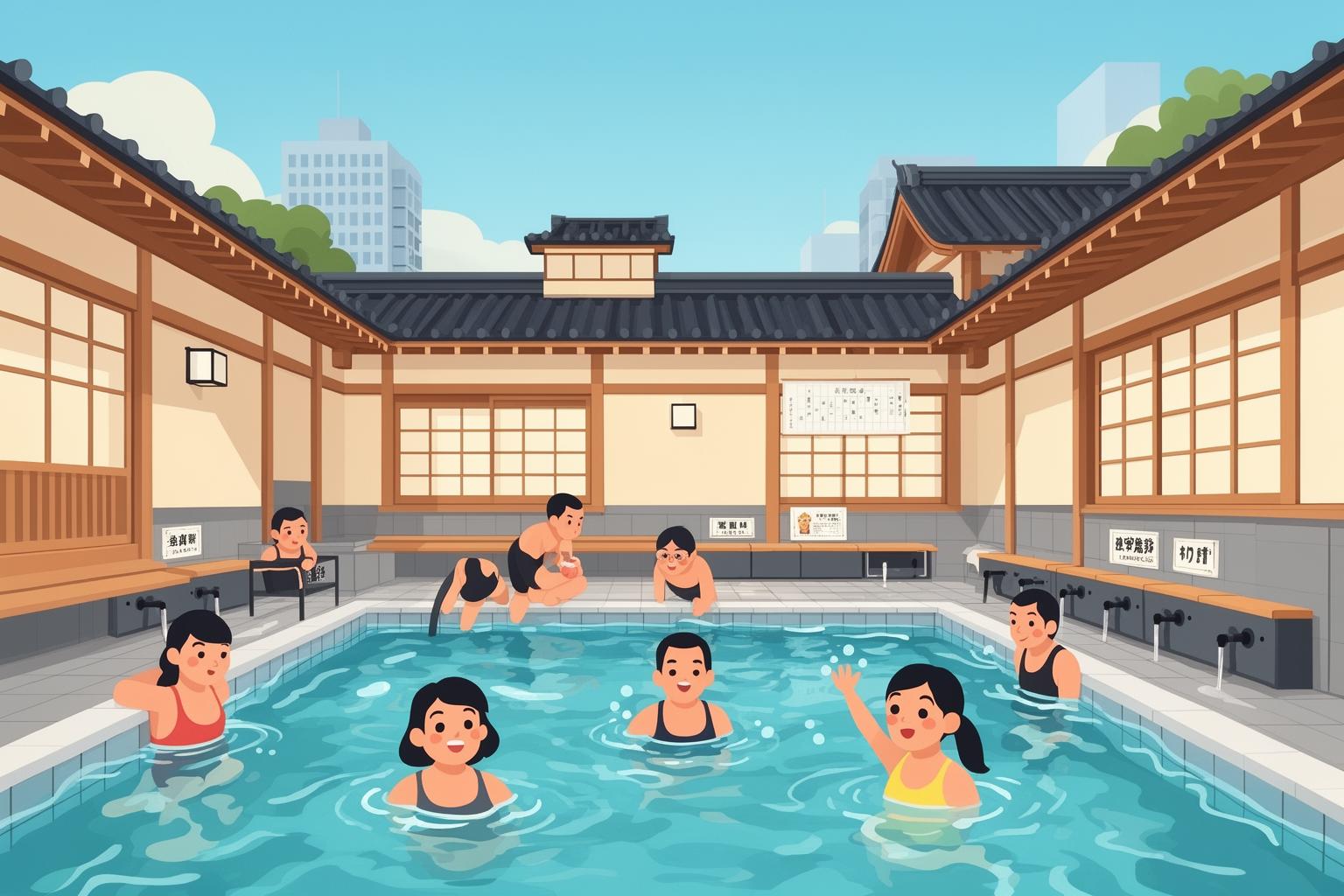
Your journey starts not at the edge of the bath, but on the street outside. Look for the iconic sign, ゆ (yu), meaning hot water, often displayed on a noren—a traditional fabric curtain hanging in the doorway. Passing through this curtain feels like stepping into another world, leaving the hectic pace of the city behind. The air inside instantly changes—it’s thick with the scent of soap, steam, and a subtle, clean aroma of wood and tile. You’ll find yourself in the genkan, the entrance area, where a gentle symphony of clattering and muffled greetings welcomes you. This is your first stop, the place to shed your street identity. Remove your shoes. This isn’t just a suggestion; it’s a basic rule, a sign of respect for the clean space inside. You’ll notice rows of small shoe lockers. Slide your shoes inside, take the wooden key, and either keep it in your pocket or secure it to your wrist. This simple act is your first step toward relaxing, becoming part of the sentō’s rhythm.
The Keeper of the Keys: Interacting at the Bandai
Next, you’ll approach the reception desk, called the bandai. In older, more traditional sentō, this may be a raised platform offering a commanding view of both the men’s (otoko, 男) and women’s (onna, 女) changing rooms. In more modern facilities, it’s a typical front desk. Don’t be intimidated. The person here is the heart of the operation, the keeper of the keys, and the unofficial mayor of the neighborhood. A simple “Konnichiwa” and a smile go a long way. The entrance fee is usually a fixed price, incredibly affordable for the experience awaiting you, typically around 500 yen. If you haven’t come prepared, this is your lifeline. Most sentō provide what’s called a “tebura setto,” or “empty-handed set.” For a few hundred yen extra, you can rent both a small and large towel and purchase single-use packets of shampoo, conditioner, and body soap. It’s a lifesaver for spontaneous visits after a long walk or a sudden rain shower. Hand over your money, receive your change and possibly your rental items, and offer a slight bow or nod of thanks. You’re now officially a patron. They will direct you to the correct changing room, marked by its own noren—usually blue for men and red for women—with the corresponding kanji. Push through this second curtain. The real experience is about to begin.
The Unveiling: Mastering the Changing Room
The datsuijo, or changing room, serves as a lively social hub that forms a buffer between the outside world and the inner sanctum of the baths. As soon as you step inside, you’re greeted by a wave of warm, humid air. The soundscape blends the snap of locker elastics, the rustle of clothing, the quiet chatter of regulars, and the hum of vintage fans during summer. This is not a place for hushed reverence; it is a vibrant, living space. Find an empty locker. While the key for your shoe locker may be a simple piece of wood, the key to your changing room locker will almost always have an elastic band attached—designed to be worn on your wrist or ankle while bathing to prevent loss. It’s a simple yet clever design. Now comes the moment that can be intimidating for first-timers: getting undressed. The secret is confidence and ease. No one is watching you. Truly. The sentō acts as a great equalizer. Here, everyone—from construction workers to salarymen to students—is the same. People focus on their own routine. Disrobe at your own pace, fold your clothes neatly, and place them in the locker with your large bath towel. You will only carry one item into the bathing area: your small wash towel, often called a “modesty towel,” for reasons that will soon become clear.
More Than a Locker Room: The Social Undercurrent
Observe the rhythm of the datsuijo. You may see older men stepping onto large, vintage scales as part of their daily ritual—a silent testament to the passage of time. Friends might catch up on the day’s news, their voices a soft, familiar murmur. This space offers a prime opportunity for passive social learning. Notice how people interact—a slight nod, a quiet “Otsukaresama desu” (a greeting roughly meaning “Thanks for your hard work”), or shared laughter over a TV program playing on a small screen mounted high on the wall. The atmosphere is relaxed and communal. This is where you begin to sense the neighborhood’s heartbeat. Don’t rush. The sentō experience is not designed to be hurried. If you spot someone you know, a simple nod makes for a perfect greeting. The datsuijo is the prelude, setting the tone for the relaxed, open communication that the bathhouse encourages.
The Sacred Waters: Rituals of the Bathing Area

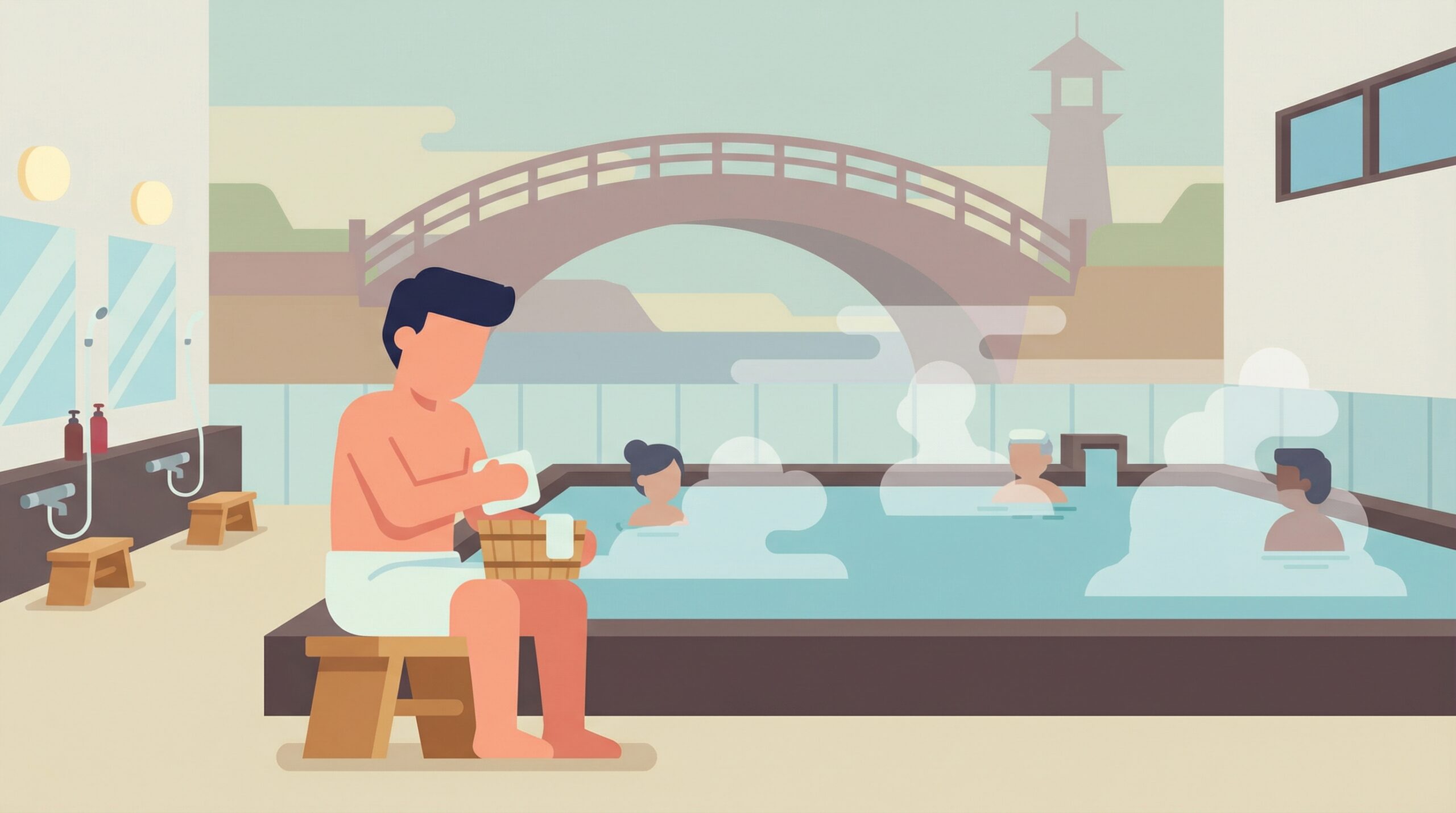
Sliding open the door to the yokujō, the bathing area, is a surge of sensory experience. A dense cloud of steam quickly fogs your glasses and warms your face. The sound of flowing water fills the space—from showers, faucets, and the gentle ripple of the main baths. The tiled room’s acoustics amplify every noise into a calming white noise. Your first and most essential stop is the arai-ba, the washing area. Here, you’ll find rows of low stools placed before faucets and showerheads. This is non-negotiable. The absolute, unshakable rule of the sentō is that you must thoroughly wash your body before entering the baths. The tubs are meant for soaking, not cleaning. Entering the communal water with soap or dirt on your body is a serious breach of etiquette. Find an empty station. Take a stool and a washbowl. Sit down. This is another crucial distinction from Western showers—you sit rather than stand. This minimizes splashing your neighbors and reflects the relaxed, grounded nature of the ritual. Turn on the faucet, fill your bowl, and perform the kakeyu—pouring warm water over your body, starting at your feet and moving upward toward your torso to acclimate to the temperature. Then, lather your small towel until it’s rich with foam and scrub your body clean from head to toe. Be considerate of your neighbors and keep splashing to a minimum. When finished, rinse off all the soap thoroughly. Clean your station by rinsing the stool and surrounding area for the next person. This simple act of respect forms the foundation of sentō etiquette.
The Art of Soaking: A Symphony of Temperatures
Now freshly cleaned and rinsed, you’re ready to approach the baths themselves. The main tub, the ofuro, is generally kept quite hot, often between 40 and 44 degrees Celsius (104-111 F). Enter slowly—don’t jump or splash. The aim is to slip in with as little disturbance as possible. Let out a sigh of contentment—it’s an almost universal, subconscious response to the comforting heat, a shared expression everyone understands. “Aaaah, ii yu da na” (“Ah, this is good water”) is a classic phrase you might hear, serving as a gentle, informal way to acknowledge fellow bathers. Now, about that small towel: it should never go into the bath water. You can place it on your head, which also helps prevent light-headedness from the heat, or set it on the tub’s edge. Letting it touch the communal water is considered unclean. Take a look around. You’ll often find a variety of tubs. There might be a nuruyu, a lukewarm bath for longer soaks, or a denki-buro, an electric bath with a mild current flowing between two plates that creates a tingling sensation designed to ease muscles. Approach with caution! You might also find a jacuzzi, a cold plunge pool (mizuburo), and if you’re fortunate, an outdoor bath, the rotenburo. Moving between the hot and cold tubs is an excellent way to stimulate circulation and is a ritual in itself.
Hadaka no Tsukiai: The Art of Naked Conversation
This is where the real magic happens. Soaking together in the same hot water fosters a strong sense of camaraderie. This is the essence of “hadaka no tsukiai.” With everyone unclothed, and therefore stripped of social status, communication becomes more straightforward and sincere. The easiest way to start a conversation is by commenting on the shared setting. “Kyou wa atsui desu ne” (“It’s hot today, isn’t it?”) or a simple remark about the bath’s quality. Sports also serve as a great common ground, especially in Osaka. Mentioning the local heroes, the Hanshin Tigers baseball team, usually sparks conversation, especially if they won the previous night. You can ask about the different baths. “Sumimasen, denki-buro wa hajimete desu ga…” (“Excuse me, this is my first time in an electric bath…”). People are generally happy to share their knowledge and tips. Don’t force it—let conversations flow naturally. Sometimes, the strongest connection is a shared, comfortable silence. The goal isn’t to make a lifelong friend on your first visit but to become a familiar, friendly presence. Consistency is key. If you visit the same sentō regularly, people will start recognizing you. A nod will evolve into a greeting, the greeting into a brief chat, and the chat into genuine conversation.
The Afterglow: The Post-Bath Social Scene
While the soaking itself is wonderful, the experience doesn’t end when you leave the water. The post-bath ritual is equally important, both for your body and your social life. After a final rinse, return to the datsuijo, this time using your large, dry towel. Make sure to dry off completely before walking around the changing room floor to avoid leaving wet footprints—another small but meaningful gesture of consideration. The atmosphere now is one of complete relaxation. Your body hums with warmth, your mind feels clear, and a deep sense of calm has settled in. This is an ideal moment for connection. Many changing rooms feature a lounge area, possibly with a few chairs, a television, and the highlight of the sentō experience: vintage vending machines. This is the time for the iconic post-bath drink. The traditional choices are fruit milk (furutsu gyunyu) or coffee milk (kohii gyunyu), served in nostalgic glass bottles. The cold, sweet beverage after a hot soak is a distinctly Japanese delight. Grabbing a bottle, popping the cap, and drinking it in one go is a shared ritual that transcends age and background. It also serves as a great social icebreaker. You may find yourself standing next to someone you just bathed with. A simple “Oishii desu ne” (“This is delicious, isn’t it?”) while raising your bottle can be the perfect way to move from the bathing area into a longer conversation.
Expanding the Conversation in the Rest Area
Many sentō include a kyūkei-shitsu, a dedicated rest area or lobby, often featuring tatami mats or comfortable couches. Here, visitors in yukata (light cotton robes) or wrapped in towels can relax, read manga, watch TV, or chat. This space is where friendships are forged. You might see regulars playing a game of Go or Shogi. You can buy a beer from the vending machine and join in the relaxed atmosphere. Here, the conversations sparked in the bath continue and deepen. No one is hurried to leave; the sentō serves as their third place, after home and work. You can discuss your day, ask for recommendations for local eateries, or share a laugh about the baseball game on TV. As a foreigner, people will naturally be curious about you. Where are you from? What brings you to Osaka? Why did you come to a sentō? Respond with openness and a smile, and show genuine interest in them as well. Inquire about the sentō’s history or their favorite local spots. This is how you go from being a visitor to becoming part of the community fabric. Some of my most memorable conversations have taken place in these post-bath lounges, sharing a beer with men I’d met just an hour before, our shared experience in the water creating an instant and effortless bond, much like the unspoken camaraderie among hikers resting at a mountain summit, admiring the same view.
Finding Your Flow: Practical Tips for the Sentō-Curious
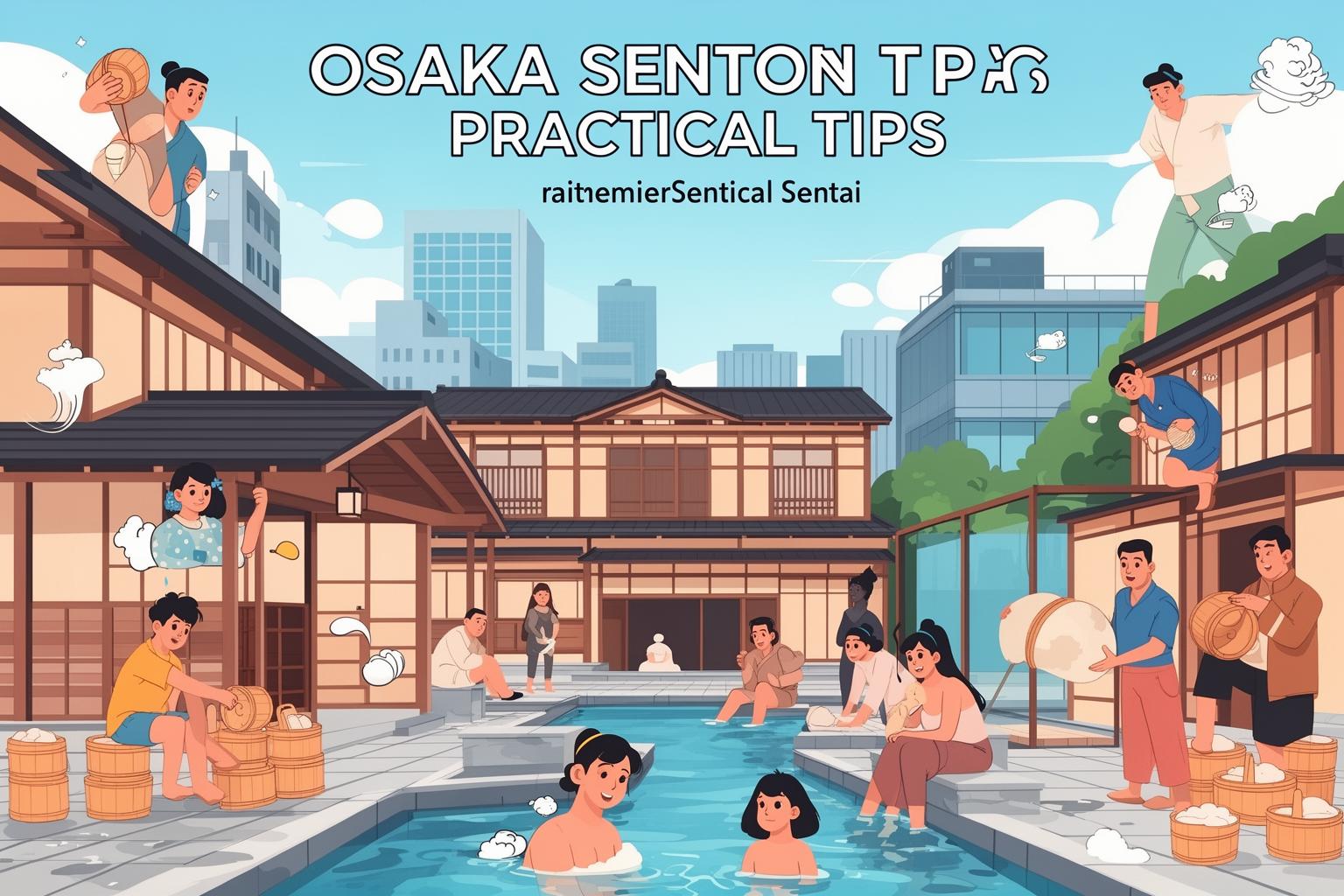
Ready to discover your local spot? Osaka is home to countless sentō, each with its own distinct charm. Some are shiny, modern “super sentō” featuring a wide variety of baths, saunas, and even restaurants. Others are small, family-run businesses that have remained unchanged for fifty years, adorned with beautiful Fuji-san murals on the tiles. The best way to find one is to stroll through a residential neighborhood and watch for the ゆ symbol. A useful tip is to search near a shotengai, a local shopping street, as sentō there often serve as social hubs for the community.
Important Tips for Your Visit
- Tattoos: This is a crucial point. Traditionally, tattoos in Japan have been linked to the yakuza, and many onsen (hot spring resorts) and larger gyms still prohibit them. However, neighborhood sentō in working-class cities like Osaka tend to be more relaxed. Many enforce a “no organized crime members” policy rather than a strict tattoo ban. Small, discreet tattoos are often tolerated. If you have extensive tattoos, it’s best to seek out sentō explicitly labeled as “tattoo-friendly.” Websites and blogs on this subject can be very helpful. When unsure, don’t hesitate to ask politely in person—a humble approach is appreciated.
- What to Bring: To enjoy the full experience, prepare your own “sentō kit.” A small bag with a large towel, a small towel, soap, shampoo, and a razor is all you need. Owning a kit shows you’re serious about the sentō tradition. That said, the “tebura setto” (ready-made set) is always an option.
- Timing is Key: Sentō typically open in the early to mid-afternoon (around 2 or 3 PM) and remain open until late at night, often until midnight or 1 AM. The busiest hours are usually early evening, from 7 PM to 10 PM, when people stop in after work. This is an ideal time for people-watching and socializing. For a more peaceful, reflective soak, consider visiting mid-afternoon on a weekday.
- Seasonal Soaks: The sentō experience shifts with the seasons. In Osaka’s intense summer humidity, a soak followed by a cold plunge is wonderfully refreshing. In the depths of winter, soaking in a steaming bath is deeply comforting. Be on the lookout for special event baths. During the winter solstice (tōji), many sentō float yuzu citrus fruits in the water, releasing a delightful aroma and warming the body. On Children’s Day in May, baths may be filled with iris leaves (shōbu-yu), believed to protect against illness.
Taking the Plunge: Your Invitation to the Community
The sentō is more than just a bath; it is a microcosm of Japanese society—a place of ritual, respect, and deep community. It serves as a workout for the soul, teaching you about consideration for others, the beauty of shared traditions, and the simple yet profound joy of being clean and warm. For anyone living in Osaka, especially those of us from abroad, it provides a rare and authentic glimpse into the city’s heart. It’s a space to feel grounded, to connect with the rhythm of everyday life, and to meet people in an environment free from work pressures or formal social settings. Don’t worry about making mistakes. As long as you show respect and follow the basic rules—washing before entering and keeping your towel out of the water—people will be incredibly forgiving and welcoming. Your willingness to take part in this beloved local custom is a sign of respect in itself. So go ahead, find a local sentō, push aside the noren, and step into the steam. Embrace the vulnerability, enjoy the warmth, and open yourself to the possibility of connection. You may discover that the path to true friendship in Osaka is lined with tile and filled with hot water.