Step off the train in Osaka, and you’ll notice it immediately. Not the neon of Dotonbori or the sheer scale of Umeda Station. No, it’s something more fundamental, a current of motion that flows through the city’s arteries. It’s the silent, steady, and sometimes startlingly swift presence of the mamachari. This isn’t just a bicycle. In Tokyo, a bike might be for leisure, a sleek accessory for a weekend ride. In Osaka, the mamachari—the humble, heavy-duty utility bicycle—is the city’s lifeblood. It’s the family minivan, the grocery cart, the commuter vehicle, and the gossip-session platform all rolled into one sturdy, steel-framed package. My first week living here, I bought one second-hand, a sturdy Panasonic in a faded sky blue, complete with a slightly dented front basket. I thought I was ready. I thought I knew how to ride a bike. But riding a bike in my home country and navigating the urban ballet of Osaka on two wheels are two profoundly different skills. My first attempt to ride through the Tenjinbashisuji Shopping Arcade was a masterclass in humiliation. I saw hundreds of others gliding through the crowds, a river of cyclists flowing between pedestrians. I nudged my front wheel into the throng, convinced a siren would blare and a security guard would tackle me. The signs with a bicycle crossed out seemed to scream at me. Yet, no one else seemed to care. An elderly woman with a perm the color of lavender and a basket full of daikon radish breezed past me, ringing her bell with a gentle, almost apologetic chirin. I had entered a world governed not by signs and regulations, but by a complex, unspoken social contract. This is the real guide to getting around Osaka. It’s not about the traffic laws you can look up online; it’s about the kinetic, intuitive, and deeply ingrained culture of the mamachari, a culture that reveals the very soul of the city: pragmatic, a little bit rebellious, and always, always in motion.
To truly understand the pragmatic and social rhythm of the city, one must also appreciate how Osakans conclude their day, a practice perfectly captured in the local tradition of the shime meal.
The Mamachari Itself: Your Osaka Chariot
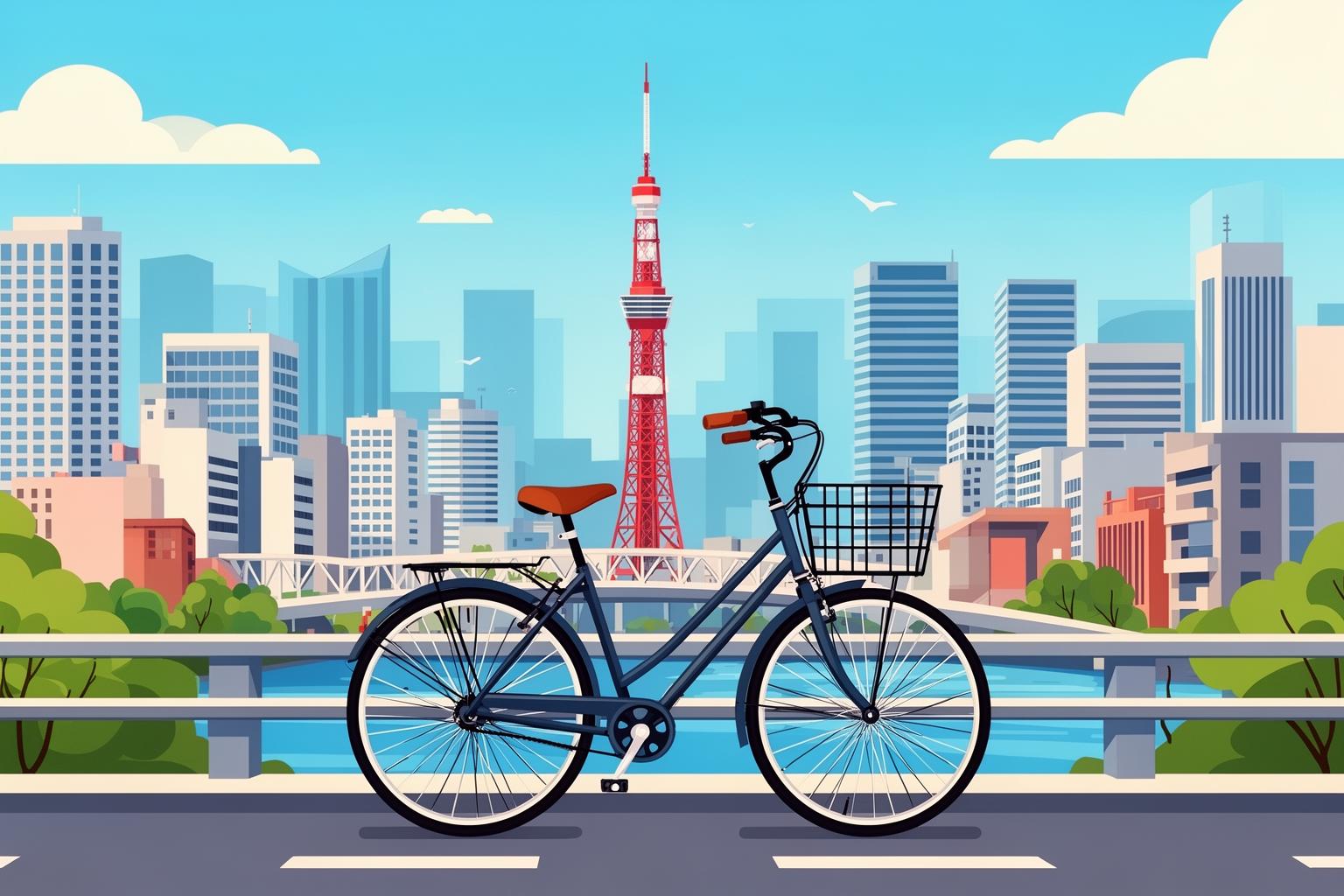
Before you can grasp the rules, you first need to understand the vehicle. The mamachari, a blend of “mama” (mom) and “charinko” (a slang term for bicycle), reigns supreme on the streets of Osaka. It’s a symbol of Japanese domestic life, yet in Osaka, its use crosses all demographics. You’ll spot everyone riding one, from high school students to salarymen in full suits with their briefcases bungee-corded into the front basket.
What Exactly is a ‘Mamachari’?
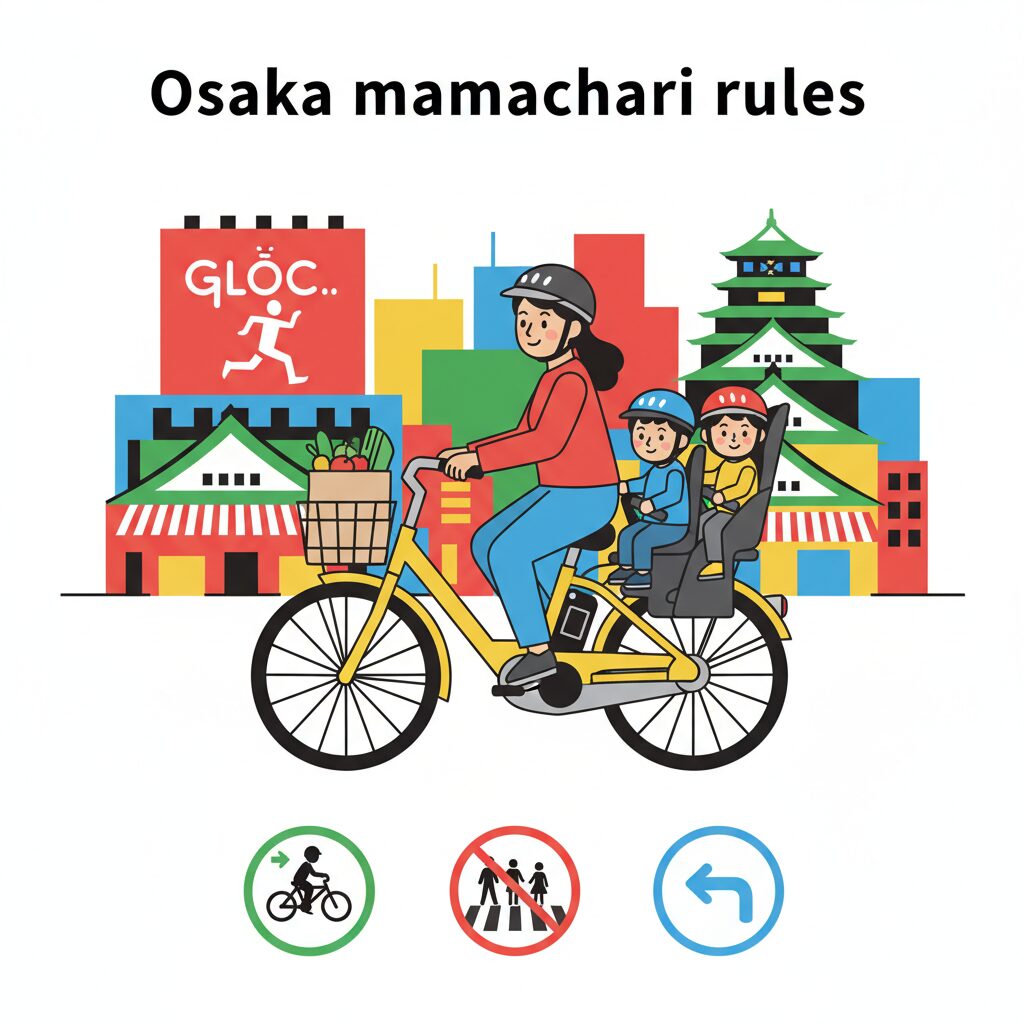
Forget the sleek, multi-geared road bikes common in leaner, more athletically-focused cities. The mamachari is built like a tank. Its signature feature is a step-through frame, allowing easy mounting and dismounting—even while wearing a skirt or carrying a child. The handlebars curve back toward the rider, encouraging an upright, relaxed posture ideal for watching out for pedestrians and stray shopping bags. The front basket is essential; a mamachari without one is like a car without a trunk. It serves as the main cargo space for groceries, handbags, school bags, and occasionally, a small, well-behaved dog. Many also have a heavy-duty rack on the rear, often fitted with a sturdy child seat. Even if childless, this rack is perfect for securing larger items. The kickstand is not the flimsy stick found on other bikes but a strong, dual-pronged stand that keeps the bike upright and stable—vital when loading a week’s worth of groceries without tipping over. Add a built-in wheel lock, a dynamo-powered headlight that hums to life while riding, and a simple three-speed gear system, and you have the pinnacle of practical design. From a fashion perspective, the mamachari is the ultimate anti-fashion statement. It is pure, unfiltered function. Its appeal lies in its total lack of pretense. There’s an honesty in its design you won’t find in a carbon-fiber racing bike. Yet personality emerges in the details. Riders personalize their bikes with colorful waterproof basket covers, plush seat cushions, and stickers from favorite bands or local shrines. The recent rise of electric-assist mamacharis adds another dimension. These quiet, powerful machines represent a significant investment and have become subtle status symbols, enabling riders to effortlessly tackle the city’s few hills.
Acquiring Your Steed: New, Used, and Rental
Owning a mamachari is a rite of passage. The easiest option is buying new. Large retailers like Don Quijote or home centers such as Kohnan offer a broad selection of shiny new bikes at reasonable prices. Local family-run bicycle shops, the jitensha-ya, provide a more curated choice along with invaluable personal service. However, for many, the true Osaka experience begins in the world of second-hand goods. Recycle shops are treasure troves of well-loved mamacharis, each bearing its own history in scratches on the frame and a slight wobble in the basket. Buying used is cost-effective but comes with an important requirement: bicycle registration, or bōhan tōroku. This mandatory system in Japan must not be overlooked. When you buy a bike, new or used, the shop handles the registration. You complete a form, pay a small fee, and receive a small orange or yellow sticker attached to the frame. This sticker links the bike’s serial number to you, serving as proof of ownership. The police conduct random checks, and being caught with an unregistered bike—or one registered to someone else—can lead to a lengthy and awkward discussion at the local police box (kōban), under suspicion of theft. When buying from a recycle shop, confirm that they handle the registration transfer. If purchasing from an individual, you will need to visit a police station or designated bike shop with the seller and the bike’s original paperwork to complete the process yourself. It’s a bureaucratic hassle but an essential one for peace of mind in Osaka.
The Law vs. The Reality: Where to Ride
At the heart of Osaka cycling lies a central paradox. Reading the official Japanese road traffic act leads one to conclude that bicycles are considered light vehicles and must keep to the left side of the road, following the flow of traffic. However, riding a bicycle strictly by the letter of the law in Osaka would invite chaos, confusion, and potentially serious injury. The reality on the streets is an entirely different world, governed by collective understanding and fluid negotiation.
The Sidewalk as the Main Road
In Osaka, the sidewalk serves as the default cycling lane. This is the foremost unwritten rule you need to internalize. While some areas have signs designating shared paths for pedestrians and cyclists, most cyclists have effectively claimed the sidewalk over decades through collective practice. The explanation is purely practical. Osaka’s roads, especially side streets and neighborhood lanes, are narrow and frequently congested with delivery trucks, taxis, and cars. Dedicated bike lanes are scarce. For a mamachari rider, moving slowly with a basket full of groceries, competing with motor vehicles is neither feasible nor safe. Therefore, everyone takes to the sidewalk. This creates a unique and complex ecosystem. As a cyclist, you become a guest in the pedestrian realm and must behave accordingly. You do not have the right of way. You need to master the slow weave, anticipating the unpredictable movements of shoppers, children, and smartphone users. Speed is your adversary. The aim is to keep a pace just a bit faster than a brisk walk. Your bell is not a blaring horn to clear your path. A single, gentle chirin is a polite “excuse me,” a soft alert of your presence when approaching from behind. Repeated frantic ringing is seen as shockingly aggressive, akin to honking a car horn in a quiet residential street. It brands you as a rookie, an outsider unfamiliar with the delicate social fabric. Mastering the sidewalk is about becoming part of the flow—a silent, courteous dance of constant micro-adjustments and spatial awareness.
The Sacred Territory of the Shōtengai (Shopping Arcade)
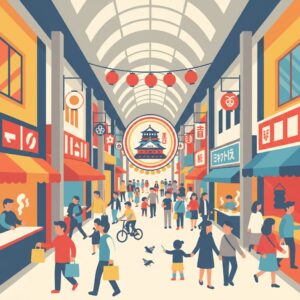
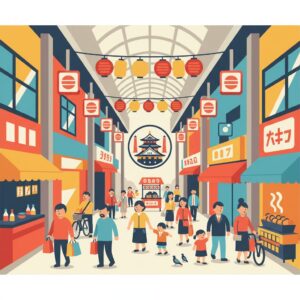
This dance is most intense within the shōtengai, the covered shopping arcades that are the vibrant heart of Osaka’s neighborhoods. These pedestrian havens brim with the aromas of grilled eel and fresh tempura, the calls of fishmongers, and neighbors’ chatter. Yet, they also serve as primary routes for mamacharis. Riding through shōtengai like Shinsaibashisuji or the marathon-length Tenjinbashisuji feels like breaking every traffic law imaginable. But watch the locals. They ride at a snail’s pace, perfectly syncing their speed with surrounding pedestrians. They essentially walk aided by wheels, often keeping their feet off the pedals, ready to set them down instantly. The front basket shifts from cargo space to a moving shopping basket; riders glide to fruit stands, select items, pay, and place purchases in the basket without ever dismounting. It’s a stunning display of balance and multitasking. The key is absolute deference. You must be ready to stop immediately for a child chasing a ball or friends paused in conversation. You must navigate around a grandmother examining vegetables with surgical precision. Impatience has no place here. Riding in a shōtengai means embracing the slow, communal, and slightly chaotic rhythm of Osaka neighborhood life. It is the ultimate test of your ability to integrate into the city’s unwritten code.
The Art of Parking: A Game of Urban Tetris
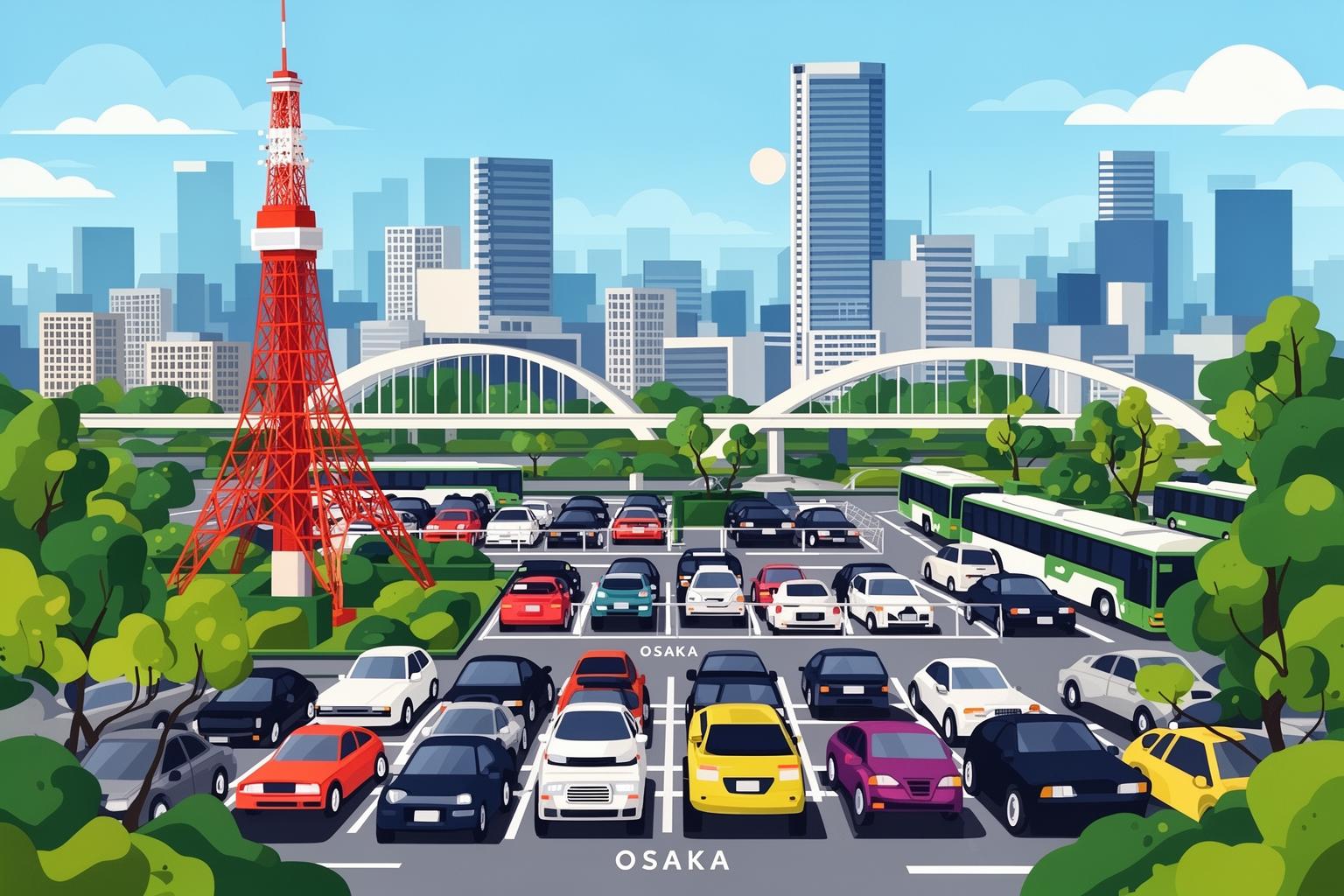
Your journey doesn’t end once you arrive at your destination. In a densely packed city like Osaka, finding a spot to park your mamachari is a strategic challenge requiring foresight, a bit of luck, and a willingness to bend the rules. The neatly arranged, perfectly orderly bike parking of Tokyo feels like a distant dream here. In Osaka, bike parking is more like a contact sport.
The Black Hole of the Train Station
The areas around every train station, from major hubs like Namba to the smallest local stops, are ground zero for bicycle chaos. They are often encircled by vast, sprawling seas of parked mamacharis, tangled together like metallic coral reefs. The official paid parking lots, or chūrinjō, are the sensible choice. Some are sophisticated multi-level garages with automated systems, while others are simple outdoor areas with metal racks. Many commuters buy monthly passes for designated spots, which offers peace of mind. Yet, the sheer volume of bicycles frequently overwhelms the official capacity. This leads to widespread illegal parking. Every guardrail, utility pole, and neglected patch of concrete becomes a potential parking spot. There’s an art to it: finding a location out of the main pedestrian flow but still convenient. However, it’s a gamble. Municipalities regularly conduct sweeps, with the first warning being a brightly colored tag on your handlebars. If ignored, you’ll return to find your bike gone, replaced by a notice on the ground informing you it’s been impounded. Retrieving it means a pilgrimage to a remote impound lot, usually in an industrial area on the city’s outskirts, where you must prove ownership and pay a fine of a few thousand yen. It’s an infuriating and time-consuming ordeal that teaches a harsh lesson in the city’s parking hierarchy. Almost every long-term resident has a story about their bike getting “lifted.”
Supermarket and Department Store Etiquette
Parking at supermarkets or department stores presents a different challenge. Most have designated areas, but they’re rarely large enough and quickly descend into a free-for-all. Here, the double kickstand proves its worth, allowing you to park securely while loading your basket. Loading groceries is a skill itself—a careful game of weight distribution to keep the bike balanced. Heavy items like drinks and rice go at the bottom; fragile items like eggs and bread are placed gently on top. When you return, your bike will almost certainly be hemmed in by other mamacharis. Extracting it requires a delicate touch. You must wiggle and gently pivot your bike, careful not to knock over the surrounding ones and trigger a catastrophic domino effect. There’s a silent understanding among shoppers: you do your best not to block anyone, but accept that some entanglement is inevitable. A quiet sigh and a patient minute of maneuvering are simply part of the daily ritual.
The Social Contract: Interacting with Others
Successfully navigating Osaka on a mamachari relies less on technical skill and more on social intelligence. You are part of a dynamic, mobile community, and your survival depends on recognizing its subtle signals, hierarchies, and ways of communication.
The Hierarchy of the Sidewalk
A clear, unspoken pecking order exists on the sidewalk. At the very top are the elderly, especially grandmothers. They move at their own pace and can be unpredictable. You must give them as much space as possible and be ready to stop completely. They have earned priority on the sidewalk, and you are merely a guest. Next come pedestrians with strollers and young children, to whom you yield without hesitation. Following them are general pedestrians, around whom you are expected to navigate politely. Then there is you, the mamachari rider, who shares a delicate balance with other cyclists. Passing another mamachari involves a silent negotiation, often initiated by eye contact or a slight shift in body weight signaling your intention. You maintain a respectful distance, acknowledging that you are both participating in the same intricate dance. At the bottom of this hierarchy—and a common source of low-level friction—are scooters and small motorbikes that sometimes illegally use sidewalks as shortcuts. They are faster, heavier, and noisier. The general consensus among mamachari riders is to keep a wary, slightly resentful, wide berth around them. They are playing a different, riskier game.
Communication Without Words (and Sometimes With Them)
Most interactions are non-verbal. A slight nod of the head, called the “Sumimasen nod,” is a customary way to thank someone who makes way for you. It’s a brief acknowledgment, a micro-gesture of social grace that keeps the system running smoothly. As noted, the bell is a subtle tool: a gentle ring serves as a polite notification, whereas an aggressive one is a serious social misstep. However, Osaka is also a city of straightforward communication. People are not shy about voicing their thoughts, which can feel refreshingly blunt compared to Tokyo’s more reserved culture. If you accidentally cut someone off or make a clumsy move, you might hear a sharp, “Abunai!” (Dangerous!) or a typical Osaka-ben phrase like, “Chanto mite ya!” (Watch where you’re going!). These exchanges are rarely drawn-out confrontations; rather, they are quick, sharp feedback from the community—a course correction. You’re expected to accept it, offer a brief nod of apology, and move on. From a personal safety perspective, especially for women, the mamachari is an empowering tool. It offers speed and mobility beyond walking, allowing you to cover ground quickly and choose your routes. Sticking to well-lit main streets at night, with the steady glow of your dynamo light leading the way, provides a genuine sense of security and independence within the vast urban environment.
Essential Mamachari Accessories and Maintenance
To fully embrace the mamachari lifestyle, you need to equip yourself with a few essential accessories. These are not mere extras; they are vital tools for navigating the practical demands of daily life and Osaka’s unpredictable weather.
Preparing for Life in Osaka
The most crucial accessory is a high-quality rain poncho. Umbrellas are ineffective when riding a bike. A proper cycling poncho is a full-body garment that covers you, your handlebars, and your front basket, creating a personal, mobile shelter. The sight of dozens of these vibrant, billowing figures gliding silently through a heavy downpour is one of the most iconic and surreal images of Osaka. It reflects the city’s relentless, practical spirit. Then there’s the sasube, a controversial yet ubiquitous gadget. It’s a clamp that attaches to your handlebars, designed to hold an umbrella and free your hands. Although technically illegal in most situations because it can block vision and be dangerous in strong winds, the sasube exemplifies Osaka’s inventive approach to problem-solving. You will spot them everywhere. Another must-have is a basket cover. These range from simple nets to elaborate, insulated, waterproof models. They serve several purposes: shielding your belongings from rain, preventing groceries from bouncing out on rough roads, and offering some privacy for your shopping. Lastly, you should be aware of the community air pump, the kūkiire. Nearly every local bike shop has a manual air pump chained outside for public use. It’s a wonderful, unspoken community service. The etiquette is straightforward: use it, then return it neatly for the next person. Keeping your tires properly inflated is the single most important maintenance you can perform.
Keeping Your Bike in Motion
Despite their sturdy build, mamacharis are not indestructible. The most common issue is a flat tire, or panku. It’s unavoidable. When it happens, you’ll need to visit the nearest jitensha-ya. These small, often cluttered shops are staffed by mechanics who can patch a tire with impressive speed and skill for a very reasonable price. They are the unsung heroes of the mamachari ecosystem. For most riders, maintenance starts and ends with fixing flat tires. The mamachari is a workhorse, not a precious possession. Its chain may be rusty, its brakes may squeak, but as long as it rolls, it fulfills its purpose. It’s a tool to be used, not a trophy to be polished. This mindset is pure Osaka: what matters is not appearance, but functionality and efficiency.
Riding a mamachari in Osaka means understanding the city on a visceral level. It’s participating in a daily, city-wide performance of organized chaos. It reveals a culture that values pragmatism over strict rule-following, and community intuition over formal instructions. At first, the constant negotiation of space, the near-misses, and the sheer number of other cyclists can feel overwhelming, even stressful. But then, one day, it clicks. You find yourself gliding through a crowded arcade, matching the pace of shoppers perfectly. You execute a flawless sidewalk weave around a group of tourists without thinking. You share a knowing nod with another rider as you both wait for a light to change. In that moment, you’re no longer just an observer. You become part of the current. My faded blue Panasonic, with its permanently dented basket and squeaky brakes, has become more than just my transportation. It’s my pass to the backstreets, my mobile storage unit, my connection to the neighborhood’s rhythm. It’s my membership card to the authentic, everyday life of this complex, frustrating, and endlessly fascinating city.