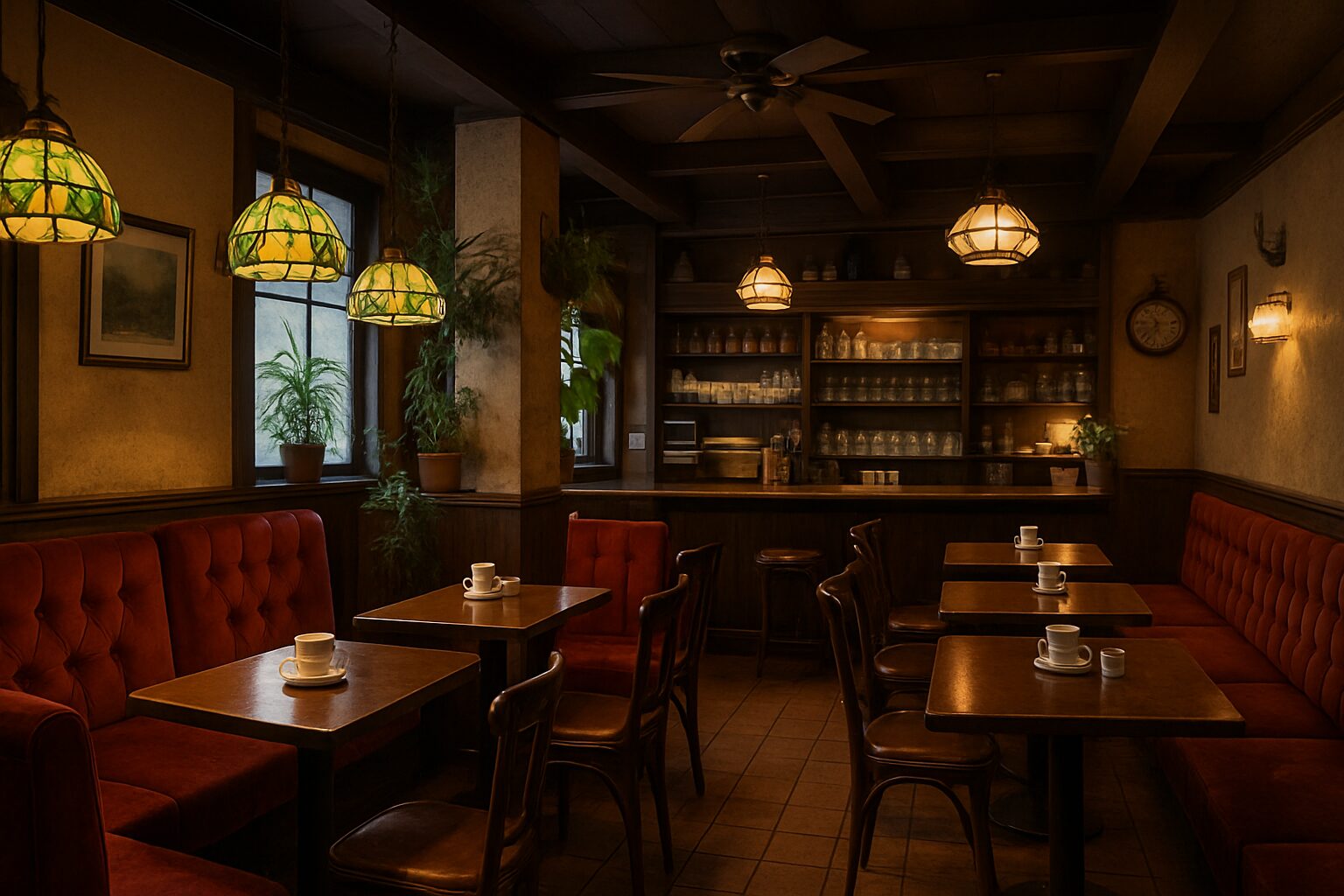
The air hangs thick and sweet, a sacred blend of dark-roast coffee, caramelized sugar, and the faint, papery scent of yesterday’s news. A low murmur of conversation hums beneath a soundtrack of crackling vinyl jazz or a somber classical piece playing from a corner speaker. Light struggles through stained-glass accents or heavy velvet curtains, painting the dark wood panels and worn leather booths in amber hues. This isn’t just a coffee shop. This is a sanctuary, a time capsule, a living room for an entire city. This is the Osaka Kissaten, and you’ve arrived just in time for the morning ritual.
In a city that crackles with the high-voltage energy of commerce and comedy, there exists a profound and quiet tradition known as “Morning Service,” or simply “Mōningu.” It’s a concept born from the quintessentially Osakan spirit of generosity and good value—a cultural institution that predates the global coffee chains by decades. The premise is simple, yet beautiful: purchase a cup of coffee, and with it, you receive a complimentary or heavily subsidized breakfast. We’re talking thick, fluffy toast, a perfectly boiled egg, and perhaps a small salad. It’s more than a meal; it’s a daily communion, a gentle, civilized start to the day that grounds you before you’re swept up in the city’s relentless rhythm. To understand Osaka, you must understand the art of the morning, and that art is perfected within the hallowed walls of its traditional coffee houses, the kissaten.
To fully embrace this daily rhythm, consider exploring the vibrant local life of an Osaka shotengai for your morning errands and shopping.
The Soul of the Showa Era: More Than Just a Cafe
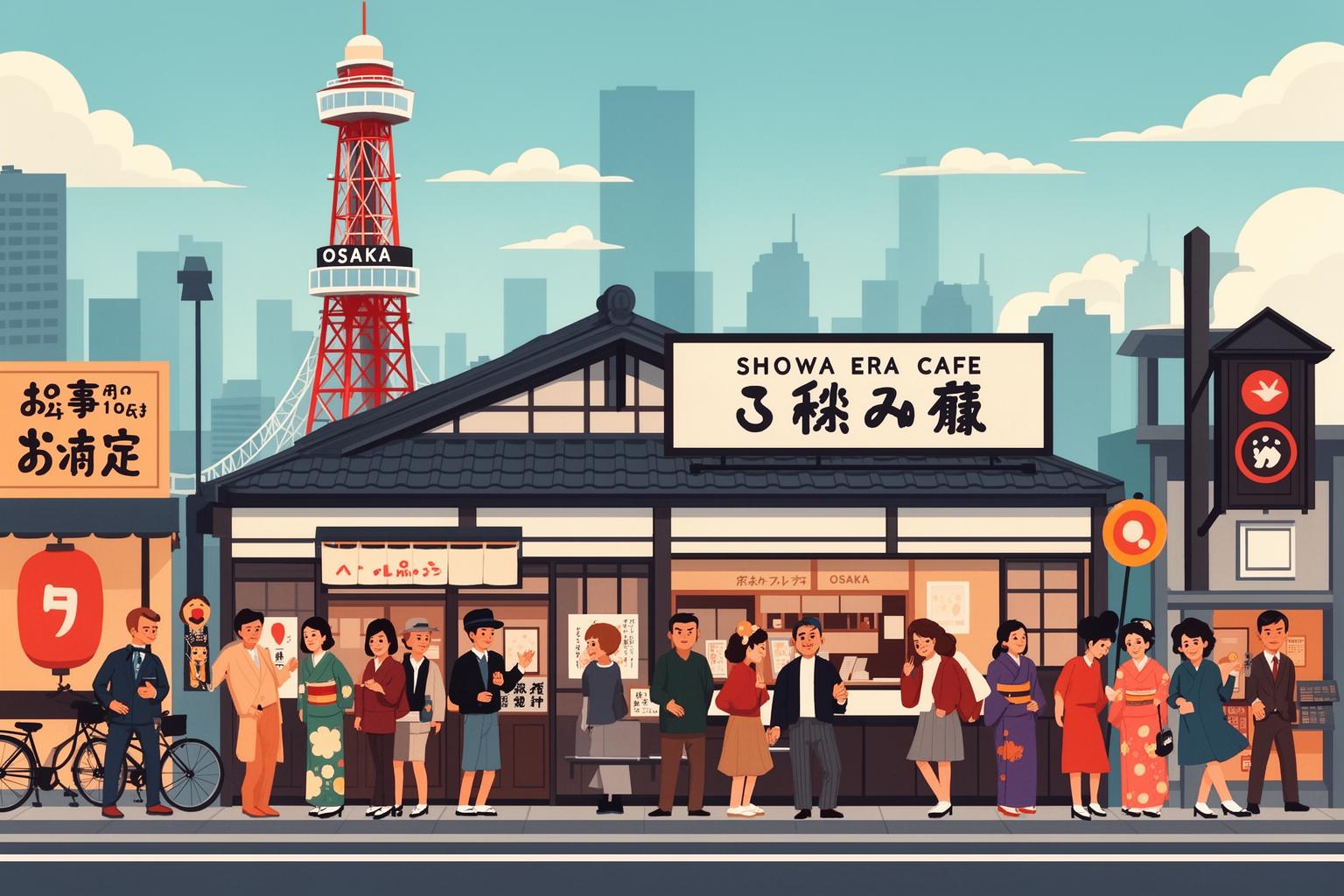
Step inside a true kissaten, and you step out of time. The modern world with its sterile minimalism and grab-and-go efficiency fades away behind you. Here, time flows at the pace of a slow drip coffee. These spaces are not designed for laptops and conference calls; rather, they are sanctuaries for reflection, conversation, and the simple act of being. Their aesthetic is often inspired by the Showa Period (1926-1989), an era of significant economic and cultural change in Japan. Picture dark, polished wood, ornate lamps casting a warm glow, and plush velvet or worn leather seats molded by generations of patrons. The air itself feels thick with history, filled with countless stories shared over countless cups of coffee.
At the center of this world is the “Master,” the proprietor who often serves as both conductor and focal point of this quiet symphony. Clad in a crisp shirt, perhaps a waistcoat, the Master moves with practiced, deliberate grace behind the counter. This is their stage. They know the regulars by name, their preferred coffee blends, and how they take their toast. They may not be overly talkative, but their presence is a steady, reassuring anchor. Watching a Master prepare coffee with a siphon—a dramatic, scientific-looking apparatus of glass globes and open flames—is a theatrical experience in itself. It is a testament to a dedication to craft, a ritual carried out with unwavering focus. This is not the impersonal transaction of a modern café; it is a subtle, personal human connection.
The clientele represent a cross-section of the city’s soul. In one booth, a group of elderly friends, dressed in their finest, catch up on the week’s gossip, their laughter a gentle melody. Elsewhere, a salaryman in a sharp suit carefully folds his newspaper, savoring his moment of peace before the day’s struggles begin. A young student may be tucked away in a corner, absorbed in a textbook, finding comfort in the quiet focus of the space. The kissaten is a true “third place,” a home away from home, a neutral ground where different worlds coexist in comfortable silence or hushed conversation. The gentle clinking of porcelain cups, the rustle of turning pages, the low hum of the refrigerator—these sounds create the unique, soothing soundscape of the kissaten.
Decoding the Morning Service: An Osakan Ritual of Value and Comfort
The concept of “Morning Service” beautifully expresses Osaka’s merchant spirit. Known for their pragmatic and shrewd nature, Osakans value a good bargain, or “otoku.” The morning set represents the ultimate otoku experience. Originating in the post-war period, it was a smart strategy for coffee shops to draw in and keep the morning commuter crowd. By pairing a small, satisfying meal with the purchase of a drink, they fostered a loyal customer base and created a beloved daily tradition.
The classic set exemplifies comforting simplicity. First, the toast. This isn’t the flimsy, pre-sliced bread found at supermarkets. It’s “shokupan,” a thick, fluffy, cloud-like slice of white bread, often an inch or more thick. Toasted to a perfect golden brown, it has a crisp crust enclosing a pillowy, steamy interior, generously spread with butter that melts into every crevice. Alongside it, there is almost always a hard-boiled egg, or “yude tamago.” Still in its shell, it arrives as a small, perfect package to be cracked open and sprinkled with a pinch of salt from the tiny shaker on the table. Some cafés may add a small serving of fresh cabbage salad with sesame dressing or a tiny pot of yogurt. For the cost of a single cup of coffee, often around 500 yen, you receive a complete and satisfying breakfast. It’s an act of hospitality that feels both generous and deeply rooted in tradition.
Naturally, variations exist, each telling its own story about the particular kissaten. You might encounter an “Ogura Toast” set, a specialty from Nagoya where the toast is topped with a generous layer of sweet red bean paste (anko) and butter—a rich blend of savory and sweet. Other places might serve a hot dog bun, a warm egg salad sandwich, or a mini pizza toast. The coffee remains the centerpiece. Typically, it is a dark, robust roast, low in acidity and full-bodied, brewed to complement milk and sugar. This comforting, old-fashioned flavor contrasts sharply with the bright, acidic notes of third-wave coffee. It evokes nostalgia, capturing the taste of a Japanese morning across generations.
Timing is crucial to enjoy this ritual. The service usually runs from when the shop opens—sometimes as early as 7 AM—until around 11 AM. It’s a special window, a golden hour for those who know. For a first-timer, spotting the kanji for kissaten (喫茶店) or the katakana for coffee (コーヒー) on a sign is the first step. Look for the charmingly retro plastic food models, or “shokuhin sanpuru,” showcased in the window, displaying the morning set in all its glory. Simply saying “Mōningu, onegaishimasu” (Morning, please) unlocks this wonderful local experience.
An Expedition Through Osaka’s Kissaten Landscape
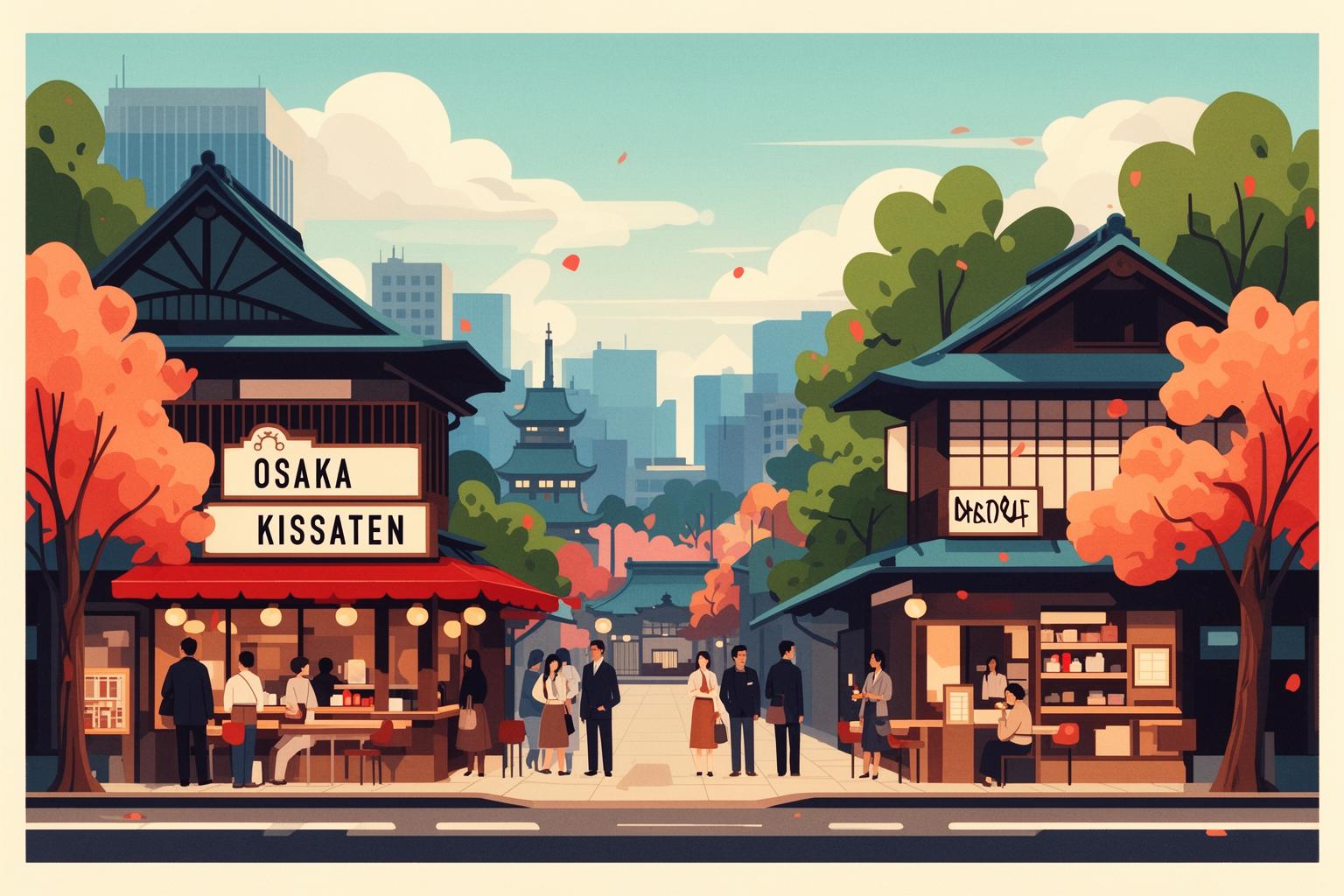
Osaka is an expansive metropolis, with a kissaten culture as varied as its many neighborhoods. Each area offers a distinct flavor and a unique glimpse into the city’s past and present. To fully grasp the richness of this culture, one must venture out and explore.
The Grand Dame of Namba: Marufuku Coffee Shop
Nestled in the neon-lit, bustling heart of Sennichimae, just steps from the Dotonbori canal, stands a beacon of Showa-era elegance: Marufuku Coffee Shop (丸福珈琲店). Established in 1934, Marufuku is far more than a mere coffee shop—it’s a revered institution. Stepping through its heavy dark wooden door is like traveling back in time. The interior features a harmonious blend of dark wood, stained glass, and deep red velvet upholstery. The air is rich with the scent of their signature coffee—a famously strong, robust brew made using a proprietary roasting and drip method. This potent, almost liquor-like coffee has been invigorating Osakans for nearly a century.
The morning service here is classic and sophisticated. Thick, perfectly toasted bread is served with butter or jam. However, many patrons find it impossible to resist Marufuku’s legendary hotcakes—fluffy, golden brown, served with butter and maple syrup. These hotcakes have become iconic. Securing a seat in the morning means witnessing a slice of Osaka life: businessmen quietly sealing deals, shoppers resting tired feet, and tourists marveling at the beautifully preserved interior. The atmosphere is both grand and intimately personal, a testament to the enduring value of quality and tradition amid a constantly evolving neighborhood.
The Community Heartbeat of Tenjinbashisuji: Local, Unpretentious Charm
For a more grounded experience, head north to Tenjinbashisuji Shotengai, Japan’s longest covered shopping street. This vibrant 2.6-kilometer stretch is dotted with numerous small, independent shops, including dozens of neighborhood kissaten. Unlike the grand establishments like Marufuku, these are cozy communal living rooms.
Here, you’ll discover venues with names such as “Coffee Shop Peacock” or “Cafe Alps,” their signs weathered by the sun, and interiors adorned with an eclectic mix of mismatched furniture, personal knick-knacks, and calendars from years past. The owner and their spouse may be the sole staff, moving in a familiar, relaxed rhythm. The morning fare is simple, hearty, and incredibly affordable. Coffee is brewed in a large percolator batch, and toast is served with a smile and friendly chat about the weather or the Hanshin Tigers baseball team. This is where you experience the genuine fabric of local life—neighbors greeting one another, the mailman dropping in for a quick cup, and the fish market proprietor catching up on the sports pages. These shops thrive on loyalty and affection. Though lacking the architectural grandeur of downtown shops, their warmth and authenticity are immeasurable. Exploring Tenjinbashisuji and popping into a random kissaten remains one of the most rewarding ways to discover Osaka’s true, unfiltered soul.
The Retro-Futurism of Shinsekai: A Coffee Shop Out of Time
South of Namba lies Shinsekai, the “New World,” a district oddly suspended in time. Developed before the war, its futuristic aspirations now present a charmingly retro scene, dominated by the iconic Tsutenkaku Tower. The kissaten here mirror this unique vibe, often spacious with slightly kitschy, space-age-inspired décor from the 1960s and ’70s—curved lines, funky light fixtures, and bold color schemes. A classic example is Gratefully, a large coffee house where you can sit by a window and observe Shinsekai’s world outside.
One signature offering here, sometimes part of the morning set, is the “Mix Juice” (ミックスジュース). This iconic Osaka drink is a creamy, frothy blend of milk, bananas, and canned fruits such as peaches and mandarin oranges. It evokes a sweet, nostalgic childhood flavor for many Osakans and was reportedly invented at a fruit parlor in Shinsekai that later became a kissaten. Enjoying a morning set—perhaps toast and an egg, complemented by a tall, icy glass of Mix Juice—while gazing up at Tsutenkaku Tower is a uniquely Osakan ritual. It’s a journey into a peculiar, slightly surreal, yet utterly captivating corner of the city’s history.
The Intellectual Haven of Kitahama: The Junkissa
In the business and financial district of Kitahama, you’ll find a distinct type of kissaten: the “Junkissa” (純喫茶), or “pure coffee shop.” Historically, this term referred to places serving only coffee and non-alcoholic beverages, setting them apart from cafes that also offer alcohol and double as bars at night. This distinction fostered an atmosphere of quiet elegance. Junkissa became sanctuaries for artists, writers, and intellectuals, spaces for serious discourse and solitary reflection.
In Kitahama, nestled between sleek modern office towers and historic Meiji-era buildings, there are gems upholding this tradition. A notable example is Gokan Kitahama Honkan, located in a magnificent 1912 heritage building. Although primarily a patisserie, its second-floor tea salon captures the essence of a grand, refined kissaten. For a more classic experience, seek out smaller, more concealed spots that specialize in classical music, known as “Meikyoku Kissa.” Conversation here is discouraged; the focus is on the music, played through high-fidelity vintage sound systems, and the coffee, often carefully brewed using siphon or flannel drip (Nel Drip) methods. Ordering a morning set in such establishments offers a meditative experience—a chance to be enveloped by music and the rich aroma of coffee, a beautiful contrast to the city’s bustling exterior.
A Deeper Dive into the Kissaten Menu: Beyond the Morning
While the morning service serves as the perfect introduction, the culinary world of the kissaten extends well beyond just toast and eggs. These establishments frequently offer a menu of “yoshoku,” or Western-style dishes adapted to Japanese tastes, providing pure comfort and nostalgia. Stopping by for lunch or a mid-afternoon break uncovers an additional layer of their charm.
One of the undeniable highlights of the kissaten lunch menu is “Napolitan” spaghetti. This is not an authentic Italian dish but a uniquely Japanese creation from the post-war era. It features thick, soft spaghetti noodles pan-fried with onions, green peppers, and sausage or bacon, all coated in a sweet and tangy tomato ketchup-based sauce. For many Japanese people, it conjures a strong sense of nostalgia, a taste of simpler times. Another favorite is Curry Rice (カレーライス), a mild, thick, and savory Japanese-style curry served over white rice. It’s a hearty and deeply satisfying meal.
For a lighter choice, the “Mix Sando” (mixed sandwich) is a true work of art. Made with the same fluffy shokupan bread, these sandwiches are typically layered with various fillings in one elegant cross-section—commonly egg salad, ham and cheese, and vegetables like cucumber and tomato. They are carefully prepared, with the crusts neatly trimmed. For a sweet indulgence, nothing beats the classic “Cream Soda.” A vibrant, jewel-toned green melon soda is served in a tall glass, topped with a scoop of vanilla ice cream and often crowned with a bright red maraschino cherry. This whimsical, bubbly treat delights both the eyes and the palate. These dishes embody the soul food of the kissaten, each perfected through decades of tradition.
Practical Advice for Your First Kissaten Visit
Stepping into your first kissaten can feel like entering a private club, but a few simple tips will help you feel comfortable right away. First, take note of the atmosphere. If it’s quiet, with customers reading or speaking softly, it’s best to do the same. These are not places for loud phone calls or rowdy conversations. Second, keep in mind that many older kissaten still allow smoking. For some, this adds to the nostalgic ambiance, but for non-smokers, it’s an important consideration. Look for a no-smoking sign (禁煙) if this matters to you, though many smaller, older cafes may lack a separate section. Lastly, bring cash. While some larger or newer kissaten accept credit cards, many small, family-run spots are cash-only—part of their old-fashioned charm.
Don’t be put off if the menu is only in Japanese. The plastic food models displayed in the window are a great guide. You can simply take the staff outside and point to what you’d like. A smile and a simple “Kore, onegaishimasu” (This one, please) works perfectly. Embrace the unhurried pace. Your coffee might take a while, especially if it’s siphon or hand-drip brewed. That’s part of the charm—an invitation to relax, put away your phone, and just be present. The kissaten is a rare place today where doing nothing is not only accepted but welcomed.
The Enduring Legacy of a Fading Art
In an era dominated by global chains and fleeting trends, the traditional kissaten has become an endangered species. Many have shuttered over the years as Masters retire without successors and patrons’ preferences evolve. Yet, there is a growing appreciation for what these establishments symbolize. A younger generation, weary of cookie-cutter cafes, is rediscovering the charm of “Showa retro.” They are attracted to the authenticity, craftsmanship, and the unique, irreplaceable atmosphere of the kissaten. These places are no longer just the domain of the older generation; they are now cherished as cultural treasures—living museums where you can sit with a cup of coffee in hand.
Spending a morning in an Osaka kissaten is about more than just having breakfast. It is taking part in a daily ritual that connects you to the very heart of the city. It teaches you the beauty of slowness, the value of tradition, and the quiet comfort of community. It reminds you that even in a city racing relentlessly toward the future, sacred spaces remain where the past is not only remembered but lovingly preserved—one cup of coffee at a time. So, next time you find yourself in Osaka, set your alarm a bit earlier. Pass by the familiar chain cafes, seek out a weathered awning and a wooden door. Push it open, inhale the history, and order the morning set. You’ll discover that it’s the most delicious and meaningful way to greet this incredible city.