When you first start living in Osaka, your senses are on high alert. You’re busy decoding train maps, navigating the glorious chaos of supermarket aisles, and trying to figure out why bicycles seem to have the right-of-way on every conceivable surface. Amidst this whirlwind of newness, you start to notice the quiet constants, the little pockets of rhythm that anchor the city’s daily life. You see them tucked away on side streets, nestled under the rumbling train tracks of the JR Loop Line, and holding their ground in the busiest shotengai shopping arcades. I’m talking about the neighborhood kissaten.
From the outside, they can look intimidating, even a bit neglected. Their faded plastic awnings advertise coffee brands you’ve never heard of. In the window, a collection of dusty, sun-bleached plastic food models—perfectly sculpted representations of spaghetti napolitan, melon soda floats, and the star of the show, the “Morning Set”—sit in a state of permanent, waxy stillness. The interiors, glimpsed through a door curtain or a steamed-up window, are often dark, woody, and filled with what appears to be the entire cast of a local neighborhood drama. It’s easy to walk past these places, opting instead for the bright, familiar glow of a Starbucks or a Doutor. For months, I did just that. It felt like intruding on a private club, a place with unwritten rules I hadn’t yet learned. But to truly understand Osaka, to get a feel for its heartbeat beyond the neon glare of Dotonbori, you have to push open that door, listen for the little chime, and take a seat in one of those worn velvet booths. Because inside these time capsules, a ritual unfolds every single morning that explains more about the Osaka mindset than any textbook ever could: the humble, glorious, and deeply significant Morning Set.
To further explore the unique social spaces that define Osaka’s character, consider the city’s vibrant standing bar culture.
What Exactly is a ‘Morning Set’? The Anatomy of a Deal
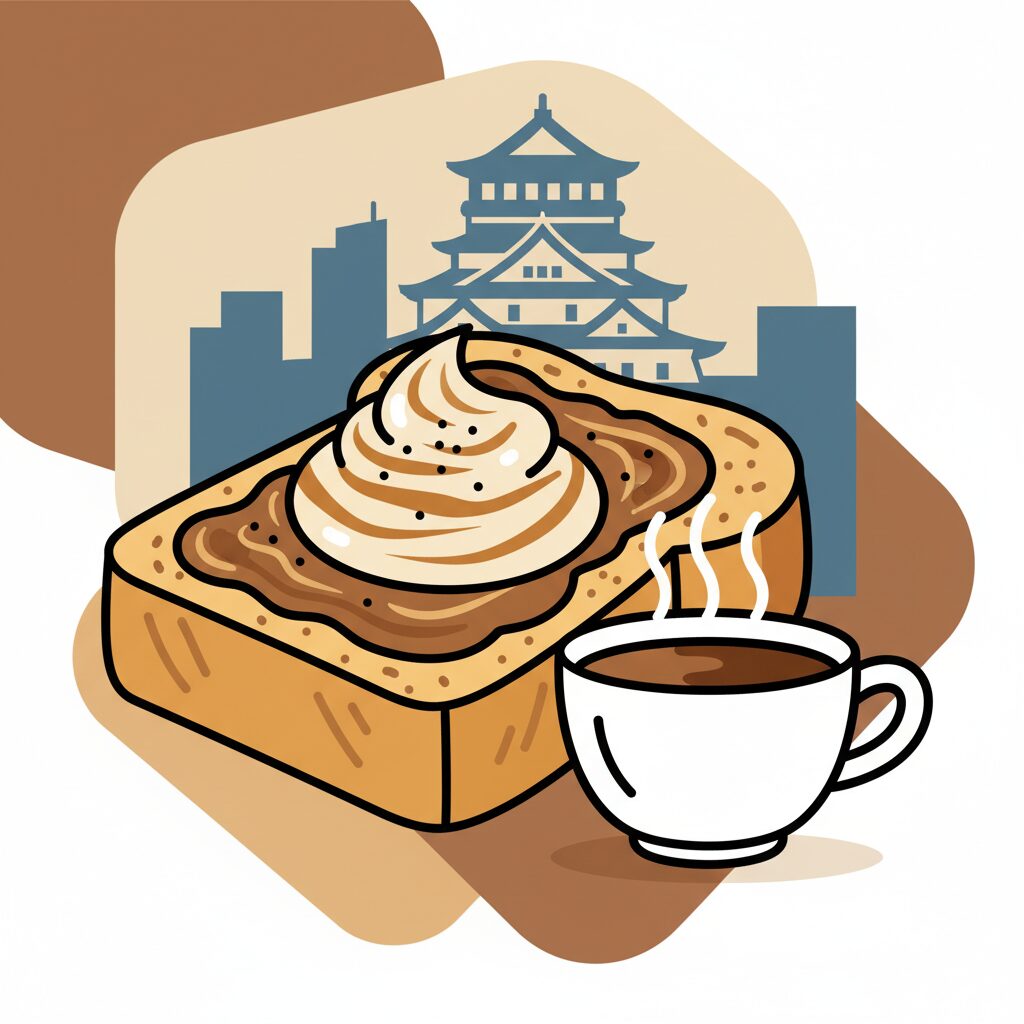
First, let’s clarify what we’re discussing. In most parts of the world, breakfast is simply a meal. But in an Osaka kissaten, it becomes a masterclass in economic theory. The idea of the “Morning Set,” or just “Morning” as it’s commonly known, is straightforward: for a limited time in the morning (usually until about 11 a.m.), if you order a cup of coffee, you receive a full breakfast for a small additional cost, or sometimes even free. The price for the entire set is often just slightly higher than that of a single cup of coffee, typically around 400 to 600 yen. For that, you get your coffee alongside the kissaten breakfast’s holy trinity: toast, egg, and a little extra.
This isn’t just any toast. We’re talking about shokupan, the incredibly fluffy, cloud-like Japanese milk bread, sliced into a gloriously thick piece, at least an inch and a half tall. This is no thin, sad slice of packaged bread. It’s substantial. Toasted to a perfect golden brown, with a crispy exterior that yields to a pillowy, steamy center. It comes pre-buttered, the melted butter soaking into every nook, creating a simple yet deeply comforting food. Sometimes you’ll have a choice of toppings—such as a packet of Ogura-an (sweet red bean paste) or a small dish of strawberry jam—but the classic remains plain butter—simple and perfect.
Next is the egg. The default is almost always a hard-boiled egg, or yude tamago. It arrives warm in its own small ceramic cup, waiting patiently for you to crack it open. There’s a meditative quality to peeling a warm egg while your coffee cools to just the right temperature. It’s a slow, intentional way to start the day. Some places may offer a small, perfectly cooked portion of scrambled eggs or a tiny fried egg, but the boiled egg is the icon of this tradition. It’s simple, packed with protein, and requires zero fuss from the kitchen.
Lastly, there’s the “plus one.” This varies by location and is a key part of the kissaten’s charm. Most often, it’s a tiny, almost symbolic salad: a few shreds of lettuce, a slice of cucumber, a sliver of tomato, all lightly dressed with sesame or wafu dressing. It’s just enough to give you a taste of vegetables. Other common additions include a small bowl of plain yogurt, sometimes paired with a dollop of fruit preserve, a single “Vienna” sausage, or a few slices of banana or orange. It’s never a large portion but completes the plate, transforming it from a snack into a balanced, albeit compact, meal. The coffee itself is usually a dark, robust roast, often brewed with a syphon—a beautiful, scientific-looking device of glass bulbs and flames that produces a uniquely smooth, low-acidity cup. It’s serious coffee for those who see the drink as fuel, not a fashion statement.
This whole combination embodies Osaka’s famed pragmatism. It’s not about gourmet ingredients or fancy presentation. It’s about delivering the greatest value and satisfaction for a reasonable price. It exemplifies the principle of kechi—often mistranslated as “stingy” but better understood as “frugal” or “value-conscious”—in delicious, edible form. Why would anyone in their right mind pay 500 yen for just a coffee at a chain when, for the same price, they can have coffee, thick toast, a boiled egg, and a salad, all while supporting a local business? To an Osakan, the choice is clear. It’s not just a great deal; it’s the right way to do things.
The Kissaten: More Than a Cafe, It’s the Neighborhood’s Living Room
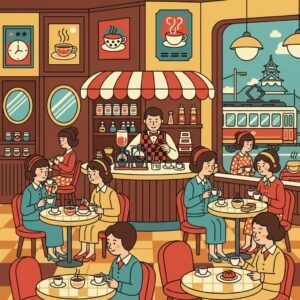
To confuse a kissaten with a simple coffee shop is to fundamentally miss its role within the city’s social fabric. A chain cafe functions as a transactional space: you order, pay, receive your product, and leave, or sit anonymously with your laptop. A kissaten, however, is a relational space. It acts as an extension of the neighborhood itself—a ‘third place’ distinct from home or work—where the community can relax and connect. The furniture is often vintage—plush velvet chairs in burgundy or forest green, dark wood-paneled walls, perhaps a stained-glass lamp here or a slightly kitschy painting there. This is not a drawback but a feature. The worn-in comfort signals the place’s history, its service to generations, and its steady presence in the local landscape.
The ‘Master’ and the Regulars: An Unspoken Understanding
At the center of every great kissaten is the ‘Master’ or ‘Mama-san’—the owner, often the sole operator or working alongside their spouse. This person is more than a barista or server; they are the stoic, observant, quietly caring core of this small world. They move with practiced economy, wiping the counter, brewing syphon coffee, and sliding plates of toast to regulars without a word exchanged. They know who takes sugar, who reads the Asahi Shimbun versus the Yomiuri, and who’s having a tough week simply by how they slump into their usual seat.
The customers, the jōren-san, complete the equation. They are the lifeblood of the kissaten. You find the elderly gentleman who’s visited every day at 8 a.m. for forty years, sitting at the same counter stool reading his paper cover to cover. Local shopkeepers from the nearby fish market or tofu shop pause to exchange gossip and market news over coffee. Salarymen in suits fuel up before heading to their offices in Umeda or Yodoyabashi, and groups of immaculately dressed older women gather for their weekly chats. They come not just for the coffee but for routine, familiarity, and low-stakes social interaction. The bond between Master and regulars is an unspoken contract: customers provide steady business to keep the lights on, while the Master offers a space of consistency and quiet recognition. It’s a place where you are known. In a sprawling, often anonymous metropolis, this sense of belonging is invaluable.
The Atmosphere: A Symphony of Sounds and Scents
The sensory experience of a morning kissaten sharply contrasts with that of a modern cafe. Sleek, minimalist coffee shops cultivate a culture of quiet productivity, dominated by the tapping of keyboards and the soft hiss of high-end espresso machines. These spaces are designed for focus and individual pursuits. An Osaka kissaten, by contrast, is a symphony of gentle, domestic chaos. The first thing that strikes you is the scent: a rich, comforting blend of dark-roast coffee, toasting bread, and, in many older establishments, the faint, lingering trace of tobacco smoke. It’s the aroma of a lived-in, authentic place.
The soundscape is a blend of ambient noises: a low hum of conversation punctuated by laughter; the clatter of ceramic cups and saucers; the rustle of turning newspaper pages; and the chime of the doorbell announcing arrivals. A television in the corner, tuned to morning news or a daytime variety show, offers a shared cultural touchstone. It’s not intrusive but part of the atmosphere, creating a sense of shared experience as the day begins collectively. This environment doesn’t demand your attention but envelops you. It’s a space where reading, chatting, or simply sitting and staring into the middle distance is perfectly natural as you gather your thoughts before the day unfolds. The silence isn’t awkward, nor is the noise intrusive—it simply is.
Osaka vs. Tokyo: The Kissaten Divide
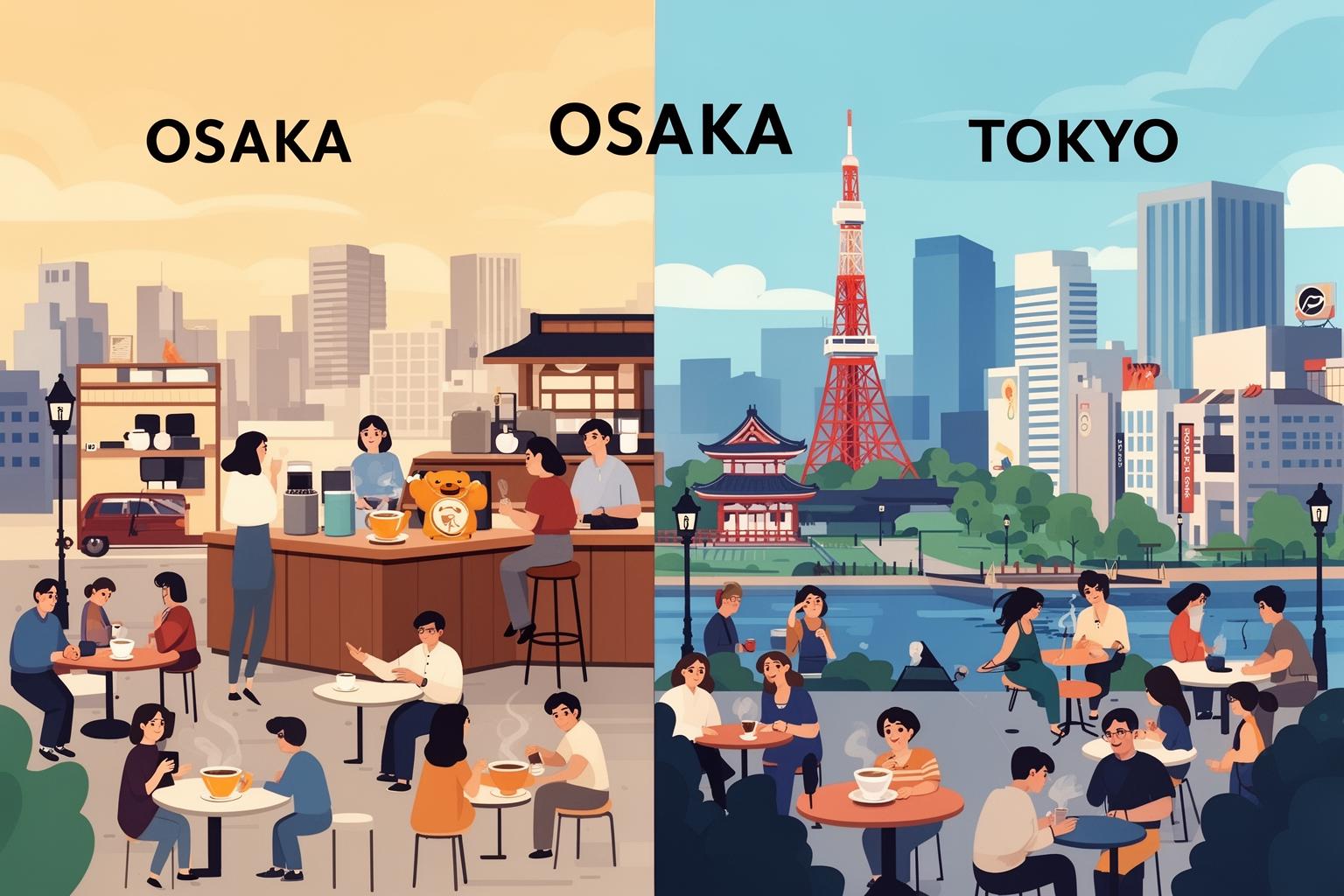
While Tokyo certainly boasts its share of historic and charming kissaten, the culture feels distinct, and the neighborhood-focused model is arguably more prevalent in Osaka. The contrast between the cafe scenes of the two cities highlights some fundamental differences in their urban characters. Tokyo is a city driven by relentless trends, where style and presentation frequently take precedence. Osaka, though it has its own fashionable areas, shows a stronger, more persistent preference for substance over style, and function over form.
Value Over Aesthetics
In Tokyo, you’ll encounter numerous elegantly designed, minimalist cafes crafted for the perfect Instagram photo. The coffee might be a single-origin pour-over costing 800 yen, and the avocado toast a piece of edible art. These places are destinations in their own right. Osaka’s kissaten culture primarily operates on a different set of priorities. The decor often takes a backseat, sometimes to the point of being an afterthought. The worn velvet chairs and Formica tables aren’t retro-chic design choices; they are the original furnishings. The value lies not in the visuals you can capture on your phone, but in the quality and quantity of what you receive on your plate for the price.
This is not to suggest that Osakans don’t appreciate beauty, but they harbor a strong cultural reluctance to pay for showiness. The morning set exemplifies this attitude. It is defiantly un-photogenic—just breakfast: a brown piece of toast, a white egg, a pale green salad. Yet it’s honest, filling, and an undeniably wise way to spend your money. This practicality is a fundamental aspect of Osaka’s identity. There’s a shared civic pride in discovering and celebrating a good deal. Talking to friends about a new kissaten where the morning set includes a complimentary mini-fruit jelly is far more common than discussing the latte art at a trendy new cafe.
Community Over Anonymity
This difference extends into the social atmosphere as well. In the vastness of Tokyo, a cafe often serves as a refuge for anonymity—a place to be alone in public, put in your earbuds, and create a personal bubble. The service is usually flawless, efficient, and impersonal. In Osaka, the kissaten serves the opposite purpose. It’s a tool for fostering and maintaining community. The service is not anonymous; the Master recognizes your face and probably knows your order. The space isn’t designed for isolation; the close quarters and ambient chatter foster a sense of shared experience.
This connects directly to the cliché that “Osaka people are friendly.” It’s not that strangers are constantly high-fiving you, but that social barriers are lower and expectations of interaction are slightly higher. The kissaten acts as a training ground for this mindset. You overhear conversations. You might receive a nod from the person next to you. The Master may ask where you’re from. It’s a space that is porous, not sealed off. It reflects a city that, despite its size, often functions socially like a much smaller town. People show genuine interest in one another, and the kissaten is one of the main venues where this interest unfolds in a casual, everyday setting.
Reading the Unwritten Rules of the Morning Ritual
For a foreigner, walking into a kissaten for the first time can feel like interrupting a family gathering. The menus are often handwritten in Japanese, the customs are unfamiliar, and all the regulars seem to follow a script you haven’t seen. Yet the rules are simpler than they seem, grounded in mutual respect and a shared understanding of the space’s purpose.
It’s a Ritual, Not Just a Transaction
The key thing to grasp is that the Morning Set is not fast food. Although the service is efficient, the experience is not meant to be hurried. This isn’t a quick grab-and-go deal. The price you pay covers not only your food and drink but also the use of your table for a reasonable time. You’re expected to sit down, read your book or newspaper, and savor your coffee. The whole point is to gently ease into the day, rather than rush through breakfast to get to something else. This is especially true for the older patrons, for whom this morning visit might be their main social event of the day. Pressuring them or creating a rushed atmosphere would go against the spirit of the place. The slow pace is intentional, serving as a calm contrast to the city’s hectic energy outside.
When you enter, a simple nod and a quiet “ohayo gozaimasu” to the Master is appropriate. Find a seat, and they will bring you a glass of water (omizu) and a small wet towel (oshibori). The key phrase is “Morning Set, kudasai.” If there are options (A, B, C), you can simply point. When you finish, you don’t linger for hours—especially if it’s busy—yet you’re not expected to clear your own table or rush out. Take your check (usually left on the table) to the register by the door, pay, offer a quiet “gochisosama deshita” (thank you for the meal), and leave. It’s a graceful, simple routine that feels natural after a few visits.
Finding Your Spot: How to Choose a Neighborhood Kissaten
The best kissaten rarely have flashy signs or English-language ads. The surest way to find an authentic spot is to wander through a residential neighborhood or local shotengai and look for the signs. Watch for a handwritten sign outside advertising a morning set at a price that seems almost too good to be true. Look for plastic food models in the window. Notice the bicycles of regulars parked casually out front. Seek out names that sound like they belong to another era, such as “Coffee Shop Pure” or “Salon de Thé L’Amour.”
Don’t be deterred by a dated interior or a stern-looking Master—these often signal authenticity. The worth of a kissaten lies in its longevity and its ability to keep loyal customers for decades. The gruff Master might reveal a heart of gold, recalling your order by your second visit. The absence of an English menu is an opportunity, not a barrier—it invites you to engage through the simple, universal language of pointing and smiling. The reward for your courage is not just an inexpensive and delicious breakfast but also a genuine glimpse into the soul of everyday Osaka, a city whose warmest and most fascinating corners are tucked just out of plain sight.
Why the Morning Set Endures in Modern Osaka
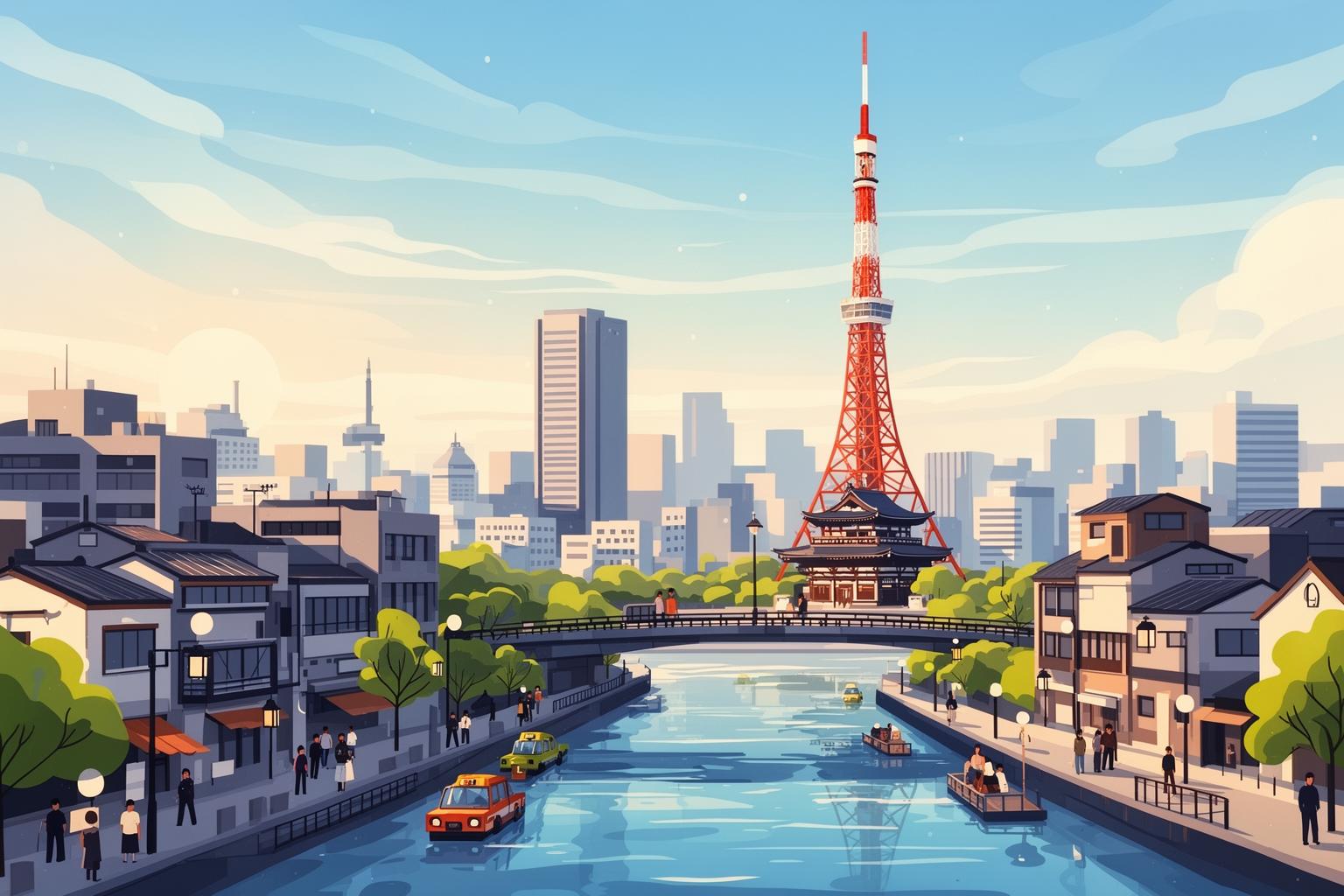
In an era dominated by global coffee chains, 24-hour convenience stores serving 100-yen coffee, and constantly shifting food trends, the traditional kissaten might be expected to vanish. Indeed, many have closed over the years as their owners retire. However, the culture of the Morning Set remains surprisingly resilient in Osaka. It persists because it provides what modern competitors cannot: genuine human connection, a strong sense of place, and unbeatable value.
For the city’s aging population, the local kissaten is more than just a café—it’s a lifeline. It offers a reason to leave the house, guaranteed social interaction, and a cornerstone of daily routine. It stands as a defense against loneliness. For younger generations and newcomers, the kissaten delivers something different: a taste of authenticity. In a world that feels increasingly uniform and sterile, the retro charm, simple food, and genuine community atmosphere of a kissaten are deeply appealing. It feels authentic in a way that a perfectly branded corporate café never can.
Ultimately, the Morning Set ritual perfectly symbolizes Osaka itself. It is practical rather than pretentious. It is warm and community-centered, not cold or impersonal. It’s a bit old-fashioned but proudly so. It values substance and good value over fleeting trends and superficial looks. It’s a daily affirmation of a culture that believes starting the day should not be a solitary, rushed task, but a shared, leisurely, and affordable moment of calm. It’s the quiet, beating heart of the city, served every morning on a small plate with a thick slice of toast and a perfectly boiled egg.