Welcome to Osaka, a city that moves to its own electrifying beat. Known for its dazzling neon, its knockout street food, and its warm, boisterous locals, Osaka pulses with an energy that’s utterly captivating. But beneath the futuristic gleam of its skyscrapers and the joyous chaos of its covered shopping arcades, there lies a quieter, more soulful rhythm. It’s a rhythm best experienced in the early hours of the day, before the city fully roars to life. This is the world of the kissaten, Japan’s traditional coffee houses, and their most cherished ritual: the ‘Morning Service,’ or as it’s known here, mōningu sābisu. This isn’t just breakfast; it’s a cultural institution, a warm embrace, and a window into the heart of old-world Osaka. It’s a beautifully simple, yet profound, transaction that defines the city’s spirit of generosity. You walk into a cozy, time-worn coffee shop, order a single cup of expertly brewed coffee, and with it comes a complimentary meal—often a thick slice of golden toast, a perfectly boiled egg, and perhaps a small salad. It’s a practice that speaks volumes about Osaka’s merchant soul, a city built on the principle of giving a little extra, of forging connections, and of starting the day with a gesture of goodwill. Forget the sterile, fast-paced efficiency of modern global coffee chains. The kissaten is an escape, a living museum, a sanctuary of calm where time seems to bend and slow. It’s where you’ll find salarymen quietly reading the morning paper, elderly couples sharing a moment of peace, and artists sketching in worn notebooks. To understand the morning service is to understand a fundamental piece of Osaka’s identity, a tradition steeped in history, community, and the simple, profound joy of a good cup of coffee. Join me as we push open the heavy wooden door, listen for the welcoming chime of a small bell, and step into the aromatic, comforting world of the Osaka kissaten.
If you’re considering making this vibrant city your home, understanding the local rhythm extends to finding the right place to live, which you can explore further in our guide to Osaka apartment life.
The Dawn of a Tradition: What is ‘Morning Service’?
At its core, the concept of ‘Morning Service’ exemplifies Japanese hospitality and savvy business acumen. The idea is refreshingly simple: during the early morning hours, generally from opening until about 11 a.m., ordering a beverage—usually coffee or tea—entitles you to a complimentary light breakfast. This offer seems almost too generous in today’s world, a charming holdover from an earlier era of customer care. However, reducing it to merely a ‘freebie’ overlooks its true significance. Morning Service is a cultural tradition, a deeply rooted ritual practiced for generations that transforms the act of drinking coffee into a communal and comforting way to start the day. It embodies omotenashi, the uniquely Japanese spirit of wholehearted hospitality, where guests’ needs are anticipated and met graciously without expecting anything in return. For the cost of a single coffee, you become more than a customer; you are a guest welcomed into a space meant for relaxation and comfort.
More Than Just Breakfast: The Concept Unpacked
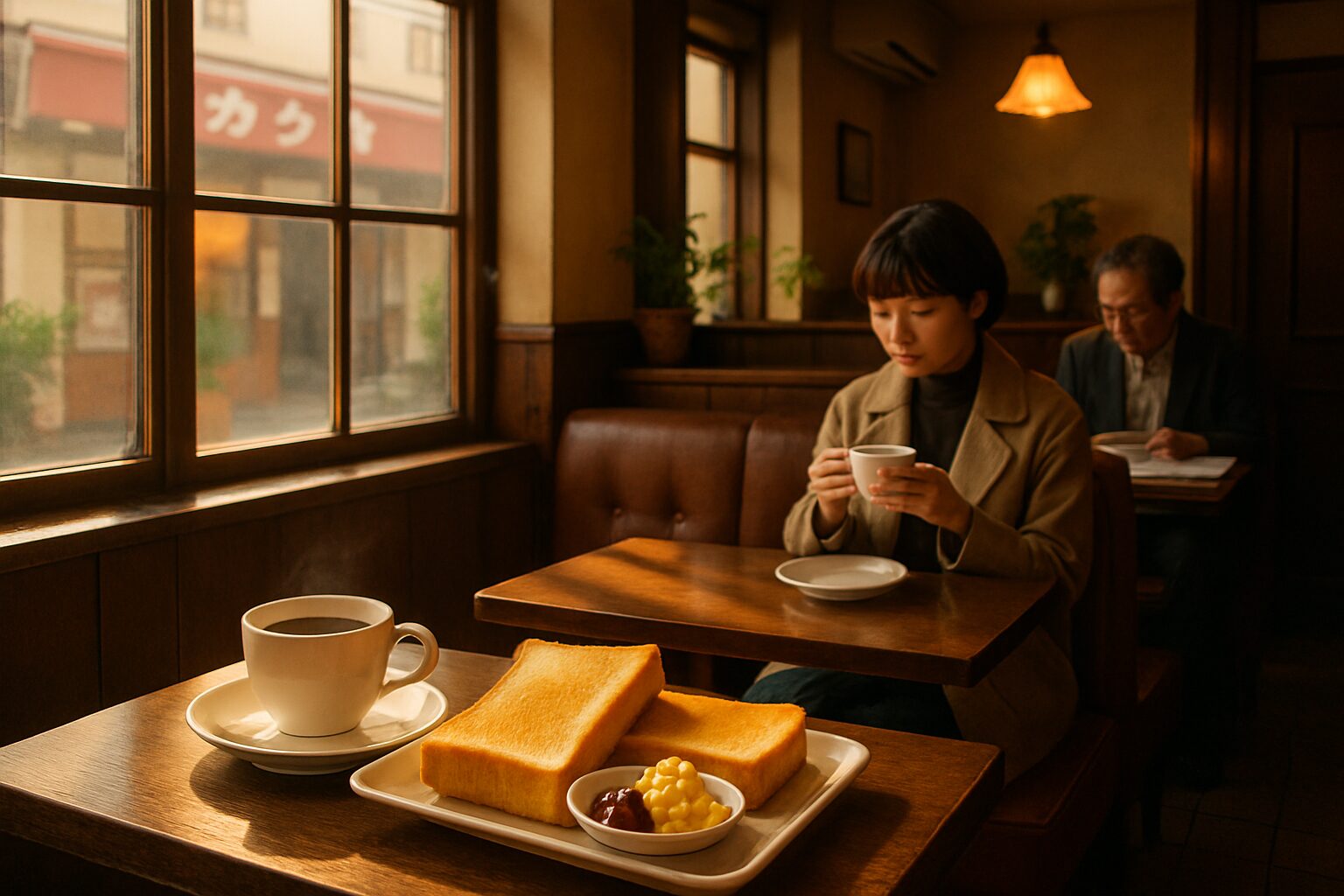
The classic Morning Set is a perfect example of satisfying simplicity. The centerpiece is nearly always the coffee. This is not the rushed espresso typical of modern cafes; instead, it is brewed with care, often using a siphon, flannel drip, or another traditional, meticulous method. The result is a cup rich in aroma and flavor. Accompanying this carefully prepared drink is the quintessential trio of morning service: toast, egg, and a small additional item. The toast itself is remarkable. Typically, it is a thick slice of shokupan, Japanese milk bread—sometimes an inch or more in thickness. Toasted to a golden-brown crust while remaining soft and fluffy inside, it’s served with a pat of butter that melts invitingly on the surface, and occasionally alongside a small dish of strawberry jam or Ogura-an (sweet red bean paste), a nod to its Nagoya roots. Next is the egg, commonly a yudetamago—a hard-boiled egg served warm in a tiny porcelain cup. The ritual of tapping and peeling it forms part of the meditative kissaten morning experience. In some places, the egg might be scrambled, fried, or folded into a creamy egg salad topping for the toast. To complete the set, you might receive a small bowl of crisp iceberg lettuce with sesame dressing, a pot of plain yogurt, a slice of melon, or even a single banana. This combination offers a balanced mix of protein, carbohydrates, and freshness—not a heavy meal, but a gentle, nourishing way to awaken the senses and prepare for the day ahead. It beautifully reflects the Japanese appreciation for achieving deep satisfaction through simple, well-executed elements.
A Glimpse into History: The Origins of Morning Service
Though Morning Service is now widespread across Japan, its roots lie in an intriguing chapter of post-war Japanese history. The most accepted origin story dates back to the mid-20th century in Ichinomiya, a city in Aichi Prefecture known for its textile industry. Local coffee shop owners observed that their morning patrons—mostly busy factory managers and salespeople—were conducting business meetings over coffee and snacking on peanuts. To enhance their customers’ experience and foster loyalty, the shop owners began offering a simple complimentary breakfast of toast and a boiled egg with every coffee ordered. The idea was an instant success. It combined appreciation with clever marketing, ensuring a steady flow of customers during the otherwise slow morning hours and building a loyal clientele. The concept soon spread to Nagoya, where it was embraced and elaborated on, becoming an important part of the city’s cultural identity. From there, Morning Service crossed the country, finding a particularly receptive audience in Osaka. The city’s celebrated merchant culture, known as akindo, which emphasizes service, value, and customer satisfaction, was the perfect environment to nurture the tradition. Osakan kissaten owners didn’t merely adopt Morning Service—they embraced it enthusiastically, competing to offer the most generous and delicious sets. It reflected the kuidaore (‘eat until you drop’) spirit, applied to hospitality. This historical context is key; it reveals why Morning Service is far more than a discount—it is a proud tradition, symbolizing a business owner’s dedication to their community and marking a connection to Japan’s remarkable post-war economic and cultural revival.
Stepping Back in Time: The Allure of the Kissaten
To truly appreciate the Morning Service, one must first fall in love with its setting: the kissaten. These traditional coffee houses stand in stark contrast to the bright, minimalist, and often impersonal cafes dominating the global coffee culture. A kissaten is more than just a spot for caffeine; it is a destination, a refuge, a carefully designed environment meant to transport you back in time. Opening the door—often a heavy, dark-wood one with a small brass bell announcing your arrival—is like stepping through a portal. You leave behind the bustling, modern street and enter a quiet, atmospheric space where the Showa Era (1926-1989) still feels alive. These venues prioritize comfort over style, permanence over trends, and quiet reflection over hurried productivity. They serve as the living rooms of their communities, keepers of memories, and steady anchors in a rapidly changing world.
The Atmosphere: A Symphony of Sights, Sounds, and Smells
The sensory experience of a classic kissaten envelops you immediately. Visually, the palette is warm and rich. Walls are often clad in dark, polished wood, sometimes mahogany or teak, which radiates a gentle glow under soft lighting. Seating is not plastic or metal but plush armchairs and banquettes upholstered in deep, velvety shades—burgundy, forest green, or royal blue—that have softened with years of use. Lighting is deliberately subdued, casting an intimate, cozy glow, often provided by ornate Tiffany-style stained-glass lamps hanging low over tables or elegant brass sconces on the walls. The air is rich with a comforting, complex aroma: freshly ground coffee beans, a faint and lingering sweetness of past tobacco smoke (though many are now smoke-free), and the subtle scent of aged wood and well-loved books. The soundtrack rarely involves pop music; instead, gentle classical pieces—a piano sonata or a lilting violin concerto—or the cool, sophisticated improvisations of classic jazz fill the space. These sound layers are punctuated by soft, rhythmic noises: the clinking of porcelain cups on saucers, the gentle rustle of newspaper pages turning, the hiss and gurgle of a siphon coffee maker at work, and the low, respectful murmur of conversation. This atmosphere invites you to relax, lower your voice, and slow your pace. It is a place intended not for a quick stop but for a tranquil, lingering visit.
A Cast of Characters: The Regulars and Their Stories
A kissaten is defined as much by its people as by its décor. At its center is the ‘Master,’ the owner-operator who is often a stoic, dignified figure—sometimes elderly—who has managed the establishment for decades. They move with efficient precision, polishing glasses, carefully brewing each cup of coffee, and greeting regulars with a knowing nod. The Master is the conductor of this quiet symphony and the keeper of the kissaten’s unique atmosphere. The patrons are equally essential to the fabric of the place. Over the rim of your coffee cup, you witness neighborhood life unfold. In one corner, an elderly gentleman with spectacles perched on his nose methodically works his way through the morning newspaper—a ritual likely performed in that very seat for years. At another table, two businessmen in crisp suits hold a quiet pre-work meeting, their voices low and serious. A university student nestles into a booth, textbooks piled on the table, seeking a peaceful place to study away from the distractions of the library. Then there are solo patrons who come for the gift of solitude—to read a novel, write in a journal, or simply watch the world go by. These are the jōren, the regulars, whose unspoken bond with the Master and the space itself gives the kissaten its soul. It functions as a classic ‘third place,’ a term by sociologist Ray Oldenburg describing essential community anchors that foster social interaction beyond home (the first place) and work (the second place), providing a neutral ground where people gather, socialize, and simply be.
The Osaka Flavor: How the City Makes Morning Its Own
While the concept of Morning Service is a cherished national tradition, Osaka, with its vibrant character and renowned passion for good food, has naturally developed its own unique and delicious twist on it. The city’s kuidaore culture demands both value and flavor, and its kissaten deliver generously. Morning sets here tend to be more abundant, inventive, and attuned to local tastes. An Osaka morning isn’t satisfied with mere basics; it strives to surprise and delight, offering that little extra touch that can turn a first-time visitor into a lifelong regular. This is where the city’s innovative and pragmatic spirit shines brightest, transforming a simple breakfast into an experience that is distinctively Osakan.
Beyond Toast and Egg: The Osaka-Style Morning Set
While the classic toast-and-egg combination is found throughout Osaka, many kissaten elevate it further. One of the most beloved regional variations includes the hotto sando (hot sandwich). This is far from an ordinary grilled cheese. Using the same soft, fluffy shokupan, these sandwiches are pressed in a special griddle until crisp and golden, encasing an array of delicious fillings. The standout is the tamago sando, a hot sandwich filled with a creamy, rich Japanese-style egg salad often made with Kewpie mayonnaise for its signature tang. Warm, comforting, and incredibly satisfying, it epitomizes the Osakan morning. Another iconic local addition to the morning menu is the city’s famous beverage creation: mikkusu jūsu (mix juice). This bright, smoothie-like drink blends bananas, oranges, peaches, milk, and a touch of syrup into a sweet and creamy concoction that evokes nostalgic Osaka childhood memories. Many kissaten offer it as a coffee or tea alternative in their morning sets, providing a refreshingly fruity start to the day. Osaka’s generosity also extends to more substantial offerings. It’s not uncommon to find morning sets featuring a small bowl of udon noodles in delicate dashi broth, a freshly made onigiri (rice ball), or even a mini portion of spaghetti Napolitan. The philosophy is simple: begin the day with a satisfied stomach and joyful heart, all for the price of a single drink. It’s this dedication to exceeding expectations that makes the Osaka morning experience so special.
Finding Your Morning Haven: Navigating Osaka’s Kissaten Scene
So, where can you discover these hidden treasures? Luckily, they are everywhere, often blending into their surroundings. The secret is to look beyond the main streets and glossy storefronts of global chains. Your best bet is to explore Osaka’s extensive shōtengai, or covered shopping arcades. These lively, bustling hubs are the heart of local neighborhoods, filled with traditional businesses, including numerous kissaten. Wander through Tenjinbashisuji Shotengai, Japan’s longest shopping arcade, or the atmospheric arcades branching from Shinsaibashi and Namba, and keep your eyes alert. Look for clues: a vintage, sometimes slightly weathered sign featuring a stylized coffee cup with steam rising; a display window showcasing charmingly unrealistic plastic food models (shokuhin sanpuru) of the morning set; or a simple, hand-written sign in Japanese that reads モーニングサービス. Some of the richest finds lie in neighborhoods famed for their retro appeal. Nakazakicho, with its maze of narrow alleys and beautifully preserved pre-war buildings, is a haven for quirky, independent kissaten. The slightly gritty, deeply nostalgic Shinsekai district, under the watchful eye of Tsutenkaku Tower, also hosts classic establishments seemingly untouched by time. Don’t hesitate to explore quiet side streets or climb narrow stairs to second-floor locations—these often house family-run spots serving the local community for generations, providing the most authentic and memorable morning service experiences.
A Practical Guide for the First-Timer
Entering a traditional kissaten for the first time can feel a bit intimidating, as it follows a set of unspoken rules and customs that differ from those of a modern cafe. However, there’s no need to worry; the experience is meant to be welcoming and relaxed. With a few simple tips, you’ll soon navigate the world of Morning Service like a local, ready to enjoy the unique atmosphere and savor your delicious breakfast. The key is to move slowly, observe with respect, and embrace the leisurely pace of this beloved ritual.
The Etiquette of the Kissaten Morning
First, there is no need to wait to be seated. Just walk in, and if there are open tables, you are free to choose your own seat. The Master may offer a quiet “Irasshaimase” (Welcome) from behind the counter. Pick a spot that appeals to you—a cozy booth, a small window table, or a seat at the counter where you can watch the coffee being made up close. Shortly after you sit, a staff member will bring you a glass of iced water (omizu) and a warm, damp towel called an oshibori. The oshibori is meant for wiping your hands, not your face, and is a refreshing gesture of hospitality. You will then receive a menu. To order, you can often simply say “Morning” or “Mōningu Setto,” and they will understand. If there are several options (such as A set, B set), just point to the one you want. An important etiquette point for visitors from many Western countries is smoking. Although Japan has become much more smoke-free recently, many old-school kissaten still allow smoking. They are often havens for smokers shut out of other public places. If you are sensitive to smoke, look for a non-smoking (kin’en) sign at the entrance or a separate non-smoking section (kin’en seki). When no sign is displayed, assume smoking is permitted. When you’re done, don’t wait for the bill to be brought to your table. Simply collect your belongings and approach the cash register (usually near the entrance), where the Master will total your bill. Cash is preferred in these establishments; while some accept cards, it’s best to have yen on hand for a smooth, easy transaction.
Decoding the Menu: Key Japanese Phrases
Although many kissaten in tourist areas may provide English menus, venturing off the beaten path often means encountering Japanese-only menus. Knowing a few key phrases will make your experience smoother and more enjoyable.
- モーニングサービス (mōningu sābisu): The magic phrase for Morning Service.
- コーヒー (kōhī): Coffee. They may ask if you want it hot or cold.
- ホット (hotto): Hot
- アイス (aisu): Iced
- 紅茶 (kōcha): Black tea.
- トースト (tōsuto): Toast.
- ゆで卵 (yudetamago): Boiled egg.
- サラダ (sarada): Salad.
- お会計をお願いします (okaikei o onegaishimasu): Check, please. (Used when you are at the register.)
- ごちそうさまでした (gochisōsama deshita): A polite phrase to say after finishing your meal, expressing thanks for the food. It’s a lovely gesture to say to the Master as you leave.
When to Go and What to Expect
Timing is key when it comes to Morning Service. As the name indicates, it is a morning-only offering. Hours vary between kissaten, but generally, it runs from the time the shop opens (sometimes as early as 7 a.m.) until around 11 a.m. Some may extend it to 11:30 a.m. or even noon, but it’s best not to wait too long. The most important expectation to set is regarding the pace. A kissaten is the opposite of a fast-food spot. The service is attentive yet unhurried. Coffee is brewed to order, which takes time. It’s not a place to visit if you’re in a hurry. The whole point is to slow down. Lingering after your meal is perfectly acceptable and even encouraged. Read your book, plan your day, or simply sit and soak in the ambiance. No one will rush you out. The price of your coffee has bought you not only a meal but a peaceful space to relax for a while.
Iconic Kissaten to Start Your Journey
While part of the joy in exploring Osaka’s kissaten culture lies in uncovering your own hidden treasures, there are several legendary establishments that serve as ideal starting points into this captivating world. These cafes have earned their fame through decades of mastery and have become cherished landmarks in their own right. Visiting one of these classics sets a standard for what defines a great kissaten, from the quality of the coffee to the richness of the atmosphere.
The Showa-Era Classic: Marufuku Coffee
To experience a true kissaten institution, head to Marufuku Coffee (丸福珈琲店). Established in 1934, Marufuku is a living piece of Osaka’s history. Its main location, nestled in the lively Sennichimae area near Namba, feels like a magnificent time capsule. The interior features a harmony of dark wood, stained glass, and antique fixtures, radiating a deep sense of history and elegance. Founder Riichi Ibuki created a unique, secret brewing method with a proprietary roaster, producing coffee that is famously rich, dark, intensely flavorful, and low in acidity. It’s a robust, classic cup of coffee that will definitely wake you up. Their Morning Service is a timeless offering, usually including their signature coffee paired with a perfectly toasted, buttered slice of bread. Marufuku is also celebrated for other menu items that might tempt you back—towering stacks of fluffy pancakes, firm custard pudding (purin) drenched in caramel, and delectable cheese toast, all legendary in their own right. Sitting in Marufuku isn’t just breakfast; it’s taking part in a tradition spanning nearly a century, savoring coffee in the same space where generations of Osakans have gathered.
The Siphon Specialist: Arabian Coffee
If you appreciate coffee as an art form, a visit to Arabian Coffee (アラビヤコーヒー) is essential. This small, beloved spot, located just by the Namba Grand Kagetsu Theater, has been a local favorite since 1951. The space is small and intimate, with most seating arranged along a long, polished wooden counter, offering a front-row view of the main attraction: the mesmerizing siphon coffee brewing. Watching the Master skillfully handle glass globes, open flames, and bubbling water is like witnessing a captivating performance. The siphon method yields an exceptionally clean, clear, and aromatic cup of coffee, and Arabian’s brew is sublime. Their Morning Service is simple yet satisfying: expertly crafted coffee, a thick slice of toast, and a boiled egg. Here, all embellishments fall away, placing full focus on the coffee’s quality. The atmosphere is cozy and welcoming—a quiet sanctuary from the bustling crowds of Namba just outside. It’s a haven for connoisseurs, a temple dedicated to the pure, unfiltered pleasure of a perfect cup.
The Neighborhood Gem: Exploring Beyond the Big Names
While the famous institutions are wonderful, the true soul of kissaten culture thrives in countless small, independent, family-run shops scattered throughout residential neighborhoods and shopping arcades. These unheralded spots may not feature in guidebooks but offer the most genuine and heartwarming experiences. Picture discovering a modestly named ‘Coffee House Fuji’ or ‘Kissaten Rondo.’ The sign is faded, the plastic food replicas in the window are worn, but a warm, yellow light spills out. You open the door to be greeted by an elderly couple who have run the shop for fifty years—the husband carefully preparing coffee behind the counter, his wife presenting the menu with a gentle smile. The other patrons are locals who greet each other by name. The morning set is simple but lovingly prepared—the toast perfectly browned, the egg warm, and the coffee smooth and comforting. Here, you feel less like a tourist and more like a temporary resident, partaking in the neighborhood’s daily rhythm. The best advice for any visitor to Osaka: get lost. Wander down an unfamiliar shotengai, explore quiet residential alleys, and when you spot an inviting kissaten, be bold and step inside. These spontaneous discoveries will become your most treasured memories of the city.
An Invitation to Slow Down
In a city as vibrant and fast-moving as Osaka, the kissaten and its morning service ritual provide a precious and increasingly uncommon gift: the permission to pause. It is more than just an affordable breakfast; it is a form of urban meditation, a deliberate act of stepping off the relentless treadmill of modern life, even if only for an hour. It serves as a gateway to a more thoughtful, intentional version of Japan, one that existed long before smartphones and bullet trains. Taking part in this tradition offers a way to connect with the city on a deeper, more human level. It’s about appreciating the quiet dignity of the Master, the comforting scent of freshly brewed coffee, the simple joy of a perfectly toasted slice of bread, and the shared, peaceful energy of a roomful of people beginning their day in quiet reflection. So, on your next morning in Osaka, resist the temptation to grab a quick pastry from a convenience store. Instead, look for the gentle glow of a kissaten sign. Push open the heavy door, settle into a plush velvet chair, and order the “Morning.” Put your phone away. Pick up the newspaper, even if you can’t read it. Watch the world outside the window. Listen to the soft jazz. Inhale. Exhale. This is Osaka’s soul, served warm on a small porcelain plate, waiting to welcome you.