In the heart of Osaka, a city that pulses with electric energy, famed for its neon-drenched nightlife and soul-stirring street food, lies a vast, quiet expanse of green. It’s a place that doesn’t shout for your attention. Instead, it whispers. This is the Naniwa-no-Miya Palace Site, a sprawling park where the ghosts of Japan’s very first unified capital sleep beneath the grass. Standing here, you’re not just in a park; you’re standing at a genesis point, the very location where Japan began to forge its identity as a nation on the world stage over 1,300 years ago. Long before Tokyo’s scramble crossings and Kyoto’s golden pavilions, this was the center of the universe for the Japanese empire. It’s a space of profound historical weight, yet it feels open, accessible, and deeply peaceful—a stark, beautiful contrast to the urban thrum that surrounds it. For the traveler seeking to understand the deep roots of this incredible country, a visit to Naniwa-no-Miya is not just a detour; it’s a journey back to the very beginning.
After contemplating the profound history of this ancient capital, you can continue your journey into Osaka’s rich cultural heritage by exploring the city’s traditional shojin ryori cuisine.
A Realm of Serene Emptiness: The Atmosphere of the Palace Grounds
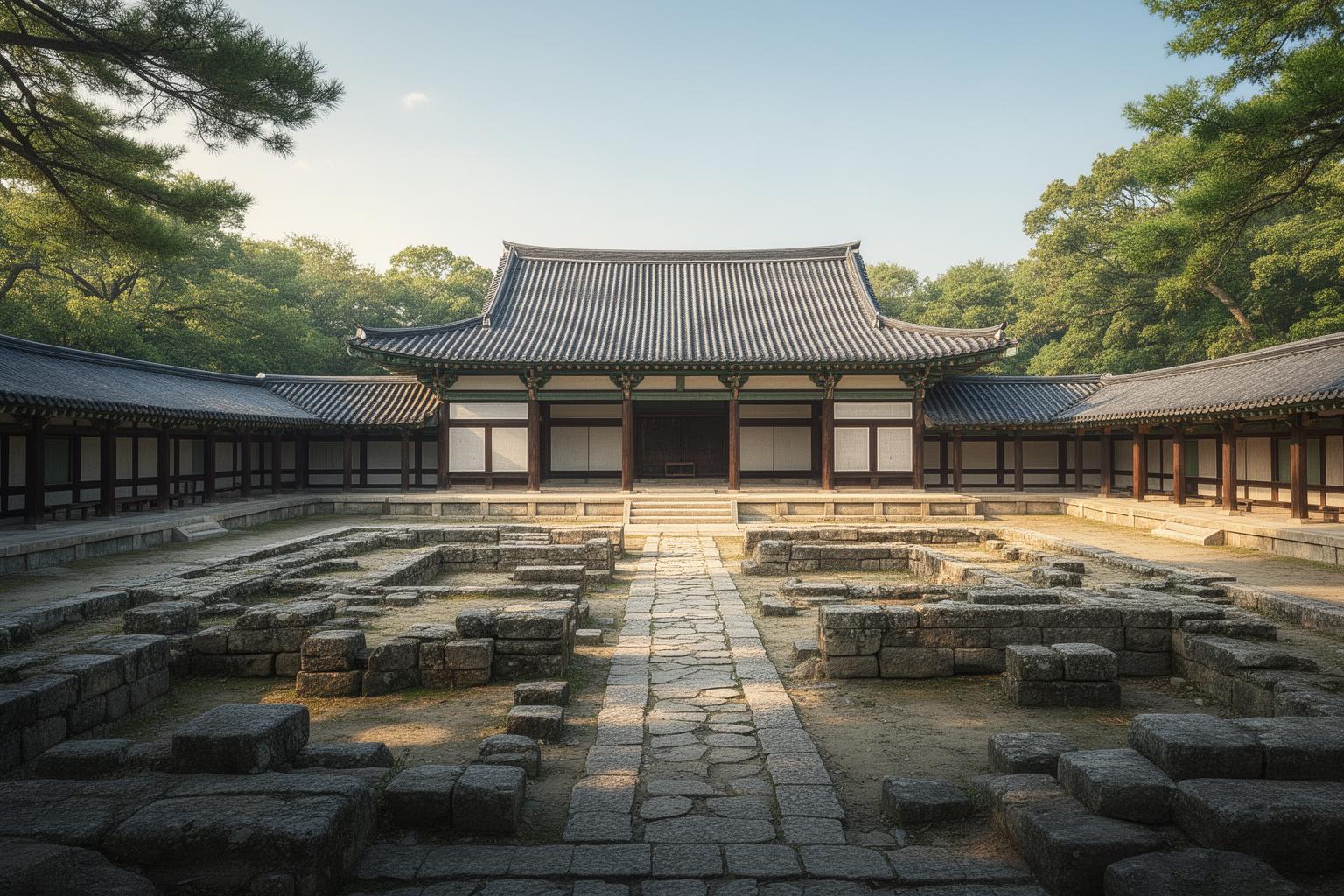
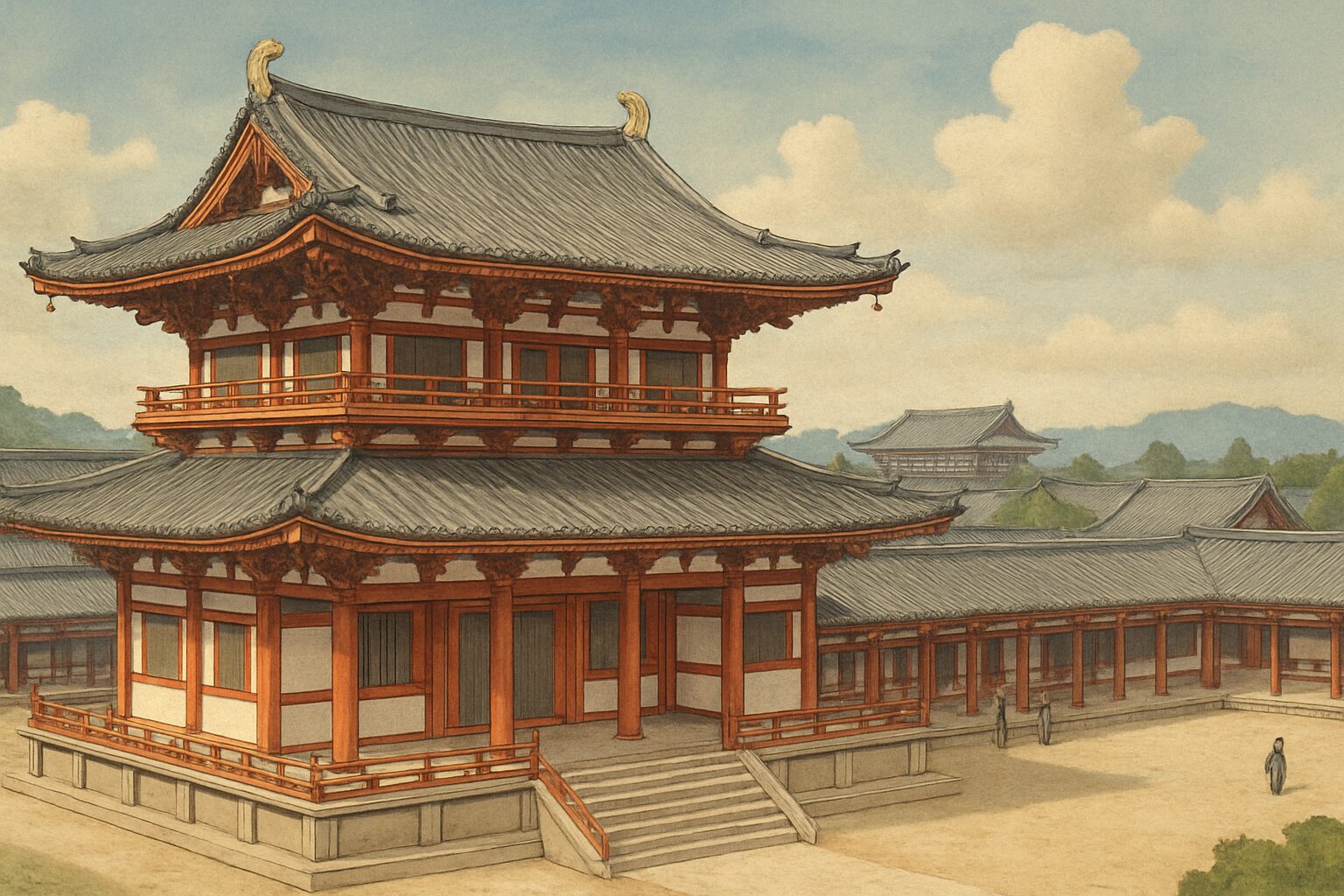
Stepping into the Naniwa-no-Miya Palace Site brings a dramatic shift in sensory experience. One moment, you find yourself navigating the dense, concrete avenues of Osaka, surrounded by the sound of traffic and the ringing of train crossings. The next, you are suddenly immersed in an almost startling sense of openness. The sky here feels vast and expansive. The main features are the well-maintained lawns, the broad gravel paths, and the carefully arranged stone platforms that mark where massive wooden buildings once stood. This landscape is defined by absence, and it is precisely this absence that gives it its power. Your imagination is invited to fill the gaps, to rebuild the sweeping tiled roofs, brightly colored pillars, and bustling courtyards of a long-past era.
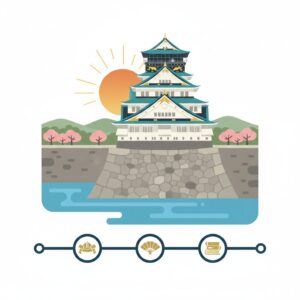
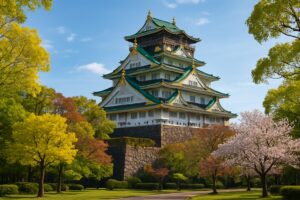
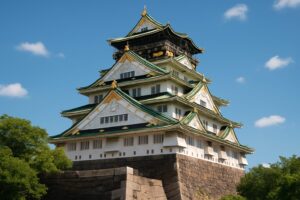
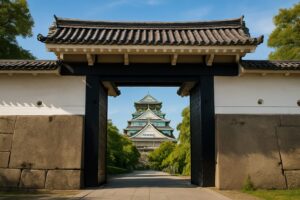
The air here is different—calmer. You’ll notice local residents walking their dogs, office workers enjoying a quiet lunch break on benches, and elderly couples strolling hand-in-hand around the perimeter. Occasionally, children’s laughter drifts in from a nearby school, a gentle reminder that life, in its wonderfully ordinary form, continues on this historic ground. The most striking feature is the ever-present, towering sight of Osaka Castle, its magnificent white and green keep visible just to the north. This contrast offers a visual delight for any history enthusiast—the ruins of Japan’s ancient capital in the foreground, with the symbol of its feudal, samurai-era power standing watch behind it. Framing it all is the sparkling skyline of modern Osaka, a testament to the city’s resilience and unyielding progress. It is a place where multiple timelines merge in a single view, a quiet field where centuries engage in conversation.
Unearthing the Imperial Court: A Deep Dive into History
The story of Naniwa-no-Miya is not a straightforward, singular tale; it is a complex narrative woven with ambition, political upheaval, and international exchange across two distinct eras. Understanding its significance means grasping a pivotal moment when Japan deliberately shaped its identity, looking outward to the great civilizations of continental Asia for inspiration while charting its own unique course. This area in Osaka served as the stage for that grand nation-building endeavor.
The First Palace: Emperor Kotoku and the Taika Reforms
The earlier palace, known as Naniwa Nagara-Toyosaki-no-Miya, was established in 645 by Emperor Kotoku. This was more than a mere court relocation; it was a revolutionary act. It represented a decisive break from the powerful Soga clan, which had dominated politics for decades, and stood at the heart of the Taika Reforms. These reforms were a comprehensive set of policies inspired by the sophisticated bureaucratic systems of Tang Dynasty China. Their aim was to centralize power under the emperor, create a nationalized land ownership system, and establish formal government institutions staffed by officials. Constructing a grand, permanent capital symbolized this newly centralized state. Previously, the capital frequently changed with each emperor’s reign. Naniwa was intended to be different— a fixed, splendid center of power and a symbol of a new era. For ten years, this palace served as Japan’s political heart, a place of major decrees and political strategy, before the capital was relocated back to the Asuka region after the emperor’s death.
The Second Coming: Emperor Shomu’s Grand Vision
A century later, in 726, the great Emperor Shomu—a devoted Buddhist who would later commission the Great Buddha of Todai-ji Temple in Nara—decided to re-establish the capital at Naniwa. By this time, the primary capital was Heijo-kyo (modern-day Nara), but Emperor Shomu recognized the strategic importance of Naniwa as a sub-capital, or ‘fukuto.’ The later Naniwa-no-Miya was constructed directly atop the ruins of the first, underscoring the site’s enduring significance. This second palace was even more magnificent, a stunning complex that served as the primary imperial residence for a period. From here, Emperor Shomu administered state affairs, received foreign dignitaries, and oversaw a flourishing of culture and religion. However, its tenure as the main capital was brief. Political intrigue and perhaps the difficulties of managing two major capitals led to the court’s full return to Nara in 745. Following this, Naniwa Palace was largely abandoned, and fires in the centuries that followed gradually erased it from view until it was ultimately forgotten, buried beneath the expanding city.
The Gateway to the World
Why was this particular spot in Osaka chosen twice? The answer lies in geography. Naniwa was located at the mouth of the Yodo River, opening into Osaka Bay and the Seto Inland Sea. This provided direct maritime access to the wider world, which in the 7th and 8th centuries meant the advanced Korean kingdoms of Silla and Baekje, as well as Tang China. Naniwa was Japan’s gateway. It served as the port of entry for diplomatic missions, known as ‘kentoshi’ (missions to Tang China) and ‘kenshiragi-shi’ (missions to Silla). These missions brought back not only trade goods but transformative ideas in philosophy, law, art, architecture, and technology. The layout of Naniwa Palace, symmetrical along a north-south axis, was a clear adoption of Chinese capital design. Standing there today, one can easily imagine foreign envoys arriving by ship, marveling at this grand, continental-style palace rising from the plains—Japan’s bold declaration of its emergence as a sophisticated, organized nation.
Rediscovery in the Modern Age
For over a thousand years, the exact site of Naniwa-no-Miya remained a mystery, preserved only in ancient texts such as the Nihon Shoki. It wasn’t until the 20th century that its location was uncovered—literally. In 1954, historian Tokujiro Yamane, through diligent research and inspired intuition, discovered a fragment of a decorated roof tile in the area. This single artifact became the key to unlocking the past. Subsequent archaeological excavations exposed the vast scale of the palace complex, revealing foundation stones, wall remnants, pottery, and wooden tablets that confirmed this as the lost capital’s site. The park that now stands is the result of decades of meticulous excavation and preservation, honoring the scholars who brought this crucial chapter of Japanese history back into the light.
What You See Today: A Blueprint of Power
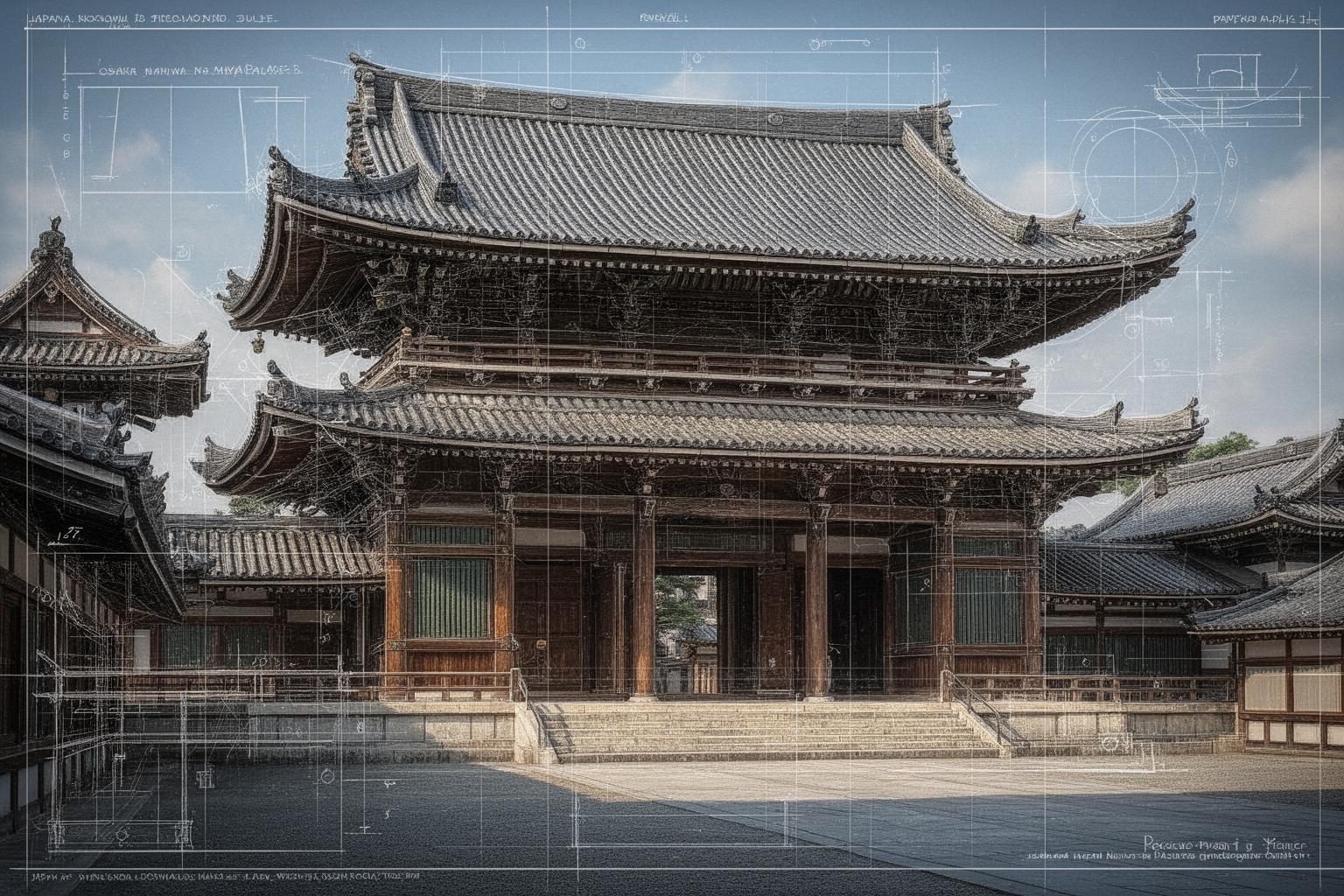
Although no original buildings remain, strolling through the Naniwa Palace Site is far from an empty experience. The park serves as a full-scale historical blueprint on the ground, allowing you to appreciate the immense size and grandeur of the imperial complex. Key structures are carefully outlined, providing a tangible sense of the palace’s layout.
The Daigokuden: The Throne Hall
The most striking feature is the elevated platform of the Daigokuden, or the Great Hall of State. This was the central core of both the palace and the nation. The platform, now a large concrete base with vivid vermilion-painted balustrades and restored column bases, marks the footprint of this vast building. This was the throne hall where the emperor presided over major state ceremonies, received New Year’s greetings from court officials, and issued imperial edicts. Stand at the platform’s center and close your eyes. Imagine the rustling silk robes, the quiet murmur of courtiers gathered, and the emperor, the ‘Son of Heaven,’ seated on the ‘Takamikura’ throne, surveying his realm. The scale is monumental, meant to inspire awe and affirm the emperor’s absolute power. From here, you have a commanding view looking south over the expansive courtyard toward the main gate, a vantage point designed to project imperial authority.
The Chodoin: The State Chambers
Extending south from the Daigokuden is the area once known as the Chodoin, a large rectangular courtyard bordered by lengthy halls. This was the administrative heart of the palace, where government ministries carried out their daily functions and where lower-ranking officials gathered for ceremonies. The park today marks these buildings’ foundation posts with cylindrical stone markers and red-painted wooden posts standing waist-high. Walking among them reveals the grid-like precision and vast scale of the complex. It feels like moving through a silent, skeletal forest of pillars, each a marker of spaces where history unfolded. This area, more than any other, conveys a sense of the court’s daily life—the thousands of officials, scribes, and servants who kept the machinery of the early Japanese state operating.
The Osaka Museum of History: Bringing the Palace to Life
A visit to the Naniwa Palace Site feels incomplete without stopping by its neighboring attraction, the Osaka Museum of History. This contemporary, architecturally striking museum is more than just adjacent to the park; it acts as an extension of it. From the upper floors, visitors are treated to a stunning panoramic view of the entire palace site, offering a god’s-eye perspective of the Daigokuden and Chodoin layout, perfectly framed by Osaka Castle in the background. Here, the park’s empty spaces are brought to life with rich, detailed context.
The museum experience begins on the 10th floor, dedicated entirely to the Nara Period and the Naniwa Palace. The highlight is an impressive full-scale partial reconstruction of the Daigokuden’s interior. Visitors can walk among towering vermilion-lacquered columns, admire the intricate, colorful patterns on the coffered ceiling, and observe mannequins dressed in authentic 8th-century court attire. This immersive exhibit powerfully transports visitors back in time, making the abstract ruins outside suddenly vivid and tangible. Artifacts excavated from the site are on display, including everyday pottery, inkstones used by scribes, and ‘mokkan’—thin wooden tablets that served as official records and messages, ancient equivalents of memos and shipping labels. Detailed dioramas further enhance the experience, vividly portraying scenes from capital life, ranging from grand court ceremonies to the lively markets that once thrived around the palace. The museum masterfully tells the story not only of emperors but also of the ordinary people who lived and worked in Japan’s first great city. As visitors descend through the museum’s floors, they journey forward in time, exploring Osaka’s evolution from a merchant city in the Edo period to its modern form, offering a comprehensive narrative of the city’s full history.
A Practical Guide for the Modern Explorer
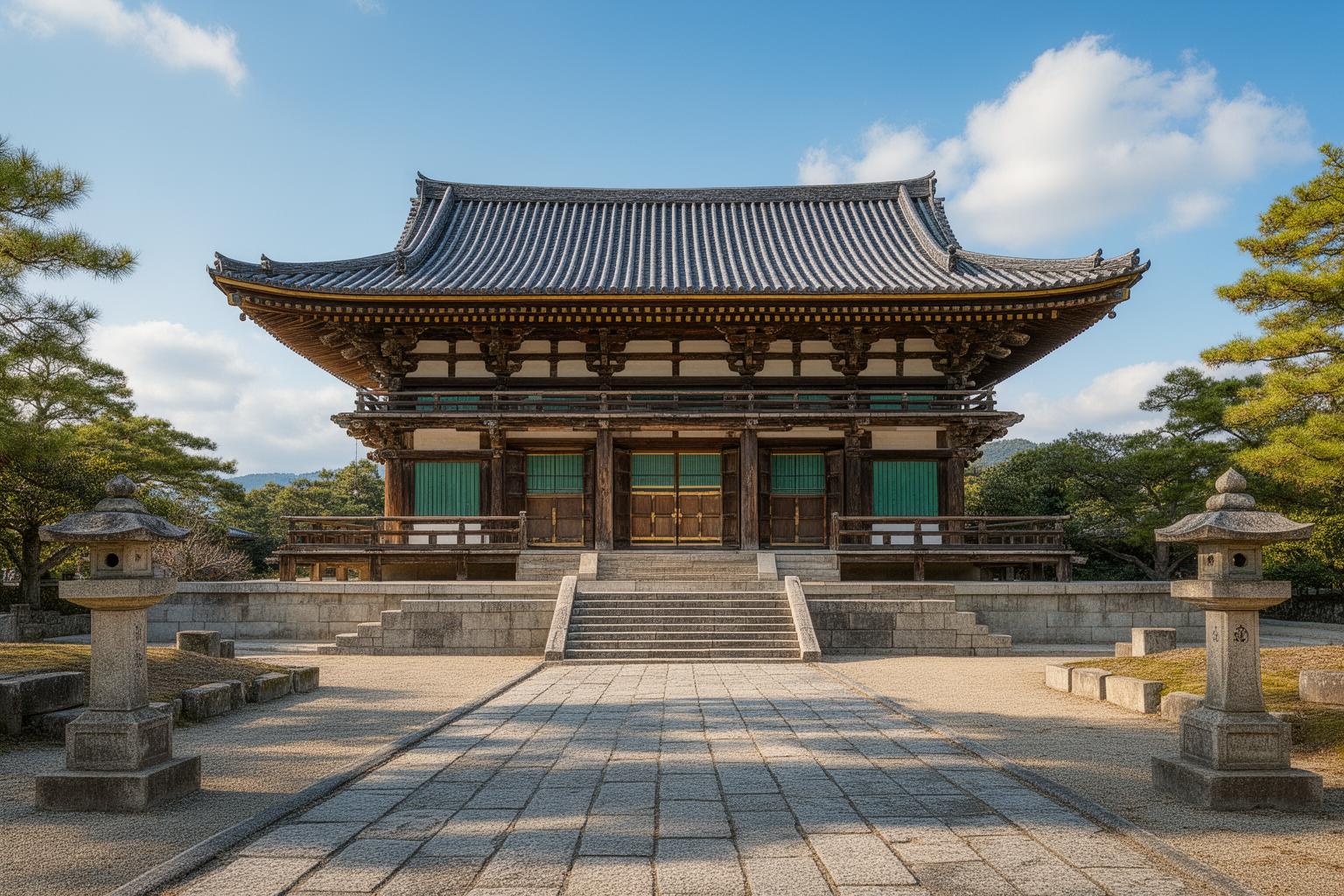
Exploring Japan’s ancient past is surprisingly effortless, thanks to Osaka’s top-notch public transportation. The site is just a brief walk from Tanimachi Yonchome Station, conveniently served by both the Tanimachi and Chuo subway lines. Use Exit 9 from the station, and you’ll find yourself almost at the entrance of the Osaka Museum of History, with the park extending just beyond it. The park is free to enter and open 24/7, making it a flexible and enjoyable addition to any itinerary.
Timing Your Visit
Though the park is open all year, certain seasons bring a special charm. In late March and early April, cherry blossom trees around the park burst into pale pink blooms, beautifully framing the historic scenery. It’s a popular spot for ‘hanami’ (flower viewing), where families picnic beneath the blossoms on grounds once walked by emperors—a touching mix of past and present. Autumn is another perfect time to visit, with crisp air, clear skies, and mild temperatures ideal for a relaxed stroll. Photographers will especially appreciate the ‘golden hour’ just before sunset, when warm, low light accentuates the red pillars and casts long shadows, creating a melancholic and photogenic setting. For a more peaceful experience, try an early morning visit when the city is waking, and the park is nearly empty.
Local Tips and Etiquette
- Wear comfortable walking shoes, as the park is vast and you’ll likely cover a lot of ground, especially if you also visit nearby Osaka Castle.
- Bring a bento or snacks for a picnic on the lawn. It’s a local favorite and a wonderful way to take in the surroundings. Convenience stores near the station offer plenty of options.
- Combine your visit with the Osaka Museum of History, which is essential for understanding the park’s historical context. Allocate at least 1.5 to 2 hours for the museum.
- Don’t forget your camera—the unique views of the ruins against Osaka Castle and the modern skyline make for exceptional photos.
An Echo in the Heart
A unique feeling washes over you as you stand on the platform of the Daigokuden—a profound sense of connection. As a Korean-American, being in that spot feels especially meaningful. This is where envoys from my ancestral homeland once stood, bringing culture, ideas, and diplomacy that would shape Japan’s future. It was a convergence point, a place of meeting and exchange, and that spirit of international connection seems embedded in the very soil. This quiet field serves as a powerful reminder that Osaka has always been an outward-looking, international city, a tradition that continues today in its welcoming, vibrant character. It humbles you, making you aware of the immense weight and flow of history—the rise and fall of capitals—and the enduring resilience of a place and its people.
More Than Ruins: The Birthplace of a Nation’s Story
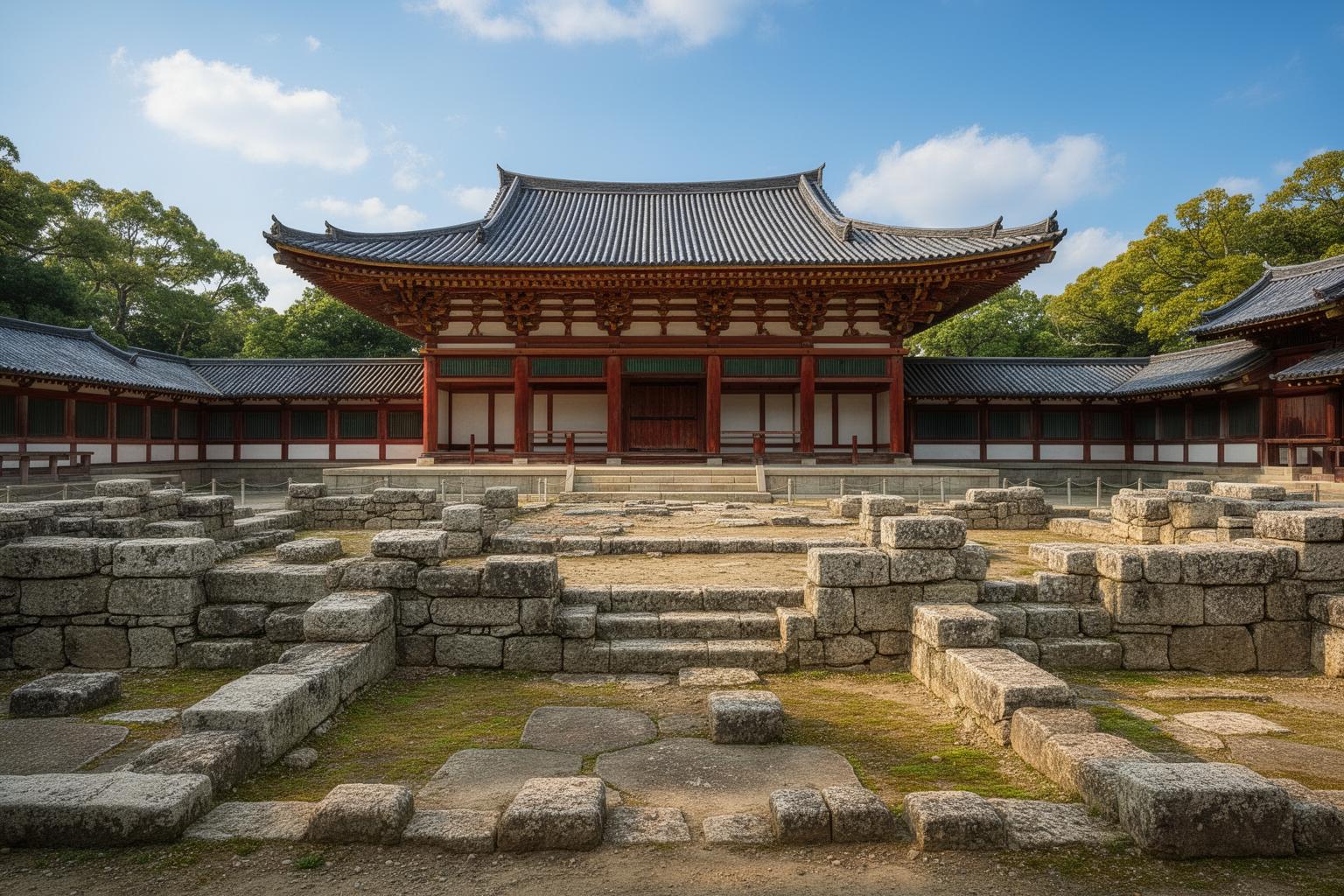
In a city teeming with high-energy attractions, the Naniwa-no-Miya Palace Site offers something unique. It offers perspective. More than just an archaeological site, it is the birthplace of Japan’s centralized government, the setting for its earliest grand diplomatic dramas, and a testament to an era of limitless ambition. It provides the deep historical bassline to Osaka’s vibrant tune. To visit is to realize that beneath the sparkling surface of modern Japan lies a foundation grounded in ancient dreams of empire and enlightenment. So when you come to Osaka, by all means, enjoy the takoyaki, explore the dazzling chaos of Dotonbori, but also take a few hours to stroll through this tranquil field. Listen carefully, and you may just catch the whispers of an empire at its dawn, carried on the breeze.