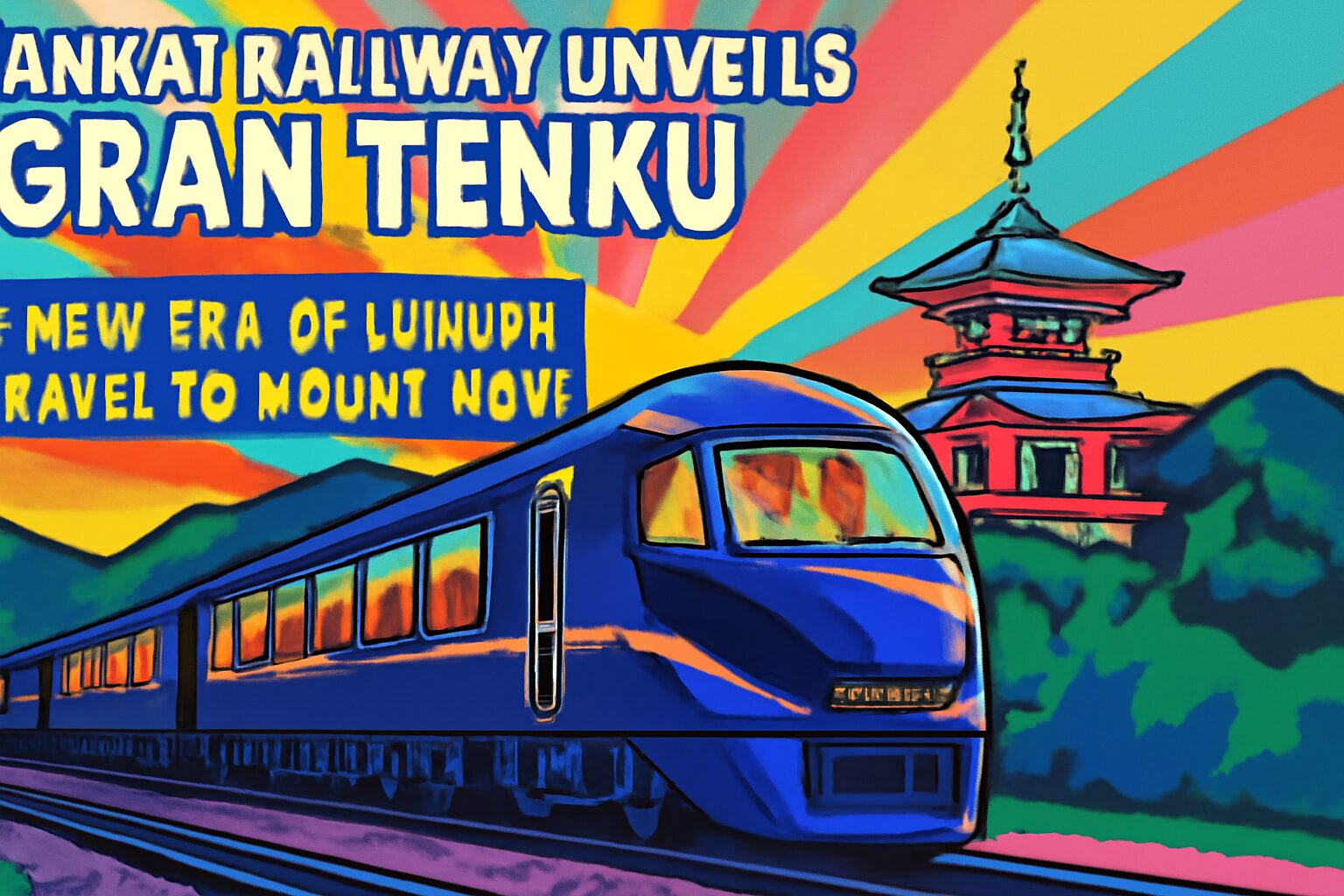
Nankai Electric Railway has officially announced the launch of its new flagship luxury sightseeing train, ‘GRAN Tenku,’ set to begin service on April 24, 2026. This premium train will offer a direct route from the heart of Osaka at Namba Station to Gokurakubashi Station, the final stop before ascending to the sacred Mount Koya. The introduction of ‘GRAN Tenku’ is a strategic move to elevate the travel experience to the UNESCO World Heritage site, catering to a growing demand for high-end tourism from both international and domestic visitors.
The Growing Demand for Premium Travel to Mount Koya
A Spiritual Destination on the Global Stage
Mount Koya, or Koyasan, is one of Japan’s most revered and mystical locations. As the headquarters of Shingon Buddhism, it attracts hundreds of thousands of pilgrims and tourists annually. In the post-pandemic travel boom, Mount Koya has seen a significant resurgence in popularity, particularly among international visitors seeking authentic cultural and spiritual experiences like temple stays (shukubo). Before the pandemic, in 2019, Wakayama Prefecture welcomed nearly 400,000 foreign overnight guests, a large portion of whom visited Koyasan. With Japan’s tourism numbers rapidly recovering and exceeding 3 million monthly visitors in early 2024, the demand for quality access to such key destinations is higher than ever.
Bridging a Crucial Gap in a Key Tourist Route
While Nankai Railway already operates the scenic ‘Tenku’ train and the limited express ‘Koya,’ there has been a noticeable gap in the market for a truly luxurious, seamless travel option. Affluent travelers, who often prioritize comfort, exclusivity, and experience over cost, have lacked a transportation choice that matches the premium quality of high-end ryokans and temple lodgings available on the mountain. ‘GRAN Tenku’ is designed specifically to fill this void, transforming the 90-minute journey from a simple commute into an integral part of the luxury Koyasan experience.
What to Expect from ‘GRAN Tenku’
A Journey Defined by Luxury and Scenery
While specific details of the train’s interior and services are yet to be fully unveiled, the name ‘GRAN Tenku’ (combining ‘grand’ and ‘sky’) suggests an experience focused on expansive views and exceptional comfort. Travelers can anticipate spacious seating, large panoramic windows to enjoy the dramatic mountain scenery as the train climbs from 52 meters to 535 meters above sea level, and premium onboard services. It is expected to feature locally-sourced refreshments and cuisine, along with dedicated attendants to provide a level of hospitality akin to a five-star hotel. This focus on a high-quality, curated experience aims to make the journey itself a memorable highlight.
Projected Impact on Kansai’s Tourism Landscape
Elevating the Region’s Tourism Profile
The launch of ‘GRAN Tenku’ is poised to have a significant ripple effect on tourism in the Kansai region. By providing a high-value travel option, Nankai Railway is not only attracting a wealthier demographic but also encouraging longer stays and higher spending in the area. This aligns perfectly with the Japanese government’s strategy to shift from mass tourism to more sustainable, high-value tourism. Following the 2025 Osaka-Kansai Expo, initiatives like ‘GRAN Tenku’ will be crucial in maintaining global interest and positioning Osaka as a gateway to diverse and premium experiences throughout the region.
Setting a New Benchmark for Regional Railways
The introduction of ‘GRAN Tenku’ will likely inspire other railway operators in the Kansai area, which is already home to popular sightseeing trains like Kintetsu’s ‘Shimakaze’ and ‘Awoiyoshi.’ This new luxury service to a world-renowned spiritual site sets a new benchmark, potentially sparking further investment in premium rail travel that connects major cities to regional attractions. For travelers, this means more choices and an overall enhancement of the quality and diversity of tourism products available in Western Japan.
Ultimately, the ‘GRAN Tenku’ is more than just a new train. It represents a sophisticated evolution in how visitors will access one of Japan’s most sacred places, promising a journey as profound and memorable as the destination itself.