
Walk down any covered shotengai shopping arcade in Osaka, from Tenjinbashisuji to a tiny, nameless lane tucked away in Nishinari, and you’ll feel it. It’s a current of energy, a buzz that’s distinctly different from the polite hum of Tokyo. It’s louder, a little faster, and a lot more personal. At the center of this energetic vortex, you will almost certainly find her: the Osaka ‘Okan’. You might see her before you hear her—a flash of leopard print, a glint of gold sandals, a cloud of perfectly coiffed, permed hair. Or you might hear her first—a hearty, booming laugh that cuts through the market chatter, or a sharp, direct negotiation with the local vegetable seller over the price of daikon radishes. She might catch your eye, notice you’re looking a little lost, and before you know it, she’s pressed a small, hard candy into your palm with a gruff but warm, “Ame-chan, tabe.” Eat this candy.
For many foreigners living in Osaka, the Okan is one of the first and most memorable cultural encounters. She is the stereotype of the middle-aged Osakan woman, often portrayed in Japanese media as a brash, nosy, and comically frugal figure. But to dismiss her as a mere caricature is to miss the point entirely. The Okan is not just a person; she is a powerful social institution. She is the unofficial mayor of her block, the guardian of neighborhood etiquette, the engine of the local economy, and the weaver of the intricate social fabric that makes Osaka feel so fundamentally different from any other city in Japan. To truly understand what it means to live here, to grasp the city’s rhythm and its soul, you have to look past the animal print and understand the profound influence of the Okan. She is the key to decoding the city’s unwritten rules and appreciating the beautiful, chaotic, and deeply human heart of everyday Osaka life.
Intrigued by how local bargaining mirrors Osaka’s vibrant spirit, you might also explore Osaka rent negotiation tips to gain further insights into the city’s distinct everyday commerce.
Decoding the Okan: More Than Just a Mom
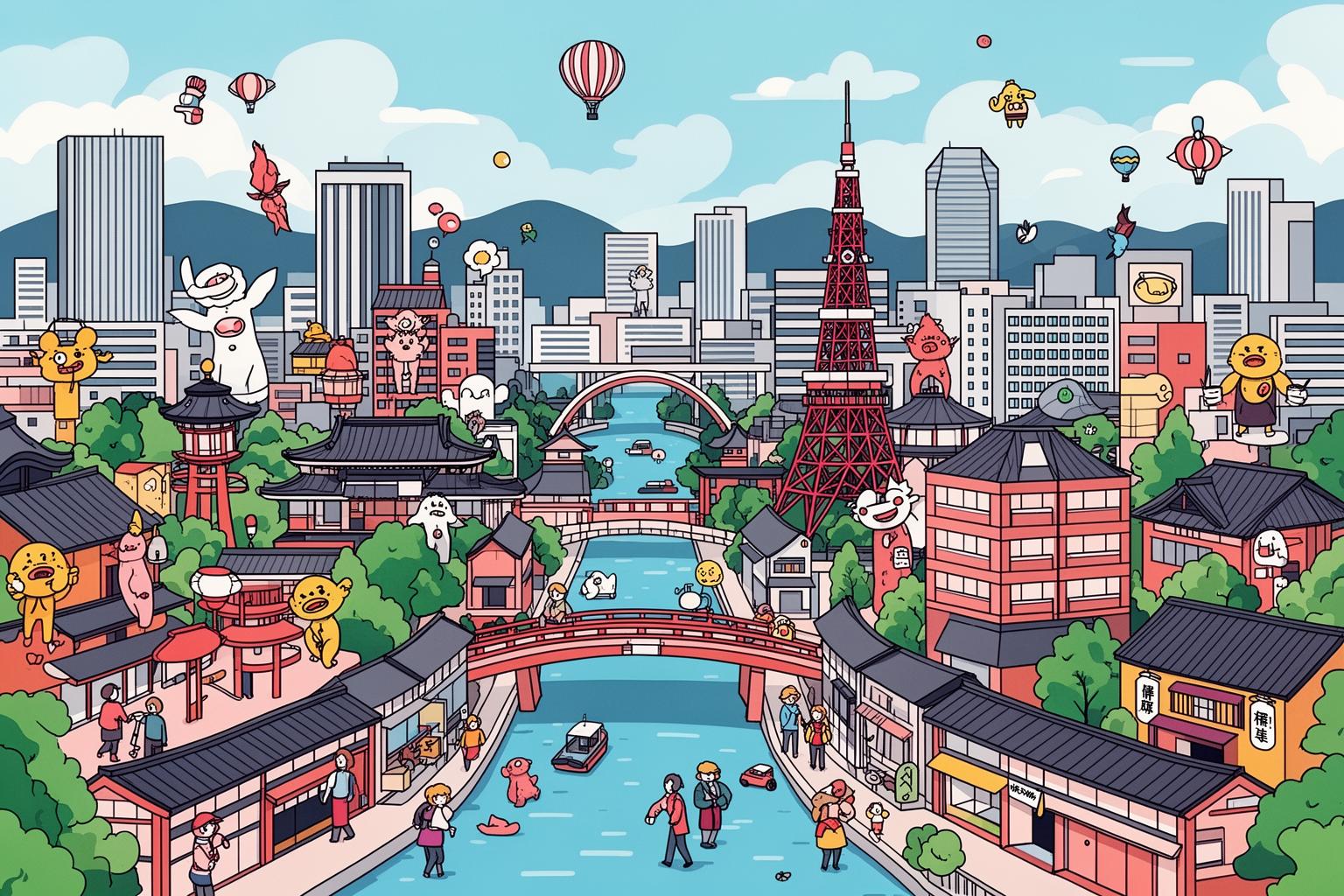
The word ‘Okan’ (おかん) is the Kansai dialect term for ‘mother.’ While technically every mother is an ‘okan,’ the term has come to represent a distinct social archetype. She is usually middle-aged or older, experienced in raising children and managing a household on a tight budget. Yet, her influence stretches well beyond her own doorstep. She embodies a practical, no-nonsense attitude toward life, shaped by years of navigating the dense, competitive, and community-focused environment of Osaka.
The Visual Language of the Okan
First, let’s confront the stereotype directly: the fashion. The leopard print, the bold purples and reds, the chunky jewelry. In fashion-conscious Tokyo, where blending in is often preferred, the Okan’s style stands out—bold and unapologetic. But this isn’t about poor taste; it’s a declaration of presence. Her look is a form of communication, signaling confidence, a refusal to be overlooked, and a certain playful assertiveness. It says, ‘I am here, I have earned my place, and I’m not afraid to take up space.’ The practical ‘panchi pāma’ (punch perm) hairstyle is more than a retro statement; it’s low-maintenance and holds its shape, reflecting the Okan’s prioritization of function over fleeting fashion trends. Her entire ensemble is an assertion of identity, projecting someone who is comfortable in her own skin and deeply connected to her community. She isn’t dressing for an anonymous crowd on the Yamanote Line; she’s dressing for her world—the shotengai—where every shopkeeper is a familiar face.
The Sound of Osaka: Language and Laughter
If the Okan’s appearance is her banner, her voice is her instrument. The Kansai dialect she uses is quicker, more melodic, and far more direct than the standard Japanese spoken in Tokyo. It lacks the delicate, unspoken nuances of ‘tatemae’ (public facade) and ‘honne’ (true feelings). An Okan will tell you exactly what she thinks, for better or worse. This bluntness can be startling for newcomers, Japanese or foreign, accustomed to more circuitous communication. While a Tokyoite might subtly hint that your garbage is sorted incorrectly, an Osaka Okan will come over, point directly at the offending plastic bottle in the burnable trash pile, and deliver a loud, detailed, and unavoidable lecture on municipal recycling rules.
Her volume is also crucial to her social role. It doesn’t stem from anger but from a desire to connect. In the noisy, bustling market or crowded street, her strong voice carries above the clamor to greet a neighbor, scold a grandchild, or haggle with a vendor. Her booming laughter is more than an expression of happiness; it’s an invitation. It creates a warm, shared space amid the urban bustle, drawing people into her orbit. This auditory presence plays a fundamental role in making Osaka’s public spaces feel more lively and less anonymous than those in Tokyo.
The Unseen Network: How Okan Weave the Social Fabric
The true strength of the Okan resides not in her looks or voice, but in her function as a central hub within a powerful, informal social network. She embodies the human equivalent of a community bulletin board, neighborhood watch captain, and social services director all combined into one formidable figure.
The Neighborhood’s Eyes and Ears
In an Okan’s community, very little escapes notice. She knows who is expecting a baby, whose son recently failed his university entrance exams, and which elderly neighbor hasn’t picked up their newspaper in days. This might come across as intrusive gossip, and to those used to urban anonymity, it can indeed feel that way. However, within Osaka’s community-focused culture, this represents a crucial, low-tech system of security and social welfare—a network of mutual vigilance born out of genuine care. If a stranger is spotted lingering nearby, an Okan will likely be the first to notice and may even be the first to approach them and ask their business. This constant vigilance fosters a real sense of safety and accountability that neither fences nor security cameras can replicate. It creates an atmosphere where people naturally look out for one another, knowing they are also being watched over.
The ‘Ame-chan’ Philosophy: Small Gestures, Big Connections
The Okan’s act of handing out ‘ame-chan’ (candy) is one of the most quintessential Osaka interactions. While it may seem like a simple, spontaneous kindness, it serves as a sophisticated social tool. The ‘ame-chan’ functions as an icebreaker, conversation starter, and a small social contract all at once. It communicates, “I see you. We share this space.” It’s offered to calm a crying child on the train, thank a bus driver, or strike up a conversation with a foreigner struggling with a ticket machine. Accepting the candy means entering into a brief social bond—a gateway to a friendly, momentary connection that dissolves barriers between strangers. This culture of small, frequent, low-key interactions is a key reason why Osaka is often called ‘friendly.’ It’s not an abstract trait; it’s a practiced daily ritual, with the Okan as its revered figurehead.
Masters of the Bargain: The Economic Engine of the ‘Shotengai’
Observe an Okan at a local market. Her exchange with the vendor is rarely a mere transaction; it’s a performance—a negotiation, a dance. The famed Osakan reputation for being ‘kechi’ (stingy or frugal) is often misunderstood. For the Okan, securing a good deal isn’t just about saving a few yen; it’s about the principle of value and nurturing the relationship with the seller. Her request, “Chotto make-te” (“Give me a little discount”), serves as an opening gambit, sparking a back-and-forth that reinforces their long-standing rapport. The vendor may grumble good-naturedly but will often reduce the price slightly or toss in an extra spring onion (omake). This daily ritual does more than save money—it keeps local shopkeepers alert, ensures prices stay competitive, and sustains a personal, human-scale economy that’s becoming increasingly rare. In Tokyo’s sterile, fixed-price supermarkets and department stores, this dynamic is mostly absent. In Osaka, it’s the lifeblood of the neighborhood shotengai, and the Okan is the heart pumping that lifeblood.
Navigating the Okan Encounter: A Guide for Newcomers

For someone new to Osaka, encountering a full-force Okan can be an intense experience. Her directness may come across as criticism, and her curiosity might feel like an invasion of privacy. Grasping the cultural context is essential to appreciating these interactions for what they typically are: expressions of communal care.
When Nosiness is Kindness in Disguise
You’ll be asked personal questions like “Where are you from?” “Are you married?” or “Why are you buying instant ramen? You’re too thin; you should eat real food!” In a Western setting, or even in Tokyo, such questions from a stranger would be considered rude. In Osaka, however, this is an Okan’s way of vetting you and welcoming you into the community. She isn’t judging you so much as assessing your situation to determine if you need assistance. She operates from a worldview where being connected and cared for is the norm, and being left alone is a sign something’s wrong. The right response is not to take offense, but to engage. A simple, friendly reply will satisfy her curiosity and show that you’re part of the neighborhood. In her own way, she’s checking to see if you’re okay. Being bothered by an Okan means you’re on her radar, which in Osaka, is a very good place to be.
The Art of Receiving Feedback (Whether You Asked for It or Not)
An Okan will offer unsolicited advice on nearly any topic. She might critique your choice of produce at the market, tell you you’re not dressed warmly enough, or demonstrate how to properly collapse your umbrella before entering a store. The key is to understand that this isn’t meant as a personal attack. It stems from a deep sense of practicality and collective responsibility. She believes there’s a right, efficient, and common-sense way to do things and is simply sharing this essential knowledge with you, the newcomer. Reacting defensively will only cause tension. The most effective approach is to smile, nod, and say “Ookini” (thank you in Kansai dialect). You don’t have to follow her advice, but acknowledging her gesture shows respect for her role as a guardian of local wisdom. By doing so, you participate in a tradition of knowledge-sharing that has bound Osaka’s communities for generations.
The Okan’s Legacy: Why This Culture Endures
In an era marked by growing urbanization, social isolation, and digital disconnection, the role of the Okan may appear outdated. Yet, her function is arguably more vital than ever. She acts as the social adhesive that keeps neighborhoods from fragmenting into mere collections of strangers. The community she nurtures serves as a strong defense against the loneliness afflicting so many modern cities. Her constant, watchful presence ensures that the vulnerable—the elderly, the young, the newcomers—are never overlooked.
Although younger generations of Osakan women might not adopt the traditional leopard-print-and-perm look, the essence of the Okan endures. It resides in the straightforward communication style, the proud local spirit, and the deep understanding that a city is comprised not just of concrete and steel, but of human connections. The Okan culture functions as the city’s immune system, proactively tackling social challenges through simple, direct, human interaction.
So, the next time you find yourself in Osaka and a woman with a commanding presence offers you candy or loudly corrects your Japanese, don’t dismiss it as a stereotype. Recognize her as a pillar of the community, a guardian of culture, and the vibrant, beating heart of the city. She is the reason living in Osaka feels less like dwelling in a metropolis and more like being embraced by a vast, lively, nosy, and deeply caring extended family. And truly, there’s no finer way to live.