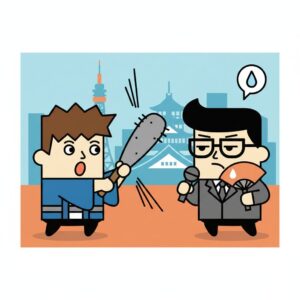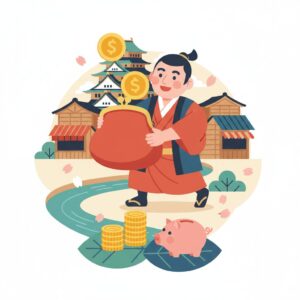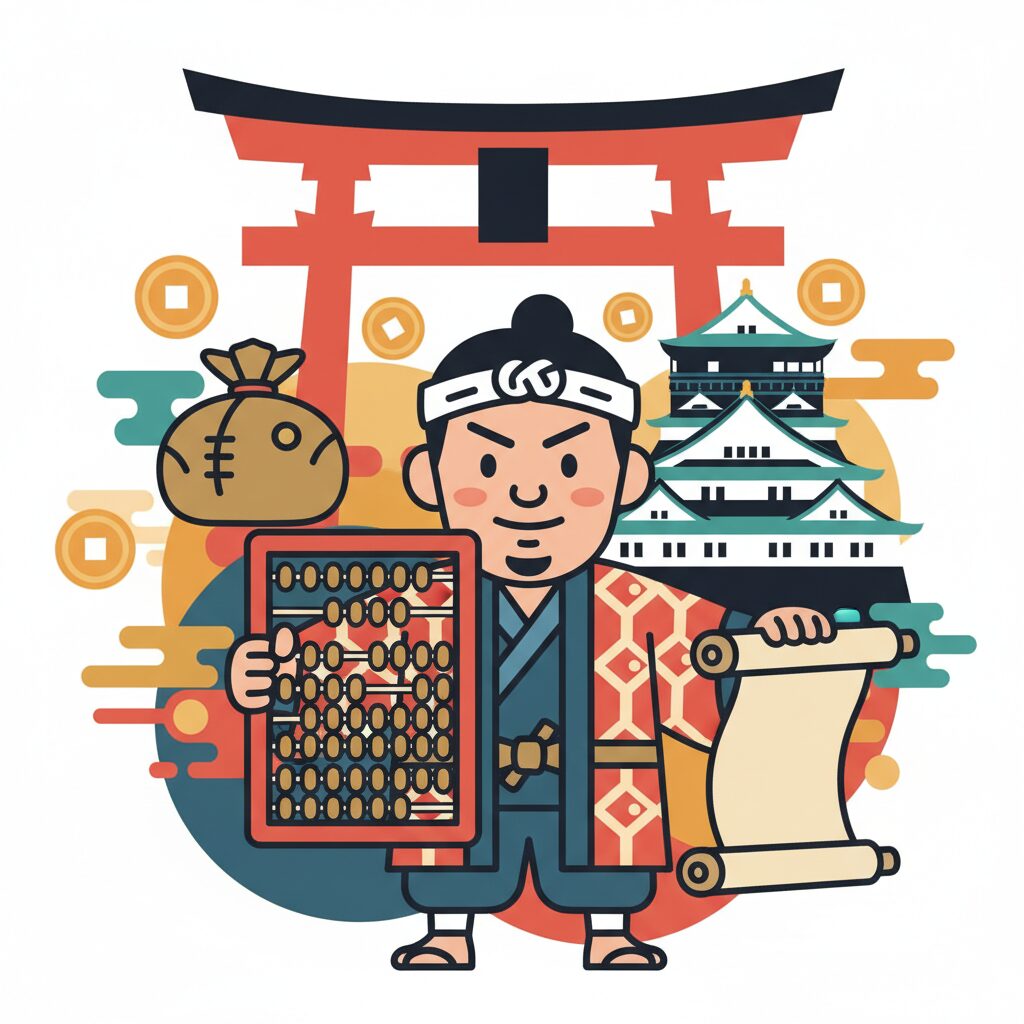
Ever tried talking about money in Tokyo? It’s a delicate dance, a conversation wrapped in layers of politeness and vague gestures. You might discuss a wonderful meal, but you’d rarely mention the price tag unless it was shockingly expensive, and even then, only in hushed tones. But here in Osaka, money isn’t a footnote; it’s the headline. Just the other day, my landlady, Tanaka-san, stopped me in the hallway. She wasn’t just asking about my day; she pointed at my grocery bag, eyes sharp. “Cabbage? How much?” she asked, not out of nosiness, but with the genuine concern of a seasoned stock trader checking the day’s market. I told her I got it for 98 yen at the supermarket down the street. A slow, appreciative nod was my reward. “Ah, good price. Smart girl,” she said, before telling me I could have gotten it for 85 yen if I’d waited for the evening sale at the other market. This isn’t an isolated incident. This is Osaka. It’s a city where the price of cabbage is a valid topic of conversation, a measure of your daily victory. This is the pulse of the ‘Akindo’ spirit. Akindo, the old word for merchant, is more than a job title here; it’s the city’s operating system. It’s a mindset rooted in centuries of commerce, where Osaka was Japan’s kitchen, its warehouse, its financial engine. While samurai in Edo (now Tokyo) concerned themselves with honor and hierarchy, merchants in Osaka were busy calculating, negotiating, and building an empire on the simple, powerful principle of value. This DNA runs deep, shaping everything from how people greet each other to where they choose to live and how they shop for groceries. For an outsider, it can be jarring, sometimes misinterpreted as being cheap or blunt. But to truly live here, you have to understand that in Osaka, being smart with your money isn’t just a survival skill; it’s a source of pride, a community sport, and the most honest form of communication. It’s a rhythm you learn to feel in the bustling shotengai and the quiet calculations over a dinner bill. This is the city, in its most practical, unfiltered form.
In parallel with its time-honored merchant mentality, Osaka is embracing modern innovation as projects like the upcoming AI-powered luxury hotel signal a bold new era in the city’s hospitality scene.
The Philosophy of ‘Mokkari-makka? Bochi bochi denna’
More Than Just a Greeting
In many places, people greet each other with a simple “Hello, how are you?” and the typical response is an automatic “Fine, thanks.” It serves as a social lubricant without any genuine inquiry. In Osaka, however, the traditional greeting—especially among older generations or in more formal business environments—is “Mokkari-makka?” which literally means “Are you making a profit?” The usual reply, “Bochi bochi denna,” is a wonderfully flexible phrase that roughly translates to “So-so” or “Can’t complain.” This exchange offers a fascinating glimpse into the Osakan spirit. Imagine that—your financial situation isn’t a private or taboo subject; rather, it’s the icebreaker. It’s comparable to discussing the weather elsewhere. This isn’t an intrusive question about your finances but a shared acknowledgment of reality: we’re all here, working hard, earning, and trying to get by. Business is more than just business; it’s a way of life. This mindset permeates the culture at every level. From top executives to students working part-time jobs at convenience stores, there is a deep-seated awareness of money’s flow. It cultivates a grounded realism. People value tangible success and savvy financial decisions more than abstract notions of status. This greeting sets the tone for a society where economic well-being is a communal subject—something to be discussed, lamented, or celebrated together.
Value over Brand: The Core Principle
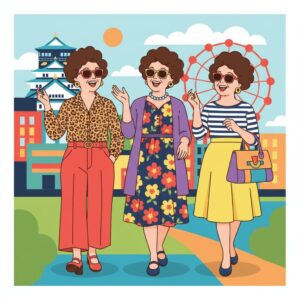
Stroll along the stylish streets of Omotesando in Tokyo, and you’ll find a showcase of luxury brands. The bag, the shoes, the logo on the shirt—all symbols of status and taste. Now, head to Shinsaibashi in Osaka, and you’ll notice many fashionable people, but the motivation behind their choices is fundamentally different. Here, the ultimate goal isn’t the brand name but ‘kosupa’—a Japanese-English blend meaning “cost performance.” This is the highest compliment. Saying something has good kosupa means it delivers exceptional value. It’s not about being cheap—cheap suggests low quality at a low price. Kosupa means achieving outstanding quality, quantity, or satisfaction at a fair price. Osakans proudly share stories about scoring amazing wool coats for a fraction of department store prices or enjoying a ten-course meal for the cost of a single appetizer in a Tokyo bistro. The story isn’t “I bought something expensive”; it’s “I found an incredible deal.” This outlook produces exceptionally savvy consumers. They constantly assess value with an internal calculator, examining fabric quality, counting the number of gyoza per serving, and measuring coffee cup sizes. Outsiders often misinterpret this focus on tangible value as a disregard for luxury or refinement. But that’s not accurate. Osakans do appreciate quality—they just refuse to pay extra for marketing, branding, or pretense. Why spend 2,000 yen on a pancake that’s 90% air and Instagram appeal when a filling, delicious okonomiyaki loaded with ingredients and made with care costs 800 yen? To an Osakan, the answer is clear: the pancake is overpriced, the okonomiyaki is good kosupa. It’s a rational, almost scientific approach to consumption.
The Hunt for the Deal: Spending as a Sport
Shotengai: The Arenas of Everyday Commerce
To witness the Akindo spirit in its true setting, you need to visit a shotengai, a covered shopping arcade. While many of these have declined in other parts of Japan, in Osaka, they are vibrant, lively streams of activity. Places such as the Tenjinbashisuji Shotengai, the longest in Japan, are more than mere commercial passageways; they are living ecosystems. They are loud, bustling, and alive with the calls of shopkeepers advertising their daily specials, the aroma of freshly fried croquettes, and the sight of locals expertly weaving through the crowds. This is where the quest for value unfolds as a daily spectacle. The vegetable vendor might toss in an extra green onion as ‘omake’ (a small bonus). The butcher will discuss the best way to prepare the cut you’re purchasing. The bond between customer and seller is personal and dynamic. You’re not simply a consumer; you’re a participant in a daily economic drama. Neighborhood residents have frequented the same tofu shop or fishmonger for generations. This fosters trust but also sets expectations. Vendors understand that discerning customers will take their business elsewhere if price or quality falter. This keeps everyone sharp. The shotengai stands as a testament to the idea that commerce should be human. It sharply contrasts with the sterile, quiet atmosphere of a modern department store, where prices are fixed and interaction is minimal. In a shotengai, the price marks just the start of the conversation.
‘Negiri’: The Art of Friendly Negotiation
To be clear: haggling in Japan is generally uncommon. Across most of the country, especially in large chain stores or upscale boutiques, attempting to negotiate prices is a major social faux pas, met with confusion and embarrassment. But Osaka breaks that mold. Here, ‘negiri’ (negotiation) is not rude; it’s a form of engagement. It’s a playful art, a verbal dance. Naturally, this doesn’t occur at the 7-Eleven. But at an independent electronics shop in Den Den Town, a family-run clothing store in a shotengai, or a flea market stall, a bit of negiri is often expected. The key lies in the approach. It’s never aggressive or demanding, but carried out with a smile and a touch of classic Osaka humor. Phrases like “Mou chotto makete kureru?” (“Can you knock a little off for me?”) or “Kore, nanto ka naran?” (“Can’t we do something about this price?”) open the door. The shopkeeper might laugh and decline or respond with a slightly lower price or offer a freebie. The result is almost secondary to the interaction itself. It signals that you’re a savvy customer who values their goods, not just a passive buyer. It creates a human connection. My Chinese background gives me a special appreciation for this practice, as bargaining is woven into commerce throughout much of East Asia. But in Osaka, it has a distinctive flavor—it’s less a battle of wills and more a collaborative effort to find a price that satisfies both parties. It’s a game, and a successful negiri, no matter how small the discount, feels like a shared victory.
The ‘Time Sale’ and the Supermarket Sprint
Nowhere is the daily search for value more vividly displayed than in an Osaka supermarket around 7 p.m. This is the prime time for the ‘time sale,’ when staff emerge with red sticker guns, marking down prepared foods, bentos, sushi, and other perishables. What follows is a spectacle of strategy and speed, which I call the Supermarket Sprint. Shoppers who had been browsing casually suddenly lock in with intense focus. They trail the staff member wielding the sticker gun, maintaining a respectful but keen distance. When a 20% off sticker is slapped on a pack of sashimi, it’s considered. When a 50% off sticker appears, it’s go time. There is absolutely no shame in this; securing a half-priced, high-quality meal is a victory, celebrated quietly among peers. You’ll see people comparing their finds while waiting in line. This ritual perfectly embodies the ‘shimatsu’ principle—the virtue of being resourceful and avoiding waste. Wasting perfectly good food is a far greater offense than buying discounted goods. This behavior spans all demographics. Well-dressed businesswomen, elderly couples, and young students alike take part in this ritual. To the untrained eye, it might seem intense, but it’s a beautiful expression of the city’s collective financial savvy. It’s a daily, tacit agreement among the city’s residents: we will not let good value slip away.
Saving and Investing: The Long-Term Game
Practicality in Living Spaces
The Akindo spirit extends beyond daily shopping habits, significantly shaping major life choices, such as deciding where to live. In Tokyo, real estate often symbolizes status. The address holds importance. Residing in a fashionable area like Daikanyama or an upscale one like Azabu carries social prestige, prompting many to pay a steep premium, frequently sacrificing living space for location. In contrast, Osaka takes a much more practical approach. The key question is: what value am I getting for my money? An Osakan is likelier to take pride in the low rent and spaciousness of their apartment rather than the trendiness of the neighborhood. They carefully calculate rent per square meter and prioritize proximity to affordable supermarkets over nearby fancy cafes. This results in a distinct urban dynamic. Residents are more willing to live farther from the city center if it means significant rent savings, provided the commute is manageable and local conveniences are practical. The idea of spending an extra 30,000 yen monthly just to have a more stylish station name on their address strikes many Osakans as perplexing. It exemplifies paying for something intangible, which is viewed with deep skepticism. This pragmatic mindset makes living in Osaka generally more affordable and often more comfortable than in Tokyo, focusing on the quality of life inside the home rather than the prestige of the address.
A Distrust of Unseen Value
This practical attitude extends to a broader cultural skepticism toward anything seemingly overpriced for intangible reasons. The Akindo spirit is essentially empirical. Value should be something you can see, touch, or taste. Brand prestige, abstract luxury ideals, and hype are met with a healthy dose of cynicism. Coffee offers a clear example: while Tokyo embraces third-wave coffee culture with 800-yen single-origin pour-overs, Osaka thrives on its ‘kissaten’ (traditional coffee shops) serving a ‘morning set’—coffee, thick toast, a boiled egg, and sometimes a small salad—all for the price of the coffee alone, about 400-500 yen. The value is obvious and compelling. An Osakan might try fancy coffee out of curiosity but will remain loyal to the place offering the better deal for daily visits. This isn’t because they can’t appreciate subtle taste differences but because they question whether that difference justifies paying twice as much. This skepticism pushes Osaka businesses to be straightforward; hype alone won’t sustain success. Products and services must offer genuine, demonstrable value. If they don’t, Osaka consumers, with their finely tuned sense of worth, will simply look elsewhere. This creates a highly competitive yet fair marketplace.
The ‘Kechi’ vs. ‘Shimatsu’ Distinction
At this juncture, many foreigners—and even some Japanese—make a crucial error by labeling the Osakan mindset as ‘kechi,’ meaning stingy or miserly. This is a serious misconception and, to an Osakan, a real insult. Being ‘kechi’ is a negative trait: a person who hoards money selfishly, refuses to pay their fair share, won’t treat friends, and shows up at parties empty-handed. Such tight-fistedness damages social bonds. The virtue celebrated in Osaka is ‘shimatsu,’ a much subtler and more positive concept. It means being frugal, resourceful, economical, and, above all, not wasteful. Someone practicing ‘shimatsu’ manages resources wisely, understands the value of money because of how hard it is earned, turns off lights in empty rooms, repurposes leftovers, and hunts for the best deals. Yet, that same person can be remarkably generous when appropriate. The difference is in the intent behind spending. A ‘shimatsu’ individual won’t waste money on themselves but will gladly spend on others to nurture relationships and share happiness. For instance, a ‘kechi’ person might avoid giving a wedding gift, while a ‘shimatsu’ person will find a beautiful, high-quality gift at a discount, achieving excellent value while still presenting something meaningful. Grasping the distinction between selfish stinginess (‘kechi’) and wise resourcefulness (‘shimatsu’) is essential to truly understanding the people of Osaka.
How the Akindo Spirit Shapes Social Life
‘Warikan’ and Financial Transparency
Going out for a meal with a group in Japan often involves ‘warikan,’ or splitting the bill. In Osaka, however, this practice is frequently elevated to an art of mathematical precision. While in Tokyo, groups might round amounts up or down for simplicity, or a senior member might pay a bit more, Osaka groups are much more likely to calculate each person’s share down to the last yen. Someone will almost always pull out a calculator on their phone, and the bill is divided with the seriousness of a corporate audit. This approach doesn’t stem from a lack of trust; rather, it’s the opposite. It reflects mutual respect and a transparent acknowledgment that everyone’s money holds equal value. It levels the playing field, removing the awkwardness of social hierarchy from the simple pleasure of sharing a meal. This preference for fair, straightforward transactions over systems based on status or obligation mirrors the ethos of this merchant city. In commercial dealings, fairness is paramount, and the same principle applies to social gatherings. It offers a clear, unambiguous way of handling shared expenses that leaves no room for resentment or confusion, keeping friendships uncomplicated by financial imbalance.
Generosity with a Purpose
Despite all the talk of saving money and hunting for deals, it would be wrong to assume Osakans are not generous. In fact, they can be among the most generous people in Japan. Yet their generosity, like everything else, is filtered through the lens of value. It’s about ‘iki-gane’ (living money) versus ‘shini-gane’ (dead money). ‘Shini-gane’ refers to money spent on things that offer little real return in happiness or well-being—flashy displays of wealth, overpriced brands, or items meant solely to impress. In contrast, ‘iki-gane’ is money spent wisely—an investment in experiences, relationships, good food, and laughter. An Osakan will likely forgo a stuffy, Michelin-starred French restaurant where the bill is high and portions small. Instead, they’ll take you to a favorite local izakaya, order a generous amount of delicious, unpretentious food and drinks, and ensure everyone has a fantastic time—all at a fraction of the cost. This is ‘iki-gane.’ The goal isn’t to flaunt wealth but to maximize shared enjoyment and satisfaction. They will treat you warmly, but the treat will almost always be a fantastic deal, a prime example of good kosupa. Their generosity is not about the price but the value of the experience shared.
The Entrepreneurial Undercurrent
Finally, the Akindo spirit fuels a strong entrepreneurial current running through the city. Respect for commerce, admiration for financial savvy, and an emphasis on self-reliance create a culture where starting one’s own business is seen as a noble and natural goal. People are constantly considering opportunities, with conversations peppered by business ideas, side hustles, and networks. “My cousin started a takoyaki stand and is doing great.” “I know someone who can get you a good deal on that.” The city is a dense web of small and medium-sized enterprises, many family-run for generations. This stands in contrast to Tokyo’s more corporate-centered culture, where many strive for stable jobs at large, prestigious firms. In Osaka, being your own boss, taking calculated risks, and building something from scratch command deep respect. This mindset infuses the city with a dynamic energy and a sense of potential. There’s a belief that with a good idea, hard work, and business savvy, anyone can succeed. This entrepreneurial spirit is infectious, contributing to the city’s resilience and ongoing reinvention. It’s a reminder that Osaka was, and always will be, a city built by its merchants.
To live in Osaka is to learn a new language of value. It means understanding that a conversation about the price of eggs is also a conversation about the state of the world. It’s about seeing the beauty in a perfectly timed half-price bento run and appreciating the wisdom in a mindset that prizes resourcefulness over extravagance. The Akindo spirit is not a cold, calculating code; it is a warm, communal, and deeply human way of navigating the world. It finds joy in practicality, builds relationships through fair exchange, and celebrates the simple victory of a day lived smartly. For a foreigner learning the ropes, embracing this spirit is the key to unlocking the true heart of the city. You learn to stop worrying about appearances and begin valuing the tangible. You discover that this city of merchants, with its honest, no-nonsense approach to life and money, is one of the most welcoming and straightforward places you could ever hope to call home.