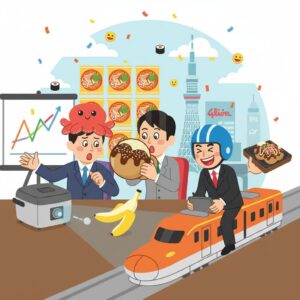
You see it simmering just beneath the surface, a kinetic energy that powers this city. It’s in the quick, no-nonsense pace of the salaryman striding through the Umeda underground, laptop bag slung over his shoulder. It’s in the quiet focus of the young designer, sketching on a tablet in a smoky, Showa-era coffee shop in Tenma, the air thick with the aroma of dark roast and ambition. It’s in the cheerful chaos of a shop owner in the Kuromon Market, one hand weighing produce while the other taps out a shipping confirmation on her phone for an online order. This isn’t the Japan you read about in business textbooks—the land of lifetime employment, rigid hierarchies, and face-to-face meetings that stretch into the night. This is Osaka, and here, business is done differently. The office is not a building; it’s a state of mind. Work is not a title; it’s a transaction. And the guiding principle isn’t corporate loyalty; it’s the shrewd, pragmatic, and relentlessly resourceful spirit of the ‘Akindo,’ the merchant.
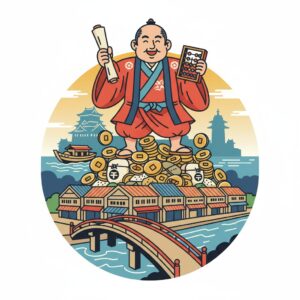
For centuries, Osaka was the commercial engine of Japan, the ‘Nation’s Kitchen’ where rice, goods, and fortunes were traded. That history isn’t just a footnote in a museum; it’s the city’s living, breathing operating system. This Akindo spirit—a mindset that prioritizes results over process, value over vanity, and opportunity over obligation—is the invisible hand shaping how Osakans are embracing the modern realities of remote work, freelancing, and the side hustle. It’s a culture that was ready for the gig economy centuries before the term was even invented. Forget the stereotypes of a monolithic Japanese work culture. To truly understand how to live and work in Osaka, you have to look past the gleaming office towers and into the cafes, the workshops, and the bustling shopping arcades where the real deals are being made. You have to understand that in this city, everyone is, in some small way, a merchant at heart.
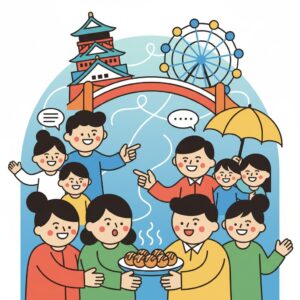
This pragmatic, deal-focused mindset is also reflected in the unique social dynamics of the city, where the influential role of Osaka’s middle-aged women often serves as the community’s social and economic glue.
The ‘Akindo’ Blueprint: More Than Just Merchants
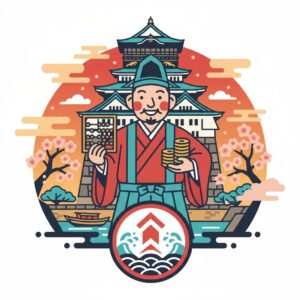
To truly understand the essence of Osaka’s work culture, you must first dismantle the simplistic notion of the ‘merchant’ as merely a shopkeeper. In Osaka, the Akindo represents an archetype, a cultural hero. It embodies a mindset rooted in fierce independence and an unwavering commitment to tangible results. This spirit was forged in the crucible of commerce when Osaka was the undisputed economic center of feudal Japan. While samurai in Edo (modern-day Tokyo) focused on honor, rank, and ceremony, Osaka’s merchants were busy developing futures markets for rice, crafting complex financial instruments, and mastering the art of negotiation. This history created a deep cultural divide that still resonates in every business discussion and freelance contract today.
Deconstructing the Merchant Mindset
The Akindo spirit is a complex weave of several key elements. Most importantly, it emphasizes jitsuri (actual profit or practical benefit) over tatemae (the public facade or principle). Throughout much of Japan, especially corporate Tokyo, maintaining harmony and following proper protocol can be just as important as the end result. Meetings are held, reports prepared, and processes followed meticulously—even when inefficient. In Osaka, however, the primary and often sole question is: ‘So, what’s the bottom line?’ An idea is only as valuable as its practical implementation. A meeting is only worthwhile if it leads to a decision. This pragmatism can feel refreshingly direct but may also be jarring to those used to a softer, indirect communication style. The intent is not to offend but to cut through distractions and get to the heart of the matter, because time and energy are precious and shouldn’t be squandered on unnecessary pleasantries.
This practical focus drives Osaka’s famous ‘ne-giri’ or price-haggling culture. Outsiders often mistake this for mere frugality, but it isn’t about being cheap. It reflects a deep, instinctive need to verify and confirm value. Haggling isn’t simply about negotiating a lower price; it’s a dialogue to establish fair exchange. ‘Is this product really worth this much? What am I receiving for my money?’ This same critical scrutiny applies to everything, from business proposals to freelancers’ rates. When presenting an idea in Osaka, be ready to clearly justify its value—how it will earn money, save time, or boost efficiency. Vague promises and corporate jargon quickly lose credibility under this demand for tangible benefit.
Finally, the Akindo spirit is marked by scrappy, relentless resourcefulness—the ability to spot opportunities where others see none and to blend diverse elements into new ventures. It’s exemplified by the owner of a small, ten-seat curry shop who also runs a catering service, sells his unique spice blend online, and teaches cooking classes on weekends. It’s about maximizing every asset, skill, and connection. This is not seen as overwork but smart business—building a resilient enterprise not reliant on a single source of income.
How This Differs from the Tokyo Salaryman Ideal
To fully appreciate Osaka’s approach, it helps to contrast it with its counterpart: the archetypal Tokyo salaryman. The Tokyo corporate ideal revolves around large, established institutions. Success is measured by steady advancement up a clear corporate ladder. Loyalty is crucial—not only to the company’s goals but also its culture, procedures, and hierarchy. One’s identity is often tied to the company name on their business card. The system values stability, conformity, and slow, steady growth. The nail that sticks out gets hammered down—not because it’s bad, but because it disrupts the smooth surface of group harmony.
In Osaka, the ideal is not the loyal soldier but the savvy general. Loyalty is directed more toward the network of customers, suppliers, and partners than a single corporate entity. An Osakan’s identity is more closely linked to personal skills, a reputation for getting things done, and the ability to create value, regardless of who pays their salary. Organizations are viewed as platforms or tools for achieving one’s goals, not the ultimate objective. If a better opportunity arises, switching is only logical.
This contrast is clear in everyday interactions. Picture a project update meeting: the Tokyo style might involve a lengthy, polished PowerPoint presentation covering every detail, acknowledging all stakeholders, and diplomatically couching any problems. The goal is to show diligence and build consensus. In Osaka, the approach might be a manager cutting in after five minutes to say, ‘Okay, I get it. Just give me the numbers. Are we on track? What’s the problem and the solution?’ The focus is on the finish line, with collective impatience for any scenic detours that slow progress. This is not rudeness but a shared understanding that momentum is the most valuable resource.
The Remote Work Revolution, Osaka-Style
The global shift to remote work wasn’t a sudden revolution in Osaka; rather, it accelerated a trend that had already been underway. The Akindo spirit, emphasizing autonomy, efficiency, and results, naturally aligns with a workstyle that frees productivity from the confines of a physical office. For many in Osaka, remote work’s appeal goes beyond the Western notion of ‘work-life balance’ as simply having more leisure time. It’s about optimizing the ‘work’ itself—reclaiming commuting hours to focus on side projects, enjoying the flexibility to meet clients for coffee without seeking managerial approval, and organizing the day around peak productivity instead of a strict nine-to-five routine.
The “Third Place” is the Real Office
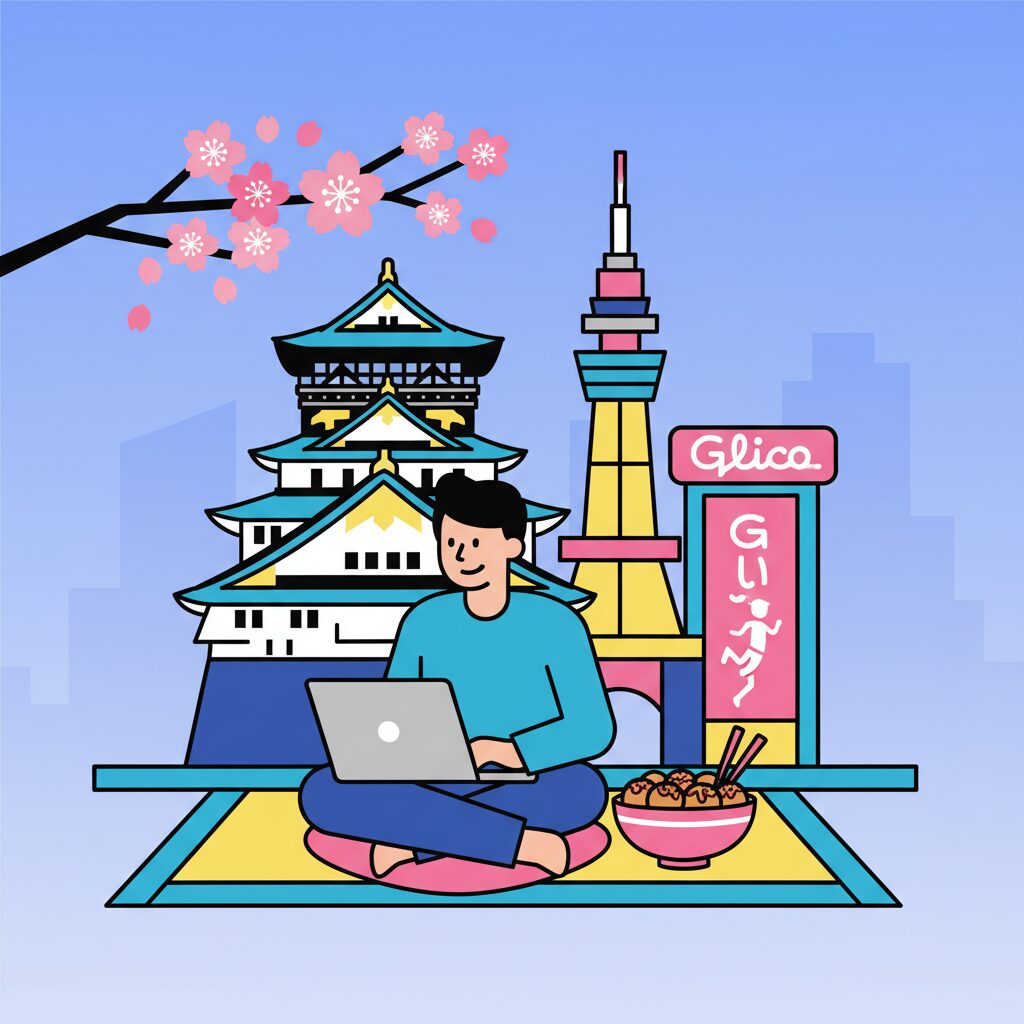
Long before co-working spaces became a global phenomenon, Osakans had perfected the concept of the ‘third place’ office. Walk into any neighborhood kissaten (traditional coffee shop) on a weekday afternoon, and you’ll see salespeople finishing reports, freelancers designing websites, and entrepreneurs drafting business plans on napkins. These locations are selected as pragmatically as any business decision. The kissaten in Shinsaibashi might be ideal due to its central spot and the city’s lively ambiance that sparks creativity. A quiet library in Tennoji offers uninterrupted hours for deep focus. A co-working space in Grand Front Osaka in Umeda provides networking opportunities and a prestigious address for meetings. Even a local tachinomi (standing bar) can serve as a venue for quick, informal check-ins with collaborators over a highball and yakitori.
The city’s infrastructure implicitly supports this mobile workstyle. Free Wi-Fi is increasingly available, and a keen eye can spot power outlets in unexpected corners of cafés and train station waiting areas. People select their work environment, their ba, according to the day’s mission. A morning of concentrated work might be spent at home, followed by afternoon calls and emails from a bustling café drawing on urban energy, and an evening meeting in a relaxed Namba izakaya to build rapport with a new client. The office isn’t one fixed place; it’s a dispersed network of locations, each serving a specific purpose. This flexible approach maximizes efficiency, turning the entire city into a potential workspace.
Tools of the Trade: Pragmatism in Tech
Osaka’s relationship with technology is refreshingly practical. The question is never ‘What’s the newest, flashiest software?’ but rather ‘What’s the simplest tool that effectively gets the job done?’ While a Tokyo corporation might invest in a complex, all-in-one enterprise solution for project management, Osaka-based small businesses or freelancers often achieve equal or better results using a mix of Google Sheets, the messaging app LINE, and a shared calendar. The focus is function over form.
This pragmatism arises from the Akindo’s emphasis on return on investment. Why spend heavily on a sophisticated CRM when a well-organized spreadsheet can manage a client list just as well? Why enforce a complicated, multi-step communication process when a quick phone call can resolve an issue in thirty seconds? This mindset may sometimes be mistaken for technological backwardness, but that misses the point. It’s a deliberate rejection of ‘process for process’s sake.’ Tools serve the goal, which is always to advance the business with minimal friction and cost. The elegance lies in the simplicity and effectiveness of the system, not in the sleekness of the user interface.
Communication: Direct, Fast, and Mobile
This pragmatic approach extends to communication. The carefully polished, formal email typical in other parts of Japan often takes a backseat in Osaka to more immediate forms of contact. LINE dominates, used for everything from quick client confirmations to group chats for collaborative projects. Its instant, conversational style suits the city’s fast pace. Phone calls are also common. To many non-Japanese, an unplanned call may seem intrusive, but in Osaka’s business culture, it often shows respect for your time. The caller is thinking, ‘This is faster than emailing back and forth for an hour. Let’s resolve it now and move on.’
The local language tends to be more direct. There’s less of the indirect, tentative phrasing common in other regions. Rather than saying, ‘It might be somewhat difficult to meet that deadline,’ you’re more likely to hear, ‘That’s impossible. We need another two days.’ This isn’t meant to be confrontational; it reflects the most efficient route to a practical solution. By stating the problem clearly, both parties can get straight to crafting an effective answer instead of wasting time interpreting polite euphemisms. For anyone working in or with Osaka, learning to value this directness as a form of efficiency is essential for successful collaboration.
The Side Hustle Ecosystem: Everyone’s an Entrepreneur

If remote work represents the contemporary interpretation of the Akindo spirit, then the side hustle, or fukugyo, stands as its fullest expression. In Osaka, maintaining a side project or a small business alongside a main job is not merely a millennial trend; it is a deeply rooted cultural tradition. It echoes the days of merchants who sold rice by daylight and brokered sake deals by night. It’s about diversification, passion, and an unyielding quest for opportunity. The city offers fertile ground for these endeavors, where a hobby can naturally and swiftly transform into a profitable venture.
From Shop Stall to Online Store
The connection between past and present is remarkably direct. The merchant in the Shotengai (covered shopping arcade) who knew each customer by name finds a modern parallel in the Instagram influencer cultivating a loyal community around their niche—whether vintage clothing, handmade pottery, or rare succulents. Though the tools have evolved—from abacuses to e-commerce platforms, from physical shops to social media feeds—the Akindo principles endure. Start small. Test the market. Build relationships. Deliver genuine value. Iterate rapidly.
This culture of experimentation permeates everywhere. Stroll through creative hubs like Nakazakicho or Horie, and you’ll see many examples: the graphic designer with a full-time agency job who shares a small gallery space on weekends to sell prints; the office worker passionate about coffee who runs a side business importing and roasting rare beans, selling online and at farmers’ markets; the stay-at-home parent using their fluency in English to teach conversation lessons online. The perceived barrier to entry remains low because the mindset is not, “I must write a 50-page business plan and secure venture capital,” but rather, “I have an idea—let’s try it this weekend and see if anyone pays.” Failure is not stigmatized; it’s seen as market research, providing valuable insights for the next attempt.
The Network is Your Net Worth
In Osaka’s side hustle scene, the most valuable asset isn’t the product or the capital; it’s your network of human connections. Business here is deeply personal. While formal contracts matter, it’s the handshake, the shared meal, and the foundation of mutual trust that truly close deals. Networking isn’t a formal, structured exercise but a way of life. Opportunities arise from casual conversations at a favorite bar, introductions from friends of friends, and being a familiar, respected presence within local communities.
The concept of shoukai, or introduction, serves as currency. A cold email to a potential client might be overlooked—but a referral from a mutual, trusted contact guarantees a meeting. This system hinges on reputation. Your reliability, quality of work, and character as a trustworthy business partner precede you. This explains why Osakans dedicate significant time to nurturing relationships: they’ll remember your children’s names, inquire about your recent travels, and show up to support your new endeavor. This friendliness is more than social—it’s a core business strategy.
This contrasts with the more formal, credential-driven networking typical of Tokyo, where university affiliation or corporate status often unlock doors. In Osaka, these factors matter but are usually secondary to a more fundamental question: “Can I trust you? What can you do? Are you someone I want to work with?” It’s a meritocratic, relationship-based environment, empowering freelancers and small business owners to build success on skills and personal brand.
Blurring the Lines: When the Hobby Becomes the Hustle
A hallmark of Osaka’s side hustle culture is how naturally it often springs from personal passion. Motivation rarely centers solely on earning extra income; it’s about monetizing what you genuinely love. This intrinsic drive fuels the perseverance needed to overcome the challenges of building something from scratch. The vintage bicycle enthusiast starts by repairing friends’ bikes, then imports rare parts, eventually opening a small, highly regarded custom shop. The entire enterprise rests on authentic passion and expertise—qualities customers sense and are willing to pay more for.
This approach reflects the Akindo principle of creating distinctive value. Instead of competing on price in crowded markets, these passion-led ventures carve out their own niches. The mindset is, “I love this, and I’m skilled at it. How can I make it financially sustainable?” This might be the foodie launching a private supper club, the anime fan sourcing rare figurines for collectors, or the musician offering specialized production workshops. In Osaka, the boundaries between work and life, profession and passion, are artfully and lucratively blurred. It’s a culture that embraces the idea that the best business is one that never feels like work.
Navigating the Osaka Work Scene: A Foreigner’s Guide
For any non-Japanese person aiming to work or live in Osaka, grasping the subtle nuances of the Akindo spirit is essential not only to survive but to truly thrive. Many initial culture shocks and misunderstandings arise when foreigners interpret Osaka’s distinctive behaviors through a different cultural lens. By reframing these interactions, you can begin to understand the underlying logic and even learn to use it to your advantage.
Common Misunderstandings
A frequent source of friction is the perception that Osakans are ‘cheap’ or ‘stingy.’ This impression may arise in situations ranging from salary negotiations to quoting project prices, often causing feelings of being undervalued. However, it’s important to reinterpret this behavior not as cheapness but as a strong emphasis on value. An Osakan client is not simply seeking the lowest price; they want the best return on their investment. They are implicitly asking you to justify your cost. By confidently and clearly explaining the value you provide—‘This design will boost your customer conversion rate,’ ‘My translation will save your team hours of clarification,’ ‘This monthly fee covers proactive maintenance that prevents costly downtime’—you will earn their respect. It’s a discussion about worth, not just price.
Another common misunderstanding concerns the direct, sometimes blunt, communication style. In a culture where politeness often means indirectness, Osaka’s straightforwardness can seem rude. A quick ‘no,’ a critical question in a meeting, or frank negative feedback may feel abrupt. The key is to not take it personally. This directness is almost always about efficiency, not personal animosity. The aim is to quickly identify and resolve problems. Learning to view this feedback as valuable information rather than a personal attack is a superpower. Likewise, communicating your own needs and opinions clearly and succinctly is regarded as a sign of competence and respect for others’ time.
Finally, the fluid, relationship-based way of conducting business may appear ‘chaotic’ or ‘disorganized’ to those used to rigid structures and formal processes. Agreements might be reached verbally, with paperwork coming later. Plans could shift at the last minute due to new opportunities. This is not a lack of organization but a different type of organization—one that is highly adaptable and built on trust between individuals rather than strict adherence to corporate playbooks. It demands greater tolerance for ambiguity and a willingness to be flexible but allows for remarkable speed and agility when opportunities arise.
Thriving as a Remote Worker or Freelancer
To succeed in this environment, you must actively engage with its unique ecosystem. First and foremost, build your network relentlessly. This doesn’t mean superficially handing out business cards at formal networking events. It means becoming part of the local fabric. Find a favorite coffee shop and become a regular. Attend meetups related to your industry or hobbies. Frequent local izakayas. Show genuine interest in people and their businesses. In Osaka, community and commerce are closely connected. Offer your help and expertise freely before asking for anything in return. Cultivate your reputation one authentic connection at a time.
When presenting yourself and your work, be unapologetically clear about your value proposition. Avoid vague corporate jargon. Osakans appreciate clarity. What problem do you solve? How do you improve your clients’ lives or boost their businesses? Be ready to discuss specific numbers and tangible outcomes. Have a clear pricing structure but remain flexible and open to discussions about value. Demonstrating a business owner’s mindset will have you treated as a valued partner.
Embrace the city as your office. Don’t isolate yourself at home. Working from different neighborhoods isn’t just a change of scenery; it’s a strategy. It introduces you to new people, fresh ideas, and serendipitous encounters that often lead to new projects in Osaka. Let the city’s energy inspire your work. Find spots where you feel productive and creative, and make them your own.
Finally, learn to speak the language of value. When negotiating, frame your points around mutual benefit. It’s not just about what you gain but what they gain. By showing that you grasp the Akindo mindset—that you focus on creating concrete, practical, and profitable results—you will move beyond being seen as just a foreign freelancer and become a trusted member of the business community.
Conclusion: The Future of Work is Already Here, and It Speaks with an Osaka Accent
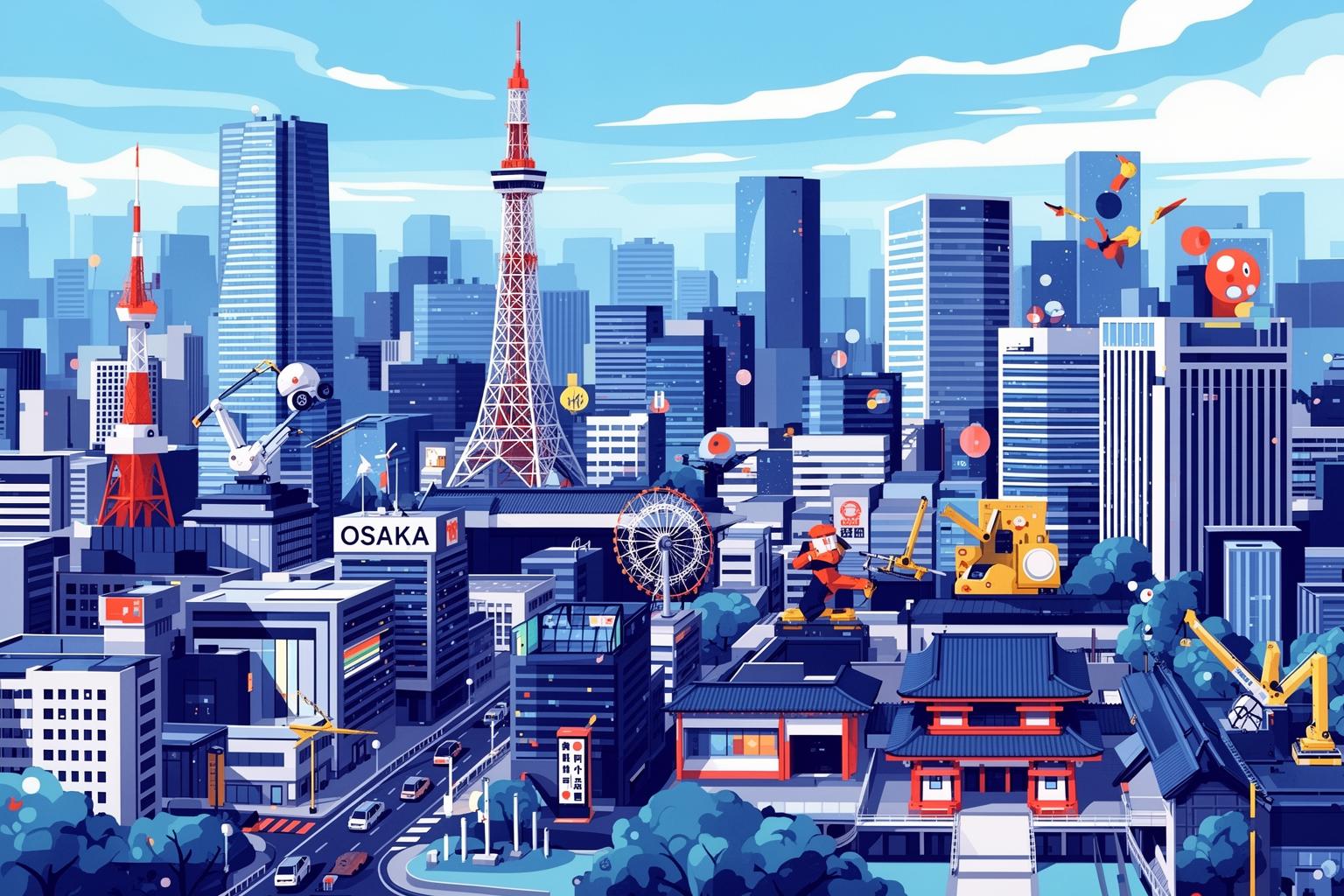
The global discussion is full of buzzwords about the ‘future of work’—agility, entrepreneurship, the gig economy, decentralized teams. Yet in Osaka, these are not futuristic ideas; they are enduring principles revitalized by modern technology. The Akindo spirit, born in the markets of a feudal city, has proven to be a remarkably resilient and effective system for navigating the challenges and opportunities of the 21st-century economy.
What makes Osaka’s approach so compelling is that it is fundamentally human-scaled. It is grounded in relationships, personal reputation, and a direct connection between effort and reward. It fosters a culture where individuals are empowered to create their own niche, building something unique—whether a global e-commerce brand operated from a spare bedroom or a local freelance practice supported by a network of trusted clients. This is a practical, straightforward evolution of work, applying centuries-old wisdom about value, resourcefulness, and human connection to modern digital tools.
Living and working here means unlearning the strict separation between your job, passions, and community. It means recognizing that a quick conversation in a standing bar can be more effective than a formal board meeting. It means understanding that true career security lies not in a long-term contract with one company, but in a strong network and a reputation for delivering genuine value. While other cities are still planning for a more flexible and entrepreneurial future, Osaka is already living it, actively making it happen. It may not always be polished, and it is certainly not always polite by external standards, but it is a city that is, and always will be, open for business.