There’s a moment, standing before a wall of deepest blue, when the world outside simply melts away. The hum of the city, the rush of your travel itinerary, the very weight of gravity seems to dissolve, replaced by a silent, graceful ballet. A colossal whale shark, a gentle giant patterned with the cosmos, glides by, its sheer presence both humbling and profoundly calming. This isn’t just a window into the ocean; it’s a plunge into the very heart of our planet’s lifeblood. This is the experience of the Osaka Aquarium Kaiyukan, a place that transcends the traditional idea of an aquarium and becomes a narrative journey, a moving piece of art, and a powerful testament to the intricate beauty of the Pacific Ocean. Nestled in the vibrant, breezy Osaka Bay Area, Kaiyukan isn’t merely a collection of tanks; it’s a carefully choreographed exploration of the Pacific Ring of Fire, guiding you from sun-dappled forests down into the mysterious abyss. It’s a place where science and wonder dance together, leaving you with a connection to the marine world that lingers long after you’ve returned to the bustling streets of Osaka. For anyone traveling to this dynamic city, especially with family, Kaiyukan is more than an attraction—it’s an essential chapter in the story of your journey.
After immersing yourself in the marine wonders of Kaiyukan, you can continue your Osaka adventure by exploring the city’s diverse culinary scene, including finding halal-friendly dining options near Nishikujo Station.
The Grand Design: A Journey from the Surface to the Depths
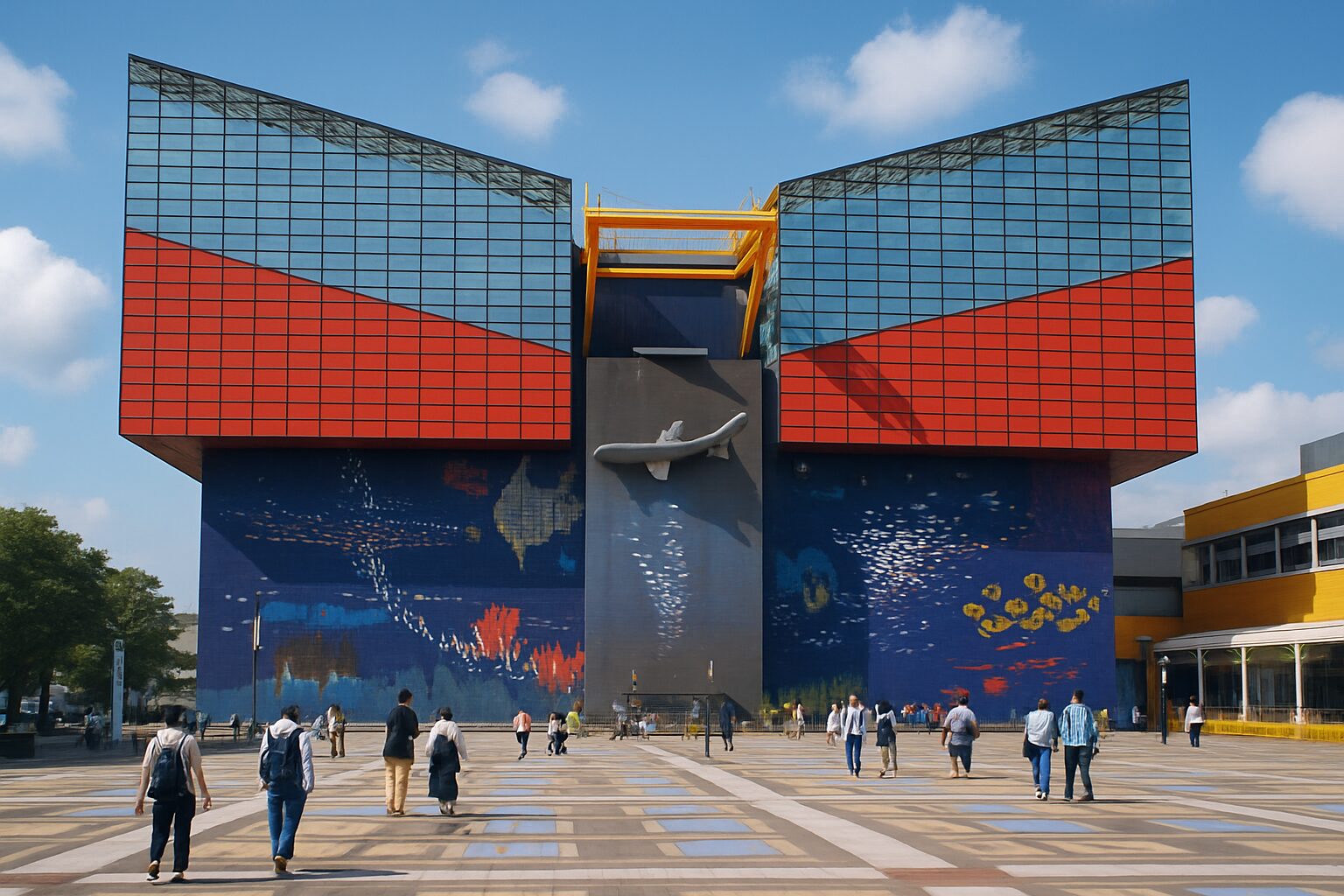
The architectural brilliance of Osaka Aquarium Kaiyukan is the first thing that captures your attention, long before you spot a single fish. The building itself, a striking composition of blue and red blocks, stands like a modern art installation against the Osaka Bay skyline. Yet, the true marvel lies within its internal design, a vision realized by the innovative architect Peter Chermayeff. His aim was to craft not merely a viewing experience but an immersive journey. This experience doesn’t start at the bottom and climb up; instead, it begins with an elevator ride to the eighth floor, where your descent into the ocean’s depths truly begins. Starting at the top is a masterstroke of storytelling. You begin in the light, in a world akin to our own, then spiral down around a vast central tank, delving deeper into the blue mystery of the Pacific Ocean. The entire path is a smooth, gently sloping ramp, making it easily accessible for strollers and wheelchairs, a considerate detail that highlights its family-friendly design. The flow is natural, guiding you seamlessly from one habitat to the next without the need for maps or confusing signs. You are effortlessly carried along by the aquarium’s narrative current. The very first exhibit, the “Aqua Gate,” perfectly sets the mood. It’s a tunnel tank brimming with glittering reef fish, a cerulean passage that immediately seals you off from the outside world. Passing through it feels like a rite of passage, a symbolic immersion into the marine world. Sunlight filters through the water above, casting dappled patterns on the floor and walls, creating a tranquil atmosphere of eager anticipation for the wonders ahead. From there, you enter the “Japan Forest,” a beautifully recreated terrestrial habitat. The air here feels different, enriched with the scent of damp earth and foliage, accompanied by the gentle sound of a waterfall cascading over moss-covered stones. Here, you encounter Asian small-clawed otters, whose playful behavior provides a charming introduction to life thriving where land meets water. You also see giant salamanders, ancient and solemn creatures whose gaze seems to hold the forest’s mysteries. This exhibit serves as an important opening chapter. It roots your journey in a familiar environment, reminding you that all water on Earth is connected, flowing from mountains and forests down to the vast ocean. It’s a gentle and poetic way to begin the grand descent.
The Heart of the Pacific: The Majesty of the Whale Shark
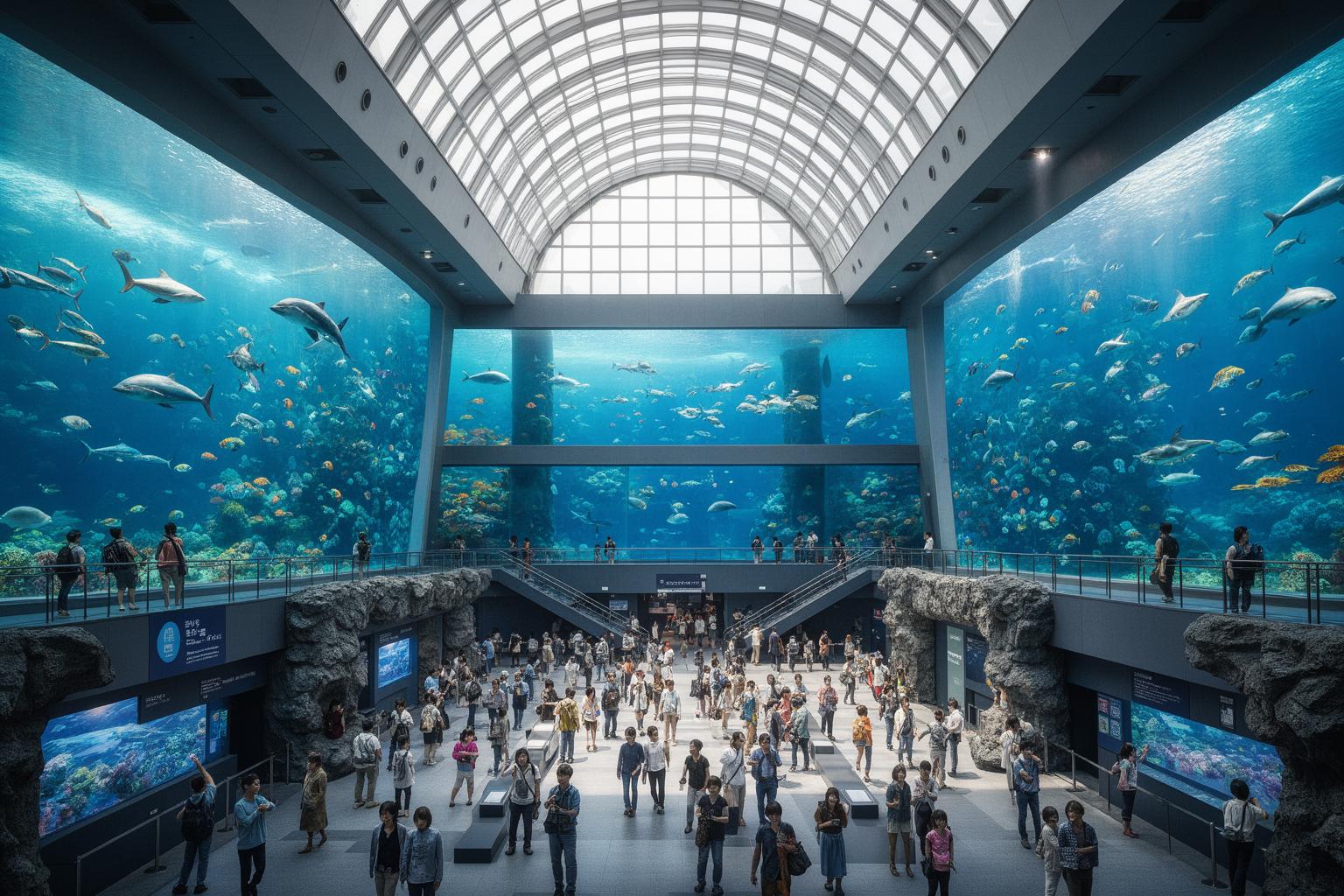
As you spiral down the gently sloping ramps, you catch glimpses of it—a vast expanse of blue, a shadow moving in the distance, a flicker of immense scale. This is the central “Pacific Ocean” tank, the beating heart of Kaiyukan, a spectacle that truly defies description. Holding 5,400 tons of water, the tank is an incredible nine meters deep and 34 meters long, a self-contained ocean housing a breathtaking ecosystem. At its center is the aquarium’s undisputed monarch: the whale shark, or jinbe-zan in Japanese. Seeing this creature for the first time leaves an indelible mark on your memory. They are the largest fish in the world, yet they move with an impossibly slow-motion grace. Their massive bodies, adorned with a unique pattern of white spots resembling a star chart, absorb the light, creating an aura of profound tranquility. They are not predators in the fearsome sense but gentle filter feeders, their cavernous mouths cruising slowly through the water, gathering plankton. Watching a whale shark glide effortlessly past the enormous acrylic panels is a meditative experience that slows your breathing and quiets your mind. You feel incredibly small, but in a comforting, connected way. The aquarium’s design allows you to view this central tank from multiple levels and angles. From the top floors, you see the whale sharks cruising near the surface, their backs catching the simulated sunlight. As you descend, you observe them from the side, appreciating their full length and the coterie of smaller fish that often travel with them. At the bottom, you look up at their pale bellies as they pass overhead—a truly awe-inspiring perspective. But the whale shark is not alone in this vast blue world. The Pacific Ocean tank is a dynamic community. Majestic manta rays, with their diamond-shaped bodies and elegant wing-like fins, perform a silent ballet, soaring and dipping through the water. Scalloped hammerhead sharks, with their distinctively shaped heads, patrol the lower depths, adding a touch of primal mystery. Enormous schools of silver fish move as one shimmering, fluid entity that parts and reforms around the larger inhabitants. It is a living, breathing diorama of the open ocean, a complex interplay of life endlessly fascinating to observe. Behind this incredible spectacle lies a deep commitment to research and conservation. Kaiyukan is a world leader in the study and care of whale sharks in a managed environment. Their work provides invaluable data supporting conservation efforts for wild populations. The health and well-being of these gentle giants are paramount, and the care they receive reflects the aquarium’s dedication to its scientific mission. This tank is more than an exhibit; it is a celebration of the ocean’s grandeur and a powerful reminder of our responsibility to protect it.
A World of Water: Exploring the Ring of Fire’s Diverse Ecosystems
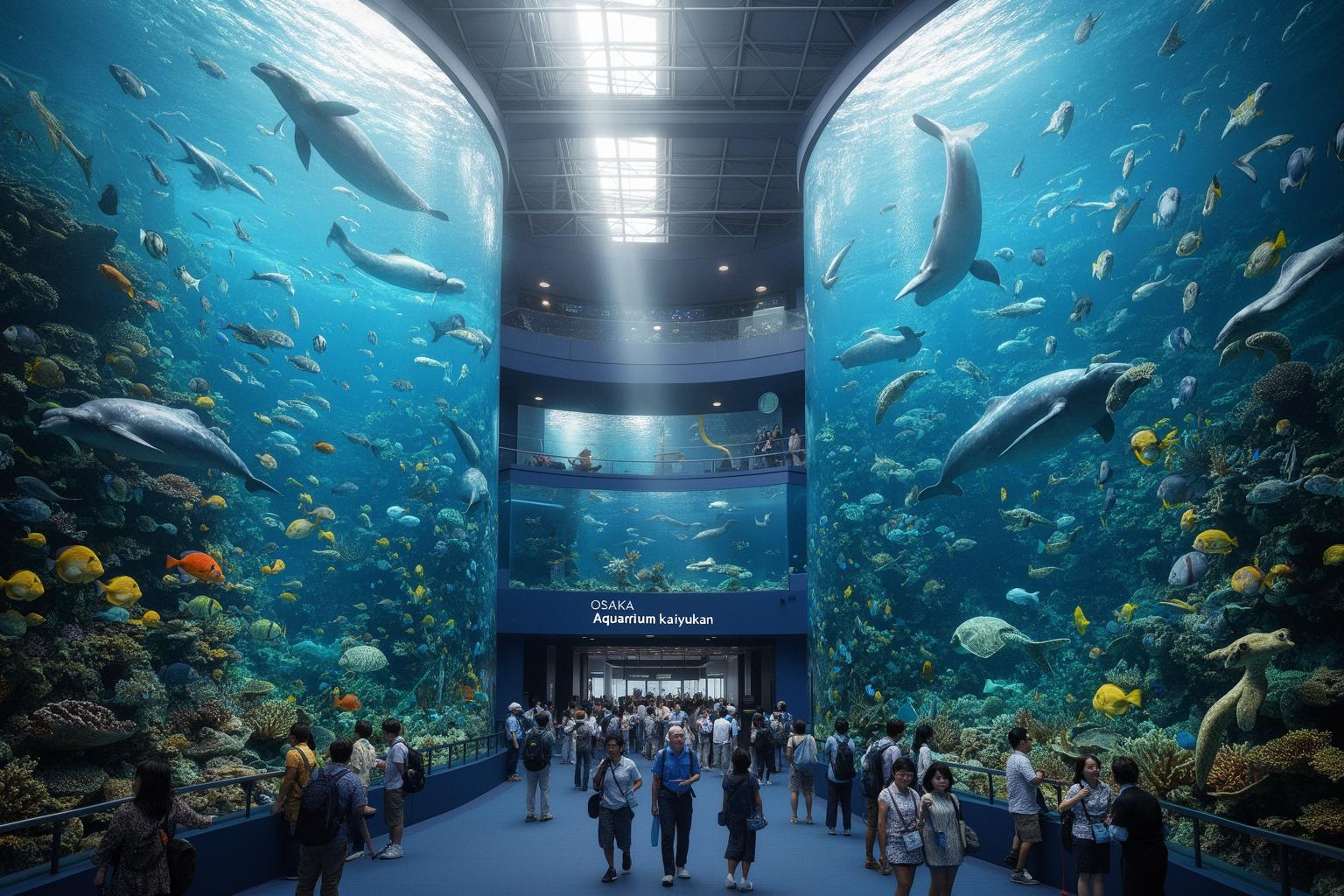
While the Pacific Ocean tank serves as the centerpiece, the true brilliance of Kaiyukan lies in its thorough depiction of the entire Pacific Rim. The journey around the central tank leads you through a series of carefully recreated habitats, each representing a specific region along the volcanic “Ring of Fire.” This geographical storytelling is what makes the aquarium so captivating. You’re not merely observing random groups of marine life; you’re on a global expedition, witnessing the incredible diversity shaped by various climates, currents, and coastlines. Each new tank acts as a gateway to another part of the world, complete with its own distinct atmosphere, sounds, and inhabitants.
The Aleutian Islands: The Playful Realm of Sea Otters
One of the initial and most enchanting exhibits showcases the cold, nutrient-rich waters of the Aleutian Islands, where the undeniable highlights are the sea otters. Their exhibit is crafted to resemble the rocky shorelines and kelp beds they inhabit. Watching them is pure delight. They are energetic and charismatic, twirling and diving with remarkable agility, using rocks to crack open shells on their bellies while floating effortlessly on their backs. Their thick, dense fur—the densest among mammals—is constantly groomed, a vital and often amusing behavior to observe. This exhibit is not just entertaining; it subtly teaches visitors about the crucial role sea otters play as a keystone species. By controlling sea urchin populations, they protect the essential kelp forests that underpin their coastal ecosystem. It’s a perfect example of how Kaiyukan integrates important ecological lessons into a thoroughly enjoyable experience.
Monterey Bay: Seals and Sea Lions in the California Sun
Continuing south along the Ring of Fire, you reach an environment that feels distinctly different: Monterey Bay, California. The lighting is brighter, simulating the Pacific sun, and the stars here are the charismatic California sea lions and harbor seals. Their habitat offers a wonderful combination of deep water for swimming and rocky ledges for basking. You can observe them from both above and below the water. On land, they appear clumsy and comical, barking and jostling for the prime sunning spots. But as soon as they slip into the water, they transform into sleek, powerful swimmers, cutting through the deep blue with incredible speed and grace. The dual-level viewing area perfectly showcases this contrast. It’s a lively, noisy, and engaging exhibit that captures the vibrant energy of the California coast.
The Gulf of Panama: A Tropical Explosion of Color
Crossing the Pacific, the journey brings you to the tropical meeting point of Central America. The Gulf of Panama exhibit is a captivating blend of terrestrial and aquatic life, emphasizing the close connection between the rainforest and the sea. The water is alive with brightly colored fish, a striking contrast to the cooler hues of the northern displays. However, the surprise often lies on the land portion of the habitat, where capybaras—the world’s largest rodents—can be seen lounging near the water’s edge. This thoughtful inclusion illustrates the interconnectedness of ecosystems, demonstrating that the health of the ocean is inseparable from the health of the adjacent land. It’s a warm, humid, and vibrant environment buzzing with the sounds of the tropics.
Antarctica: A Glimpse into the Frozen Continent
Perhaps the most dramatic environmental shift occurs in the Antarctica exhibit. The temperature drops noticeably as you approach, and the air grows crisp and cold. The exhibit is an impressive recreation of the icy landscapes of the southernmost continent, complete with real snow and ice. A colony of penguins, including King, Gentoo, and Adélie species, calls this space home. Watching them is an absolute pleasure as they waddle and hop across the ice with charming clumsiness before diving into the frigid water, where they become masters of their environment, darting and gliding with incredible agility. The exhibit allows you to observe them both on the ice and through underwater viewing panels, offering a comprehensive view of their lives. It’s a powerful and immersive experience that transports you to one of the most remote and extreme environments on Earth, consistently delighting visitors of all ages.
The Great Barrier Reef: A Kaleidoscope of Coral Life
No exploration of the Pacific would be complete without visiting its most famous natural wonder. The Great Barrier Reef exhibit bursts with color and life. The tank is expertly designed to mimic a thriving coral ecosystem, with thousands of small, vividly colored fish darting amid the complex coral structures. The diversity is astounding. You’ll encounter familiar favorites like clownfish nestled in anemones, elegant angelfish, and shoals of vibrant damselfish. The lighting is bright and clear, enhancing the vivid hues and creating the sensation of being in a sunlit shallow lagoon. This exhibit is a visual feast—a living kaleidoscope highlighting the breathtaking beauty of coral reefs. It also serves as a poignant reminder of their fragility, fostering a deeper appreciation for these vital and threatened underwater cities.
Beyond the Glass: The Science and Soul of Marine Conservation
The philosophy of Osaka Aquarium Kaiyukan is deeply grounded in the “Gaia Hypothesis,” a concept proposed by James Lovelock that views all living organisms and their physical environment as parts of a single, interconnected, self-regulating system. This belief permeates every facet of the aquarium. It’s not just about displaying animals; it’s about showcasing the profound and delicate connections that unite them. This dedication is most apparent in the aquarium’s commitment to research and conservation, much of which occurs behind the scenes. Kaiyukan functions as an active research institution, partnering with universities and organizations worldwide to study marine biology and enhance conservation methods. They have achieved remarkable success with breeding programs for various species, aiding the genetic diversity and survival of animals threatened in the wild. The educational mission is seamlessly integrated into the visitor experience. It is never heavy-handed or preachy. Instead, the aquarium nurtures a sense of wonder and connection, believing that a personal, emotional response to the beauty of the marine world is the strongest driver for conservation. This is beautifully illustrated during animal feeding times. These are not just performances; they are opportunities for visitors to learn. As the keepers feed the sea otters, penguins, or the inhabitants of the main Pacific tank, they provide engaging commentary over a PA system. They share intriguing facts about the animals’ diets, behaviors, and unique personalities. This simple act closes the distance between visitor and animal, transforming them from mere specimens behind glass into living, breathing beings with their own stories. It also offers a glimpse into the extraordinary dedication and expertise of the staff who care for these creatures, highlighting the science and effort that make the entire operation possible.
An Interactive Ocean: Engaging the Senses
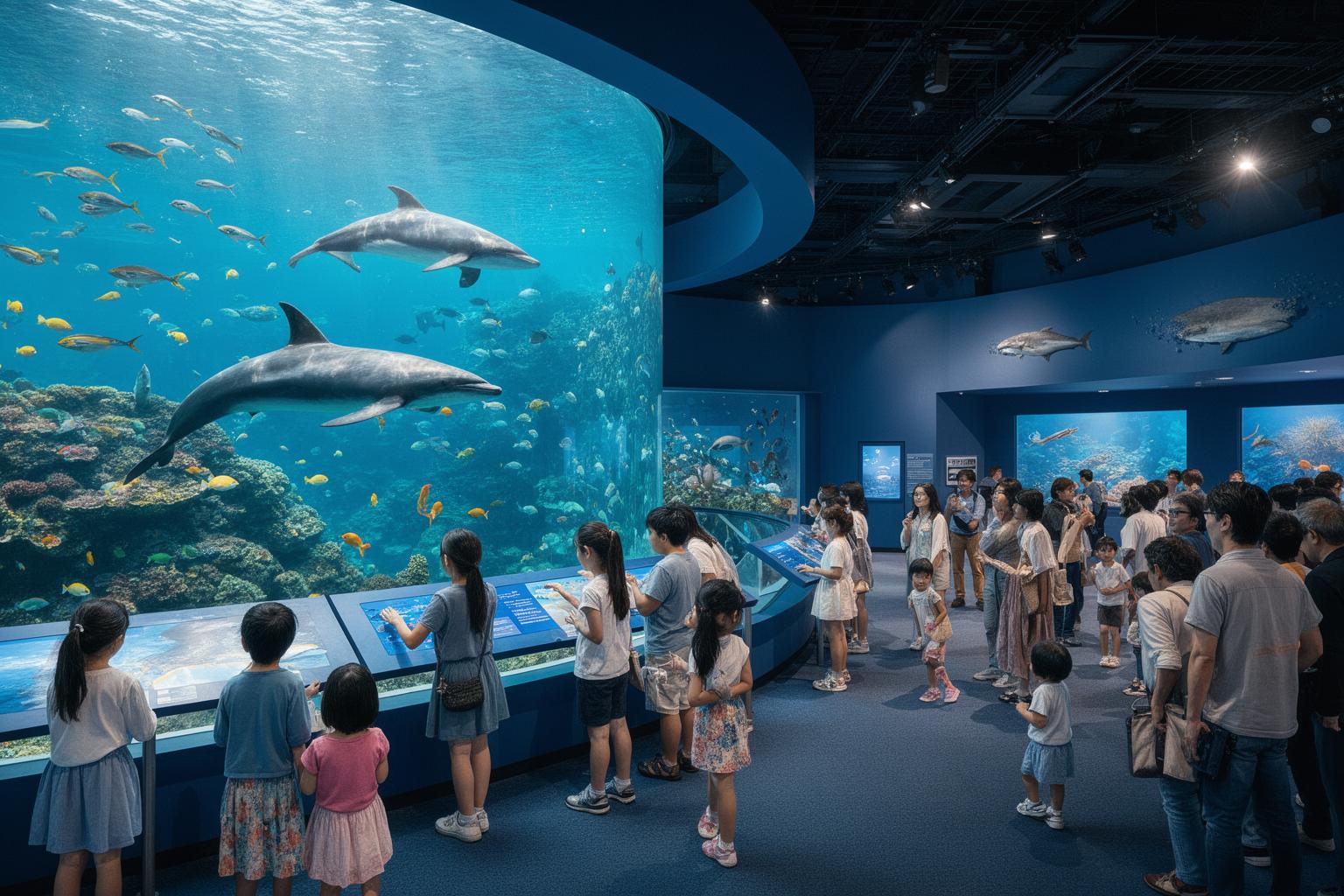
Kaiyukan recognizes that genuine learning and connection come from engaging more than just the eyes. Near the end of the main route, on the lower floors, you’ll encounter the New Interactive Area, designed to offer a hands-on, multi-sensory experience. This space is an excellent addition, particularly for younger visitors, though adults find it equally captivating. A favorite feature for many is the large, open-top touch pool, where under staff supervision, you can gently touch the backs of small rays and sharks. The sensation is unforgettable: the rays feel smooth and surprisingly soft, while the skin of the small sharks is rough like sandpaper. This tactile experience is powerful, dissolving fear and replacing it with curiosity and respect, creating a connection that simple observation cannot achieve. Another part of the interactive area highlights the Arctic, allowing you to see charming ringed seals in a specially designed tank with a low acrylic dome that you can pop your head into for a 360-degree view. Nearby, a room simulates the region’s frigid temperatures, letting you experience the biting cold these animals are so well adapted to. Perhaps the most mesmerizing and artistic section of the aquarium is the “Fuwa-Fuwa Kurage Kan,” or “Floating Jellyfish Pavilion.” This peaceful, dark space is filled with cylindrical tanks illuminated by shifting colored lights, where dozens of jellyfish species drift and pulse in gentle currents. The experience is ethereal and dreamlike; set to calming ambient music, watching the jellyfish is like observing a living art installation. Their translucent bells, trailing tentacles, and rhythmic movements are hypnotic, offering a moment of pure, peaceful contemplation—a perfect, otherworldly finale to your underwater journey.
Practical Navigation for Your Voyage
Embarking on your Kaiyukan adventure is incredibly easy, thanks to Osaka’s excellent public transportation and the thoughtfully designed Bay Area layout. A bit of planning can make your visit as smooth and enjoyable as a manta ray gracefully gliding through the water.
Getting There: Your Gateway to the Bay
The easiest and most popular way to get to Kaiyukan is via the Osaka Metro. Take the Chuo Line (the green line on the map) to Osakako Station. The name, meaning “Osaka Port,” is a helpful hint that you’re on the right track. From there, it’s a pleasant five-to-ten-minute walk. You can’t miss it—just follow the signs and the giant Ferris wheel in the distance. The walk itself adds to the experience, with the fresh sea breeze and growing excitement as the striking blue and red aquarium building comes into view.
Timing Your Visit: Navigating the Crowd
As one of Osaka’s top attractions, Kaiyukan often gets crowded, especially on weekends, public holidays, and school breaks. For a calmer experience, aim to visit on a weekday. Arriving right at opening time lets you beat the largest crowds, while visiting later in the afternoon (after 3 PM) means you’ll catch the tail end of the rush. For a truly enchanting visit, try “Kaiyu Night.” After 5 PM, the aquarium dims its tank lighting to mimic dusk, and the background music shifts to a more relaxing, atmospheric tone. Animal behavior changes too, with some becoming more active in their natural nocturnal rhythm. It transforms the space into a more intimate, mysterious, and romantic setting, making it an ideal choice for couples or those seeking a reflective experience.
Tickets and Treasures
To save time, I highly recommend booking your tickets online in advance. This lets you skip the potentially long lines at the entrance and walk right in. The official Kaiyukan website has a user-friendly booking system. As you leave, you’ll pass through the gift shop, which is an attraction in itself. It offers a delightful selection of marine-themed souvenirs, from educational books and toys to beautifully crafted stationery. The plush toys are especially popular, and you’ll find it difficult to resist taking home a cuddly whale shark, sea otter, or jellyfish.
Fueling Your Expedition: Dining in the Bay Area
After several hours exploring the ocean’s depths, you’re sure to be hungry. Conveniently located next to the aquarium is the Tempozan Marketplace, a large shopping mall featuring a wide food court and numerous restaurants. Here, you’ll find everything from Japanese staples like ramen and udon to fast food favorites. For a more unique meal, head to the Naniwa Kuishinbo Yokocho on the marketplace’s second floor. This food theme park is designed to resemble a nostalgic 1960s Osaka street. There, you can sample famous local treats like takoyaki (octopus balls) and okonomiyaki (savory pancakes) in a fun, retro setting. It’s the perfect way to recharge and continue your Osaka adventure.
The Bay Area Constellation: More Than Just an Aquarium
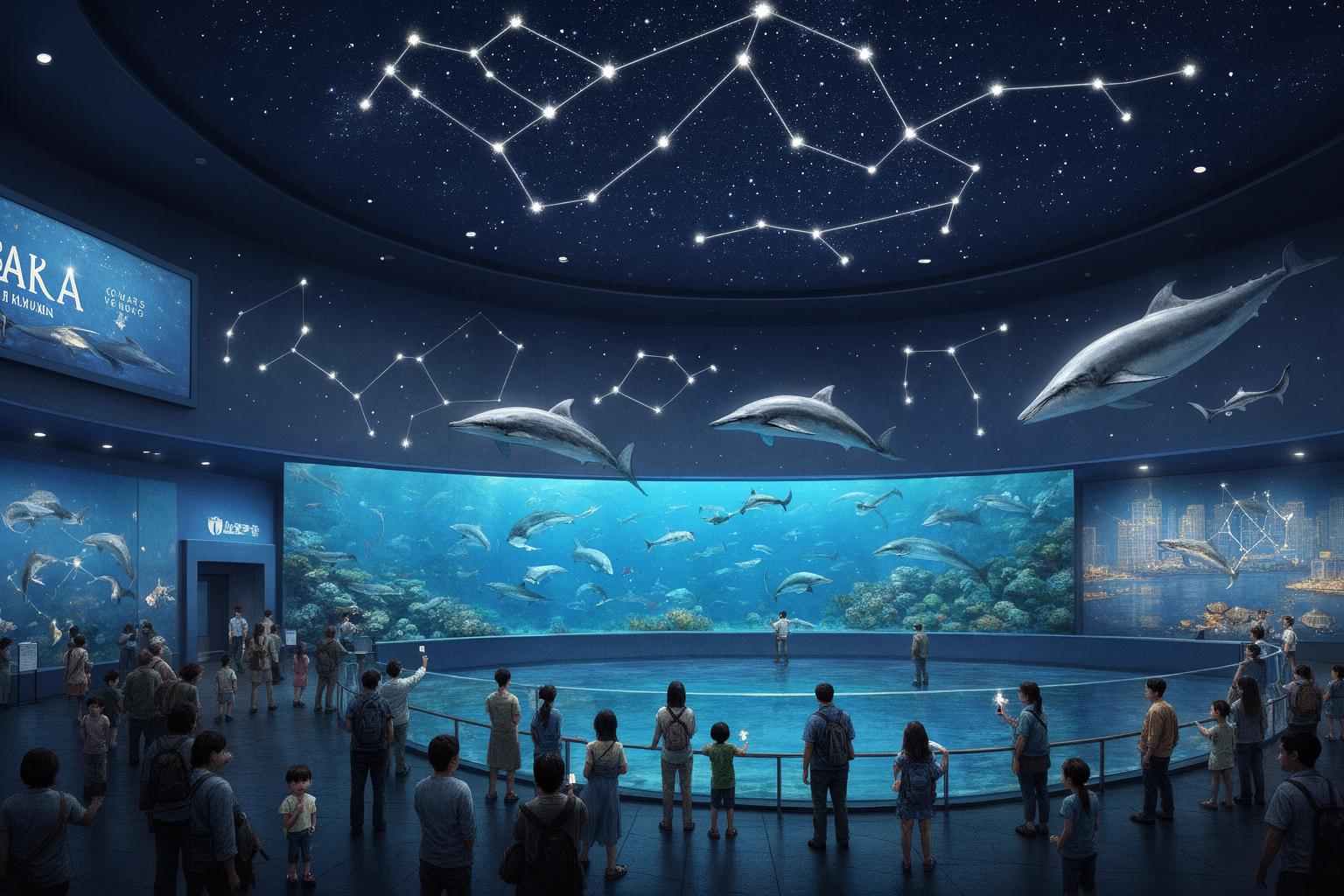
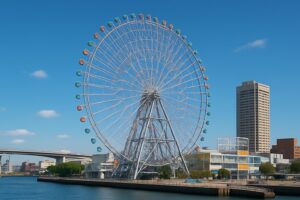
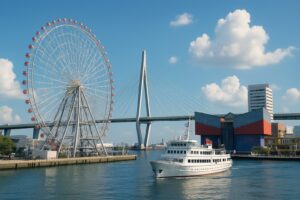
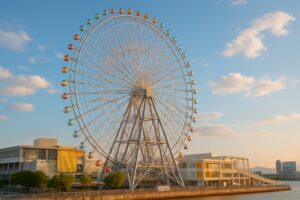
One of the greatest highlights of visiting Kaiyukan is its location. Tempozan Harbor Village is a destination in itself—a vibrant entertainment hub that can easily occupy an entire day. You’re not simply visiting an aquarium; you’re experiencing a lively, festive part of the city. The most notable landmark, besides the aquarium, is the Tempozan Giant Ferris Wheel. At 112.5 meters tall, it was once the largest in the world and still provides stunning panoramic views of the city, the port, and on clear days, all the way to the Akashi Kaikyo Bridge. For an extra thrill, you can choose to ride in one of the few fully transparent gondolas, with see-through floors, walls, and ceilings. It’s a thrilling and unforgettable way to view Osaka from above. For families with young children, the Legoland Discovery Center Osaka, also located in Tempozan Marketplace, is a wonderful addition to the day’s plans. It’s an indoor playground featuring Lego-themed rides, a 4D cinema, and millions of Lego bricks for creative building. If you prefer being on the water rather than just watching it, the Santa Maria cruise ship offers tours of Osaka Bay. This replica of Christopher Columbus’s flagship provides a relaxing and scenic journey, giving you a unique perspective of the city’s impressive port and skyline. The entire area has a wonderfully open, breezy, and laid-back atmosphere. Street performers often entertain visitors, and there’s plenty of space to sit, enjoy an ice cream, and watch the ships pass by. It’s a perfect contrast to the more crowded urban districts of Namba and Umeda, offering a refreshing seaside retreat within the city.
A Final Reflection: The Ripple Effect
Stepping out from the cool, dark, and captivating world of Kaiyukan into the bright Osaka sunshine is a disorienting experience. For a brief moment, the world seems louder, faster, and more chaotic. Yet, you carry with you a trace of the ocean’s calm. A visit to Kaiyukan is far more than just a day out; it’s a journey that gently shifts your perspective. You don’t merely see a whale shark; you feel awe for the immense scale and elegance of life beneath the waves. You don’t simply observe a coral reef; you gain an understanding of its vibrant complexity and the urgent need to protect it. The aquarium’s narrative, following the flow of the Pacific Ring of Fire, leaves you with a deep appreciation of interconnectedness—how a forest in Japan is connected to a penguin colony in Antarctica, and how all life is woven into one beautiful and fragile tapestry. You leave not with a mind full of facts, but with a heart full of wonder. Perhaps that is Kaiyukan’s greatest success. It doesn’t just educate; it inspires. It plants a seed of curiosity and responsibility that spreads outward, hopefully fostering a deeper respect for the magnificent blue world covering most of our planet.