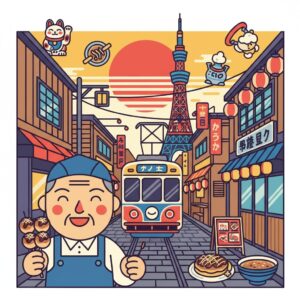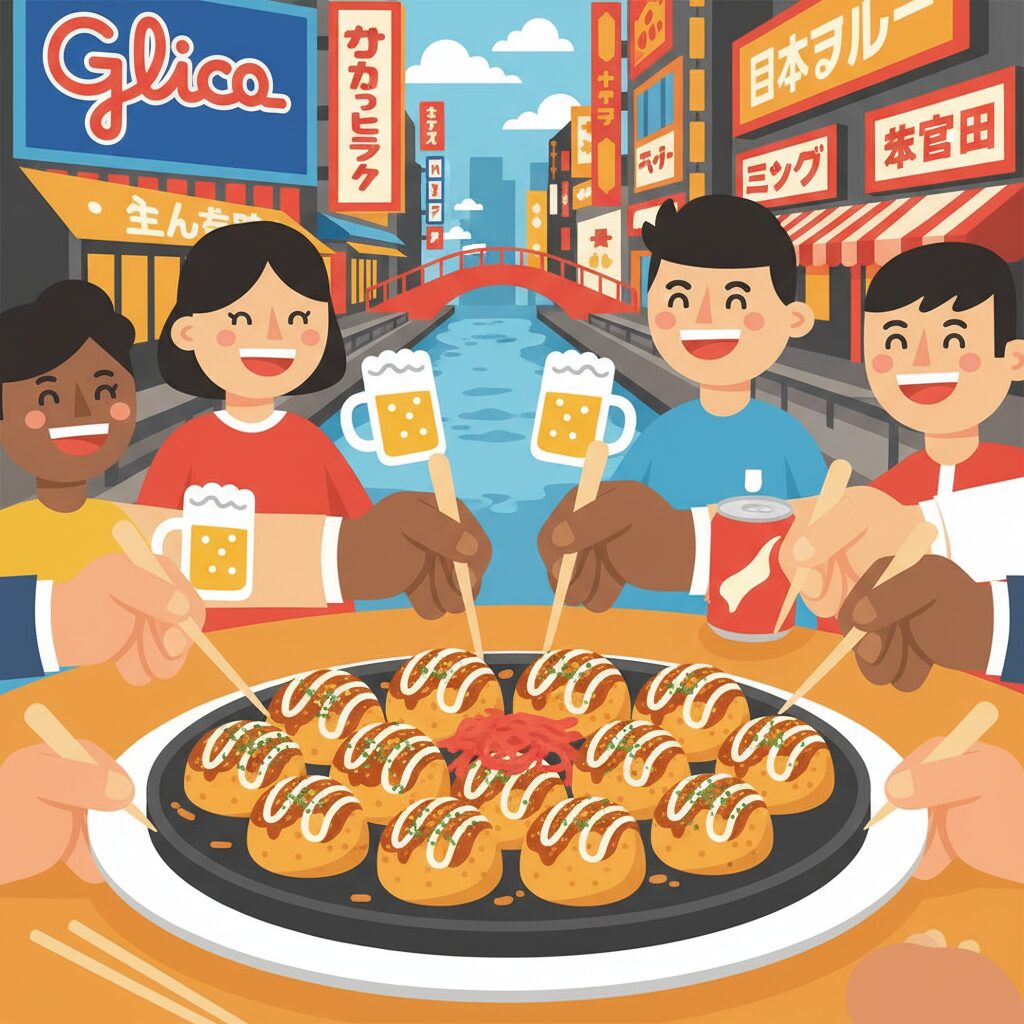
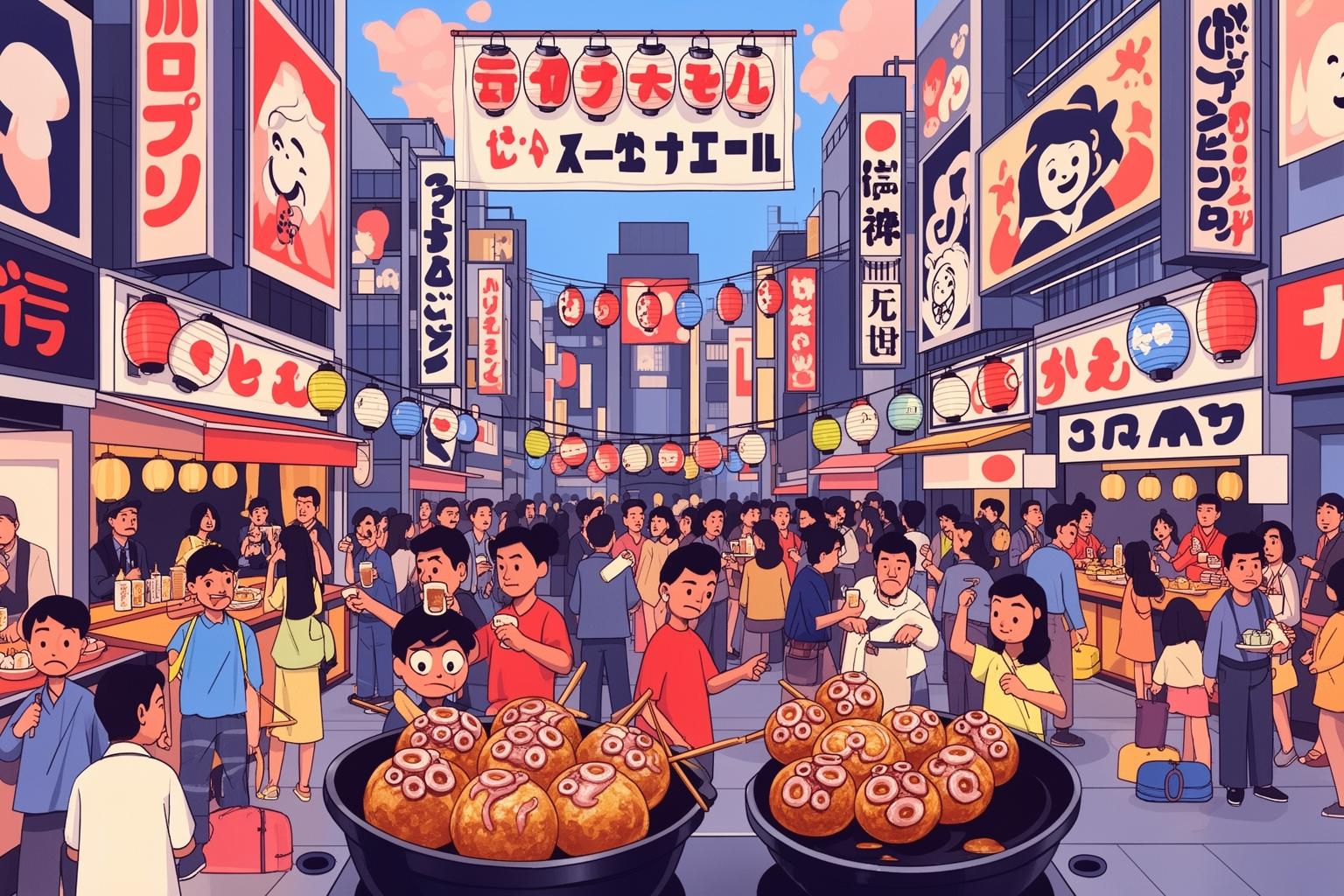
Walk through any Osaka shotengai, one of those covered shopping arcades buzzing with life, and you’ll find it. The smell of savory batter hitting hot iron, the rhythmic click-clack of metal picks against the griddle, the sight of a vendor, face slick with concentration, effortlessly flipping dozens of perfect, golden-brown spheres. This is takoyaki, the city’s undisputed culinary mascot. For most visitors, and even for many Japanese from other regions, this is the beginning and the end of the story: a delicious, piping-hot street food snack, served in a paper boat, drizzled with sweet-savory sauce and mayonnaise, and topped with dancing bonito flakes. A quintessential Dotonbori photo-op. A quick bite before diving back into the neon-soaked chaos.
But that’s just the surface, the public face of a much deeper, more intimate local phenomenon. To truly understand Osaka, you have to look past the street stall and peer into the living rooms of its ordinary apartments and houses. Because here, takoyaki undergoes a transformation. It sheds its identity as a commercial product and becomes a social ritual, a domestic institution, a crucible of friendship. This is the world of the ‘Tako-pa’, the at-home takoyaki party. The question that unlocks a crucial piece of the Osaka puzzle isn’t “Where can I buy the best takoyaki?” but rather, “What really happens at a Tako-pa?” This is where the city’s soul resides, not in the perfectly uniform balls sold under bright lights, but in the slightly misshapen, sometimes burnt, endlessly customized versions made among friends. It’s a world where nearly every household possesses a dedicated takoyaki maker, a fact that baffles people from Tokyo, and where the simple act of cooking flour and octopus becomes a complex social performance, complete with unspoken rules, assigned roles, and a specific brand of boisterous, heartfelt communication. This is where you see how Osaka really works.
To truly understand the city’s rhythm, you’ll need to find a quiet space to work, which you can discover in our guide to Osaka’s best workspaces in Namba.
The Sacred Appliance: Why Every Osaka Home Has a Takoyaki Maker
A Tool, Not a Toy
In many regions around the world, and certainly across most of Tokyo, specialized kitchen gadgets are treated as novelties. Consider the pasta maker, the ice cream machine, or the fondue pot. These are items you might receive as wedding gifts, use once with enthusiasm, and then tuck away in a high cupboard to collect dust. They are toys reserved for special occasions. However, in an Osaka household, the takoyaki maker, or ‘takoyaki-ki’, does not fall into this category. It is not a toy but a tool. It holds a place alongside the rice cooker and microwave as standard kitchen equipment. Its absence is more remarkable than its presence.
Not owning a takoyaki-ki in Osaka invites mild suspicion and raised eyebrows from neighbors. “Eh? You don’t have one?” the question lingers, implicitly followed by, “Are you really from around here?” Visit any major electronics store in Osaka—like Yodobashi Camera in Umeda or Bic Camera in Namba—and you won’t find a small, neglected display tucked away. Instead, you’ll encounter an entire aisle dedicated to takoyaki devices. There are simple electric hotplates with fixed, dimpled cast-iron tops, more adaptable models with interchangeable plates for okonomiyaki or yakiniku, and for true enthusiasts, powerful gas grills that hook up to butane canisters, offering a crispier exterior and molten interior—the ideal Osaka takoyaki. The extensive variety and retail space devoted to one dish speaks volumes. This is not a niche interest; it is a fundamental part of daily life.
The cultural importance runs so deep that the takoyaki maker is a popular and cherished gift for major life milestones. For someone moving into their first apartment, it’s a housewarming present that says, “Welcome to adult life in Osaka; now you can host your own gatherings.” For newlyweds, it symbolizes future family celebrations and shared meals. This appliance is a marker of identity, a tangible expression of Osakan pride in their ‘konamon’ culture—the affection for all things flour-based. It declares: we don’t just eat our city’s famous food; we embody it.
The Economics of Flour and Water
To grasp why this appliance is so common, you must understand Osaka’s obsession with ‘cospa’, or cost performance. Built by merchants, Osaka has long valued pragmatism, resourcefulness, and securing a good deal. This ‘akindo’ (merchant) spirit influences everyday life, including socializing. From a cospa viewpoint, Tako-pa is an unbeatable social event.
Breaking down the costs: a large bag of premixed takoyaki flour with dashi seasoning costs a few hundred yen. A small pack of boiled octopus, the priciest ingredient, is about 500 yen. Eggs, green onions, tenkasu (crispy tempura bits), and beni shoga (pickled red ginger) are all inexpensive. For a total outlay around 1,500 yen, you can make over a hundred takoyaki balls—enough to satisfy five or six people fully. Compare this to ordering pizza or dining out, which costs multiples more. The Tako-pa embodies ‘shimat-su,’ an Osakan term preferred over ‘kechi’ (stingy). While ‘kechi’ has negative connotations of reluctance to spend, ‘shimat-su’ is positive, meaning savvy, frugal, and smart resource management. Tako-pa is the ultimate expression of this mindset, delivering maximum enjoyment, interaction, and fullness for minimal expense.
This starkly contrasts with homes gatherings in Tokyo, where a party might involve elaborate dishes prepared ahead or guests bringing pricey wine and delicacies from upscale ‘depachika’ food halls. Such occasions can be subtle displays of refinement and taste. Osaka’s approach avoids this altogether: it’s hands-on, participatory, and proudly economical—an ingenious, efficient social solution worthy of the city’s merchant heritage.
Deconstructing the ‘Tako-pa’: An Unspoken Social Contract
A Tako-pa is not a typical dinner party. The word ‘party’ can be misleading if it brings to mind a host serving a carefully prepared meal to passive guests. Instead, it is much more lively: a collaborative workshop, a live show, a communal game. Everyone takes on a role, and the success of the event relies on a shared, often implicit, understanding of the social choreography.
The Cast of Characters: Roles and Responsibilities
When you enter a Tako-pa, you step onto a stage, and you are expected to take part. Although the roles are flexible, a clear structure quickly takes shape.
The Host (The Shokunin-in-Charge): The host provides the location and the essential equipment: the grill itself. They also guard the batter. Every Osaka family has its own secret batter recipe, a source of quiet pride. It may include a specific type of dashi, a splash of soy sauce for umami, or grated ‘yamatoimo’ (mountain yam) to create a fluffier, creamier texture. The host usually makes the first batch, showcasing their house style and giving a tutorial to any newcomers. Their skill is on display, and a smooth, confident performance sets the tone for the entire gathering.
The Prep Crew: A Tako-pa is an exercise in mise en place. While the host handles the batter, guests naturally gravitate toward the ingredients. One person is assigned to chop the green onions. Another carefully cuts the boiled octopus into perfectly sized pieces—not too large to prevent the ball from closing, not too small to disappear in the batter. Someone else arranges the supporting ingredients: the bowl of tenkasu, the jar of beni shoga, and any experimental fillings.
The Flippers (The Apprentices and the Masters): This is the centerpiece. Equipped with the ‘kiri’, the small, sharp metal picks used for flipping, the flippers gather around the grill. There is a clear hierarchy here, based purely on skill. The experienced Osakan, the Master, moves with economical motions. Their wrist is relaxed, the pick an extension of their hand. They know exactly when to make the crucial first turn, breaking the outer cooked layer and letting the liquid batter from above flow underneath, forming a perfect sphere. The Apprentice—often a non-Osakan friend or a younger family member—is easy to spot. Their shoulders are tense, their grip too tight. They poke tentatively, often producing misshapen, ‘Saturn-like’ takoyaki with a ring of batter, or worse, a collapse into scrambled eggs. The Master watches briefly before leaning in with a smile. “Kashite mina,” they’ll say. “Let me see that.” This is not criticism but an invitation to learn. Teaching a novice how to flip takoyaki is a cherished Osakan tradition, a moment of cultural transmission.
The Toppings Master and The Audience: As the golden-brown spheres come off the grill, another role arises: the Toppings Master. This person oversees the sauces and garnishes. They coordinate the final presentation, asking key questions: “Sauce? Mayo?” Applying the toppings is an art—a drizzle of takoyaki sauce, a lattice of Kewpie mayonnaise, a generous sprinkle of ‘aonori’ (green seaweed powder), and a final flourish of ‘katsuobushi’ (bonito flakes) that dance from the heat. The remaining guests form the audience, offering a running commentary. “Ooh, that row is cooking perfectly!” “Careful, you’re gonna burn that one!” “Meccha umai!” (“This is so good!”). They keep the energy high, appreciate the craft, and keep the conversation flowing as freely as the beer and chu-hai.
The Rhythm of the Party: From Batter to Burn
A Tako-pa flows in waves. It is a marathon of continuous cooking and eating, not a single plated meal. Guests don’t sit at a formal table; they gather around the grill, plates and drinks in hand, grabbing takoyaki as soon as they’re ready. The party follows a distinct, multi-act structure.
Round One: The Orthodox. The first few batches are almost always the classic recipe: octopus, tenkasu, beni shoga, and green onion. This round establishes the baseline, helps everyone settle into the cooking rhythm, and satisfies the initial craving. It’s the standard against which all later variations will be judged.
Round Two: The Heretical. After everyone has had their fill of the classic, experimentation begins. This is where the party’s creativity shines. “What else can we add?” Cheese is popular, melting into a gooey center. Kimchi delivers a spicy, fermented kick. Chunks of mochi become soft and chewy. Cocktail sausages, corn, even spicy cod roe (‘mentaiko’) are all fair game. This round is often driven by the more adventurous guests, who may bring special ingredients specifically for this purpose.
Round Three: The Sweet and Bizarre. If the party continues long enough and enough alcohol has been consumed, a dessert round might appear. This is when things get truly odd. Chunks of chocolate, pieces of banana, or even marshmallows are dropped into the batter. The results are often messy, absurd, and surprisingly delicious. This final round marks the party reaching a state of pure, unrestrained fun, where all rules are cast aside.
Throughout these rounds, one constant remains: the looming risk of a burned mouth. Every Osakan and anyone who has attended a Tako-pa carries a scar on their soul from eagerness. The unspoken rule is to eat takoyaki immediately after it comes off the grill, when the outside is crisp and the inside is a superheated, lava-like liquid. Waiting for it to cool means missing the textural contrast that defines great takoyaki. The little dance you do, tossing the molten ball inside your mouth while trying to breathe in cooling air, is a rite of passage. Complaining about the heat is rookie behavior; you endure it with a grimace and a laugh, sharing a collective experience of delicious pain.
More Than Just Octopus: The Unspoken Rules of Tako-pa Etiquette
Beyond the mechanics of cooking, a Tako-pa is guided by a complex set of social codes. Understanding these unspoken rules is essential to grasping the Osakan approach to hospitality and friendship. It’s not about strict formality, but about active, enthusiastic engagement.
The Ingredient Gauntlet: What to Bring
The universal rule of not arriving empty-handed stands firm, but the choice of what to bring holds particular significance. Common options like a six-pack of beer or a bottle of shochu are always safe and appreciated. Yet, to truly stand out, you need to contribute to the main activity. The pro move is to bring an interesting or unusual filling for the takoyaki itself. Showing up with a block of high-quality cheese, a container of spicy kimchi, or something unexpected like avocado or shrimp signals that you’re not merely a passive guest—you’re actively contributing to the creative process. It says, “I’ve thought this through, and I’m here to participate.” This gesture sparks conversation and clearly signals your understanding of the collaborative spirit of the event. By contrast, bringing an elaborate, pre-made dish from a department store can be a slight faux pas. While well-meant, it subtly contradicts the party’s core premise: that everyone is there to make something together. The value lies in shared effort, not a polished final product.
The Art of Conversation: Banter as the Main Ingredient
The soundtrack of a Tako-pa isn’t background music; it’s the constant, overlapping chatter punctuated by loud bursts of laughter. The process of making takoyaki—the pouring, filling, flipping—provides the perfect framework for conversation. It prevents the awkward silences that can often haunt more formal gatherings. If you’re unsure what to say, you can always comment on how the takoyaki is cooking. The conversation itself becomes a performance, deeply influenced by Osaka’s ‘manzai’ comedy tradition. The dynamic between ‘boke’ (the goofy, scatterbrained character) and ‘tsukkomi’ (the sharp, straight man) plays out continuously. People will tease each other’s flipping technique: “You’re holding the pick like it owes you money! Relax!” This teasing is not mean-spirited; it’s a fundamental form of intimacy. To be teased is to be part of the group. A foreigner who can laugh at their shaky flipping skills and even manage a clumsy ‘tsukkomi’ comeback will be quickly embraced. The talk rarely skews deep or intellectual. It’s about sharing funny stories, grumbling about the local baseball team (the Hanshin Tigers), and delighting in the shared, slightly chaotic moment. This is where the cliché of “friendly Osakans” becomes real. Their friendliness isn’t a polite, reserved smile—it’s an invitation to join the loud, messy, and hilarious joy of being together.
The Flipping Hierarchy
It bears repeating: your skill with the takoyaki pick is quietly evaluated, but in the kindest way possible. A seasoned Osakan can often wield two picks at once—one in each hand—with the precision of a surgeon and the grace of a dancer. They can manage multiple rows simultaneously, ensuring every ball is uniformly golden-brown. For a newcomer, attempting this often leads to disaster. The key to social success is not pretending you know what you’re doing. The goal is to show enthusiastic incompetence. Your struggles become social lubricant. Your mangled, broken takoyaki offer a chance for someone else to step into the role of generous, skilled teacher. By accepting their help and laughing at your own failures, you demonstrate a vulnerability essential to forming genuine connections in Osaka. Trying to be the perfect guest who never makes a mess or gets in the way is the wrong approach. The right way is to jump in, make a mess, and create an opportunity for someone to share their culture with you in the most hands-on way possible.
Osaka vs. Tokyo: The Takoyaki Divide
The unassuming Tako-pa perfectly encapsulates the cultural divide between Osaka and Tokyo. The ways in which people from these two cities socialize at home reveal fundamental differences in their values and priorities.
The Home Party Paradigm Shift
Picture a home party in a sleek Tokyo apartment. The style is likely minimalist and carefully curated. The lighting is soft, with tasteful indie pop or jazz playing in the background. The host has probably spent hours preparing food that is both beautiful and delicious, artfully arranged on elegant tableware. Guests arrive bearing thoughtfully selected gifts, perhaps a bottle of craft gin or a cake from a renowned patisserie. Conversations might center around recent art exhibits, career goals, or travel plans. It can be a sophisticated and enjoyable experience, though it often feels like a showcase of individual taste and success. The host displays their home and cooking skills; guests demonstrate their worldliness through their gifts and dialogue.
Now, turn to the Osaka Tako-pa. The apartment is likely a bit more cluttered, reflecting a life actively lived rather than meticulously arranged. The TV is probably on, loudly airing a comedy show or a baseball game, becoming part of the gathering’s ambiance. The air is thick with the aroma of hot oil and dashi. Guests crowd around a single table, shouting to be heard over one another. The emphasis is less on individual presentation and more on a collective, lively creation. The mess is integral to the fun—batter splattered on the floor, aonori dusted on the sofa—these are signs of an enjoyable time, not mishaps. This contrast underscores a key distinction: Tokyo social life often values polish, order, and individual expression, while Osaka prioritizes communal energy, unpretentious fun, and the ‘nori’—the shared mood or atmosphere of the moment.
“Why Make It So Complicated?”
At the heart of the Osaka fondness for the Tako-pa lies a strong aversion to anything ‘mendokusai’—a hassle, troublesome, or unnecessarily complicated. Osaka culture is grounded in pragmatism. Why endure the stress and ritual of a formal dinner party when a bag of flour and a hot plate can produce a more engaging experience? The Tako-pa is a cleverly efficient social invention, offering food, entertainment, and conversation all at once. It demands minimal preparation from the host and encourages guests to pitch in, spreading the effort. It answers the practical question: “How can we have the most fun with the least fuss?”
This ‘anti-mendokusai’ attitude is often misunderstood by outsiders, especially those from Tokyo, as being crude or lazy. Yet for Osaka residents, it is a source of pride. It is about stripping away superficial social formalities to reach what matters most: genuine human connection. Why waste time on polite rituals when you can be flipping takoyaki and sharing laughter? This straightforward, no-frills outlook drives life in Osaka—a city that values substance over style and action over affectation. The Tako-pa embodies this philosophy, served up and ready to enjoy.
Living the Tako-pa Life: What It Tells You About Osaka
Ultimately, the culture of the at-home takoyaki party is more than a mere culinary quirk. It offers a glimpse into the city’s very soul, revealing the social dynamics, communication styles, and core values that make Osaka such a distinctive and captivating place to live.
The Breakdown of Barriers
The takoyaki grill acts as a great equalizer. In Japan’s traditionally hierarchical society, where relationships between seniors (‘senpai’) and juniors (‘kohai’), or bosses and subordinates, are clearly defined, the Tako-pa creates a space where these structures temporarily vanish. Around the sizzling grill, everyone becomes a cook and an equal. A department manager might fumble with flipping, relying on a new, 22-year-old employee who happens to be a takoyaki prodigy for guidance. This shared, slightly playful activity builds a unique bond based on collaboration and humor rather than rank and status. Inviting a new colleague to a Tako-pa is a classic Osaka icebreaker, far more effective at integration than a formal welcome dinner. It’s a way of saying, “Let’s skip the formalities and get to know each other as people.”
The Taste of Home
While tourists debate which street stall in Dotonbori serves the best takoyaki, Osakans understand that the ultimate takoyaki is the one made at home. Its flavor is deeply tied to memory and identity. It’s the taste of their mother’s particular dashi ratio, of rowdy parties with high school friends, of lazy Sunday afternoons with family. The debates over preparation are intense and personal. Should cabbage be added to the batter for extra texture and sweetness? (A controversial but common choice.) Should the batter be thin and runny for a creamy interior, or slightly thicker? These aren’t simply culinary preferences, but declarations of family tradition and neighborhood pride. This passionate attention to local food details highlights the strong pride Osakans feel for their culture. Beneath their loud, pragmatic, and comedy-loving exterior lies a deep, enduring love for their city and its unique, homegrown traditions.
The Aftermath: A Shared Mess, A Shared Responsibility
The party doesn’t end when the last takoyaki is eaten. The final and crucial part of the ritual is the cleanup. Just like the cooking, tidying up is a collective effort. The host is never left alone to face the pile of dishes and the oil-splattered table. Without prompt, guests begin clearing plates, washing bowls, and tackling the most dreaded chore of all: scrubbing the takoyaki grill, with its tiny, crusted dimples. This last shared responsibility is perhaps the most revealing aspect of the entire experience. Having made the mess together, they clean it together. It reinforces the communal spirit of the event from beginning to end. It is the perfect, practical, and unglamorous conclusion to a perfect, practical, and unglamorous Osakan evening. It strengthens the bonds forged over the hot grill, leaving behind not only a clean kitchen but a deeper sense of camaraderie and a true taste of life in Japan’s most brilliantly down-to-earth city.