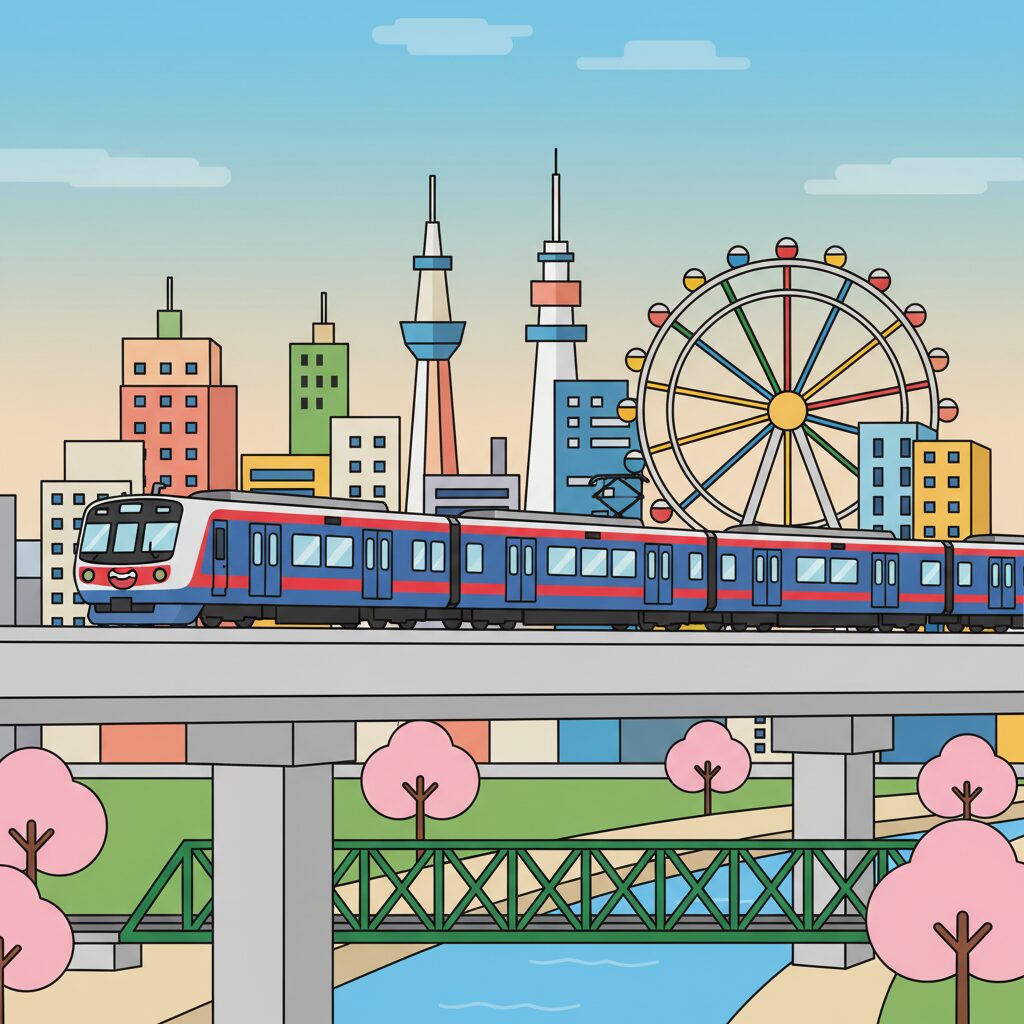
When I first moved to Osaka from Tokyo, I thought I understood trains. I mean, I survived the Yamanote Line crush, navigated the Shinjuku Station labyrinth, and mastered the art of the silent, ten-centimeter personal space bubble. A train was a train, right? A metal tube designed to get you from Point A to Point B with maximum efficiency and minimal interaction. Then I started my daily commute in Osaka, and I realized how profoundly wrong I was. Here, a train isn’t just transport. It’s a tribe. It’s a statement of identity, a rolling microcosm of the city’s complex social strata. The question isn’t just “Where do you live?” but “Which line do you ride?” And the answer speaks volumes before you’ve said another word. Forget JR for a moment; the real soul of Osaka’s daily rhythm beats along the private railways. We’re talking about the big three that carve up the landscape and the local psyche: the elegant Hankyu, the gritty Hanshin, and the sprawling Kintetsu. Learning to navigate them wasn’t about reading a map; it was about learning to read the people, the atmosphere, and the unspoken rules that govern each car. This isn’t a guide to transfers and timetables. This is a deep dive into the daily lifeblood of the city, an exploration of how three different train lines reveal three different versions of Osaka. It’s the story of a city told through the rattle of its tracks.
Amidst Osaka’s evolving transit culture and identity, exploring how international hotel brands reimagining Kansai hospitality are reshaping the region offers additional insight into its bold transformation.
The Unspoken Hierarchy: Hankyu’s Maroon Elegance
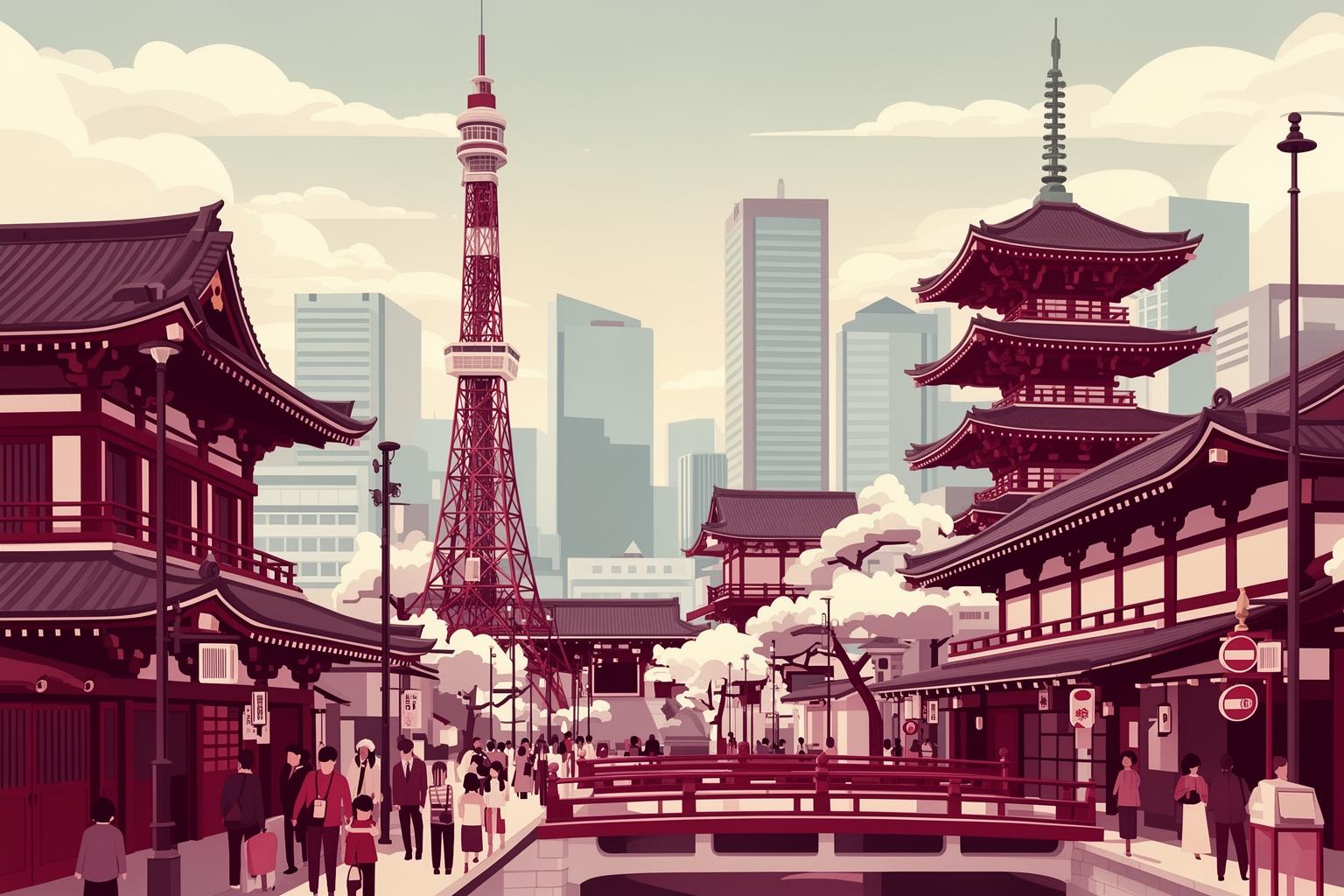
Your first ride on a Hankyu train truly surprises you. Stepping off the bustling Umeda station, the chaos seems to fade away. The cars boast a deep, polished maroon, so iconic it’s known as “Hankyu Maroon.” Inside, it’s far from the cold, sterile plastic typical of commuter trains. Instead, you’re welcomed by warm wood-grain paneling and soft olive-green wool seats. The lighting is soft and gentle. Everything feels intentional, thoughtfully designed, and impeccably clean. This isn’t merely a train; it’s a carefully crafted experience, essential to grasping the Hankyu identity. Hankyu Corporation didn’t just create a railway; it created a lifestyle. It developed upscale residential neighborhoods along its routes, from Toyonaka and Ikeda to the famously affluent enclaves of Ashiya and Nishinomiya in Hyogo. It built the grand Hankyu Department Store at its Umeda terminus, a landmark of high-end retail. And it established the all-female Takarazuka Revue, a cultural icon. Riding the Hankyu line means immersing yourself in this entire ecosystem of understated elegance.
The “Hankyu Image” and Its People
The passengers embody this image. People here appear a bit more neatly dressed, a touch more composed. You’ll see mothers with children heading to department stores, students from the prestigious Kwansei Gakuin University, and professionals carrying themselves with a quiet confidence. The atmosphere is noticeably calmer than on other Osaka lines. This isn’t the tense, anxious silence of crowded Tokyo trains where everyone stares at their phones to avoid eye contact. It’s a more relaxed, peaceful quiet. People read physical books or gaze out the large, spotless windows. Conversations take place in low tones. It feels less like a crowded commuter car and more like a mobile waiting room for a distinguished establishment. There’s an unspoken agreement to uphold this ambiance. A loud, boisterous group would feel immediately out of place, receiving not angry glares but subtle, puzzled looks. It’s a culture of collective, subtle stewardship of public space. The train is an extension of the refined neighborhoods it serves, and passengers behave accordingly.
The Seating Shuffle and the Window Gaze
Watching the seating etiquette reveals another layer of the Hankyu code. There’s a distinct, almost choreographed way people fill the long bench seats. New passengers nearly always choose seats at the farthest available ends, leaving as much space as possible between themselves and the next person. Only when the ends are taken do people start occupying the middle seats. It’s a silent, mutual respect for personal space that feels especially pronounced here. Another intriguing habit, especially on the Kyoto and Kobe lines, is how passengers often sit at a slight angle, turning their bodies toward the direction of travel, even in bench seating. This reduces accidental bumps and creates a subtle psychological boundary—a further gesture toward preserving one’s personal bubble. These small, consistent behaviors shape the Hankyu experience. It’s a commute that values order, predictability, and a shared, unspoken understanding of civility. Riding Hankyu quietly proclaims: “I appreciate a certain lifestyle, and my commute reflects it.”
The Blue-Collar Heartbeat: Hanshin’s Down-to-Earth Vibe
Walk from the Hankyu Umeda terminal through the underground passages to the Hanshin platforms, and you step into a completely different Osaka. The atmosphere shifts. The pace quickens. The refined calm fades, replaced by a raw, buzzing energy. The Hanshin Railway is the yin to Hankyu’s yang. Its trains are practical, often painted in a straightforward blue and cream. The stations feel older and more woven into the urban fabric, with tracks rumbling directly above busy shopping arcades and narrow streets. While Hankyu built its identity around creating aspirational suburbs, Hanshin’s identity is rooted in serving the dense, commercial, and industrial core between Osaka and Kobe. It’s the railway of the people, and nowhere is this clearer than in its deep connection to one passion: baseball.
The Tiger’s Roar on Rails
You can’t truly understand the Hanshin line without understanding the Hanshin Tigers. The railway literally owns the team and Koshien Stadium, their sacred home. On game days, the Hanshin line transforms completely. It stops being mere public transportation and becomes a moving stadium entrance, a flowing river of yellow and black. Fans of all ages, clad in jerseys and waving team gear, crowd the cars. The energy is electric and palpable. Strangers converse, debating the team’s chances, high-fiving after a win, or collectively grieving a loss. The usual quiet decorum of public transport is temporarily abandoned, replaced by the shared passion of sports fandom. This is the total opposite of the reserved Hankyu experience. The Hanshin line is the emotional lifeline of a vast community, and riding it means feeling the city’s heartbeat at its most intense. It’s loud, proud, and unapologetically populist.
A Different Kind of Etiquette: Pragmatism and Proximity
Even on non-game days, the Hanshin vibe is distinctive. Its passengers represent a cross-section of working-class Osaka: shopkeepers from the covered shotengai arcades, factory laborers, office workers, and students. The atmosphere is more relaxed and audibly lively. Conversations are louder, laughter more frequent. The notion of personal space so valued on the Hankyu line is far more fluid here. Passengers crowd in without strict boundaries. A bit of jostling is expected and accepted with a quick nod or a gruff “gomen” (sorry). This isn’t rudeness; it reflects a pragmatic, communal mindset shaped by the dense neighborhoods the line serves. This is shitamachi (downtown) culture in motion. The emphasis is on getting where you need to go efficiently, and if that means standing close to your neighbors for fifteen minutes, so be it. The Hanshin line doesn’t sell a lifestyle; it delivers a service. It’s a dependable workhorse, treated by its riders with a familiar, unpretentious affection. It is a place where the genuine, unfiltered character of Osaka is fully on display.
The Sprawling Kingdom: Kintetsu, Connecting Worlds
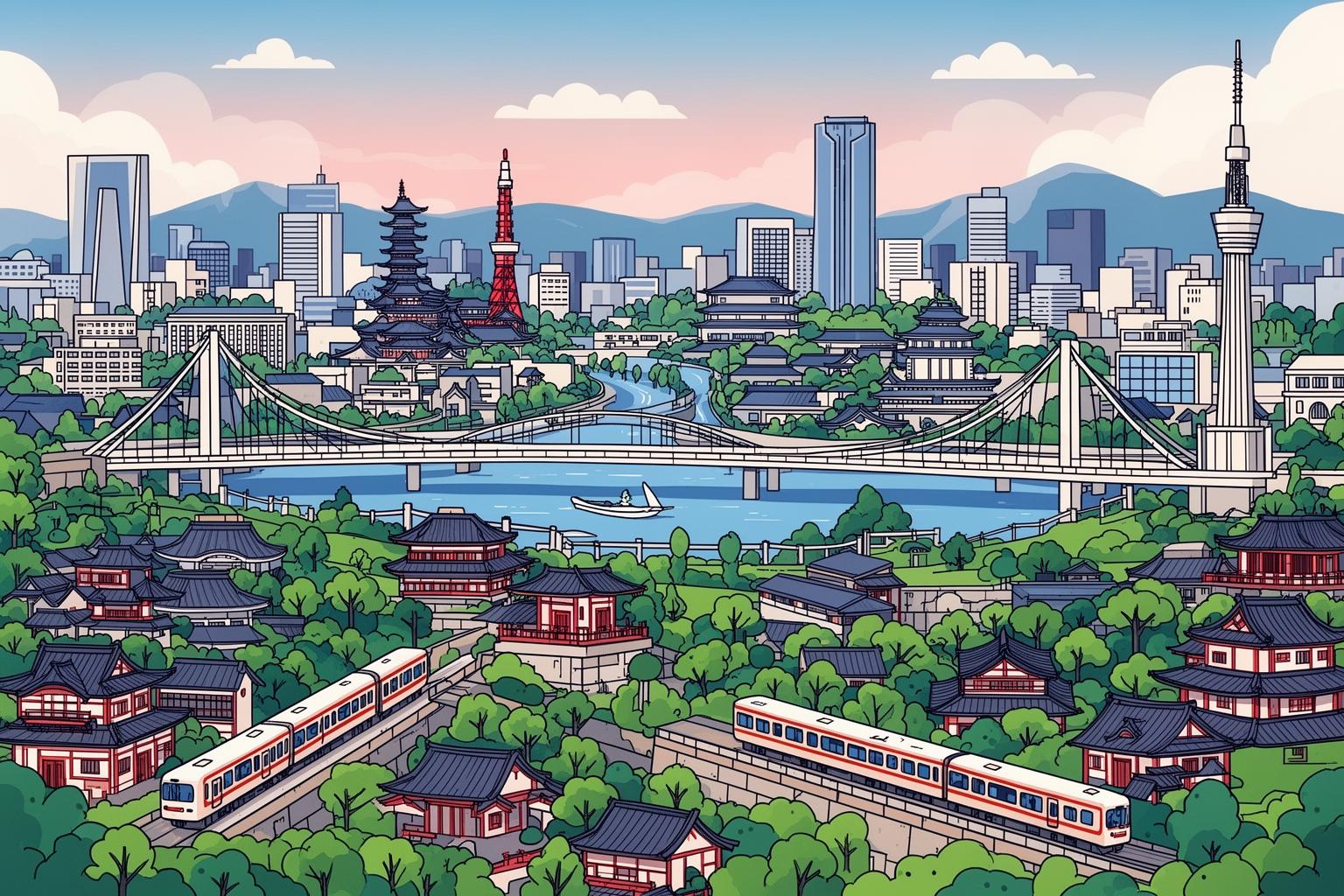
Then there is Kintetsu. While Hankyu and Hanshin engage in their parallel westward dance between Osaka and Kobe, Kintetsu stands as an empire all its own. As Japan’s largest private railway network, its reach is vast, extending from Osaka’s core southward to Wakayama, eastward to the ancient capitals of Nara and Kyoto, and even further to the Ise Grand Shrine in Mie and the industrial center of Nagoya. Riding Kintetsu means experiencing the full spectrum of life in the Kansai region. It’s the line that unites the hyper-urban with the deeply rural, and its character is as diverse and varied as the landscapes it crosses. It lacks the single, unifying brand identity of Hankyu or Hanshin, but its strength lies in its vast, sprawling utility. It is the great connector.
The Bridge Between Urban and Rural
Begin your journey at Osaka Namba or Tsuruhashi Station, and you’re immersed in a classic urban commute. The trains are crowded, the pace is hectic, and the passengers form a typical city mix of workers and students. But stay aboard as the train heads east toward Nara, and you’ll see a gradual shift. Concrete fades into suburbs, the suburbs into rice paddies and green hills. The passengers change as well. Sharp-suited office workers give way to elderly couples on a day trip to a temple, or families out for a hike. The rhythm of the train itself seems to slow. Announcements adopt a more relaxed tone. A ride on Kintetsu often feels like a journey between worlds. It serves the high-powered executive in the Abeno Harukas skyscraper (Japan’s tallest building, constructed atop a Kintetsu station) just as it serves the farmer in a quiet Nara village. This diversity means there’s no single “Kintetsu etiquette.” Rather, its social code shifts with the specific route and time of day, a fluid identity for a railway in perpetual motion.
The Art of the Long Haul Commute
Because Kintetsu spans such great distances, it nurtures a unique long-haul commuter culture. Here, you observe behaviors less common on the shorter Hankyu and Hanshin runs. Travelers come prepared. It’s common to see someone unwrap a small onigiri or a bento for a discreet meal. Sleeping becomes an art, with passengers deeply and unapologetically asleep for large parts of their journey. This also explains the popularity of the Kintetsu Limited Express. For a modest additional fee, you can reserve a seat in a more comfortable, spacious car. Unlike Tokyo, where the express fee is often viewed as a business-travel luxury, on Kintetsu, it’s a practical and typical choice for regular commuters facing hour-long rides. It’s a way to reclaim personal time, secure a seat, and transform a tough commute into a more civilized experience. This choice—between the packed standard train and the comfortable express—is a daily calculation for thousands, reflecting the practical trade-offs that shape life on the outskirts of a major metropolis.
The Osaka vs. Tokyo Commute: More Than Just Manners
My experience riding these three lines clarified for me the fundamental differences between daily commutes in Osaka and Tokyo. It’s not merely that one is louder or the other more crowded. The entire philosophy of sharing public space differs. This contrast reaches the very core of each city’s social fabric. The key misconception for many outsiders, especially those accustomed to Tokyo, is to confuse Osaka’s casualness with a lack of rules. The rules exist; they are just more flexible, more human, and grounded in a different set of social priorities.
Personal Space is Negotiable
In Tokyo, personal space is sacred and absolute. The morning rush on the Chuo Line is an exercise in becoming an inanimate object. People press together but do not acknowledge one another. Eye contact is avoided at all costs. It’s a silent, anonymous crush. In Osaka, personal space feels more like a negotiation. When a Hanshin line train gets crowded, passengers squeeze together, but there’s a sense of shared experience. You’ll hear a flurry of “sumimasen” (excuse me) and “chotto失礼” (pardon me for a moment). People physically make way for those trying to get off, actively compressing themselves to create a path. There’s recognition of the other human beings in the car. This ties into the Osaka concept of nori—the vibe, the shared atmosphere. Osakans excel at reading and adapting to the nori. If the car is quiet, they are quiet. If it’s after a baseball game celebration, they join in. In Tokyo, the rule is uniform silence, irrespective of context. In Osaka, the rule is to match the energy of the moment.
The Sound of the City
And yes, Osaka trains are louder. This is often the first complaint from Tokyoites. While talking on the phone is still officially discouraged, it’s not the cardinal sin it is in Tokyo. You’ll hear quiet, brief conversations. Friends chat and laugh. The station jingles are livelier, and announcements carry the warm, rolling cadence of the Kansai dialect. To a Tokyo ear, it might sound chaotic. But it isn’t. It simply reflects a culture where the boundary between public and private is more fluid. The commute isn’t a sterile void between life events; it’s part of life’s flow itself. The city’s personality doesn’t stop at the ticket gate; it rides the train with you. There is a fundamental belief that public space should be filled with human energy, not void of it.
A Foreigner’s Field Guide: Reading the Rails

For anyone living in or relocating to Osaka, understanding these train lines is more than just a practical necessity; it serves as a cultural Rosetta Stone. It’s your key to unlocking the city’s social geography, its values, and the subtle ways people define themselves and others. This is where you’ll encounter the city’s authentic character—not the one found in guidebooks, but the one experienced daily by millions. Your choice of train is your first step toward engaging in the real life of the city.
Why Your Train Line Defines You
Never underestimate the social shorthand conveyed by your train line. Saying you live on the Hankyu Kobe Line immediately suggests a certain lifestyle—perhaps an appreciation for quiet neighborhoods, good schools, and a degree of refinement. Living along the Hanshin line, meanwhile, evokes an image that’s more down-to-earth, community-oriented, and maybe a bit livelier. A Kintetsu address implies a life that might be more spread out, with closer connections to Nara or other Kansai areas. These are broad generalizations, of course, but they are influential and widespread. They serve as mental shortcuts people use to map the city and its inhabitants. Listening to how people describe their daily commute reveals a subtle, ongoing negotiation of class, culture, and identity.
Beyond the Rules: Finding Your Rhythm
So, what’s the takeaway for a non-Japanese resident trying to find their place? It’s this: watch, listen, and sense the flow. The posted etiquette signs are only the beginning. The real insight comes from observing the unwritten rules. Notice how people queue on Hankyu platforms versus the more chaotic rush at a busy Hanshin station. Feel the change in energy as a Kintetsu train departs the city. The goal isn’t to mimic perfectly, but to grasp the context behind these behaviors. Riding these rails offers a daily lesson in Osaka’s diversity. Hankyu suggests aspirations toward elegance and order. Hanshin pulses with a passionate, populist spirit. Kintetsu reflects the sprawling, varied reality of a connected region. The daily commute, often viewed as a chore, is in fact one of the most genuine and revealing cultural experiences here. It’s where you can truly see, hear, and feel what makes Osaka tick—one station, one packed car, one rhythmic clatter of the tracks at a time.