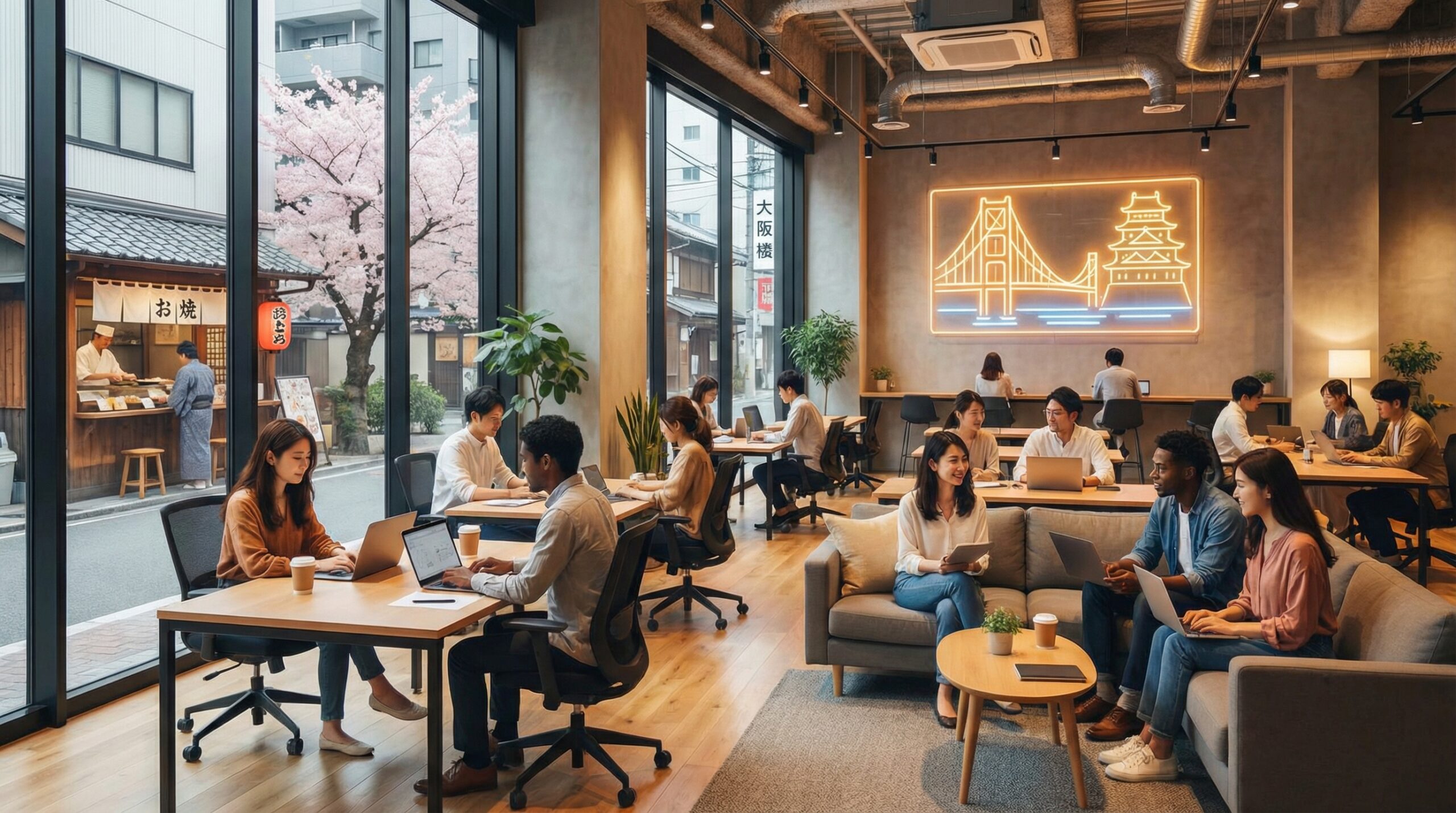
The hum of a city is a language all its own. In Osaka, it’s a percussive rhythm of bicycle bells, the sizzle of takoyaki grills, and the warm, rolling laughter of its people. When I first arrived, a Korean-American writer chasing stories of Japan’s vibrant anime culture, that rhythm was intoxicating but also isolating. I had my laptop, my deadlines, and a tiny apartment that felt more like a bubble than a home. The loneliness of the remote worker is a universal tune, but in a foreign country, it plays in a minor key. I needed more than just a Wi-Fi signal; I needed a connection. I craved a space where the frantic clatter of my keyboard could harmonize with the city’s broader melody, a place to plug into the mainframe of Osakan life. That search led me not to a quiet library or a bustling chain cafe, but into the thriving, unexpectedly soulful world of Osaka’s coworking spaces—places that promise a desk and deliver a universe.
This isn’t just a story about finding a better place to work. It’s about discovering that in Osaka, the space between the desks is filled with something profound: community, collaboration, and a genuine cultural exchange that a tourist phrasebook could never teach you. These hubs are the modern-day tea houses, the new village squares, where freelancers, entrepreneurs, artists, and wanderers from across the globe converge with local innovators. They are crucibles where friendships are forged over shared lunch bentos, where business ideas are sparked during impromptu language exchanges, and where the daunting challenge of building a life in a new country is made a little easier, one friendly face at a time. For any foreigner navigating the beautiful complexities of life in Japan’s kitchen, these spaces are more than an office; they’re an anchor, a launchpad, and a home. They are where you stop just observing Osaka and start becoming a part of its rhythm.
To truly become part of Osaka’s rhythm, mastering its efficient Osaka Metro system is as essential as finding your community in a coworking space.
The Evolution of Work in Japan’s Kitchen

To fully grasp the importance of coworking culture in Osaka, one must first understand the environment in which it developed. For decades, the standard image of Japanese professional life was rigid and uniform, shaped by the post-war economic boom. This era was dominated by the “salaryman,” defined by lifelong employment at a single company, long hours under harsh fluorescent lighting, and unwavering company loyalty. The office was more than just a workplace; it was the core of one’s social and professional identity. Work took place at the kaisha (company), where the boundaries between professional responsibilities and personal life were often intricately, and sometimes harshly, intertwined. The concept of a nomadic worker, moving between projects with only a laptop as their constant companion, was as alien as the idea of putting ketchup on sushi.
However, even the strongest tides eventually shift. The collapse of the economic bubble in the 1990s, followed by prolonged economic stagnation, began to undermine this traditional system. Lifetime employment became less certain. At the same time, the digital revolution was transforming the global work landscape. The internet leveled hierarchies and made location irrelevant for an expanding group of creatives, tech professionals, and entrepreneurs. Japan, though often seen as culturally conservative, was not exempt from these profound changes. A new generation started questioning old norms, seeking greater autonomy, improved work-life balance, and a deeper sense of purpose beyond corporate loyalty. This cultural shift had been building for years, but the global pandemic accelerated the change, pushing even the most conventional Japanese companies to adopt remote work almost overnight. The genie was out of the bottle.
Osaka, in many respects, was uniquely positioned to nurture this new work culture. Historically, it has been the rebellious, entrepreneurial counterpart to the formal, bureaucratic Tokyo. Known as tenka no daidokoro, or “the nation’s kitchen,” it was the commercial hub of feudal Japan, a city of merchants, artisans, and performers. There is a pragmatism, straightforwardness, and warmth in the Osakan spirit that encourages innovation and human connection. The strict formalities of Tokyo often give way here to a can-do attitude, a focus on results, and, naturally, a good laugh. This innate character makes Osaka an ideal home for startups and the freelance economy. The city’s DNA is infused with the hustle and creativity of self-made individuals. It understands that great achievements happen not only in boardrooms but also over a shared plate of okonomiyaki or a highball at a standing bar. It is within this vibrant context that coworking spaces arose—not merely as a real estate solution for a post-office era but as a cultural response, a “third space” that seamlessly blends the city’s historic entrepreneurial spirit with the needs of today’s modern, global workforce.
Finding Your Tribe: The Social Architecture of Osaka’s Coworking Scene
Entering the coworking scene in Osaka is like journeying through the city’s varied neighborhoods; each space carries its own unique character, rhythm, and community. The charm lies in this diversity. There is no one-size-fits-all approach. Instead, you’ll encounter a rich ecosystem of spaces designed to suit a range of needs, goals, and creative energies. Selecting a coworking space here is less about securing a hot desk and more about finding your tribe—a professional refuge where you can not only work effectively but also grow, learn, and connect. It’s a process of discovering which part of this vibrant professional landscape genuinely feels like yours, with options as diverse and exciting as the city itself.
The Startup Hubs: Igniting Ambition in Umeda and Namba
Amid the towering skyscrapers of Umeda and the vibrant, neon-lit streets of Namba, you’ll discover the powerhouses shaping Osaka’s future. These coworking spaces serve the dreamers, disruptors, and tech entrepreneurs. The energy here is electric, infused with ambition. Imagine expansive, open-plan offices with floor-to-ceiling windows offering sweeping urban views—a constant inspiration to reach new heights. The design is sleek, modern, and practical—think polished concrete floors, ergonomic seating, and walls covered in whiteboards filled with flowcharts and lines of code. The scent of freshly brewed strong coffee mingles with the steady clatter of keyboards, creating a symphony of productivity. This is where ideas become reality, and startups take flight.
The community here is a dynamic mix of local Japanese developers, international founders aiming to enter the Asian market, and venture capitalists on the lookout for the next breakthrough. Conversations, often blending Japanese and English, focus on funding, user growth, and cutting-edge AI developments. The event schedule is nonstop, designed to fuel this ecosystem: weekly pitch nights where hopeful founders get five minutes to change the world, intense weekend hackathons powered by pizza and energy drinks, and networking events where a simple business card exchange over craft beer might spark a multimillion-yen deal. Facilities boast state-of-the-art studios for podcasting, video production with green screens, and high-tech fabrication labs featuring 3D printers and laser cutters. They recognize that innovation demands not only intellect but also the right tools. For foreigners launching businesses in Japan, these hubs provide invaluable infrastructure, networks, and an immersive introduction to the local startup culture.
The Creative Havens: Supporting Art and Design in Nakazakicho and Horie
Step away from Umeda’s corporate sheen and into the quieter, bohemian enclaves of Nakazakicho and Horie. Tucked into backstreets and renovated older buildings, these spaces embody the creative heart of Osaka’s coworking scene. They serve as havens for artists, writers, designers, photographers, and makers. The vibe contrasts sharply with the startup hubs: warm wood tones, exposed brick, and ample natural light streaming through large industrial windows replace glass and steel. The air is infused with the scents of paper, ink, and oil paint, combined with the rich aroma of specialty single-origin coffee. The background is not buzzing servers, but ambient playlists, the gentle glide of a stylus on paper, or the satisfying snap of a camera shutter.
These spaces are crafted to inspire. Their walls showcase rotating exhibits of members’ artwork, creating a living gallery. Their layouts accommodate both focused solitude and spontaneous collaboration—quiet, library-like areas for writers coexist with large communal tables where graphic designers share palettes and illustrators swap techniques. The community is a vibrant mosaic of creatives from diverse disciplines and backgrounds. Here, a French fashion designer might receive advice on sourcing local textiles from a Japanese pattern maker, or an American novelist could find a local illustrator for a book cover. Events are centered on creation rather than pitching: life drawing sessions, workshops on traditional ukiyo-e printmaking, guest talks from renowned photographers, and intimate open mic nights for poets and writers. These havens are more than workspaces; they’re cultural incubators where Osaka’s raw creative energy can breathe, grow, and thrive. For foreign artists and writers, they offer not just a desk, but a muse and a supportive community attuned to the joys and challenges of the creative journey.
The Community-First Spaces: A Home Away From Home
Perhaps the most impactful coworking spaces for foreigners in Osaka are those that put community first. Often located in residential neighborhoods or just off main streets in areas like Shinsaibashi or Tennoji, these spaces feel like the city’s living rooms. Smaller and cozier, they brim with the personalities of their owners, who often act as community managers and warm hosts rather than mere administrators. Their mission is clear: to fight the isolation of modern work and foster a true sense of belonging. The vibe is inviting, relaxed, and deeply human. You’ll find mismatched comfy sofas, bookshelves overflowing with multilingual reads, and a spacious communal kitchen that serves as the space’s heart.
This is where cultural exchange happens most naturally. Daily shared lunches are sacred rituals, with members taking turns preparing dishes from their homelands, turning midday meals into global culinary journeys. One day, you might learn to make authentic dashi for miso soup from a local Osakan; the next, savor a spicy curry crafted by an Indian member. These shared meals break down barriers. Language exchange flows effortlessly over coffee, where you help a Japanese member craft better English emails, and they, in return, teach you the nuances of Kansai-ben, Osaka’s distinctive, colorful dialect. Events revolve around connection: weekend hikes to Mount Ikoma, cherry blossom viewing in spring, calligraphy workshops led by elder neighbors, and board game nights filled with laughter. For foreigners, these spaces are lifelines—offering practical advice from reading utility bills to finding trusted doctors. They’re where you make your first local friends who will welcome you to family New Year celebrations. Ultimately, these coworking spaces turn Osaka from a place you work into a place you truly call home.
More Than Just a Desk: Amenities and Experiences

The appeal of Osaka’s top coworking spaces goes well beyond their physical amenities. While fast Wi-Fi, comfortable seating, and unlimited coffee are basic expectations, the most desirable spaces recognize that their true worth lies in the experiences they offer and the support networks they establish for their members. These spaces serve as platforms for both personal and professional growth, providing a rich array of amenities and programs designed to help you succeed in all areas of your life in Japan. This integrated approach acknowledges that you are more than just a worker; you are a complete person adapting to a new culture, and these spaces are built to be your reliable partners throughout that journey.
Language and Culture on Tap
One of the biggest challenges for any foreigner in Japan is the language barrier. Although you can manage with English in tourist areas, genuine integration and deeper connections require some knowledge of Japanese. Coworking spaces have become invaluable resources for this. Many provide structured language programs, but the real treasures are the casual conversation groups. Picture a weekly “Nihongo/Eigo Chat Time,” where Japanese members wanting to practice English pair with foreign members eager to practice Japanese. It’s not a formal class; it’s a relaxed, judgment-free exchange over tea and snacks. Here, you’re not only learning grammar but also slang, cultural nuances, and conversational skills. You build the confidence to order at an izakaya, chat with local shopkeepers, and appreciate the rapid-fire humor of Osakan comedians on TV. Beyond language learning, these spaces function as cultural gateways. They offer workshops that introduce you hands-on to the arts and philosophies shaping Japanese life. You might find yourself learning the meditative art of shodo (calligraphy) from a master, exploring the principles of simplicity and nature in ikebana (flower arranging), or joining a traditional tea ceremony that teaches mindfulness and respect. These aren’t tourist demonstrations; they are authentic, member-led experiences that open a genuine window into the heart of Japanese culture.
Fueling Your Body and Mind
Acknowledging the intense pressures of modern work, many coworking spaces in Osaka emphasize wellness and work-life balance—a notably progressive concept within Japan’s traditional work culture. This focus extends far beyond providing an ergonomic chair. You’ll discover dedicated quiet rooms or meditation spaces where you can unwind and recharge during a hectic day. Some larger venues offer weekly on-site yoga or mindfulness classes, making it easy to prioritize your physical and mental well-being without leaving the building. The communal kitchen is often a lively hub of healthy activity. In addition to shared meals, certain spaces organize cooking classes centered on nutritious Japanese home cooking (washoku), teaching you to prepare balanced, delicious dishes. This holistic approach to well-being fosters an environment where you feel supported not only as a professional but as a person. It’s a subtle recognition that your best work flows from a place of balance, and the space itself is designed to help you maintain that balance.
The Gateway to Professional Japan
For freelance and entrepreneurial expats, navigating the Japanese business landscape can be a maze of unwritten rules, intricate etiquette, and bureaucratic obstacles. Coworking spaces serve as a vital bridge, simplifying the process and offering access to networks that would otherwise take years to develop. They routinely host seminars and workshops tailored to the needs of foreign professionals. You might attend expert-led sessions on critical topics like establishing a business (kabushiki gaisha or godo gaisha), understanding the Japanese tax system for freelancers, and managing the visa application process. These practical and informative events can save you countless hours of uncertainty and potential errors. Moreover, the networking opportunities are priceless. Within your coworking community, you’re surrounded by potential clients, collaborators, and mentors. It’s a trusted, pre-screened environment. An introduction from a fellow member or community manager carries considerable weight in Japan’s relationship-driven business culture. Whether you’re a software developer seeking a local UI/UX designer or a marketing consultant aiming for Japanese clients, the connections forged within your coworking space can become the foundation of your professional success in Osaka.
Practicalities: Navigating Your Coworking Journey in Osaka
Starting your coworking journey in Osaka is an exciting opportunity, but having some practical knowledge can help you find the ideal space and smoothly navigate local customs. The multitude of options can feel overwhelming, but by carefully considering your needs and understanding the system’s nuances, you can discover a space that not only enhances your productivity but also enriches your life in Japan. Think of it as a matchmaking process: you’re seeking a long-term partner for your professional path.
Choosing the Right Space for You
Before visiting any spaces, take a moment for self-reflection. What are your non-negotiables? Begin with location. Being close to your home is convenient, but proximity to major train lines like the Midosuji Line (the city’s main artery) or the JR Osaka Loop Line is even more advantageous, offering easy access across the city. Consider the neighborhood’s atmosphere: do you thrive in the energetic buzz of Umeda, or do you prefer the quieter, artistic feel of Horie? Next, honestly evaluate your work style. Do you need complete silence to focus, or do you work better with some background noise? Visit potential spots and observe the sound environment. Many provide a mix of social hot-desking areas and quiet zones.
Cost is naturally a key factor, with pricing varying widely. A day pass—usually between ¥1,500 and ¥3,000—is a great way to try out a space. For regular use, monthly hot-desking memberships are most common, costing between ¥20,000 and ¥40,000. If you require a permanent desk with storage, expect to pay more; private offices represent the top tier. Don’t just consider the price—think about the value. Does the membership offer 24/7 access? How many free meeting room hours are included? What is the quality of the coffee? Most importantly, check the community and event calendar. A slightly pricier space with a lively community and events aligned with your interests and goals often offers far greater value than a cheaper, sterile environment. Don’t hesitate to request a free trial day; most reputable spaces will accommodate this.
Understanding the Etiquette
Although coworking spaces are generally more casual than traditional Japanese offices, they still reflect Japanese cultural norms. Keeping a few etiquette points in mind will help you integrate smoothly and show respect to fellow members. Cleanliness and order are paramount. Always clean up immediately after yourself in the kitchen—wash your mugs, wipe counters. Leaving a mess is viewed as a major social faux pas. Be considerate about noise—keep your voice moderate even in social areas, and take phone or video calls in designated booths or meeting rooms. Loud conversations in open workspaces are considered very rude, as sharing space harmoniously is essential.
Networking is encouraged but tends to be more subtle than in Western cultures. Direct, hard-sell approaches to strangers are unlikely to be welcomed. Instead, nurture relationships organically: attend events, join communal lunches, and let conversations flow naturally. The exchange of business cards, or meishi, remains a significant ritual. When receiving a card, accept it with both hands, study it briefly, and place it respectfully on the table during your conversation—never just shove it in your pocket. This shows respect for the person and their professional identity. Finally, a simple greeting goes a long way. Saying “Ohayo gozaimasu” (Good morning) upon arrival and “Otsukaresama desu” (a versatile phrase recognizing hard work) when you or others leave helps foster a friendly and positive atmosphere.
A Personal Reflection: Finding My Corner of Osaka
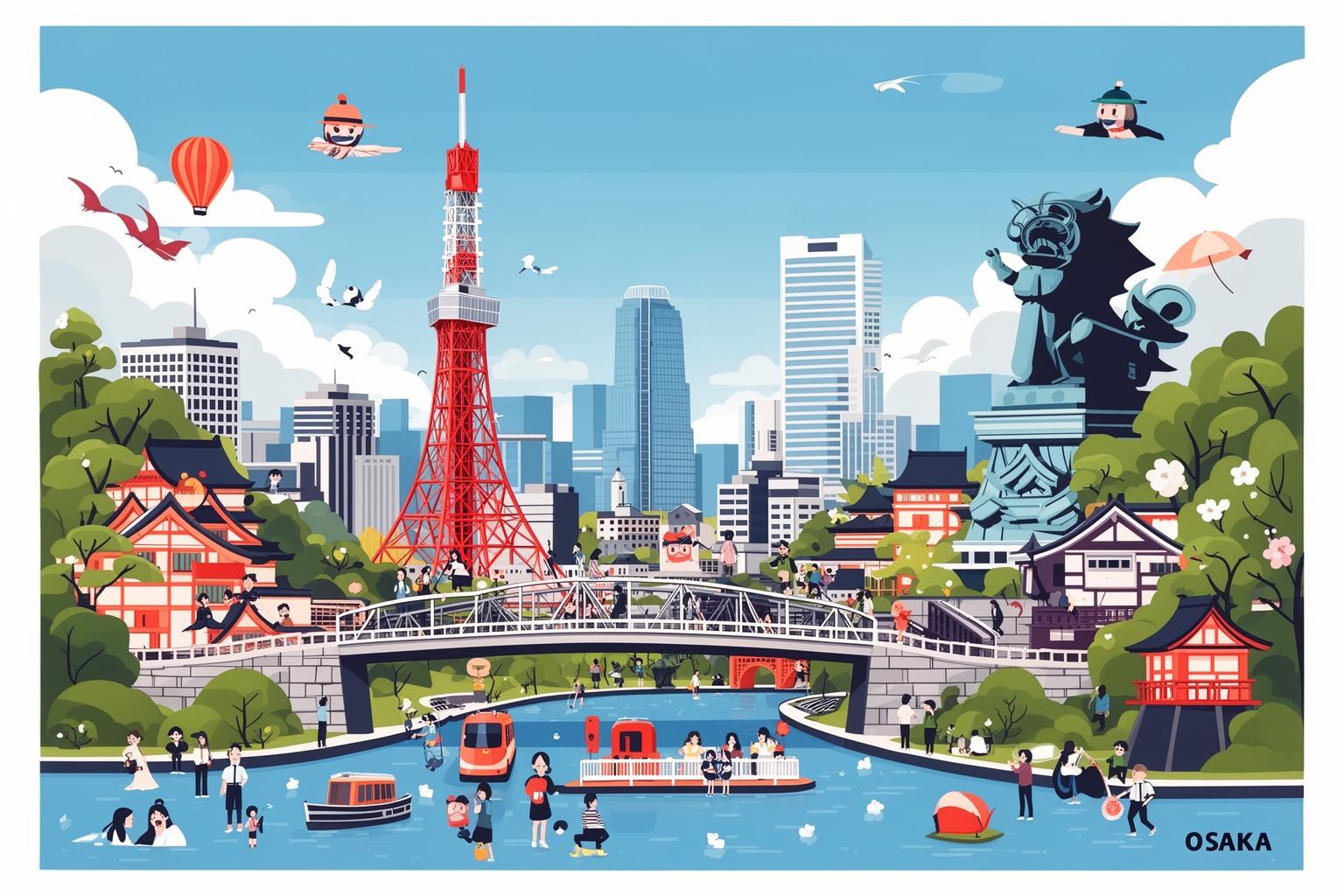
I discovered my place in a small, community-oriented spot tucked away on a quiet street near Tennoji Park. It wasn’t the most extravagant or modern. The furniture was a mix of vintage pieces, and the coffee was brewed with a simple drip machine. Still, its spirit was vast. The owner, a woman named Keiko-san, had a remarkable ability to make everyone feel acknowledged. She remembered not only our names but also our projects, challenges, and favorite snacks. It was there, during a weekly shared lunch, that everything shifted for me.
I was wrestling with a particularly challenging piece of research for an article, trying to grasp the nuanced history of a niche animation studio based in Kansai. I mentioned my frustration casually while passing the soy sauce to a quiet, older Japanese gentleman named Tanaka-san, whom I knew to be a retired graphic designer. His eyes brightened. It turned out he not only knew the studio but also that his best friend from art college had been one of its founding animators in the 1980s. That afternoon, Tanaka-san placed a phone call. The next day, I found myself in a kissaten, a traditional coffee shop, listening to a primary source—a living legend—share stories never before recorded, all thanks to a conversation over a bowl of rice. That connection was something no amount of online research could have provided.
But it wasn’t just about professional breakthroughs. It was the small moments. Learning how to cook a perfect tamagoyaki (rolled omelet) from a fellow member. The spontaneous trip to see fireflies in the mountains of Minoo with a group I had met just weeks earlier. Tanaka-san patiently correcting my Japanese grammar, not with the strictness of a teacher, but with the gentle encouragement of a grandfather. In that space, surrounded by the quiet buzz of productivity and the warmth of genuine friendship, the immense, overwhelming city of Osaka began to feel like a village. My tiny apartment was no longer an isolated bubble; it was simply a place to sleep. My coworking space—my corner of the city—had become my real Osakan home. It was where my laptop sat, yes, but also where my life in Japan truly started to take root and grow.
Your Invitation to Connect
For anyone standing at the threshold of a new life in Osaka, feeling that familiar blend of excitement and apprehension, I encourage you to look beyond the search for an apartment or the pursuit of the best ramen. Explore these communities. Step into a few coworking spaces, purchase a day pass, and simply absorb the atmosphere. Experience the distinct energy each one radiates. Because what you will discover is a mirror of Osaka itself: a city that works diligently, dreams boldly, and never loses sight of the importance of human connection. It’s a city that welcomes newcomers not as strangers, but as new neighbors.
These spaces are more than just a trend; they are a crucial part of the modern social fabric of this remarkable city. They are the breeding grounds for the next great startup, the studios of future artistic movements, and most importantly, the welcoming refuges that help us navigate the beautiful, chaotic, and ultimately fulfilling journey of making a life here. So, by all means, open your laptop. But then, look away from the screen. Greet the person beside you. Join the shared lunch. Attend the weekend event. Step out of the digital realm and into the vibrant, supportive, and endlessly intriguing community waiting for you. This is your invitation not only to work in Osaka but to connect with its soul.