Welcome, fellow adventurer, to the pulsating, neon-drenched core of Osaka’s soul: Dotonbori. If Osaka is the kitchen of Japan, then Dotonbori is its roaring, open-flame stove, a place where the city’s spirit is simmered, fried, and served up with a side of spectacular chaos. This isn’t just a tourist spot; it’s a living, breathing testament to a philosophy known as kuidaore, which translates, with glorious abandon, to ‘eat until you drop’. Here, along the banks of a canal that has witnessed centuries of revelry, food isn’t just sustenance; it’s a religion, an art form, and the main event. The air hums with the sizzle of grills, the shouts of exuberant vendors, and the collective gasp of visitors seeing the city’s iconic, gargantuan signage for the first time. It’s a sensory overload in the most wonderful way possible, a dazzling spectacle of light, sound, and flavor that defines the very essence of this vibrant, unapologetically fun-loving city. Prepare to loosen your belt, open your mind, and dive headfirst into the brilliant madness. This is Dotonbori, and it’s waiting to feast with you.
To truly embrace the kuidaore spirit, consider learning how to connect with locals at Dotonbori’s izakayas and food stalls.
The Neon Heartbeat of Osaka
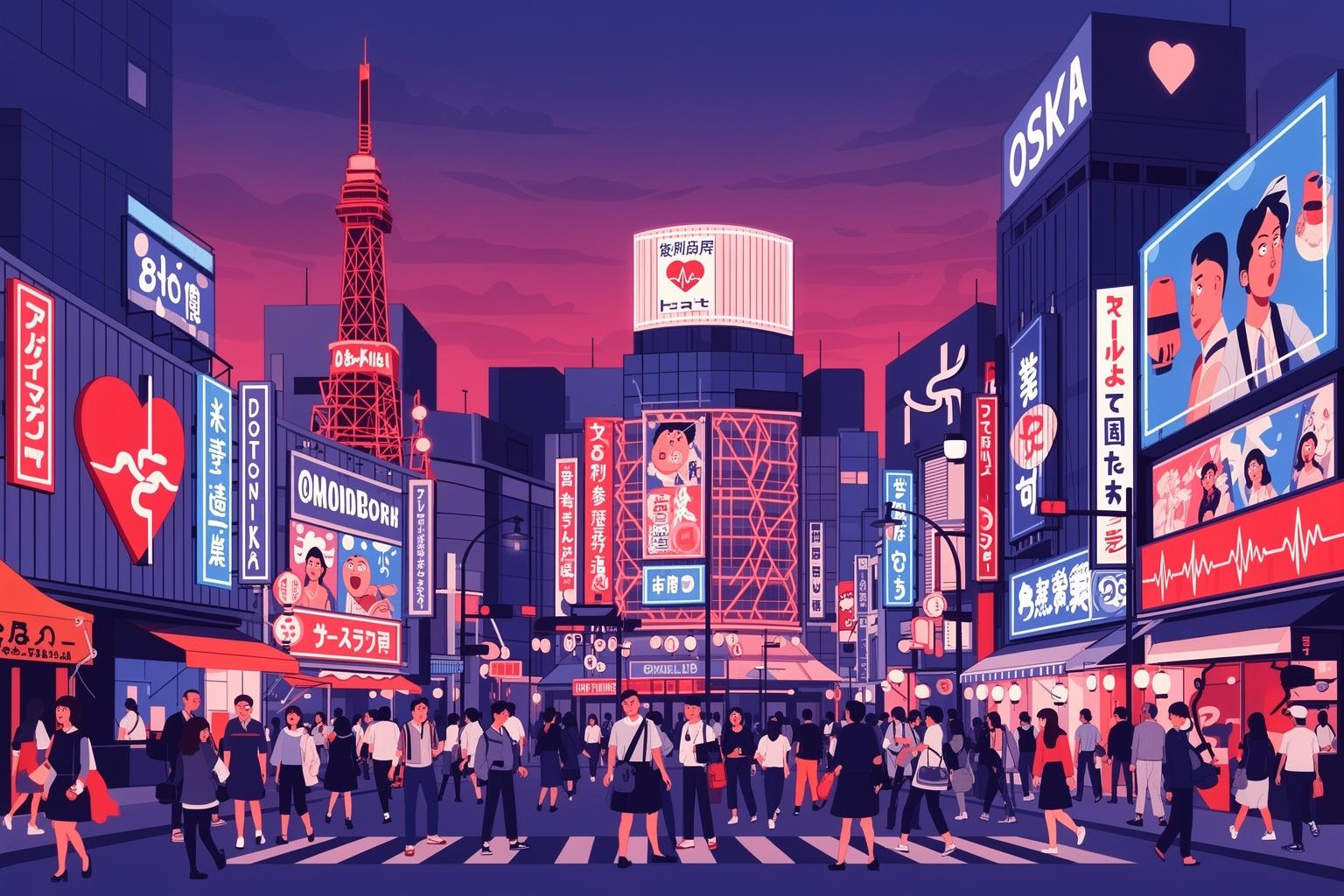
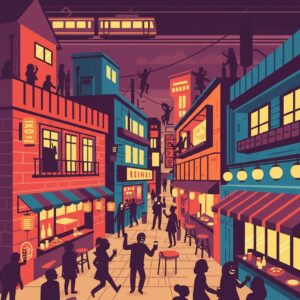
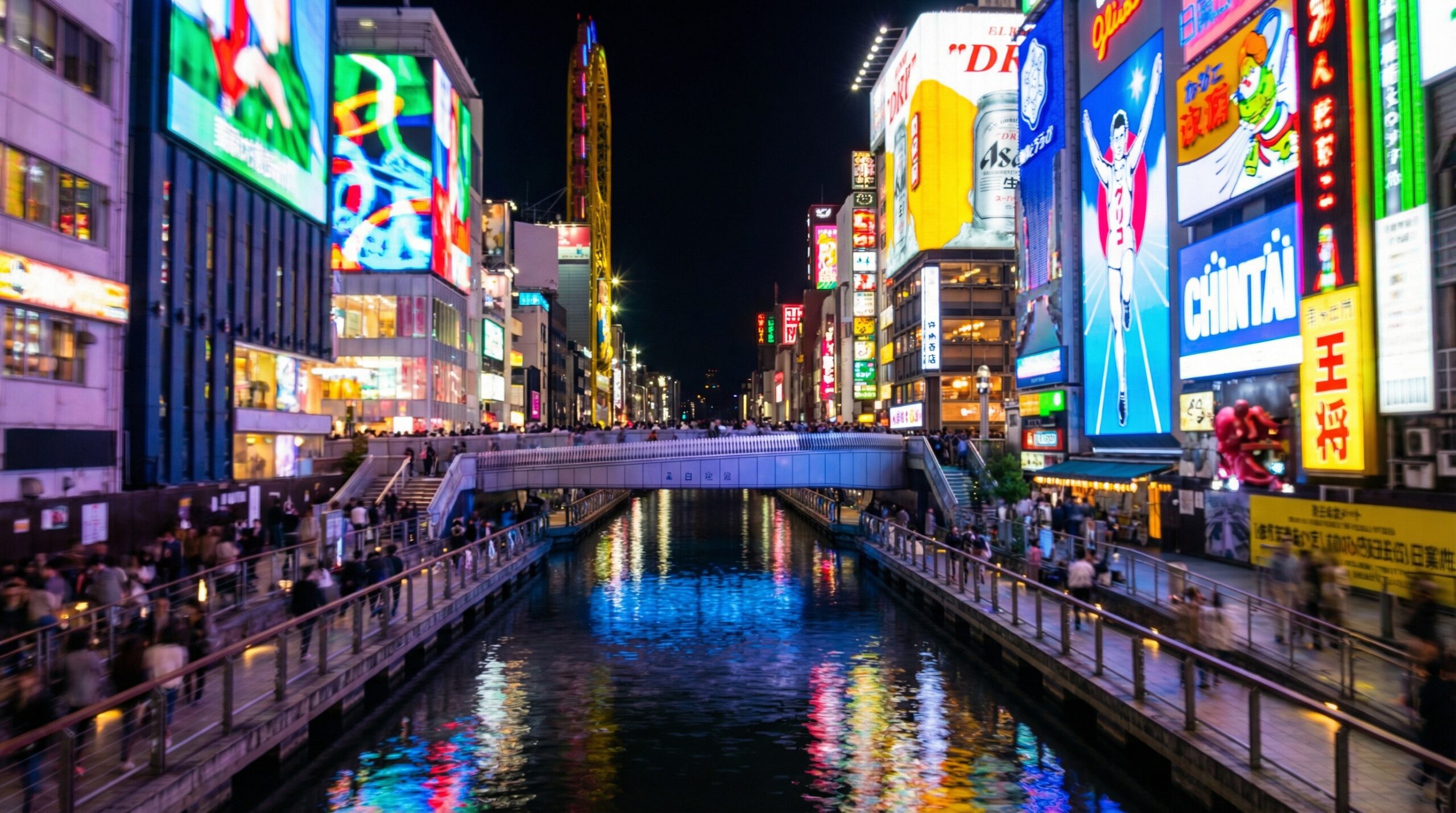
As dusk begins to fall over Osaka, Dotonbori undergoes a transformation. It starts with a slow awakening, followed by a sudden, dazzling burst of energy. One by one, the giant mechanized signs lining the canal flicker on, casting shimmering, kaleidoscopic reflections onto the water below. This is when Dotonbori truly comes alive, shedding its daytime facade to reveal an electric, nocturnal wonderland. Standing on the Ebisubashi Bridge, the district’s main artery, feels like stepping onto the set of a futuristic film, yet it carries the weight of a century of commercial spectacle.
Your gaze is instantly drawn to the icons, the larger-than-life mascots of Dotonbori’s culinary scene. There’s the massive, mechanical red crab of Kani Doraku, its claws and legs moving in a slow, hypnotic rhythm. Look further and you’ll see a giant pufferfish lantern for Zuboraya, a huge hand clutching a piece of sushi, and the solemn face of the Kushikatsu Daruma mascot, cautioning against the cardinal sin of double-dipping. But the undisputed monarch of this neon realm is the Glico Running Man. First installed in 1935, this colossal sign depicts a victorious athlete crossing a finish line, arms raised in triumph. It has become the quintessential symbol of Osaka, a backdrop for countless photos and a popular meeting spot for both locals and visitors. Standing beneath its vibrant glow, you sense a tangible connection to the city’s relentless energy and hopeful spirit.
The atmosphere buzzes with a unique mix of sounds. The cheerful, tinny jingles from storefronts compete with the bass-heavy beats pouring out from nearby arcades. The crowd’s roar on the bridge is constant, a multilingual symphony of excitement and wonder. Street vendors call out their wares, their voices forming a rhythmic chant against the sizzle of teppan grills and the bubbling of deep fryers. The air itself plays a part, thick with the savory aromas of grilled octopus, sweet soy sauce, and rich simmering ramen broth. It’s an intoxicating scent that stokes the kuidaore spirit, inviting you to join the feast. Moving through the crowded streets becomes a kind of dance, a gentle maneuvering through a sea of people all drawn here for the same reasons: to see, to taste, and to feel the pure, high-voltage energy of Osaka at its liveliest.
Kuidaore! A Culinary Pilgrimage
The journey through Dotonbori is, above all, a culinary adventure. The idea of kuidaore isn’t about indulgence but rather a passionate, joyful celebration of food. It’s about spending your last yen on a delicious dish and appreciating the craftsmanship behind a single skewer of kushikatsu or a perfectly shaped takoyaki ball. Here, street food is elevated to an art form, with every stall and restaurant serving as a temple devoted to a particular delicacy. Your senses will guide you, leading from one memorable flavor to the next.
The Titans of Takoyaki
Your introduction to the Dotonbori culinary ritual starts with the humble takoyaki. Despite its simple spherical shape, this is a miniature culinary masterpiece, exemplifying Osaka’s dedication to flavor and texture. This soul food originated right here in Osaka, with Dotonbori as its grand stage. Stalls abound, each with long lines that attest to their quality—a social proof you’re in the right place.
Imagine a cast-iron pan dotted with hemispherical molds, gleaming under the bright stall lights. A skilled vendor, with the precision of a surgeon and the speed of a drummer, pours savory, dashi-infused batter into each mold. A tender, perfectly cooked piece of octopus (‘tako’) is nestled in the center, followed by pickled red ginger (beni shoga) and crunchy tempura scraps (tenkasu). Then the magic unfolds. Using two long metal picks, the vendor performs a blur of wrist movements, skillfully turning each ball into a flawless sphere. The exterior forms a delicate, golden-brown, slightly crispy shell, while the interior stays molten and custardy—a delightful contrast defining expertly made takoyaki.
Once cooked, they’re carefully placed in a boat-shaped paper or plastic dish, ready for the flavor explosion ahead. Traditionally, they’re generously coated with a tangy, sweet brown takoyaki sauce, similar to Japanese Worcestershire, which settles in the crevices. A zigzag drizzle of creamy Japanese mayonnaise follows. Finally, a flurry of aonori (green seaweed flakes) and katsuobushi (dried, smoked bonito flakes) crowns the dish. The paper-thin flakes dance in the steam rising from the hot takoyaki, adding a theatrical flair and a deep, smoky umami note. After waiting a moment to avoid burning your mouth, the first bite is a revelation—a harmonious blend of savory, sweet, and umami, with textures ranging from crispy to creamy to chewy. This isn’t merely a snack; it’s an experience, a sphere of pure Osakan joy. You’ll spot famous names like Kukuru, known for its large octopus sign, or Creo-Ru, which offers inventive twists, but honestly, the longest, liveliest line is usually a safe bet.
The Art of Okonomiyaki
If takoyaki is Osaka’s iconic snack, okonomiyaki is its heartier, more substantial counterpart. Often called a ‘Japanese savory pancake’ or ‘Japanese pizza,’ these descriptions barely capture the comforting, soulful nature of the dish. The name itself hints at its essence: ‘okonomi’ means ‘what you like,’ and ‘yaki’ means ‘grilled.’ It’s a customizable, throw-everything-in-the-mix kind of meal and a proud institution in Dotonbori.
The base is a batter of flour, grated nagaimo (a yam that adds fluffiness), dashi, eggs, and heaps of finely shredded cabbage. This is combined with your chosen ingredients—classic pork belly slices, squid, shrimp, cheese, or mochi are popular options. The mixture is poured onto a large, flat teppan grill and expertly shaped into a thick, round pancake. It cooks slowly, allowing the cabbage to steam and sweeten while the pork crisps enticingly.
Watching the preparation is half the pleasure. At many Dotonbori venues, including the legendary Michelin Bib Gourmand-recognized Mizuno or the popular Chibo chain, the teppan grill is built into your table. A chef might prepare the okonomiyaki right before your eyes, or you might even try flipping it yourself—a challenging but rewarding task. Once cooked through, it’s slathered with the same rich, sweet okonomi sauce used on takoyaki, drizzled with mayonnaise, and topped with aonori and dancing bonito flakes. Cutting into it with a small metal spatula (‘kote’), you unveil a steaming, flavorful interior. It’s warm, hearty, and deeply satisfying—the perfect shared meal with friends over a cold beer, embodying Osaka’s communal dining spirit.
Kushikatsu: The Golden Skewers
Delving further into Osaka’s fried specialties, kushikatsu awaits. Originating from the nearby Shinsekai district but firmly embraced in Dotonbori, kushikatsu represents the pinnacle of deep-frying. ‘Kushi’ means bamboo skewer, and ‘katsu’ refers to a deep-fried cutlet. Yet it’s much more than that. Almost anything can be skewered, dipped in light panko breadcrumbs, and fried to a golden crisp: beef, pork, chicken, shrimp, scallops, quail eggs, lotus root, asparagus, shiitake mushrooms, even cheese.
A single, sacred rule governs the experience, posted in every kushikatsu shop and known by locals: NO DOUBLE-DIPPING. Skewers are served with a communal pot of thin, savory dipping sauce—you dip once, then take a bite. If you want more sauce, you use a piece of raw cabbage to scoop it onto your plate. This rule is about hygiene, yes, but also a shared social contract that adds to the meal’s tradition and fun.
Kushikatsu Daruma is one of the most famous establishments, its stern-faced mascot a Dotonbori landmark. Inside, the atmosphere is lively and unpretentious. You sit at the counter, place your order, and soon a parade of hot, crispy skewers arrives. The batter is wonderfully light and non-greasy, enveloping the ingredients and complementing their flavors perfectly. Each bite—whether a crisp lotus root, a juicy beef piece, or a creamy quail egg—is distinct and delicious. Paired with a cold beer, kushikatsu offers a boisterous, interactive, and thoroughly satisfying Osakan experience.
Ramen and Udon: The Soulful Slurp
Though fried foods steal the spotlight, Dotonbori’s noodle scene is unmatched. The district hosts some of the city’s most iconic ramen shops, offering soulful broths and perfectly cooked noodles. Kinryu Ramen, notable for its enormous green dragon emerging from the facade, is a 24-hour classic. Serving light yet flavorful tonkotsu (pork bone) broth ramen in a casual, tatami-mat setting, it has fueled late-night diners for decades.
For a contemporary and personalized experience, Ichiran stands out. Famous for its ‘ramen focus booths,’ Ichiran provides solo dining cubicles to minimize distractions, allowing diners to fully immerse themselves in their bowl. You customize everything on a paper form—the broth’s richness, garlic amount, noodle firmness, and spiciness from their signature red sauce. Moments later, a curtain lifts, revealing your perfect bowl, then closes again. The broth is a deep, rich tonkotsu, turning the meal into a meditative flavor journey.
Don’t overlook udon, the thick and chewy wheat noodle dear to Osaka’s heart. In fact, the beloved kitsune udon—udon in a light dashi broth topped with sweet, deep-fried tofu (‘aburaage’)—was born here. For a taste of tradition, Imai Honten Dotonbori is a must-visit. Established in 1946, this elegant restaurant offers a quiet respite amid Dotonbori’s bustle. Their legendary dashi is delicate and complex, showcasing the simple beauty of udon perfectly. It’s a comforting, traditional flavor that offers a gentle contrast to the area’s lively food scene.
Beyond the Bites: Dotonbori After Dark
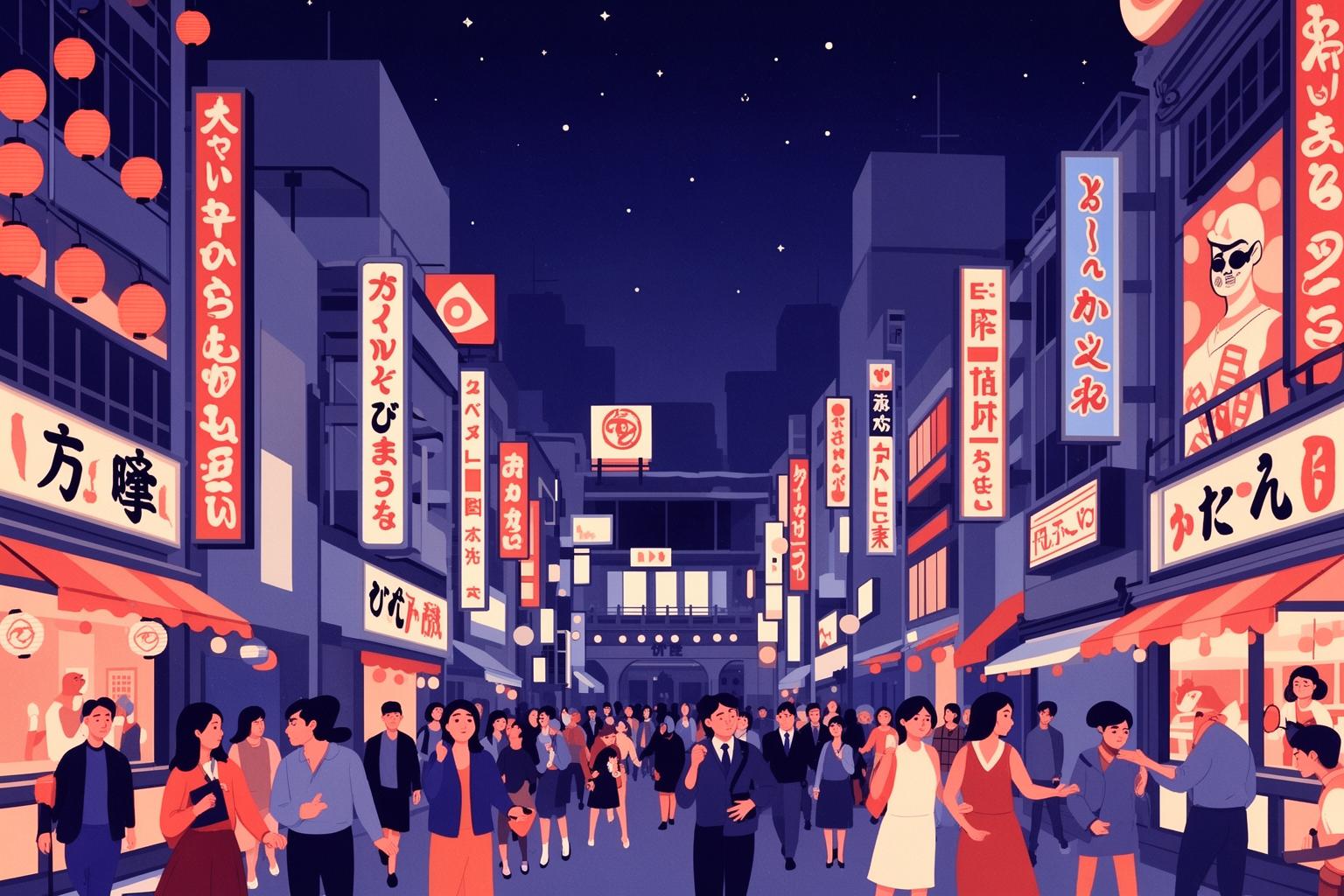
Though your stomach may eventually beg for mercy, the Dotonbori experience doesn’t end with the final bite. As night falls, the district’s vibe shifts from a food-centric frenzy to a diverse range of entertainment. This has always been Dotonbori’s essence; its roots lie in theater and pleasure, a legacy that lives on today in many forms.
The Dotonbori Canal: A River of Lights
The canal serves as the heart of the nightlife. One of the best ways to take in the dazzling neon spectacle is from the water. The Tombori River Cruise offers a brief yet stunning journey along the canal, providing a unique, low-angle view of glowing signs and lively bridges. Drifting beneath the Glico Running Man while your guide enthusiastically points out landmarks is a classic Dotonbori experience. The open-air boat lets you fully absorb the sounds and energy of the crowds along the riverbanks, who wave as you pass.
Even without the cruise, the Tombori River Walk offers a wonderful promenade for a post-dinner stroll. It’s often a bit less crowded than the main street, giving you more space to appreciate the scenery. There are benches for sitting and people-watching, plus small bars and cafés with terraces overlooking the water. At night, you might catch street performers or live musicians adding their own soundtrack to the vibrant evening atmosphere.
From Arcades to Theaters
For high-energy entertainment, Dotonbori’s complexes form a world of their own. The massive Round One building is a vertical playground packed with floors of amusement, including the latest arcade and rhythm games, bowling alleys, karaoke rooms, and billiards. It’s a noisy, colorful, and immensely fun spot to spend a few hours, especially on a rainy night.
For a more refined evening, Dotonbori’s history as Osaka’s main theater district in the Edo period deserves recognition. This tradition is proudly upheld by the grand Osaka Shochikuza Theatre. Its neo-Renaissance façade stands in elegant contrast to the neon chaos around it. The Shochikuza offers a variety of performances but is best known for traditional Kabuki plays. Watching a Kabuki show, with its dramatic makeup, stylized gestures, and rich narratives, is a captivating cultural experience that connects you directly to the district’s entertainment heritage. Even if you don’t attend a performance, admiring the theatre’s architecture is a pleasure.
A Toast to the Night: Bars and Izakayas
As the night progresses, countless bars and izakayas (Japanese pubs) invite you in. There’s everything from chic cocktail bars with sweeping views to gritty, standing-only tachinomi spots where you can mingle with local office workers over cheap beer and snacks. The true charm, however, often lies in the narrow, winding alleyways branching off the main street.
A notable example is Hozenji Yokocho, a narrow, stone-paved lane that feels like a step back in time. Illuminated by traditional paper lanterns, this atmospheric passage is lined with tiny, exclusive eateries and cozy bars. The pace is slower here, the ambiance more intimate. It’s an ideal place to savor a glass of sake or a carefully crafted cocktail, offering a quiet haven just moments from the main street’s lively chaos. Exploring these hidden alleys reveals Dotonbori’s layered character, where vibrant modern energy and serene tradition coexist beautifully.
Navigating the Neon Jungle: Practical Tips
To fully immerse yourself in the Dotonbori experience, a bit of practical knowledge goes a long way. This vibrant district is a sensory overload, and being prepared will help you navigate the bustling chaos with ease and confidence, allowing you to focus on the fun and the food.
Getting There and Getting Around
Dotonbori is very well connected, situated in the heart of Osaka’s Minami (South) district. The most convenient access point is Namba Station, which is less a single station and more an extensive underground complex served by multiple railway and subway companies. You can reach it via the Midosuji, Yotsubashi, and Sennichimae subway lines, as well as the Nankai, Kintetsu, Hanshin, and JR train lines. From any of the station’s many exits, Dotonbori is just a short, clearly signposted walk away. You’ll know you’re close when the buildings grow taller and the lights shine brighter.
The ideal time to visit is in the late afternoon, around 4 or 5 PM. This lets you witness the enchanting transition as the sun sets and neon signs flicker to life, casting vibrant hues across the sky and canal. You’ll see the district in two different lights and be there just as the food stalls start their evening rhythm. Weekdays tend to be less crowded than weekends and public holidays, though Dotonbori always buzzes with energy. The area is best explored on foot, so wear comfortable shoes. The main street is pedestrian-only in the evenings, making it easy to wander and lose yourself in the spectacle.
First-Timer’s Guide to Etiquette
Though Japan is a high-tech society, the core of its street food culture remains deeply traditional. Many of the most authentic, family-run stalls in Dotonbori operate on a cash-only basis. While larger restaurants and shops accept credit cards, having an ample supply of 1,000-yen notes and some coins will make purchases smooth and hassle-free, letting you get back to your meal faster. Don’t hesitate to point at what you want; vendors are accustomed to international visitors, and a smile goes a long way.
One important local custom to respect is the etiquette around eating while walking. Unlike many Western countries, it is generally considered rude in Japan to eat on the move. The proper approach is to buy your food from a stall and then step aside or find a nearby designated standing or seating area to enjoy it. This shows respect and helps avoid messes in crowded spaces. You’ll often find small designated areas near stalls for this exact purpose.
Finally, embrace the queue! In Dotonbori, a long line is not an annoyance; it’s a signpost pointing to something delicious. Osakans are passionate about their food and know where to find the best. Joining a line is part of the experience—a moment of shared anticipation with fellow food lovers. Be patient, take in the atmosphere, and rest assured that a delicious reward awaits you at the front.
Exploring the Surroundings
Dotonbori is an excellent base for exploring the broader Minami area. When you need a break from the neon lights or want to discover another side of Osaka, several fascinating districts are within easy reach.
Just south of the main Dotonbori canal lies Hozenji Yokocho. While mentioned for its bars, it’s worth revisiting during the day. This charming, lantern-lit alley is home to Hozenji Temple, where you’ll find the renowned Mizukake Fudo statue—a Buddhist deity covered in a thick, green mossy carpet. Worshippers pour water over the statue as they pray, nurturing this lush moss over many years. The temple’s peaceful, spiritual vibe offers a striking and beautiful contrast to Dotonbori’s commercial buzz.
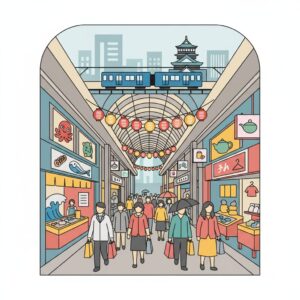
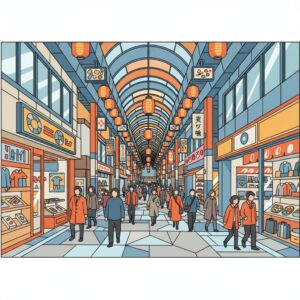
Directly north, you can walk into the Shinsaibashi-suji Shopping Arcade, a covered street extending over 600 meters. It’s a retail haven, featuring everything from luxury department stores and global brands to quirky independent boutiques and souvenir shops. It’s the perfect spot for retail therapy or simply experiencing the spectacle of Japanese consumer culture.
For a taste of youth culture, head west to Amerikamura, or “Amemura.” This district is Osaka’s answer to Harajuku, a hotspot for street fashion, vintage stores, record shops, and trendy cafes. The atmosphere here is younger, edgier, and creatively vibrant, offering yet another intriguing facet of Osaka’s diverse personality.
The Soul of a City in a Single Street
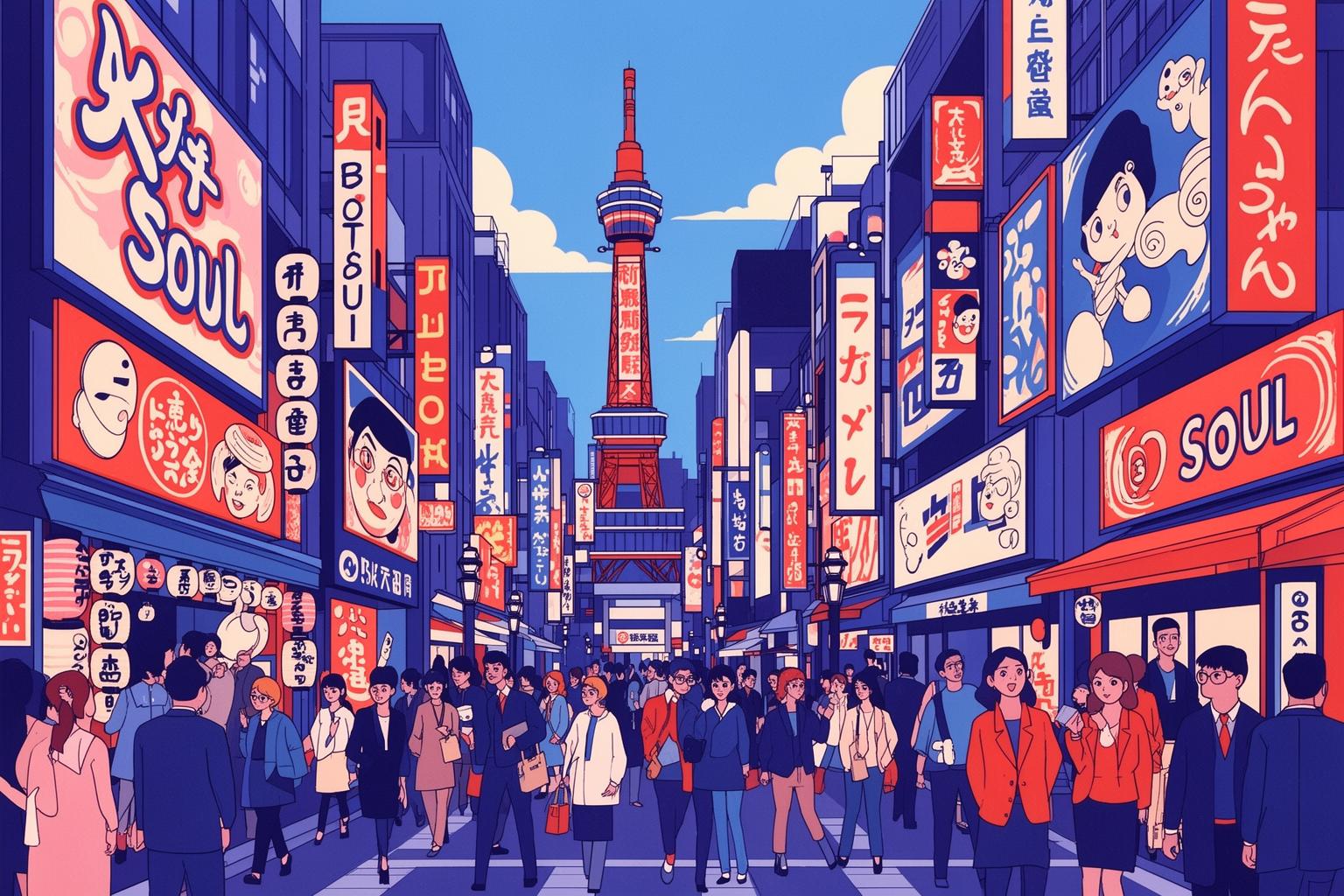
Dotonbori is far more than just a cluster of restaurants and bright lights. It is the loud, proud, and unabashedly joyful core of a city that thrives on eating, laughing, and entertaining. Strolling through its bustling streets means joining a centuries-old tradition of celebration. It embodies the kuidaore spirit—a call to shed your reservations and immerse yourself in the glorious, delicious chaos. You’ll find it in the savory steam rising from a takoyaki stand, the triumphant stance of the Glico Man, the shared laughter around a table of okonomiyaki, and the shimmering reflections of countless neon signs on the canal’s dark waters.
This is not a place for quiet reflection. It’s a place to be wonderfully overwhelmed, to have your senses sparked, and to make memories as vivid and colorful as the surroundings. So arrive with an empty stomach and an open heart. Let the crowds lead you, the aromas tempt you, and the electric energy of Dotonbori carry you through the night. Your own personal kuidaore adventure awaits.