Step off the bustling, neon-soaked streets of Osaka and push aside a simple cloth curtain, the noren. In that single motion, you’re not just entering a building; you’re stepping into the very soul of the city. This is the izakaya, a place that defies simple translation. It’s not merely a bar, nor is it strictly a restaurant. It is a living, breathing, communal space—a public living room where the day’s worries are washed away with frothy beer and the sizzle of food on a grill. For anyone looking to truly understand Osaka, to feel its rhythm and connect with its famously friendly people, the izakaya is your university, your stage, and your sanctuary. It’s here, amidst the clatter of plates, the boisterous laughter, and the fragrant steam rising from countless small dishes, that the city’s true character reveals itself. But for a newcomer, this vibrant chaos can feel like a secret society with unwritten rules and a language all its own. Fear not. This guide is your invitation, your key to unlocking the magic of the Osakan izakaya, transforming you from a silent observer into an active participant in the city’s nightly celebration of food, drink, and human connection.
After experiencing the vibrant energy of an izakaya, you might also enjoy exploring the city’s more relaxed side at some of the best Osaka local vinyl bars.
The Grand Entrance: Navigating the Noren Curtain and Beyond

Your izakaya adventure begins even before you step inside. It starts on the street, as you meander through a winding yokocho (alleyway), your senses flooded with signals. Look for the quintessential mark of a classic izakaya: the akachochin, a glowing red paper lantern swaying gently by the door, a warm beacon in the urban night. It’s a silent promise of good food, flowing drinks, and lively company within. Let your nose lead the way; the scent of grilled meat glazed with sweet soy sauce, the sharp aroma of dashi broth, and a subtle, comforting hint of cigarette smoke (common in many traditional spots) all form the izakaya’s distinctive olfactory signature.
Reading the Room Before You Enter
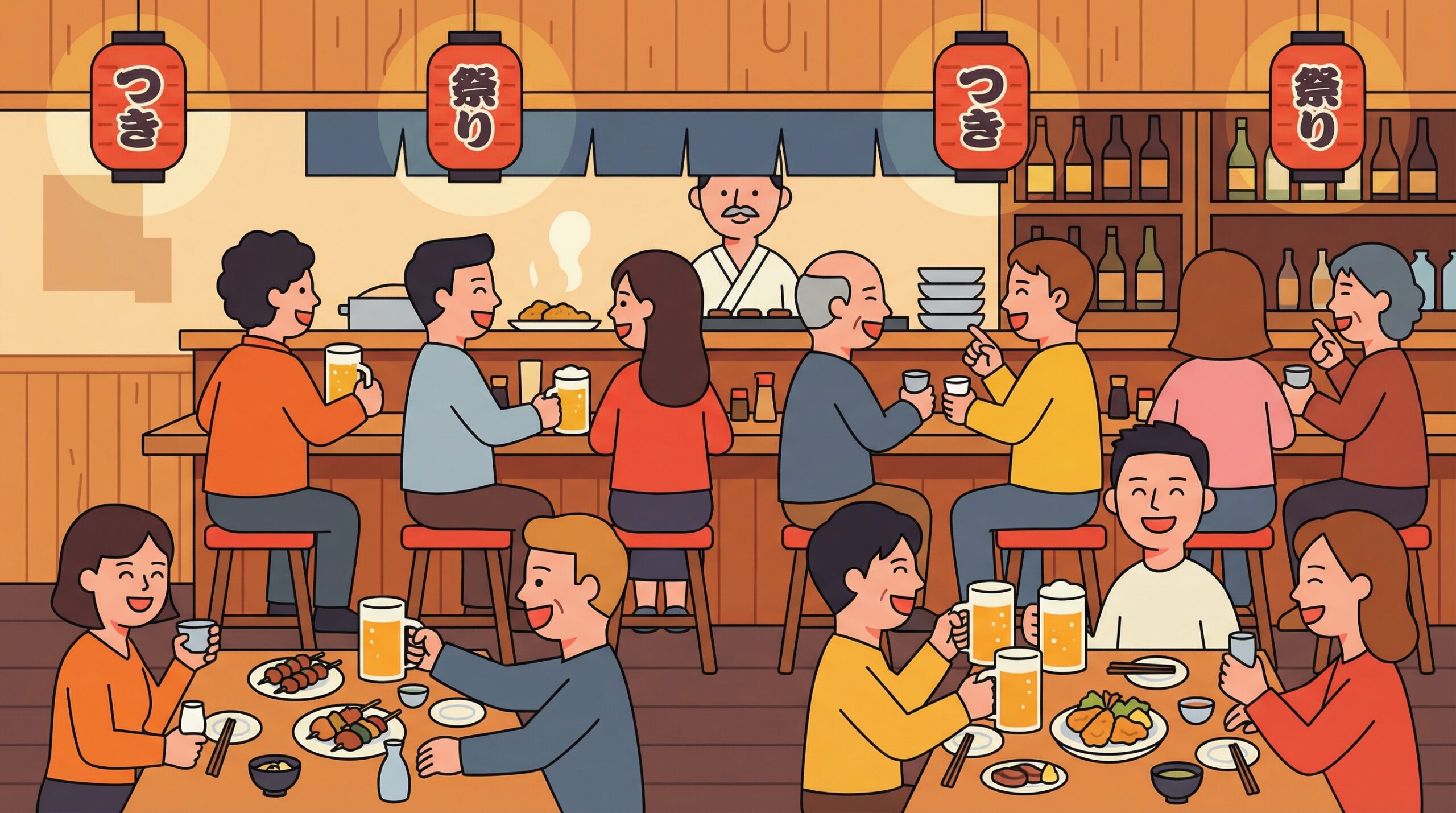
Pause for a moment at the entrance. Peek through the glass or the gap in the curtain. What do you see and hear? Is it a tachinomi, a standing bar where patrons stand shoulder-to-shoulder, engaged in lively conversation over quick drinks and snacks? These spots are perfect for a quick, energetic stop and offer an easy way to feel part of the crowd. Or does it resemble a cozier, more intimate neighborhood joint, with regulars sharing laughs with the owner in a more relaxed rhythm? These are gems for deeper, more personal interactions. Sound is a crucial clue. A lively izakaya hums with energy—the murmur of conversation, punctuated by bursts of loud laughter and the staff’s spirited calls. This vibrant soundscape is not just noise; it’s the establishment’s heartbeat. Sensing the atmosphere from outside helps you choose the experience you’re ready for. The noren itself is a symbolic threshold. Pushing it aside is an act of intent, signaling that you’re ready to leave the outside world behind and enter the convivial space within.
The Greeting Game: “Irasshaimase!” and Your Response
As you step inside, you’ll be greeted by a chorus of voices, a wave of sound that can be surprising at first. “Irasshaimase!” The staff calls out, often in unison, from the chef behind the counter to servers weaving through the tables. This is not a question, nor does it need a detailed verbal reply. It is a powerful, energetic welcome—a declaration that you’re now part of their space. The most natural response is a simple, friendly nod and smile. If you feel comfortable, a quiet “Domo” (Thanks) works perfectly. The next step is to communicate the size of your party. You don’t need a full sentence. Simply hold up the number of fingers corresponding to your group. One finger for “Hitori desu” (I’m alone), two for “Futari desu” (two people), and so on. This simple, non-verbal communication is universally understood and instantly effective. The staff will then guide you to a suitable spot, and your journey into the heart of the izakaya truly begins.
Securing Your Spot: The Art of Izakaya Seating
Where you choose to sit in an izakaya can significantly influence your entire experience. Typically, you’ll be offered a few options, each providing a distinct viewpoint on the evening’s events. This isn’t merely about finding a spot to settle in; it’s a deliberate choice that shapes your level of engagement and immersion. The staff may ask, “Kauntaa to teeburu, dochira ga yoroshii desu ka?” (Counter or table, which would you prefer?), or simply guide you to whatever is available. Understanding the differences lets you subtly steer your own adventure.
Counter, Table, or Tatami? Picking the Perfect Spot
Each seating type carries its own unique culture and advantages. Think about the kind of night you want to have. Are you eager to connect with the creators and the craft? Or do you prefer a more private area to chat with your companions? Your choice sets the mood for everything that follows.
The Counter Seat (Kauntaa-seki): Your Front-Row Experience
For solo diners, couples, or anyone genuinely interested in the heart of the establishment, the counter is unquestionably the best seat available. This is not a secondary or overflow area; in many izakayas, it’s the prime location. Sitting at the counter places you right in front of the taisho (the master, owner, or head chef), offering an intimate view of the culinary performance. You can watch skewers expertly turned over glowing charcoal, see sashimi sliced with stunning precision, and observe the kitchen staff’s smooth, practiced rhythm. This proximity acts as an invitation. It opens the door for interaction. You become more than just a customer; you become part of the audience and a potential conversational partner. Here, it’s easy to ask questions, give compliments, and build a rapport with the person crafting your meal. The counter breaks down barriers between creator and diner, fostering a shared experience that lies at the core of izakaya culture.
The Table Seat (Teeburu-seki): Ideal for Groups and Conversations
If you’re with friends or colleagues, a table seat offers the perfect setting for your own private sphere of conversation. It lets you face each other, share dishes effortlessly, and engage in discussions without feeling like you’re on display. While the kitchen action might be a bit farther away, you still soak in the overall lively atmosphere of the izakaya. At a table, getting a server’s attention requires a more subtle touch. You’ll need to be slightly more proactive—making eye contact with a nod or quietly raising your hand is customary. Shouting across the room is generally discouraged. This seating allows your group to be the focus of your own experience, while still enjoying the room’s energetic vibe.
The Zashiki (Tatami Room): Traditional and Communal
In some older, more traditional izakayas, you may find zashiki seating. These are rooms with tatami mat floors where you sit on cushions (zabuton) at low tables. The first and most important rule of zashiki is to remove your shoes before stepping onto the tatami. You’ll often find a small shoe locker or a designated spot near the entrance for this. Taking off your footwear shows respect and maintains cleanliness, instantly creating a more relaxed, home-like atmosphere. While sitting on the floor might challenge those unfamiliar with it, it fosters a unique sense of intimacy and equality within the group. It recalls a more traditional Japanese dining style and communal spirit, making the meal feel less like a commercial transaction and more like a shared feast among friends in a private home. If you have the chance to try zashiki seating, take it—it offers a truly memorable and authentic cultural experience.
Breaking the Language Barrier: Ordering Like a Pro (Even with Zero Japanese)
For many visitors, the menu is the most daunting part of the izakaya experience. A wall of beautiful but unreadable kanji characters can feel like a test you didn’t prepare for. However, ordering food and drinks relies less on language fluency and more on a few key phrases, gestures, and a spirit of culinary adventure. The staff are used to serving people from diverse backgrounds and are generally patient and helpful. Your enthusiasm and willingness to try are your greatest assets.
The Sacred First Drink: “Toriaezu, Nama!”
Before even glancing at the food menu, the first priority is drinks. In Japan, there is a strong cultural ritual known as “toriaezu biru” or “toriaezu nama,” meaning “a beer for now” or “a draft beer to start.” When a group sits down, it’s very common for one person to say, “Toriaezu, nama futatsu!” (Two draft beers to start!). This isn’t just about a universal love of beer—though Japanese draft beer is famously excellent—it’s about social efficiency and harmony. It skips a long discussion about individual preferences, allowing the first drinks to arrive quickly so the important “Kanpai!” (Cheers!) can take place. This initial toast officially starts the evening, breaking the ice and bringing the table together. The clinking of cold mugs signals the beginning of the meal. If you don’t drink beer, don’t worry. A highball (“haibouru“), a lemon sour (“remon sawaa“), or oolong tea with shochu (“uuron-hai“) are all popular and delicious alternatives. Understanding the spirit of “toriaezu nama” gives you valuable insight into the collective, get-things-started mindset of izakaya culture.
Deciphering the Menu: From Kanji Confusion to Culinary Success
When faced with an all-Japanese menu, take a deep breath. You have several strategies. First, look around. See what the people next to you are enjoying. If something looks tempting, don’t hesitate—just point and say to your server, “Are, onegaishimasu” (That one, please). This is a straightforward and entirely acceptable way to order. Many izakayas, especially in busy areas, offer menus with pictures, which can be your best guide. Pointing is a universal language. Look for the word “osusume” (おすすめ), meaning “recommendation.” Ordering the chef’s suggestion usually guarantees freshness, seasonality, or a house specialty. If unsure, you can use simple categories to help decide. Point to a section and ask, “Kore wa, yakimono desu ka?” (Is this grilled?).
Here are some key izakaya food categories to know:
- Yakimono/Yakitori: Grilled items, most famously chicken skewers (yakitori). These can often be ordered by the skewer. Try momo (juicy thigh), negima (thigh and leek), tsukune (savory meatball), or if you’re adventurous, kawa (crispy skin). You’ll often be asked “Shio? Tare?“—salt or sweet soy-based sauce. Both are delicious.
- Agemono: Deep-fried dishes, such as karaage (Japanese fried chicken), tempura (lightly battered seafood and vegetables), and korokke (croquettes).
- Sashimi/Osashimi: Skillfully sliced raw fish, depending on the daily market catch. A moriawase (assortment) is a great way to try several varieties.
- Nimono: Stewed or simmered dishes, offering comforting, richly flavored options like nikujaga (meat and potato stew) or daikon no nimono (simmered daikon radish).
- Shime: A final “finishing” dish, usually something carb-heavy to complete the meal, such as yakisoba (fried noodles), onigiri (rice balls), or ochazuke (rice with tea or broth poured over it).
Summoning the Staff: The “Sumimasen!” Signal
One of the biggest cultural adjustments for visitors from Western countries is the service style. In an izakaya, staff won’t constantly hover over your table asking if you need anything. They give you space to enjoy your conversation and meal. This means you must be proactive when you want to order more or request something. The universal magic word is “Sumimasen!” (Excuse me!). Say it clearly and confidently—not shouting, but loud enough to be heard over the noise. As you say it, try to make eye contact with a server and raise your hand slightly. This signals that you need their attention. In some modern or large chain izakayas, there may be a call button on your table, making this even easier. But mastering the classic “Sumimasen!” is an essential izakaya skill. It’s not rude; it’s the expected and proper way to interact with staff.
The Heart of the Matter: Engaging with the Taisho and Fellow Patrons
Once you’ve settled in with your first drink and dish in hand, the real magic can begin. At its core, an izakaya is a social space. The food and drink act as fuel, but the true energy comes from the human connections formed within its walls. Osakans, especially, are known throughout Japan for being more open, direct, and lively than people from other regions. Their deep love for good food, good fun, and good conversation makes their izakayas particularly vibrant places for spontaneous interactions.
Chatting with the Chef: The Magic of the Counter Seat
If you choose a seat at the counter, you have a prime opportunity to connect with the taisho. These chefs are often masters of their craft and take great pride in their work. They are the heart and soul of their establishment. Don’t be put off by their focused demeanor; they are usually very welcoming to curious and appreciative customers. The simplest way to start a conversation is with a sincere compliment. After tasting something especially delicious, catch the chef’s eye and say, with a genuine smile, “Oishii desu!” or even a stronger “Meccha umai!” (This is insanely delicious!). This small show of appreciation can open the floodgates. You can then ask for their recommendation for your next dish: “Osusume wa nan desu ka?” (What do you recommend?). This demonstrates respect for their expertise. You might inquire about a specific ingredient or the source of the fish. Show genuine interest not only in the food but in the person preparing it. Through these conversations, you’ll often learn the story of the izakaya, the philosophy behind the food, and gain a deeper connection to the culture. These moments transform a simple meal into a treasured memory.
Making Friends with Your Neighbors: The Osaka Spirit of “Kuidaore”
There’s a famous saying in Osaka: “kuidaore,” which roughly means “eat until you drop” or “eat yourself into ruin.” Though it sounds indulgent, its deeper significance lies in a passionate, all-encompassing love for food that forms a core part of the city’s identity. This shared enthusiasm serves as a powerful social lubricant. Sitting shoulder to shoulder with strangers all enjoying the same tasty food naturally fosters camaraderie. It’s not unusual for the person next to you to comment on your dish or for you to remark on theirs. A simple “Sore, oishisou desu ne” (That looks delicious, doesn’t it?) can kick off a wonderful conversation. People often ask where you’re from (“Doko kara kimashita ka?“) and are usually eager to share their favorite local spots with you. The ultimate gesture of izakaya friendship is sharing. Someone might offer you a piece of their karaage or pour you some sake. The polite way to accept is with a grateful “Sumimasen, itadakimasu!” (Excuse me, I humbly receive it!). You can return the kindness by ordering a round of drinks or a dish to share. A communal “Kanpai!” with your new friends seals the bond, blurring the line between stranger and neighbor. This is the true spirit of Osaka, and you’ll find it vibrant in every bustling izakaya.
Mastering Izakaya Etiquette: Unwritten Rules and Cultural Nuances
While izakayas are casual and laid-back, there are a few cultural customs and unwritten rules that are useful to know. Paying attention to these small etiquette points will not only demonstrate respect but also help you feel more at ease and connected to the atmosphere. These are not rigid rules but rather subtle traditions that guide social interaction.
The Otoshi Appetizer: A Welcome Gesture, Not a Mistake
Shortly after ordering your first drink, you may find a small dish placed before you that you didn’t request. Don’t worry; this is not an error. This dish is known as otoshi (or tsukidashi in some areas). It is a small, mandatory appetizer that also serves as a table or cover charge. The chef selects the dish, which is usually simple and seasonal—such as a small serving of pickled vegetables, simmered fish, or an inventive tofu creation. Culturally, the otoshi has two roles. First, it is a welcoming gesture, offering something to nibble on while waiting for your main orders. Second, it acknowledges your valued patronage. Although it may be confusing for first-timers, this practice is standard and legitimate throughout Japan. Accept it as part of the experience and a flavorful introduction to the chef’s specialties.
The Art of Pouring Drinks
When you order a large bottle of beer or sake to share, you will encounter one of the most significant rituals in Japanese drinking culture: pouring drinks for others. It is customary to keep your companions’ glasses topped up at all times. When you notice a glass running low, pick up the bottle—holding it politely with two hands, or one hand on the bottle and the other supporting it underneath—and offer to pour for them. Ideally, the label should face upward as a sign of respect. Conversely, when someone offers to pour for you, take your glass with one hand and support the bottom with the other, raising it slightly towards them. This makes pouring easier and shows appreciation. Never pour your own drink from a shared bottle; always wait for someone else to pour for you. This ongoing, reciprocal act of pouring strengthens a sense of community, attentiveness, and mutual care within the group.
Pacing Your Order and Sharing Plates
An izakaya meal is not a formal, multi-course dinner like in Western dining. Rather, it is a leisurely marathon, not a sprint. The idea is to order a few dishes at a time, share them around the table, and order more as the mood arises. This approach lets you enjoy a variety of flavors and textures throughout the evening. Food is typically served on small plates placed in the center of the table for everyone to share. When taking food from a communal dish, it’s best to use the larger, designated serving chopsticks (toribashi), if available. If not, the polite way is to flip your own chopsticks around and use the thicker, clean ends to transfer the food to your personal small plate (torizara). This slow, shared style of eating promotes conversation and allows the evening to unfold naturally over several hours.
The Graceful Exit: Paying the Bill and Saying Goodbye
As the evening comes to a close, ending your izakaya experience with grace and gratitude is just as important as how it began. The final moments you share with the staff leave a lasting impression and complete the circle of hospitality.
The “Okaikei” or “Okanjo” Request
When you’re ready to pay, you’ll need to signal the staff again. The word for “the bill” is okaikei or okanjou. A simple, “Okaikei, onegaishimasu” (The bill, please) works perfectly. There is also a common non-verbal gesture: crossing your two index fingers to form an “X,” which is widely understood to mean “check, please.” Usually, the server will bring the bill to your table, and you’ll then take it to the cash register near the entrance to pay. Paying directly at the table is less common but can vary. Often, one person in a group pays for everyone, with others reimbursing them later in cash. Splitting the bill (betsu-betsu ni) is possible but can sometimes be inconvenient for the staff, so paying as one group is generally smoother.
To Tip or Not to Tip? The Answer is No.
This is an important point of etiquette for visitors from countries where tipping is customary. In Japan, tipping is not part of the culture. It is neither expected nor necessary, and in some cases, may even cause confusion or discomfort. Excellent service is considered standard and included in the price. Trying to leave a tip might lead to a staff member returning after you to offer your money back. The best way to show appreciation for great service is with your words, not extra cash.
A Heartfelt “Gochisousama Deshita”
As you leave the izakaya, this is your moment to say the most important phrase of the night: “Gochisousama deshita.” Often translated as “Thank you for the meal,” its meaning goes much deeper and is more heartfelt. It expresses gratitude for the entire experience—the effort of the chefs and staff, the farmers and fishermen who supplied the ingredients, and the meal itself. It acknowledges all the hard work behind your evening. As you exit, turn to the staff, make eye contact, and say it with a sincere smile and a slight bow or nod. This single phrase, said with genuine feeling, is the most valuable gesture you can offer. It ends the evening on a note of mutual respect and appreciation, ensuring you’ll be welcomed warmly on your next visit.
Putting It All Together: A Few Recommended Izakaya Areas in Osaka
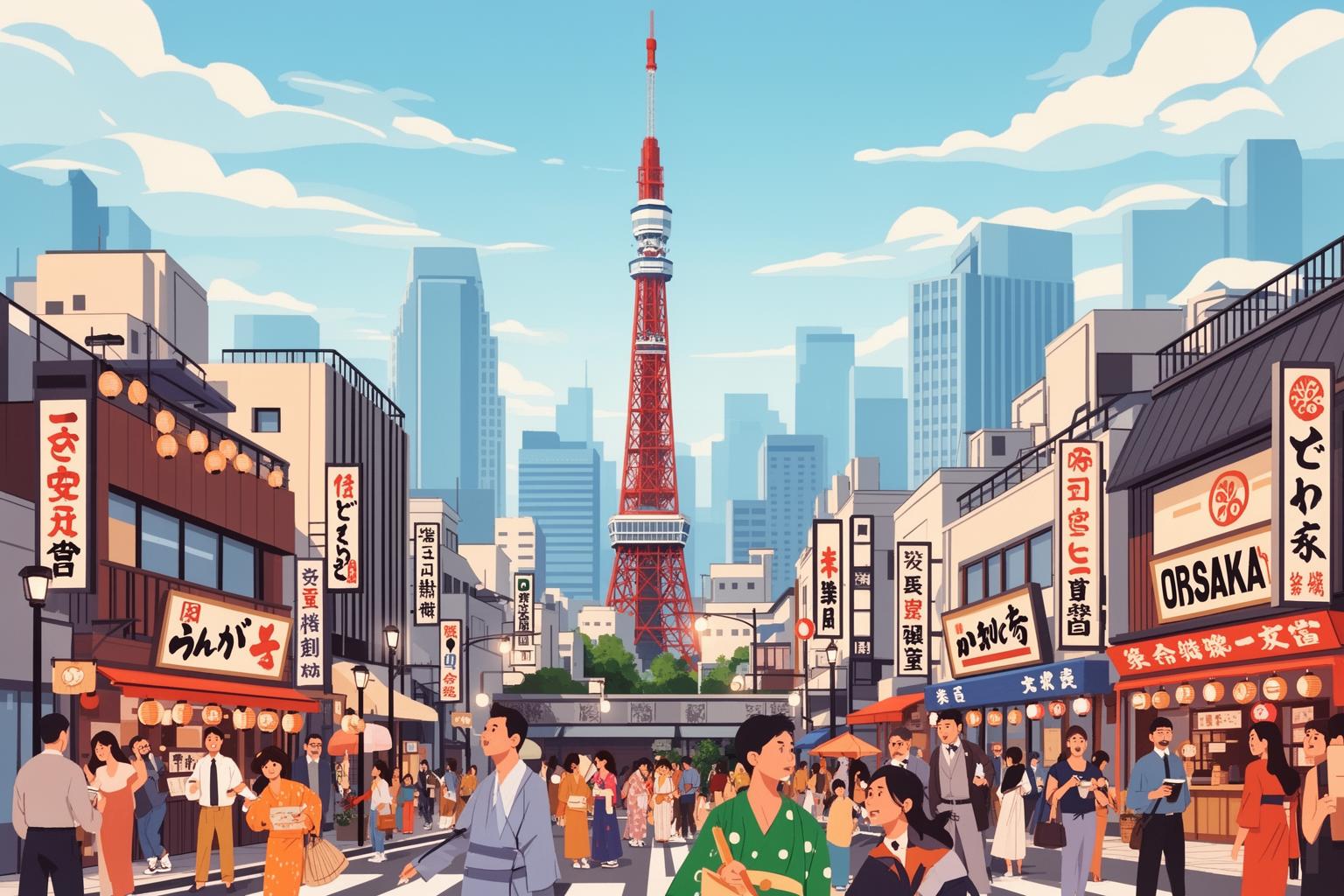
Now that you’re equipped with cultural knowledge, it’s time to start exploring. Osaka is a city of neighborhoods, each boasting its own unique izakaya scene. Here are a few areas to help you begin your journey.
Namba & Ura Namba: The Classic Hustle and Bustle
Namba is the quintessential Osaka entertainment district, a dazzling maze of neon lights, covered shopping arcades, and endless dining options. Just behind the main streets lies Ura Namba (literally “Back Namba”), a dense network of narrow alleyways packed with fantastic izakayas, standing bars, and specialty restaurants. The atmosphere here is vibrant and exciting. For a more traditional and atmospheric experience, seek out Hozenji Yokocho, a charming stone-paved alleyway that feels like a step back in time, home to higher-end yet inviting establishments.
Tenma & Kyobashi: The Local’s Paradise
For a truly local experience, head to the areas around Tenma and Kyobashi stations. These districts are less polished and see fewer tourists but abound with authentic, affordable, and character-filled izakayas. Tenma lies adjacent to Japan’s longest shopping street, Tenjinbashisuji Shotengai, and the side streets off it are full of hidden gems. The atmosphere here is lively, unpretentious, and incredibly welcoming. This is where you’re most likely to strike up a conversation with a local and truly taste everyday Osakan nightlife.
Shinsekai: Retro Vibes and Kushikatsu Rules
Shinsekai, dominated by its iconic Tsutenkaku Tower, feels like a district frozen in the mid-20th century. Famous for its kushikatsu (deep-fried skewers), the area is also packed with old-school izakayas that have served generations of working-class Osakans. When enjoying kushikatsu, you’ll encounter the most famous rule in Osaka dining: nidozuke kinshi—no double-dipping! The large communal container of dipping sauce on the table is meant for sharing, so you dip each skewer only once, while it’s fresh and clean. Following this rule shows you understand and respect the local culture, adding a fun element to the unique Shinsekai experience.
Final Thoughts: Your Passport to Osaka’s Nightlife
An izakaya is much more than just a place to eat and drink. It represents a microcosm of Japanese society—a space for community, comfort, and connection. It’s where colleagues become friends, neighbors catch up on their lives, and strangers share a laugh over a common plate of food. For those of us living in Osaka, it is an essential part of the social fabric. Your willingness to step through the noren, try a new dish, fumble through a few Japanese words, and share a smile with the person beside you—this is your passport. It will open doors to experiences far beyond what any guidebook can offer. So be curious, be brave, and be open. Raise your glass with a hearty “Kanpai!” and dive in. The heart of Osaka awaits you—one delicious, lively, and wonderful izakaya at a time.