
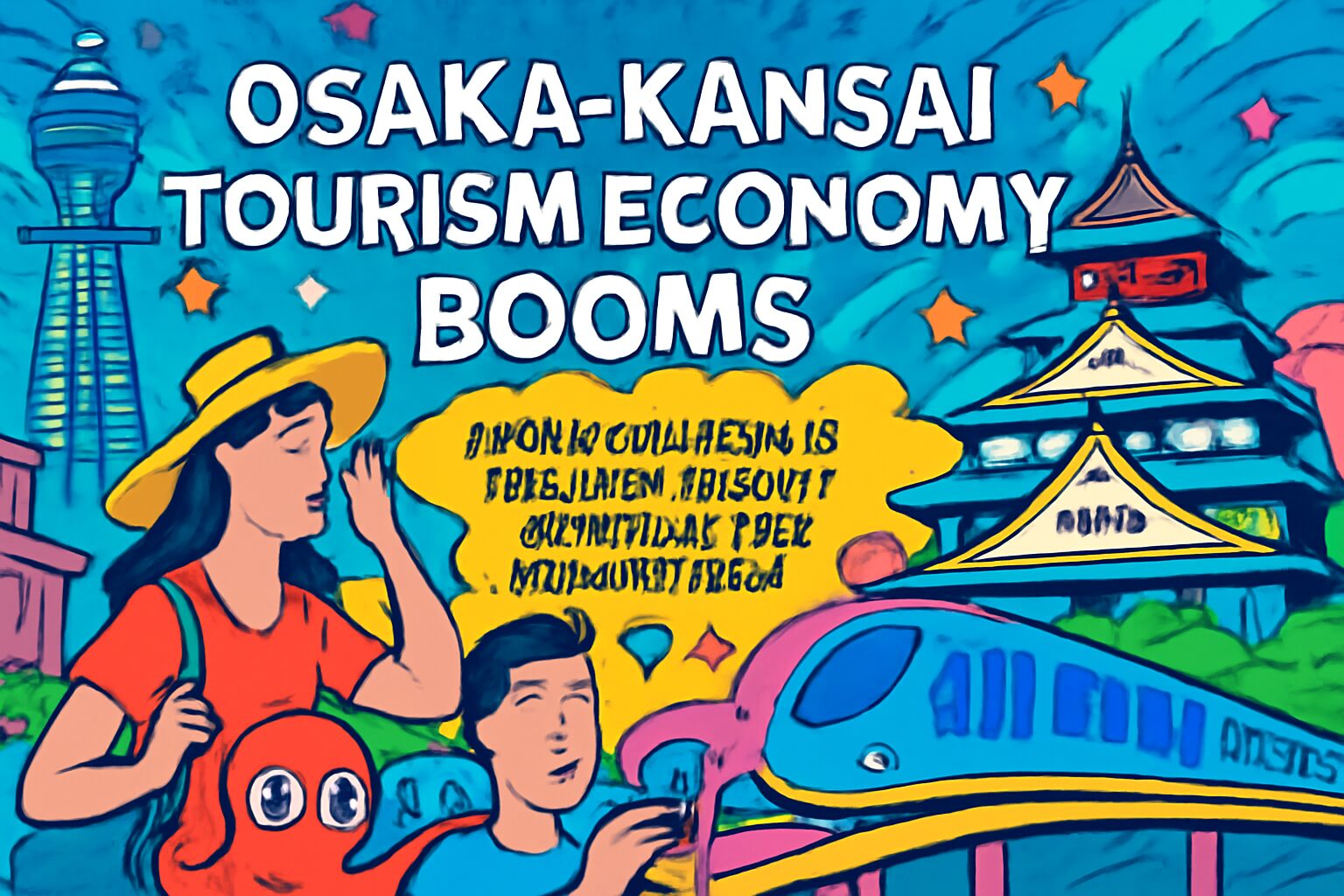
A Robust Summer for the Regional Travel Sector
The economic outlook for the Osaka-Kansai travel sector is exceptionally positive this summer. According to recent data for the summer of 2026, the region has recorded a 12.2% increase in summer accommodation bookings compared to the same period last year. More importantly, the financial impact of these visits is growing exponentially, with the average spending per inbound tourist surging by 14.6% year-over-year. This upward trajectory underscores a powerful trend toward higher-value tourism, generating substantial revenue streams that heavily benefit the broader regional economy.
The Post-Expo 2025 Legacy and Market Drivers
The current economic boom is deeply rooted in the successful legacy of Expo 2025 Osaka, Kansai, which concluded its six-month run in October last year. The global event served as a major catalyst for the region, leaving behind modernized infrastructure such as the extension of the Osaka Metro Chuo Line to Yumeshima and the expansion of terminals at Kansai International Airport. More critically, the intense international media coverage surrounding the Expo permanently elevated the global profile of the Kansai region, creating a strong desire for return visits and extended stays this year.
Furthermore, the continued favorable exchange rate of the Japanese yen throughout 2026 has significantly enhanced the purchasing power of international visitors. Rather than merely driving up overall visitor volume, this macroeconomic climate has successfully attracted a demographic willing to invest heavily in premium hospitality, high-end retail, and exclusive cultural experiences.
A Strategic Shift Toward Higher-Value Tourism
The 14.6% rise in average tourist spending represents a critical evolution in the regional tourism model. For years, the Kansai tourism industry focused on accommodating massive crowds along traditional sightseeing routes. Now, the data clearly indicates a successful shift toward high-value experiential travel.
This financial influx is also actively spreading beyond the central urban hubs of Osaka and Kyoto. Successful regional initiatives sparked by the Expo momentum have encouraged international tourists to extend their trips and explore neighboring prefectures such as Hyogo, Wakayama, and Nara. By dispersing the tourist footprint across a wider area, the Kansai region is managing to increase overall visitor expenditure while mitigating the pressures of overtourism in highly concentrated city centers.
Future Outlook and the Road to 2030
Looking ahead, the long-term forecast for the Osaka-Kansai tourism economy remains incredibly strong. The transition toward a high-yield visitor economy proves that the region has moved beyond short-term travel trends and has firmly established itself as a premier global destination.
This sustained high-value tourism positions Kansai perfectly for its next major milestone: the highly anticipated opening of Japan’s first integrated resort (IR) in Osaka, targeted for around 2030. As inbound tourists continue to increase their per-capita spending, local businesses across the hospitality, culinary, and transportation sectors can expect sustained profitability. The summer of 2026 serves as clear evidence that the Osaka-Kansai region has successfully transformed its tourism industry into a resilient, high-value economic engine for the future.








