
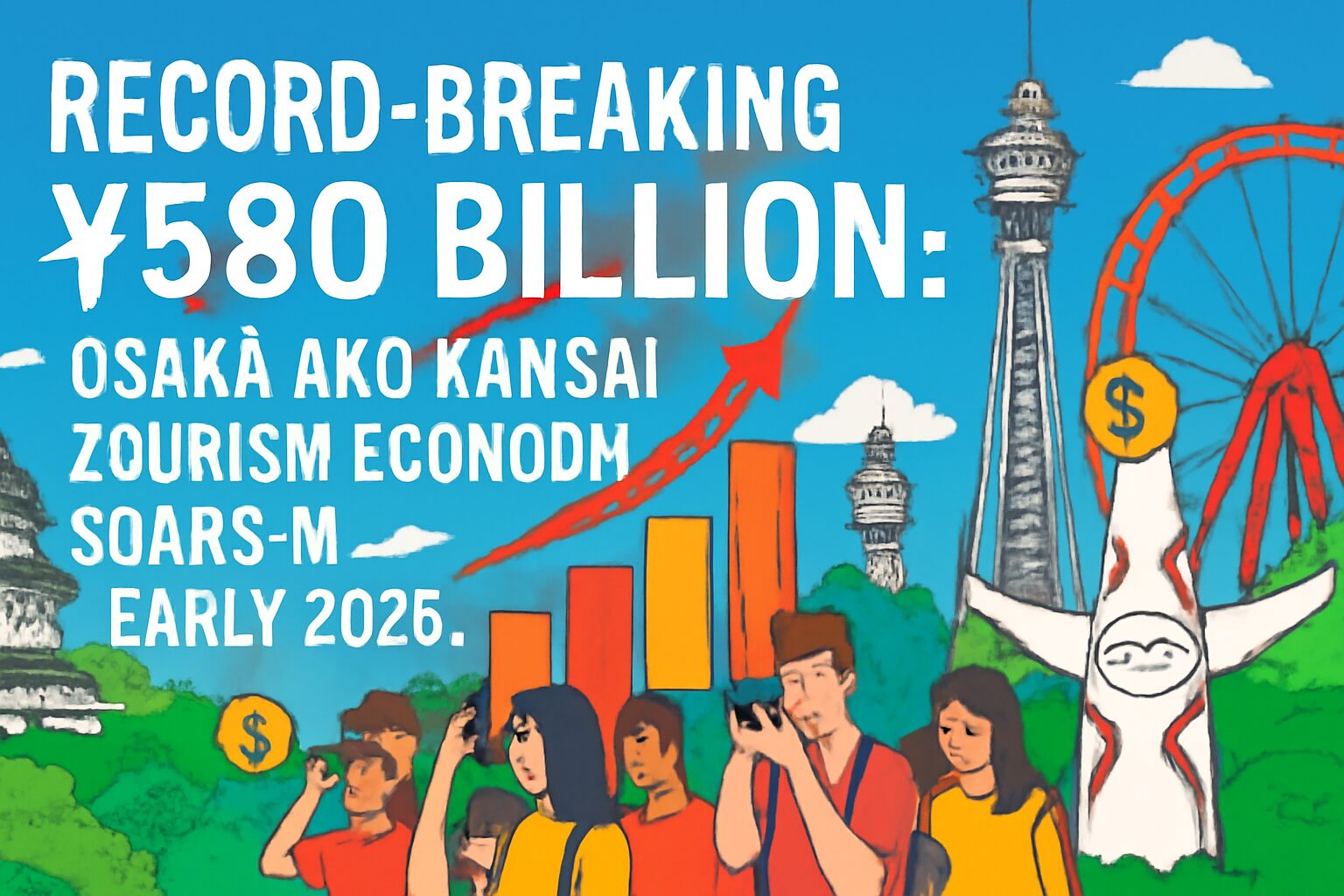
The Osaka-Kansai region has officially entered a new golden era of tourism. According to the latest data from the first quarter of 2026, international visitor spending in the region reached an unprecedented ¥580 billion. This staggering figure represents a 30% increase compared to the same period in 2019, completely shattering pre-pandemic economic records and cementing tourism as the primary engine of the regional economy.
Here at Osakaa, we have been closely monitoring the influx of global travelers navigating our vibrant streets, historic sites, and modern attractions. The recent data confirms what local businesses have been feeling on the ground: Kansai is experiencing a massive, sustained travel boom.
The Catalysts: A Weak Yen and the Expo 2025 Legacy
Several converging factors have driven this remarkable Q1 growth. Primarily, the sustained weakness of the Japanese yen has significantly amplified the purchasing power of international tourists. Travelers from North America, Europe, and neighboring Asian countries are finding that their travel budgets stretch further than ever before, allowing for extended vacations and increased daily expenditure.
Furthermore, the lasting international legacy of the 2025 World Expo cannot be overstated. Last year’s global event successfully placed Osaka in the international spotlight, showcasing the region’s technological innovations, cultural richness, and world-class hospitality. The media exposure and infrastructure upgrades generated by the Expo have created a powerful ripple effect, continuing to draw visitors well into 2026 who wish to experience the revitalized Kansai region for themselves.
Broad Economic Revitalization Across Kansai
This injection of ¥580 billion into the local economy is reshaping the business landscape in Osaka and the broader Kansai area. The hospitality, retail, and transportation sectors are the most immediate beneficiaries. Luxury hotels are reporting record occupancy rates, traditional ryokans are seeing unprecedented international bookings, and local retail centers—from high-end department stores in Umeda to the bustling street vendors in Dotonbori—are experiencing a massive surge in sales.
Significantly, this tourism-driven economic momentum is playing a crucial stabilizing role for the broader regional economy. While traditional local industries such as manufacturing have faced recent global supply chain and export challenges, the explosive growth in inbound travel spending is effectively offsetting these localized economic hurdles.
The Rise of the High-Value Traveler
Beyond the sheer volume of spending, the data reveals a fundamental shift in traveler demographics and behavior. The Osaka-Kansai region is increasingly attracting high-value travelers. Rather than rushing through multiple cities on brief itineraries, these visitors are choosing longer, more immersive stays.
Empowered by favorable exchange rates, tourists are investing heavily in premium experiences. This includes booking exclusive culinary tours, securing reservations at Michelin-starred restaurants, purchasing high-quality local crafts, and utilizing private transportation services. This shift from volume-based tourism to value-based tourism is maximizing economic benefits while helping to mitigate some of the traditional crowding issues associated with mass tourism.
Future Outlook and Regional Impact
Looking ahead through the rest of 2026 and beyond, the trajectory for Kansai’s travel economy remains overwhelmingly positive. However, this sustained growth will bring both opportunities and operational challenges.
We can expect to see increased private and public investment in regional infrastructure to support this elevated baseline of international visitors. High-end hospitality brands are likely to accelerate their expansion plans within Osaka, Kyoto, and Kobe. Additionally, local governments will need to double down on sustainable tourism initiatives. With visitors staying longer and spending more, authorities will likely invest in multilingual services, advanced crowd management technologies, and the promotion of lesser-known regional destinations to distribute the economic wealth and prevent hyper-localized overtourism.
For travelers planning a trip to Osaka, the message is clear: the region is more dynamic, welcoming, and globally connected than ever before. As tourism continues to drive the Kansai economy forward, visitors can look forward to an ever-expanding array of premium, culturally enriching experiences.








