Step off the train in Osaka, and the first thing that hits you isn’t a sight, but a sound. It’s a city humming with a unique frequency, a symphony of commerce, conversation, and clatter. This urban soundscape changes dramatically the moment you push open a door. Behind one, you find the high-pitched hiss of an espresso machine, the rapid-fire clicks of a dozen keyboards, and a chorus of energetic Kansai-ben bouncing off concrete walls. Behind another, the world slows to the gentle drip of a siphon coffee maker, the soft rustle of a newspaper, and the low, respectful murmur of voices that have shared the same space for decades. This is the central question for anyone trying to carve out a life here: where do you go to get things done, and where do you go to simply exist? In Osaka, the answer isn’t a simple binary of old versus new, traditional versus modern. The choice between a sleek, minimalist cafe and a time-worn kissaten is a functional, social, and cultural declaration. It’s about navigating the city’s dual personalities: the relentless merchant and the loyal neighbor. As someone who spends my days dissecting the modern art scenes of Tokyo, I find Osaka’s living culture, expressed through its public-private spaces, just as compelling. It’s a city that trades Tokyo’s obsession with polished aesthetics for a pragmatic focus on ba—the feeling, the purpose, and the community of a place. Understanding this distinction is the key to unlocking how Osaka truly works.
For those eager to experience another facet of Osaka’s dynamic lifestyle, exploring its vibrant quick drink culture at a tachinomi bar offers a refreshing perspective.
The Modern Cafe: Osaka’s Hub of Hustle and Connection
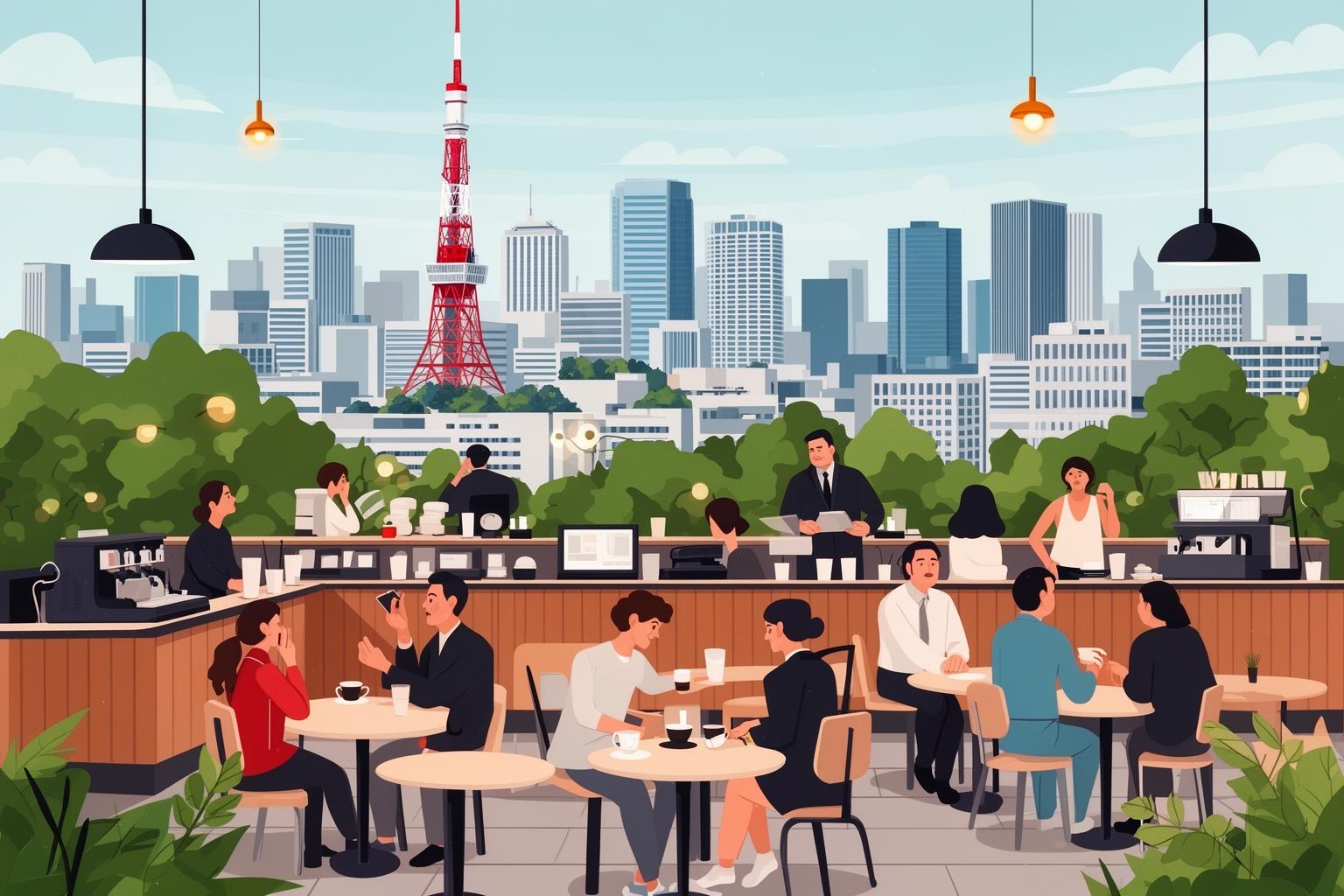
Osaka’s contemporary cafes serve as the driving force behind the city’s ambitions. You’ll find them concentrated around Umeda, Namba, and Shinsaibashi—the bustling commercial centers—where their glass facades mirror the constant stream of pedestrians. Inside, the design often speaks a familiar international language: polished wood, exposed brick, industrial lighting, and the quintessential fiddle-leaf fig in the corner. Yet, the soundtrack remains distinctly Osaka. It’s a dynamic, almost intense hum—the sound of students cramming for exams, freelancers coding their latest projects, and salespeople closing deals over the phone, their Kansai dialect sharp and straightforward. This isn’t a place for quiet reflection; it’s a springboard for productivity.
The Unspoken Agreement: Wi-Fi, Power, and the Cost of a Seat
Stepping into a modern Osaka cafe means entering a clear, unspoken deal. Your 500-yen latte buys you a few hours of Wi-Fi, a spot to sit, and access to a coveted power outlet. It’s a transactional relationship, and Osakans, with their merchant city heritage, grasp this perfectly. There’s little of the performative “work-from-cafe” scene you might find in Tokyo, where appearances and aesthetics sometimes rival productivity’s importance. Here, functionality reigns. People come genuinely to work, to meet, to accomplish tasks. The space is a tool, and everyone recognizes its role.
The staff act as facilitators of this exchange. Service is swift, efficient, and professional. They’ll take your order, deliver your coffee, and then leave you to focus. They’re not there to cultivate a long-term relationship over the counter; their job is to keep the cafe’s engine running smoothly. The ambient noise is part of the experience—a blend of conversations, the steady tap of the portafilter being cleaned, and the electronic chime signaling orders ready for pickup. For many, this background hum is the ideal stimulus for concentration, a white noise that drowns out internal distractions. It’s the sound of a city at work, and by being there, you join its productive pulse.
Reading the Atmosphere: When Your Welcome Begins to Fade
Despite its practical charm, your stay in a modern cafe is never indefinite. The unspoken agreement has boundaries, and knowing when your time is ending is an important social skill. The signs are subtle at first: staff may become more attentive with refilling your water glass, a gentle hint of their presence. They might clear your long-empty cup with a pointed, “Yoroshii desu ka?” (“Is this okay?”). When the cafe starts to fill up and a line forms at the door, social pressure grows. You’ll sense the gaze of waiting customers on your laptop, on your prime window seat.
This is where Osaka’s trademark directness emerges. Whereas a Tokyo barista might let you linger endlessly to avoid awkwardness, an Osaka cafe manager—especially in a smaller independent spot—follows a different logic. It’s the logic of shōbai—business. If the cafe is busy and you’ve occupied a four-person table with just one cold coffee for three hours, you may receive a polite but firm request to either order another item or free the spot for paying customers. This isn’t meant as rudeness; it’s a straightforward statement of commercial reality. Taking it personally misses the space’s fundamental purpose. It’s a shared office, where rent is paid every few hours by placing a new order. Learning to read these signals—the change in atmosphere, staff movements, and length of the queue—is essential to being a respectful cafe user in Osaka.
The Kissaten: Stepping into Osaka’s Living Room
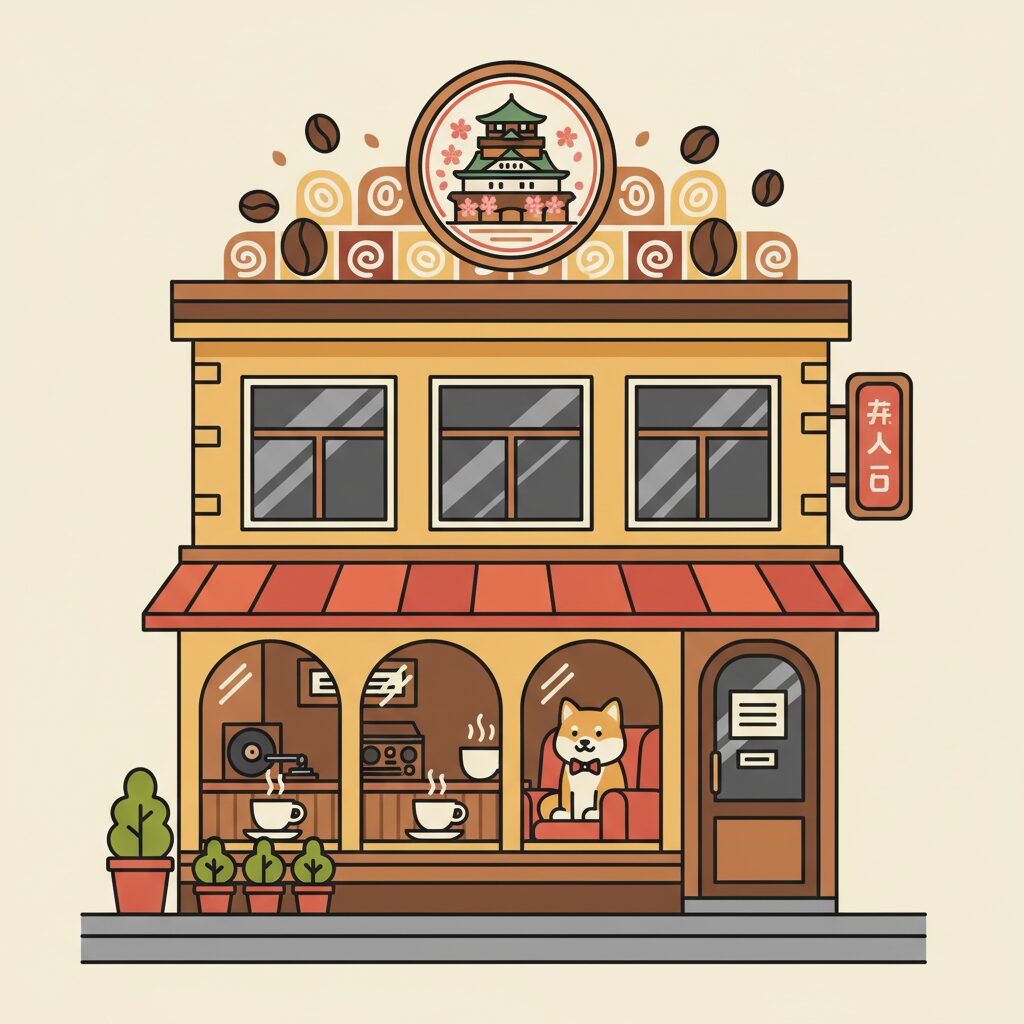
Leaving a modern cafe to step into a traditional kissaten is like crossing a threshold in both time and temperament. These establishments are nestled within covered shōtengai shopping arcades, tucked away on quiet residential side streets in neighborhoods like Nakazakicho, or hidden in the basements of aging office buildings. The noisy, hurried outside world fades the moment you slide open the heavy wooden door. Inside, the air is thick with the rich aroma of dark-roast coffee brewed in a siphon, a hint of toasted bread, and the lingering ghost of countless cigarettes smoked over half a century. The decor is a harmonious blend of dark wood paneling, worn velvet or vinyl seating, ornate light fixtures casting a dim, warm glow, and perhaps a dusty collection of porcelain cups behind the counter.
This is no place for fleeting productivity; it is a sanctuary of permanence. The pace is slow and deliberate. The soundtrack consists of the clink of a spoon against a ceramic cup, the crinkle of a turning newspaper page, and the quiet, almost conspiratorial tones of hushed conversation. In one corner, a group of elderly men may be discussing the Hanshin Tigers‘ latest game. At the counter, a lone salaryman sips his coffee with closed eyes, stealing precious moments of peace from a demanding schedule. The kissaten serves as Osaka’s collective living room, a third space that feels more private and personal than any public place has a right to be.
The “Master” and the Regulars: More Than Just Coffee
At the heart of the kissaten is the “Master.” This owner-barista-curator shapes the entire experience. Often clad in a crisp white shirt and black waistcoat, the Master commands quiet authority. They may not greet you with the effusive “Irasshaimase!” typical of chain stores, but with a simple nod or a quiet “Dōzo.” This is not coldness; it’s a reserved welcome, an invitation into their personal domain. A relationship with the Master develops over months and years. They come to know your name, your usual order, and how you take your coffee. They serve as silent custodians of the community that forms within their walls.
This community comprises the jōren-san, the regulars, who are as integral to the kissaten’s atmosphere as the furniture. They have their designated seats and established routines. Their presence fosters a stable, calming environment. For newcomers, this can feel intimidating—as if stumbling into a private club. Yet the regulars are not exclusionary; they are guardians of the space’s unspoken rules. Their quiet demeanor sets the tone for everyone else. This strong sense of place and belonging is a cornerstone of Osaka’s neighborhood culture. A kissaten is not merely a business on a street; it is an anchor for the local community, a place where the social fabric is cared for daily over thick toast and carefully brewed coffee.
The Etiquette of Lingering: Laptops, Conversations, and the Art of Silence
The unspoken contract in a kissaten differs greatly from that of a modern cafe. You are not paying for Wi-Fi or a power outlet; you are paying for atmosphere—a slice of peace amid a hectic world. And this atmosphere comes with its own rules. The most notable often concerns technology. Many kissaten explicitly forbid the use of laptops or, at the very least, discourage it. The rhythmic, percussive sound of typing is a jarring intrusion into their analog tranquility. It signals the outside world of work and deadlines—the very things patrons seek to escape.
Bringing out a laptop here is a social faux pas of the highest order, indicating a fundamental misunderstanding of the space’s purpose. A kissaten is meant for reading a physical book, reflecting, writing in a notebook, or having quiet, meaningful conversation. Even conversations are moderated; unlike the boisterous chatter of a cafe, voices in a kissaten are kept low, so you speak in a way that does not impose on neighboring tables. Shared silence is a precious commodity, and all present share the responsibility to preserve it. This reveals a lesser-known aspect of the Osaka personality: though often stereotyped as loud and boisterous, Osakans deeply appreciate the importance of context and shared space. In the kissaten, they collectively create an oasis of calm, a mutual pact to keep the city’s chaos at bay.
Osaka vs. Tokyo: A Tale of Two Coffee Cultures
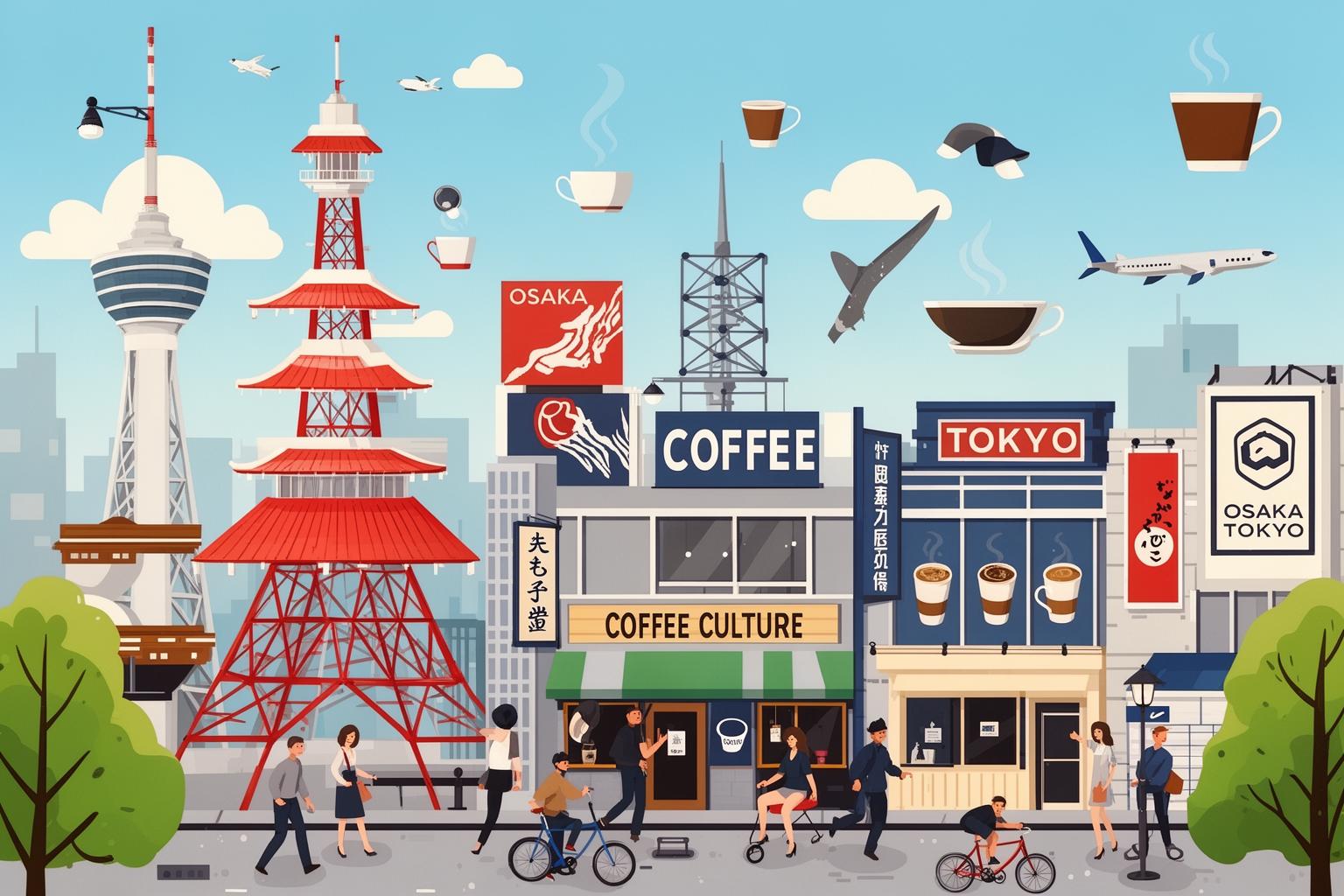
The contrast between a café and a kissaten in Osaka is striking, but it becomes even more pronounced when compared to the scene in Tokyo. Although the two cities are only a couple of hours apart by train, they operate on distinctly different cultural codes. Their unique approaches to coffee, work, and public spaces reveal their fundamental identities.
Tokyo’s “Efficient Escape” vs. Osaka’s “Grounded Community”
In Tokyo, particularly in business hubs like Marunouchi or Shibuya, modern cafés often feel like seamless extensions of the corporate office. They are sleek, minimalist, and designed to maximize individual focus. The quiet tends to be cool and almost clinical, with patrons isolated in their own bubbles thanks to noise-canceling headphones. It’s an “efficient escape,” a place to work without office distractions but under the same pressure to be productive. Even Tokyo’s kissaten can feel different; many have been elevated to cultural landmarks, perfectly preserved Showa-era spaces that resemble curated museum exhibits more than lived-in rooms. While beautiful, these spaces sometimes carry a sense of performative nostalgia.
Osaka’s approach feels more grounded and less self-conscious. Its modern cafés emphasize connection and commerce over solitary work. The atmosphere is louder and more social, brimming with the raw energy of people making plans and closing deals. These cafés are functional, vibrant hubs—not quiet work pods. Similarly, Osaka’s kissaten feel less like museums and more like living, breathing community centers. The worn furniture and slightly yellowed wallpaper aren’t flaws to be fixed but rather testaments to their history and vital role in the neighborhood. They aren’t frozen in time but age gracefully alongside their patrons. They’re built for community, not for display.
The Economic Undercurrent: Value for Money and “Mōkarimakka?”
At the core of Osaka’s identity lies its history as a city of merchants. The traditional greeting, “Mōkarimakka?” (“Are you making a profit?”), reflects a pragmatic, business-minded ethos that values practicality and, above all, good value. This spirit is brilliantly embodied in the institution of the mōningu sābisu, or “morning set.” Offered at nearly every kissaten, this deal gives you a thick slice of toast, a hard-boiled egg, and sometimes a small salad or yogurt for the price of a single cup of coffee. It’s an incredibly generous deal and an everyday expectation, not a special promotion.
This custom is far less common and much less generous in Tokyo. For Osakans, the morning set forms the foundation of the relationship between the customer and the kissaten Master. The Master provides exceptional value to attract and retain customers, and in return, the customer shows loyalty. It’s a relationship rooted in a recurring, mutually beneficial exchange—the very essence of good business in Osaka. This focus on tangible value over fleeting trends or polished appearances is a defining trait of the city. Osakans want to see, feel, and taste the value in everything they pay for, whether it’s a cup of coffee or a business deal.
Practical Guide for the Foreign Resident: Decoding Your Destination
Navigating the social landscape of Osaka’s cafes and kissaten requires understanding the subtle—and sometimes not so subtle—signals of each space. Choosing the wrong venue for your intended activity can result in awkwardness or even a polite request to leave. Here’s how to align your choice of space with your needs.
Choosing Your Space: A Flowchart for Your Mood
If you need to complete a report, send a flurry of emails, and have a video call, your best bet is a modern cafe. Visit one of the larger chains or an independent spot in a commercial district like Umeda or Yodoyabashi. Look for key signs: “Free Wi-Fi” and “Power Outlets.” Embrace the buzz of productivity, put on your headphones if necessary, and remember to order a second drink if you plan to stay for more than a couple of hours.
If you want to read a novel, write in a journal, or simply observe the world in quiet contemplation, head to a kissaten. Leave your laptop in your bag—or better yet, at home. Bring a book or just your thoughts. Order a siphon coffee, which offers its own slow, captivating ritual of preparation. Settle into a cozy booth and allow the analog calm to wash over you.
For serious, private conversations—whether business or personal—a kissaten is often the better option. The plush seats, booth dividers, and low-key ambience provide a level of privacy hard to find in the open layout of modern cafes. Soft surfaces absorb sound, enabling discreet talks.
If you want to feel the vibrant, chaotic pulse of the city, opt for a modern cafe with large windows overlooking a bustling street. It’s an ideal spot for people-watching and soaking up Osaka’s energy without being overwhelmed. You’ll see the full spectrum of urban life, from hurried commuters to groups of friends laughing loudly, all from the comfort of your seat.
Common Misunderstandings and How to Avoid Them
A frequent mistake is assuming any old-looking place will be a quiet refuge. Some neighborhood kissaten are lively centers of local chatter, where regulars and the Master hold court all day. The key is to pause briefly at the door before entering. Listen to the noise level. Observe the patrons’ activities. The atmosphere will tell you all you need to know.
The biggest misconception is that you can work anywhere. As noted, pulling out a laptop in a traditional kissaten goes against its fundamental purpose. Before opening your computer, scan the room. Are others working on laptops? Are there signs (often in Japanese) forbidding their use? If you see only people reading books or talking quietly, that’s your answer. When unsure, stick to analog.
Lastly, don’t misread the different service styles. The quick efficiency of staff in a busy modern cafe may feel impersonal, but it’s not directed at you—it’s part of the business model. Conversely, a kissaten Master’s reserved or even gruff manner isn’t rudeness. It often reflects professional distance, which softens over time as you become a familiar face. In Osaka, both efficiency and reserved loyalty are expressions of respect.
Ultimately, choosing between the rhythmic clatter of the cafe and the dignified hush of the kissaten means choosing between two genuine facets of Osaka’s identity. One represents the city of commerce—the pragmatic, fast-paced engine of Kansai. The other symbolizes the city of neighborhoods—the grounded, loyal community that values relationships nurtured over time. To live here, to truly feel at home, is to understand you need both. Mastering when to engage with the city’s hustle and when to retreat into its quiet heart is key to appreciating the rich and wonderful complexity of life in Osaka.