Coming from Tokyo, I thought I understood Japan. I speak the language, I get the hierarchy, I know which way the escalators run. My work as an event planner is all about reading the room, understanding the flow of a city. But Osaka? Osaka doesn’t just have a different flow; it operates on a completely different rhythm. In Tokyo, life feels like a meticulously composed symphony, every note in its place. Here, it’s jazz. It’s improvisation, a call-and-response between strangers on a crowded street, a beat that pulses not from the gleaming corporate towers but from the covered, chaotic, wonderfully human shopping arcades known as shotengai.
We all look for a “third place.” It’s that spot that isn’t home (your first place) or work (your second). It’s where you decompress, connect, or just exist in public. In Tokyo, my third place was predictable: a sleek, minimalist cafe with good Wi-Fi and even better branding, or a WeWork with kombucha on tap. It was a space I paid for, a service I consumed. But in Osaka, the concept feels deeper, messier, and infinitely more interesting. The search for a third place here leads you straight into the heart of the shotengai, where you’re faced with a fundamental choice. Do you slide into the worn vinyl booth of a decades-old kissaten, a traditional coffee house, or do you tap your keycard at the door of a brand-new coworking space? This isn’t just about where you’ll get your caffeine fix or your emails sent. It’s a choice that defines your relationship with the city itself. It’s about deciding whether you want to plug into a network or plug into a neighborhood. And that decision reveals everything about the soul of Osaka.
This improvisational rhythm is perfectly captured in the local conversational style, which you can explore further in our article on decoding the ‘shiran kedo’ phrase.
The Soul of the City: What is a Shotengai, Anyway?
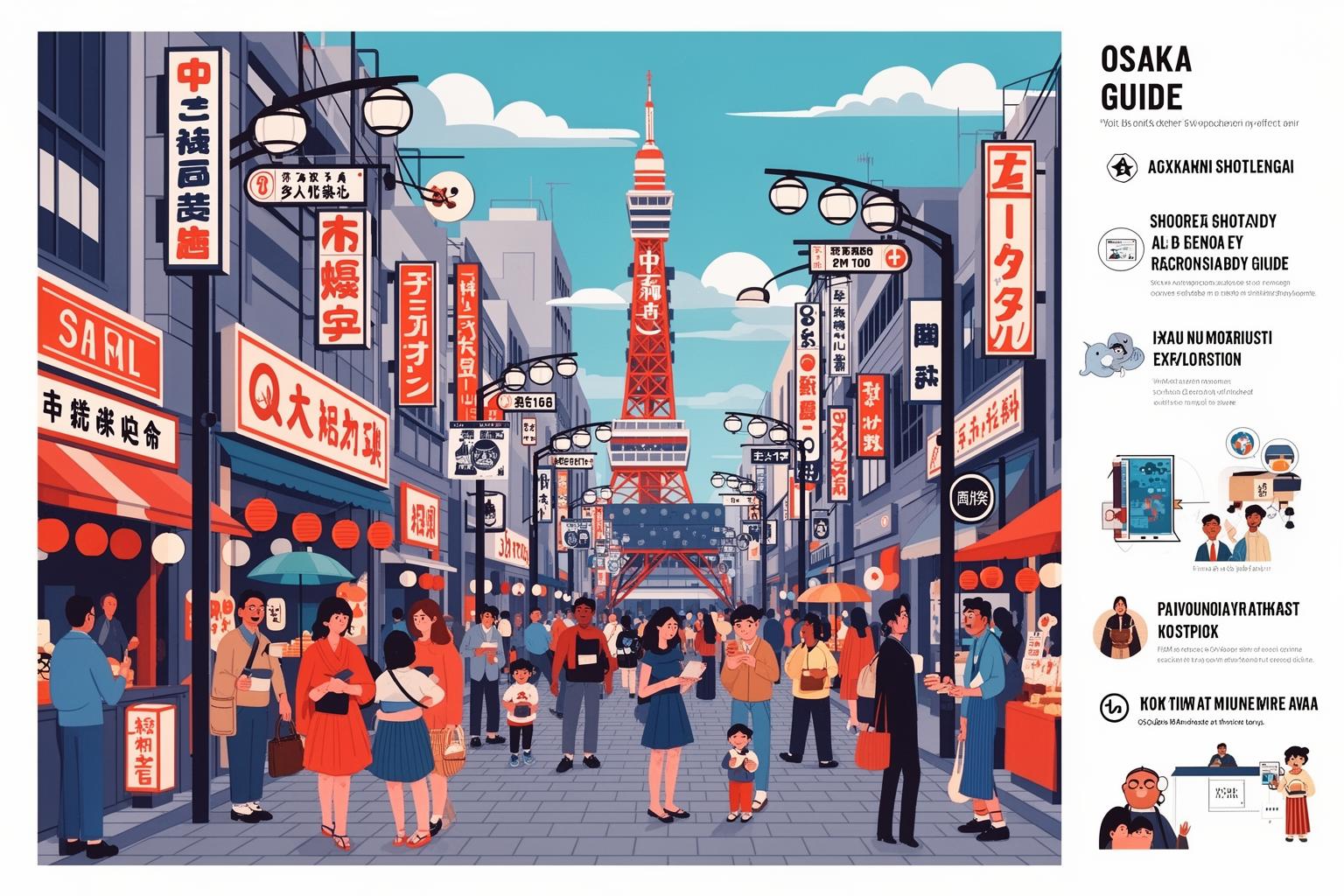
Before we discuss coffee or Wi-Fi, we first need to consider the setting where this story takes place. A shotengai is far more than just a “shopping arcade.” While that translation is technically accurate, it lacks emotional depth and misses the essence entirely. In Tokyo, shopping streets are often polished destinations—Omotesando for high fashion, Ginza for luxury goods—places you visit. An Osaka shotengai is a space you live in. It serves as the neighborhood’s lifeblood, a living, breathing ecosystem under one shared roof.
Step into a place like Tenjinbashisuji, the longest in Japan, and you’ll be enveloped in a sensory feast. The air fills with the sweet soy aroma from a dango stand, the savory scent of takoyaki batter, and the fresh, earthy smell of daikon radishes piled high at the greengrocer. You hear bicycles rumbling over the tiled floor, the high-pitched, rhythmic calls of shopkeepers promoting their daily specials—“Yasui de! O-kusan, kore moっていき!” (“It’s cheap! Ma’am, take this home!”)—and the lively, friendly chatter of neighbors greeting one another. This isn’t mere background noise; it’s the heartbeat of the city.
This marks the first major cultural gap between Osaka and Tokyo for many. Tokyo emphasizes polish and presentation; Osaka values substance and a good bargain. A shotengai is a physical manifestation of this philosophy. The shops are often family-owned for generations: the butcher who knows exactly how you prefer your pork sliced, the tofu maker who rises at 3 a.m., the small pharmacy where the owner inquires about your grandmother. It forms a web of relationships built on trust and daily connection, rather than slick marketing or loyalty points. Foreigners often misinterpret this lively chaos as run-down or outdated. That’s a fundamental misconception. This isn’t a lack of modernity; it’s a deliberate rejection of impersonal commerce. In the shotengai, you’re not a consumer—you’re a neighbor.
The Kissaten: Osaka’s Living Room
Tucked away within these lively arcades, you’ll discover the kissaten. These traditional coffee houses serve as the city’s unofficial living rooms, places that feel wonderfully frozen in time, around 1975. They stand in stark contrast to Tokyo’s third-wave coffee shops in Kiyosumi-Shirakawa, where intense, hushed conversations about bean origins prevail.
More Than Just Coffee
Step inside a classic Osaka kissaten and you’re immediately enveloped by nostalgia, even if it’s not your own. The décor is a harmony of dark wood, plush velvet seats in shades of burgundy or forest green, and soft ambient light from ornate, vaguely European lamps. A faint, lingering scent of stale cigarette smoke—a remnant of a past era—blends with the aroma of dark-roast coffee brewed in a siphon. The menu reflects steadfast tradition. You won’t find flat whites or cold brews here. Instead, there’s “blend coffee,” thick buttered toast, a colorful “cream soda” topped with vanilla ice cream, and perhaps a “Neapolitan” spaghetti dish.
At the heart of this world is the “Master,” the owner, usually stationed behind the counter, polishing glasses, reading a newspaper, and quietly observing the unfolding life of the café. He is the guardian of the community’s stories—knowing who recently had a grandchild, whose son is preparing for exams, and who visits after a disappointing Hanshin Tigers game. The kissaten is his stage, and the regulars are the cast. This isn’t merely a transactional space; the coffee is simply the ticket to a place of comfort and belonging.
The Unspoken Rules of the Kissaten
For foreigners, especially those accustomed to the anonymous efficiency of global coffee chains, the kissaten can feel intimidating. There are unwritten rules. You can’t just open your laptop, put on noise-canceling headphones, and settle in for six hours. Well, you could, but you’d miss the point entirely and likely draw a few puzzled glances.
The social contract here is different. You’re expected to be present. This is where Osaka’s character shines in its purest form. Unlike Tokyo’s polite, non-intrusive distance, Osaka thrives on interaction. The Master might ask where you’re from. The elderly man next to you might comment on the weather or your sandwich choice. This isn’t nosiness; it’s inclusion. They’re inviting you into their world. To ignore them would be rude. To engage, even in broken Japanese, is to be welcomed.
I once spent an afternoon in a small kissaten near Sugamo Jizo-dori Shotengai in Tokyo, and not a single person spoke to me for three hours. It was peaceful, but solitary. The first time in an Osaka shotengai kissaten, before I’d even finished my first sip of coffee, the woman beside me offered candy, said I resembled her niece, and asked if I was eating enough vegetables. It was direct, a bit startling, but undeniably warm. This is Osaka: connection over privacy, engagement over anonymity.
Why It Works (and Doesn’t) as a Third Place
As a third place, the kissaten offers something deep: a true sense of belonging. It counters the loneliness that can pervade big-city life. You are seen, you are known, you become part of the daily rhythm of the place. The coffee is affordable, the atmosphere calm, and you get a front-row seat to the unscripted theater of everyday Osaka life. It encourages you to slow down, lift your eyes from the screen, and be human among humans.
However, it’s not ideal for productivity. Wi-Fi is often unavailable. Power outlets are rare and treasured. The gentle chatter can easily escalate into a lively baseball debate. It’s a place for reading, sketching, or quiet reflection—not for Zoom calls or app development. It asks for a piece of your attention in exchange for its comfort. It’s a trade-off: a little focus for a great deal of soul.
The Rise of the Coworking Space: A New Wave in an Old City
At the opposite end of the spectrum lies the coworking space. These facilities are sprouting up throughout Osaka, frequently housed in repurposed old buildings on the outskirts of the very same shotengai, creating a striking contrast between the old and the new. They embody a different concept of the third place, one centered around the global values of productivity, networking, and high-speed internet.
The Global Standard Arrives in Osaka
Step into a coworking space in Osaka, and it could be anywhere in the world. The design is recognizable: clean lines, Scandinavian-style furniture, exposed ductwork, and plenty of green plants. The air carries the aroma of freshly ground coffee from an automated machine. The soundscape is the quiet, focused buzz of activity—the gentle tapping of keyboards and the soft murmur of conference calls from private booths. Here, the amenities are the main attraction. You can count on a comfortable chair, a stable desk, blazing-fast Wi-Fi, and unlimited coffee, tea, and water. It’s a haven of efficiency, a seamless environment designed with one goal: to get work done.
These spaces draw a distinct crowd: freelancers, startup founders, remote employees of international companies, and digital nomads. The community is based not on shared location but on shared professional ambition. The language often blends Japanese and English, with an emphasis on collaboration and networking.
The Osaka Flavor of Coworking
Yet even within these temples of global work culture, the Osaka spirit manages to shine through. I’ve used coworking spaces in Tokyo where the silence is so complete it resembles a library. Networking events tend to be formal, structured, involving lots of business card exchanges and polite bowing. In Osaka, things are more relaxed. The vibe is friendlier. People are more inclined to start genuine conversations in the shared kitchen—not just about work, but about where to find the best okonomiyaki.
Networking feels less transactional and more like a social gathering. There’s more laughter and lighthearted teasing. The hierarchical nature of professional interactions common in Tokyo feels less pronounced here. People care about who you are, not just your job title. It reflects a fundamental Osaka business philosophy: build the relationship first, and the business will follow. So while the exterior may be a global coworking brand, the spirit within is unmistakably local.
A Transactional Third Place?
As a third place, the coworking space is undeniably effective. It offers the infrastructure for modern work that a kissaten simply can’t provide. It’s a place of intense focus and great potential for professional development. You can cultivate a network of contacts worldwide and accomplish a tremendous amount of work in a single day. For remote workers, it’s a vital resource, creating a clear and necessary boundary between home and work life.
However, there is an inherent transactional element. You are a paying member, and your access depends on your subscription. The community, while often friendly, is curated and self-selecting. It lacks the beautiful, spontaneous, intergenerational mix found in a shotengai kissaten. You won’t find an octogenarian grandmother and a tattooed young musician sharing the same table. You are purchasing a service: a clean, well-lit workspace. You don’t automatically become part of the neighborhood’s living history.
The Real Difference: Community vs. Convenience
Choosing between a kissaten and a coworking space is not just a matter of aesthetics or practicality. It’s a philosophical decision about how you want to engage with Osaka. It strikes at the core of what differentiates this city from Tokyo. Tokyo represents a city of magnificent, efficient systems, while Osaka embodies messy, vibrant, and deeply human connections.
A coworking space perfectly reflects the Tokyo mentality, even when situated in Osaka. It is a system designed for maximum efficiency—logical, clean, and delivering a predictable, high-quality result. It respects your privacy and helps you concentrate on your personal goals. It is a tool for both personal and professional growth.
In contrast, the kissaten is quintessentially Osaka. It is inefficient, unpredictable, and profoundly communal. It values relationships over transactions. Your coffee is more than just a product; it’s an invitation to engage. The value lies not in the caffeine or the Wi-Fi speed, but in the shared experience of being together. It’s in the casual conversation with the Master that unexpectedly turns into a meaningful life lesson. It’s in learning the names and stories of the other regulars. It prioritizes community, neighborhood, and collective connection over individual solitary productivity.
One morning, I tried to finish a project proposal in a shotengai kissaten—and it was a disaster. The owner insisted on showing me photos from his fishing trip, and a regular urged me to try a new kind of pickle he brought. I barely got any work done. The next day, I went to a coworking space and completed the entire proposal in three hours of peaceful, uninterrupted focus. But after those two days, which experience made me feel more connected to the city? Which one taught me something new about the people I lived among? It wasn’t the one with the ergonomic chair. While the coworking space advanced my career, the kissaten made Osaka feel a little more like home.
Finding Your Shotengai, Finding Your Place
So, which is the “better” third place? The question itself is misleading. It assumes a single correct answer, which goes against the very spirit of Osaka. The charm of this city lies in not forcing you to choose. The real answer is that you need both. You need the focused, quiet efficiency of a coworking space to build your career, and you need the noisy, warm, and imperfect humanity of the kissaten to build your life here.
Living in Osaka means embracing this duality. It means recognizing that progress doesn’t have to erase the past. A new coworking space can open just two doors down from a kissaten that’s been around for sixty years, and both can flourish. They meet different needs, yet coexist within the same ecosystem—the shotengai.
For any foreigner trying to understand this city, my advice is simple: don’t just seek a place to work. Find your shotengai. Explore them. Get a little lost. Discover the one that feels right—whether it’s a bustling, large one or a quiet, residential neighborhood. And once you find it, experience both. Spend a morning being productive at a modern desk, then spend an afternoon lingering over coffee in a vinyl booth. One will connect you to the global flow of commerce and ideas; the other will tie you to the heart of a fiercely proud, stubbornly local, and wonderfully engaging city. Striking that balance is the key not only to living in Osaka but truly belonging there.