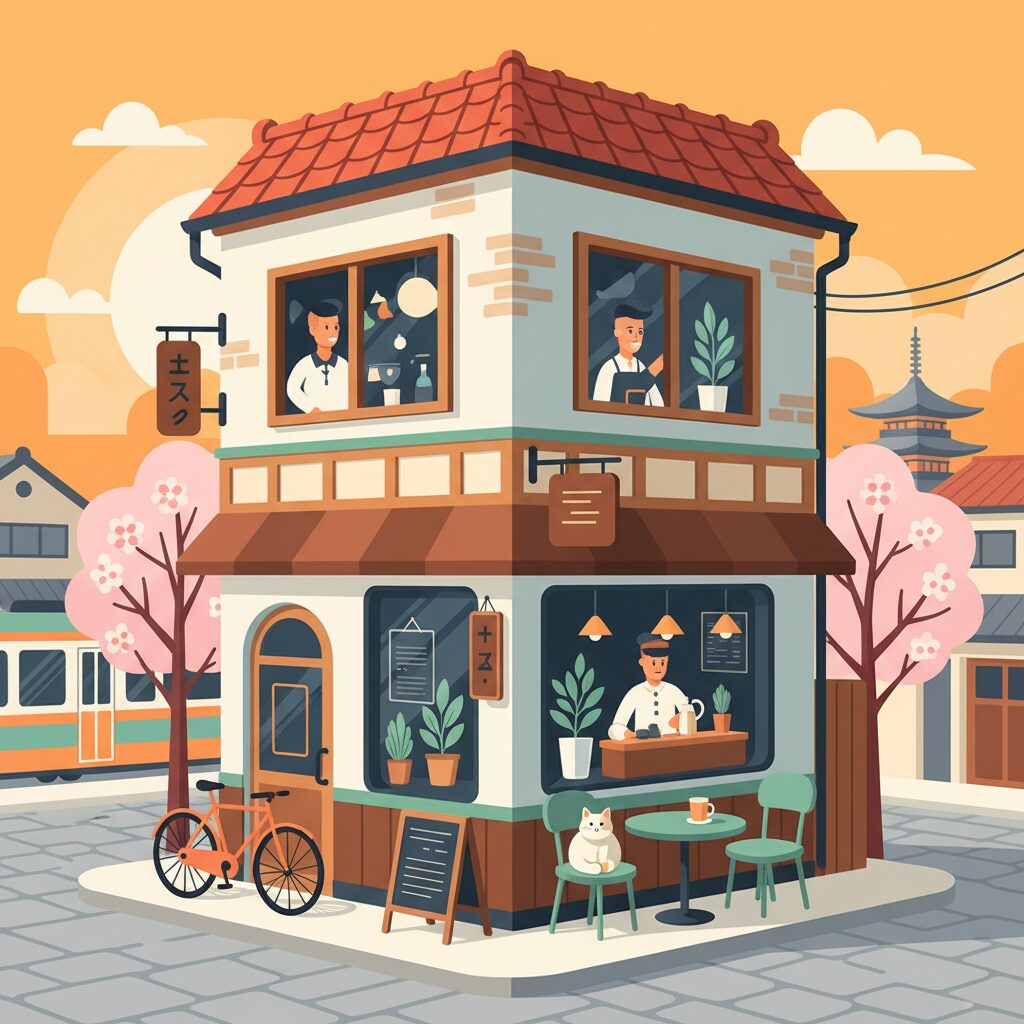
The air is thick, a hazy cocktail of freshly ground coffee beans, toasted shokupan, and the spectral ghost of a thousand past cigarettes. It’s a smell that clings to the dark wood paneling, the cracked crimson velvet of the booth seats, and the stoic figure behind the counter, a man they call the “Master.” Outside, the frantic pulse of Osaka rushes by—the clang of a tram, the chatter of shoppers in the shotengai, the relentless hum of a city that never quite sits still. But in here, time slows to the pace of a slow drip filter. This isn’t Starbucks. This isn’t Tully’s. This is a kissaten, a traditional Japanese coffee house, and for a growing number of us navigating the strange new world of remote work in Osaka, it’s not just a café. It’s an office, a sanctuary, and a classroom for understanding the very soul of this city. It is, in the truest sense of the word, a “third place,” that essential anchor of community life that exists between the solitude of home (the first place) and the obligations of the office (the second place). As a foreigner trying to build a life here, I thought I was just looking for good Wi-Fi and a decent cup of coffee. What I found instead was a lesson in Osaka’s unwritten social contract, a world away from the gleaming, efficient, and often impersonal spaces of Tokyo. This isn’t about finding the most Instagrammable latte art; it’s about finding your footing in a city that values human connection over polished aesthetics, a place where belonging is earned not through networking events, but through the quiet ritual of ordering a second cup of coffee.
Just as the kissaten offers a window into Osaka’s social fabric, the city’s public baths provide another profound, communal space for understanding its true soul.
The Anatomy of an Osaka Kissaten: A Symphony in Brown and Beige
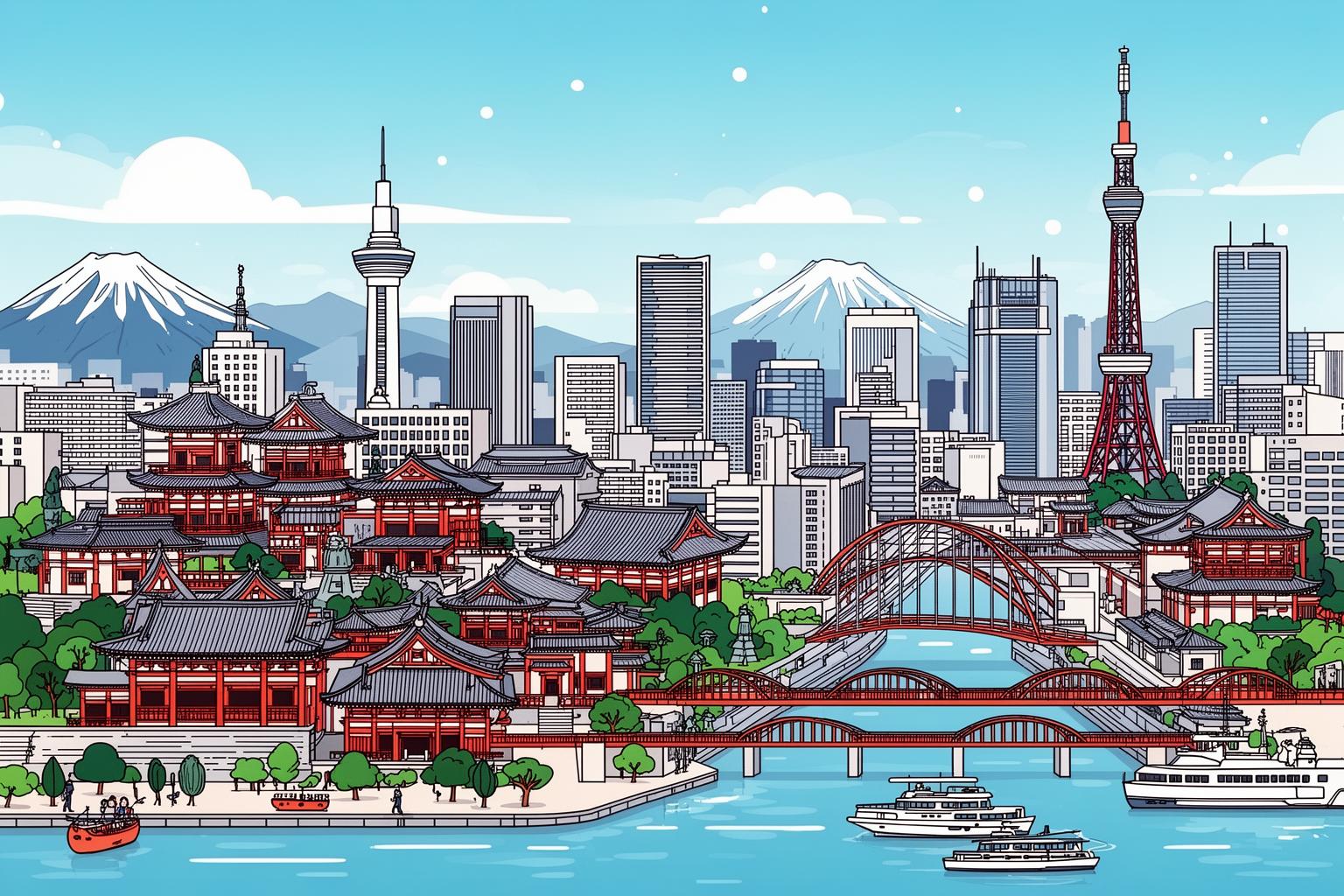
To grasp the role of the kissaten, you first need to immerse yourself in the space itself. It’s a sensory experience, a conscious retreat into the past. Forget the minimalist Scandinavian aesthetics, bright lights, and recycled wood tables of contemporary third-wave coffee bars. The classic Osaka kissaten hails from the Showa Era (1926-1989), and its style has remained largely intact. The color scheme features subdued earth tones: walnut-brown walls, caramel vinyl booths, with occasional deep burgundy or forest green accents in the upholstery. Lighting is purposely dim, provided by ornate, often slightly dusty brass or stained-glass lamps that emit a warm, golden glow, creating intimate pockets of light around each table. This environment wasn’t designed for the harsh glare of laptop screens; rather, it encourages conversation, reading newspapers, and quiet reflection.
The furniture is sturdy and built to endure. Tables often have dark laminate tops, sometimes worn with subtle rings from countless coffee cups. Chairs and booths favor comfort over aesthetics, inviting guests to settle in and linger. Modular, easily rearranged furniture is noticeably absent. These spaces were intended to be permanent fixtures, contrasting sharply with the temporary nature of many modern cafés. Large communal tables are common, where solo visitors gather, forming a silent fellowship of readers and thinkers. Almost invariably, there’s a magazine rack filled with well-thumbed weekly journals, manga collections, and sports newspapers, their pages softened by the hands of regular patrons.
Then there’s the soundscape—a delicate equilibrium. It’s seldom silent, yet never overwhelmingly loud. You’ll hear the gentle clink of ceramic against saucer, the hiss of a vintage, chrome-laden espresso machine, the soft rustle of newspaper pages turning, and the low murmur of conversations. Many kissaten feature a television in the corner, tuned to a daytime talk show or a Hanshin Tigers baseball game, offering a gentle, ambient hum of familiar cultural reference points. This background noise is essential: it’s the sound of life, the city breathing softly around you. It forms a subtle bubble of privacy without demanding absolute silence, cultivating an unexpectedly perfect setting for focused thought. Unlike the carefully curated chill-hop playlists of global coffee chains, the soundtrack of a kissaten is natural, spontaneous, and distinctively Japanese.
The menu reflects this timeless spirit. Don’t expect flat whites or cold brews here. The centerpiece is “blend coffee,” a closely guarded house blend, served hot and black in a petite, refined ceramic cup. Classic options include “Vienna Coffee” (topped with a generous mound of whipped cream), Cream Soda (a vibrant green melon soda with a scoop of vanilla ice cream), and Mixed Juice (a frothy, sweet fruit blend that’s a specialty of Osaka). The food menu is just as nostalgic, centered on “kissaten meals” or keishoku. Thick-sliced toast (atsugiri toast) often appears as part of a “Morning Service” set with a hard-boiled egg and a small salad, all offered at an incredibly affordable price. Lunch choices include Napolitan spaghetti (sweet ketchup-based pasta with sausage and peppers), curry rice, and sandwiches with crusts meticulously removed. This fare isn’t haute cuisine; it’s comfort food meant to be dependable, affordable, and deeply satisfying.
At the heart of this entire environment stands the Master. He (almost always a he, occasionally accompanied by his wife, the Mama-san) is not simply a barista. He is the owner, the conductor, the steady anchor of the whole establishment. His movements are economical, shaped by decades of repetition. He knows his regulars by name, their usual orders, and when they want to chat or to be left in peace. His presence transforms the kissaten from a mere business into a community hub. He is the guardian of its ambiance and the keeper of its history. His quiet nod of recognition as you enter means far more than a thousand scripted greetings from a part-time café worker. He is what makes the space feel safe, stable, and welcoming.
“Maido!” vs. “Irasshaimase!”: The Unspoken Social Contract
To truly understand the essence of Osaka’s kissaten culture, you need to appreciate the subtle yet profound difference in the city’s social interactions, a difference perfectly captured in a simple greeting. In Tokyo, when you enter a shop or café, you are greeted with a crisp, high-pitched, and standardized “Irasshaimase!” (Welcome!). It is professional, polite, and efficient, but entirely impersonal. It functions as a broadcast, not a conversation. It signals the start of a transaction. You are a customer, they are a service provider, and the roles are clearly defined.
In Osaka, by contrast, you are more likely to be welcomed with a warmer, more familiar “Maido!” or “Maido, ookini!” Roughly translated, it means “Always, thank you,” or more casually, “Thanks for your continued patronage.” This phrase is rooted in the city’s long history as a merchant hub. It’s not merely a welcome; it’s an acknowledgment. It implies a pre-existing relationship, even if none formally exists. It says, “I see you. I recognize you as part of this community, and I appreciate your presence.” From the very first moment, the interaction is framed not as a one-time transaction, but as part of an ongoing relationship.
This fundamental difference in approach shapes the entire experience of being a remote worker in a kissaten. In a Tokyo Starbucks, you are a consumer of Wi-Fi and caffeine. Your right to occupy a seat is directly tied to your consumption. The unspoken rule is to buy a drink, find a spot, put on your headphones, and become invisible. The staff is trained for efficiency and turnover. Lingering too long with an empty cup can invite subtle (or not-so-subtle) pressure to either order more or leave. The space is functional but can feel cold and isolating. You are working alone, in public.
In an Osaka kissaten, the dynamic is wholly different. The “Maido!” greeting sets the tone for a relational experience. You are not just a customer; you are a temporary resident, a guest in the Master’s house. This comes with specific responsibilities and etiquette, but it also offers a deep sense of security and belonging. You are working among others, part of a quiet, shifting community of regulars, students, and fellow remote workers. The Master isn’t timing your stay with a stopwatch. He observes the flow of his establishment and understands that you are there to work, granting you tacit permission to do so, as long as you respect the space and other patrons.
This creates a unique social contract. Your payment isn’t just for the coffee; it’s for the time and space. It’s your “rent.” This is why the rhythm of ordering is so important. You arrive, order a coffee and perhaps the Morning Set. You work for a couple of hours. As lunchtime approaches and your cup is long empty, it’s time to pay your next round of rent. You might order another coffee or perhaps the Napolitan spaghetti. This simple act signals to the Master: “I appreciate this space. I understand the arrangement. I am contributing to the ecosystem.” It’s a gesture of respect that ensures you remain welcome for the afternoon. Trying to stretch a single 400-yen coffee over a five-hour workday breaches this contract. It’s not about a written rule but about reading the atmosphere and understanding the give-and-take that sustains these small, independent businesses.
The Master, in return, offers more than just coffee. He provides a stable, predictable environment. He quietly refills your water glass without your asking. He shooes away overly loud patrons or proselytizers. He acts as a gentle, unobtrusive guardian of the atmosphere. Over time, as you become a familiar face, the relationship deepens. The initial “Maido!” might be followed by a small nod. After a few weeks, he might ask a simple question about your work or comment on the weather. This isn’t intrusive small talk; it’s the slow, steady weaving of a social fabric. It’s the acknowledgment that you are no longer an anonymous stranger, but part of the daily rhythm of the place. For a foreigner, often feeling adrift in a new culture, this slow-burn recognition is incredibly grounding. It’s the feeling of putting down roots, one cup of coffee at a time.
The Unspoken Rules for the Kissaten Nomad
For those unfamiliar, entering the revered, dimly lit halls of a traditional kissaten with a laptop can feel daunting. This is not a co-working space. There are no signs promoting high-speed internet or welcoming “Digital Nomads.” You are stepping into a pre-digital era, attempting to integrate your 21st-century lifestyle within it. Success depends on careful observation, respect, and an understanding of the subtle etiquette that governs these places. These aren’t posted rules, but they remain as real and binding as any formal policy.
Rule 1: The Art of Reconnaissance
Not all kissaten are alike, and not every one is suitable for working. Before opening your laptop, choose your venue carefully. Start with a quick glance from the doorway. Look for signs: are others using laptops or reading books? That’s a promising sign. Is the space filled with elderly regulars engaged in boisterous conversation? Probably not ideal for concentration. The most valuable and often scarce resource is the power outlet. These are hidden gems in Showa-era cafés. Check tables along the walls for outlets near the floorboards. Finding one is like striking gold. If you spot one, you’ve found a potential workspace. If not, be ready to rely on your battery. Asking the Master to unplug a lamp to charge your MacBook is a serious misstep. You are a guest and should adapt to the environment, not expect it to accommodate you.
Rule 2: The Sacred Act of the First Order
Your first interaction with the Master sets the tone for your visit. Don’t just enter, drop your gear on a table, and wait to be noticed. Step inside, make eye contact with the Master, and wait to be shown to a seat. Once settled, order without delay. The “Morning Service” (or mōningu sābisu) is your best ally. Served until about 11 a.m., it usually includes coffee, thick toast, a boiled egg, and sometimes a small salad or yogurt, often priced just above the cost of coffee alone. Its incredible value reflects an era of fierce competition among coffee shops. Ordering the Morning Set indicates you’re planning to stay awhile and understand local customs. It’s a gesture of goodwill that marks you as a knowledgeable patron, not just a visitor.
Rule 3: Mastering the “O-kawari” (Refill) Rhythm
This might be the most important unspoken rule. One cup of coffee doesn’t pay for the entire day. The kissaten runs on a rhythm of consumption that must be honored. A good guideline is to place an order every two to three hours. When your first cup is a distant memory and your water glass has been refilled twice, it’s time to order again. This is where the o-kawari comes in. Many kissaten offer a second cup of coffee at a discounted price. Ordering one is a simple way to extend your stay. It’s a low-cost, high-impact signal to the Master that you’re not abusing his hospitality. After noon, consider choosing from the lunch menu. A plate of curry rice or Napolitan spaghetti not only recharges you for the afternoon but also confirms your role as a valued, contributing member of the café community. This isn’t about upselling; it’s about engaging in the mutual relationship that sustains these small businesses.
Rule 4: Managing Your Sonic Footprint
You share this space with others seeking peace and quiet. Phone calls are strictly prohibited. If you must take a call, gather your belongings and step outside. There are no exceptions. Likewise, all computer sounds must be muted. Notifications, pings, and video audio—all should be silent. If you need to listen to something for work, headphones are mandatory. Even then, be cautious about sound leakage. The goal is to remain a quiet, unobtrusive presence. Your workstation is your table, and your personal space should not extend beyond it. Respect the peaceful atmosphere. The ambient sounds of the kissaten—the clinking cups, quiet conversations, and television—is the accepted background. Your personal audio is not.
Rule 5: The Graceful Exit
When your time is up, pack up silently and efficiently. Don’t leave behind papers, crumbs, or empty sugar packets. Take your bill (usually placed on your table in a small plastic holder) to the register near the door. This is not a place to summon the Master for the check. When paying, a simple “Gochisousama deshita” (Thank you for the meal/drink) and “Arigatou gozaimashita” (Thank you very much) is essential. This is more than politeness; it’s a formal expression of appreciation for the service and hospitality you received. It closes the social contract you entered upon arrival. As you leave, the Master will likely see you off with another “Maido, ookini.” This farewell feels different—it’s not just a greeting but a confirmation. You have successfully navigated the unspoken rules. You are welcome back. You have found your place.
A Tale of Two Coffee Cultures: Why Osaka’s Kissaten Feel Different
Spend ample time in both Tokyo and Osaka, and you begin to sense the profound, foundational differences in their urban philosophies. These contrasts are clearly evident in their respective café cultures. While both cities boast chain cafés and trendy espresso bars, the essence of their traditional, independent coffee houses reveals two fundamentally distinct approaches to public space, community, and commerce.
Tokyo’s coffee culture, much like the city itself, often feels driven by concept, design, and efficiency. The third places that flourish there tend to be highly specialized and meticulously curated. You encounter minimalist, almost reverential coffee bars where patrons speak softly, focusing exclusively on the esoteric tasting notes of a single-origin pour-over. There are also sleek, design-forward cafés in neighborhoods like Omotesando or Daikanyama, where the aesthetics—the furniture, lighting, and branding—sometimes outweigh the coffee itself. These venues are beautiful, precise, and often costly, serving as extensions of personal brands and backdrops for carefully curated lifestyles. Then there are the hyper-functional spaces: co-working cafés with day passes, designated quiet zones, and plentiful power outlets. These spots are ruthlessly efficient, providing everything a remote worker requires, yet they often lack soul. Interactions feel transactional, the atmosphere is professional, and the sense of community is frequently manufactured via networking events rather than arising organically.
In Tokyo, space is the ultimate luxury, and every square foot is optimized for maximum return. This results in a café culture that can feel segmented and transient. You visit one place for the best coffee, another for the best work environment, and yet another for the ideal atmosphere. The notion of a single neighborhood spot fulfilling all these needs—and sustaining this for fifty years—is becoming scarce. The pressure to be new, trendy, and the “next big thing” is immense. As a result, many independent cafés in Tokyo seem to perform a concept rather than simply exist.
Osaka’s kissaten culture, by contrast, springs from the city’s merchant spirit. It is pragmatic, unpretentious, and deeply anchored in the ideas of kosupa (cost performance) and human connection. The value offered by an Osaka kissaten is not just the quality of its coffee or the appeal of its interior design. It lies in its reliability, affordability, and its function as a stable community hub. An Osaka merchant would ask, “Does it serve its purpose? Is it fairly priced? Does it make people feel welcome so they return tomorrow?” This attitude has fostered a landscape of coffee shops less focused on fleeting trends and more on lasting function.
Take the Morning Service, a tradition more common and generous in Osaka (and nearby Nagoya) than Tokyo. For the price of a single, often modest coffee in a chic Tokyo café, you can enjoy a full breakfast set in an Osaka kissaten. This is not merely a marketing tactic; it embodies a business philosophy. It’s about cultivating loyalty through tangible value. It’s a way of saying, “Start your day with us. We’ll take care of you. We’re a dependable part of your routine.” This practical, value-oriented approach is quintessentially Osaka.
Moreover, the relational character of Osaka society, often described by the term naniwa-bushi (a humanistic, sometimes sentimental way of life), imbues its kissaten with a distinct energy. The Master is not a detached coffee artisan but a neighborhood pillar. Regular customers are more than clients; they form an extended family. Conversations tend to be louder, laughter more frequent. There’s a cozy, lived-in messiness to an Osaka kissaten that sharply contrasts with the polished perfection of many Tokyo cafés. It’s the difference between a museum and a living room: one for admiration, the other for living.
This is not to suggest Tokyo lacks wonderful, historic coffee shops or Osaka has no stylish modern cafés. But their centers of gravity differ. In Tokyo, the quest for a third place may lead you to numerous highly specialized venues. In Osaka, it often leads to that one unpretentious kissaten around the corner—with a faded awning and comfortable chairs—where the Master knows your order. In Tokyo, you find your niche. In Osaka, you find your place.
The Kissaten as a Microcosm of Osaka Itself
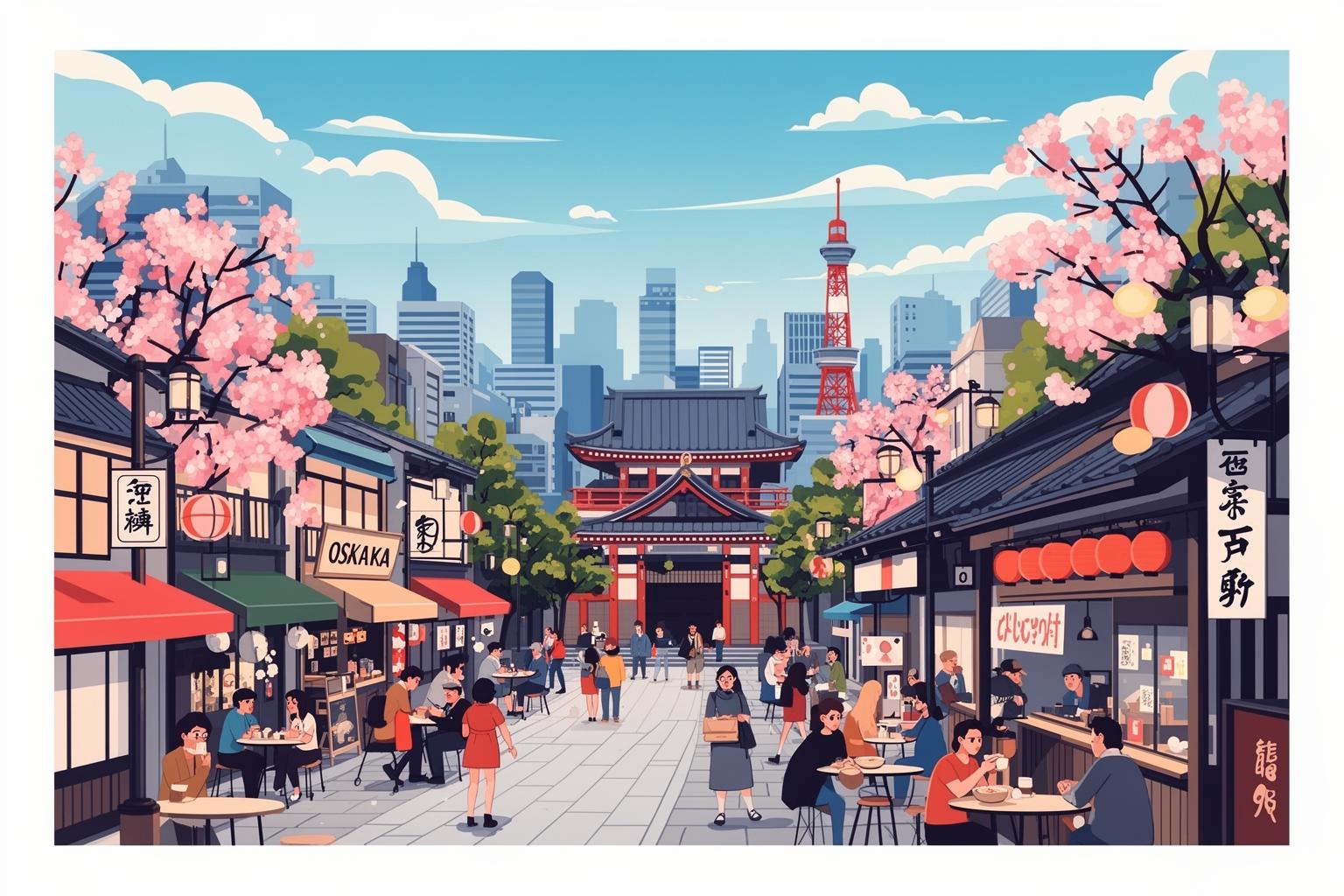
After some time, you begin to understand that the neighborhood kissaten is more than just a place to enjoy coffee or work on a laptop. It serves as a perfect, miniature representation of Osaka society—a living museum showcasing the city’s values, quirks, history, and unique way of urban living. Every detail, from the menu to the clientele, reflects a fundamental aspect of the Osakan identity.
Firstly, the kissaten stands as a stronghold of local identity within a sprawling metropolis. Unlike the standard, cookie-cutter interiors of global coffee chains that look identical in Namba and New York, each kissaten uniquely mirrors its immediate environment. A kissaten near Yodoyabashi’s business district will be filled with salarymen in suits, the air buzzing with murmurs of business deals and the rustling of the Nikkei newspaper. The pace is quicker, and the atmosphere more serious. In contrast, a kissaten secluded in the bohemian, artistic Nakazakicho neighborhood presents an entirely different vibe. The décor might be eclectic, the music an old jazz record, and the patrons a mix of artists, students, and shop owners from vintage clothing stores. Deep within the extensive Tenjinbashisuji Shotengai, a kissaten becomes a lively hub for shoppers and elderly locals, the TV constantly tuned to a variety show. Each kissaten functions as a distinct social ecosystem—a direct extension of the street beyond its doors. Finding your kissaten means discovering your neighborhood’s heart.
Secondly, the kissaten is one of the rare genuinely intergenerational spaces left in modern Japanese society. Any given afternoon reveals a beautiful cross-section of the city’s population coexisting in quiet harmony. In one booth, elderly women dressed in their finest enjoy cake and coffee after shopping. At the counter, a weathered old man slowly reads a sports paper, a lit cigarette held between his fingers (in one of the few remaining smoking-allowed spots). Elsewhere, a university student diligently highlights textbook passages. Meanwhile, in the corner, you, a remote worker, type away on your laptop. Few places naturally bring together such diverse groups. The kissaten acts as a “social commons,” a neutral space where different generations share the same environment without forced interaction, united by simple rituals of coffee and comfort. It represents a quiet, yet powerful, form of social cohesion at work.
Lastly, the kissaten embodies Osaka’s renowned gochamaze culture—the art of blending everything together. The term means “jumbled up,” perfectly capturing Osaka’s love for a lively, somewhat chaotic fusion of elements. The kissaten is a gochamaze of time, function, and atmosphere. It is a Showa-era relic meeting the needs of a digital-age workforce; a place of business that feels like home; a setting for intense private focus that is simultaneously a center of public community life. The menu itself is a delightful mix: Japanese comfort foods like curry rice alongside Western-inspired dishes such as Napolitan spaghetti and cream soda. This refusal to fit neatly into categories, this embrace of a comfortable, practical messiness, is the essence of Osaka. While Tokyo separates and perfects, Osaka combines and adapts. The kissaten holds no single, fixed purpose; it is whatever its patrons need it to be—an office, cafeteria, study hall, meeting place, or sanctuary. Through this flexible, pragmatic, and deeply human approach, it reveals the very soul of the city it serves.
Beyond the Laptop: Finding Your Place in the Urban Fabric
The search for the perfect remote workspace often feels like a soulless, utilitarian task—a checklist of Wi-Fi speed, outlet availability, and coffee prices. But in Osaka, the quest to find your favorite kissaten becomes far more meaningful. It transforms from a practical necessity into a rite of passage, an essential part of truly inhabiting the city rather than merely living in it. It’s the moment when you stop viewing the city as just a collection of train stations and landmarks and begin to see it as a network of neighborhoods, each with its own rhythm and its own living room.
What I’ve come to realize is that the value of these establishments lies not in their modernity or efficiency, but in their unwavering consistency. In a world of constant change and fleeting digital trends, the kissaten serves as an anchor. The Master is present every day. The coffee tastes the same as it did last week and will next week. The worn velvet of your favorite booth offers familiar comfort. This predictability fosters a sense of psychological safety that greatly supports both work and well-being. It becomes a stable foundation on which you can build a routine and, by extension, a life in a new city.
Foreigners often misinterpret Osaka by relying on clichés. They hear “friendly” and expect everyone to be outgoing comedians. They hear “merchant city” and assume it’s only about food and bargains. But the city’s true character is subtler. It’s a pragmatism softened by deep-rooted humanism. It’s fierce independence paired with a profound sense of community. The kissaten is where these abstract ideas turn into tangible experiences. You witness Osaka’s practical side in the incredible value of the Morning Service. You feel its human touch in the Master’s quiet nod of recognition. You observe its community spirit in the easy coexistence of strangers sharing a quiet space.
So, the next time you stroll down an Osaka street and notice a small, unassuming coffee shop with a faded food model and a name inscribed in elegant, old-fashioned script, don’t just pass by. Pause. Look inside. See the warm glow of the lamps, the dark wood, the regulars reading their newspapers. You’re not just looking at a café—you’re witnessing a vital part of the city’s social fabric. You’re seeing a third place that has supported its community for decades and now quietly adapts to serve a new generation.
Step inside. Order a blend coffee. Breathe in the history. It may not offer the fastest Wi-Fi or the trendiest décor, but it provides something far more precious: a sense of place. It’s an opportunity to engage in the daily life of the city in an authentic, uncurated way. It’s an office, a refuge, and a front-row seat to the beautiful, ordinary, and endlessly fascinating human drama of Osaka. And in that quiet, comfortable space, you may discover that you’re not just a remote worker searching for an outlet—you’re a resident finding your home.