Walk down any major street in Osaka, from the electric canyons of Namba to the polished corridors of Umeda, and you’ll see her. The green mermaid, beckoning you into the bright, predictable comfort of a Starbucks. It’s a familiar global language of frappuccinos and free Wi-Fi. It’s clean, it’s easy, and it’s utterly anonymous. You could be in Osaka, or you could be in Ohio. For many foreigners navigating life in this vibrant, chaotic city, these chains become a default, a simple solution to the need for caffeine and a place to sit. But in doing so, you walk past a hundred hidden doors, portals into the real, beating heart of Osaka. You miss the city’s living rooms, its confessionals, its unofficial community centers. You miss the kissaten.
These traditional Japanese coffee houses are more than just cafes. They are time capsules, social anchors, and stubborn bastions of local identity in a world rushing towards homogenization. A kissaten isn’t a place you go for a quick transaction; it’s a place you go to belong. It’s where the unspoken rules of Osaka society play out over siphon-brewed coffee and thick, buttery toast. It’s where the city’s gruff warmth and deep-seated pragmatism are not just concepts, but lived experiences. To understand the kissaten is to understand a fundamental truth about what it means to live here, to be a part of a neighborhood rather than just an address in a megacity. This isn’t a guide to the most Instagrammable retro cafes. This is a map to finding community, one cup at a time, in the quiet, smoke-tinged corners where Osaka is most itself. Let’s start our journey in an area where the past and present mingle, a neighborhood brimming with the kind of character you won’t find in a corporate coffee shop manual.
Amid the nostalgic lure of kissaten, one also discovers a city where the unvarnished, blunt communication style reveals the raw, authentic pulse of Osaka life.
The Anatomy of a True Kissaten: It’s Not Just About the Coffee
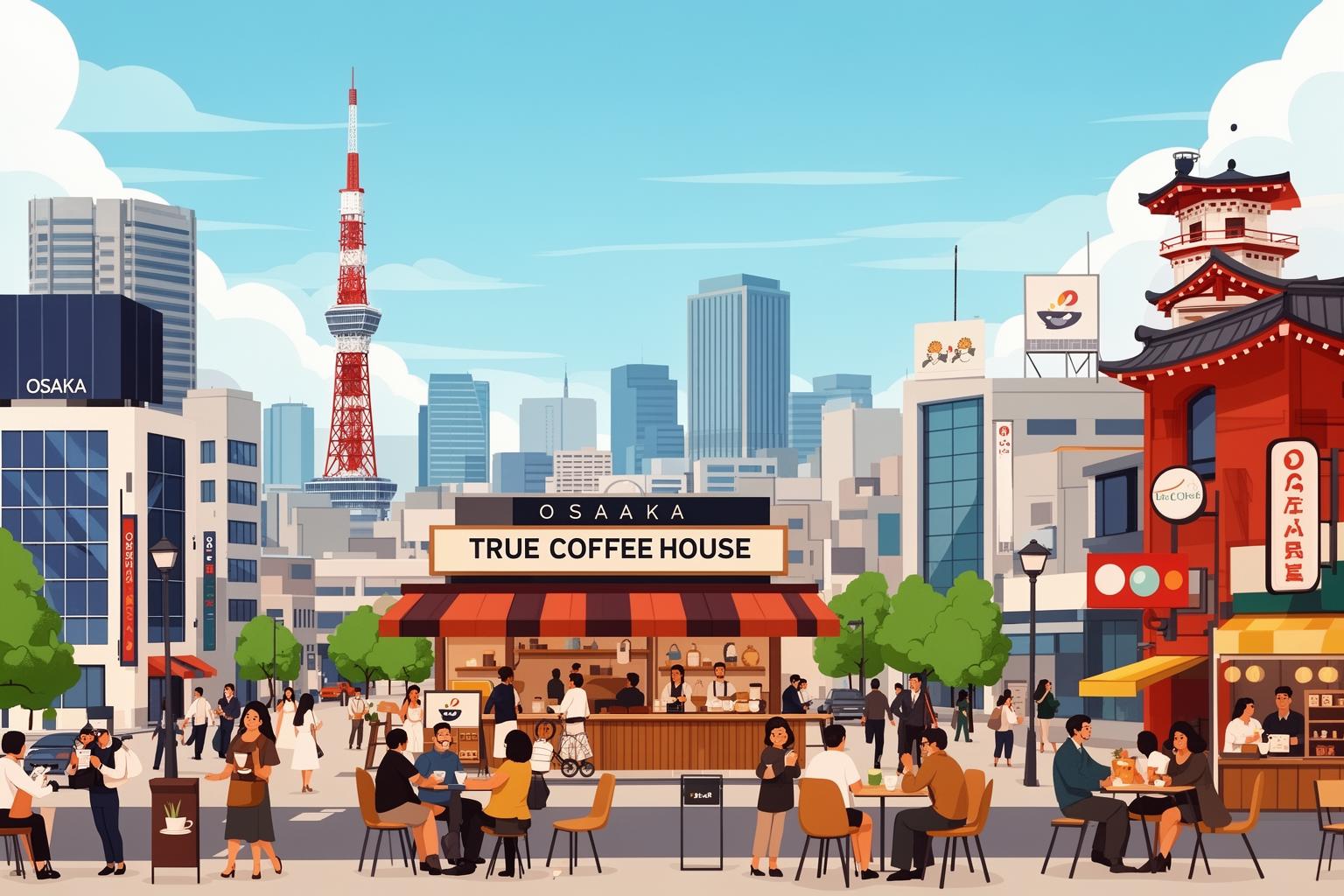
Step through the door of a classic kissaten, and the modern world instantly fades away. The air feels different—thick with the rich scent of dark-roast coffee, a subtle, sweet echo of tobacco from years gone by (and often still present), accompanied by the gentle hum of a life lived at a slower pace. Minimalist decor or bright, open seating are nowhere to be seen. Instead, you are surrounded by dark, polished wood, plush velvet chairs in deep burgundy or forest green, and the warm glow of Tiffany-style lamps. Yet these physical details serve merely as a backdrop. The true heart of the kissaten lies in its people, a social ecosystem governed by rules unlike those of the usual service industry.
The “Master”: Guardian of the Gate
Behind the counter, you won’t find an upbeat, name-tagged barista asking for your name to scribble on a paper cup. Instead, you’ll meet the “Master” (masutaa). This title is no exaggeration. The Master is the owner, the craftsman, the confidant, and the quiet conductor of this small world. Often, they have stood behind that very counter for thirty, forty, or even fifty years, having inherited the business from their parents. They embody a living record of the neighborhood’s history.
The Master’s role goes far beyond that of a mere service provider. They act as a social anchor. They know their regulars not as customers, but as individuals. They remember that Tanaka-san takes his coffee with one sugar, that Suzuki-san’s daughter recently began university, and that Mrs. Sato is recuperating from a cold. Their movements demonstrate practiced efficiency, whether they are carefully brewing coffee with a gleaming siphon—a process that resembles a chemistry experiment more than meal prep—or quietly wiping down the counter. They may not greet you with effusive warmth initially; often, their welcome is a quiet nod and a gruff “Irasshai.” This isn’t rudeness but a calm, steady presence. A relationship with a Master is earned gradually, through consistent quietude. They are the gatekeepers of the community, and gaining their acknowledgment is the first step to truly belonging.
The “Joren”: The Lifeblood of the Place
Look around the room. You’ll notice them—the elderly man in the corner, methodically reading his newspaper, a plume of cigarette smoke rising. The two women in their sixties, engaged in a low, conspiratorial murmur. The salaryman on his break, gazing into space, his coffee cup his sole companion. These are the “joren,” the regulars. They represent the lifeblood of the kissaten. They don’t merely visit the establishment; they inhabit it. For them, this is a third place, an extension of their own living room.
Becoming a joren is a natural progression. It’s not driven by loyalty cards or point systems. It’s about showing up. It’s about finding your place, ordering your usual, and honoring the space’s rhythm. Over weeks and months, your presence melds into the environment. The Master might start preparing your coffee as you enter. Another regular may offer a faint nod of recognition. This marks a profound departure from the impersonal, transactional nature of a chain coffee shop. At Starbucks, you are a customer; in a kissaten, you have the chance to become woven into the fabric of the place. The joren form a quiet, loosely connected community, united by a shared appreciation for this unique sanctuary. They are the custodians of its atmosphere, and their steady presence transforms a kissaten from a business into a home.
Reading the Unspoken Rules: How to Belong, Not Just Visit
To someone unfamiliar, the kissaten can feel like an intimidating place. The quiet atmosphere, the seemingly closed social circles, and the absence of a clear English menu—it can all come across as somewhat unwelcoming. However, this isn’t a fortress meant to keep people out. Rather, it’s a space governed by a different set of social expectations, a silent understanding between the Master, the joren, and anyone who steps inside. Grasping these unspoken rules is essential to fully appreciating the experience.
This is Not Your Office
This is perhaps the most important cultural distinction to grasp. A kissaten is not a co-working space. In a world where any cafe with a power outlet has turned into a remote office, the kissaten maintains its own standards. Setting up a laptop and settling in for four hours with just one cup of coffee is a significant faux pas. It fundamentally misses the point of the space. A kissaten is meant for conversation, reading a book, or a brief moment of quiet reflection away from the city’s hustle. It’s about human connection, even if that connection is shared silence. Taking over a table for work is considered disrespectful to the Master, who depends on a steady yet slow turnover, and to other guests who seek the intended ambiance. The space is communal, not a private office. Close your laptop. Pick up a newspaper. Or simply sit and watch the world go by. You’ll be engaging with the culture, not just freeloading Wi-Fi.
The Sacred Ritual of “Morning Service”
If you want to experience a kissaten at its most authentic, visit in the morning. Between roughly 8 AM and 11 AM, many kissaten serve “Morning Service” (mōningu sābisu). This is more than just a breakfast deal; it’s a cultural tradition. For the price of a single cup of coffee—usually around 400 to 500 yen—you receive a small feast. The classic set includes the coffee, a thick slice of fluffy shokupan toast (often called “thick-cut toast”), buttered and delightfully satisfying, a hard-boiled egg, and sometimes a small salad with sesame dressing or a tiny cup of yogurt.
In Tokyo, a similar breakfast might be viewed as a quick, efficient way to refuel. In Osaka, it’s different. It’s a ritual. It’s the neighborhood’s daily gathering. This is where local shop owners meet before opening their doors and where elderly residents have their first chat of the day. The value is incredible and directly appeals to the practical, straightforward Osakan mindset. Why pay 600 yen for just a coffee in a paper cup when you can get a full breakfast and a real ceramic mug for less? The Morning Service is a declaration of purpose: we’re here to offer comfort, community, and great value. It’s the kissaten’s daily promise to its neighborhood.
Navigating Osakan Conversation
Unlike the more reserved social norms common in Tokyo, Osaka operates on a more direct, engaging, and sometimes inquisitive wavelength. Don’t be surprised if the Master or a regular customer starts a conversation with you. Questions like “Where are you from?” or “What do you do in Japan?” aren’t meant to be intrusive. They’re genuine expressions of curiosity, an open invitation to join the community. In Tokyo, random chats with strangers in a cafe are rare. In Osaka, it’s part of how social life functions.
The secret is to embrace this openness. A simple, friendly response can lead to a rewarding exchange. This is where you’ll hear authentic stories, get local tips that aren’t in any guidebook, and experience the city’s famed hospitality firsthand. It’s not a cliché; it’s a style of conversation based on mutual goodwill. You are not an anonymous foreigner; you’re a new participant in the neighborhood’s daily story. Lean into it, and you might just make a new friend.
Kissaten as Micro-Communities: Finding Your Niche in a Megacity
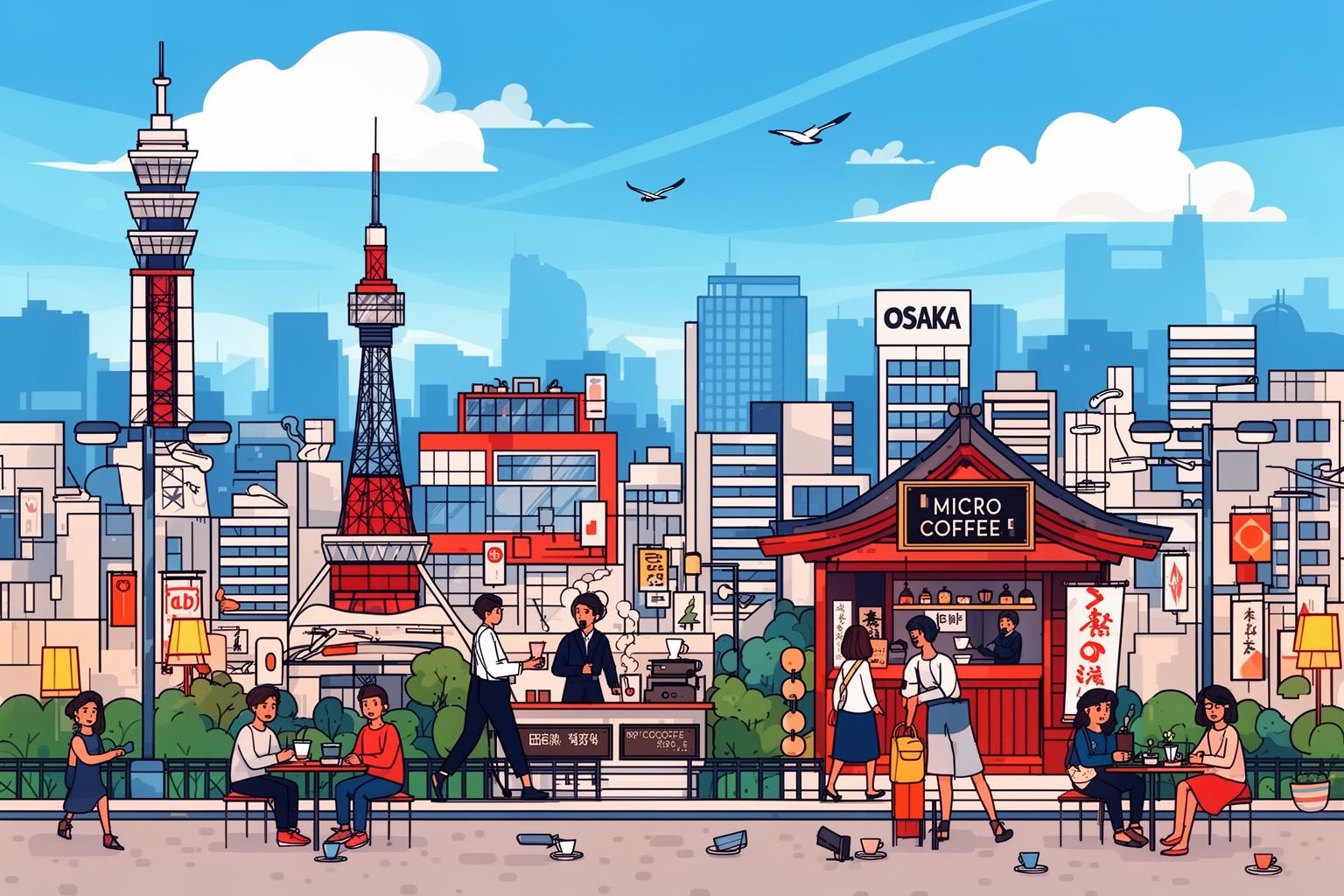
No two kissaten are exactly the same. Each one acts as a reflection, revealing the distinctive character of its neighborhood and the people who visit. A kissaten located in a lively shopping arcade carries a completely different vibe than one nestled in a quiet residential area. They serve as micro-communities, each possessing its own unique purpose and personality. Discovering the right one is like finding your tribe within the vastness of the city.
Function Defines Form: From Business Meetings to Shogi Games
Some kissaten effectively serve as offices for local businesspeople. In neighborhoods like Shinsaibashi or Honmachi, you’ll find men in suits holding quiet discussions over coffee, using the space as neutral ground for negotiations. The atmosphere is calm and serious. Others, especially in older districts, act as social clubs for retirees. You might see groups of men gathered around a shogi (Japanese chess) board, their game continuing for hours, fueled by endless cups of coffee and friendly chatter. Still others, often near universities or in bohemian areas like Nakazakicho, become refuges for artists, writers, and students who come for affordable coffee and the serene, inspiring environment. The kissaten adjusts to the needs of its community, becoming whatever its regulars require: a boardroom, a social club, a library, or a sanctuary.
A Tale of Two Neighborhoods: Tenjinbashisuji vs. Shinsekai
To appreciate this diversity, consider two iconic Osaka neighborhoods. The kissaten along Tenjinbashisuji Shotengai, Japan’s longest shopping arcade, are integrated into the commercial life of the street. They are bright, bustling, and efficient. The turnover is somewhat faster, and conversations louder. Shopkeepers drop by for quick coffee and a cigarette, sharing gossip and venting about the day’s business. It’s a place for a brief pause, a moment of rest amid a busy day of commerce. The energy is practical, social, and thoroughly local.
Now, head south to Shinsekai, the pre-war entertainment district that time seems to have overlooked. The kissaten there are completely different. They are darker, quieter, and filled with a deep sense of nostalgia. The interiors remain unchanged for fifty years. The clientele is older, and the pace slow. Here you’ll find shogi players, day laborers reading sports papers, and people who have been drinking the same coffee at the same table since the Showa era. The air is heavy with history, echoing a more prosperous past. A kissaten in Shinsekai is not just a break in the day; it is the day’s main event. It serves as a living museum of working-class Osaka, a testament to resilience and the comfort of routine.
Why Osaka Clings to Kissaten Culture (And Why It Matters)
In a progressive country like Japan, the continued presence of these seemingly old-fashioned establishments, particularly in a vibrant city like Osaka, raises an important question: why? Why have kissaten endured here with such resilience when they have become niche curiosities elsewhere? The answer lies deeply rooted in the Osakan mindset, blending strong local pride, keen economic pragmatism, and an enduring desire for human connection.
A Firm Resistance to Homogenization
Osaka has always defined itself in contrast to Tokyo. While Tokyo is polished, standardized, and corporate, Osaka is gritty, unique, and independent. The kissaten perfectly embodies this spirit. It stands as the opposite of global coffee chains. Each one is intensely individual, reflecting its Master’s personality rather than a corporate branding manual. Choosing a local kissaten over a Starbucks is a small, everyday act of cultural preservation. It’s a vote for the local, the personal, and the city’s unique character. Osakans harbor a deep suspicion of anything overly slick or imposed from the outside, and the kissaten is a cherished local institution they fiercely support through their patronage.
The Practical Mindset of a Merchant City
Osaka was built by merchants, with a sharp sense of value ingrained in its DNA. Osakans are known for their pragmatism (kenjitsu). They expect a fair deal. A 700-yen artisanal latte in a disposable cup meant to be drunk quickly doesn’t always add up. But a 450-yen Morning Service including carefully brewed siphon coffee, toast, an egg, and a comfortable seat where you can relax for an hour? That’s a bargain. The kissaten delivers clear value. The coffee is often excellent, prepared with meticulous care. Portions are honest. The atmosphere is welcoming. It’s a high-quality experience at a reasonable price, and in Osaka, that’s the ultimate indicator of a good business.
A Remedy for Urban Isolation
Ultimately, the strongest reason for the kissaten’s survival is how it meets a basic human need. In the expansive, impersonal spread of modern cities, people yearn for connection and belonging. The kissaten provides this abundantly. It’s a place where you are recognized. The Master knows your face and your order. Other regulars acknowledge you. Your absence is noticed. This simple recognition is a powerful counter to the loneliness that often accompanies urban life. In a society that can sometimes feel formal and reserved, the kissaten offers a space for informal, sincere human interaction. It’s a community you join simply by showing up, a place where, for the price of a cup of coffee, you can feel like you belong.
Finding Your Own Kissaten: A Practical Guide
Convinced? Great. The next step is to discover your own spot—a place you can truly call your own. This isn’t about locating the “best” kissaten in Osaka, but about finding the one that suits you best.
Look for the Signs
The most satisfying kissaten are seldom found on busy main streets with flashy signage. Instead, they’re often hidden away in the basements of old office buildings, down narrow side alleys, or on the second floor above a noodle shop. Watch for telltale signs: a spinning, tricolor barber-pole-like sign, a handwritten menu board outside, a display case with faded plastic food models (sampuru), or simply the word 珈琲 (kōhī) glowing on a small illuminated sign. The entrance might appear dark and a bit intimidating—that’s usually a good sign, indicating the spot caters to locals rather than tourists.
The First Visit: Courage and Coffee
Walking in for the first time can feel like crashing a private gathering. The regulars may glance your way. The Master might look at you curiously. Don’t let that discourage you. Enter with confidence, find an open seat, and be patient. A polite “Sumimasen” (Excuse me) will get the Master’s attention. You don’t need to master complicated Japanese—just saying “Hotto kōhī, kudasai” (Hot coffee, please) is enough. The default is typically a dark, well-balanced blend, the standard by which all kissaten are judged.
Take in the rhythm of the room. Avoid speaking loudly or taking phone calls. Savor your coffee, read your book, and immerse yourself in the ambiance. When it’s time to leave, bring your bill to the register and pay. A simple “Gochisousama deshita” (Thank you for the meal/drink) is a courteous and appreciated gesture.
The Art of Becoming a Regular
The real magic unfolds on your second visit, then the third, and the tenth. Consistency matters most. Try to visit around the same time each day and maybe sit in the same area. The Master will begin to recognize you. A nod or a quiet “Itsumo arigatou” (Thanks for always coming) might follow. This is a milestone—you are no longer a stranger. Keep it up, and one day you’ll walk in to find your coffee being prepared without you having to say a word. That’s when you know you’ve found your place. You’ve transitioned from a customer to a joren. You have claimed your own little corner of Osaka.
A Final Word on a Fading Art
It would be misleading to depict a culture free of challenges. The Masters are growing older, and their children frequently pursue different career paths. The economics of running a small, independent business are becoming increasingly tough. For every thriving kissaten, another has quietly closed its doors forever, taking a small piece of the neighborhood’s soul with it. These places are precious yet fragile.
However, they are not gone. They remain here, waiting to be discovered in every corner of the city. Choosing to spend your 500 yen in a kissaten rather than a global chain is more than a consumer decision. It is an act of engagement with the city you live in—supporting a local family, preserving a piece of history, and participating in a tradition that makes Osaka so wonderfully and stubbornly unique. You enjoy a great cup of coffee, a moment of peace, and an opportunity to connect with the real city. In return, you help keep the heart of Osaka beating, one quiet, deliberate, and perfect cup at a time.