Hey there. I’m Megumi Hara. Back in Tokyo, I spend my days planning massive corporate events and music festivals, trying to bottle up energy and sell it. But my real passion, the thing that gets my heart racing, is the raw, unfiltered energy of a city’s streets. And nowhere in Japan beats with a more chaotic, compelling rhythm than Osaka. When I first started spending serious time here, away from the tourist tracks, I kept hearing the same two words, spoken like a password to a secret club: Kita and Minami. North and South. It sounded simple, just points on a compass. But the way people said it, with a sly grin or a proud lift of the chin, told me it was something more. It wasn’t just geography; it was identity. It was a tribal declaration.
For anyone looking to actually live here, to unpack their bags and their life in this vibrant city, this isn’t just trivia. It’s the most important question you’ll answer: Are you a Kita person, or a Minami person? This choice will define your daily rhythm, the people you meet, the food you eat, and how you understand the soul of Osaka. It’s a city of two hearts, beating to different drums, and figuring out which one matches your own is the first step to calling this place home. So, let’s break down this rivalry, move past the postcard images, and get to the heart of what makes Osaka tick, one neighborhood at a time. This isn’t about where to visit for a day; it’s about where to live for a year, or a lifetime.
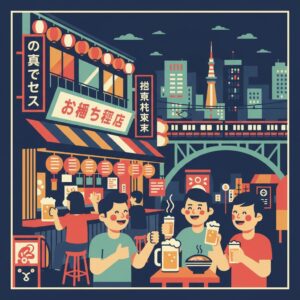
For those eager to experience another dimension of Osaka’s vibrant rhythm, exploring the intricate maze of local bars in Tenma offers a fresh perspective beyond the famed Kita-Minami divide.
Deconstructing the Stereotypes: What’s the Real Deal with Kita and Minami?
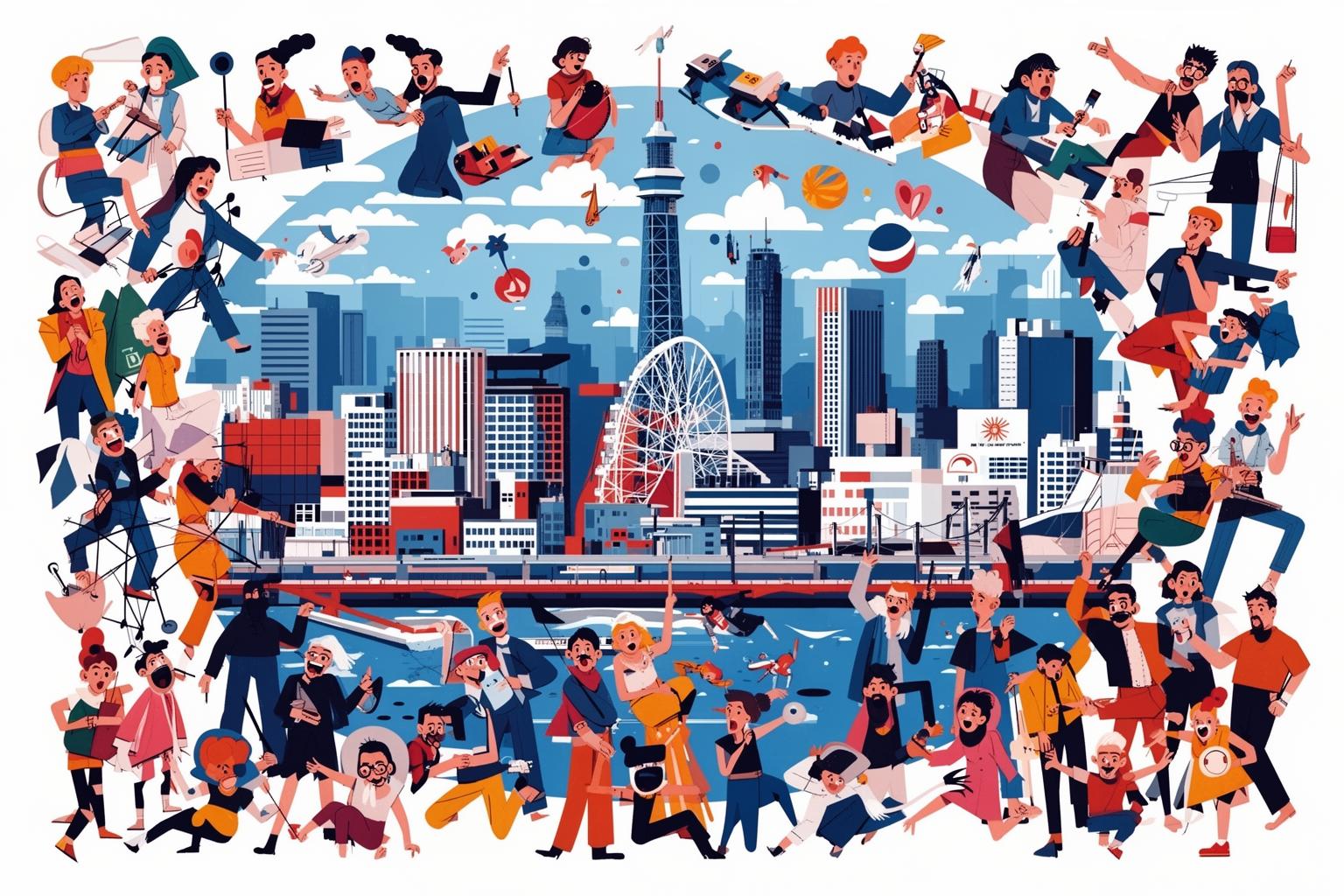
To grasp the rivalry, you first need to understand the two contenders. Both are unmistakably Osaka, yet they express that identity through vastly different dialects. Think of them as siblings: one is the impeccably dressed elder who thrives in business, while the other is the loud, artistic, and slightly rebellious younger sibling who is the life of every party. They love each other but would never admit they wish to be like the other.
Kita: The Polished Professional’s Domain
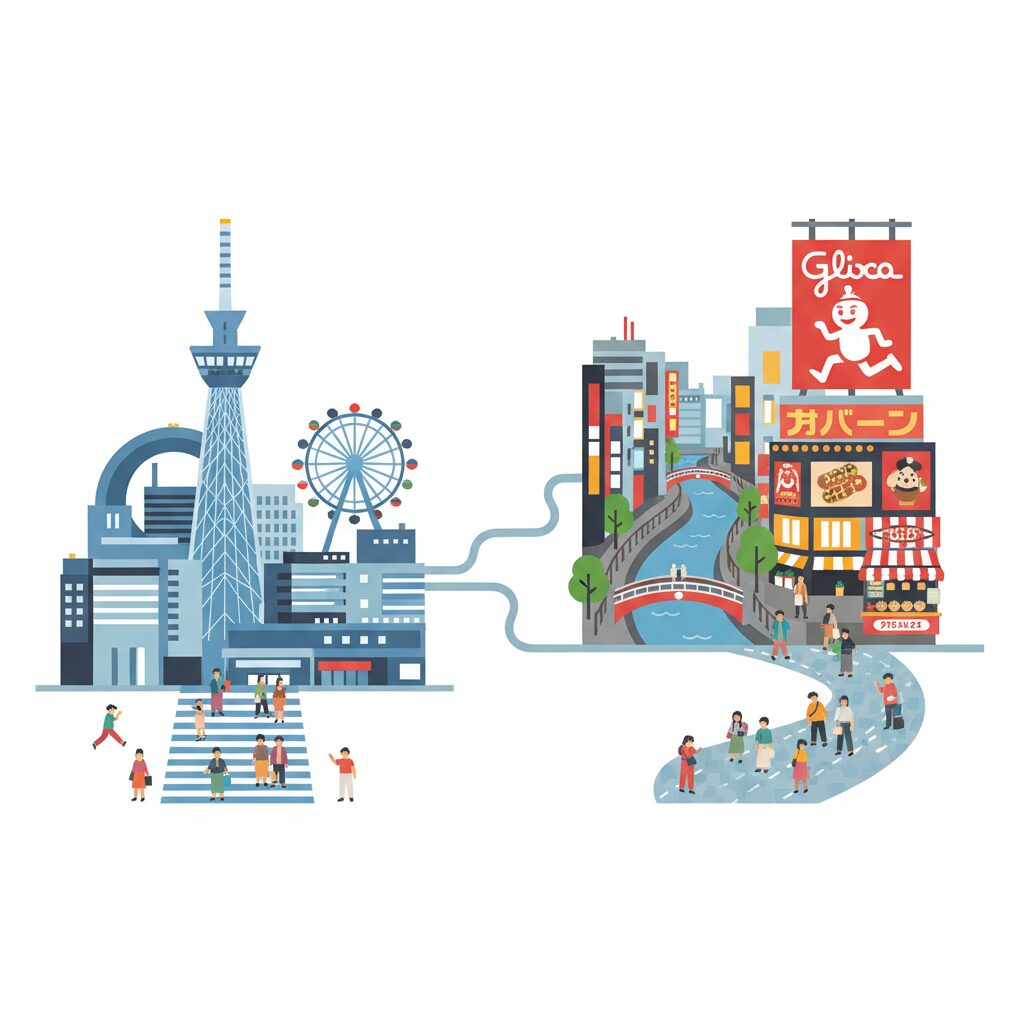
Kita, literally meaning “north,” centers around the expansive transportation and business hub of Umeda. If you’ve ever felt Osaka is just a messier Tokyo, you were likely in Kita. This is Osaka in its Sunday best, donning a crisp, tailored suit. It’s the city’s corporate face, where towering glass skyscrapers holding major companies mirror the clouds. The energy here is dynamic yet controlled. It’s the purposeful pace of salarymen heading to meetings, the elegant click of heels on polished Hankyu Department Store floors, and the quiet murmur of upscale restaurants.
The atmosphere is sophisticated, international, and pricey. This is Osaka’s Marunouchi—the financial and commercial powerhouse. Daily life here is structured. Your mornings might start with a craft coffee from a minimalist café before navigating Osaka Station, the busiest in western Japan. Evenings might involve sipping cocktails at a rooftop bar overlooking city lights or enjoying a carefully curated multi-course meal in Kitashinchi, the city’s premier entertainment district for affluent executives.
For foreign residents, living in or near Kita means convenience rules. You’re connected to the main veins of the region’s transport network. The Shinkansen is a short ride away at Shin-Osaka, with direct trains whisking you to Kyoto or Kobe in under 30 minutes. Housing here often means modern high-rise apartments—known as “tower mansions”—with concierges, gyms, and stunning views. The rent reflects the premium: you pay for location, modernity, and prestige. Choosing Kita is opting for a lifestyle of efficiency, refinement, and seamless connectivity. It suits those who value a clear division between polished work life and sophisticated leisure, wanting both to be top-tier.
Minami: The Soulful Heartbeat of Osaka
If Kita is the city’s brain, Minami (“south”) is its vibrant, unfiltered heart. Centered around the neon-lit districts of Namba, Shinsaibashi, and iconic Dotonbori, Minami is the Osaka you see in films. It’s loud, chaotic, a sensory feast at its finest. This is the city of kuidaore—to eat oneself into ruin—and you sense that philosophy on every corner, with steam rising from takoyaki stands and the scent of grilled meat in the air. The aesthetic is kote-kote, meaning gaudy, flashy, or over-the-top. Giant mechanical crabs, dragons, and pufferfish cling to buildings, competing for attention.
The energy in Minami is raw, creative, and utterly human. It’s the crowd’s roar at comedy shows, the bargaining voices in Kuromon Market, and the eclectic fashions in Amerikamura (America Village). This is the historic playground of the common folk, born from the city’s merchant culture and theater districts. It feels less engineered and more organic—a beautiful chaos developed over centuries. Life here doesn’t follow a corporate schedule; it beats to the rhythms of street performers, shopkeepers, and countless people seeking fun and food.
Living in Minami is immersive. You don’t just live here—you become part of the spectacle. Your grocery store might be a stall in a covered arcade. Your apartment may be a quirky, older unit tucked in a narrow side street, full of charm impossible for new buildings to capture. Rents are generally cheaper than Kita’s, but you trade sleek modernity for vibrant, sometimes gritty authenticity. Choosing Minami is for those who want to live the culture, not just watch it. It suits foodies, artists, night owls, explorers who feel a city’s true spirit lies in its joyful, noisy, delicious disorder. It’s a choice to be in the festival, 24/7.
Beyond the Stereotypes: How the Rivalry Plays Out in Real Life
This divide is more than just an abstract idea for urban planners; the Kita-Minami split is a living, breathing part of Osaka’s social fabric. It quietly shapes conversations, decisions, and everyday routines in ways that can confuse outsiders. Though it’s a friendly rivalry, it remains a rivalry rooted in generations of local pride.
“Where Are You From?” – The Osaka Edition
Across most of Japan, asking where someone lives is a straightforward geographic question. In Osaka, however, it’s a loaded inquiry, gently probing into your identity. Your answer isn’t just about location; it places you within the city’s intricate social landscape.
Mention that you live near Tenma, and people will envision you savoring inexpensive, tasty food and drinks in crowded, smoky izakayas. You’ll be seen as down-to-earth, sociable, and someone who enjoys good times on a budget. Say you reside in Nakanoshima, a tranquil island of art museums and riverside parks nestled in Kita, and the perception changes. You’re viewed as appreciating culture, serenity, and a more refined way of life.
Osakans constantly use this kind of shorthand. You might overhear friends teasing: “Of course you want to go to that fancy café in Grand Front—you’re such a Kita person!” countered by, “And you just want to eat kushikatsu standing up in Shinsekai; classic Minami thinking!” This playful stereotyping strengthens a sense of belonging. As a foreigner, once you reveal your neighborhood, you’ll find yourself gently welcomed into one of these local tribes. Your neighborhood choice becomes a part of your Osaka story—one locals immediately understand and relate to.
The Commuting Calculation: A Daily Expression of Loyalty
The city’s transit system seems designed to emphasize this divide. The two main poles of Osaka are Umeda Station in Kita and Namba Station in Minami. Which of these centers you live closer to often governs your daily life’s trajectory. This determines your train line, which in turn shapes your entire world.
Living along the Hankyu Railway lines, all converging at Hankyu Umeda Station, identifies you as a Kita person by default. Your life orbits around Umeda: where you change trains, shop, and meet friends from other Hankyu lines. Umeda forms the center of your mental map of Osaka.
On the other hand, residing along the Nankai Railway, terminating at Namba Station’s heart, makes you a Minami person. Namba is your gateway to the city and beyond (via its direct Kansai Airport route). Takashimaya is your department store, while the vibrant Sennichimae arcades are your familiar ground.
The Midosuji subway line acts as a main artery connecting the two, yet most people tend to remain within their comfort zones. This daily act of allegiance creates two parallel worlds within one city. A Kita resident might go weeks without southward travel beyond Yodoyabashi, while a Minami dweller may regard trips to Umeda as special journeys into a distinct, more formal realm.
The Great Department Store Rivalry
This rivalry is most institutionalized in the fiercely competitive battles among the city’s grand department stores. This competition isn’t merely about retail—it’s a struggle for the heart of Osaka’s consumer culture. In Kita, the undisputed leader is the Hankyu Umeda Main Store, the epitome of luxury, fashion, and sophisticated taste. An Osakan “madam” wouldn’t be caught dead without her Hankyu shopping bag, a symbol of class and quality. Nearby stands its rival, Hanshin, renowned for two things: an extraordinary basement food hall (depachika), a culinary treasure trove, and steadfast loyalty to the local baseball team, the Hanshin Tigers. Choosing between Hankyu’s high fashion and Hanshin’s foodie paradise reveals much about your preferences.
In Minami, the reigning queen is Takashimaya, perched above Namba Station. It exudes a classic, slightly more traditional elegance, embodying the wealth of Minami’s long-established merchants and residents. Competing are trendier spots like OIOI (Marui), aimed at younger customers. A family’s department store loyalty can be an heirloom handed down through generations. Your grandmother shopped at Takashimaya for gifts, so you do too. This devotion deepens the Kita-Minami divide on both personal and commercial levels, serving as a quiet but constant reminder of which side of the city commands your respect—and your money.
The Foreigner’s Dilemma: How to Choose Your Osaka Base Camp
So, you’re convinced and understand the two tribes. Now comes the challenging part: choosing one. As a foreign resident, your decision is beautifully free from the burden of family history or lifelong habits. You get to define your identity based on what genuinely suits you. The choice ultimately comes down to a combination of practical logistics and a simple vibe check.
The Practical Side: Rent, Commute, and Convenience
Before falling for a vibe, it’s important to be realistic about your daily life. The single most crucial factor should be your commute. Where is your workplace? Where is your school? Locate them on a map and start from there. Although the Midosuji line makes getting around the city easy, a one-hour commute each way will wear you down, regardless of how cool your neighborhood might be.
If your work is in the Umeda business district or if you frequently travel to Kyoto, Kobe, or Tokyo, the practical benefits of Kita are clear. The concentration of modern, earthquake-resistant high-rises provides peace of mind and amenities you might be familiar with back home. You’ll find larger international supermarkets and services catering to the expat professional community. The trade-off is the cost—space is generally smaller for the price, and the price of everything, from coffee to dining out, tends to be slightly higher.
For students, artists, freelancers on a budget, or those working in hospitality or entertainment, Minami is often the more sensible choice. The housing market is more varied. You can find older, larger apartments at a fraction of the cost of a modern Kita condo. The downside is that buildings may be older, without elevators, and located in noisier, denser areas. But your access to affordable food, vibrant nightlife, and endless entertainment is unmatched. Daily life will be cheaper and arguably more exciting.
The Vibe Check: Finding Your Personal “Fit”
Once you’ve handled the practical side, it’s time for the true test. Forget the map. Spend a full day in each area. Start with morning coffee, have lunch, stroll the streets in the afternoon, and see how it feels at night. Tune into your own energy.
Does the structured, efficient vibe of Kita make you feel calm and productive? Do you appreciate the clean aesthetics, wide sidewalks, and the sense of being at a commercial center? Do high fashion and sophisticated dining excite you? If you thrive on order, prioritize convenience, and view your home as a peaceful refuge from a busy professional life, then you’re likely a Kita person.
Or does the chaotic, lively, and somewhat messy vibe of Minami make you feel alive? Do you enjoy finding tiny, family-run restaurants tucked away in hidden alleys? Does the mix of languages, music, and laughter energize you rather than tire you? Are you more drawn to street style than high fashion? If you crave spontaneity, want to be immersed in vibrant culture, and don’t mind a bit of grit and noise, your spirit probably belongs to Minami.
Escaping the Dichotomy: The “Third Way” Neighborhoods
Of course, Osaka is vast, and boiling it down to two poles is an oversimplification. Many fascinating neighborhoods lie between or outside this rivalry, offering a unique blend of features.
Tennoji/Abeno: The emerging third force. With the towering Abeno Harukas skyscraper, it boasts the modern polish of Kita. Yet it’s adjacent to the gritty, retro-futuristic Shinsekai and the historic Shitennoji Temple. This is a neighborhood of striking contrasts, combining upscale shopping with affordable local eateries. It has its own major train hub, making it highly convenient without being in the center of the Umeda maze.
The “Castle” Zone (Kyobashi, Tanimachi, Morinomiya): Located east of the main north-south axis, these areas are more residential with a calmer, more historical atmosphere thanks to their proximity to Osaka Castle. They offer a more relaxed, local lifestyle while still very central. Here you’ll find charming parks, independent cafes, and a strong community vibe, away from tourist crowds.
The West Side (Horie, Nakazakicho, Fukushima): These neighborhoods challenge stereotypes. Horie, just west of Minami, is known for trendy furniture shops, boutique clothing stores, and stylish cafes. It has a youthful, creative energy but is much more laid-back than Shinsaibashi. Nakazakicho, a short walk from Kita, is a maze of old wooden houses converted into vintage stores and artsy cafes—a bohemian oasis next to the corporate giant. Fukushima has emerged as a top gourmet destination, filled with outstanding restaurants attracting food lovers citywide. These areas show that you can be “Kita-adjacent” or “Minami-adjacent” without fully adopting the core identity of either.
What This All Says About Osaka Culture
This long-standing rivalry is not merely a curiosity; it offers a glimpse into the very essence of Osaka. It exposes a mindset fundamentally distinct from Tokyo’s and helps clarify what makes the city so captivating and occasionally perplexing for outsiders.
A City of Proud Neighborhoods, Not a Monolith
Tokyo is an immense, sprawling metropolis where people’s identities are often linked to vast train lines (like the Yamanote Line or the Chuo Line) rather than specific neighborhoods. Osaka, though large, feels more like a mosaic of fiercely proud villages woven together. The Kita vs. Minami rivalry represents the strongest expression of this intense localism. Residents don’t just identify as being from “Osaka”; they hail from Umeda, Namba, Tenma, or Kyobashi, and they will passionately debate which area boasts the best food, shopping, people, and overall vibe.
This pride is not spiteful. It resembles a sports rivalry—a lively, spirited competition that unites everyone with a team to support. It nurtures a strong sense of community and identity. It’s a way for Osakans to distinguish themselves from the monolithic, centralized dominance of Tokyo. While Tokyo presents a unified image to the world, Osaka flourishes on its internal divisions and local allegiances. That’s why the city feels so richly textured and varied from one station to the next. You’re not merely traveling through a city; you’re crossing invisible borders into unique territories, each governed by its own leaders, customs, and pride.
Business vs. Pleasure: An Enduring Legacy
This division has deep historical roots that remain evident today. Kita’s identity formed around the Dojima Rice Exchange during the Edo period, the world’s first futures market. It was a serious center of business, finance, and logistics—a transportation hub linking Osaka to the nation. Its purpose was commerce, and its culture reflects that professional and affluent heritage.
Minami, conversely, developed alongside the Dotonbori canal, lined with kabuki and bunraku puppet theaters. It was the city’s entertainment district, where the merchant class could break free from rigid social norms to enjoy their wealth. Its purpose was pleasure, and its culture descends directly from that legacy of performance, spectacle, and indulgence.
This historic separation between work and leisure, commerce and culture, is embedded in the city’s design. Whereas many cities mix these functions, Osaka has distinct centers for each. The ongoing rivalry between Kita and Minami is a daily reenactment of this fundamental urban tension. As a resident, you gain the unique chance to choose which of these historical streams you want to immerse yourself in every day.
Conclusion: More Than Just a Dot on a Map
Choosing an apartment in a new city often feels like a mechanical process involving budgets, floor plans, and commute times. In Osaka, however, it is much more than that. It is an invitation to engage in a conversation that has been ongoing for centuries. It represents a decision about the kind of life you want to live, the energy you want to be surrounded by, and the identity you wish to embrace in your new home. There is no right or wrong answer in the ongoing Kita vs. Minami debate. The refined convenience of Kita suits some perfectly, while the vibrant chaos of Minami is ideal for others. Meanwhile, some will find their happiness in the mixed neighborhoods that resist easy classification.
The key is recognizing that you are making a choice, whether consciously or not. The best way to decide is to take the train, stroll the streets, and listen—listen to the sounds, observe the people, and absorb the unique rhythm of each area. One of these places will feel like it’s resonating with your own song. Whether you become a polished resident of the north or an energetic member of the southern community, you will be doing more than merely living in Osaka. You will be partaking in the vibrant, proud, and beautifully divided culture that makes this city one of the world’s most captivating places. Your address will be more than just a point on a map; it will be your response to the city’s first and most essential question.