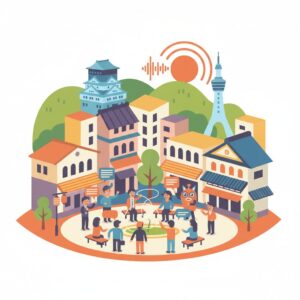
You hear it almost as soon as you arrive. It’s a question that hangs in the air, a subtle sorting mechanism used by locals over plates of kushikatsu and glasses of ice-cold beer. It’s not about where you’re from, or what you do, but something deeper, something that defines your entire approach to life in this city. “So,” they’ll ask, a knowing glint in their eye, “are you a Kita person, or a Minami person?” To an outsider, this question about North (Kita) versus South (Minami) seems like a simple matter of geography. You might pull out a map, point to your apartment, and think you’ve answered. But you haven’t. Not really. In Osaka, Kita versus Minami is not a location; it’s an identity. It’s the city’s central nervous system, a cultural binary that codes everything from how you dress, to how you work, to how you laugh. It is the fundamental tension that makes Osaka, Osaka—a city with two competing, clashing, and ultimately complementary hearts.
This isn’t a clean, simple divide like Tokyo’s old-money Yamanote hills versus the working-class Shitamachi lowlands. Tokyo’s divide is largely a story of class and history. Osaka’s is a story of two rival commercial empires that grew up in parallel, each carving out a distinct philosophy of existence. Kita, centered on the sprawling Umeda station complex, is the city’s modern, corporate face. It’s sleek, sophisticated, and forward-looking, the polished gateway connecting Osaka to the rest of Japan and the world. Minami, a chaotic, brilliant sprawl radiating from Namba and Shinsaibashi, is the city’s historical soul. It’s the raucous, unapologetic heart of merchant culture, entertainment, and the very spirit of kuidaore—the noble pursuit of eating and drinking yourself into ruin. To live in Osaka is to constantly navigate the magnetic pull between these two poles. You don’t just travel between them on the Midosuji subway line; you perform a kind of cultural code-switch. The person you are in the gleaming corridors of Grand Front Osaka in Kita might be subtly, or radically, different from the person you become in the lantern-lit back alleys of Hozenji Yokocho in Minami. Understanding this dualism is the key to unlocking the city’s true character, moving beyond the tourist clichés and seeing Osaka as its people live it: a dynamic, ongoing dialogue between its ambitious head and its rebellious heart.
To truly grasp this dynamic, one must also understand the foundational role of Osaka’s unique konamon cuisine, which fuels both its merchant soul and modern ambition.
The Lay of the Land: What Are Kita and Minami, Anyway?
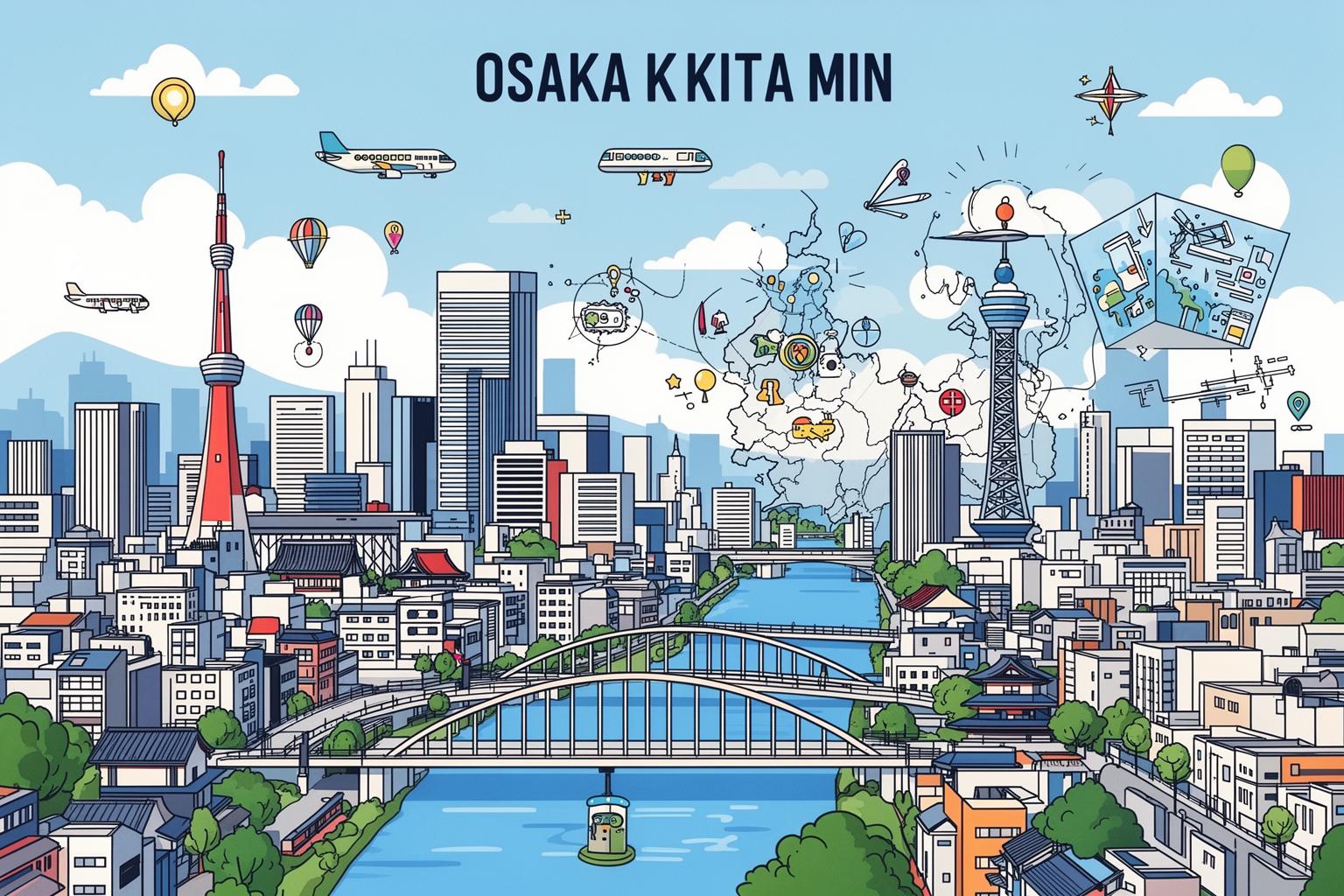
Before sensing the cultural divide, you first need to recognize the physical one. However, in Osaka, even the map acts more as a suggestion than a strict guideline. The boundaries are blurred, drawn not in ink but in ambiance. You don’t cross a clear border into Kita or Minami; rather, you sense a gradual shift in the energy, the architecture, and the very rhythm of the crowds surrounding you.
Defining the Borders (and Why They’re Blurry)
Kita: The Polished Northern Nexus
Kita, meaning “North,” is both geographically and spiritually anchored by the immense transportation hub of Osaka-Umeda Station. This isn’t just a single station; it’s a sprawling complex where multiple JR, Hankyu, Hanshin, and subway lines intersect—a concrete-and-steel heart that pumps commuters and shoppers into the city. Kita’s landscape is marked by verticality and refinement. Imagine soaring skyscrapers like the Umeda Sky Building, the gleaming facades of Grand Front Osaka and LUCUA shopping malls, and the imposing presence of both national and international corporate headquarters. Key districts include Umeda itself, the financial and governmental hub of Nakanoshima, and the upscale nightlife area of Kitashinchi. The atmosphere here is distinctly modern, professional, and somewhat formal. This is where major business happens, where shoppers explore international luxury brands in pristine department stores, and where the city reveals its most cosmopolitan side. It feels organized, efficient, and spotless—sometimes to the point of feeling sterile, according to its southern neighbors.
Minami: The Vibrant Southern Soul
Minami, meaning “South,” offers a completely different world. Its center lies around the busy Namba and Shinsaibashi stations, but its spirit extends into a sprawling, delightfully chaotic network of neighborhoods. This is the historical playground of Osaka. Where Kita rises vertically, Minami spreads horizontally—a dense, low-rise maze of covered shopping arcades (shotengai), neon-lit streets, and narrow, tucked-away alleyways. The defining landmarks are cultural icons rather than corporate towers: the Glico “Running Man” sign overlooking the Dotonbori canal, the lively Namba Grand Kagetsu comedy theater, and the trendsetting streets of Amerikamura. Minami is a sensory bombardment in the best sense. It’s loud, crowded, and filled with the aroma of grilled takoyaki and the calls of shopkeepers hawking their goods. The energy is raw, spontaneous, and unapologetically Osakan. It’s home to independent boutiques, vintage clothing shops, all-you-can-eat eateries, and countless tiny bars where chatting with strangers is not only possible but expected. It is the vibrant, beating heart of the city’s merchant spirit.
The Dividing Line
So where exactly does one end and the other begin? Most locals would loosely place the boundary around Honmachi or Yodoyabashi, the historic business district between the two main hubs. The Chuo-dori avenue or the Tosabori River can serve as informal geographical markers. But truly, it’s a gradient. As you walk south from Umeda along the grand Midosuji Boulevard, you can feel the shift. The wide, tree-lined avenue flanked by high-fashion flagships gradually changes. Buildings become slightly older, shops a bit smaller, and the crowds noticeably louder. By the time you reach the Shinsaibashi-suji shopping arcade, the transformation is complete. The polished calm of Kita has melted into the vibrant, human-scale chaos of Minami. You haven’t just journeyed a few kilometers; you’ve crossed between two distinct worlds.
The Tale of Two Cities: Historical Roots of the Rivalry
The clear contrast between Kita and Minami is not a coincidence of modern urban planning. It is the outcome of two centuries of distinct development, a historical story that set them in opposing roles from the start. Their rivalry is embedded in the very foundations of the city.
Kita: The Modern Gateway
Kita’s character was shaped by steel and steam. During the Meiji Restoration in the late 19th century, as Japan rapidly modernized, Osaka emerged as a vital industrial and logistical center. The first Osaka Station was established in Umeda in 1874, not in the city’s traditional core, but on its northern edge. This was a strategic choice. Umeda became the connecting point, the junction linking Osaka to the important port of Kobe and the ancient imperial capital of Kyoto. It was intentionally created as a gateway—a place to receive goods, people, and ideas from outside. This outward-looking function defined its entire identity. National corporations, banks, and trading companies headquartered here to stay close to the main arteries of national transport. The development of Nakanoshima as a hub for the city hall, central bank, and other institutions further reinforced Kita’s role as the formal, administrative, and corporate face of Osaka. Its growth was planned, organized, and driven by the demands of a modernizing nation. It was built for business, not leisure.
Minami: The Merchant’s Playground
Minami’s history is much older and more organic. Its origins trace back to the Edo period, when Osaka was known as “the nation’s kitchen” (tenka no daidokoro), the commercial heart of Japan. While samurai ruled from castles, the merchant class (chonin) wielded real power in Osaka. Minami was where they spent their wealth. The Dotonbori area was officially designated as an entertainment district in 1615, quickly flourishing with kabuki theaters, bunraku puppet theaters, restaurants, and teahouses. Unlike Kita, developed by government and corporate interests, Minami evolved naturally, shaped by the local people’s desires. It was a place for release, consumption, and vibrant, sometimes risqué, popular culture. Its economy relied not on national railway networks but on the money in the hands of local shopkeepers, artisans, and rice brokers. This history gave Minami a strong sense of independence, distrust of outside control, and a culture focused on immediate, tangible pleasures: good food, good drink, and good company. It was a city built by Osakans, for Osakans.
The Daily Grind: How the Divide Shapes Work and Life
The historical DNA of Kita and Minami continues to influence the daily habits and professional mindsets of Osaka residents. Where you work shapes more than just your commute; it affects your entire professional identity, from your style of dress to the way you close deals.
The Kita Commuter: Suits, Schedules, and Sophistication
Arrive at Osaka-Umeda Station at 8:30 AM on a Tuesday, and you enter the core of corporate Japan, Osaka-style. The crowd flows like a river of dark suits, leather briefcases, and purposeful strides. The pace is brisk, efficient, and resolute. People maneuver through the station’s complex levels with practiced, no-nonsense precision. This work culture mirrors its surroundings. Business unfolds in high-rise offices with panoramic city views. Meetings tend to be formal, following set agendas and protocols. A business lunch might take place in a quiet, elegant restaurant in Hilton Plaza, emphasizing a sophisticated image. After-work routines are equally structured. The preferred destinations are upscale izakayas or exclusive, quiet bars in Kitashinchi, where discreet conversations happen over premium whiskey. This is the place to impress clients, especially those from Tokyo. While the famous Osaka-ben is ever-present, in the formal Kita setting, it’s usually moderated, softened, or blended with standard Japanese (hyojungo) to maintain a universally professional tone. The overall impression conveys competence, refinement, and global readiness.
The Minami Professional: Deals, Banter, and Relationships
Head south to Shinsaibashi or Namba, and the work environment shifts dramatically. Here the professional scene is dominated not by multinational corporations but by independent shops, family businesses, restaurants, and wholesalers like those along Sennichimae Doguyasuji, the renowned kitchenware street. Business here is a much more personal, hands-on affair. Deals aren’t closed by PowerPoint presentations but with handshakes, shared jokes, and relationships nurtured over months or years of informal interaction. The renowned Osaka merchant spirit (akindo) thrives here. This means a sharp eye for value, excellent negotiation skills, and an appreciation that personal trust is the most precious currency. After work, the atmosphere is loud, communal, and spontaneous. People flock to crowded, smoky tachinomi (standing bars) in the Ura Namba neighborhood, where the company president might stand elbow-to-elbow with a new part-timer, shouting over the noise. Hierarchies quickly dissolve over inexpensive beer and grilled skewers. The Osaka-ben here is full-strength, rapid, and often wielded humorously. A quick, witty comeback holds far more value than an elaborate business card. In this culture, work and social life blend seamlessly, with business partners doubling as drinking companions.
A Weekend in the Life: Shopping, Socializing, and Self-Expression
The divide between Kita and Minami is most evident in how people choose to spend their leisure time. On weekends, the city’s dual nature is highlighted sharply, revealing two very different approaches to consumption, entertainment, and personal style.
Saturday in Kita: Department Stores and Designer Dreams
A Saturday in Kita is typically a carefully crafted experience. The main attractions are the grand, multi-level department stores around Umeda station: Hankyu, Hanshin, and Daimaru. Shopping here is a polished ritual. The interiors are spotless, the lighting gentle, and the service exceptionally polite and formal. The emphasis is on quality, craftsmanship, and brand prestige. Visiting the Hankyu Umeda Main Store is not just about purchasing a handbag, but about experiencing the brand’s luxury, admiring the artful displays, and receiving the item wrapped with meticulous care. The basement food halls (depachika) are famous, offering gourmet delicacies and beautifully packaged gifts. Social life in Kita often mirrors this refined consumption. A typical weekend might involve attending a special exhibition at the Nakanoshima Museum of Art, followed by afternoon tea with panoramic views from the 39th floor of the Hankyu Grand Building. Evening plans might include a classical concert at The Symphony Hall or dinner at a Michelin-starred restaurant. The overall experience is one of sophistication, comfort, and a certain predictable elegance. Personal style in Kita tends to be conservative and brand-aware—classic, well-tailored, and understated.
Saturday in Minami: Bargain Hunting and Bold Statements
A Saturday in Minami is a vibrant exercise in unpredictability. Shopping is a lively, exhilarating adventure. Instead of quiet department store halls, you find yourself in the noisy, covered Shinsaibashi-suji Shopping Arcade, a 600-meter stretch thronged with people flowing past hundreds of shops. The aim isn’t just to buy, but to discover a deal, haggle when possible, and uncover unique finds. Nearby Amerikamura (American Village) exudes a younger, more rebellious energy. The streets serve as a dynamic runway of eclectic street fashion, with shops ranging from vintage clothing stores and independent designer boutiques to quirky subculture hubs. Shopping here is about self-expression rather than status. Socializing is just as spontaneous—no reservations, just discovery. You might start by grabbing piping-hot takoyaki from a street vendor and eating it on the move. Entertainment could be a lively, interactive comedy show at the Namba Grand Kagetsu, where audience participation adds to the fun. As night falls, the plan is simply to wander. You might find yourself in a tiny, eight-seat bar tucked away in an alley, drawn into conversation with the owner and staying for hours. Or you might follow the sound of live music pouring from a basement club. Life in Minami unfolds at street level, where joys are often unexpected and unscripted. Fashion here is bold, experimental, and a striking expression of individuality.
The Social Identity: “I’m a Kita Person” vs. “I’m a Minami Person”
Over time, these patterns of work, life, and leisure merge into a genuine social identity. Calling yourself a “Kita person” or a “Minami person” serves as a form of cultural shorthand. It communicates what you value, how you view the world, and where you feel most at home. It is a declaration of your tribe.
The Kita Persona: The Polished Professional
Someone who identifies as a “Kita person” often values order, sophistication, and a cosmopolitan outlook. They might work for a national or international company and see Umeda as Osaka’s crucial connection to the wider world. Their social networks often include people from the affluent neighboring cities of Kobe and Kyoto, and they tend to appreciate the more reserved, elegant aspects of Kansai culture. To them, Kita symbolizes progress, ambition, and modernity. They might regard Minami with a mix of fondness and condescension—as a lively place for a wild night out, but ultimately somewhat chaotic, loud, and perhaps even a bit tacky. It’s a spot for tourists and teenagers. Their identity is often linked to their career, an appreciation for quality and luxury, and a vision of Osaka as a modern, global city equal to any other.
The Minami Persona: The True Osakan Spirit
In contrast, a self-identified “Minami person” wears their local identity as a badge of honor. They are proudly, fiercely Osakan. They prize authenticity, humor, and human connection above all else. They believe the true spirit of the city lies not in gleaming skyscrapers but in the warm, lively atmosphere of a neighborhood izakaya. They see Kita as cold, impersonal, and—the harshest criticism of all—a “Tokyo wannabe.” To them, Kita lacks soul; it has sacrificed its distinct Osakan character for a generic corporate polish. A Minami person’s identity is rooted in the city’s merchant history. They take pride in being street-smart, unpretentious, and adept at finding the best food and bargains in any situation. Their life centers on community, tradition, and preserving the rebellious, independent spirit that has always defined Osaka.
The In-Betweener and the Foreigner’s Place
Naturally, the reality for most Osakans—and for the foreign residents living among them—is far more nuanced. Most people are not strictly one or the other. They are cultural amphibians, skilled at thriving in both environments. The savvy Osakan works in a Kita office by day, embodying professionalism and efficiency, but as soon as the clock strikes six, they shed that skin and plunge headfirst into the vibrant chaos of Minami for the evening. They appreciate the convenience and variety of the Umeda department stores for some things but rely on family-run shops in Minami for others. For a foreigner trying to find their place, this can be confusing. Many expats, especially those sent by corporations, naturally gravitate toward the residential areas north of Umeda. The suburbs along the Hankyu railway lines, for instance, are popular for their clean, organized, and comfortable living environments. It’s easy to build a life that revolves almost entirely around the Kita ecosystem. However, doing so means missing half the story. To truly grasp the heart of the city, you must immerse yourself in Minami. You need to learn to navigate its crowded arcades, appreciate its street food, and participate in its lively social scene. The best advice for newcomers is not to choose a side but to master the art of switching. Understand the context, read the room, and enjoy the full range of what Osaka has to offer.
Language and Laughter: The Subtle Sound of North and South
Even the well-known Osaka dialect, Osaka-ben, is not uniform. It spans a spectrum, with subtle variations in tone as you move between Kita and Minami, reflecting the distinct social roles of these areas. The language adjusts to its context, serving either for professional clarity or social connection.
Kita’s Kansai-ben: The Boardroom Dialect
In Kita’s corporate meeting rooms and high-end shops, you’ll encounter a form of Kansai-ben that is often regarded as more polished or refined. The unique grammar and vocabulary remain intact, but the intonation tends to be slightly flatter, leaning closer to standard Japanese. More colorful, slang-like, or comedic expressions are usually softened in favor of clearer, unambiguous wording. This is not due to any shame about the dialect; rather, it’s a practical adaptation. In business settings, especially when interacting with clients from across Japan, the priority is professionalism and efficiency. The regional character adds warmth and identity but is carefully moderated to avoid misunderstanding or appearing unprofessional. It’s Osaka-ben dressed for business.
Minami’s Osaka-ben: The Language of the Streets
Cross over into Minami, and the dialect bursts into vibrant life. This is the Osaka-ben most commonly associated with popular culture and the manzai comedians seen on television. It’s faster, more rhythmic, and carries a distinctive musical intonation. Here, language is not simply a means of communication but a form of performance. It builds rapport, facilitates bargaining, tells stories, and most importantly, makes people laugh. The culture of owarai (comedy) is deeply woven into Minami’s identity, with venues like the Namba Grand Kagetsu serving as its shrines. In this setting, humor is a valuable social asset. A sharp punchline or a quick-witted retort (tsukkomi) signifies intelligence and social skill. The dialect is rich with expressive, sometimes blunt phrases crafted to provoke a reaction. It is a language meant to be shared, laughed with, and enjoyed collectively. It is the raw, unfiltered voice of Osaka’s spirit.
Beyond the Stereotypes: Navigating the Nuance
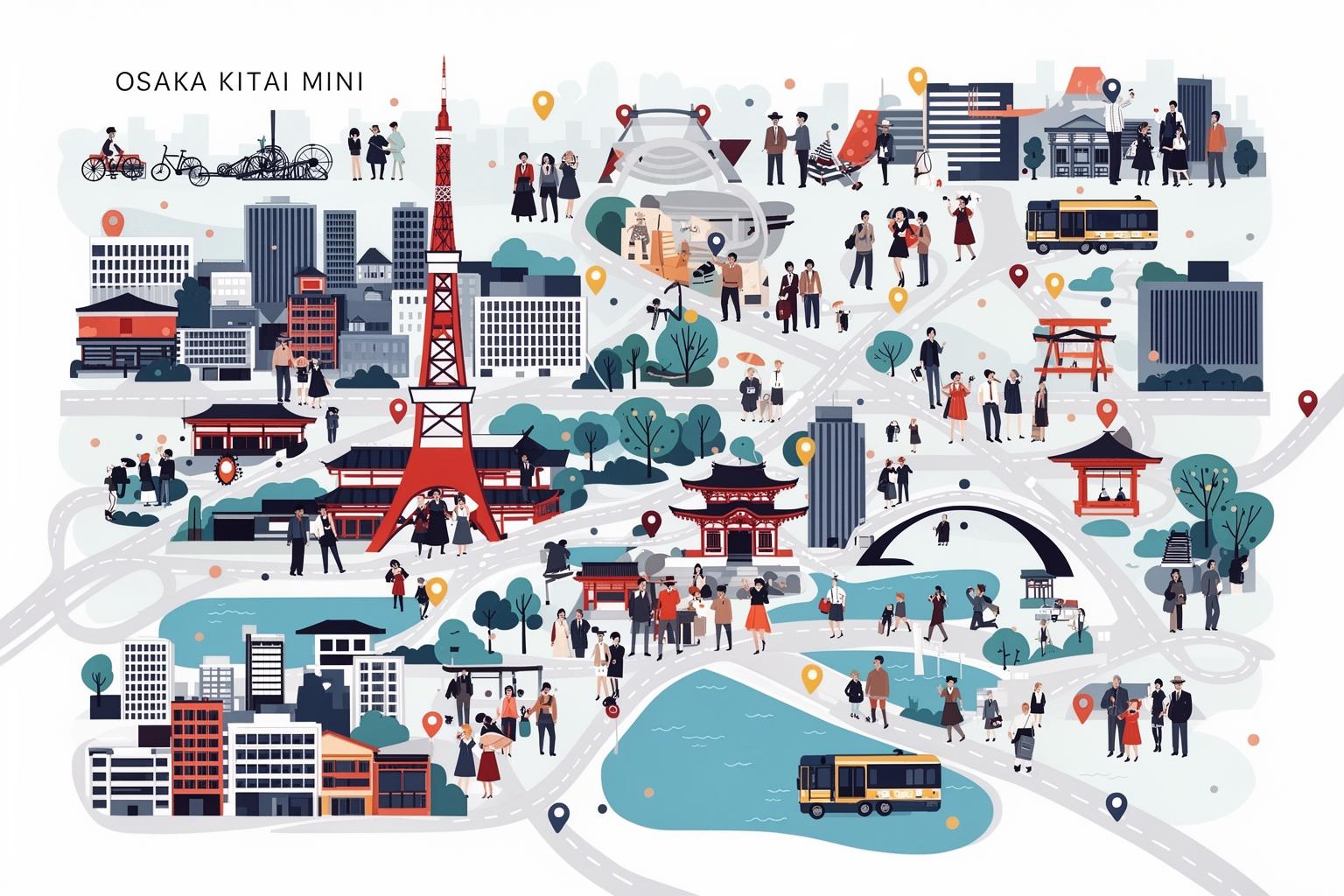
While the Kita/Minami binary serves as a useful framework for understanding Osaka, it also simplifies the reality. The city is a living, evolving organism, and its culture is always changing. Leaning too much on these stereotypes risks overlooking the rich complexity that exists just beneath the surface.
Is Kita Really Just “Tokyo-lite”?
This is a common and oversimplified critique from Minami loyalists and some outsiders. However, reducing Kita to a mere Tokyo copy misses its unique Osakan character. Although it features skyscrapers and corporate headquarters, the atmosphere within is distinct. Customer service, even in the most formal department stores, often carries a warmth and straightforwardness that contrasts sharply with Tokyo’s reserved politeness. The obsession with value for money, or kosupa (cost performance), permeates every level of commerce. A restaurant in a gleaming Kita skyscraper still needs to offer excellent food at a reasonable price to survive because its customers remain discerning Osaka merchants at heart. Kita is not an imitation of Tokyo; rather, it is Osaka’s own interpretation of a modern global city, grounded in pragmatism and commercial savvy.
Is Minami Only for Partying?
The neon lights and lively crowds of Dotonbori may give the impression that Minami is solely an entertainment district. But this overlooks its rich cultural and historical significance. Just steps from the Glico sign is the National Bunraku Theatre, dedicated to preserving the traditional art of Japanese puppet theater. A short walk from the bustling nightlife leads to the peaceful, moss-covered Fudo Myoo statue in the lantern-lit Hozenji Yokocho alley. The Sennichimae Doguyasuji is more than a shopping street; it’s a place where generations of craftsmen have supplied the city’s culinary experts with high-quality knives and cookware. Minami is not just about consumption; it’s a living museum of Osaka’s popular culture, where deep-rooted traditions and serious craftsmanship flourish amid the joyful chaos.
The Third Way: The Rise of Other Neighborhoods
Moreover, the city continually produces neighborhoods that defy simple classification. Take the Tennoji and Abeno area, for example. It features Abeno Harukas, Japan’s tallest skyscraper, symbolizing modern ambition akin to Kita, yet it is adjacent to Shinsekai, a district delightfully frozen in the early 20th century, with a gritty, unpretentious vibe reminiscent of Minami. Then there’s Nakazakicho, located in the Kita ward but just a short walk from Umeda. With its labyrinth of narrow alleys, preserved old wooden houses, and thriving community of independent cafes, vintage shops, and art galleries, it exudes a bohemian, fiercely independent spirit that aligns more with Minami. These hybrid neighborhoods demonstrate that the Kita/Minami dynamic is not a fixed opposition but a creative tension continually shaping the city in new and exciting ways.
Making Your Choice: Where Do You Belong?
So, after all this, are you a Kita person or a Minami person? The beautiful truth is that as a resident, you don’t need to choose. The question isn’t about picking a team to support; it’s about understanding the city’s inner language so you can become a more fluent speaker of its culture. The ultimate goal is to become an Osakan, and a true Osakan knows how to navigate both worlds with ease.
If your personality leans toward structure, predictability, and the convenience of a modern, well-connected urban center, you will likely be drawn to the Kita lifestyle. You might prefer living along one of the northern train lines that efficiently feed into Umeda, enjoying clean streets and quieter residential neighborhoods. Your weekends might be filled with shopping, museum visits, and dining in refined settings.
If you thrive on spontaneity, human connection, and the vibrant energy of a city that never sleeps, you’ll find your soulmate in Minami. You might seek an apartment in the southern part of the city, where life spills onto the streets and your neighbors become your friends. Your life will be a constant adventure discovering hidden gems, from the best ramen shop to the most eccentric bar.
But the highest level of integration into Osaka life is realizing that the city’s two souls are not opposing but complementary. They are the yin and yang of a complete urban experience. Mastering life here means drawing from both. It’s about knowing that the best place to buy a formal, high-quality gift for your boss is the Hankyu department store in Kita, while the best spot to celebrate with friends after a hard week is a noisy, unpretentious izakaya tucked away in Namba’s backstreets. This duality—the ability to switch between codes and embrace both the polished and the raw—defines the modern Osakan. Understanding the divide between North and South isn’t about building a wall in your mind; it’s about opening a door to a richer, deeper, and more authentic experience of this incredible city.