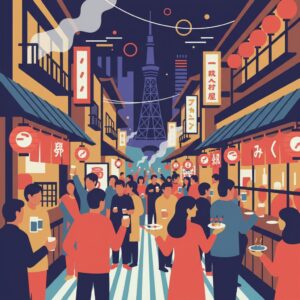
Living in Osaka is like living inside a song that never ends. There’s a rhythm to it, a constant, energetic beat that thrums through the soles of your shoes whether you’re navigating the human rivers of Umeda Station or catching the scent of grilled takoyaki in a quiet neighborhood shotengai. It’s a city of powerful, unfiltered humanity. Conversations are loud, laughter is louder, and every interaction feels like a performance where you’re both the audience and the star. We Osakans thrive on this energy. It fuels us, it defines us. But sometimes, even the most dedicated dancer needs to step off the floor, catch their breath, and listen to a different kind of music. That’s when we go to Kobe. To an outsider, it might seem strange. A trip to the city right next door? It’s a mere twenty-minute train ride away. It’s not an escape to the countryside, nor a pilgrimage to the ancient capital of Kyoto. It’s a lateral move. But for those of us swimming in the vibrant, chaotic sea of Osaka, that twenty-minute journey is a portal. It’s a deliberate, almost ritualistic act of decompression, a way to trade the city’s raw, powerful bassline for a weekend of subtle, sophisticated melody. It’s about more than just seeing a different place; it’s about recalibrating your entire being.
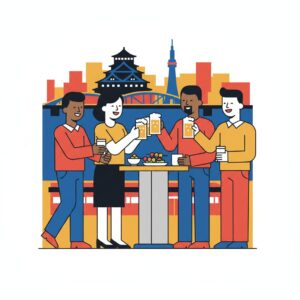
Returning from Kobe’s refined ambiance, many find solace in the familiar camaraderie at a neighborhood tachinomi that perfectly embodies Osaka’s vibrant pulse.
The Osaka Frequency: A Constant Hum of Humanity
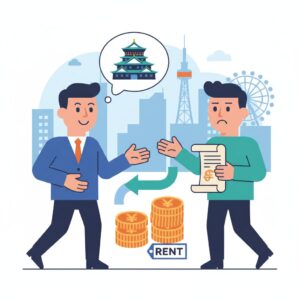
To grasp the necessity of Kobe, you first need to understand the rhythm of Osaka. Life here is lived loudly, both emotionally and audibly. The city functions on a social currency of directness, humor, and mutual interaction. When you buy something from a street vendor in Namba, it’s not a quiet, impersonal exchange. It’s a conversation. The woman selling you dango might ask where you’re from, comment on your jacket, and toss out a playful tease about how slowly you’re eating. You’re expected to respond, engage in some light banter, a tsukkomi or a clever comeback. Silence is often seen not as politeness, but as disinterest or even aloofness. This is the essence of Osaka’s renowned friendliness—it’s an active, participatory warmth that invites, and sometimes insists, that you join the performance.
This constant buzz is everywhere. It’s in the clang of train doors at Tennoji Station, the overlapping shouts of shopkeepers in the Tenjinbashisuji shopping arcade, the sizzle of okonomiyaki on countless griddles. It’s a rich, layered, and deeply human soundscape. But it demands energy. You are always ‘on.’ Your senses are continuously engaged. You learn how to navigate not just crowds, but conversations. You build social armor and sharpen your wit just to get through the day. We love this. It makes us feel alive, connected, part of a vast, sprawling, chaotic, and hilarious family. Still, this constant output—the need to keep up with the city’s vibrant pace—can be exhausting. By Friday afternoon, there’s often a yearning for a bit of silence. Not the empty silence of solitude, but the gentle, restorative quiet of a place that doesn’t require a performance. A place where you can simply be.
Crossing the Border: The 20-Minute Attitude Adjustment
The Hankyu Railway train traveling from Osaka-Umeda to Kobe-Sannomiya is much more than just a means of transportation. It serves as a transitional space, an airlock between two distinct worlds. Departing from Umeda Station feels like being launched out of a cannon. It’s a masterpiece of organized chaos—a whirlwind of people moving with intense purpose, announcements echoing from every direction, and the air thick with the aroma of baked goods from the station’s department stores. You scramble aboard the train, find a seat if fortune smiles on you, and as the train pulls away, you sense the city’s hold gradually loosening.
Twenty minutes later, you step off at Sannomiya, where the change is immediate and tangible. The air itself seems different—lighter, infused with a faint, fresh scent of the nearby sea. The station remains busy, but the flow feels different. People move with composed grace, their steps a little less hurried. The ambient noise lowers noticeably. The sharp, staccato energy of Osaka gives way to a smoother, more legato rhythm. It’s like taking a deep, purifying breath after holding it for a week. This isn’t simply about one city being “nicer” than the other; it marks a fundamental shift in civic demeanor. Osaka leans in, gesticulating wildly, while Kobe steps back, observing with a calm, knowing smile. For an Osakan, that shift is everything—it’s permission to relax your shoulders, unclench your jaw, and let the world flow over you instead of constantly having to engage with it.
Speaking in a Different Key: The Kobe Dialect and Demeanor
This difference is embedded in the very way people speak. Osaka-ben, our dialect, is known for being fast, direct, and punchy. It’s the language of comedy, bargaining, and storytelling—full of personality and emotion. Just a few kilometers west, the Kobe dialect softens. Its intonation is gentler, expressions more reserved. It’s a subtle change, but one that signals a completely different social atmosphere.
This linguistic shift reflects a deeper cultural demeanor. In Kobe, there’s a prevailing sense of what the Japanese call johin—a quiet elegance and refinement. You sense it in the service. An Osaka shopkeeper might become your best friend in the five minutes it takes to ring up your purchase, offering unsolicited life advice and a free candy for the road. A Kobe shopkeeper, by contrast, provides service that is impeccable, polite, and flawlessly professional. They wrap your purchase with artistic precision, bow with practiced grace, and thank you in a soft, measured tone. Neither style is superior; they fulfill different needs. The Osaka interaction energizes you; the Kobe one soothes you. After a week of high-energy banter, the quiet dignity of a Kobe welcome feels like a balm for the soul.
Urban Planning as a State of Mind: Mountains, Sea, and Order
Much of this feeling arises from the very shape of the city. Kobe is beautifully and elegantly contained—a long, narrow strip of land wedged between the deep green Rokko Mountains and the sparkling blue Seto Inland Sea. This geographical limitation has imposed a sense of order. The streets form a relatively clean grid, easy to navigate. You always know where you stand in relation to the mountains and sea, providing a constant, calming sense of orientation.
Osaka, by contrast, is a magnificent, sprawling creature. It grew organically and messily, spreading across a vast plain. Its neighborhoods twist and turn, connected by a complex web of looping train lines and labyrinthine underground malls. There is excitement in its chaos—a joy in discovering a hidden temple behind a pachinko parlor. But it can also overwhelm, making you feel directionless amid its immense scale. In Kobe, the city’s very layout offers a form of therapy. You can stand in the Kitano district, gaze up at the forested mountainside, then turn to see the port, the ships, and the endless horizon of water. This clear, linear perspective fosters a sense of mental space and clarity. It’s a physical environment that encourages you to breathe more deeply, see farther, and think more clearly—a stark contrast to Osaka’s delightful yet often overwhelming urban density.
The Weekend Ritual: What an “Escape” to Kobe Actually Looks Like
So, what do we do when we arrive? The Osakan weekend in Kobe isn’t about ticking off tourist sights. It’s a ritual of carefully selected activities meant to counterbalance the sensory overload of home. It’s about immersing yourself in a different rhythm of life, one that values aesthetics, reflection, and quiet delights.
Coffee Shops Instead of Comedy Clubs
In Osaka, a Friday night might involve squeezing into a tiny, smoky izakaya in Kyobashi, shouting over the noise to share stories and laugh until you’re breathless. It’s communal, lively, and incredibly fun. In Kobe, the typical social setting is often a café. The city is celebrated for its coffee culture, with numerous independent shops where brewing is treated as an art rather than just a business. You visit these places not for entertainment, but for conversation. The aim is to sit in a beautifully designed space, savor a carefully brewed pour-over, and engage in quiet, meaningful dialogue. These cafés are tucked away in the chic backstreets of Sakaemachi or along Tor Road. They serve as sanctuaries, places where time appears to slow, and the clink of a ceramic cup on a saucer is the loudest noise. For an Osakan, spending an afternoon in a Kobe café is a kind of meditation, a way to reconnect with oneself and a friend without battling the city’s noise.
Window Shopping as Meditation: Motomachi vs. Shinsaibashi
Shopping in Osaka and Kobe offers two entirely different experiences. The Shinsaibashi-suji shopping arcade in Osaka is a force of nature—a dense, pulsating stream of people flowing beneath a covered roof. You’re carried by the crowd, bombarded by neon lights, competing music from numerous stores, and the constant calls of vendors. It’s an exhilarating quest for bargains and trends, almost a full-contact sport.
Motomachi shopping street in Kobe, along with nearby areas like Sakaemachi, embodies a different philosophy. Shopping here is a relaxed stroll. The street is broad and lined with elegant, long-established stores and small independent boutiques. There is room to breathe, pause, and truly admire the carefully curated window displays. It’s less about frantic buying and more about appreciating craftsmanship, design, and beauty. You drift from a store selling exquisite leather goods to a gallery displaying local artists, then to a shop specializing in imported teas. The experience isn’t a transaction; it’s a gentle journey of discovery—a way to engage your senses without overwhelming them.
A Taste of the World, Not Just the Neighborhood
This is where we move beyond the beef. Kobe is famously known for its marbled steak, but for Osaka locals, the city’s culinary charm lies in its international diversity. Osaka’s food culture is unbeatable in Japan when it comes to kuidaore—eating oneself into bliss. It’s hearty, straightforward, and deeply local: takoyaki, okonomiyaki, kushikatsu. It’s the ultimate comfort food, the flavor of home.
Kobe, with its history as a port city, presents a different culinary scene. It was among the first Japanese cities to open to foreign trade, and that legacy remains vibrant in its cuisine. The city is renowned for its bakeries and patisseries, a remnant of its early European inhabitants. A weekend visit almost always includes a stop at a famous bakery like Isuzu or a patisserie like Tooth Tooth for cakes that resemble jewels. Authentic global cuisine is found everywhere—from the lively Nankinmachi (Chinatown) to the old Western-style houses in Kitano, now home to French and Italian eateries. For an Osakan, dining in Kobe satisfies a different craving—a thirst for flavors that are refined, international, and elegant. It’s a charming contrast to the bold, soulful tastes of everyday life.
Why Not Kyoto? The Sibling Rivalry Explained
The natural question for any outsider is, “If you want a change of pace from Osaka, why not visit Kyoto?” It’s just as nearby and stands as the cultural and historical heart of Japan. The answer reflects a deep understanding of the Kansai region’s psychological landscape. Visiting Kyoto is a deliberate choice to connect with history. It’s a journey into “Old Japan.” The city bears the weight of a thousand years of tradition. It’s breathtakingly beautiful, yet it can also feel heavy, almost demanding reverence. It’s a place of temples, traditions, and tourists all there to see the same sights. For an Osakan, a trip to Kyoto can sometimes feel like a field trip, a cultural obligation. It’s like putting on your most formal kimono; you look beautiful, but might not feel entirely at ease.
Kobe, on the other hand, is different. It’s not about reflecting inward on Japan’s past; it’s about looking outward to the wider world. Its elegance is modern, international, and relaxed. It asks nothing from you. It simply offers a beautiful, orderly setting for you to relax and recharge. Kyoto makes you feel like you’re truly in Japan. Kobe, with its harbor views, European-style houses, and broad boulevards, can make you feel like you’re somewhere completely different. And for a weekend, that’s exactly the idea. It’s a break not only from Osaka’s energy but also from the intensity of Japanese cultural expectations. Kobe is the comfortable, stylish cashmere sweater you slip on after a week of wearing a formal uniform. It’s effortlessly chic and deeply comforting.
Coming Home: The Sweet Relief of Osaka’s Chaos
The most meaningful part of the ritual, however, is the journey home. After spending a day or two in Kobe’s peaceful embrace, you board the train back to Umeda. As you step off the platform, the wave of sound, energy, and humanity hits you, and something unusual occurs. It’s neither jarring nor overwhelming; it feels like a warm hug.
The loud, direct way people speak suddenly becomes music. The chaotic flow of commuters weaving through the station feels familiar and comforting. The rich aroma of dashi and sweet soy sauce drifting from a food stall feels like a welcome-home banner. The weekend in Kobe doesn’t make you dislike Osaka; it reminds you why you love it. It lets you shake off fatigue so you can appreciate the city’s energy once again. You’ve had your moment of quiet, your taste of elegance. You’ve recalibrated your senses. Now you’re ready to dive back into the beautiful, noisy, hilarious, and profoundly human rhythm of Osaka. You’re ready to dance once more.