The laptop is open, the coffee is cold, and the same four walls you’ve been staring at all week are starting to close in. This is the remote work reality, a universal rhythm of productivity and creeping cabin fever. In Osaka, your first instinct might be to find a trendy café in Shinsaibashi with good Wi-Fi and even better latte art. Or maybe you’ll look up one of those slick, minimalist co-working spaces that promise networking opportunities and ergonomic chairs for a hefty monthly fee. These are valid options, the kind you’d find in any major global city. But they aren’t the Osaka way. To tap into the real current of this city, to find a solution that’s as practical and community-grounded as Osaka itself, you need to look past the commercial gloss and discover the city’s unsung hero: the kōminkan.
A kōminkan, or local community center, is your neighborhood’s living room. It’s a publicly funded space designed for everything from calligraphy classes for retirees to after-school study sessions for teenagers. And for the savvy remote worker, it’s a golden ticket—a quiet, astonishingly cheap, and sometimes even free place to work. More than that, it’s a portal. It’s where you stop being an anonymous resident and start seeing the intricate, everyday machinery of your local community in action. Forget the curated vibe of a café; the kōminkan offers something far more valuable: a dose of unvarnished, authentic Osaka life. It’s a workspace, a cultural classroom, and a lesson in the city’s pragmatic soul, all rolled into one.
The community-driven spirit of Osaka’s kōminkan is mirrored by modern trends, as TikTok GO’s impact on Kansai tourism exemplifies the innovative convergence of local life and digital transformation.
The Osaka Mindset: Practicality Over Polish
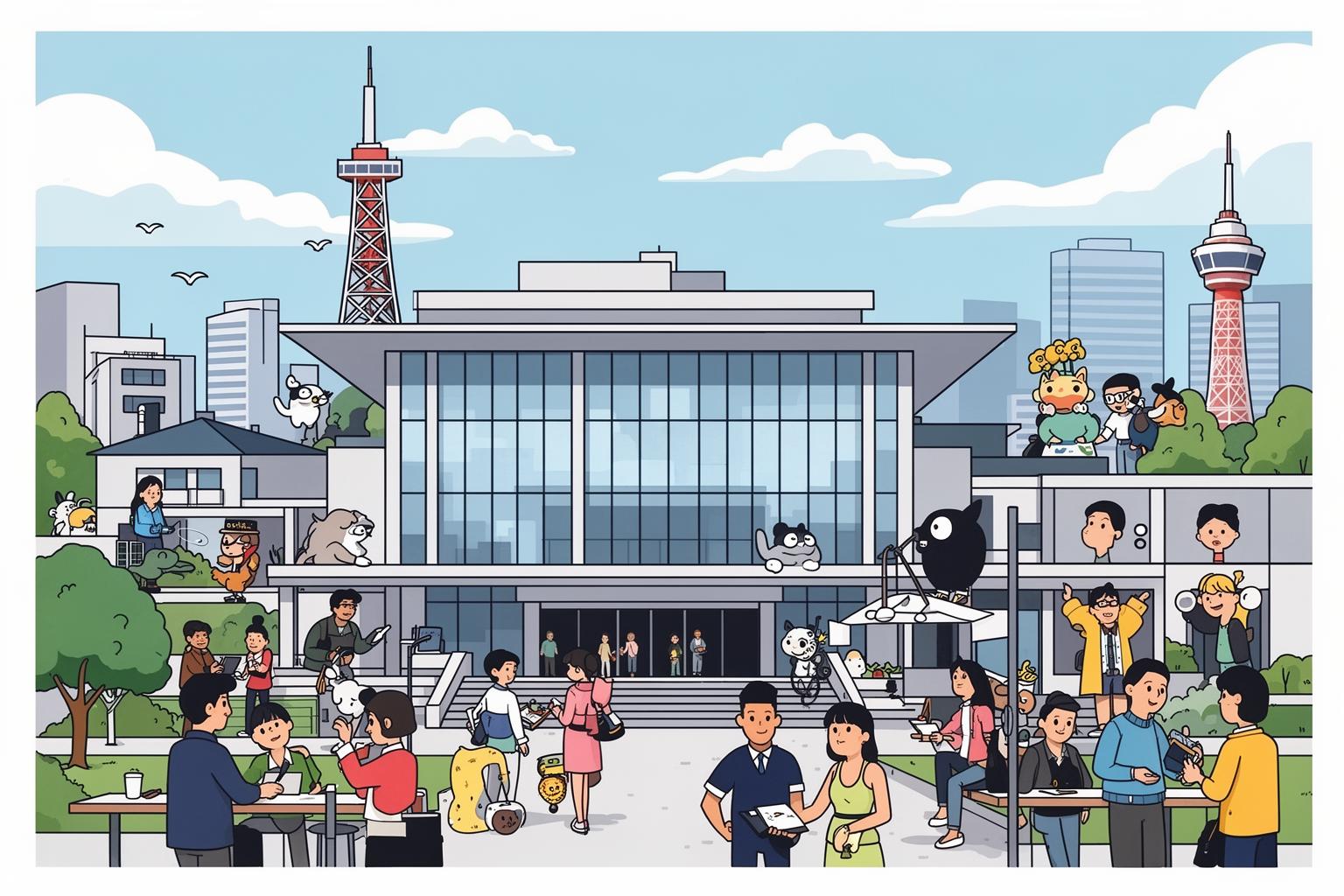
To grasp the appeal of the kōminkan, you first need to understand the fundamental difference in mindset between Osaka and Tokyo. Tokyo shines. It’s a city that values aesthetics, where presentation takes precedence. A co-working space in Tokyo will have a clear brand identity, a carefully curated playlist, and artisanal coffee that costs more than your lunch. You’re paying for the experience, the atmosphere, the feeling of being in a place that looks good on Instagram. It’s sleek, professional, and transactional.
Osaka, however, operates on a different wavelength. This city was built by merchants, and that pragmatic, business-minded spirit influences every aspect of daily life. The key question here isn’t “Does it look good?” but “Does it work, and is it a good value?” This is the philosophy of `akinai no machi`, the merchant city. Why spend 800 yen on coffee just to rent a table for an hour, or 30,000 yen a month for a hot desk, when the city offers a perfectly functional, quiet space for a fraction of the cost, or often, for free? This mindset is pure Osaka. It’s not about being cheap; it’s about being wise. It’s about recognizing value and refusing to pay for unnecessary extras.
The kōminkan is the tangible embodiment of this approach. Step inside, and you won’t be met with minimalist design or the scent of single-origin espresso. Instead, you’ll likely find fluorescent lighting, well-worn linoleum floors, and sturdy, no-frills tables and chairs that have served the community for years. The décor might feel dated. The Wi-Fi may be steady, but not lightning-fast. It is, in one word, functional. It’s not meant to impress you; it’s designed to serve you. This reflects the Osaka `ma, e-yan` (“ah well, it’s good enough”) attitude. It doesn’t have to be perfect. It doesn’t need to be beautiful. It just has to work. For a remote worker seeking a quiet place to focus, it serves brilliantly. This emphasis on substance over style is one of the most striking differences you’ll notice living here compared to the polished capital.
What Exactly is a Kōminkan? Deconstructing the Community Hub
For many foreigners, the local kōminkan is a building they pass by daily without giving it much thought. It appears official, perhaps a bit plain, with a sign outside advertising activities that seem unrelated—ikebana circles, seniors’ shogi clubs, parenting workshops. It’s easy to assume it’s a closed world, a place not meant for you. This is a common misconception. A kōminkan is, by definition, meant for the entire community, including you, the foreign resident. It’s a cornerstone of municipal life, designed to offer accessible resources for education, culture, and connection.
More Than Just a Study Room
For a remote worker, the heart of the kōminkan is often the `jishūshitsu` (study room) or a library corner. These are designated quiet areas, furnished with individual carrels or large shared tables where high school students prepare for exams alongside retirees reading the newspaper. However, the building is a small ecosystem of activity. Peek into other rooms, and you’ll find a microcosm of Japanese society. In one, a group of `obachan` (aunties) might be joyfully participating in a hula dancing class. In another, you might hear the focused clatter of mahjong tiles. Down the hall, a room might be reserved by a local NPO for a meeting. These centers often include a branch of the public library, a children’s play area, and sometimes even small kitchens or pottery studios available for rent at a nominal fee. You’re not just working quietly; you’re sharing a space with the entire range of your neighborhood. You’re connected to the local rhythm in a way that your apartment alone could never provide.
The Unspoken Rules of the Shared Space
Because a kōminkan is a shared community resource, it operates according to a set of unspoken but universally understood rules. This isn’t a commercial space where paying customers expect service. It’s a communal area where your presence calls for consideration. Learning this etiquette is an essential part of navigating life in Osaka.
First, silence is sacred in study areas. This isn’t a café where you can join a Zoom call with your headphones on. Taking calls inside the quiet zone is a serious faux pas. If your phone rings, you must get up and move to the lobby or step outside. Social enforcement is quick and effective. You may not be verbally reprimanded, but you will likely receive a sharp, focused look from a high school student whose exam prep you disrupted, or a pointed glance from an `obachan`. In Osaka, people are direct. They don’t tolerate passive aggression; they have work to do, and you’re expected to respect the shared space that enables everyone to do so.
Second, respect the schedule and the system. Rooms and desks aren’t always available on a walk-in basis. You may need to sign in at the front desk, receive a numbered tag for your seat, or follow specific time blocks (e.g., 9:00–12:00, 13:00–17:00). Closing times are strict. Staff won’t softly urge you to leave; at 5 PM, the lights might start flickering as a signal to pack up. This isn’t rudeness; it’s efficiency. The system is designed to ensure fair access for all, and the Osakan way is to obey the system without complaint.
Finally, the principle of `atarimae`—doing what is obvious and expected—is paramount. Clean up after yourself. Push your chair in when you leave. Don’t leave your belongings unattended to save your spot for hours. These small acts of consideration are the lubricant of Japanese society, and in a communal space like a kōminkan, they are non-negotiable. You are a guest in a shared home, and you’re expected to behave accordingly.
Finding and Using Your Local Kōminkan: A Practical Guide
So you’ve embraced the idea and are ready to swap your cramped desk for a spacious, focused workspace infused with genuine local culture. But how do you actually make it happen? Fortunately, the process tends to be as practical as the philosophy behind it.
How to Locate One
Almost every ward (`ku`) in Osaka has at least one kōminkan or a similar facility, often referred to as a `shōgai gakushū sentā` (lifelong learning center). The simplest way to find one near you is by doing a quick map search. Open your map app and enter the name of your ward followed by `公民館` (kōminkan) or `生涯学習センター`. For example, try searching for “Nishi-ku kōminkan” or “Kita-ku shōgai gakushū sentā.” These centers are often conveniently situated near other municipal facilities like the ward office (`kuyakusho`) or the main public library, making them easy to locate and incorporate into your daily routine. Just keep an eye out for a modest, functional public building—it’s probably the one.
The Registration and Fee System: Osaka-Style Bureaucracy
Dealing with Japanese bureaucracy can seem daunting, but the process at a kōminkan is generally straightforward and low-pressure. For free-use study areas, you might only need to sign a logbook at the front desk, noting your name and entry time. For certain facilities, especially if you wish to reserve a private meeting room, a simple registration process could be required. This may involve filling out a short form with your name and address and presenting your Residence Card (`zairyū kādo`) to confirm your residency in the city or ward. Don’t be surprised if the entire procedure is analog—paper forms, ink stamps (`hanko`), and physical membership cards remain common. This is just Osaka pragmatism in action. There’s no need for a sleek app or fancy website when a piece of paper and a stamp have worked perfectly well for decades.
The fee structure is where the real value shines. The open study desks are often completely free. If you want to rent a small meeting room for a few hours to work with a colleague, the cost is usually incredibly affordable—around 500 to 2,000 yen for a three-hour slot. When compared to the hourly fees at commercial co-working spaces, you can see why this is such a quintessential Osaka life hack. It’s a system built for accessibility, not profit.
From Remote Worker to Community Member
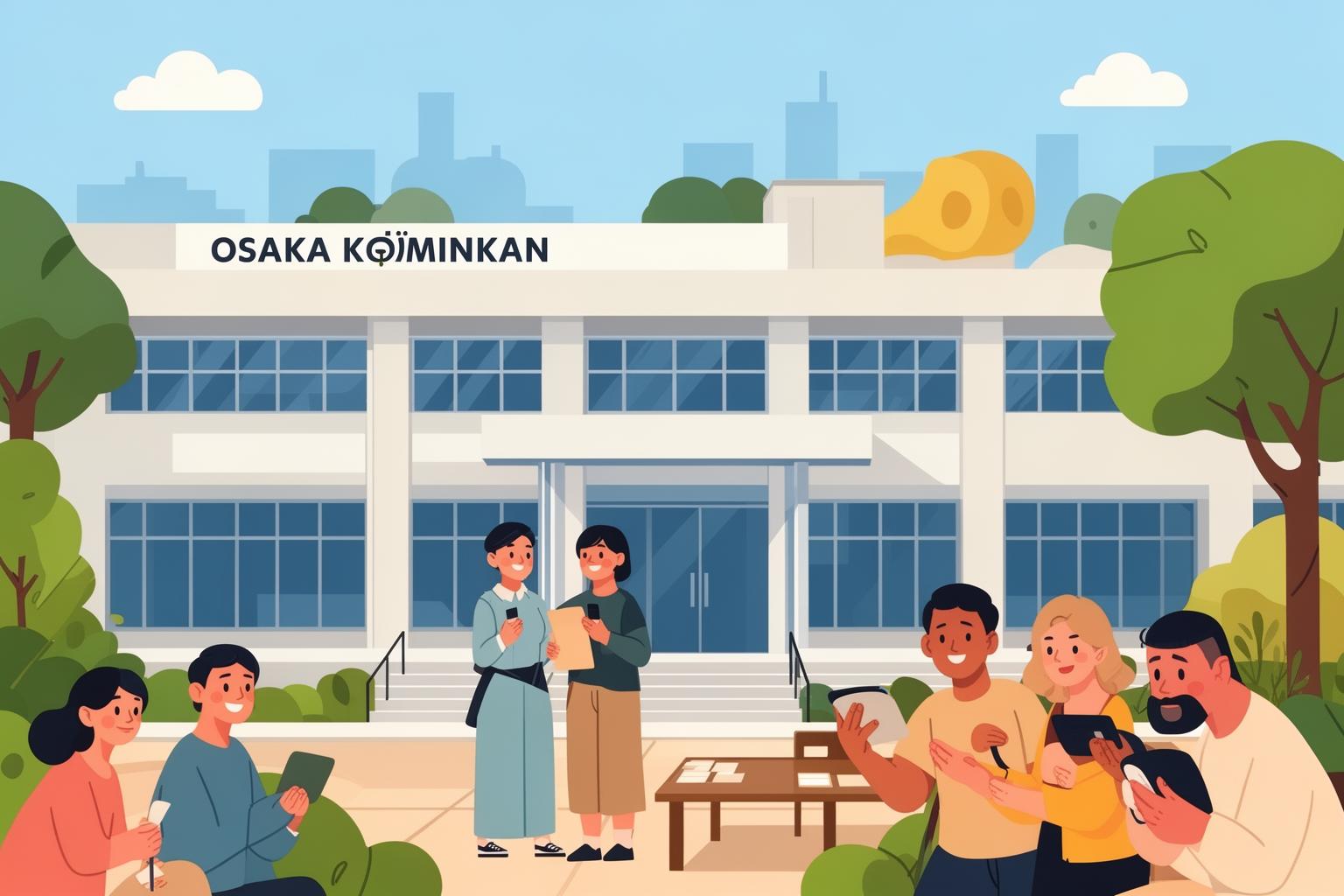
The greatest advantage of working at a kōminkan isn’t the free Wi-Fi or the quiet desk. It’s the subtle change in perspective—the shift from merely observing Osaka to quietly participating in its everyday life. Your home office is a bubble. A café is a transient space. A kōminkan is a living institution.
The Power of Casual Observation
By spending just a few hours a week sitting in a kōminkan, you begin to absorb the rhythm of your neighborhood. You notice the same group of seniors who gather every Tuesday to play Go. You observe the high school students who arrive like clockwork after school, their tired sighs evolving into intense concentration. You’ll see posters on the community bulletin board advertising the local summer `matsuri`, a flea market at the nearby shrine, or a call for volunteers to help clean the park. These details transform a city into a home. You start to understand the concerns, the celebrations, and the pace of the people around you. You hear Kansai-ben, the local dialect, in its natural environment—not as a show for tourists, but in the casual, rapid-fire conversations between friends. This passive immersion offers a rich form of cultural education.
The Accidental Conversation
While Tokyo can sometimes feel politely anonymous, Osaka has a lower threshold for casual interaction. People tend to be more openly curious. Don’t be surprised if an older man at the next table asks you in simple Japanese what you’re working on or where you’re from. These aren’t intrusive questions but genuine sparks of curiosity. In Osaka, a simple `doko kara kitan?` (“Where’d you come from?”) is a common, friendly way to start a conversation. These brief, fleeting exchanges are the threads weaving the social fabric. You might share a laugh with the librarian about the weather or exchange a silent nod of understanding with a fellow student. This is what people mean when they say Osaka is “friendly.” It’s not an exaggerated, welcoming-committee kind of friendliness—it’s a grounded, matter-of-fact warmth that arises from a shared sense of community and natural curiosity about those around you.
Why This is Quintessentially Osaka
Opting to work at a kōminkan instead of a polished café goes beyond a practical choice; it represents an embrace of the fundamental principles of the Osaka philosophy. It signifies a preference for a different lifestyle and work approach in a city, one that sharply contrasts with the more commercialized and individualistic trends of other global centers.
First, it upholds pragmatism. The kōminkan exists to address a specific need—the demand for space—in the most efficient and cost-effective manner possible. It embodies a culture that prioritizes resourcefulness and common sense over branding and luxury.
Second, it is firmly grounded in community. The very presence of these centers confirms the importance of public life. It suggests that your existence shouldn’t be limited to your private apartment or commercial establishments. There is a third space available to everyone, maintained by everyone, and serving everyone. Whereas in Tokyo you often have to pay to access a community or third space, in Osaka it is offered as a fundamental public good.
Finally, it mirrors the directness of the culture. The rules are straightforward. The purpose is clear. Interactions, when they occur, are sincere. There is little pretense. You are there to work or study, and the space supports that without any fuss.
So, the next time your apartment walls feel like they’re closing in, resist the lure of the familiar café. Grab your laptop, take a short walk, and open the door to your local kōminkan. Find a seat, plug in, and start working. But as you do, look around. Listen. Absorb the quiet energy of the room. You’re not just saving money or finding a quiet spot to type. You’re engaging in a deeply Osakan tradition and experiencing the city not through its famous landmarks, but through its humble, hardworking, and genuinely practical heart.