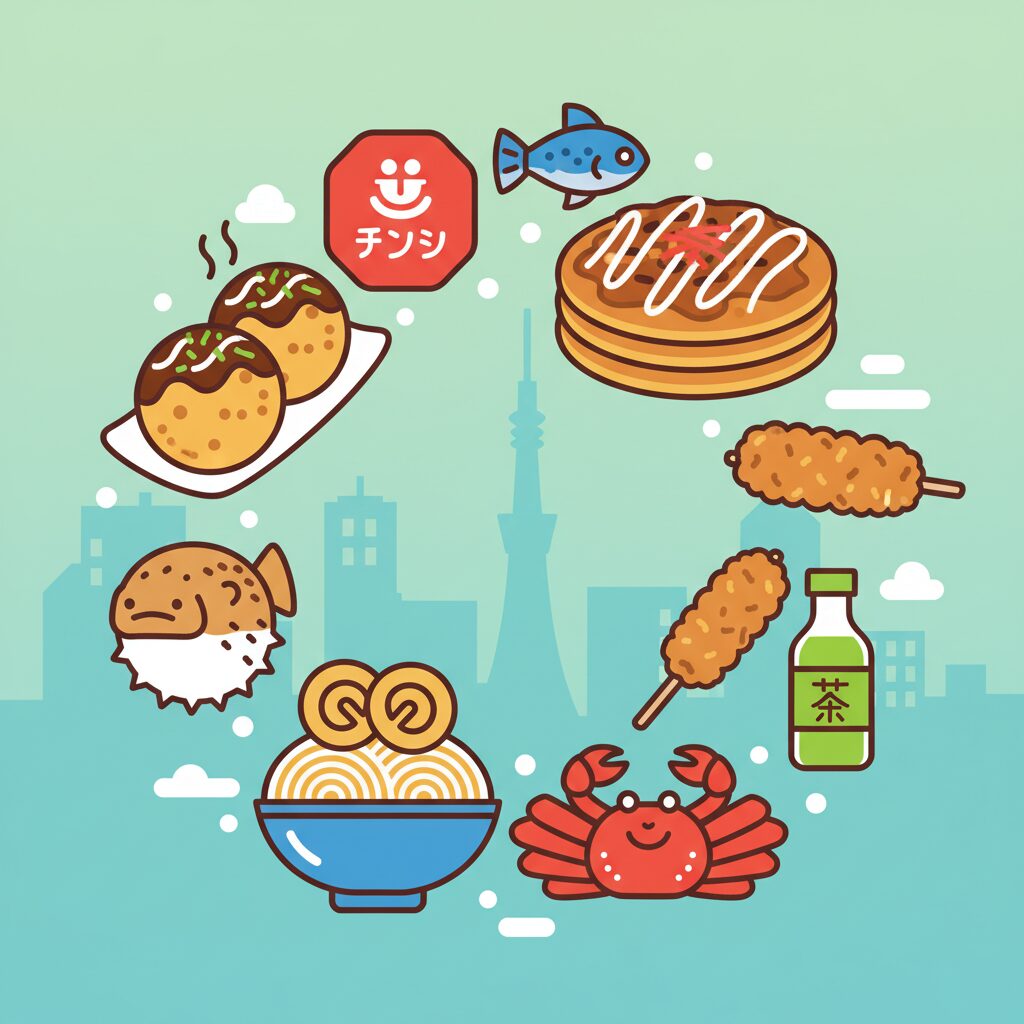
Walk through Osaka at dusk, and the city speaks to you in a language of sizzling oil and savory steam. The air in Namba hangs thick with the scent of grilling octopus and sweet soy sauce. In Tenma, the clatter of plates and joyous shouts spill from a thousand tiny izakayas. This isn’t just background noise; it’s the city’s heartbeat. This is the world of kuidaore, a foundational Osaka concept that translates, with a grin, to ‘eat until you drop’ or, more accurately, ‘eat yourself into bankruptcy.’ It’s a philosophy, a challenge, and a city-wide pastime. Food here isn’t just sustenance; it’s the primary medium for communication, celebration, and identity.
But what happens when your body speaks a different language? What if you’re vegan, vegetarian, gluten-intolerant, or have a serious food allergy? Suddenly, this culinary paradise can feel like a labyrinth with no exit. The joyous symphony of street food becomes a minefield of hidden ingredients and social hurdles. This isn’t a problem you can solve with a simple restaurant finder app. To survive and thrive here, you have to understand the deep-seated mindset behind the food. You need to learn the unspoken rules of the Osaka table, because navigating kuidaore on a diet is less about finding the right dish and more about understanding the soul of the city that cooked it. This is your guide to doing just that—finding your own delicious path in a city that wants nothing more than to feed you, on its own very specific terms.
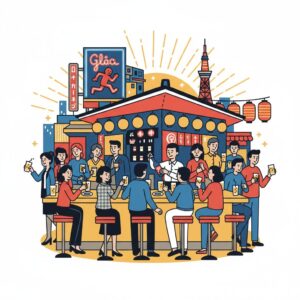
Embracing dietary challenges can lead to unexpected adventures, such as discovering the lively local spirit at tachi-nomi social hubs that continues the city’s celebration well into the night.
The Unspoken Rules of the Osaka Table

Before you even attempt to place an order, you need to understand a fundamental truth: in Osaka, food represents love. It’s respect. It’s the social glue that binds everything together. A meal is not a transaction; it’s a relationship. When you enter a small, family-run okonomiyaki shop, you step into their kitchen and their legacy. This reality influences every interaction and can make dietary requests feel like navigating a delicate social dance.
“Kore Meccha Umai Nen!” – The Gospel of Good Taste
When an Osakan recommends a dish, they’re not merely making a suggestion; they’re sharing a part of their identity. When your coworker grabs your arm and says, “You have to try the takoyaki from that stall—it’s the best!” they’re giving you a gift. It’s an invitation into their world, a moment of connection. The food serves as the medium for the message: “I like you, and I want you to experience the joy I feel.”
This is where the first challenge arises. Politely refusing can feel to them like you’re rejecting the gesture itself. It’s not that they feel personally insulted, but there’s a brief confusion. Why would anyone turn down something so universally accepted as delicious? In Tokyo, dining can be a more individualistic experience. People often order different things, and there’s a broader range of international cuisines where customization is common. In Osaka, however, the food culture is deeply communal. You come for okonomiyaki. You come for kushikatsu. The group shares the same specialty, strengthening bonds over a shared griddle or communal dipping sauce. To opt out of the central experience is to sit on the sidelines of the social event.
The Ghost in the Machine: Dashi and Other Hidden Ingredients
Here’s the most practical—and perhaps frustrating—lesson you’ll learn: in Japan, the definition of “meat” or “animal product” often differs greatly from yours. This isn’t deception; it’s a cultural default. The entire foundation of traditional Japanese flavor—the invisible framework of the cuisine—is based on ingredients that can disrupt a special diet in a single bite.
Dashi is King, and He’s Not Vegan
The biggest challenge for vegetarians and vegans is dashi. This savory broth, usually made from katsuobushi (dried bonito flakes) and kombu (kelp), is the cornerstone of Japanese cooking. It’s in everything. That “vegetable udon” you ordered? The broth is dashi. The dipping sauce for your tempura? Dashi. The miso soup accompanying your set meal? Dashi. Even seemingly safe dishes, like a simple boiled vegetable appetizer (ohitashi), are often steeped in it. Because it’s a foundational flavor, many cooks don’t even consider it a “fish ingredient”—it’s just… broth. Asking for a dish without it is like asking for a cake without flour; it alters the very essence of the food.
The “Just for Flavor” Fallacy
Another common hurdle is the use of small amounts of meat or lard purely for flavor. Many chefs, especially from older generations, believe that a little pork adds essential umami and richness (koku) that cannot be duplicated. You might order yakimeshi (fried rice) without meat, yet it could still arrive with tiny, nearly invisible specks of pork added for flavor. To the cook, this is not a main ingredient but a seasoning, like salt. The same applies to some ramen broths, curry sauces, and even breads or pastries, which may be made with lard instead of butter or vegetable oil. The assumption is that you’re avoiding large pieces of meat, not trace amounts used as flavor enhancers.
Decoding the Menu and the Mindset
Communication is your most powerful tool, but it can also be your greatest potential pitfall. Simply translating your dietary needs into Japanese often isn’t sufficient. You need to convey the underlying concept, which requires understanding the local perspective on food and service.
Why “I Don’t Eat Meat” Gets Lost in Translation
Japanese food categorization is more specific than in English. When you say you don’t eat “meat,” the average person will hear niku (肉), which mainly refers to the meat of land animals like beef, pork, and chicken. Fish (sakana, 魚) and seafood (gyokai, 魚介) are regarded as entirely separate categories. So, when you say “Niku wo tabemasen” (I don’t eat meat), you might be served grilled fish with pride. You need to be extremely specific.
Your best approach is to prepare a short vocabulary list addressing your precise needs. Rather than a general statement, list the categories.
- For vegetarians: “Watashi wa bejitarian desu. Niku to sakana wa tabemasen.” (I am a vegetarian. I don’t eat meat or fish.)
- For vegans, it’s more complicated: “Niku, sakana, tamago, nyuuseihin, hachimitsu wo tabemasen.” (I don’t eat meat, fish, eggs, dairy products, or honey.)
- The dashi issue: “Katsuo dashi wa chotto nigate nandesu.” (I’m not good with bonito fish broth.) Using a softer word like “nigate” (not good with/weak to) can sound less blunt than a straightforward refusal.
This level of detail might feel awkward, but it helps close cultural gaps and clearly shows the chef what you need to avoid.
The Chef’s Pride vs. Your Custom Order
In many Western dining cultures, the mindset is “the customer is always right,” and customization is expected. In a traditional Osaka eatery, the dynamic is different. The chef is a shokunin—an artisan. They have dedicated years, sometimes a lifetime, to perfecting a single dish. Their okonomiyaki recipe is a carefully balanced blend of flavors and textures passed down through generations. The sauce is their signature.
Requesting the omission or substitution of an ingredient can be seen not as a dietary necessity, but as a criticism of their craft. It implies, “Your perfect creation isn’t good enough for me; I want it my way.” This reaction isn’t rooted in arrogance, but in deep pride in their work. The response might be a polite but firm “Uchi wa soiu no yattenainde” (We don’t do that kind of thing here). This isn’t meant to be unhelpful; it reflects artistic integrity. This contrasts sharply with Tokyo, where a higher number of international residents and tourists has made restaurants more accustomed to and flexible with special requests.
Building Your Personal Food Map of Osaka
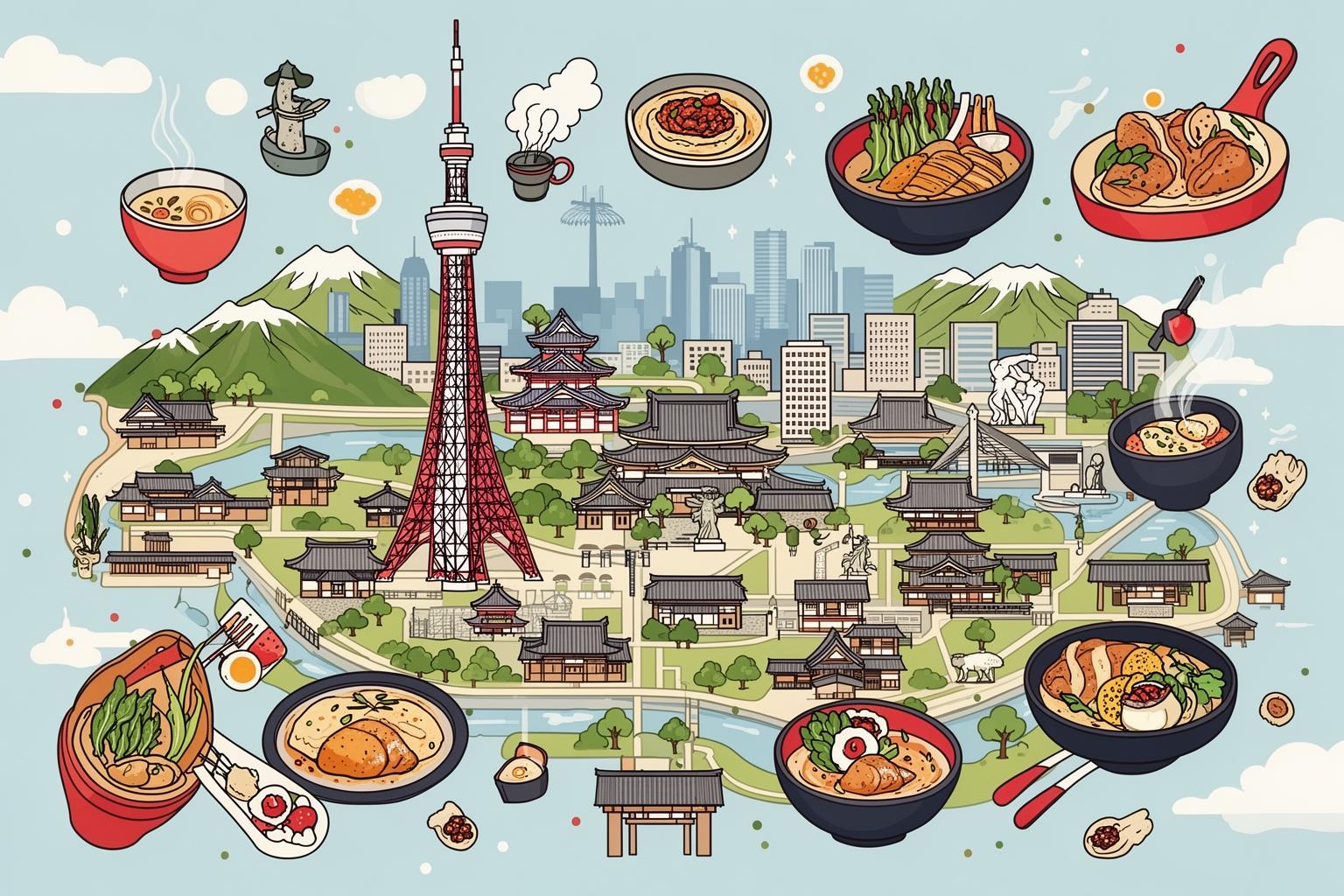
The traditional food scene can be challenging. Does that mean you’re stuck with plain rice and convenience store salads? Definitely not. It simply means you need to get creative and explore beyond the well-known foodie areas. You have to create your own version of Osaka, one that suits your preferences.
Skip Dotonbori, Discover Your Own Spot
The most famous places for kuidaore—Dotonbori, Shinsekai, Kuromon Market—are the epicenters of traditional, rigid food culture. Vendors there serve thousands daily the same classic dishes they have for decades. They’re the least likely to accommodate special dietary requests. So, politely, leave those to the tourists.
Your solution lies in neighborhoods where modern Osaka thrives. Visit areas like Horie, with its trendy cafes and indie shops. Wander Nakazakicho’s labyrinth of charming, old-and-new eateries and boutiques. Even Shinsaibashi and Umeda’s side streets host modern restaurants run by younger chefs. Here you’ll find dedicated vegan spots, cafes offering soy milk lattes without hesitation, and Indian, Italian, or Middle Eastern restaurants where vegetarian options are standard. This is your new territory.
The Supermarket: Your Ultimate Ally
For anyone with dietary restrictions, this is the most crucial advice: embrace the Japanese supermarket. Shops like Life, Hankyu Oasis, and budget-friendly Gyomu Super are your gateway to dietary freedom. The quality and variety of fresh produce are outstanding. The tofu selection alone is amazing, featuring silken, firm, fried (aburaage), and grilled (yakidofu) types. You’ll discover every mushroom imaginable, a vast range of seaweeds, and staples like rice, beans, and noodles.
Cooking at home isn’t a compromise; it’s empowering. It enables you to engage with the food culture on your terms. You can safely experiment with Japanese ingredients. Becoming adept at reading labels is essential. Look for the arerugii hyouji (アレルギー表示), the legally mandated allergy label box, which lists common allergens like egg (卵), dairy (乳), wheat (小麦), shrimp (えび), and crab (かに). Learning these kanji is essential.
Find Your Community: The Rise of Conscious Eateries
Though still less common than in some global cities, the scene is evolving. A new wave of health-conscious, ethically driven entrepreneurs is launching businesses. Vegan ramen shops, gluten-free bakeries, and organic cafes are emerging. These places are your community. The staff won’t just understand your needs—they’ll anticipate them. Their entire business is built around this. Use apps like HappyCow or local blogs to discover them. Supporting these businesses not only provides a safe dining option but also fosters community growth and increases demand for more choices in the city.
Navigating Social Eating: The Real Final Boss
Eating alone is one thing, but the real challenge lies in social dining: work dinners (nomikai), parties with friends (enkai), and celebratory meals. These occasions are essential to Japanese social and professional life, and skipping them is not always an option. This is where your communication skills and strategic thinking become crucial.
The Art of the Polite Refusal (and the Preemptive Approach)
Never wait until you arrive at the restaurant to reveal your dietary restrictions, especially if a set-course meal is involved. Doing so puts the host in an awkward position and can disrupt the entire event. The key is a preemptive approach.
When you receive an invitation, respond enthusiastically but follow it with a polite and apologetic explanation. A phrase like, “Osasoi itadaki arigatou gozaimasu! Zehi sanka sasete kudasai. Jitsu wa, tabemono no arerugii ga arimashite… Gomeiwaku wo okake shimasu ga…” (Thank you very much for the invitation! I’d love to join. Actually, I have a food allergy… I’m very sorry for the inconvenience…) works perfectly. This frames the issue as your responsibility, not theirs, and gives them time to check with the restaurant or pick a different venue. If it’s a casual gathering at someone’s home, offer to bring a dish to share. This gesture is both common and welcomed, ensuring there will be at least one thing you can eat.
The Izakaya Strategy: Drink, Don’t (Just) Eat
Navigating izakayas and work nomikais* can be easier than expected. Although many dishes may be off-limits, ordering many small, shared plates gives you some control. The main purpose of these gatherings is bonding over drinks, not gourmet meals. Your participation is what truly counts.
Stick to safe choices like edamame, hiyayakko (cold tofu—just ask to hold the bonito flakes), french fries (furaido poteto), plain rice, and simple salads (request no dressing or just salt and oil). Focus on pouring drinks for superiors and colleagues, joining conversations, and laughing at the boss’s jokes. As long as you’re a happy, engaged participant socially, no one will notice or mind that you’re only picking at edamame. You can always eat a proper meal before or after the event. Your social duty is to be present and pleasant; a full stomach is secondary.
Ultimately, living in Osaka with dietary restrictions is a journey. It can be frustrating at times, bringing confusion and hunger. Yet it also invites deeper engagement with the city. You move beyond the tourist-friendly surface to discover a modern, evolving Osaka. You develop more nuanced, precise communication skills. You find hidden gems in quiet neighborhoods and master the art of the Japanese supermarket.
You may not be able to indulge in takoyaki and ramen without worry, but you can create your own version of kuidaore. One built on fresh tofu from the corner shop, a perfect vegan ramen from a tiny back-alley spot, and home-cooked meals shared with understanding friends. It’s about carving out your own space at the table, and in doing so, gaining a deeply satisfying taste of what it truly means to live in this wonderfully, stubbornly food-obsessed city.