
You hear the word before you even arrive. Kuidaore. It’s whispered in travel guides, shouted from neon signs, and slapped onto souvenir t-shirts. The standard translation offered is dramatic, almost comically so: “to eat oneself into bankruptcy.” For most, the image it conjures is one of endless gluttony—a city of people loosening their belts, hopping from one food stall to the next, consuming takoyaki, okonomiyaki, and kushikatsu until they collapse in a blissful, carb-induced heap. This is the image of Dotonbori at night, a dazzling, overwhelming river of light and food, where the Glico Running Man sprints forever and a giant mechanical crab waves its claws at the hungry masses.
But that interpretation, the one built for tourists and flashy Instagram posts, barely scratches the surface. It captures the ‘what’ but completely misses the ‘why.’ The true spirit of kuidaore isn’t found in the sheer volume of food consumed. It’s not a challenge to see how much you can eat. It is a philosophy, a mindset, a deeply ingrained cultural habit that governs daily life far from the neon glow. It is Osaka’s relentless, unforgiving, and joyful pursuit of ultimate value. To understand kuidaore is to understand the soul of this city—a soul forged in the fires of commerce, seasoned with pragmatism, and served with a healthy dose of demanding skepticism. It’s an economic principle applied to every plate, a silent calculation running in the back of every Osakan’s mind. This isn’t about eating until you drop; it’s about making sure that every single yen you spend on food works as hard as you do. It’s a creed that separates the savvy from the suckers, and in Osaka, nobody wants to be a sucker.
Osaka’s relentless pursuit of value is mirrored in its hospitality sector, where Kansai’s booming hotel market attracts global investors amid a surge in tourism.
Deconstructing ‘Kuidaore’: Beyond the Buffet Mentality
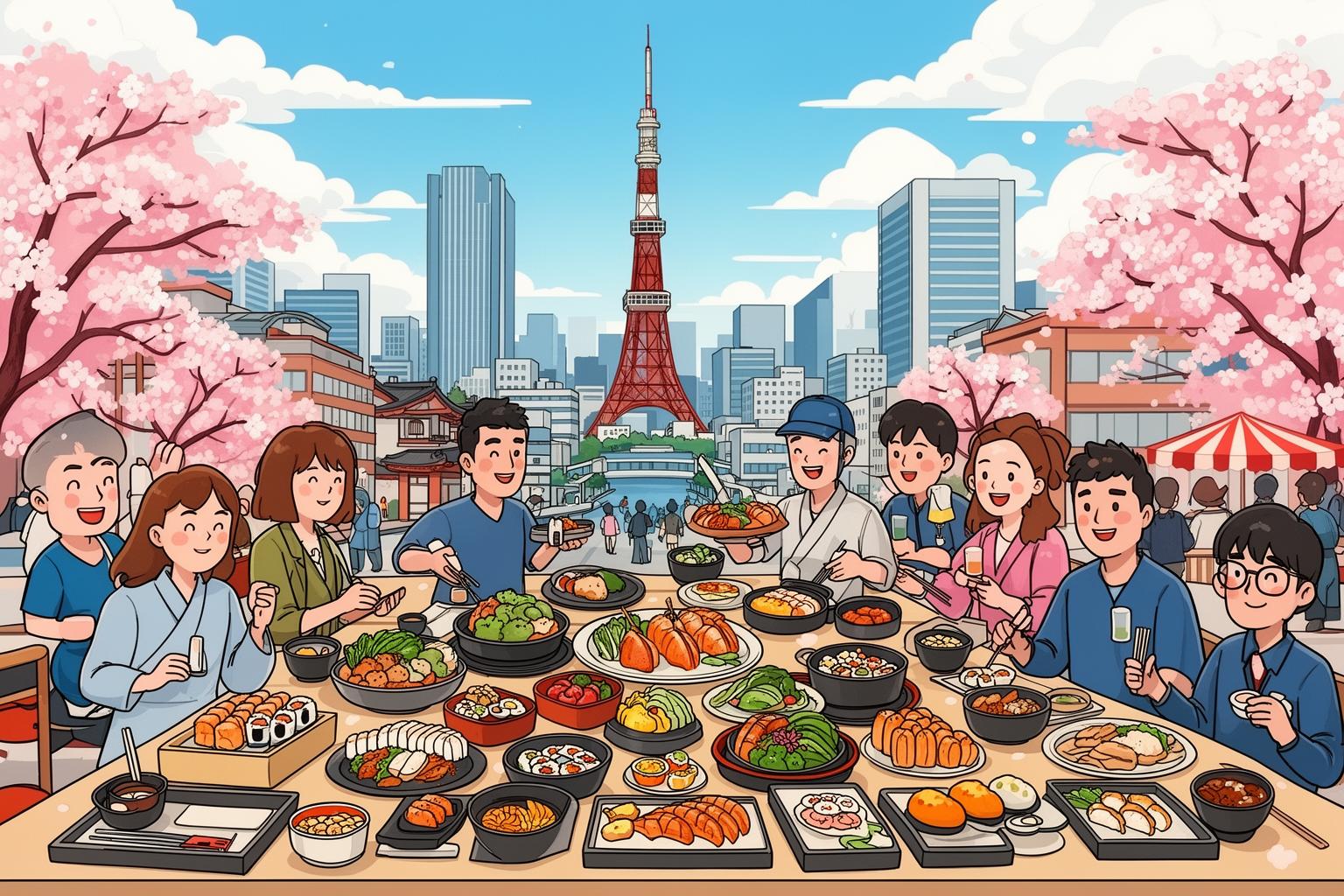
Let’s break down the word itself. Kui (食) derives from the verb kuu, which is a slightly informal, robust way to say “to eat.” Daore (倒れ) comes from taoreru, meaning “to fall down,” “to collapse,” or, in a financial context, “to go bankrupt.” So, the literal—if somewhat harsh—translation is “eating to collapse” or “eating to bankruptcy.” However, in the nuanced world of Japanese language, such dramatic phrasing is often an exaggeration. It’s intended to express an intense passion, a completely consuming focus. You wouldn’t say a painter ega-daore (paints until bankruptcy), but for Osakans and their food, the expression stuck.
This is because the obsession isn’t just about eating; it involves the entire economic exchange surrounding food. The core idea isn’t gluttony, but cospa, the Japanized abbreviation of “cost performance.” In Osaka, cospa reigns supreme—king, queen, and the whole royal court. It’s an almost sacred concept. A meal with good cospa offers quality, satisfaction, and experience far beyond its price. Conversely, a meal with poor cospa is an insult, a breach of the unwritten social contract between customer and establishment.
This is the first major misconception for outsiders, especially those from Tokyo. In Tokyo, you may pay a premium for ambiance, a famous brand, or a trendy location in Ginza or Omotesando. The experience itself is part of the product. In Osaka, those factors are secondary. The fundamental question is always: “Is the food itself worth this price?” A beautifully decorated restaurant serving mediocre tempura for 2,000 yen will be harshly judged and quickly forsaken. A dingy, cramped stall beneath a railway arch serving sublime motsuni (beef giblet stew) for 500 yen will have a line around the block and be spoken of with reverence. The first offers terrible cospa; the second god-tier cospa. This isn’t about cheapness; it’s about discernment. It’s about refusing to pay for superficiality. An Osakan will happily spend 30,000 yen on a high-end sushi dinner, but they expect to taste 30,000 yen worth of impeccable quality, skill, and freshness on the plate. If they feel they received only 25,000 yen of value, they won’t return, and they will tell their friends.
The Merchant’s DNA: Why ‘Value’ is Everything in Osaka
To grasp this obsession, you need to examine Osaka’s history. For centuries, it served as Japan’s commercial hub, known as the tenka no daidokoro—the “nation’s kitchen.” During the Edo period, rice from across the country was brought here, stored in warehouses along the canals, and traded by influential merchants. The Dojima Rice Exchange, founded in the 17th century, was the world’s first futures market. This city wasn’t shaped by samurai and aristocrats but by merchants, brokers, and artisans. Their world revolved around numbers, profit and loss, sharp negotiation, and the harsh reality of the bottom line.
This merchant spirit still runs strong through the city’s veins. The Osakan mindset is famously practical, straightforward, and unsentimental. There is a general intolerance for pretension and a deep respect for substance. This perspective, where everything is evaluated for its true value, is applied most strictly to food. Why? Because food is the great equalizer. Everyone eats. It represents the most frequent and fundamental economic exchange in a person’s daily life. For the descendants of the nation’s merchants, every meal is a deal to be judged.
This results in a fiercely competitive culinary scene. A restaurant in Osaka doesn’t just compete with the one next door; it competes with the collective historical memory of every great-value meal an Osakan has ever enjoyed. The standards are extraordinarily high. To survive, a restaurant must offer something unique, and that uniqueness is almost always defined by value. You might have the best spot in Umeda, but if your lunch special costs 100 yen more than a competitor’s two blocks away and your miso soup is watery, you’re in trouble. Word spreads quickly. The local community functions as a self-regulating market watchdog, mercilessly eliminating establishments that fail the cospa test. This pressure cooker environment is exactly why Osaka’s food is so famously delicious and affordable. It has to be. Survival depends on it.
How ‘Kuidaore’ Plays Out in Daily Life

This philosophy isn’t just for restaurant critics; it’s a grassroots movement embraced daily by every resident, from salarymen and students to grandmothers. It reveals itself through the small choices and conversations that shape the city’s rhythm.
The Lunchtime Battlefield
The spirit of kuidaore is most evident during the weekday lunch hour. In business districts like Honmachi or Yodoyabashi, the streets brim with office workers on a mission. They’re not merely looking for food; they’re seeking triumph in the form of the perfect lunch teishoku (set meal). The contest is waged over a few hundred yen. A 750-yen set is compared closely with an 850-yen set. What does that extra 100 yen buy? Fresher sashimi? Thicker tonkatsu? A chawanmushi (steamed egg custard) included in one but not the other? Better rice quality, with free refills? These are far from trivial questions—they spark serious debate. People will bypass five nearby restaurants to walk ten minutes to the one whose cospa they’ve judged superior. A line of locals waiting outside a plain eatery at 12:15 PM is Osaka’s most trusted Michelin star.
Supermarket Wars
This meticulous scrutiny extends into grocery shopping. Tokyo boasts upscale chains like Seijo Ishii, focusing on presentation and imported goods. Osaka has Super Tamade. To outsiders, Tamade is a sensory overload—a chaotic burst of garish yellow and red signs, flashing neon lights, and a store soundtrack reminiscent of a pachinko parlor. But to locals, it’s a shrine of unbeatable value. Their legendary “1-yen sales” (requiring a minimum purchase) are the stuff of local lore. An Osakan housewife can instantly recall the standard price per 100 grams for pork belly, chicken thighs, and daikon radish. She’ll analyze flyers from Tamade, Life, Gyomu Super, and the local shotengai (shopping arcade) with the focus of a stockbroker monitoring market trends. She might pick produce from Tamade, meat from Life, and sashimi from a specialty fishmonger—all in one trip to maximize the value of every single item in her basket. This isn’t about frugality; it’s a sport, the excitement of the hunt for the best deal.
The ‘Tachinomi’ Test
Another classic Osaka experience is the tachinomi, or standing bar. These are often small, cramped, no-frills spots, usually near train stations or in busy arcades like those around Tenma or Kyobashi. The tachinomi is the ultimate cospa testing ground. With drinks and small plates typically priced between 200 and 500 yen, the stakes are low but expectations high. A plate of dote-yaki (slow-cooked beef sinew with miso) at 350 yen must be rich, tender, and deeply flavorful. A piece of tempura for 150 yen must be crisply perfect without greasiness. Operating on a high-volume, low-margin business model, there’s no room for mistakes. It’s where chefs showcase their skills and customers sample a wide variety of excellent food without overspending. It stands as the purest embodiment of the kuidaore ethos: maximum enjoyment for minimal cost.
‘Meccha Oishii’ vs. ‘Kore de Kono Nedan?!’: The Language of Value
You can even hear the kuidaore spirit in the way people speak. Throughout much of Japan, the highest compliment for a meal is a simple, sincere “Oishii!” (It’s delicious!). In Osaka, while “Meccha oishii!” (Very delicious!) is definitely common, the ultimate praise often includes the price. It’s a two-part judgment.
You might hear expressions like:
“Kore de happyaku-en wa arien!” (No way this only costs 800 yen!) “Mecha yasui noni, uma-sugiru.” (It’s ridiculously cheap, but incredibly tasty.) “Cospa saikou ya na.” (The cost performance is unbeatable.)
The exclamation isn’t just about flavor; it’s about the surprise and joy at the value. The deliciousness is heightened by affordability. When you mention a new restaurant to a friend from Osaka, their initial question is rarely “Was it good?” but rather “Ikuraやったん?” (How much was it?). The quality of the meal is immediately judged against its price. A 10,000-yen meal that’s just “good” is seen as a failure. A 700-yen meal that’s “good” is a victory to be celebrated and shared.
What Foreigners Often Misunderstand

This intense focus on value can sometimes be mistaken by outsiders as mere stinginess. This is a fundamental misunderstanding. Osaka is not a city of misers; it is a city of value connoisseurs. It’s an active, intellectual endeavor. The pleasure comes from discovering and securing a great deal, from the feeling of having outsmarted the market. An Osakan doesn’t want the cheapest option; they want the best value for the price. There’s a significant difference.
Another common misconception is that kuidaore culture revolves solely around inexpensive, “B-grade gourmet” street foods like takoyaki. While these foods are iconic and undeniably part of the culture, the kuidaore principle transcends class. It is applied with equal, if not greater, scrutiny to fine dining. Someone spending their hard-earned money on a celebratory kaiseki meal will be even more discerning about the value they receive. They expect every element, from the seasonal ingredients to the chef’s skills to the tableware, to justify the premium cost. The pursuit of value spans all price levels.
Lastly, this ties into Osaka’s reputation for being “friendly.” Although people tend to be more open and direct than in other regions of Japan, much of this friendliness is positively transactional. Sharing tips about a great new lunch spot or a vegetable sale acts as social currency. It’s a practical way of assisting your neighbor and reinforcing community ties. “I found this amazing value, and I’m passing it on to you.” It’s a friendliness rooted in the shared quest for a better, tastier, and more economically sensible life.
Living the ‘Kuidaore’ Lifestyle: Your Guide to Eating Like a Local
So, how can you, as a local, move past the typical tourist spots and begin engaging with the authentic kuidaore culture? It starts with a change in perspective.
First, trust the lines. I’m not referring to the tourist queues at famous pancake shops, but rather the lines of Japanese office workers in suits and older women with shopping carts. A line of locals at an unassuming establishment is a surefire sign of excellent value. Take note, return during off-peak hours, and discover what they already know.
Second, venture into the shotengai. These covered shopping streets are the vibrant heart of local commerce. While some, like Kuromon Ichiba, have turned into popular tourist spots, many others—such as Tenjinbashisuji (the longest in Japan), Senbayashi, and those near local train stations—are where residents shop daily. These are the battlegrounds of cospa (cost performance). Walk through them. Observe which butcher draws the biggest crowd, which fruit stand is busiest, and which small eatery has all its counter seats taken. This is where the true bargains lie.
Third, learn the language of value. When seeking recommendations, be precise. Don’t just ask, “Where’s a good ramen spot?” Instead, ask, “Where can I find amazing ramen for under 1,000 yen?” or “What’s the best-value lunch set around here?” Phrasing your questions this way shows you grasp the local mindset and earns you far more genuine, insightful tips.
Finally, adopt the mindset of an Osakan. Before buying that bento, look inside. Is the portion reasonable for the price? Does it appear fresh? Could you find something better just 50 yen more down the street? This isn’t about being cheap; it’s about being engaged. It’s about actively participating in the food culture rather than passively consuming it. It’s about respecting your money and honoring the hard work of those delivering honest value.
Kuidaore is much more than just a catchphrase. It’s the city’s operating system, a philosophy of practical epicureanism honed over centuries. It explains Osaka’s energy, its straightforwardness, and its focus on substance over style. Living in Osaka means being invited into this ongoing city-wide conversation about what’s good, what’s worthwhile, and where to find it. To truly embrace kuidaore is to stop being a mere observer and become a savvy player in the city’s most delicious game.