
The first time Osaka really spoke to me, it wasn’t in a hushed temple or a quiet garden. It was at a tiny, steaming takoyaki stand tucked into an alley in Tenma. I’d been in Japan for a while, mostly floating through the polite, frictionless world of Tokyo, where every interaction felt scripted and smooth. I asked the old man running the stand for eight takoyaki. He grunted, flipped the octopus balls with practiced speed, and sized me up. “Your Japanese is weird,” he said, not with malice, but with the casual finality of a weather report. “Where’d you learn it, a book? You sound like a samurai.” He then laughed, a loud, raspy sound that echoed off the concrete. In Tokyo, a comment like that would have been a conversational catastrophe. Here, it was an invitation. It was the moment I realized Osaka plays by a different set of rules, spoken in a different key. This isn’t the Japan of quiet consensus and unspoken understanding. This is the Japan of the deal, the joke, and the direct question. It’s a city built by merchants, and even today, its heart beats with the rhythm of the marketplace: fast, frank, and relentlessly practical. For any foreigner trying to build a life here, understanding this direct communication style isn’t just helpful; it’s essential. It’s the difference between feeling constantly off-balance and learning to dance to Osaka’s unique, and often hilarious, beat. It’s a city that challenges your preconceptions of Japan, trading serene harmony for a vibrant, noisy, and deeply human honesty.
Osaka’s unfiltered energy spills over into every transaction, echoing the Osakan value-driven approach that shapes the city’s dynamic everyday commerce.
The Merchant’s DNA: Where Osaka’s Straight Talk Comes From
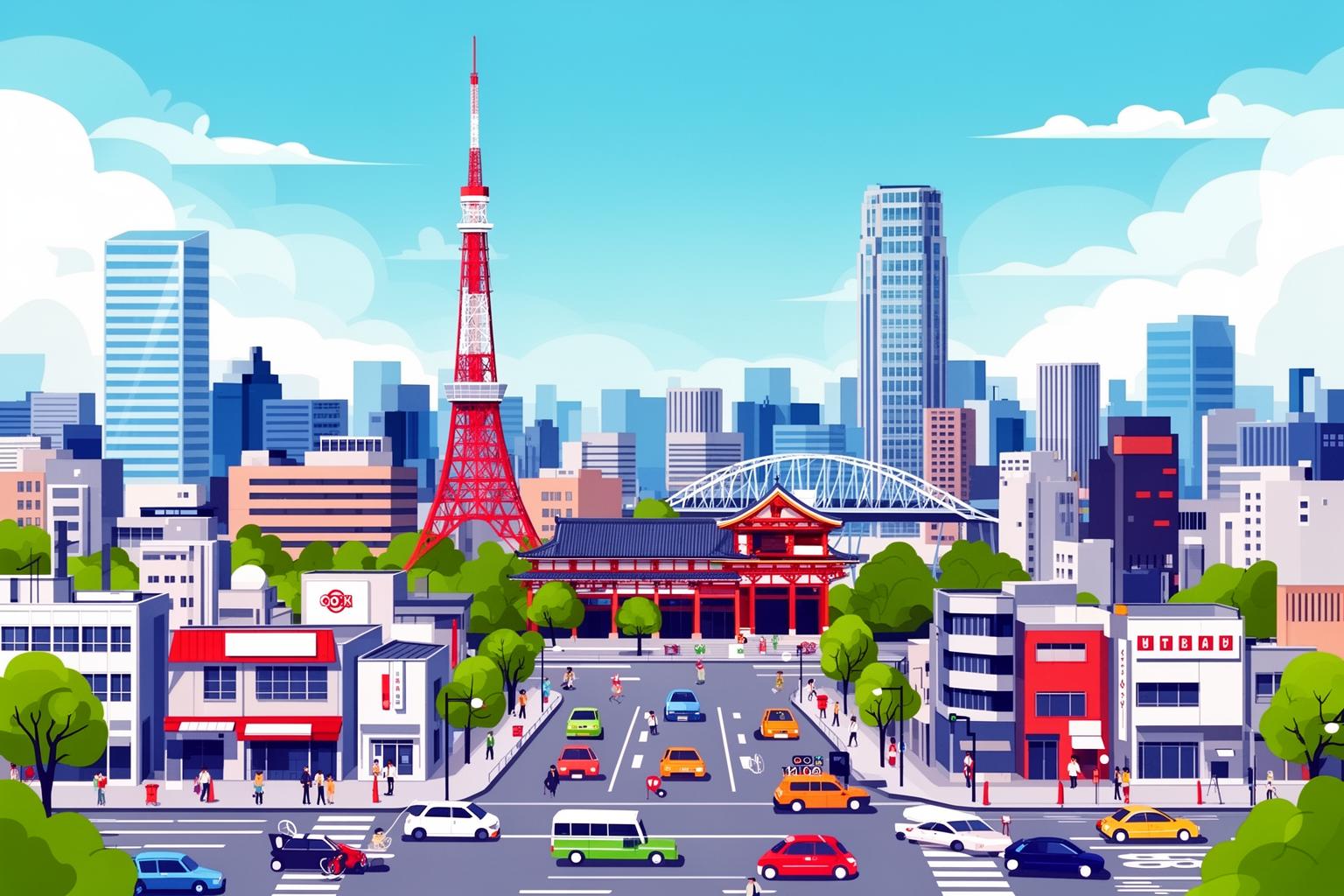
To understand Osaka, you must rewind time and peel back the layers of modern concrete and neon to reveal the city’s core. Unlike Tokyo, which developed as Edo, the political and military center of the shoguns, Osaka’s character was born of commerce. It was the tenka no daidokoro—the nation’s kitchen. Rice, sake, soy sauce, and wealth flowed through its canals and warehouses. This was not a city defined by rigid hierarchies and courtly etiquette; it was a sprawling, chaotic marketplace where sharp wits mattered more than noble lineage.
A City Built on Commerce, Not Bureaucracy
The essential difference between the samurai of Edo and the merchants of Osaka created two distinct communication cultures. In the shogun’s capital, life was governed by strict social codes. A misplaced word could have serious repercussions. This bred a culture of indirectness, with tatemae (public face) and honne (true feelings), where maintaining harmony and showing respect were paramount. Communication was a nuanced art of suggestion, designed to prevent conflict at all costs. It was a system crafted for a static, hierarchical society where everyone knew their place.
Osaka stood in stark contrast. It was lively and direct. For an Osaka merchant, or akindo, time quite literally equaled money. Deals had to be made quickly and clearly. There was no room for elaborate politeness or ambiguous hints when negotiating the price of a thousand barrels of rice. Efficiency and clarity were the most valuable currencies. This environment naturally fostered a communication style that was straightforward, practical, and focused on results. The goal was not to uphold a delicate social harmony but to reach a mutually advantageous agreement as swiftly as possible. This pragmatic spirit permeated the very fabric of the city, cultivating a mindset where blunt honesty is often regarded as more respectful than a polite but empty phrase. It’s a culture that prizes getting straight to the point—because for centuries, that was how you secured your livelihood.
The Language of Business: Key Osaka Phrases and Attitudes
The echoes of the marketplace still resonate in the city’s dialect today. A classic Osaka greeting, uncommon in Tokyo, is “Mokattemakka?,” meaning “Are you making a profit?” This would be a highly intrusive and personal question in much of Japan, but in Osaka, it serves as a friendly hello, akin to “How’s it going?” It connects people through the shared, historic language of commerce. The typical reply is a modest “Bochi bochi denna” (“So-so”), a humble deflection that keeps the conversation flowing. Another important phrase is “Nambo?” meaning “How much?” It’s shorter, sharper, and more direct than the standard Japanese “Ikura desu ka?” capturing the tone of a customer ready to negotiate.
This businesslike mindset extends beyond shops. It shapes everyday interactions. People in Osaka are fundamentally interested in value and fair exchange. This doesn’t always involve money; it could be an exchange of humor, information, or simple goodwill. But the core principle remains transparency. The local character is often described as akedo-kai, meaning open, frank, and candid. There is a sense that what you see is what you get. This absence of pretense can be incredibly refreshing, but it requires acclimating. You’re not engaging with the carefully crafted tatemae façade. You’re getting a direct line to someone’s honne, whether you want it or not.
The Upside: When Directness is a Breath of Fresh Air
For many foreigners struggling with the subtle, high-context nature of Japanese society, arriving in Osaka can feel like a window finally opened in a stuffy room. The ambiguity that can be so frustrating elsewhere is often swept away by a gust of straightforward communication. This clarity can be a huge advantage in both daily life and the professional world, once you learn to interpret it correctly.
Clarity in a High-Context World
One of the biggest challenges for expats in Japan is figuring out what people really mean. The layered phrases, the non-committal grunts, the reluctance to say “no”—it can be exhausting. Osaka cuts through much of that. At work, for example, getting feedback is often much clearer. In a Tokyo office, if your proposal isn’t working, your manager might say something like, “This is a good starting point. Perhaps we should explore some alternative perspectives.” You’re left wondering whether to make minor adjustments or start over entirely. In an Osaka office, your boss is more likely to slap the document on your desk and say, “This won’t work. The numbers are off and it’s too expensive. Find a cheaper supplier and redo the forecast by three.” It might sting a bit, but you know exactly what’s wrong and what you need to do. There’s no wasted time or agonizing over hidden meanings.
This directness extends to social life as well. Making plans in Tokyo can sometimes involve a drawn-out dance of maybes. You invite someone out, and they respond with a polite, “That sounds interesting, let me check my schedule and get back to you,” which often means a soft no. In Osaka, the response is usually more immediate. You’ll hear “Yeah, sounds great, what time?” or “Sorry, can’t. I’m busy that day.” This straightforwardness makes it much easier to build genuine connections because you spend less energy navigating social ambiguity and more time enjoying people’s company.
The Humor in the Honesty
Osaka’s directness is closely linked to its famous comedy culture, or owarai. The city is the undisputed home of Japanese stand-up, and the rhythm of its most famous comedic form, manzai, mirrors everyday conversation. Manzai features a funny man (boke) who says absurd things, and a straight man (tsukkomi) who responds with sharp, witty, and often physical retorts. That tsukkomi role—the act of pointing out a flaw or absurdity directly and humorously—is a core part of Osaka communication.
When an Osakan teases you, it’s often a sign of affection. It means they feel at ease with you. If you show up wearing a particularly garish sweater, a friend in another city might politely compliment it or say nothing at all. An Osaka friend will look you up and down and say, “Whoa, are your eyes okay? That sweater is trying to escape your body!” This isn’t an insult; it’s a conversational opener. It’s a tsukkomi delivered with a grin, inviting you to join in the banter. The worst thing you can do is take offense. The best response is a playful comeback. This verbal sparring is a form of social bonding, a way of showing you’re on the same wavelength. The honesty is wrapped in humor that makes it not just bearable, but enjoyable.
Haggling and Human Connection
Nowhere is the merchant spirit more alive than in Osaka’s sprawling shotengai, or covered shopping arcades. While haggling has mostly disappeared from modern, fixed-price Japan, it’s still practiced enthusiastically in some of Osaka’s older markets. But it’s important to understand that haggling here is more than a way to save a few yen. It’s a performance, a conversation, a human interaction disguised as a transaction.
When you ask for a discount, you’re not just trying to lower the cost; you’re engaging the shopkeeper in a centuries-old ritual. It’s a test of wits and charm. You compliment their products, they explain their thin margins, you make a joke, they laugh and knock a bit off the price. You leave with not only a cheaper item, but also a story and a connection. This stands in stark contrast to the impeccably polite but often impersonal service you find in Tokyo department stores. There, transactions are smooth, efficient, and sterile. In an Osaka market, the exchange has a pulse. It’s a reminder that commerce, at its core, is about people. This willingness to engage and step outside the formal script is a big part of Osaka’s charm.
The Downside: When Bluntness Feels Like a Bruise
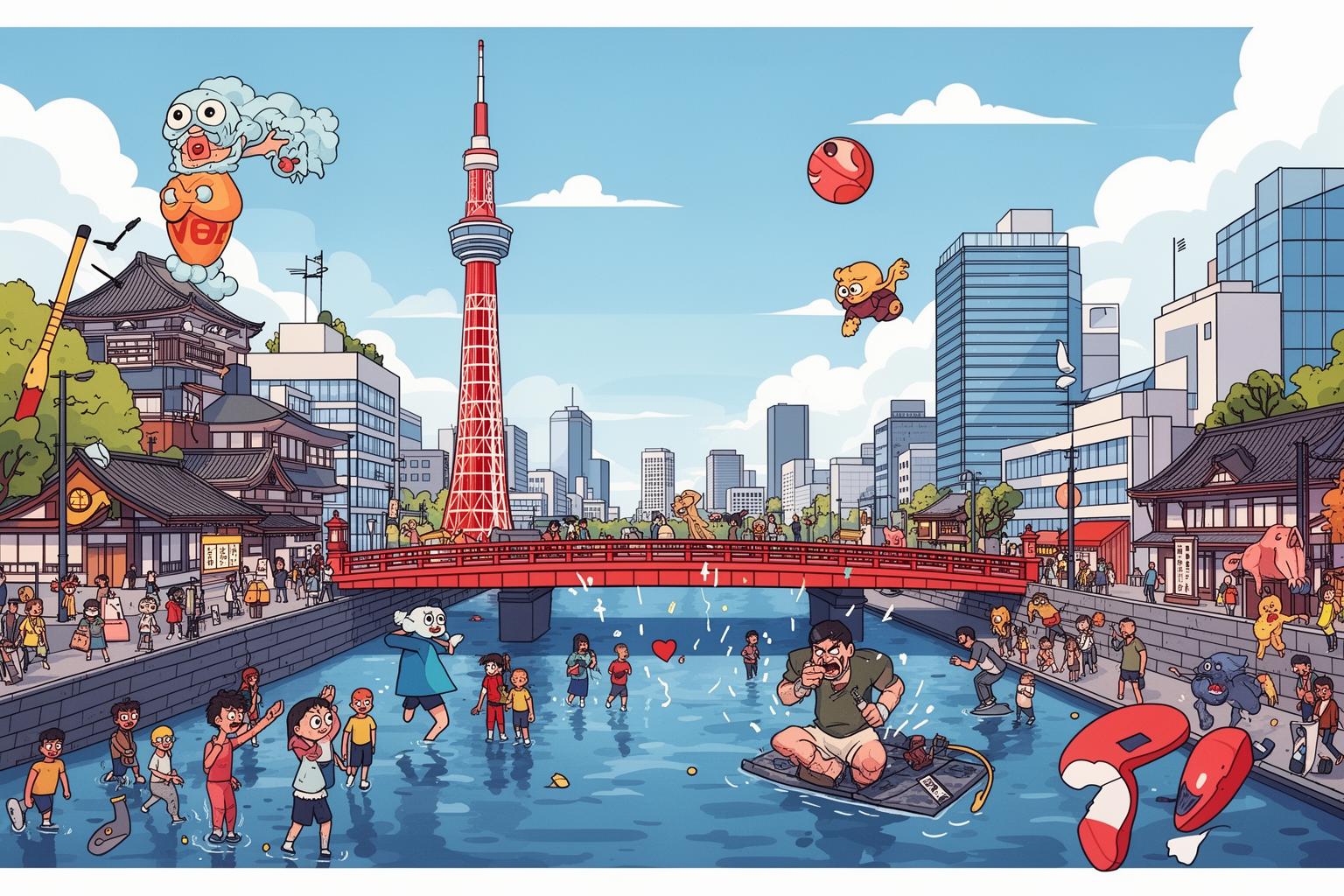
Certainly, there are two sides to every coin. The same straightforwardness that can feel like a refreshing burst of honesty can also, at times, hit like a gut punch. For those unfamiliar with it, Osaka’s communication style may come across as abrasive, intrusive, and even downright rude. Learning to handle these moments is essential for surviving and thriving in the city without feeling perpetually under attack.
Crossing the Line from Frank to Abrasive
The boundary between charmingly direct and offensively blunt is often razor-thin, and Osakans sometimes seem to step right over it. This is especially true of the city’s well-known obachan (middle-aged and older women), who are often seen as an affectionate stereotype of Osaka’s character. An obachan might sit beside you on the train, glance at your bento, and say, “You shouldn’t eat so much fried food. It’s bad for your skin.” Or she might overhear you speaking Japanese and loudly correct your grammar in front of a dozen strangers. The intention is rarely malicious; it usually comes from a place of genuine, if misplaced, concern. It’s how they might speak to their own child or nephew. But for a foreigner, this unsolicited, public criticism of your choices can feel highly personal and embarrassing.
In business settings, this abrasiveness can be equally startling. While direct feedback can be efficient, a blunt “no” to a proposal you’ve spent weeks preparing can feel dismissive. During negotiations, an Osaka counterpart might openly laugh at your initial offer, a tactic that can feel unprofessional and insulting if you come from a more diplomatic business culture. The absence of sugar-coating can be harsh and requires developing emotional resilience to avoid taking it as a personal attack on your skills or intelligence.
The Misunderstanding of “Friendly”
The cliché that “Osaka people are friendly” needs a significant caveat. Their style of friendliness is not the quiet, reserved politeness of Kyoto or the efficient, professional helpfulness of Tokyo. Osaka friendliness is active, engaging, and sometimes intrusive. It’s a friendliness that demands your participation. A stranger at a ramen counter might not just ask where you’re from but follow up with questions about your job, salary, marital status, and your thoughts on the Hanshin Tigers baseball team—all before you’ve finished eating.
For someone from a more reserved culture, this may feel like an interrogation. The concept of personal space, both physical and conversational, is simply different here. People stand closer, speak louder, and ask more direct questions than in other parts of Japan. What an Osakan sees as being open and quickly building a connection can easily be misread by outsiders as nosiness or poor boundaries. It’s a classic case of cultural signals crossing wires. Their attempt at friendliness feels intrusive, while your effort to maintain personal space may seem cold or distant.
Navigating the Nuances: It’s Not a Free-for-All
Perhaps the biggest error a foreigner can make is assuming that Osaka’s directness means all Japanese social rules have been discarded. This is far from true. It’s not a free-for-all where anything goes. The complex network of Japanese social hierarchy—respect for elders, the senpai (senior) and kohai (junior) distinctions, and the formalities in client relationships—still very much applies in Osaka. The rules are simply expressed with a different style.
You might share jokes and make blunt remarks with your boss at an after-work drinking party, but formal language (keigo) is still required at the business meeting the next morning. You can banter with the local shopkeeper, but that tone won’t fly with a new, high-value business partner. The challenge is that the usual buffer of universal politeness is missing. You need to read the context—the situation, the relationship, and unspoken cues—with much greater precision. In Tokyo, politeness is almost always the safest choice. In Osaka, too much politeness can create distance. Yet being too blunt can cause real offense. For foreigners, learning to gauge the appropriate level of frankness for each situation is one of the toughest and most vital skills to develop.
A Practical Guide for Foreign Residents
So, how do you adjust? How do you shift from being a puzzled onlooker to an engaged participant in Osaka’s dynamic conversational culture? It’s not about changing who you are, but about expanding your communication toolkit. It involves learning to listen differently, respond creatively, and grasp the meaning behind the sometimes-harsh words.
How to “Read the Air” in Osaka
Although the phrase “read the air” (kuuki wo yomu) is well-known throughout Japan, the atmosphere in Osaka feels different. The cues are louder and more apparent. First, pay attention more to tone of voice than to the exact words. A sharp critique delivered with a twinkle in the eyes and a slight smile is almost always a joke or friendly teasing. The same words, said with a flat, serious expression, carry genuine intent. Osakans are also much more expressive physically—they use more gestures, their faces show more emotion, and their laughter is louder. Notice this non-verbal channel; it offers a wealth of context.
Importantly, you must learn to recognize humor’s role as a social lubricant and a way to diffuse tension. If a conversation turns a bit tense or a comment feels sharp, watch for the follow-up laugh or playful nudge. This usually signals that everything is all right, that the comment stayed within Osaka-style interaction and wasn’t meant as a real attack. Recognizing the humor means seeing the humanity behind the straightforwardness.
How to Respond and Thrive
Above all, build a thicker skin. Most blunt remarks you hear aren’t intended as personal insults. Try to meet them with grace or humor rather than taking them too seriously. When an obachan criticizes your Japanese, smile and reply, “I know! I sound like a samurai, don’t I?” Acknowledging the comment and turning it into a shared joke instantly eases the mood and can even make a friend.
Don’t hesitate to banter back. If a friend mocks your shirt, have a witty comeback ready. “I wore it so I wouldn’t get lost!” or “It’s not as loud as your voice!” This playful back-and-forth is the local language of friendship. Polite silence can be misunderstood as coldness or, worse, as not getting the joke. Joining in shows you understand the rules of the game.
Lastly, be a bit more direct yourself, especially in everyday situations. When you want something, ask clearly. When you have an opinion, express it (respectfully, of course). In many cases, Osakans appreciate this honesty. They’d rather know what you truly think than guess. This isn’t about being rude; it’s about being open and sincere. It shows you trust the other person enough to be straightforward.
The Tokyo Comparison: A Final Word
In the end, the difference boils down to a basic philosophy of social interaction. Tokyo’s communication focuses on wa (和), or group harmony, aiming for smooth, conflict-free interactions that avoid making anyone uncomfortable. It’s a system built to reduce friction in a densely populated, highly structured society. Osaka’s style, shaped by a competitive business environment, values efficiency and genuine expression. The aim is to understand one another quickly and honestly, even if it stirs a bit of friction. The belief is that relationships grounded in frankness, though sometimes rough, are stronger and more authentic.
Neither approach is inherently superior. They are simply distinct ways to solve the challenge of how people coexist and collaborate. Your personal preference will likely influence which city feels like home. If you prefer smooth, predictable, harmonious social exchanges, Tokyo might suit you better. If you favor clarity over comfort and enjoy lively, direct, and humorous interaction, then Osaka could be your place.
Living in Osaka is an ongoing lesson in communication. It teaches you to hear the laughter behind a critique, discover the affection in a tease, and appreciate the straightforwardness that tells you exactly where you stand. The city’s voice isn’t always gentle; it can be loud, blunt, and occasionally out of tune. But it’s never dull. Osaka speaks its mind and, in doing so, invites you to find your own voice. Once you tune into its unique rhythm, you realize the directness isn’t a strike—it’s an invitation to a more honest, vibrant, and deeply human conversation.