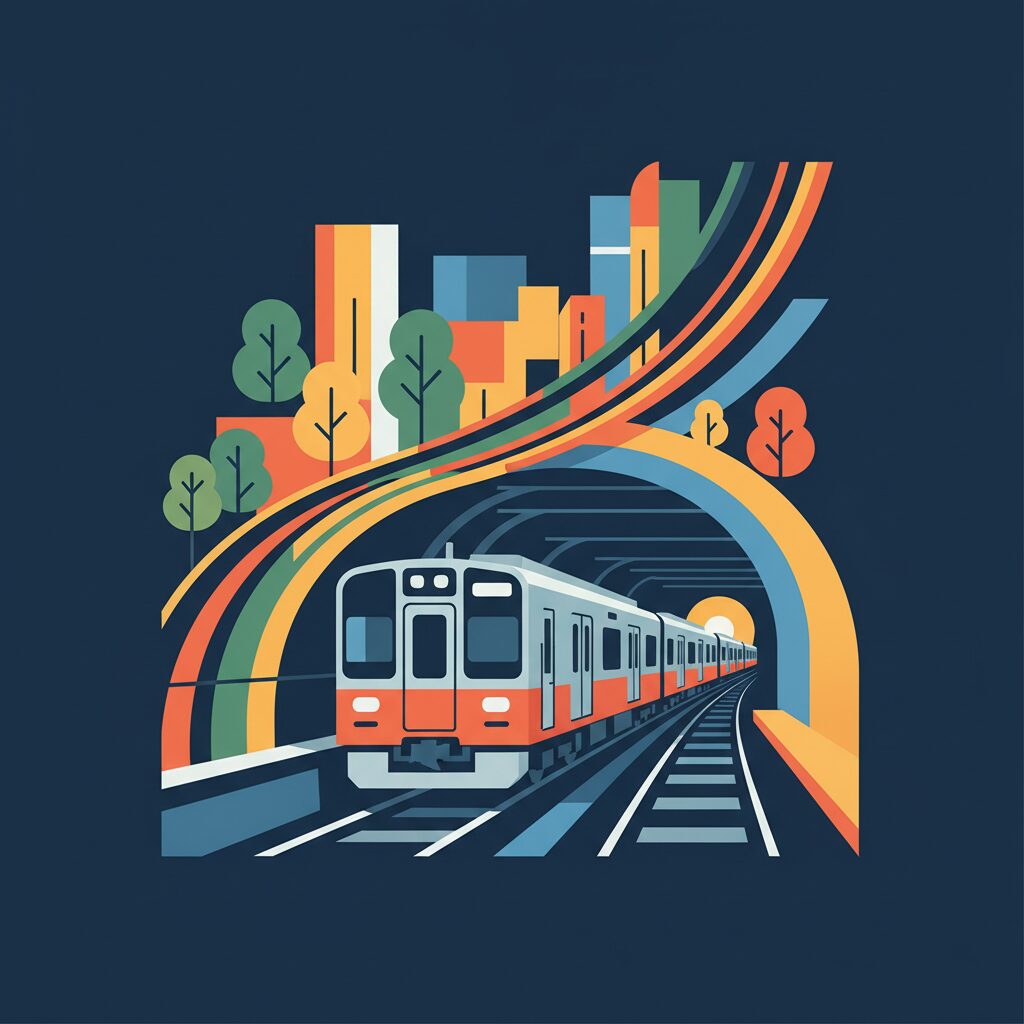
There’s a moment when you think you’ve finally cracked the code to life in Japan. You’ve mastered the convenience store purchase, you can separate your trash with your eyes closed, and you bow at the perfect, non-committal angle. Then, you step onto the Midosuji Line during the morning rush, and you realize you don’t know anything at all. This isn’t just a subway line; it’s the crimson artery of Osaka, a high-speed, high-density river of humanity that pumps life from the business hub of Umeda in the north to the electric chaos of Namba in the south. Riding it daily is a masterclass in the city’s true character, a rolling theater where the unwritten rules of Osaka play out in real time. It’s a world away from the silent, almost reverent efficiency of Tokyo’s Yamanote Line. Here, the order feels more organic, more human, and infinitely more complicated. To understand the Midosuji Line is to understand the rhythm, the pragmatism, and the beating heart of the Osakan people. It’s where you learn that this city doesn’t just move; it shuffles, it pulses, and it talks to itself.
Osaka’s dynamic energy is further exemplified by innovative ventures such as the Hyatt ‘Caption’ brand debut in Namba, inviting a fresh wave of travelers to experience the city’s evolving allure.
The Morning Rush: A Symphony of Organized Chaos
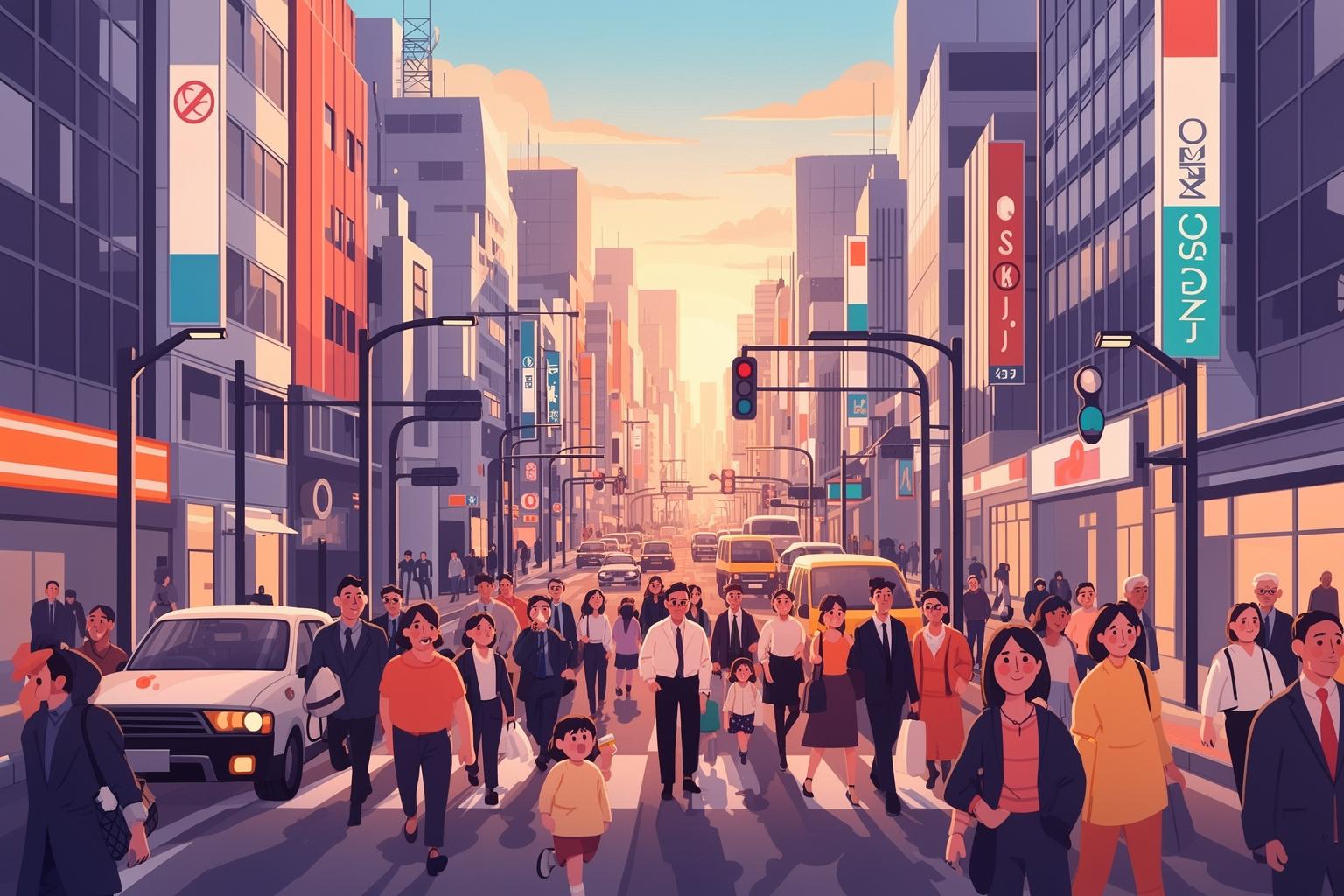
The daily commute is a ritual, but in Osaka, it resembles a full-contact sport performed with an unexpected elegance. At 8:15 AM, the doors at Umeda Station slide open, and what follows is far from the grim, silent crush often described in Tokyo. It’s an entirely different experience, governed by a logic unique to this city.
The Umeda Crush vs. The Tokyo Squeeze
In Tokyo, boarding a crowded train feels like merging into a single, silent organism. People turn sideways, hold their breath, and let the crowd’s pressure push them inside, often aided by the well-known white-gloved station attendants, the oshiya. It’s a systematic, almost impersonal routine. The Midosuji Line has no oshiya. There’s no external force maximizing capacity. Instead, the process is self-managed—a fluid negotiation of space that feels distinctly Osakan. The push here isn’t a steady, anonymous pressure but rather a succession of calculated, individual maneuvers. People don’t just shove; they find a way through. You’ll hear a sharp, unapologetic “Sumimasen, orimasu!” (Excuse me, getting off!) from deep inside the car, and suddenly a path will open like the Red Sea. The boarding passenger doesn’t simply wait to be squeezed in; they spot a narrow gap, make eye contact with no one in particular, and shimmy in with a small, apologetic nod. It’s a system based on the idea that everyone is in a rush, everyone has a destination, and the best way to get there is to cooperate efficiently but individually. It’s organized chaos—a beautiful mess that somehow works remarkably well. This faith in individual initiative and direct communication instead of a top-down approach captures Osaka in a nutshell.
The Soundscape of the Commute
A Tokyo train during rush hour is often eerily silent. The quiet is a solemn pact, broken only by automated station announcements. The Midosuji Line, however, has a heartbeat—an audible soundtrack. It’s not loud or disruptive, but the vow of absolute silence is less rigidly upheld. You’ll hear high school students whispering about a test, two colleagues quietly confirming a meeting, or an elderly woman sharing candy with a friend. This isn’t considered poor manners; it’s just life unfolding. The social barriers between strangers here are lower, more permeable. Although no one shouts into their phone, the gentle murmur of human interaction provides a constant background. It reflects a culture that’s less formal, more communal, and comfortable with the casual intermingling of public life. This ambient noise, combined with the iconic jingles that announce each station—a distinct cheerful tune for every stop—weaves into the fabric of your daily routine. You begin to associate the upbeat melody of Shinsaibashi with weekend plans, and the slightly more dignified tune of Yodoyabashi with the workweek. The sound of the Midosuji isn’t mere noise; it’s the city’s daily rhythm made audible.
Reading the Room: Unspoken Rules of the Red Line
Like any intricate social ecosystem, the Midosuji Line functions within a closely knit web of unspoken norms. Mastering these is essential for a smooth commute and a deeper insight into the local mindset. These guidelines go beyond mere politeness; they are about navigating a shared environment with maximum efficiency and minimal tension.
Personal Space is a Luxury, Not a Right
The idea of a personal bubble is the first to disappear during the morning rush. You will find yourself pressed shoulder-to-shoulder, back-to-back with numerous strangers. The skill lies in managing this closeness. The cardinal rule is to minimize your physical footprint. Backpacks aren’t worn on your back; they are swung to the front and held like a baby or placed on the overhead rack. Tote bags are gripped tightly at your side, not allowed to swing freely. The aim is to make yourself as compact as possible. Eye contact is typically avoided, not out of rudeness, but to grant others a sliver of psychological privacy when physical space is unavailable. You fix your gaze on your phone, a spot on the ceiling, or the map above the doors. It’s a delicate dance of mutual respect, a silent agreement to act as if each passenger is alone together. This practicality is central to the Osaka spirit: accepting the situation as it is, and adopting the most sensible approach to tolerate it comfortably.
The Seating Hierarchy and the “Yuzuriai” Spirit
Priority seats, or yusen-seki, are found on all Japanese trains, reserved for the elderly, pregnant, injured, or those with small children. In many areas of Japan, this is observed with quiet courtesy. Seats might remain empty even if the train is crowded, and a young person will typically stand if someone in need boards. In Osaka, the spirit of yuzuriai, or mutual concession, is a bit more forward. An obachan (a familiar term for an older woman) may not wait for you to notice her; she might give you a pointed look or a direct, though gentle, “Koko, eehin?” (Is this spot okay?). Similarly, offering a seat tends to be more direct. Instead of silently standing up and walking off, someone might catch your eye and gesture warmly with “Dozo” (Please, go ahead). It’s less about subtle social pressure and more about straightforward, efficient communication. The aim is the same—making sure the seat goes to those who need it—but the approach is distinctly Osakan: clear, quick, and human.
The Great Phone Debate: Calls, Games, and Etiquette
The ban on phone calls on trains is strict throughout Japan, and Osaka is no different. This is a sacred rule in public transportation. However, how it’s enforced varies. In Tokyo, breaking the rule might draw silent, icy glares from fellow passengers. In Osaka, reactions are often more immediate and audible. You might hear an exaggerated sigh from the person next to you, a sharp “tsk,” or even a low, direct complaint. It’s not necessarily hostile but unmistakably clear. The community polices its own space with a bluntness that may surprise newcomers. Beyond calls, phones are commuters’ constant companions. Everyone is absorbed in their screens—reading news, scrolling social media, or playing games. The key is that sound is always, without exception, muted. The image of an entire train car silently tapping and swiping is emblematic of the modern Japanese commute. It’s a private escape within a public setting, a shared ritual of quiet distraction.
The Line’s Personality: How Each Station Changes the Vibe
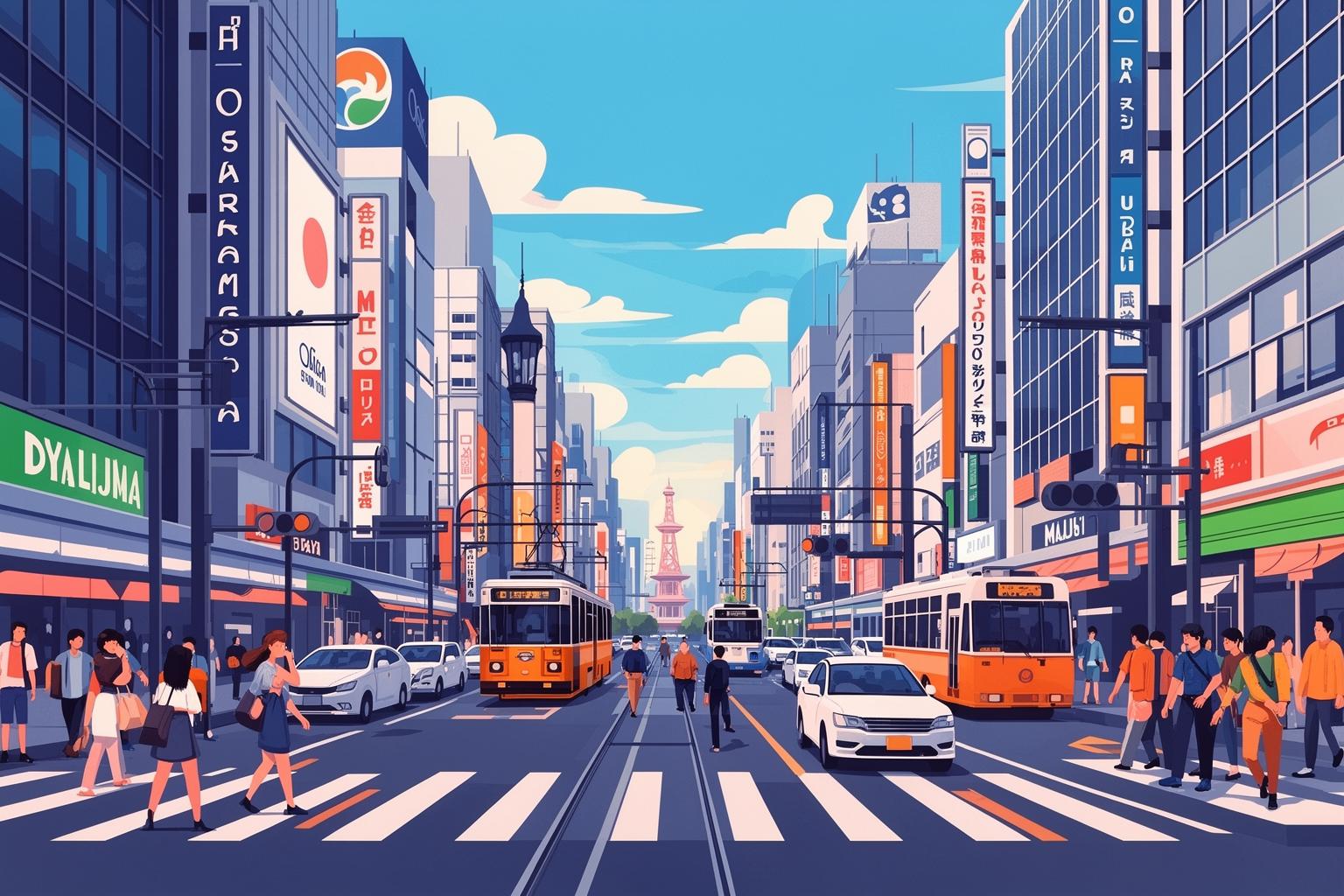
The Midosuji Line is far from a uniform entity; it consists of a series of distinct neighborhoods, and as the train moves along its north-south route, the atmosphere inside the cars changes noticeably. The passengers boarding and departing act as a living barometer of the city’s rich diversity, altering the energy, fashion, and mood with each stop.
The North: Shin-Osaka to Umeda – The Business Corridor
Beginning at Shin-Osaka, the entry point for the Shinkansen bullet train, the Midosuji Line feels most formal. The cars are occupied by travelers with rolling suitcases and business professionals clad in dark suits, their expressions determined. This stretch connects the city to the rest of Japan. Upon arriving at Umeda, the city’s corporate hub, the concentration of suits peaks. The atmosphere is brisk, focused, and somewhat tense. Conversations are hushed, movements efficient, and a serious business tone pervades. Here, commuters head to the gleaming office towers and expansive department stores that define Kita (North Osaka). This segment of the line feels the most “Tokyo-like,” embodying a world of deadlines, meetings, and economic ambition. You sense the city’s commercial engine running at full throttle.
The Center: Yodoyabashi to Shinsaibashi – The Commercial Heart
Leaving Umeda, the mood starts to evolve. Yodoyabashi and Honmachi remain business-centric with city hall and corporate headquarters, but a more relaxed, creative vibe begins to emerge. By the time the train reaches Shinsaibashi, the transition is complete. Suits give way to carefully styled shoppers, university students sporting the latest streetwear, and tourists eager to explore the city’s most famous shopping arcade. The air inside the train grows lighter and more expectant. As an influencer, this is where my camera roll fills rapidly. The variety of fashion is stunning—from avant-garde local designers to international luxury labels. The train becomes a moving runway, previewing the trends flourishing on the streets above. The soft murmur of conversations grows louder, interspersed with laughter and excited chatter about the best takoyaki spots or the newest sneaker releases. This is Osaka’s vibrant, consumer-driven core on full display.
The South: Namba to Tennoji – The Entertainment Hub
If Umeda represents the city’s brain, Namba is its wild, throbbing heart. When the train doors open at Namba station, a surge of unrestrained energy floods the cars. This is the epicenter of Osaka’s entertainment district—a dizzying labyrinth of theaters, restaurants, bars, and pachinko parlors. Passengers form a joyful mix: tourists consulting maps, young people heading out for the evening, comedy enthusiasts bound for the Namba Grand Kagetsu theater, and locals embodying the loud, humorous, and straightforward spirit characteristic of Osaka. The thick, rhythmic Kansai dialect, Osaka-ben, is heard in full force. The formality of the northern stops vanishes entirely. The energy here is raw, convivial, and unapologetically vibrant. Moving further south to Tennoji, the atmosphere shifts once again. Tennoji stands as a fascinating crossroads where old and new Osaka meet. Families head to Tennoji Zoo, fashionable shoppers flock to the soaring Abeno Harukas skyscraper, and elderly residents from the nearby, charmingly retro Shinsekai district ride along. The train becomes a melting pot of the city’s history and future—a perfect reflection of South Osaka’s dynamic and ever-evolving character.
Osakan Logic on the Rails: Why It Works This Way
The behaviors you notice on the Midosuji Line aren’t random; they directly reflect the fundamental Osakan mindset. Grasping the reasons behind the apparent chaos and bluntness is essential to truly appreciate what sets this city apart from Tokyo and other regions of Japan.
Pragmatism Over Polish
Osaka was founded on commerce. At its core, it’s a merchant city, and this history has shaped a culture that values results and efficiency over strict formality. This is clearly seen in subway etiquette. Take lining up on the platform, for example. While queues do form, they tend to be less rigid and more fluid than in Tokyo. Spaces are filled immediately. When the train arrives, the focus isn’t on maintaining a perfectly straight line but on the shared goal of boarding and disembarking as quickly as possible. The system operates on a collective, unspoken pragmatism: people exit first, then the available space is filled. It might appear less orderly or “polished” to an outsider, but it works at remarkable speed. This is Osaka’s famed practicality in action. The aim is to get things done efficiently; the process doesn’t have to look neat as long as it’s effective.
The Human Element is Always On
A major cultural difference between the Kanto (Tokyo) and Kansai (Osaka) regions lies in their approach to public interaction. Tokyo often emphasizes maintaining a harmonious and non-intrusive public environment. In contrast, Osaka’s human element is constantly present and frequently celebrated. If you drop your wallet on a Midosuji Line train, it’s unlikely to go unnoticed. More likely, multiple people will see it, and you’ll hear a chorus of “Ochihanse! Ochita de!” (You dropped this!). A tourist confused by the subway map won’t remain lost for long before an older gentleman offers unsolicited but genuinely helpful directions, possibly along with a piece of candy. This goes beyond mere friendliness—it reflects a culture where the boundary between public and private is more relaxed. People engage actively with their surroundings and fellow passengers. Osaka is a city that interacts with itself, and the subway is the perfect stage for this everyday performance.
Misunderstandings and First Impressions
For foreigners, especially those used to Kanto region customs, Osaka’s directness can come as a culture shock. It may be easily mistaken for rudeness or hostility. The woman who points out you’re sitting in a priority seat isn’t trying to embarrass you; she’s simply stating a fact to resolve the situation efficiently. The man speaking a bit louder isn’t angry—that’s just his normal tone. The key is to understand that this culture values clarity and efficiency over indirect communication. Less time is spent on subtext, more on getting straight to the point. Once you grasp this, you realize it’s not hostility but a different kind of social harmony—one based on straightforwardness rather than silence. You always know where you stand, which in a crowded, fast-paced city, offers a certain reassurance.
The Women-Only Car: A Moving Sanctuary
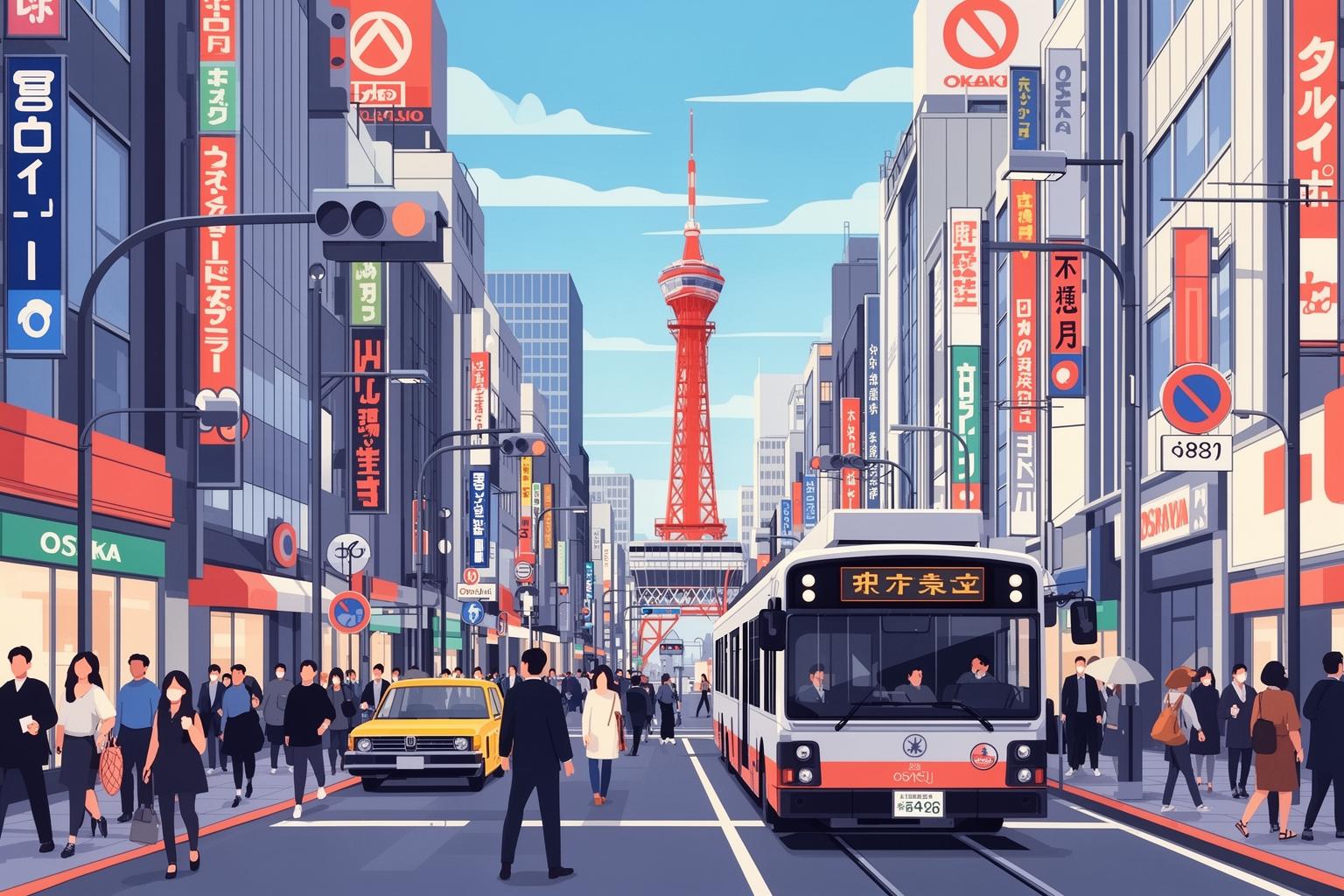
Amid the rush and crush, a distinct space emerges on the Midosuji Line during the busiest times of the day. Identified by bold pink signage on both the platform and the train, the josei senyo sharyo, or women-only car, is a compelling and essential feature of the commuting experience.
What It Is and Why It Matters
Introduced during weekday morning and evening rush hours, the women-only car was established as a direct response to the ongoing issue of chikan, or public groping—a serious problem on crowded public transportation across Japan. Although not exclusive to Osaka, its presence on the city’s main line is a daily acknowledgment of the need for a secure environment. It serves as a practical solution to a troubling reality. For many women, both Japanese and foreign, choosing this car is about more than comfort—it’s about safety. It enables them to endure the inevitable physical closeness of rush hour without the added stress and vulnerability they might experience in a mixed-gender car. Typically located at the very front or back of the train, the car’s rules are straightforward: during designated hours, only women, elementary school-aged children, and passengers with disabilities and their caregivers may board.
The Vibe Inside
Entering the women-only car from a crowded, mixed-gender car feels like stepping into another world. The atmosphere shifts. The underlying tension, often unnoticed until it disappears, melts away. There is an immediate, visible relaxation in the posture of the women around you—shoulders slump, defenses lower. The environment is noticeably calmer and quieter. Though still busy, the nature of physical contact changes—it lacks the potential threat present elsewhere. There is a shared, unspoken solidarity, an understanding of why this space exists, and a collective appreciation for it. It offers a revealing glimpse into an aspect of daily life for women in Japan and serves as a poignant reminder of the social issues that persist beneath the surface of this remarkably safe country. For any woman commuting in Osaka, knowing this option is available can be a great comfort.
After the Last Train: The End of the Line
The Midosuji Line is the lifeblood of the city, but it is not endless. As midnight nears, the city’s rhythm shifts, building toward a final, frenetic climax centered on one crucial event: catching the shuden, the last train of the night.
The “Shuden” Dash
The last thirty minutes before the final train departs from Umeda or Namba turn into a spectacle of controlled chaos. The atmosphere is a unique blend of alcohol-fueled cheer and genuine anxiety. Groups of salarymen, ties loosened, launch into unexpectedly coordinated sprints for the station gates. Friends exchange rushed, slurred farewells on the platform. Young couples hold hands as they briskly descend long stairways. Station announcements grow more urgent, reminding passengers this is the final departure. Missing the shuden is a common but costly error, and the collective rush to avoid it is a universal ritual of urban life in Japan. On the last train itself, the mood is a curious mix of exhausted relief and lingering celebration. The cars are filled with flushed faces of those who barely made it, accompanied by the quiet camaraderie of fellow travelers heading home after a long day—or night.
When the Red Artery Sleeps
Then, it’s over. The final train reaches its last stop, the lights dim, and the gates of the Midosuji Line stations are shut and locked. In that moment, the city’s central nervous system goes dark for the night. The sudden silence at a place like Umeda or Namba station, typically a whirlwind of noise and movement, is striking. Being on the streets after the shuden has departed reveals a different side of Osaka. The options for getting home shrink sharply: either a long, sobering walk or a costly taxi ride. This nightly shutdown underscores how deeply the Midosuji Line shapes the lives and routines of everyone in the city. It dictates when parties end, when business dinners must conclude, and when the city’s vibrant energy finally yields to a few precious hours of rest. The red line is more than just steel and electricity: it is the metronome setting the tempo for millions of lives, and when it rests, Osaka holds its breath, waiting for the rhythm to resume at dawn.