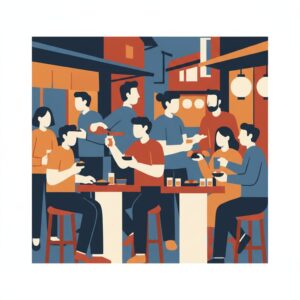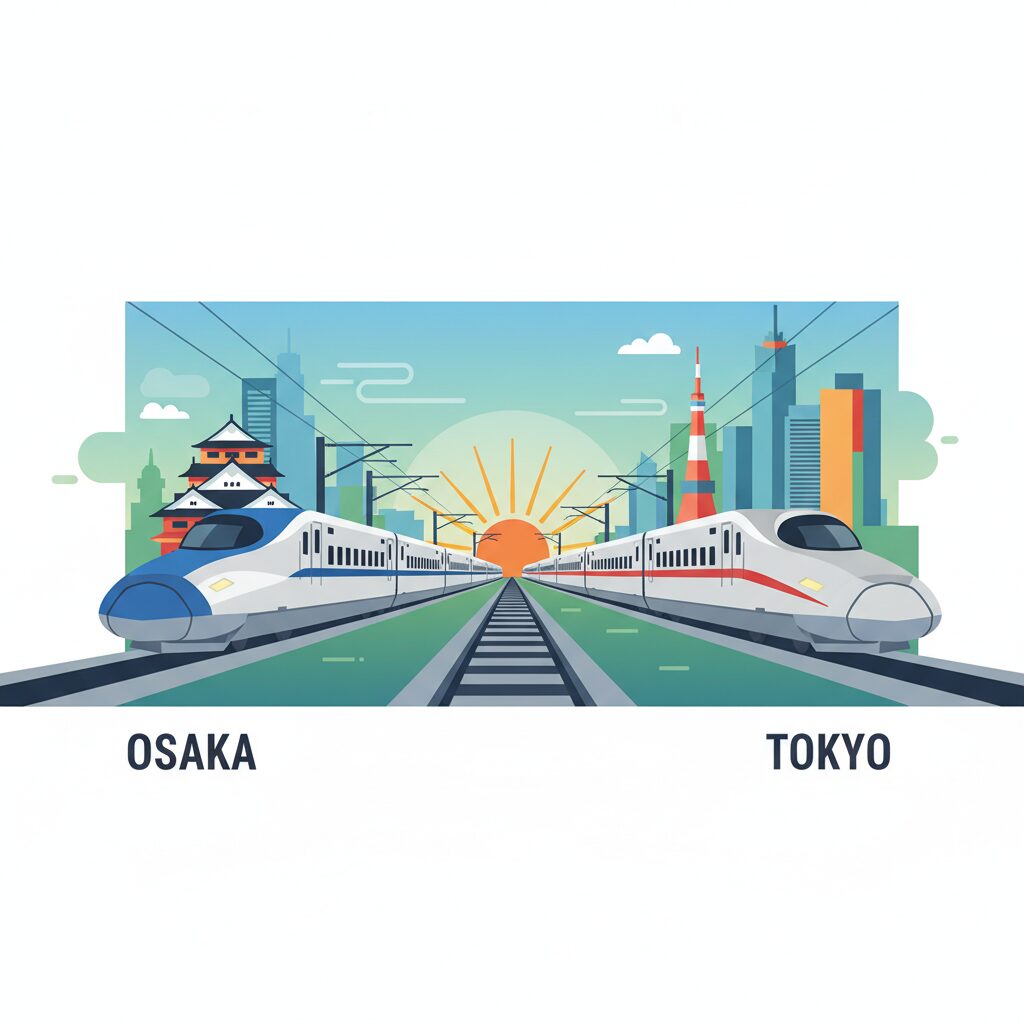
Step onto a train in Japan, and you’re stepping into a mobile microcosm of the city itself. The squeal of the wheels on the track, the rhythmic clatter of the connections, the hushed announcements—it’s all part of a daily ballet performed by millions. But the choreography, the unspoken rules, the very soul of this dance changes dramatically from one city to the next. For anyone who has split their time between Japan’s two urban titans, the contrast is as stark as night and day. And nowhere is this more apparent than on the main arteries of their respective transit systems: Osaka’s vibrant, crimson Midosuji Line and Tokyo’s iconic, green Yamanote Line. On the surface, they are both just trains, metal tubes hurtling people from one point to another. But spend a week commuting on each, and you’ll realize you’re not just traveling through different stations; you’re traveling through different cultures, different mindsets, different ways of being.
This isn’t a guide about how to buy a ticket or which exit to use. This is a deep dive into the human current that flows through these steel veins. It’s an exploration of the subtle etiquette, the ambient noise, the personal space negotiations, and the collective mood that defines a commute in Osaka versus one in Tokyo. Why does a packed car on the Yamanote Line feel like a silent library, while a similarly crowded car on the Midosuji Line hums with a low, electric murmur? What do the different ways people queue, claim a seat, or handle a ringing phone tell us about the fundamental character of each city? For foreigners trying to decode the complex social fabric of Japan, the daily commute is the ultimate Rosetta Stone. And for those of us navigating life in Osaka, understanding our beloved Midosuji Line is key to understanding the heart of the city itself—a heart that beats with a rhythm all its own, pragmatic, a little bit louder, and unapologetically human.
To truly grasp this unique rhythm, it helps to understand how Osaka’s soul flows through its rivers.
The Morning Rush: A Tale of Two Silences
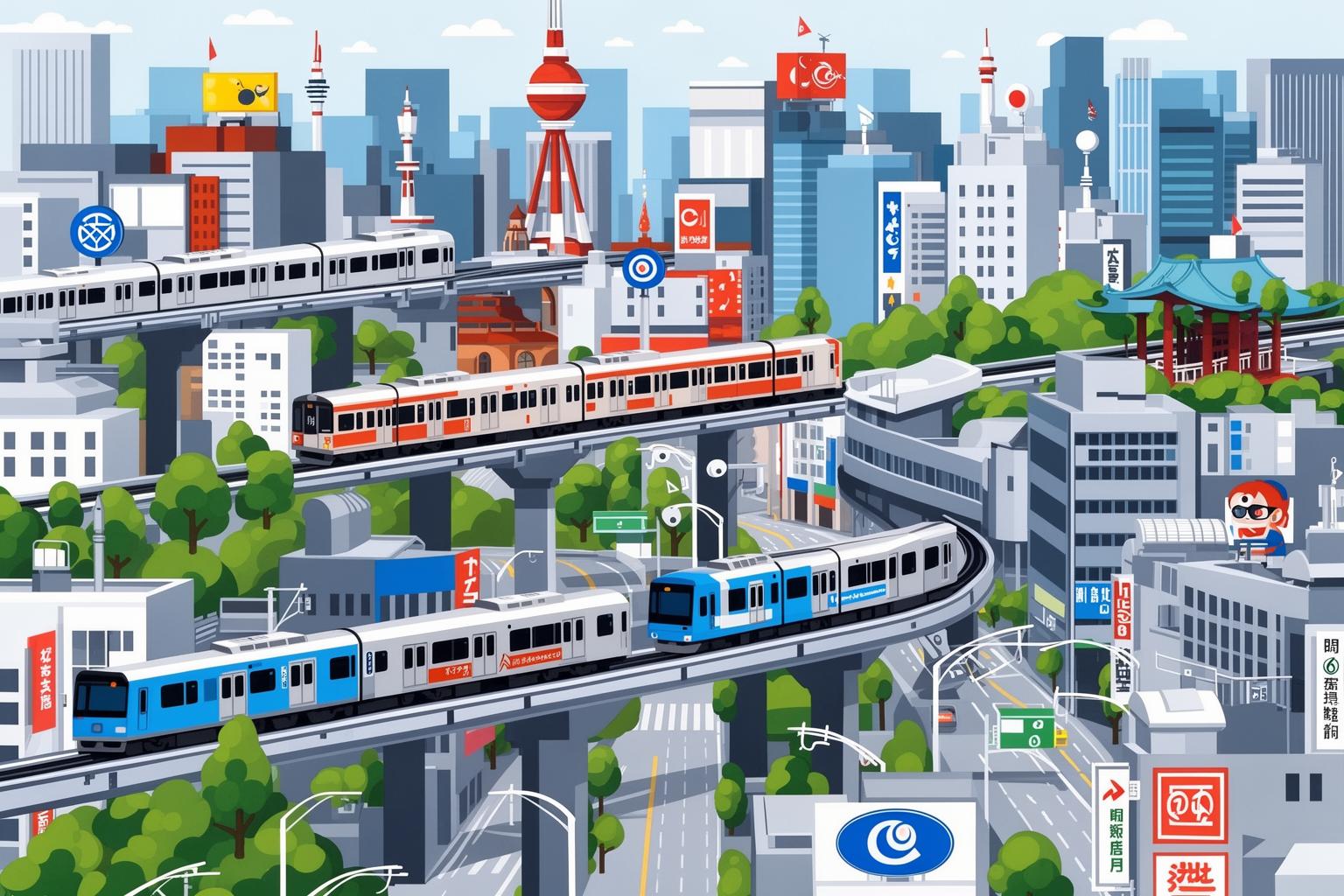
The 7:45 AM rush hour is a formidable challenge in any major city. It’s a tidal wave of humanity, a daily migration that pushes both infrastructure and personal patience to their limits. Yet, being caught up in this flow feels remarkably different when you’re standing on the platform at Shinjuku Station compared to waiting at Umeda. Both are overwhelmingly crowded, but the nature of that crowd—the sounds, the spirit—reveals everything you need to know about the city you’re in.
Tokyo’s Yamanote Line: The Silent Symphony
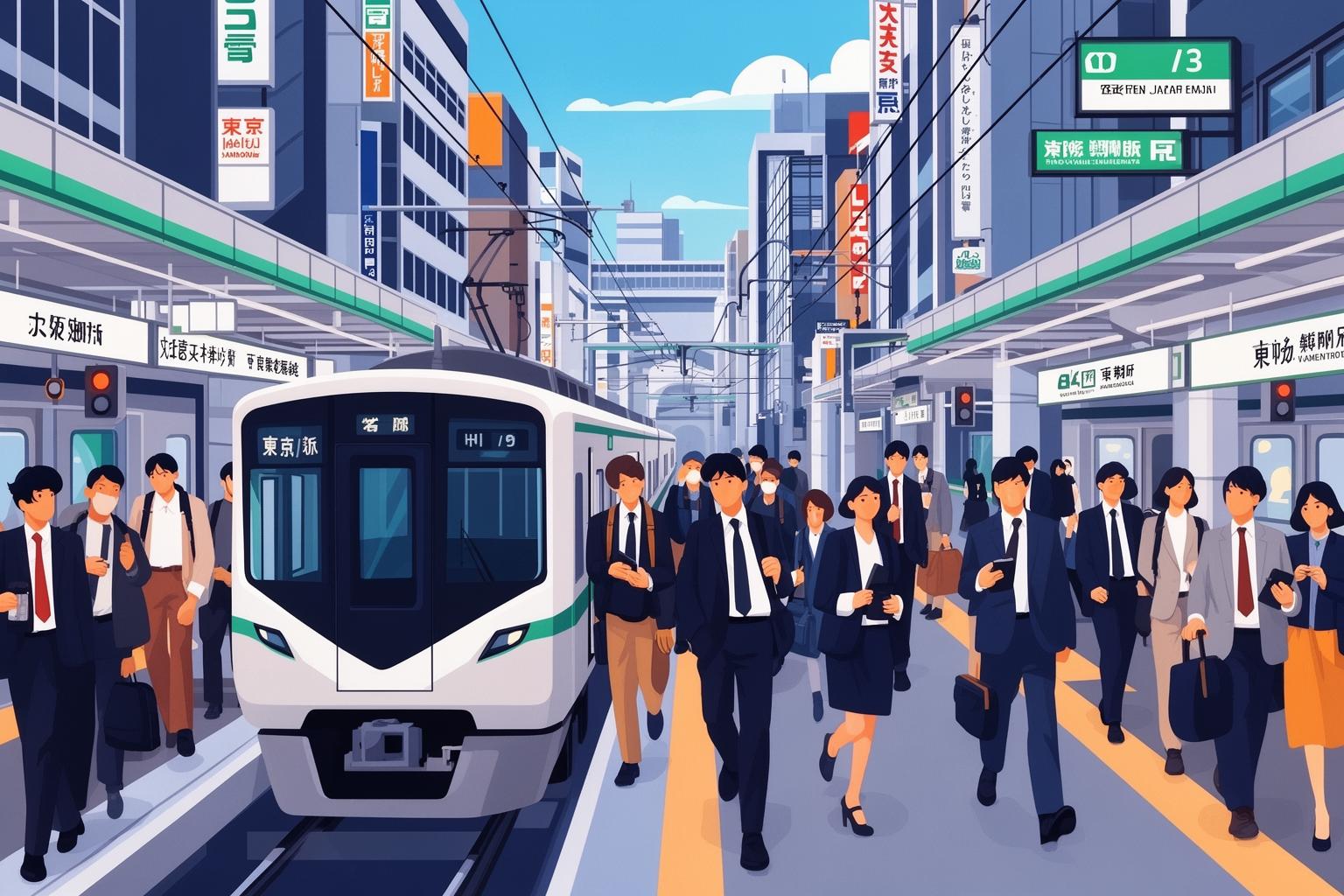
Riding the Yamanote Line during the morning rush means taking part in a masterpiece of collective social discipline. As the train arrives, its doors open to reveal a wall of people, a human mosaic arranged with near-geometric precision. Boarding happens as a quiet, orderly shuffle—no pushing, just a steady, unified pressure that carries you inside. Once aboard, an unspoken agreement kicks in immediately. The world outside—the bustling city, daily worries, personal dramas—ceases to exist. A deep silence falls, so thick you can almost feel it. This isn’t empty silence; it’s silence charged with intention.
Look around the car—each passenger is a portrait of controlled anonymity. Eyes are averted, fixed on smartphones as thumbs scroll through news or tap out messages in silence. Others are absorbed in paperback novels hidden discreetly, while most simply close their eyes, swaying gently with the train in a state of semi-meditation. The aim is to minimize one’s presence, to shrink oneself and lessen the burden on others. Physical contact—a stranger’s shoulder brushing yours—is unavoidable but emotionless, a neutral fact of physics. No one speaks. Coughs are muffled into elbows; sneezes are quiet, apologetic hisses. This isn’t the uneasy silence of strangers in an elevator; it’s a shared, collaborative pact. It’s the sound of thousands agreeing to gift each other peace amid chaos. This is Tokyo’s wa, or group harmony, distilled to its purest form. Individual comfort is secondary to the seamless functioning of the group. Speaking imposes your world on others; in such a tight space, that’s the ultimate violation.
Osaka’s Midosuji Line: The Murmur of Life
Now imagine yourself at Umeda Station, boarding a southbound Midosuji Line train toward Namba. The crowd’s density is just as intense, packed shoulder to shoulder with fellow commuters. But the atmosphere instantly feels different. The silence is gone, replaced by a low, ambient murmur. It’s the gentle hum of a city that refuses to be muted. You might spot two friends—high schoolers or office colleagues—leaning close, sharing stories from the night before in hushed but lively whispers. A soft laugh might ripple from a corner of the car. The blanket of anonymity that envelops the Yamanote Line is thinner here, more permeable.
People’s gazes are less rigidly fixed. While phones remain common, more passengers look up, observing their surroundings and fellow travelers. Accidental eye contact happens more often, and instead of quickly looking away, it might be met with a slight nod or neutral expression acknowledging your presence. The personal bubble so fiercely guarded in Tokyo is a bit more flexible here. The social contract on the Midosuji Line isn’t about absolute silence; it’s about being considerate. The unspoken rule isn’t “don’t speak,” but “don’t be a nuisance.” A loud conversation that everyone hears? That’s a nuisance. A booming phone call? Absolutely unacceptable. But a quiet, contained chat with the person next to you? That’s simply life. That’s two people connecting. The Osakan mindset is pragmatic: the train is public space, and life—with its sounds and interactions—doesn’t have to pause for the twenty-minute ride across the city. Tokyo’s silence is a preventative measure; Osaka’s relative quiet reflects a more relaxed, case-by-case judgment of what counts as disturbance. It’s a city that breathes, even during its morning commute.
Navigating the Space: Boarding, Seating, and Personal Bubbles
Beyond the soundscape, the physical negotiation of space on the train uncovers another layer of cultural difference. The simple acts of boarding the train, finding a seat, and managing belongings are carried out with distinct local nuances. These subtle choreographies govern the flow of the commute and reveal much about each city’s priorities.
The Art of the Queue
On any Japanese train platform, painted lines indicate where doors will open and where passengers should wait. How these lines are respected offers a fascinating contrast. In Tokyo, these markings are treated as sacred. Passengers on the Yamanote Line platform form immaculate, perfectly parallel lines, often two rows deep. They stand patiently, creating a clear path for those disembarking. Not a single person moves forward until the last passenger has exited. This routine is a testament to order and efficiency—a flawless algorithm executed daily by millions. It’s striking in its precision, a silent agreement that the system functions best when everyone strictly adheres to the rules.
In Osaka, the lines on the Midosuji Line platform serve more as… strong suggestions. People do queue, certainly—there’s no chaotic rush to board. Yet the formation is looser, more organic. The lines might bulge slightly, carrying a restless energy. As the train arrives and doors open, a subtle forward movement begins. Passengers start to shuffle toward the entrance while a few are still getting off. It’s not an aggressive push but a shared, unspoken eagerness to keep things moving. This mindset isn’t one of rule-breaking but practical impatience—“Okay, they’re almost off, let’s start boarding.” It reflects the Osakan sekkachi (hasty or impatient) character, often linked to the city’s merchant heritage. Time is money, and efficiency means moving from point A to point B with minimal fuss, even if it means bending the formal queuing rules slightly. Tokyo’s approach prizes perfect process; Osaka’s prioritizes the immediate goal.
The Battle for the Seat
Securing a seat on a crowded train is a prized achievement, and the strategies used reveal cultural nuances. In Tokyo, it’s a game of subtlety and peripheral awareness. A commuter on the Yamanote Line will notice someone preparing to leave a seat—gathering their belongings, putting their phone away—but won’t make direct eye contact. Instead, they’ll subtly adjust their position—a half-step here, a slight pivot there—to stand ready to claim the seat the instant it frees up. The movement is swift, silent, and carried out with plausible deniability, as if they just happened to be there. Being too obvious or staring down a seat is considered rude. It’s a quiet, strategic dance of spatial awareness.
On Osaka’s Midosuji Line, the approach is far more direct. There’s less pretense. If someone spots an open seat, their intention is clear. You might see an obachan (a colloquial term for a middle-aged or older woman) lock eyes on a vacant spot across the aisle and make a determined, unapologetic beeline for it. It’s neither aggressive nor rude by local standards; it’s transparent. The thought process is simple: “There’s a seat. I’m tired. I will sit.” This candor is quintessentially Osaka. Why waste time with subtle maneuvers when a direct route is available? It reflects a culture valuing straightforwardness over complex social choreography. There’s an honest lack of self-consciousness that can be refreshing. It’s not a stealthy battle but a clear declaration of intent.
The Backpack Conundrum and the Personal Space Negotiation
In the cramped environment of a crowded train, a backpack worn on the back becomes a significant nuisance. In Tokyo, this is a widely understood and observed piece of etiquette. As soon as a Yamanote Line car starts to fill, commuters synchronously swing their backpacks around to the front or lift them onto overhead racks. It’s an automatic, ingrained gesture of consideration, fundamental to the “minimize your footprint” philosophy. Keeping a backpack on in a crowded car is a major social faux pas, sure to attract silent, disapproving glances.
In Osaka, awareness of the “backpack issue” exists but is less consistently practiced. Many on the Midosuji Line will move their bags forward dutifully, but many others will forget or not view it as critical in the moment. As a result, you’re far more likely to be bumped by a stray backpack in Osaka. The reaction to this bump marks a key difference. In Tokyo, such contact is a silent violation, met with stiff body language and icy stares. In Osaka, the response is more immediate and vocal. The person who bumped you quickly turns around and says, “Ah, gomen!” or “Sumimasen!” (Sorry!), often with a sheepish grin. The person bumped off will likely give a small wave or nod, signaling “No problem.” The issue is resolved instantly and openly. This highlights a core distinction: Tokyo etiquette aims to prevent friction from arising, while Osaka etiquette focuses on resolving friction swiftly and humanely when it inevitably occurs.
The Soundscape of the Commute: Phones, Conversations, and Public Announcements
In Japan, the auditory environment inside a train car is a carefully controlled social space. Noise regulations, both explicit and implicit, are strictly observed. However, the way these rules are enforced socially highlights the differing priorities between Tokyo and Osaka.
Ringing Phones and Public Calls
Using a phone on a train—whether making or receiving a call—is considered a major public transport taboo in Japan, equivalent to littering in a temple. Tokyo and Osaka largely agree on this point. Signs in both cities clearly prohibit phone use on trains. Yet, the severity of the social stigma and reactions to breaches vary. On the Yamanote Line, even a phone ringing, including on vibrate mode, can create a wave of tension throughout the car. People turn their heads and narrow their eyes. If someone actually answers the call, the collective disapproval is palpable and overwhelming. It would be a moment of profound social embarrassment, a failure to maintain the cherished silence.
On the Midosuji Line, the rule is the same, but the judgmental atmosphere is less harsh. While answering a call remains a significant faux pas, it does occasionally happen. For instance, an older man, caught off guard by a sudden ring, might quietly whisper, “Moshi moshi! Ima densha no naka ya kara, ato de kakeru wa!” (Hello! I’m on the train right now, so I’ll call you back!). Others will notice, likely offering a mildly annoyed glance or a subtle shake of the head. However, the reaction feels more like individual mild irritation rather than a collective condemnation. The social pressure resembles a low rumble of discontent rather than a unified, intense glare. Such a breach is seen less as a rupture in social harmony and more as a moment of thoughtlessness by one person.
The Volume of Conversation
Here, the two lines diverge more distinctly. As noted, the Yamanote Line seeks near-total silence. Any conversation is a brief, urgent whisper, kept to an absolute minimum. The train functions as a practical space, not a social one. Meanwhile, on the Midosuji Line, the social role of the environment is not entirely erased. Osakans have mastered the art of public-private conversation—the skill of engaging in expressive, attentive dialogue at a volume audible to their companion but blending into the background noise for others. It’s a stage whisper taken to an art form.
Observe two women heading to shop in Shinsaibashi. They gesture, laugh, and respond animatedly to each other, yet their vocal volume remains remarkably controlled. They create an intimate bubble of sound that doesn’t intrude on the entire car. This talent arises from a culture that values communication and social connection but also recognizes public courtesy. They have found a balanced middle ground—being social without being antisocial. Such behavior would be nearly inconceivable on the Yamanote Line, where any sustained conversation, regardless of loudness, breaches the unspoken rules.
Station Announcements and In-Train Chatter
Even the official sounds on the trains carry different tones. In Tokyo, automated and conductor announcements are models of clarity and formality. The speech is crisp, in standard Japanese, delivered with a neutral, almost robotic tone. The purpose is straightforward information transfer, done with maximum efficiency. In Osaka, there is more warmth. While automated announcements remain standard, live announcements from drivers or conductors often feature the distinctive, melodic rhythm of the Kansai dialect. A human touch shines through. On some private railways connected to the Midosuji Line, this effect is even stronger. You might hear a conductor whose tone is relaxed and conversational when announcing the next stop. It’s a small detail, but it enhances the feeling that you are being transported by people, not just a faceless system.
Beyond the Rules: The Intangible Atmosphere
Some of the most striking differences between commuting in Osaka and Tokyo aren’t about specific etiquette rules but rather the overall atmosphere—the intangible feeling you get simply by being in the environment. This is influenced by everything from fashion choices to the chances of an unplanned interaction with a stranger.
Fashion and Self-Expression
People-watching on trains is a universal activity, and the sartorial scenes on the Yamanote and Midosuji lines tell two very different stories. A rush hour train in Tokyo is a sea of navy, black, and grey suits. The dominant style, even in casual wear, is one of carefully curated conformity. Trends are followed with precision, whether it’s the latest minimalist look from a popular brand or a thoughtfully assembled street-style outfit. The aim is to project an image of being polished, professional, and aligned with the capital’s prevailing fashion trends. Individuality is expressed within a narrow, well-defined range of acceptable styles.
Step onto the Midosuji Line, and the color palette immediately livens up. The neutrals are interrupted by vibrant bursts of color, bold patterns, and a generous dose of sparkle. Sure, business suits are common, but there’s also a bold embrace of more flamboyant styles. The infamous leopard print, a stereotype often associated with the Osaka obachan, is a vivid and celebrated reality. You’ll see more unique accessories, experimental silhouettes, and a stronger sense that people dress for themselves rather than for an imagined audience. The aesthetic is less about flawless polish and more about personal expression and genki (energetic) fun. It reflects a city less interested in subtle sophistication and more focused on showcasing personality and vitality.
Random Acts of Interaction
The ultimate measure of a city’s social vibe is the likelihood of spontaneous interactions between strangers. In Tokyo, that likelihood is extremely low. The invisible barriers between people on the Yamanote Line are thick and well reinforced. Everyone stays cocooned in their own world, and breaking that barrier without a compelling reason (like a medical emergency) is a serious social faux pas. The train is a sterile channel for moving people, not a place for human connection.
In Osaka, those barriers are much more permeable. While the Midosuji Line isn’t a nonstop party, moments of fleeting connection do happen. An elderly woman might smile and comment to a young mother about her adorable baby. If a tourist is clearly struggling with a map, it’s common for a local to lean over and ask, “Doko ikitai n desu ka?” (Where are you trying to go?) even before being asked for help. This is Osaka’s practical, helpful spirit at its best. When people describe Osaka as “friendly,” this is often what they mean. It’s not about being overly familiar or intrusive; it’s about a lower threshold for offering and accepting small acts of kindness. It’s a readiness to briefly step out of one’s own bubble to engage with another person.
A Personal Anecdote: The Dropped Orange Incident
I once experienced a small incident that perfectly illustrated this difference. A woman on a crowded Midosuji Line train had her paper grocery bag tear, sending a cascade of oranges rolling across the floor. Her face flushed with embarrassment as she let out a very Osakan “Akan!” (Oh no!). Immediately, without hesitation, the scene shifted. The man to her right bent down to gather the oranges near him. An office worker across the aisle used her foot to stop one from rolling under the seat. A high school student scooped up another near the door. Within ten seconds, three strangers were on their hands and knees, collecting the runaway fruit. As they handed them back, one of the men chuckled in a thick Kansai accent, “These oranges are trying to get off at Namba before you do!” The woman, now smiling, laughed with them and thanked them warmly. The entire car shared a brief moment of humor and connection.
I couldn’t help but imagine the same scene on the Yamanote Line. I’m sure people would have helped, but it would have felt different. The response would have been quick, silent, and efficient. The main goal would have been to restore order and erase the disruption as fast as possible. The oranges would have been returned with quiet, polite nods. The shared humor, the transformation of a minor mishap into a communal moment, would have been missing. The Tokyo response focuses on fixing the problem; the Osaka response focuses on helping the person.
What This Means for Living in Osaka
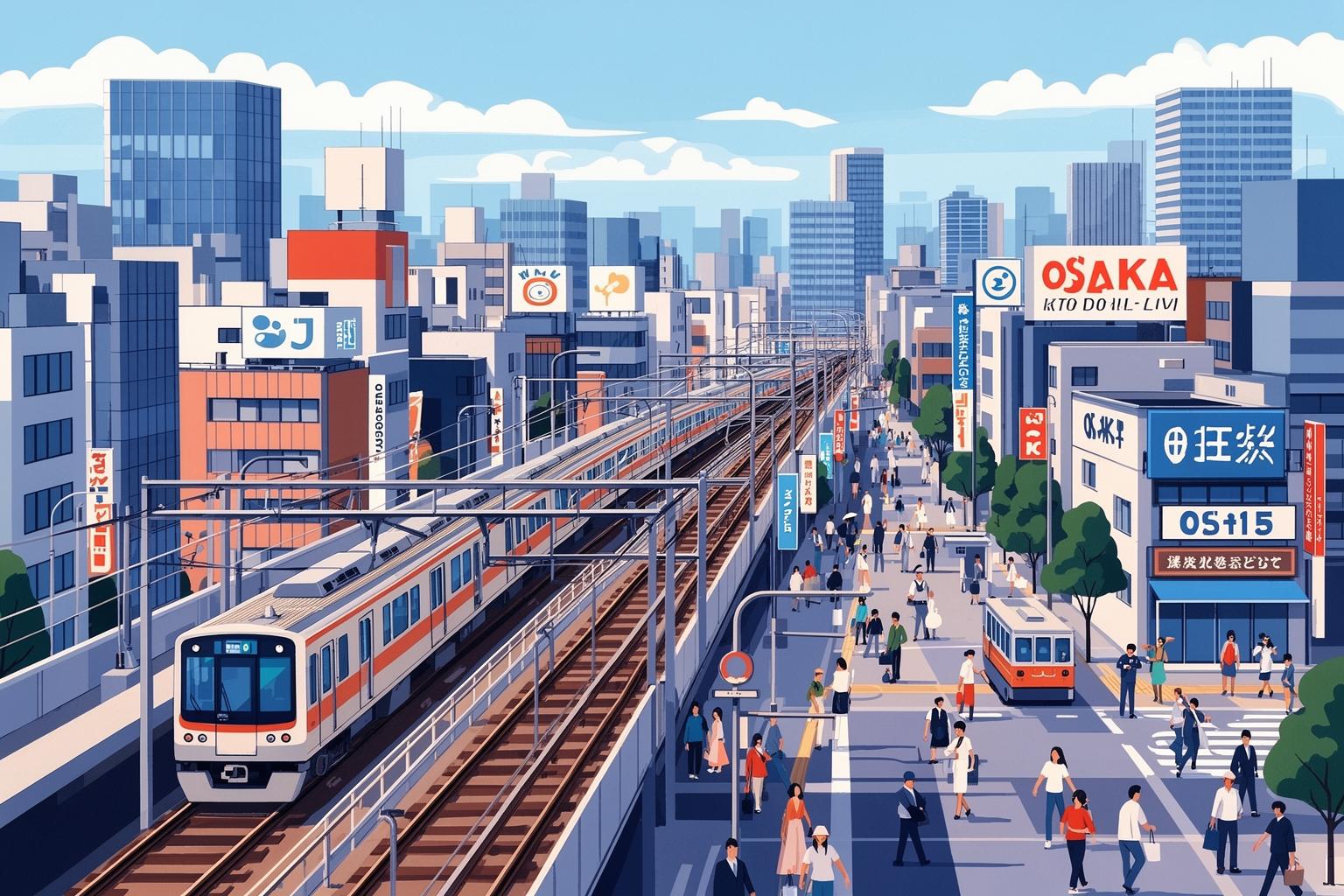
For a foreigner relocating to Osaka, especially from Tokyo, these subtle differences in train etiquette can be quite confusing. While the system seems identical, the underlying approach is entirely different. Grasping this distinction is essential for truly integrating into city life.
Misinterpreting the Signals
Someone used to the strict order of the Yamanote Line might initially see the Midosuji Line’s culture as disorderly or even impolite. The imperfect queues might appear as a lack of discipline. The soft murmur of conversation could seem intrusive. The straightforward way people claim seats might be taken as aggressive. However, this is a misunderstanding of local customs—it’s viewing Osaka through a Tokyo perspective.
The key is to adjust your perception of the social philosophy beneath it. Tokyo’s etiquette is founded on preventive harmony. Rules are stringent and consistently enforced to avoid any possible conflict. It’s a system designed to handle a huge population with maximum efficiency and minimal interpersonal tension. In contrast, Osaka’s etiquette is based on flexible common sense and reactive resolution. It relies on individuals to navigate public spaces with a sensible approach. It accepts that minor conflicts are inevitable and provides social tools—a swift apology, a shared laugh, mutual understanding—to resolve them. It’s a more resilient, though sometimes messier, system.
Adapting to the Midosuji Mindset
To succeed in Osaka, you need to adopt this mindset. Relax your posture, both physically and mentally. You don’t have to keep the same rigid, invisible boundary around you. Be aware of your surroundings—avoid being the person with a giant backpack—but don’t stress if you accidentally bump into someone. A sincere “sorry” is sufficient. Recognize that directness isn’t rudeness; it’s honesty. Hear the background chatter not as noise, but as the city’s pulse.
Living in Osaka means prioritizing practicality over perfect form. It means valuing human connection, even in brief moments, above sterile efficiency. The Midosuji Line is your daily classroom for this lesson. It shows you that a city’s spirit isn’t found in its shining skyscrapers or historic landmarks, but in the everyday interactions of its people as they move through it together. It’s louder, more vibrant, and unmistakably direct. In short, it’s quintessentially Osaka.
Conclusion: Your Ticket to Understanding Osaka
A train ride is never merely a train ride. It is an immersion into the essence of a place. The stark contrast between the quiet, synchronized commute on Tokyo’s Yamanote Line and the lively, practical flow of Osaka’s Midosuji Line powerfully highlights the deep cultural divide between Japan’s two major cities. Tokyo’s train embodies systematic harmony, a space where the collective good arises from individual restraint and a shared dedication to silent, seamless order. It is profoundly impressive, a marvel of social design.
In contrast, Osaka’s train represents a different kind of strength: the resilience of the human spirit within a crowded environment. It’s a realm where efficiency and humanity coexist, where rules are balanced with common sense, and where the barriers between strangers are slightly more permeable. The Midosuji Line is not a sterile conduit for moving bodies; it is a living, breathing artery, pulsing with the energy, chatter, directness, and occasional bursts of laughter that characterize this remarkable city. So next time you stand on the platform, waiting for that familiar crimson train, pay attention. Listen to the sounds, observe the interactions, feel the rhythm. You’re not just waiting for a ride—you’re holding a ticket to understanding the real, unscripted, and wonderfully human soul of Osaka.