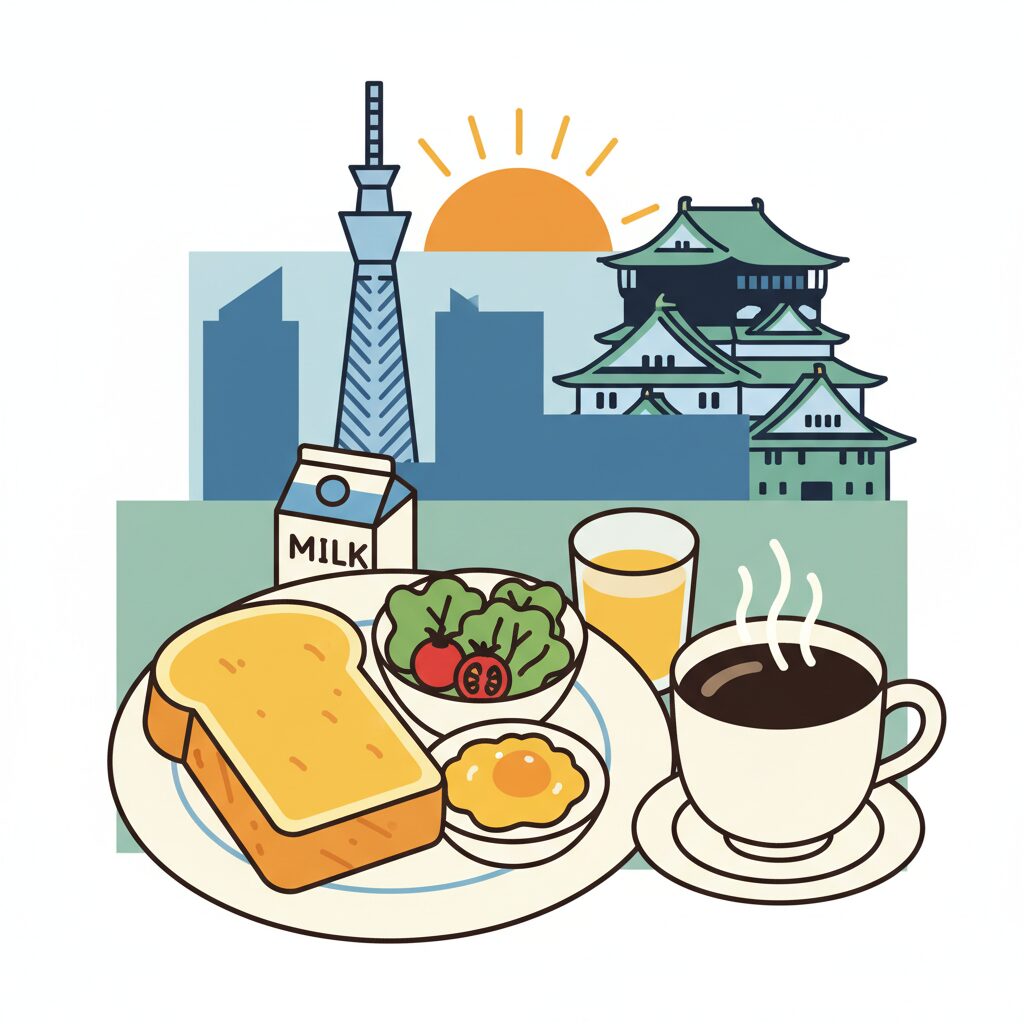
It’s a scene you’ve probably walked past a hundred times, a quiet drama playing out behind the steamed-up windows of a thousand neighborhood coffee shops. You see a simple, hand-painted sign, or maybe a weathered plastic food model in a display case: a thick slice of toast, a single boiled egg, a small salad, and a cup of coffee. Below it, a price that seems like a typo, something around 400 or 500 yen. Your brain does the math. The coffee alone should cost that much. You think, what’s the catch? This, my friend, is your entry point into one of the most fundamental, revealing, and deeply ingrained rituals of Osaka life: the culture of “Morning Service,” or as it’s known here, simply mōningu. It’s not just a cheap breakfast. It’s a social contract, a business philosophy, and a daily anchor for the city’s inhabitants. It’s where the real, unvarnished rhythm of Osaka beats loudest, far from the neon glare of Dotonbori or the sterile efficiency of a modern chain cafe. To understand the mōningu, you have to understand the very fabric of this city—its history as a merchant capital, its pragmatic approach to community, and its fierce pride in offering tangible value. It’s in these quiet, coffee-scented spaces that the unspoken rules of Osaka society are written, and learning to read them is learning to live here.
This daily rhythm of community and value is mirrored in other Osaka institutions, such as the city’s beloved neighborhood sento.
The Anatomy of a Ritual: What Exactly is ‘Morning Service’?
At first glance, the offering appears almost comically simple. It’s breakfast stripped down to its most essential, archetypal components. But this simplicity is misleading. Each element is part of a meticulously balanced formula, a masterpiece of economic and social engineering honed over decades in the modest laboratories of Osaka’s local coffee shops, the kissaten. It’s a system designed not just to nourish you, but to integrate you into the morning’s initial wave of city life.
More Than Just Breakfast: The Unbeatable Value Proposition
Let’s examine the basic transaction. You walk into a kissaten between, say, 7 AM and 11 AM and order a single cup of coffee, which might cost around 450 yen. For that price, you receive not just the coffee, but a complimentary breakfast set. This is the fundamental principle of mōningu: the food is a service, an addition, a bonus included in the cost of your drink. This reverses the typical café experience. You’re not buying breakfast with a side of coffee; you’re purchasing a moment of your morning, a seat at the table, a coffee to anchor it all, with the food as a gesture of goodwill—a thank you for your patronage.
This concept is completely foreign to the logic of Starbucks or Tully’s, where every croissant or muffin is a separate line item on your bill. In the world of the kissaten, the value lies not just in the items consumed but in the entire package. It feels like a deal, a secret handshake between you and the shop owner. It sends a message that is distinctly Osaka: “We know you work hard. We understand that money matters. Sit down, enjoy a coffee, and let us take care of the rest. We’ve got you.” It’s this sense of being looked after, of receiving more than you paid for, that forms the emotional foundation of the mōningu experience.
The Holy Trinity: Toast, Egg, and Coffee
The classic, indisputable foundation of any Morning Service is a trio of items. To diverge from this is to build on an entirely different foundation. Understanding these three components is understanding the baseline of the culture.
First, the toast. This is not the thin, sad, pre-sliced loaf found in plastic bags at the supermarket. This is atsugiri toast—a thick-cut slice, often an inch or more, from a fluffy white loaf called shokupan. It’s toasted to a perfect golden-brown on the outside while remaining incredibly soft and pillowy inside. It comes pre-buttered, the warm butter melting into every nook, creating a simple, soul-satisfying flavor. The sheer generosity of the slice speaks for itself. It’s substantial—meant to fill you up, not just serve as a base for jam.
Next, the egg. Almost universally, this is a hard-boiled egg, or yude tamago. It often arrives warm, nestled in a small dish alongside a shaker of salt. There’s a little ritual here: the gentle tap-tap-tapping of the shell on the table edge, the careful peeling, the sprinkling of salt. The boiled egg is a perfect, self-contained protein unit. It requires no complicated cooking during a busy morning, can be prepared in batches, and offers pure, unadulterated nourishment. It’s the pragmatic heart of the meal.
Finally, the coffee. The coffee served in a kissaten is a world apart from the espresso-based drinks of third-wave cafes. Typically a ‘blend coffee,’ it’s a dark, robust brew made using cloth-drip (nel drip) or siphon methods. It’s smooth, low in acidity, with a comforting, nostalgic bitterness. It’s not meant to be dissected for citrus or berry notes; it’s intended as a reliable, invigorating jolt of caffeine that cuts through the richness of the buttered toast and pairs perfectly with the morning newspaper. It’s the fuel, the constant around which the entire service revolves.
Beyond the Basics: The Evolution of the Morning Set
While the trinity of toast, egg, and coffee forms the sacred core, the beauty of Osaka’s mōningu culture lies in its endless, competitive variations. Shop owners, driven by a classic merchant spirit, are always scouting for an edge, a way to make their Morning Service just a bit more special than the one down the street. This friendly rivalry has sparked a delightful breakfast arms race.
A common addition is a small salad, usually a simple mix of shredded cabbage, perhaps a slice of tomato or cucumber, drizzled with sesame or wafu dressing. It adds a touch of freshness and a nod to a balanced meal. Some shops might offer a dollop of potato or macaroni salad instead, providing a creamy, comforting complement to the toast.
Then there are variations on the toast itself. A popular upgrade, sometimes included for free and other times for a small surcharge of 50 or 100 yen, is ogura toast. This replaces the butter with a generous spread of sweet red bean paste (anko). The combination of warm, fluffy bread and sweet, slightly textured paste is a classic for good reason. Other options might include cheese toast, cinnamon toast, or even pizza toast.
Some establishments abandon the toast-and-egg combo entirely. You may find a Morning Service featuring a sandwich set, typically with egg salad (tamago sando) or ham and cucumber. Others cater more to traditional Japanese tastes, offering a set with onigiri (rice balls), miso soup, and pickles (tsukemono). In neighborhoods with an older clientele, this alternative is common and beloved. The key principle remains: you order a drink, and a satisfying meal accompanies it. The endless variety ensures you could enjoy mōningu every day for a month and never have the same breakfast twice.
The Soul of the City: The Kissaten as a Third Space
To truly understand the importance of Morning Service, you need to look beyond the food. While the meal is the initial draw, the true offering is the space itself: the kissaten. These traditional coffee shops are far more than spots to eat and drink; they serve as essential ‘third spaces’—places outside of home (the first space) and work (the second space) where community life takes shape, solitude is honored, and the city can pause and breathe. The kissaten functions as an institution, a living museum, and a community living room all at once.
A Time Capsule of Showa Design and Atmosphere
Entering a classic kissaten feels like stepping back into another era. The style is distinctly mid-century Showa (1926-1989). The lighting is always dim and warm, spilling a soft glow from ornate, occasionally slightly dusty lampshades. The furniture is heavy and dark: wood-paneled walls, plush velvet or worn leather banquettes in hues of burgundy, forest green, or mustard yellow. The tables may feature inlaid zodiac symbols or simple geometric designs, their surfaces polished smooth by countless elbows and coffee cups.
This is not the bright, minimalist, Scandinavian-inspired aesthetic of a contemporary café. There are no stark white walls or exposed Edison bulbs here. The kissaten style prioritizes comfort, enclosure, and a feeling of permanence. It’s a place meant to be settled into, not quickly passed through. The very air feels different, thick with echoes of countless conversations and the comforting, lingering scent of freshly brewed coffee and, until recently, tobacco smoke. Even as smoking bans grow more common, that ghostly aroma often remains in the upholstery, a testament to decades spent as a quiet refuge for contemplation over a cigarette and a cup of coffee.
Sound and Silence: The Acoustic Landscape of a Kissaten
The sound environment in a kissaten is as distinctive as its decor—a delicate balance of noise and silence. In the background, soft strains of classical music, jazz, or old kayōkyoku pop might drift from a vintage stereo. The volume is never intrusive but rather serves as a gentle, ambient cushion.
Layered over this music are the unique sounds of the shop itself: the soft clink of a ceramic cup settling on its saucer, the rustle of turning newspaper pages, the quiet murmur of old friends catching up, the hiss of a siphon brewer, and the steady shuh-shuh of the master stirring a pot. Notably absent are the loud, jarring noises of a modern café—no banging espresso portafilters, no shouted complex drink orders, no high-energy pop blasting overhead. The deliberate quiet fosters an atmosphere ideal for reading a book, gathering thoughts before a big meeting, or simply watching the world go by without feeling rushed or overstimulated. It is a shared public space that miraculously accommodates private reflection.
The Master and the Regulars: A Symphony of Unspoken Rules
At the core of every great kissaten is the “Master” (masutā). This person is the owner, barista, chef, and silent orchestrator of the entire experience. Often an older individual who has managed the shop for decades, the master exudes quiet authority and reassuring familiarity. Their movements are economical and practiced—polishing glasses, carefully pouring coffee, greeting customers with a nod or a soft “Irasshai.”
The master’s relationship with customers, especially regulars (jōren-san), showcases subtle Japanese communication. There’s warmth but not the effusive friendliness found elsewhere. The master knows each regular’s order by heart. A customer might enter, catch the master’s eye, give a slight nod, and settle into their usual seat. Without a word, their typical “morning set with black coffee” is already underway. This is the ultimate expression of belonging.
Regulars form a loose, informal community. They might not know each other’s names but recognize faces—the elderly gentleman reading the same newspaper at the same table each morning for decades, the group of housewives gathering after Tuesday shopping, the local business owner using a back booth as an unofficial office. They are integral to the shop’s living ecosystem, their presence as vital to the atmosphere as the velvet chairs and jazz music.
Becoming a Jōren-san (A Regular)
For a foreigner living in Osaka, earning the status of a jōren-san at a local kissaten is a quiet badge of honor. It signifies moving beyond a transient customer to becoming part of the neighborhood’s fabric. This process can’t be rushed; it happens naturally through steady, respectful patronage.
It begins simply by showing up—visiting the same shop several times a week, roughly the same time, ordering the same items, and maintaining a quiet, unobtrusive presence. After a few weeks, the master may start preparing your coffee as you enter, initiate a simple comment about the weather, or hold your preferred newspaper for you. These small gestures carry meaning. They acknowledge you. You are no longer anonymous. You belong. In a vast, sometimes overwhelming city like Osaka, this small sense of connection, this daily anchor of familiarity, is deeply grounding and comforting.
Osaka’s Merchant Spirit on a Plate: The ‘Why’ Behind the ‘What’
The Morning Service is more than a cultural custom; it stands as the most flavorful and tangible expression of Osaka’s essence as a city of merchants. To grasp why a business owner would willingly offer free food is to understand the deeply rooted business philosophy called akindo seishin (商人精神), or the merchant spirit. This isn’t about grand displays; it’s about savvy, long-term, relationship-driven commerce.
Akindo Seishin: The Craft of the Loss Leader
At its core, the Morning Service acts as a classic loss leader. The profit margin on a 450-yen breakfast set—including toast, an egg, a salad, and coffee—is minimal, if it exists at all. The shop owner likely breaks even or even takes a small loss on each sale. So why do it? Because the mōningu isn’t the true product. The real offering is loyalty.
Historically, Osaka has been Japan’s kitchen and commercial center. Generations of merchants have understood that the fastest way to fail is by focusing solely on short-term profits from one sale. The akindo seishin philosophy stresses building a loyal customer base that keeps coming back. By providing exceptional value in the morning—making customers feel like they’re getting an excellent deal—the kissaten owner is making a long-term investment. A customer who comes for the affordable breakfast might recall the cozy ambiance and return for a 700-yen lunch, bring a friend for afternoon coffee and cake, or become a regular purchaser of the shop’s house-blend coffee beans.
This approach to business differs fundamentally from the high-rent, high-turnover model common in many global cities. It is patient, pragmatic, and people-focused. The Osakan merchant knows that a small loss today, given with genuine service (sābisu in the Japanese sense, meaning a freebie or extra), can build relationships that yield returns over many years. The Morning Service embodies this philosophy—both edible and affordable.
A Daily Ritual, Not an Occasional Treat
Another important element of this culture is that Morning Service is seen as a daily ritual, not a special indulgence. The pricing and simplicity of the food are designed to make it an accessible, repeatable part of one’s everyday routine. It’s meant for the office-bound salaryman, the student before class, and the retiree starting their day. It’s not a luxurious weekend brunch with mimosas but a consistent, comforting, and affordable way to outsource the first meal of the day.
This creates a steady, predictable flow of customers for the kissaten. The morning rush is the shop’s bread and butter (often quite literally). This dependable daily income helps them endure the slower afternoon hours. By becoming integral to the neighborhood’s daily life, the kissaten embeds itself within the local economy and community structure, making it much more resilient than a trendy café reliant on short-lived popularity.
A Contrast with Tokyo: Efficiency vs. Community
Here lies the clear contrast between Osaka and Tokyo. While Tokyo has its share of traditional kissaten, the dominant breakfast culture in its business districts prioritizes speed and efficiency. It’s about grabbing a coffee and pastry from chains like Doutor or Veloce and consuming them quickly, perhaps even standing up, before starting the day’s work. Time is money, and the transaction is purely functional.
In Osaka, the mōningu signifies a conscious slowdown. It invites you to sit, read the paper, and enjoy a moment of calm before the day fully begins. The value is not about saving five minutes but investing twenty minutes in a civilized start to the day at a reasonable price. This reflects the differing rhythms of the two cities. Tokyo is the political and corporate capital, propelled by relentless forward motion. Osaka is the merchant city, always mindful that business is ultimately about human connections, and those relationships take time to nurture—sometimes over a morning coffee.
An Osakan might see a Tokyoite paying 600 yen for a coffee to-go and think, “What a waste! For 150 yen less, I could enjoy coffee, toast, an egg, and a comfortable seat.” Meanwhile, a Tokyoite observing an Osakan’s leisurely mōningu might think, “I don’t have time for that. I need to get to the office.” Neither viewpoint is right or wrong, but it perfectly illustrates the cities’ contrasting priorities: Tokyo’s focus on functional efficiency versus Osaka’s emphasis on pragmatic, communal value.
Decoding the Social Code: Conversations, Connections, and Solitude
The kissaten during the morning hours is a nuanced social stage. It’s a space where relationships are built, the city’s secrets quietly exchanged, and the deep comfort of solitude within a crowd can be truly enjoyed. Grasping the unspoken codes of conduct inside these walls is essential to understanding how Osakans balance public and private spheres.
The Art of Eavesdropping: Tuning into the City’s Rhythm
There’s no better spot to gauge the heartbeat of a neighborhood than a kissaten at 9 AM. The gentle murmur of conversations creates a living soundtrack to the city’s daily matters. You might catch two elderly women chatting about cabbage prices at the local market. You could overhear a couple of small business owners grumbling in thick Osaka-ben over a troublesome client. Fragments of talk about the Hanshin Tigers’ latest win—or more likely, their crushing defeat—float through the air.
This isn’t considered rude; it’s ambient insight. In the intimate space of a kissaten, privacy is fluid. You’re not expected to join in your neighbors’ conversations, but neither are you expected to drown them out with headphones. You are part of a shared auditory environment. For a foreigner seeking to grasp the local dialect and the pace of daily life, it’s an invaluable, real-world language classroom. You learn what matters to people, what they joke about, what weighs on their minds. You absorb the rhythm of their speech, their directness, their humor, and the warmth often missing in more formal settings.
Your Personal Refuge: The Freedom to Be Alone, Together
Paradoxically, the kissaten also ranks among the best places in the city to be alone. The very atmosphere that fosters communal conversation also serves as an ideal shield for solitude. No one will bother you if you sit and read for an hour. No one will rush you out once your coffee is finished. The master recognizes that part of their role is offering a brief sanctuary.
This idea of being “alone, together” is a fundamental aspect of urban Japanese life, and the kissaten serves as its sanctuary. You’re surrounded by the quiet presence of others, which can feel more soothing than complete isolation, yet you remain free of social demands. You can read, work, write, or simply watch the day unfold through the window. This freedom is part of the exchange. Your 450 yen buys you not just breakfast, but permission to claim a small slice of personal space, undisturbed, for a reasonable time. In a city marked by cramped quarters and ongoing social pressures, this is a priceless gift.
The Subtle Language of Service
The dynamic between customer and staff in a kissaten teaches a refined form of communication. The master might bring you a glass of water unprompted. They might quietly refill it while you’re absorbed in your book. If it starts to rain, an umbrella stand might suddenly appear by the door. These small, almost invisible gestures constitute a profound language of care and attentiveness.
This differs from the highly scripted service of chain restaurants. It’s instinctive. The master reads the atmosphere, anticipates needs, and responds unobtrusively. This quiet, attentive style of hospitality is deeply ingrained in Japanese culture, but in Osaka, it is stripped of unnecessary formality. It’s practical and straightforward. The master isn’t trying to impress with elaborate language; they’re simply aiming to make your time comfortable. Learning to recognize and appreciate these subtle signs is part of mastering the local social code.
Common Misunderstandings and How to Navigate Them
For someone new to the scene, the world of the kissaten and its Morning Service can feel perplexing. Its reasoning and style often contradict many Western or modern cafe expectations. Navigating this realm means shifting your viewpoint and embracing a different set of values.
“It Looks Old and Dingy”: Appreciating the Wabi-Sabi Aesthetic
A typical first impression for outsiders might be that these places appear somewhat shabby. The velvet on the chairs could be worn, wallpaper might be slightly peeling in a corner, and the lighting might seem dim. It’s easy to interpret this as neglect. However, this usually reflects a misunderstanding of the underlying aesthetic.
The ambiance of a traditional kissaten isn’t about being new or polished. It revolves around the beauty of age, history, and imperfection—a concept tied to wabi-sabi. The worn chair stands as a testament to the countless people who have sat there before you. The faint scent of smoke carries the echoes of numerous stories and deals struck over coffee and cigarettes. The shop’s age signals its resilience and its significance to the community. It has endured because it is cherished. Instead of seeking spotless surfaces, try to appreciate the character and history woven into the space. See it not as dingy, but as genuine.
“Is it Rude to Stay Long?”: Grasping the Shop’s Rhythm
In many Western cafes, especially during busy times, there’s an unspoken expectation to leave once you’ve finished your order. “Table turnover” is a crucial business concern. In a kissaten, the rules differ, though they still apply. While you’re typically welcome to linger, it’s about reading the atmosphere.
During the busy morning rush between 8 AM and 10 AM, if people are waiting for a seat, it’s polite to finish up within a reasonable period—around 45 minutes to an hour. However, during quieter times in the late morning or afternoon, it’s perfectly fine to stay much longer with just a single cup of coffee. The key is to stay observant. Does the master appear stressed? Are there queues? If the shop is calm and half-empty, feel free to use it as your temporary office or reading nook. The master is offering you time and space, and as long as that space isn’t in high demand, it’s yours to enjoy.
“Why is Everyone Smoking?”: A Fading but Significant Part of the History
Until recently, smoking was an integral part of kissaten culture. For decades, these shops served as refuges for smokers. With new regulations and shifting social attitudes, this is changing rapidly. Many kissaten have become completely non-smoking, while others have created separate smoking sections or specific non-smoking hours. Yet, you may still find older shops, especially those run by an older generation, that continue to allow smoking throughout.
For non-smokers, this can pose a major challenge. It’s important to recognize that this isn’t out of disregard for health but from loyalty to long-time customers for whom coffee and a cigarette go hand in hand. If the smell of smoke is a deal-breaker for you, it’s best to look for a non-smoking sign (禁煙, kin’en) at the entrance. But it’s also worth acknowledging that this smoky atmosphere, for better or worse, was part of the authentic kissaten experience for a very long time, and its gradual disappearance marks the close of an era.
A Tale of Two Neighborhoods: Kissaten Culture Across Osaka
The spirit of the Morning Service is universal throughout Osaka, but its expression shifts according to the character of each neighborhood. A kissaten acts as a mirror reflecting the community it serves. Comparing two distinct areas reveals the adaptability of this cherished institution.
Honmachi’s Office Warriors: Powering the Economic Engine
Honmachi is one of Osaka’s major business districts, a canyon of office towers and corporate headquarters. The kissaten here form an essential part of the commercial ecosystem. In the morning, they buzz with sararīman (office workers) clad in dark suits. The atmosphere is a bit more brisk, conversations quieter and more business-oriented. You’ll see colleagues holding quick strategy meetings before important appointments or solo workers fueling up with coffee and toast while glancing over the Nikkei financial newspaper.
The Morning Service sets in Honmachi prioritize efficiency. Service is swift, toast is served promptly, and the coffee is strong. The value proposition lies in offering a quiet, refined alternative to noisy, crowded chain cafés. It allows workers to collect their thoughts and enjoy a seated breakfast without taking much time out of their busy schedules. These kissaten act as informal extensions of the office, spaces for pre-work preparation and post-meeting debriefs.
Tenjinbashisuji’s Community Hub: The Heartbeat of the Shotengai
Heading north to Tenjinbashisuji, Japan’s longest covered shopping arcade (shotengai), you find the heart of old-school, working-class Osaka. The kissaten here are not extensions of offices; they serve as the neighborhood’s living rooms. The clientele is a lively mix of local shopkeepers, elderly residents running errands, and families.
The atmosphere is relaxed, lively, and unapologetically local. The sound of Osaka-ben fills the air. The owner knows everyone by name and likely their family stories as well. The Morning Service prices here may be even lower, a point of pride for many shop owners. The sets might include more traditional options like onigiri to appeal to older customers. People linger longer, conversations flow freely between tables, and the kissaten functions as a vital hub for community information. It’s where locals catch up on news, share gossip, and check in on neighbors. It is social infrastructure disguised as a coffee shop.
The Enduring Legacy: Why Kissaten Culture Persists in Modern Osaka
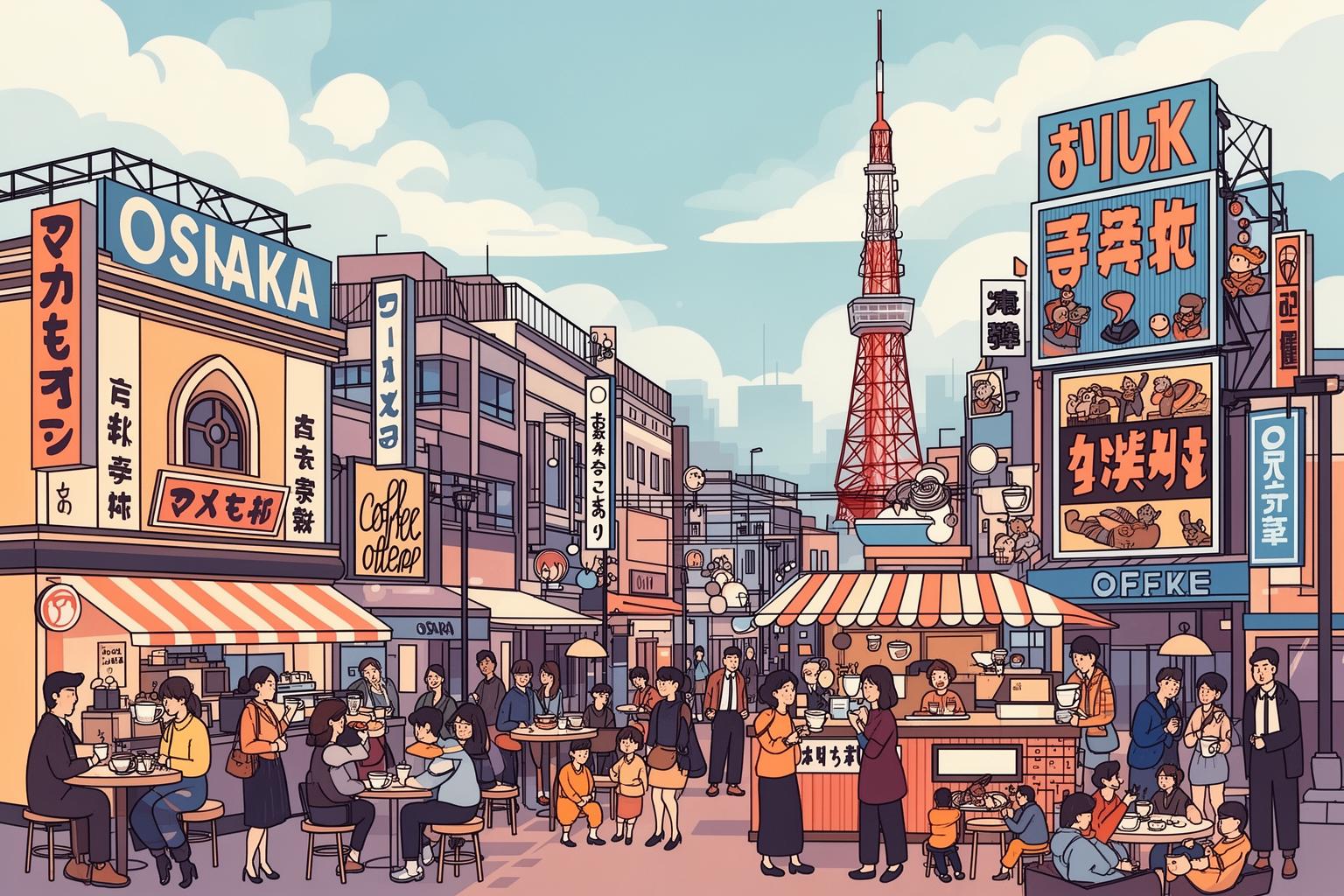
In an era of globalized chains and constantly shifting trends, the modest kissaten might be expected to vanish. Yet in Osaka, it not only endures but flourishes. Its survival stands as a strong testament to the city’s values and its subtle defiance against the uniformity of urban life.
A Stronghold Against Homogenization
Every Starbucks tends to look much the same, whether you’re in Osaka, Seattle, or Paris. The experience is predictable, standardized, and impersonal. A kissaten, conversely, is distinctly individual. Each one uniquely mirrors its owner’s personality and the history of its neighborhood. The coffee blend is crafted by them, the decor reflects decades of personal choices, and the atmosphere feels organic rather than corporate-driven.
Osakans, known for their pride in their city and their wariness of anything that seems too standardized or “Tokyo-like,” deeply value this authenticity. Supporting a local kissaten is a small yet meaningful way to preserve the city’s unique character. It’s choosing community over conformity, character over predictable branding. This makes the kissaten both a cultural and social cornerstone, standing firm against the relentless wave of global sameness.
Lessons From the Kissaten About Life in Osaka
For any foreigner hoping to settle in Osaka, the kissaten is more than just a spot for an affordable breakfast. It’s a place of learning. It reveals the city’s economic mindset—the enduring importance of loyalty over quick profit. It shows its social rhythms—the art of being alone together, the charm of understated service, and the warmth of a community rooted in shared daily rituals. It encourages slowing down, observing, and savoring simple, tangible joys like a thick slice of toast and a good cup of coffee.
Finding “your” kissaten is a rite of passage. It marks the moment you stop being merely a visitor and begin to feel like a resident. It’s where the master knows your order, where you recognize fellow regulars, and where a welcoming seat is reserved for you. For the price of a single cup of coffee, you receive a small, comforting piece of the city to call your own. In that simple, generous exchange lies the very soul of Osaka.