In the vibrant, electric hum of Osaka, a city that dances to its own beat, there are pockets of tranquility, steam-filled sanctuaries that offer a glimpse into the city’s unvarnished soul. Forget the dazzling lights of Dotonbori for a moment, and listen closer. You might hear the distant, gentle clatter of wooden buckets on tile floors, the soft hiss of a hot water tap, the contented sighs of a community at rest. This is the world of the sentō, the neighborhood public bathhouse, and it’s here, in the warm, welcoming water, that you’ll find one of the most authentic local experiences Osaka has to offer. This isn’t the grand, natural hot spring resort, the onsen, that you might see in travel brochures. This is something far more intimate, more woven into the fabric of daily life. The sentō is the city’s communal living room, a place where barriers dissolve, and the simple act of bathing becomes a shared ritual of relaxation and connection. It’s a tradition that has warmed generations, a cultural touchstone that persists with a quiet dignity against the relentless march of modernity. To step through the noren curtain of a local sentō is to step back in time, to immerse yourself not just in hot water, but in the enduring spirit of a community. It’s where you stop being a visitor and start feeling, even for an evening, like you belong.
After soaking in the warm, communal waters of a sentō, you might find yourself navigating another unique aspect of Osaka’s daily rhythm, such as the local etiquette for standing on the right side of an escalator.
The Soul of the Neighborhood: Anatomy of a Sentō
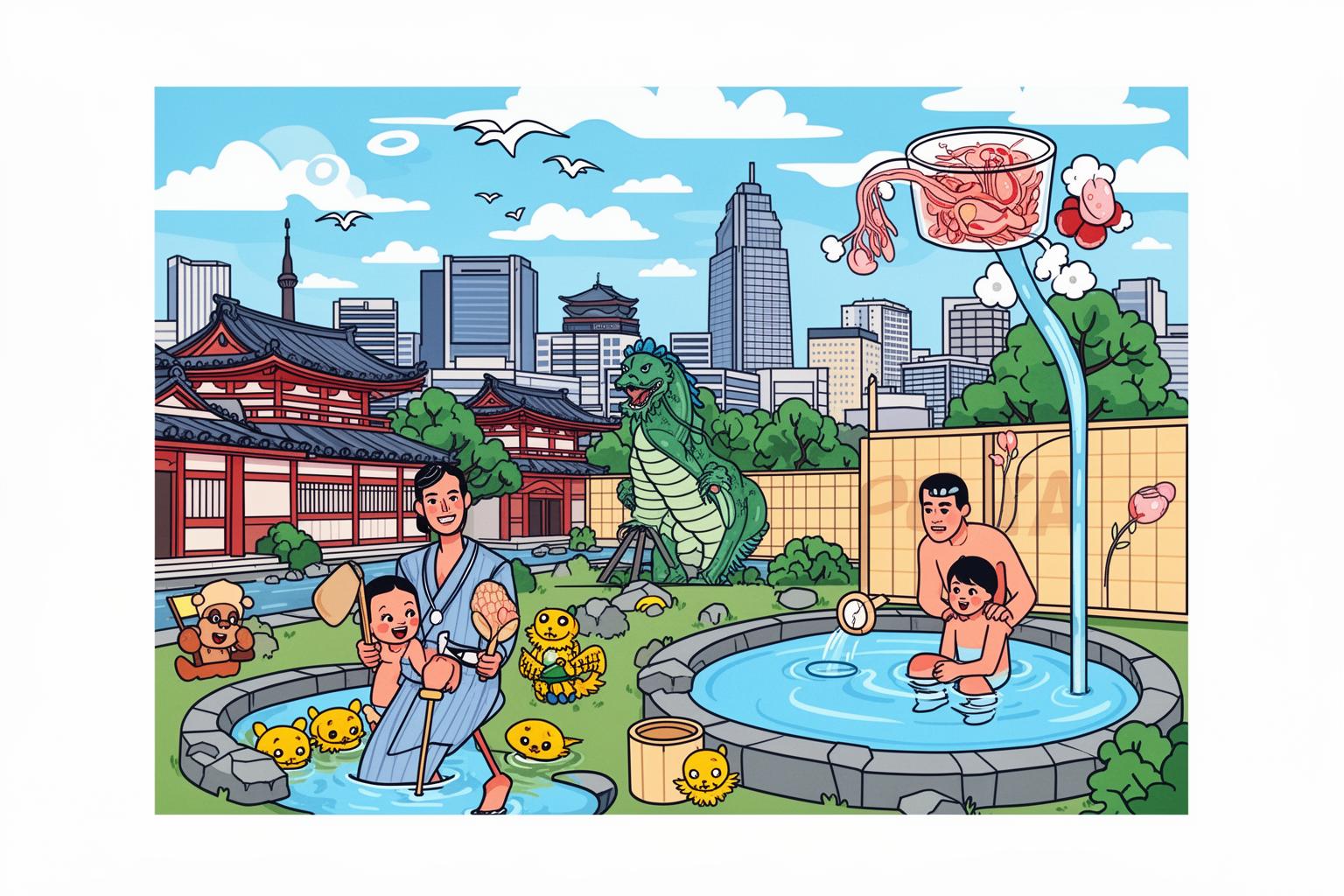
To fully appreciate the sentō experience, it is helpful to understand its form and function, a design refined over centuries. Its origins date back to a time when private baths were a luxury few could afford, making the public bathhouse a crucial part of urban living. Although most homes now have their own facilities, the sentō remains an important social institution. Its architecture, while varying in scale, often follows a familiar and comforting layout. From the street, you might notice a distinctive gabled karahafu roof, an architectural detail that signifies importance, or perhaps a tall, slender chimney rising skyward—the quiet smokestack that universally signals a working bathhouse. The entrance nearly always features noren, split fabric curtains that flutter in the breeze. Traditionally, these are navy blue for men (男) and deep red for women (女), a simple and elegant system of separation.
Upon entering, the first thing you encounter is the getabako, a wall of small wooden lockers for shoes. Find an empty compartment, slip your footwear inside, and take the wooden key, often a chunky, well-worn piece that feels substantial in your hand. This simple act marks the first step toward shedding the outside world. From there, you head to the reception area. In the most traditional establishments, you might still find the bandai, an elevated platform where the attendant, often an elderly woman, keeps a commanding view of both male and female changing rooms. It’s a charmingly old-fashioned system that can surprise first-timers but reflects the wholesome, family-run spirit of these places. In more modern sentō, you will find a standard reception desk where you pay the modest entrance fee, usually just a few hundred yen, underscoring its accessibility to all.
The core of the pre-bath ritual is the datsuijo, or changing room. This is a space of quiet transformation. Wicker baskets or modern lockers line the walls, ready to hold your clothes and belongings. The air is warm and humid, carrying subtle scents of soap and wood. Large mirrors, vintage weighing scales that have tracked the neighborhood’s health for decades, and perhaps a few old posters advertising soft drinks or local businesses decorate the space. The atmosphere is one of relaxed comfort. People of all ages and body types move with unselfconscious ease. This is a judgment-free zone, where social uniforms of daily life are shed along with your clothes. The only items you bring into the bathing area are a small washcloth, often called a “modesty towel,” and your own soap and shampoo if you have them, though small packets are almost always available for purchase at the front desk.
Passing through the final door, you enter the yokujō, the bathing hall itself. The sudden rush of warm, dense steam is immediate and enveloping. The tiled walls create a symphony of water sounds—the splash of buckets, the rush of showers, and the gentle lapping of baths—all echoing in a way that is both lively and meditative. One wall is often dominated by a grand mural. The iconic image is a majestic Mount Fuji, its snow-capped peak depicted in vibrant ceramic tiles, a tradition said to have begun in Tokyo to offer bathers a sense of expansive nature. In Osaka, however, you are just as likely to find intricate tile mosaics of local landmarks, European castles, or colorful carp swimming through a pond. The floor is lined with arai-ba, or washing stations, each equipped with a low plastic or wooden stool, a faucet with hot and cold taps, and a bucket. This is where the most important part of the bathing ritual begins, long before you ever enter the main baths.
The baths themselves, the fune (literally “ships”), are the main attraction. They come in various shapes and sizes. There is always a main hot bath, kept at a soothing 40-43 degrees Celsius that feels like a warm embrace. Often, there is a cold water bath, the mizuburo, for a startling yet invigorating plunge after time in the heat. Many sentō have added more elaborate options. You might find a jet bath with powerful streams of water massaging your back, or a denki-buro, an electric bath. A word of caution with the latter: it contains low-level currents flowing between two plates, creating a tingling, muscle-stimulating sensation that is an acquired taste and should be approached with care. Others offer milky-white herbal baths infused with seasonal botanicals like iris roots or yuzu citrus, filling the air with a beautiful, natural fragrance.
The Unspoken Rhythm: A Guide to Sentō Etiquette
For those unfamiliar, navigating a public bathhouse may seem intimidating, ruled by a set of unspoken guidelines. However, the etiquette of the sentō is straightforward, sensible, and grounded in one core principle: preserving the cleanliness of the shared water for everyone’s comfort. Learning these simple steps will not only prevent any social missteps but also enhance your appreciation of the thoughtful, considerate culture that defines the entire experience. It’s a dance of mutual respect carried out with quiet elegance.
Your preparation begins even before you leave home. While many sentō provide essentials, it’s common for locals to bring their own small kit, typically including a large towel for drying off fully afterward and a smaller, thinner washcloth. This small towel serves multiple purposes: it’s used for scrubbing your body and also acts as a “modesty towel” to loosely cover yourself when walking between the changing room and baths. You’ll also want to bring your preferred shampoo, conditioner, and soap, though single-use packets are often available for purchase. Most importantly, bring cash—while some larger, modern bathhouses accept cards, the majority of traditional neighborhood sentō operate on a cash-only basis.
Upon arrival, after storing your shoes, enter the changing room and find a locker or basket for your clothes before undressing completely. This can be the biggest cultural adjustment for visitors from places where public nudity is rare. The key is to take note of the atmosphere—it is entirely non-sexual and matter-of-fact. Everyone is there with the same purpose: to clean up and relax. All body types are present, and there is a notable absence of self-consciousness. Embrace this spirit of acceptance; it’s freeing. If it makes you more comfortable, hold your small towel in front of you as you walk.
Now comes the most important step. Before entering any of the main baths, you must wash your entire body thoroughly. Find an empty washing station, take a stool and bucket, and sit down. Washing while standing is frowned upon, as it tends to splash others. Use the tap to fill your bucket with warm water. First, perform kakeyu, which involves scooping water from the bucket and pouring it over your body, starting at your feet and working upward, to get used to the temperature. Then, give yourself a full scrub-down. Lather your washcloth with soap and wash everywhere, including your hair. Rinse thoroughly, ensuring no soap remains on your body, stool, or floor. Only once you are completely clean should you enter the communal baths.
Soaking is the reward. Ease yourself slowly into the hot water. Find a comfortable spot and allow the heat to melt away muscle tension. The small towel you used for washing should never go into the bathwater. Locals solve this by neatly folding it and placing it on their head, which also helps regulate body temperature, or by resting it on the tiled edge of the bath. Relax, breathe deeply, and enjoy the quiet community atmosphere or soft murmur of conversations. When moving between tubs, a quick rinse at a washing station is courteous. Don’t hesitate to try different baths; alternating hot and cold is excellent for circulation.
When you finish bathing, the etiquette continues. As you exit the bathing hall toward the changing room, use your small, damp towel to wipe as much water from your body as possible before stepping onto the dry floor of the changing area. This small act of consideration helps keep the floor dry for others getting dressed. Once in the datsuijo, you can use your large, dry towel to finish drying off.
The experience doesn’t end here. The changing room often serves as a lounge, where the classic post-sentō ritual takes place. Locals can be seen rehydrating with drinks from vintage vending machines or refrigerators. The quintessential choice is furutsu gyunyu (fruit-flavored milk) or coffee milk, served in classic glass bottles. There is something deeply satisfying about drinking a cold, sweet beverage after a hot soak. Take a seat on a bench, perhaps in front of an old electric fan, and let the sensation of profound cleanliness and relaxation wash over you. This lingering, social aspect of the ritual is just as vital as the bath itself.
A Tour of Osaka’s Sentō Scene: From Classic to Contemporary

Osaka’s sentō scene is as varied and distinctive as the city itself. It includes Showa-era relics that have served local communities for generations alongside contemporary designer bathhouses that reinterpret traditions for today. Exploring these types offers a journey through the city’s architectural and social history. Each bathhouse provides a unique ambiance and a different glimpse into local culture.
First, there is the quintessential Showa-era classic. Picture a bathhouse hidden on a quiet side street just off a busy shotengai shopping arcade. Its facade is a masterpiece, with a grand, temple-style entrance featuring an ornate karahafu gabled roof and detailed wood carvings. The tile work framing the door is intricate and colorful. Inside, time feels frozen. The bandai is manned by a watchful grandmother, the wooden shoe lockers gleam from decades of use, and the advertisements on the wall promote long-gone products. In the bathing area, the tile murals steal the show—perhaps a romantic European landscape or a lively scene of koi fish. The water is scorching hot, just as the elderly regulars prefer. The atmosphere is rich with history and familiarity. Conversations flow effortlessly between strangers, with neighborhood gossip and friendly chatter bouncing off the tiled walls. Visiting such a place, like Nishikiyu in the deeply local Nishinari ward, feels less transactional and more like entering a living museum, a cherished community heirloom.
At the other extreme is the modern “Super Sentō.” These large, resort-style complexes have transformed basic bathing into a full-day wellness experience. Consider places like Nobeha no Yu in Tsuruhashi or Solaniwa Onsen at Osaka Bay Tower. Upon arrival, you receive a wristband that serves as your key and wallet, letting you charge products and services for payment later. The bathing options are extensive. You might find a dozen different baths: carbonated baths coated in tiny fizzing bubbles reputed to improve circulation; open-air rotenburo offering views of manicured gardens or the city skyline; baths infused with wine, coffee, or seasonal herbs; and even single-person ceramic pot baths. Multiple saunas are almost always available—dry, steam, and salt saunas. Beyond the baths, these complexes feature spacious lounges with reclining chairs and personal TVs, manga libraries, massage services, and full-service restaurants. The clientele is diverse: young couples on dates, groups of friends spending the day, and families with children. This is a polished, contemporary interpretation of communal bathing, emphasizing amenities and entertainment alongside relaxation.
Next are the creatively revitalized sentō—bathhouses saved from closure by a new generation of owners who inject art and modern design into them. These spaces bridge old and new. They may maintain the original architecture but showcase bold, contemporary murals rather than traditional Mt. Fuji scenes. Lighting is atmospheric, music is thoughtfully selected, and the lounge often resembles a stylish café serving craft beer or artisanal coffee. These bathhouses frequently attract a younger, more creative crowd. They host events, collaborate with local artists, and use social media to highlight their unique charm. Places like Poiru in the Shonai area (a short trip from central Osaka) have become destinations themselves, drawing visitors not only for the bath but also for the aesthetic and community built around it. They embody the exciting evolution of sentō culture, demonstrating its capacity to adapt and stay relevant in the 21st century.
Finally, perhaps the most rewarding to find is the humble, hidden neighborhood favorite. This is the sentō absent from guidebooks and online; you discover it by wandering residential areas and spotting its chimney or asking a local shopkeeper for a tip. These spots are free of all pretense. The facilities are simple—maybe just a hot bath, cold bath, and jet bath—but impeccably clean and well cared for. The owner knows every regular by name, and the atmosphere is one of quiet, unassuming comfort. In these plain, unpretentious bathhouses, you sense the pure, uninterrupted essence of the sentō. They exist solely for the joy of bathing and the quiet camaraderie of sharing a simple human ritual with neighbors. Finding one feels like uncovering a secret, making the experience all the more special.
More Than Just a Bath: The Sentō as a Social Stage
The enduring significance of the sentō lies in its function as a vital community hub, a place where the social fabric of a neighborhood is reinforced and reaffirmed daily. The Japanese have a beautiful expression, hadaka no tsukiai, meaning “naked communion” or “naked fellowship.” It conveys the idea that when people shed their clothes—and by extension, their status, uniforms, and social masks—a more sincere and open form of communication becomes possible. Within the democratic space of the bathhouse, a company president and a construction worker sit as equals, soaking side by side. This leveling effect nurtures a unique camaraderie, enabling candid conversations and genuine connections that might not occur in the more hierarchical world outside.
The sentō is also a powerful site for intergenerational bonding. It is common to see grandparents patiently teaching their grandchildren the bathing rituals, passing down not only the rules of etiquette but a piece of their cultural heritage. Children splash and play, their laughter ringing through the steam, while elders watch with affectionate smiles. It’s a living classroom where respect for elders and the value of community are absorbed naturally. In a rapidly aging society, the sentō offers a rare and precious space where different generations can mingle informally and forge meaningful relationships, sharing stories and life lessons across the warm water.
In recent years, the sentō has demonstrated remarkable adaptability by adopting new roles within the community. One notable development is the rise of the “runner’s station” concept. More and more bathhouses have begun catering to local runners. Runners can arrive at the sentō, pay a small fee, and use the changing rooms and lockers to store their belongings. They then head out for a run through the city or a nearby park, returning afterward for the ultimate post-workout reward: a long, soothing soak to relax their tired muscles. This innovative use of the facilities has introduced the sentō to a new, younger, health-conscious audience, reinventing it as a fitness hub and showing that this ancient institution can adapt to modern needs.
The sentō ritual often extends beyond the bathhouse, becoming the prelude to an evening of local indulgence. The feeling of being thoroughly clean and refreshed—sappari—creates the perfect mood to enjoy a meal or a drink. Many of Osaka’s best sentō are located in neighborhoods known for their outstanding food scenes. After a bath, locals often throw on simple clothes and head straight to a nearby tachinomi (stand-up bar) for a cold beer and freshly fried kushikatsu, or to a cozy izakaya for sake and grilled skewers. This bath-to-bar tradition is a beloved local ritual. The experience flows seamlessly from relaxation to pleasure, perfectly capturing Osaka’s down-to-earth, life-embracing spirit. The sentō is not just a destination; it’s the starting point for a truly authentic local evening.
The Future of the Sentō: Preservation and Innovation
It would be neglectful not to recognize the challenges confronting this cherished cultural institution. With private bathrooms now common in modern Japanese homes, the original necessity of the sentō has nearly disappeared. Over recent decades, hundreds of bathhouses across Japan have had to close, succumbing to aging owners, rising fuel costs, and a shrinking customer base. The sight of a dismantled chimney or a closed sentō entrance has become a sad and increasingly frequent image in many neighborhoods. Yet, despite this decline, a passionate movement of preservation and innovation is revitalizing the culture, ensuring the warm glow of the public bath endures.
This revival is driven by a diverse group of people. Young inheritors of family-run sentō are choosing to invest their energy and creativity in modernizing their businesses rather than selling the valuable land. They realize that to survive, the sentō must provide more than just hot water; it must deliver an experience. They are upgrading facilities, adding new types of baths, enhancing lounge areas, and fostering a more welcoming atmosphere for newcomers, including foreign visitors. These new custodians of the tradition blend deep respect for the past with a clear vision for the future.
Artists and designers have also become vital allies in this preservation effort. Throughout Osaka and Japan, creative projects are using the sentō as a canvas, from commissioning renowned artists to create stunning murals to hosting art exhibitions and music events within the bathhouse. These collaborations generate excitement, attract media attention, and draw crowds who might not otherwise consider visiting a sentō. They reposition the bathhouse as a vibrant cultural venue—a place of creativity and community gathering, rather than just a relic of the past. Regional tourism boards and local governments also recognize the cultural importance of sentō by organizing events like “stamp rallies,” encouraging participants to visit multiple bathhouses and collect stamps in a special booklet, promoting exploration and discovery.
Moreover, the story surrounding the sentō is evolving. It is increasingly promoted not as a place for those without baths at home, but as a destination for wellness, relaxation, and authentic cultural immersion. In an age of digital overload and social isolation, the sentō offers a rare space for genuine human connection and a mindful break from technology. It is acknowledged for its mental and physical health benefits—a place to de-stress, improve circulation, and engage in a communal ritual of self-care. This new framing is vital for its survival, appealing to contemporary desires for unique experiences and holistic well-being.
As a visitor or resident in Osaka, your participation plays a direct role in this preservation. Every visit is a vote of confidence, a small but meaningful contribution that helps keep the boilers running and the lights on. By spending an evening at a local sentō, you are not only treating yourself to a wonderfully relaxing experience but also helping to sustain a living, breathing piece of Osaka’s cultural heritage for future generations.
Your journey into Osaka’s neighborhood baths is more than a search for a place to get clean. It is an invitation to slow down, observe, and participate in the quiet, daily rhythms of the city. It’s an opportunity to connect with a tradition that is both deeply Japanese and universally human—the simple, profound joy of a shared bath. So grab a small towel, find a local sentō with a welcoming light, and slide open the door. Step into the steam, listen to the gentle sounds of water, and let the warmth seep into your bones. In the heart of this bustling, modern metropolis, you will find a timeless sanctuary of peace, community, and connection.