Osaka. The name itself conjures a vibrant symphony of sights and sounds, a city electric with energy, famous for its neon-drenched canals, its boisterous, welcoming people, and its undying philosophy of kuidaore—to eat oneself into ruin. It’s a place of takoyaki stands steaming on street corners, of towering crab signs and the endless sensory overload of Dotonbori. But beneath this brilliant, chaotic surface lies another Osaka, a city that whispers rather than shouts. A world of quiet sophistication, of hidden doorways and unspoken traditions, found in the glowing labyrinth of Kitashinchi. This is Osaka’s premier nightlife and entertainment district, a place where business deals are sealed over exquisite meals and where the art of Japanese cuisine reaches its zenith. And at the heart of this refined world lies an experience that transcends mere dining: indulging in the planet’s most coveted beef, Wagyu, through the intimate theater of Kappo or the communal celebration of Sukiyaki. To step into a Wagyu restaurant in Kitashinchi is to leave the bustling city behind and enter a sanctuary dedicated to flavor, texture, and the meticulous art of Japanese hospitality. It’s a journey not just for the palate, but for the soul, an unforgettable chapter in your story of Japan.
While this refined Wagyu experience offers a different pace, you can also explore the city’s vibrant street food culture by hunting for old-school takoyaki in Tenma’s hidden alleys.
The Soul of Kitashinchi: Beyond the Neon Glow
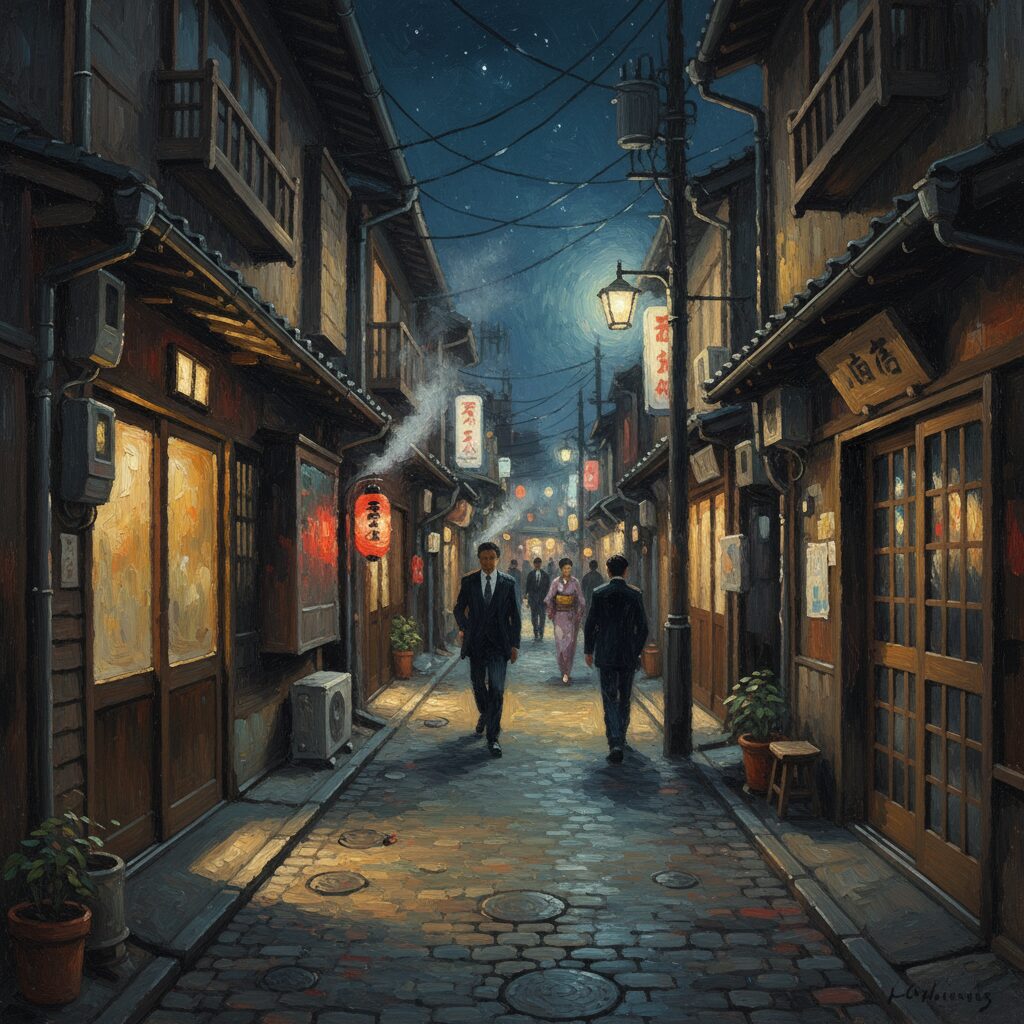
As twilight falls over Osaka, the wide avenues of Umeda, lined with sparkling department stores and busy train stations, give way to a more intimate atmosphere. Just a short walk south, you arrive at the entrance to Kitashinchi, where the city’s scale shifts dramatically. The streets narrow into refined corridors, bordered by buildings whose exteriors hint little at the treasures they hold inside. Here, there are no oversized mascots or loud advertisements. Instead, you’ll see understated wooden signs adorned with elegant calligraphy, a single lantern casting a warm, inviting glow, or a glimpse of a carefully tended bamboo garden through a narrow doorway. The air feels different too, infused with a subtle blend of expensive perfume, damp stone, and the faint, enticing scent of charcoal grills from hidden kitchens. This district thrives on discretion and exclusivity. By day, it remains a relatively quiet business area, but as dusk descends, it transforms into a haven for executives, connoisseurs, and those celebrating life’s most cherished moments. The soundscape is filled with hushed conversations, the gentle clinking of glasses, and the soft shuffle of kimono-clad hostesses weaving through cobblestone alleyways. It’s like stepping onto a film set—a timeless image of refined Japan where every detail is carefully curated and every moment becomes an experience. Unlike the bustling, come-one-come-all spirit of Minami, Kitashinchi demands a certain reverence. It invites you to slow down, observe, listen, and prepare for a culinary revelation behind one of its many unmarked doors.
Wagyu: A Culinary Masterpiece Woven with Legend
To truly appreciate the meal before you, you must first grasp the legend behind Wagyu. The word itself is straightforward: ‘Wa’ (和) means Japanese, and ‘gyu’ (牛) means cow. Yet this simplicity masks a world of remarkable complexity, dedication, and near-mythical reverence. Wagyu is more than just beef; it embodies centuries of careful breeding, unmatched animal care, and a national pride that lifts it from mere food to an art form. Its exceptional quality lies in both genetics and nurturing. These cattle, including renowned strains like Tajima (source of the famed Kobe beef), are raised in low-stress environments, often on small, family-run farms where they receive exceptional care. Their diet is a closely guarded secret, a specialized mix of grains, rice bran, and sometimes beer, all designed to encourage the development of the defining feature of Wagyu: the intense, delicate intramuscular fat known as sashi.
This is the essence of its magic. When you look at a raw slice of top-grade Wagyu, it reveals a stunning mosaic of deep crimson muscle intertwined with a fine, snowflake-like pattern of pure white fat. The marbling is graded on a scale, with A5 being the highest, symbolizing the ultimate balance of meat and fat. Unlike the tough, coarse fat found in other beef, Wagyu fat is rich in unsaturated fatty acids, granting it an exceptionally low melting point—so low that it melts at body temperature. As soon as a piece of A5 Wagyu touches your tongue, this delicate web of fat melts, coating your palate with a rich, buttery, umami flavor that is both profoundly complex and remarkably clean. It delivers a texture so tender and velvety that it redefines the very idea of beef. It requires not chewing but savoring—a slow melt that unfolds a cascade of subtle flavors. This is the gem that chefs in Kitashinchi refine to perfection.
The Art of Kappo: A Chef’s Counter Symphony
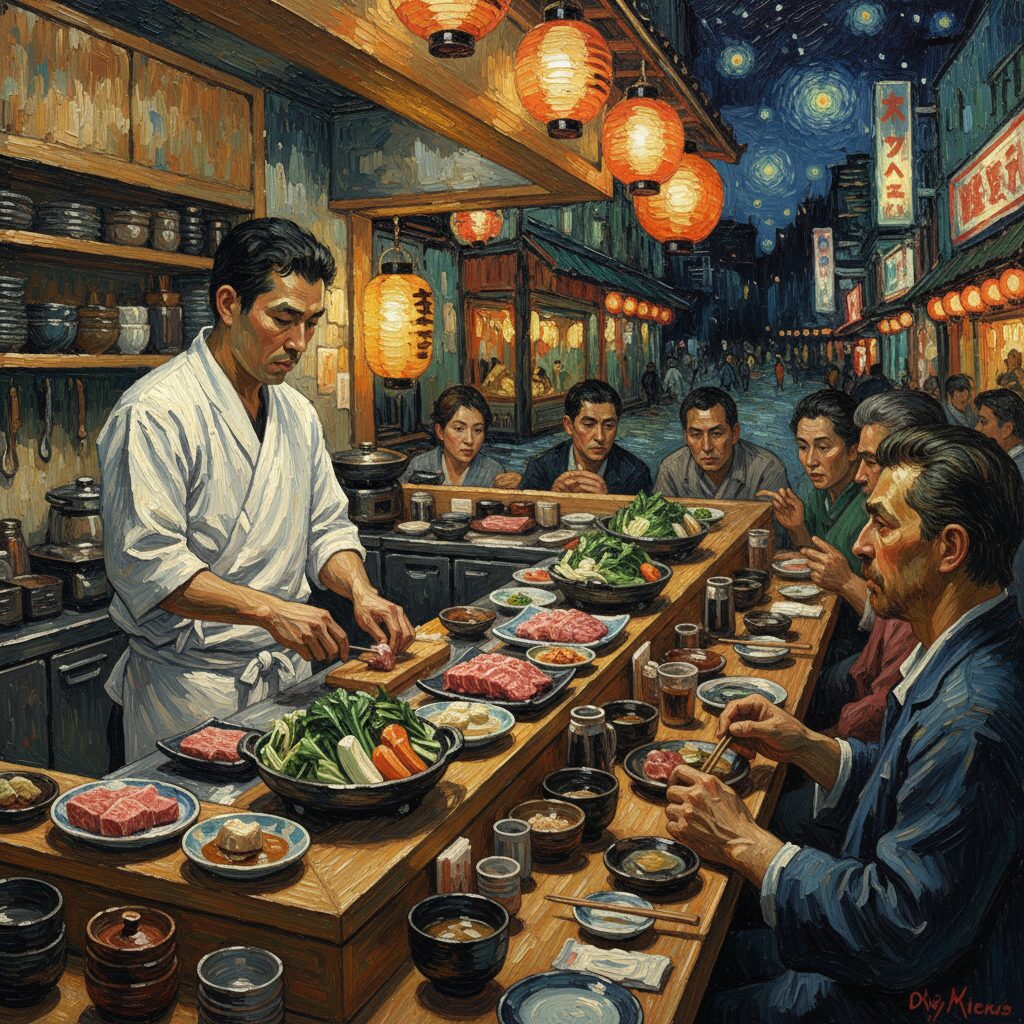
Imagine sitting at a flawless counter of polished hinoki cypress, so close to the chef that you can feel the warmth from the charcoal grill and hear the delicate whisper of a knife slicing through a pristine cut of beef. This captures the essence of Kappo dining. The term means “to cut and to cook,” a simple description for what is truly an elaborate and intimate culinary performance. Unlike the formal, private rooms of a traditional ryotei, Kappo places you at the center of the action, fostering a direct and personal connection with the master chef, the itamae. The meal is typically an omakase experience, where you entrust the entire evening to the chef’s expertise. There is no menu; the courses flow as a seasonal expression, reflecting the finest ingredients available that very morning at the market.
In a Wagyu-focused Kappo restaurant in Kitashinchi, this philosophy reaches new heights. The journey begins subtly—perhaps with a sakizuke, a small appetizer designed to awaken the palate, such as a delicate chawanmushi (savory egg custard) infused with dashi broth and topped with a tiny sliver of seared Wagyu. Next might come the owan, a clear, soul-warming soup, its broth painstakingly crafted to serve as the perfect, clean canvas for a single exceptional ingredient, like a tender Wagyu meatball. The otsukuri course, typically sashimi, could feature not only the freshest seasonal fish but also a dish of Wagyu tataki—lightly seared on the surface to a smoky char while the inside remains exquisitely rare, served with ponzu and finely grated daikon. Anticipation builds with each course. You watch the chef’s hands move in a blur of controlled, elegant motion. The precision is hypnotic. A piece of A5 sirloin is placed for mere seconds on white-hot binchotan charcoal, the fat instantly sizzling and releasing an intoxicating aroma that fills the intimate space. This yakimono (grilled dish) is served plain, perhaps with a pinch of artisanal sea salt or a dab of fresh wasabi, allowing the pure, unadulterated flavor of the beef to shine. The main event, the shiizakana, might be a more substantial dish—a small steak cooked to impossible tenderness, or a creative creation like a Wagyu cutlet, breaded and fried so quickly the inside remains perfectly medium-rare. Each course is presented on exquisite, often antique, ceramic ware selected to complement the colors and textures of the food. It’s a multi-sensory dialogue between chef, ingredients, and guest—a symphony with Wagyu as the star performer.
Sukiyaki Elevated: A Communal Pot of Dreams
If Kappo is an intimate symphony led by a single maestro, then Sukiyaki is a joyous, communal opera. It is a dish rich in history and celebration, meant for sharing, laughter, and creating warm memories. In Kitashinchi, this comforting traditional hot pot is elevated into an experience of profound luxury. The ritual begins with the presentation of the ingredients—a breathtaking platter that is a work of art itself. The star, of course, is the Wagyu: large, paper-thin slices of ribeye or sirloin, their marbling so intricate they resemble frosted rose petals. Alongside the beef are carefully prepared vegetables: squares of tofu branded with the restaurant’s crest, thick slices of negi onion, beautiful shiitake mushrooms carved into floral shapes, chrysanthemum greens (shungiku), and translucent bundles of shirataki noodles.
Here in Osaka, you will experience the authentic Kansai-style Sukiyaki, a method both dramatic and delicious. A server, often an impeccably dressed woman in a kimono, approaches your table with a heavy, shallow cast-iron pot. First, a piece of beef tallow is melted, coating the pan in a glistening layer of fragrant fat. Then, a few slices of the magnificent Wagyu are placed in the hot pan. The sizzle is immediate and deeply satisfying. A sprinkle of coarse sugar crystals follows, quickly caramelizing on the meat. Finally, a splash of a proprietary blend of dark soy sauce and mirin—the warishita—is added. The sweet and savory aroma rising from the pot is simply intoxicating. The meat is cooked for just a few moments, until it is tinged with the rich brown of the sauce but remains pink and tender. Now comes the crucial step. Each guest has a small bowl with a single, brilliant orange yolk from a premium, fresh egg, gently whisked. You take the hot, glistening slice of beef from the pan and dip it into the raw egg. This act is transformative. The heat of the beef slightly cooks the egg, creating a rich, silky, custard-like coating that tempers the saltiness of the sauce and enhances the inherent sweetness of the Wagyu. The texture is sublime, a velvety melt that coats your entire mouth with umami. After the first round of meat is savored, vegetables and other ingredients are added to the pot, absorbing the rich, beef-infused sauce as they gently simmer. The process repeats, a leisurely and interactive feast that is both deeply comforting and incredibly indulgent. It is the ultimate expression of communal dining, perfected with the world’s finest ingredients.
Finding Your Sanctuary: Navigating Kitashinchi’s Labyrinth
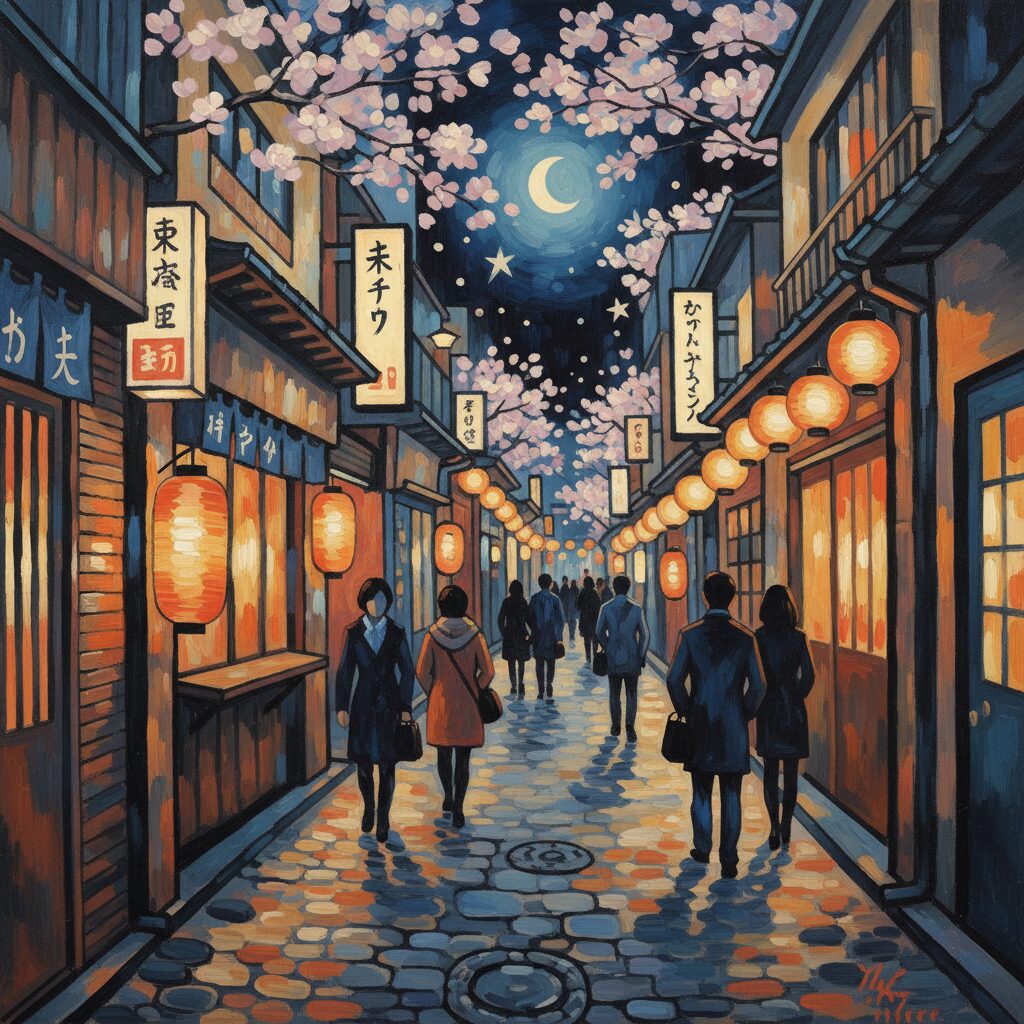
Embarking on a culinary journey in Kitashinchi calls for some planning and an openness to the unfamiliar. This is not a neighborhood where you can simply stroll around and pick a restaurant on a whim. The finest spots are often the most understated, concealed in basements of ordinary office buildings or perched on upper floors, reachable only by a small, private elevator. A modest, illuminated sign at street level may be the sole clue to the Michelin-starred haven inside. For first-time visitors, this can feel intimidating, but it is part of the area’s unique allure. Reservations are more than recommended; they are absolutely necessary, often requiring booking weeks or even months ahead for the most coveted establishments. The intimate nature of Kappo counters means there may be only eight to ten seats available each evening. If you don’t speak Japanese, this can pose a real challenge. This is where a concierge from a luxury hotel becomes invaluable. They possess the connections and language skills to secure reservations at venues that might otherwise be off-limits to foreign guests. When making your reservation, be sure to mention any dietary restrictions, but also be ready to place your trust in the chef. The omakase experience is about relinquishing control and allowing a master to guide you. Although the cost of a Wagyu dinner in Kitashinchi is unquestionably a splurge, it’s important to see it not merely as a meal’s price but as an entrance fee to an exclusive cultural performance. You are paying for the impeccable quality of ingredients, the chef’s years of training and craftsmanship, the tranquil atmosphere, and the flawless omotenashi—the distinctly Japanese spirit of wholehearted hospitality. Regarding dress code, while a tuxedo isn’t necessary, smart casual attire is the respectful choice. Aim for elegance with comfort. This is a special occasion, and dressing accordingly shows your appreciation for the effort and artistry that define your evening.
A Harmony of Flavors: Pairing Drinks with Wagyu
The profound richness of Wagyu demands a beverage that can either cut through its luxurious fattiness or complement its complex umami flavors. The classic and most traditional pairing, of course, is sake. The world of Japanese rice wine is as deep and varied as that of grape wine. For a rich, fatty cut of Wagyu, a crisp, dry (karakuchi) Junmai sake serves as a perfect foil, its clean finish refreshing the palate and preparing it for the next bite. A more aromatic and delicate Junmai Ginjo, with subtle fruity or floral notes, can beautifully harmonize with the beef’s sweetness, particularly in a Sukiyaki dish. Don’t hesitate to ask the staff for their recommendation, or osusume; they will have a carefully curated list designed to pair perfectly with the chef’s creations. In recent years, Japanese whisky has also gained popularity as an elegant choice. A glass of single malt from distilleries like Yamazaki or Hakushu, served neat or with a hand-carved ice sphere, offers a complex, peaty, or woody contrast to the meat’s richness. For those who prefer wine, many modern Kappo and Sukiyaki restaurants in Kitashinchi feature impressive cellars, often showcasing full-bodied red wines like classic Bordeaux or bold California Cabernet Sauvignon, whose tannins and structure stand up to the powerful flavors of Wagyu. Whatever your preference, the right beverage can elevate the meal from exceptional to truly transcendent.
Beyond the Meal: Soaking in the Kitashinchi Night
Your culinary adventure in Kitashinchi doesn’t need to conclude with the final course. The night remains young, and the district’s true essence emerges in its world-class bars and lounges. This is an ideal moment for a nijikai, the Japanese custom of the “second party” or after-dinner drinks. Leaving behind the serene calm of the restaurant, you can explore another side of Kitashinchi’s refined nightlife. Seek out a hidden whisky bar—a haven of dark wood, leather chairs, and floor-to-ceiling shelves filled with rare and vintage bottles from Scotland, Japan, and beyond. Here, the bartender, a true master of his craft, will lead you through a tasting, offering a quiet and reflective experience. Alternatively, find one of the city’s premier cocktail bars, where mixologists—more like alchemists—employ unique Japanese ingredients such as yuzu, matcha, and shiso to craft innovative and artistic drinks. These bars, often as intimate and elusive as the restaurants, extend the evening’s theme of discovery and exclusive indulgence. It’s a moment to savor the incredible meal you’ve just enjoyed, to bask in the enchanting atmosphere of the district, and to perfect your night out in Osaka’s most elegant neighborhood.
Practical Guide for the Discerning Traveler
Reaching Kitashinchi is simple. The area revolves around the JR Tozai Line’s Kitashinchi Station, which is underground and linked to the extensive Osaka-Umeda Station hub. This makes it easily reachable via numerous JR lines as well as the Midosuji, Yotsubashi, and Tanimachi subway lines. The district is compact and best explored on foot. Keep in mind that the true charm emerges after 6 p.m., when lanterns illuminate the streets and the city’s influencers and food lovers flock to the area. While most upscale venues accept credit cards, it’s wise to carry enough cash, especially if you plan on stopping by a smaller, traditional bar after dinner. The most important tip for first-time visitors cannot be emphasized enough: plan ahead. Spontaneity is wonderful in many parts of Osaka, but in Kitashinchi, a reservation is your golden ticket. Use your hotel concierge, book through a trusted online service, or enlist the help of a Japanese-speaking friend. This preparation will ensure a seamless, stress-free, and utterly unforgettable experience. Embrace the process, look forward to the evening, and prepare for a taste of Japan that few travelers ever encounter.
Dining on Wagyu in Kitashinchi is a ritual that blends ancient tradition with modernity. It’s an immersive journey into Japanese culinary culture, where respect for ingredients, mastery of technique, and the art of hospitality unite to create something truly magical. Whether at the intimate Kappo counter or sharing the delight of a Sukiyaki pot, the experience will stay with you long after the last exquisite bite has melted on your tongue. It serves as a reminder that in a city as dynamic and layered as Osaka, there are always new depths to discover—quiet havens of perfection waiting just beyond a hidden door. So, on your next trip, step off the beaten path, venture into Kitashinchi’s glowing alleys, and indulge in a night that is, in every sense, a masterpiece.