Welcome to Osaka, a city that moves to a different beat. If you’ve come from Tokyo, or from anywhere else in Japan, really, you feel it the moment you step off the Shinkansen. It’s not just the volume, though things are certainly louder here. It’s the rhythm of the language, the directness of the interactions, the way the air itself seems to crackle with a kind of unfiltered, human energy. You’re trying to find your footing, to understand the unspoken rules of this vibrant, chaotic place. And just when you think you’re getting the hang of it, you run into a wall. Or, what sounds like a wall. You ask for a small favor, a tiny discount, a bit of help, and you get a swift, almost cheerful, “Akan!”
Your internal Japanese etiquette guide goes into a panic. Was that rude? Did you offend them? In standard Japanese, a sharp “Dame!” (No good!) can feel like a door slamming in your face. It’s a full stop. A rejection. But here, in Osaka, this ‘Akan!’ was delivered with a grin. There was no malice in it. The conversation didn’t even stop. It just… kept going. You’re left standing there, confused, holding a perfectly polite request that was just swatted away with a smile.
This is the beautiful, baffling world of Osaka-ben, the local dialect. It’s a language built not just for communication, but for connection. And two of the most misunderstood, yet most essential, keys to unlocking this world are ‘Akan’ (あかん) and ‘Yankee’ (やんけ). They might sound harsh or strange to the uninitiated ear, but they are the bedrock of Osaka’s unique brand of friendly, frank, and deeply human way of moving through the world. Forget your textbook phrases for a moment. To truly understand life here, you need to understand the heart behind its words. This isn’t just about language; it’s about a philosophy of life lived out loud, together, on the bustling streets of Osaka.
For a deeper understanding of Osaka’s everyday quirks, consider exploring its escalator code, which reveals another facet of the city’s unique rhythm.
The Sound of a ‘No’ That Builds a Bridge: Decoding ‘Akan’
At its essence, ‘akan’ holds the same meaning as the standard Japanese word ‘dame’. It translates to ‘no good,’ ‘not allowed,’ ‘impossible,’ or simply ‘no.’ However, a direct translation is just a hollow shell—it conveys the meaning but misses the nuance entirely. The difference between ‘dame’ and ‘akan’ is like the difference between a brick wall and a swinging gate. One brings you to a complete halt; the other encourages you to find another route.
More Than Just ‘Dame’
Throughout much of Japan, social harmony is preserved through indirect communication. A straightforward ‘no’ can come across as confrontational and disruptive. Therefore, people often employ softer, more ambiguous expressions. If you request something that isn’t feasible, you might hear, “Chotto muzukashii desu ne…” which literally means, “That’s a little difficult…” It’s a polite, gentle refusal that allows both parties to save face. While effective, it also creates a certain emotional distance. The message is clear, yet the emotional connection remains somewhat detached.
Then there’s ‘dame’. ‘Dame’ is what you use when there’s no room for ambiguity. It’s what a parent says to a child reaching for a hot stove. It’s what a sign uses to forbid entry. It’s what a teacher says after a rule has been broken. It carries authority and finality. When you hear ‘dame’ socially, it often feels like a judgment. It suggests your request wasn’t just impossible but also inappropriate or wrong. It can hurt.
‘Akan’ sheds all that heavy weight. It’s a refusal without hierarchy or judgment—a peer-to-peer ‘no.’ It assumes you and the person you’re speaking with stand on equal footing, simply two people trying to work things out. It’s a word that says, “On this specific issue, we can’t make it work, but that doesn’t change anything between us.” It’s practical, not personal. This subtle shift in tone is profound in everyday life.
The Everyday Symphony of ‘Akan’
Once you start tuning in, you’ll hear ‘akan’ everywhere, a steady rhythmic beat in the city’s soundtrack. It resonates in markets, offices, izakayas, and homes—each instance painting a picture of Osaka’s social fabric.
Picture yourself at the Kuromon Market. A vendor is selling shiny strawberries. You try to negotiate a small discount. In Tokyo, this might be steeped in unspoken tension. Here, you can just ask with a smile. The oba-chan (auntie) behind the stall looks at her prized fruit, then at you, and she’ll likely respond with a big, dramatic grin, saying, “Ahhhh, onee-chan, sore wa akan!” (Oh, honey, that’s a no-go!).
There’s no offense taken—in fact, quite the opposite. Her ‘akan’ is an invitation, a playful opening to dialogue. You can laugh and say you had to try. She might even throw in a slightly bruised strawberry for free. The ‘akan’ wasn’t a conclusion; it was the beginning of a friendly exchange. It acknowledged your effort, respected her stance, and kept the good vibes flowing. You both understand the rules of the game.
Or imagine you’re out with a new colleague. You suggest a fancy, pricey restaurant. Your friend, on a tighter budget, doesn’t need to perform a series of excuses. They just gently tap your arm, laugh, and say, “Akan, akan! Kyou wa kane nai nen!” (No way, no way! I’m broke today!). It’s immediate, honest, and free of shame or awkwardness. This directness signifies trust—they feel comfortable being straightforward, confident you won’t be offended. The ‘akan’ builds the budding friendship by establishing a foundation of honesty.
‘Akan’ also carries a charming self-deprecating quality. If you attempt to assemble IKEA furniture and end up with a wobbly, unrecognizable mess, you can step back, sigh, and mutter, “Uwa, kore wa akan wa…” (Wow, this is just… no good). It’s a way of admitting defeat with a shrug and a smile. It releases frustration, turning failure into a small, relatable moment. People use it for bad hair days, burnt toast, or jokes that fall flat. It’s a universal acknowledgment that, sometimes, things just don’t work out—and that’s okay.
Why This Matters: The Osaka Mindset of Connection
This simple word reveals a key aspect of the Osaka mindset: preserving relationships is more important than maintaining superficial harmony. Vague, indirect refusals can leave behind uncertainty, causing you to wonder, “Was it my request, or do they just not like me?” This can create a subtle but persistent crack in a relationship.
An Osaka-style ‘akan’ does the opposite. It’s so direct and honest that it immediately clears the air. It communicates, “I’m being completely transparent with you.” The refusal concerns only the request itself and doesn’t spill over to damage the personal connection. By getting the ‘no’ out of the way quickly and cheerfully, both parties can move on to what matters more: finding ways to connect. “I can’t lend you money, but let’s complain about being broke over a cheap beer.” “I can’t give a discount, but let me tell you the best way to enjoy these strawberries.” The conversation remains alive, and ‘akan’ isn’t a wall that stops it—it’s a signpost that guides it.
For foreigners, this can be incredibly freeing once understood. You learn you don’t have to tiptoe around. You can ask for what you want, and the worst response is a friendly ‘akan’. It fosters a more open, honest, and ultimately less stressful way of relating to others every day.
The Playful Jab of Friendship: Getting a Handle on ‘Yankee’
If ‘akan’ is the sound of a friendly refusal, then ‘yankee’ is the sound of friendly insistence. It’s the verbal equivalent of a nudge in the ribs, a shared wink, or a conspiratorial grin. But first, we need to clear up a major—and often hilarious—point of confusion. When most people in Japan hear the word ‘Yankee,’ they think of something entirely different.
Not That Kind of Yankee
Throughout Japan, ‘yankee’ (ヤンキー) is slang for a particular type of juvenile delinquent subculture that reached its peak in the 80s and 90s. Think bleached-blonde pompadours, modified school uniforms, a tough-guy attitude, and a love for loud motorcycles. The term is said to have originated from how American youths were perceived in Osaka’s Amemura (American Village) area after the war, but it developed into a uniquely Japanese archetype. So, if you’re in Tokyo and someone says, “That guy looks like a yankee,” they definitely are not referring to sentence structure.
In Osaka-ben, ‘yankee’ (やんけ) is a sentence-ending particle unrelated to delinquents. It’s a contraction of ‘de wa nai ka’ or ‘ja nai ka,’ which roughly means ‘isn’t it?’ or ‘right?’. However, the translation barely captures its true essence. Adding ‘yankee’ to a statement fills it with energy, familiarity, and a demand for agreement. It’s a way of drawing your conversation partner closer, transforming a monologue into a duet.
The Rhythm of Agreement and Exaggeration
‘Yankee’ embodies shared experience. It’s used to affirm an obvious truth, to stress a point you both agree on, or to gently tease a friend for doing something predictable. It turns a simple observation into a moment of mutual understanding.
Imagine you’re watching the local heroes, the Hanshin Tigers, play baseball. A batter hits a towering home run. You might say, “Sugoi!” (Amazing!). That’s a perfectly acceptable comment. But an Osakan, caught up in the excitement, surrounded by fellow fans, would more likely shout, “Meccha sugoi yankee!” (That’s crazy amazing, isn’t it?!). The ‘yankee’ is like a verbal firework. It doesn’t just state a fact; it throws the feeling out to the crowd, assuming everyone shares that sentiment. It’s a declaration of community. It says, “We’re all experiencing this awesome moment together, right?!”
It’s also the ideal tool for lighthearted teasing. Your friend, notorious for being late, arrives twenty minutes after you agreed to meet. Instead of politely saying, “You’re a little late,” a friend in Osaka would greet them with, “Osoi yankee!” (You’re late, ya know!). Although it sounds accusatory on paper, the tone is usually playful and teasing. It’s a way of saying, “You did the thing you always do, and I’m calling you out on it because that’s what friends do.” The ‘yankee’ implies a shared history and comfort that allows for playful bluntness without offense. The expected response isn’t an apology but a laugh and an excuse, keeping the friendly exchange going.
It also serves to confirm a shared opinion and build rapport. You and a coworker try a new lunch spot with surprisingly large portions. As you both stare at the piles of food, one of you is sure to say, “Kono ryou, ooi yankee!” (This amount is huge, isn’t it?!). It’s not a question but a statement of shared reality that strengthens your bond. You’re both in this together, and ‘yankee’ acknowledges that. It’s the sound of two people instantly syncing up.
Building Bridges with a Word
At its core, ‘yankee’ is an empathy machine. It bridges the gap between speaker and listener. Standard Japanese has its counterpart, ‘…desu yo ne?’. It’s polite, seeks confirmation, but maintains a certain formal distance. ‘Yankee’ breaks through that space. It assumes familiarity. It assumes you’re part of the in-group. It’s inclusive by nature.
Using ‘yankee’ is like leaning in as you speak. It fosters intimacy and immediacy. When someone uses it with you, they treat you not as a stranger or outsider but as a fellow traveler who gets it. It’s a powerful sign of acceptance. It’s one reason why conversations in Osaka often feel warmer and more engaging compared to the more reserved interactions found elsewhere. People aren’t just exchanging information; they’re actively pulling you into their worldview with every ‘yankee’ they say.
Putting It All Together: A Typical Osaka Conversation
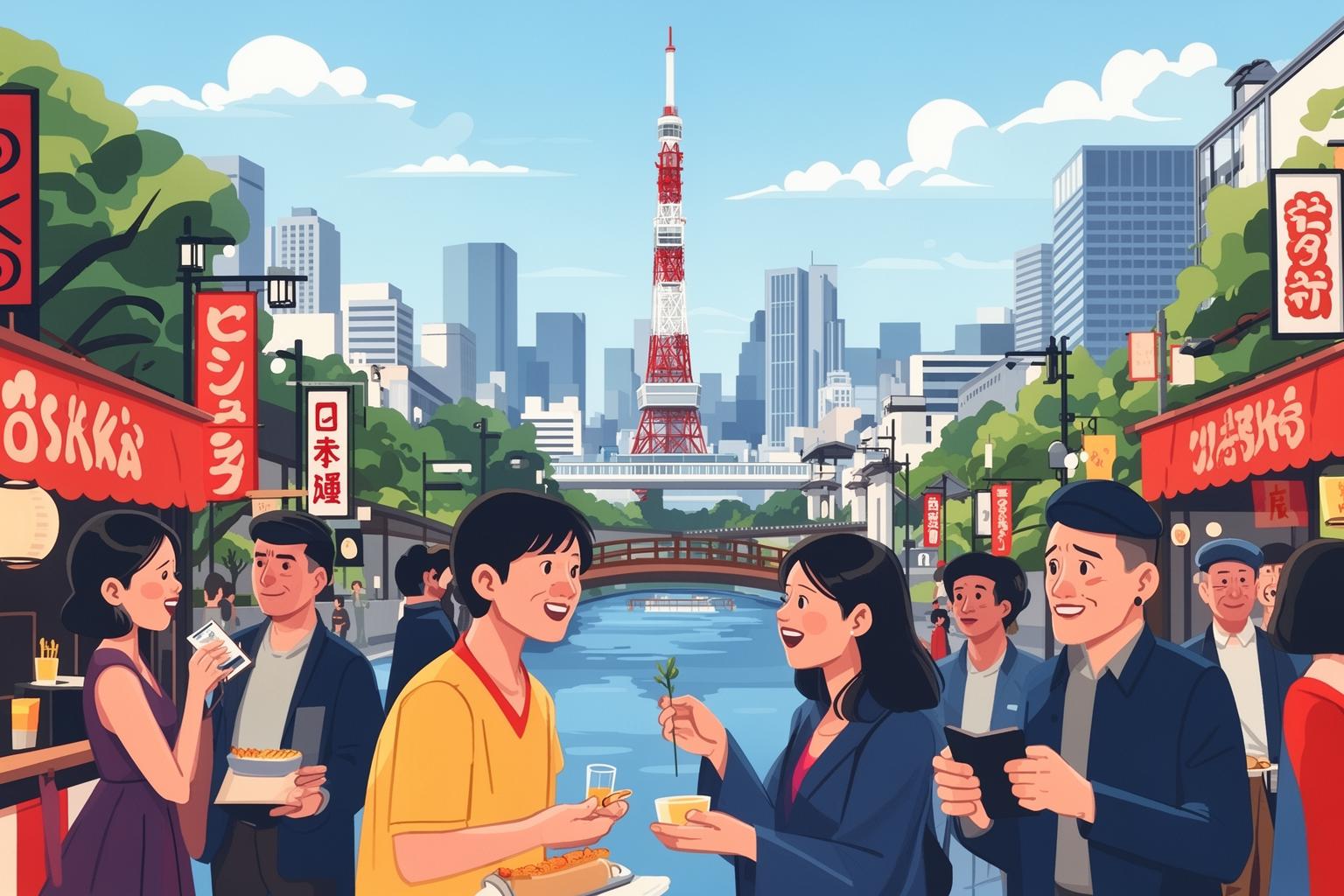
To truly grasp how these gears mesh seamlessly, let’s step into a covered shotengai, one of those long shopping arcades that form the heartbeat of any Osaka neighborhood. Imagine two friends, Kenji and Yumi, strolling past a takoyaki stand. The air is thick with the aroma of savory batter and dashi.
Kenji: “Uwa, ee nioi! Takoyaki tabetai naa.” (Wow, smells amazing! I want to eat some takoyaki.)
Yumi: “Eh, mata? Sakki udon tabeta toko ya de.” (Huh, again? We just ate udon a little while ago.)
Kenji: “Betsu bara ya, yankee! Takoyaki wa itsudemo ikeru!” (It’s a separate stomach, right?! You can always make room for takoyaki!)
Yumi, laughing: “Akan! Honma ni onaka ippai. Mou hitotsu mo hairan.” (No way! I’m really full. I couldn’t fit another bite.)
Kenji: “Jaa, hanbun ko shiyouや. Sore nara eerやろ?” (Alright, let’s split one in half. That’s okay, right?)
Yumi, sighing dramatically with a smile: “Shouganai naa… Kenji no sei ya de, futottara.” (Can’t be helped… If I gain weight, it’s your fault.)
Let’s break this down. Kenji’s use of ‘yankee’ exemplifies playful reasoning. He’s expressing a silly notion—that takoyaki takes up a “separate stomach”—as if it’s an undeniable fact, challenging Yumi to disagree. He’s not only expressing appetite; he’s trying to draw her into sharing that craving. Yumi’s reply, ‘Akan!’, isn’t a harsh refusal. It’s said with laughter. It’s a firm yet warm boundary. It says, “I get your silly logic, and I’m saying no, but I’m still in on the fun.” The refusal doesn’t close the conversation; it just ups the stakes. Kenji then suggests a compromise. The whole exchange is a gentle negotiation, a playful dance of persuasion and refusal between friends. Their friendship is the stage for this game, and their dialect is the language they use to play it.
The Foreigner’s Experience: From Confusion to Comfort
For anyone who has studied textbook Japanese, spending the first few months in Osaka can feel like stepping into an entirely different country once again. The grammar shifts, the intonation is wildly varied, and words you thought you understood suddenly take on new, mysterious roles.
First Impressions vs. Reality
Your initial encounter with a cheerful ‘Akan!’ will probably leave you puzzled. You’ve been taught that direct refusal equals rudeness, so the friendly smile accompanying it feels contradictory. Similarly, hearing a loud ‘yankee!’ at the end of a sentence, especially from a large, boisterous man, may come across as aggressive. It sounds like a challenge. Your instinct might be to become more reserved, retreating into the polite, safe confines of standard Japanese.
However, if you resist that impulse and simply observe and listen, the reality gradually becomes clear. You notice that after the ‘akan,’ people lean in closer, speak more, and laugh more freely. You see that the ‘yankee’ is followed by nods and shared laughter. You begin to understand that these aren’t signs of conflict but signals of closeness.
This represents a profound shift in perception. You move beyond merely hearing the words to sensing the intention behind them. The initial confusion fades into comfort. This is a place where you don’t have to guess what others are thinking. They tell you. And they do so in a manner that makes you feel like part of the family, even when they’re saying ‘no.’
How to Start Listening
You don’t need to rush into using ‘akan’ and ‘yankee’ in your own speech immediately. In fact, it’s better if you don’t. Like any dialect, forced use can sound awkward. The first and most important step is to become a keen listener. Observe the context: Who is speaking? Who are they addressing? What does their body language convey? Are they smiling? Are they leaning forward?
Listen to the melody. Osaka-ben has a distinct, musical quality. An ‘akan’ is rarely flat or monotone; it often carries a singsong rhythm. A ‘yankee’ typically comes at a sentence’s energetic peak. When you learn to recognize these patterns, you’ll be able to gauge the emotional tone of a conversation much more accurately. Understanding these words isn’t about memorizing dictionary definitions but cultivating a sense for the city’s rhythm. When you can hear a friendly ‘akan’ and respond with a smile without missing a beat, that’s when you know you’re truly starting to grasp Osaka.
Osaka vs. Tokyo: The Philosophy of Communication
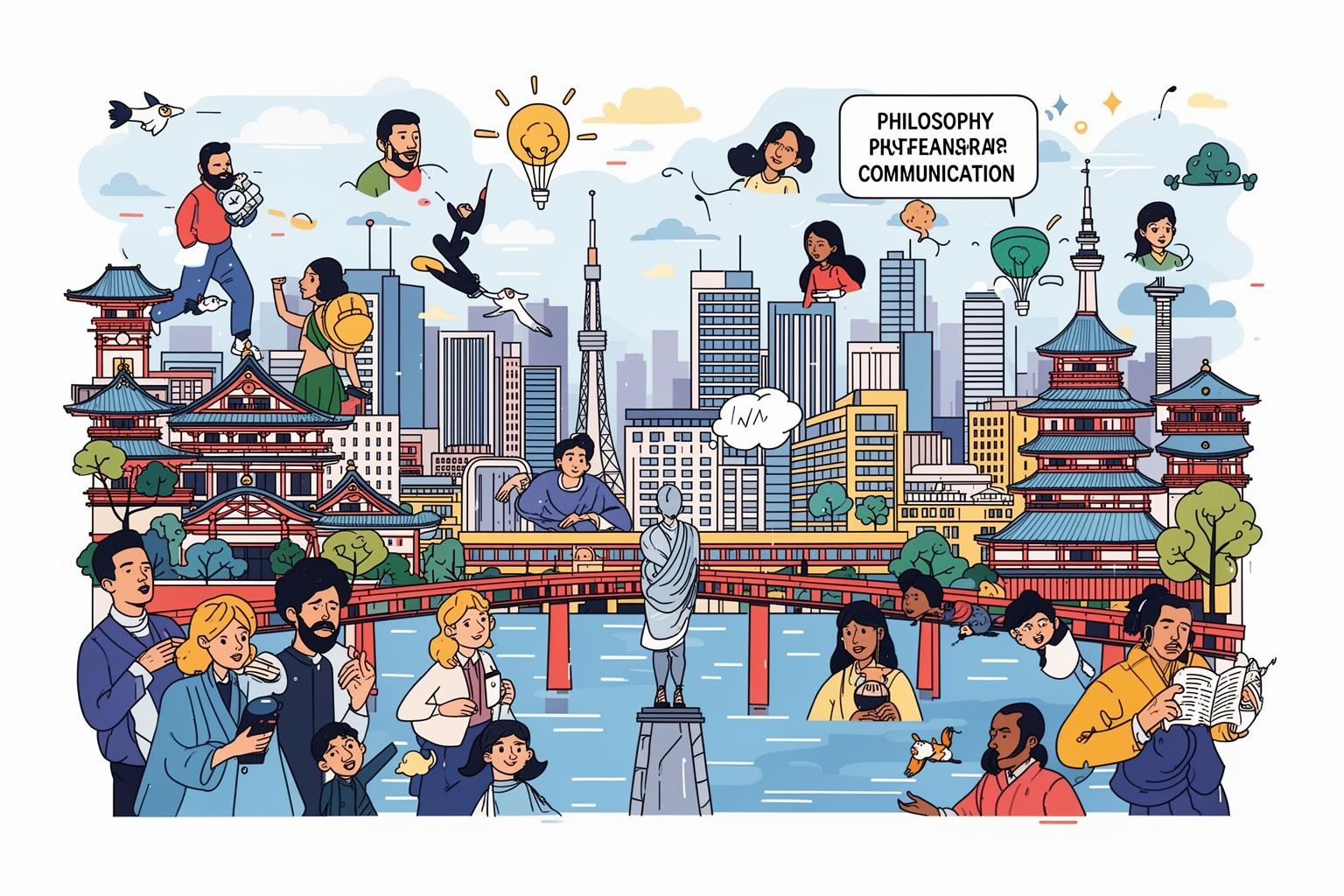
The contrast between how ‘akan’ and ‘yankee’ function compared to standard Japanese clearly underscores the fundamental difference in the social philosophies of Osaka and Tokyo. This is, of course, a generalization, but one grounded in history and evident in everyday life.
Tokyo’s culture, shaped by its history as the seat of the samurai government, often emphasizes form, order, and hierarchy. In communication, this manifests as a preference for ‘tatemae’—the public façade, the polite fiction that keeps society running smoothly. People use careful, indirect language to avoid offending others or disturbing group harmony. It’s a system built on subtle cues and the ability to read the air (‘kuuki wo yomu’).
Osaka, by contrast, has long been a city of merchants. For centuries, its prosperity relied on business, negotiation, and quickly establishing rapport and trust to close deals. In this setting, ambiguity is a weakness. You need to clearly understand where you stand. This fostered a culture that values ‘honne’—your true feelings and intentions. However, ‘honne’ is expressed with a touch of ‘naniwa bushi‘, the quintessential Osaka spirit of human kindness and emotional generosity.
‘Akan’ serves as the merchant’s ‘no’. It’s swift, clear, and uncompromising, yet delivered with a warmth that ensures you’ll return to do business again. ‘Yankee’ is the sound of quickly building the rapport necessary to close deals or make new friends. It acts as a shortcut to common ground. This is why daily life in Osaka often feels more immediate and emotionally accessible than in Tokyo. People aren’t hiding behind layers of politeness—they’re showing you who they truly are and inviting you to do the same.
The Heart of the Matter
‘Akan’ and ‘Yankee’ are far more than just quirky elements of local dialect. They serve as tools, refined over centuries, for navigating the dense, intricate, and deeply connected world of Osaka. They reflect a culture that embraces honesty and warmth as complementary rather than opposing qualities. They function as the mechanisms of a social system driven by directness, humor, and a steadfast belief in the importance of human connection.
Living in Osaka means learning a new type of social rhythm. At first, the beat might feel abrupt, the flow unfamiliar. But as you listen and allow the sounds of the city to immerse you, you begin to understand. That ‘akan’ is not a rejection but an affirmation of the relationship. That ‘yankee’ is not a confrontation but a verbal hug. These words unlock the understanding that in Osaka, communication is not a minefield of possible errors, but a playground of potential connections. When you stop translating the words and start sensing the intention, you realize you’re not merely learning a dialect—you’re embracing the heartfelt, sincere, and wonderfully human way of life that is Osaka.