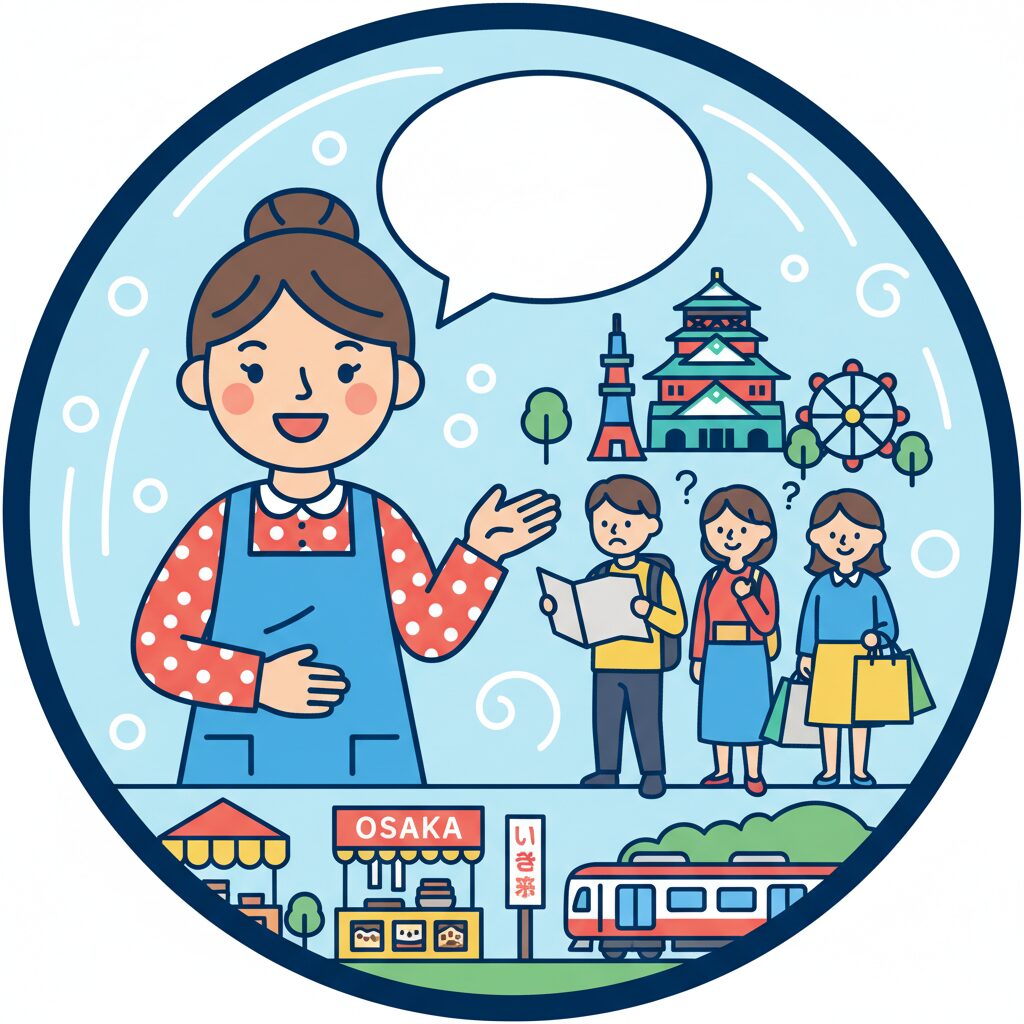
You’re standing in a bustling shotengai, maybe somewhere deep in Tenma or near the Kishinosato station. You’re trying to decide which brand of soy sauce to buy. Suddenly, a woman in her late sixties, with a classic Osaka perm and a brightly patterned apron, appears at your elbow. “Not that one, dear,” she says, pointing with a decisive finger. “This one’s better for nimono. The other one’s too salty.” Before you can thank her, the questions begin. They come fast, a rhythmic volley of curiosity. “Where are you from? You live around here? By yourself? Are you eating properly? You look a bit thin. You should eat more rice. How much is your rent anyway?” It’s a whirlwind of personal inquiries from a total stranger, a social interaction that might feel like an interrogation back home. You’re left standing there, soy sauce in hand, wondering what just happened. Welcome to Osaka. You’ve just had your first real dose of ‘Osekkai’.
This experience, in all its friendly, intrusive, and bewildering glory, is the heartbeat of daily life in this city. ‘Osekkai’ (おせっかい) is a Japanese word that’s notoriously difficult to translate. It means meddlesome, nosy, or being a busybody, but it’s almost always cushioned with good intentions. It’s the act of getting involved in someone else’s business for what you believe is their own good. In Tokyo, unsolicited advice from a stranger is a rarity. In Kyoto, it might be delivered through three layers of impenetrable politeness. But in Osaka, it’s a direct, unfiltered, and fundamental part of the social fabric. For foreigners trying to build a life here, understanding Osekkai isn’t just a fun cultural quirk; it’s the key to unlocking genuine connections and navigating the city’s unique social landscape. It’s the line between feeling like a perpetual tourist and feeling truly at home. This isn’t about sightseeing; it’s about seeing the soul of the city in its people.
Together with the warm, well-meaning curiosity that defines everyday encounters in the city, exploring affordable shotengai grocery deals offers a deeper glimpse into the dynamic lifestyle that makes Osaka so unique.
What Exactly is ‘Osekkai’? More Than Just Being Friendly
Many guides describe the people of Osaka as “friendly.” While that is true, the term hardly captures the full complexity of the social dynamics involved. People in Tokyo can be friendly too, but their friendliness tends to be professional and reserved, respecting personal boundaries. In contrast, Osaka’s style of social interaction is more like a full-contact sport played with a smile. Osekkai is proactive rather than reactive. It doesn’t wait for you to ask for help; it assumes you need it and jumps right in.
The Anatomy of an Osekkai Encounter
Let’s explore a typical Osekkai moment. It often begins with an observation. Maybe you’re struggling with a ticket machine at the subway, looking perplexedly at a map, or simply sorting your recycling. An Osakan, often an older resident or ‘obachan,’ will notice you. Their deeply tuned Osekkai radar, shaped by years of community living, immediately starts alerting. They see a situation that needs fixing—a person who seems to need guidance.
Step one is the approach. It’s direct. There’s no hesitant, “Um, excuse me…” Instead, it’s a confident, “What’s wrong, son?” or “Here, let me show you.” Personal space is often the first casualty. They’ll come close, point things out, and might even lightly touch your arm to catch your attention.
Step two is the intervention. They’ll solve the problem for you, whether you wanted them to or not. They’ll press the correct button on the machine, grab the right recycling bag from your hand and point to the appropriate bin, or offer surprisingly precise directions involving three turns, a pachinko parlor, and a dog that’s always sleeping on the corner.
Step three is the interrogation, which functions as a form of social vetting. This is when the questions start. “Where are you from?” is the opener. “How long have you been in Japan?” follows. These questions aren’t mere curiosity; they help gauge how to engage with you. The questions soon become more personal: “Are you a student? Working? What kind of work?” They’re building a mental profile of you. But the aim isn’t to judge; it’s to place you within their community worldview. The final hurdle of Osekkai questions often touches on money or marital status: “Is your rent expensive?” or “You’re not married yet? You’re not getting any younger!”
The Thin Line Between Caring and Meddling
For those from cultures where privacy is highly valued, this can feel unsettling. It might come across as rude, invasive, or downright inappropriate. Your natural reaction may be to withdraw, give vague answers, and get away quickly. This is a common misunderstanding. In Osaka’s mindset, these questions aren’t invasions of privacy; they’re offers of connection.
Someone asking if you’re eating well isn’t criticizing your diet. They’re expressing a maternal or paternal kind of care, similar to what they’d show their own child. Asking about your rent isn’t about judging your wealth; it’s a practical conversation common among locals looking for the best deal. It’s a way of saying, “We share the same daily struggles.”
Ignoring you would actually be the rude act. To them, seeing someone in difficulty and doing nothing is cold and inhuman. Osekkai acts as the city’s social immune system, activating to help newcomers integrate. It’s often clumsy, loud, and sometimes overwhelming, but its motivation is nearly always grounded in a profound sense of communal responsibility. It’s a clear message: you’re part of our neighborhood, so you are our concern.
The Roots of Osekkai: Why Osaka is Built This Way
This behavior didn’t just emerge out of nowhere. It’s ingrained in the city’s DNA, shaped by centuries of history that created a culture fundamentally distinct from Tokyo and other parts of Japan. Osaka has always been a city of merchants rather than samurai, and that difference means everything.
A Merchant City’s Social Glue
Tokyo, or Edo as it was called, was the hub of the samurai government. It was a city built on hierarchy, formality, and strict codes of conduct. Discretion was essential for survival—you kept a low profile, respected your superiors, and concealed your true feelings (honne) behind a mask of polite social obligation (tatemae).
In contrast, Osaka was known as the nation’s kitchen (tenka no daidokoro), the commercial heart where rice and goods were exchanged. In the merchant (shonin) world, success relied not on lineage but on your savvy, reputation, and ability to quickly build relationships. Business was conducted face-to-face, with plenty of bargaining, humor, and trust. You had to quickly judge whether you could do business with someone and develop a rapport that went beyond mere transaction.
This fostered a culture valuing pragmatism, directness, and a degree of emotional openness. There was less tolerance for Tokyo’s stiff formalities. Osakans often take pride in speaking their minds. The fast-paced, questioning nature of Osekkai directly stems from this merchant mentality. It’s a way to swiftly break down barriers, gauge a person’s character, and create a human connection—the foundation of strong business and community ties.
The Power of the ‘Shotengai’ Mindset
This culture is most visible in the shotengai, covered shopping streets winding through Osaka’s neighborhoods. These are not cold, generic malls but vibrant community centers. The shotengai is the natural environment for the Osekkai spirit.
Stroll through Tenjinbashisuji, Japan’s longest shotengai, and you’ll witness it firsthand. The tofu seller knows which families have picky kids. The butcher playfully mocks the fishmonger across the way. Neighbors pause for gossip in the middle of the arcade, blocking foot traffic without concern. Everyone knows everyone else’s business, and this is considered a strength, not a weakness. It means when someone faces trouble, the whole community hears within minutes and comes together to help.
This shotengai mindset goes beyond the arcades themselves. Even in a city of millions, Osaka often feels like a network of small, interconnected villages. People strongly identify with their local neighborhood. The Osekkai questions from strangers are attempts to place you on this mental map. “Oh, you live in Nakazakicho? Do you know the little coffee shop with the grumpy cat?” Finding such common ground, no matter how small, is the first step to including you in the local village. The meddling is a feature, not a flaw. It’s how the community sustains its bonds and cares for its own, including new foreign residents unsure of which soy sauce to buy.
Navigating Osekkai: A Practical Guide for Daily Life
So you understand why it happens, but how do you handle it day-to-day without losing your sanity or feeling like your privacy is constantly under siege? The key is to shift your perspective and learn the local rules of engagement. It’s like a dance, and once you know the steps, it can actually be enjoyable.
Rule One: Don’t Take It Personally
This is the most important rule. The flood of questions is not a personal attack. The unsolicited advice isn’t a judgment on your intelligence or ability. It’s a cultural script. It’s how conversations start and connections are formed. When a stranger asks about your marital status, they’re not trying to make you uncomfortable; they’re simply going through their mental checklist of conversation starters.
In fact, being on the receiving end of Osekkai is a positive sign. It means you’ve been noticed. You’ve been deemed worth engaging with. Often, the opposite—being completely ignored—is a sign that you’re still seen as an outsider. When the lady at the dry cleaner starts asking if you have a boyfriend or girlfriend yet, it’s a sign of acceptance. You’ve moved from “anonymous foreigner” to “the foreign kid who lives down the street.” It’s a promotion.
How to Respond: The Art of Playful Pushback
Communication in Osaka isn’t one-sided. It’s a rally, a game of conversational catch. They throw you an Osekkai question and expect you to hit it back. A passive, one-word answer can sometimes come across as cold or uninterested. The best way to reply is with a mix of honesty, humor, and a touch of tsukkomi—a playful retort or comeback.
Here are some examples:
- The Question: “Are you married yet?” (Mada kekkon shitenai no?)
- The Shy Response: “No.” (Silence)
- The Better, Osakan Response: “Not yet! Know anyone good for me? You must have a handsome son or grandson!” (Mada desu wa! Dareka ee hito shiri masen ka? Ee musuko-san/omago-san i haru desho!) This turns the question into a joke, shows you’re not offended, and puts the ball back in their court. They will usually laugh and appreciate the banter.
- The Question: “Your Japanese is pretty good, isn’t it?” (Nihongo jozu ya na!)
- The Humble Response: “No, no, not at all.” (Iie, iie, mada mada desu.)
- The Better, Osakan Response: “Thanks! I practice by listening to all the neighborhood gossip!” (Okini! Gokinjo no uwasa-banashi kiite benkyou shitemasu nen!) This is self-deprecating but also embraces the local culture.
Humor is your best ally. Osakans love to laugh and respect someone who can give as good as they get. You don’t have to be a comedian, but learning not to take every question literally and responding with some playful energy will earn you a lot of social goodwill.
When to Draw the Line (and How)
Of course, there are boundaries. Sometimes a question may be genuinely too personal or touch on a sensitive subject. You don’t have to answer everything. The art is in deflecting gracefully without shutting down the conversation or causing offense.
A simple, slightly embarrassed smile and a phrase like, “Oh, that’s a bit of a secret!” (Iya~, sore wa himitsu desu wa!) works wonders. It’s gentle, non-confrontational, and frames your privacy as a playful secret rather than a barrier. For more persistent questioners, a polite but clear, “That’s a little personal, sorry,” (Sore wa chotto, sumimasen…) said with a friendly expression is perfectly fine. The key is in the delivery. As long as you signal that you’re not rejecting the person, just the question, they will usually understand and back off.
The Payoff: From Nosy Neighbors to Real Connections
Navigating Osekkai may initially feel like a chore or a constant performance. However, if you persevere, you’ll uncover what lies beyond: a rare level of community and support increasingly uncommon in cities worldwide. The nosiness serves as a test, and passing it unlocks something truly special.
Beyond the Questions: The Pathway to Genuine Friendship
The Osekkai interaction is the gateway, not the destination. The same woman who questioned you about your soy sauce will be the one to notice when you have a cold and arrive at your door with homemade okayu (rice porridge). The man at the vegetable stand who asked about your salary will save the best tomatoes for you and slip in a free cucumber because you’re a regular customer.
These relationships are forged through casual, daily meddling. By sharing small, seemingly insignificant details of your life, you weave yourself into the community’s story. They remember what you say, start to look out for you, and shift from “strangers” to part of your informal, everyday support network. While it can take years to build this in a reserved city like Tokyo, it can happen within months or even weeks in Osaka—if you’re open to it.
Osaka vs. Tokyo: The Friendship Curve
Think of it as a difference in social networks. In Tokyo, friendships often form in structured settings: your workplace, university, or hobby group. Introductions are formal, relationships develop slowly and respectfully, and clear boundaries usually separate private and professional life. Breaking into these established social circles as an outsider can be challenging. The barrier to entry is high, but connections, once formed, tend to be stable.
In Osaka, the barrier to initial contact is almost nonexistent. A friendship can begin while waiting in line for takoyaki. The social network is chaotic, overlapping, and highly dynamic—messier, with fewer initial boundaries. Osekkai culture acts as the social lubricant enabling these spontaneous connections. Although the initial phase may feel intrusive, it greatly accelerates the friendship process. You might not know your neighbor’s last name, but you know their daughter is preparing for university entrance exams and that they secretly love the Hanshin Tigers. It’s a different kind of intimacy, built from the ground up through shared daily life rather than from the top down through formal associations.
Embracing the Osekkai Lifestyle
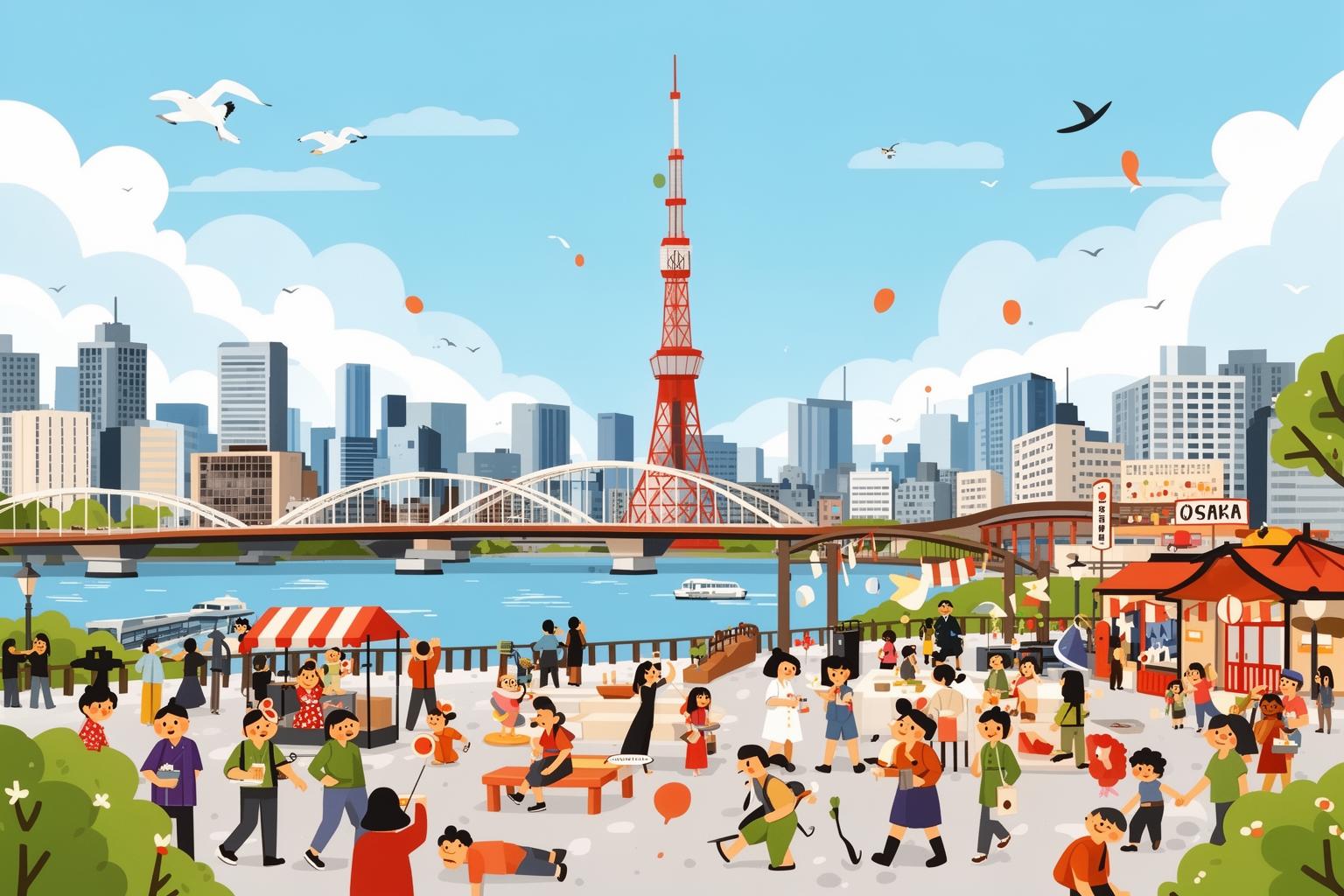
Ultimately, thriving in Osaka calls for a slight adjustment of your own cultural norms. It means learning to view community as a resource rather than a threat, and to see a bit of shared knowledge as a bond instead of a vulnerability.
A Different Definition of Privacy
The Western notion of privacy often focuses on individualism—the right to be left alone and control over personal information. In Osaka’s community-oriented culture, privacy is more flexible. Here, a strong insistence on privacy can come across as loneliness. Locally, someone who keeps entirely to themselves is often seen as isolated and possibly in need of assistance.
The Osekkai check-ins—“Are you eating? Are you well?”—serve as a way to ensure no one is overlooked. It acts as a distributed, analog social safety net. When you respond to these questions, you signal that you are okay and part of the community. It’s a trade-off: you give up a bit of personal anonymity in exchange for a deep sense of belonging and security.
Your Turn to Be a Little ‘Osekkai’
The final step in adapting to life in Osaka is to begin giving a little Osekkai back. This is when the city truly reveals itself to you. You don’t have to start asking strangers about their rent, but you can embrace the spirit behind it.
Start small. Ask the owner of your local kissaten how his back is feeling. Compliment the woman at the flower shop on her new glasses. When you go on a short trip, bring back a small box of omiyage (souvenirs) for your next-door neighbor. Share some of the fruit you bought with the security guard in your building.
These small, thoughtful gestures of connection are the currency of Osaka. They show that you are not merely a passive resident but an active member of the community. You’ve learned the unspoken rule: we’re all in this together, so it’s worth talking to one another. When you start caring a little about the people around you, you’ll realize they have likely been caring about you all along.
So next time an obachan stops you in the supermarket, take a deep breath and smile. She’s not just a nosy stranger. She’s a potential ally, a future friend, and a gateway to the real, lively, and deeply human world of Osaka. She’s asking you a question—and your answer marks the beginning of your story here.