The first time I wheeled my little granny cart into an Osaka shotengai, I was armed with a healthy dose of skepticism. I’d just moved from Europe, where my mental image of Japan was a landscape of pristine, minimalist boutiques and eye-wateringly expensive melons displayed like jewels in a museum. My wallet was braced for impact. I turned a corner into the covered arcade, and the serene, quiet Japan I had imagined simply evaporated. It was replaced by a wall of sound, a riot of color, and the scent of grilled eel, fresh fish, and simmering dashi broth all competing for attention. A man with a voice like gravel was roaring about the virtues of his cabbages, which were piled so high they threatened to trigger a small avalanche. Another vendor, a tiny woman with a perm of iron, was holding up a glistening fillet of tuna, yelling a price that made me do a double-take. Everything was loud, chaotic, and unbelievably, overwhelmingly cheap. I saw a net bag stuffed with a dozen onions for the price of a single one back home. I saw perfect, ruby-red tomatoes being sold by the box for less than a fancy coffee. This wasn’t just a market; it was a performance, a battle, a celebration of commerce in its rawest form. I left that day with my cart overflowing and my head spinning, asking the question every newcomer to Osaka asks: How on earth is this possible? The answer isn’t just about economics; it’s about the very soul of this city, a spirit forged in trade, honed by competition, and celebrated daily under the long, covered roofs of its shopping arcades.
The sheer dynamism of Osaka’s marketplace is echoed by transformative financial moves like the Centara Grand Hotel Osaka acquisition, which further illustrates how bold strategies are reshaping the city’s economic landscape.
The Unspoken Rules of the Shotengai Battlefield
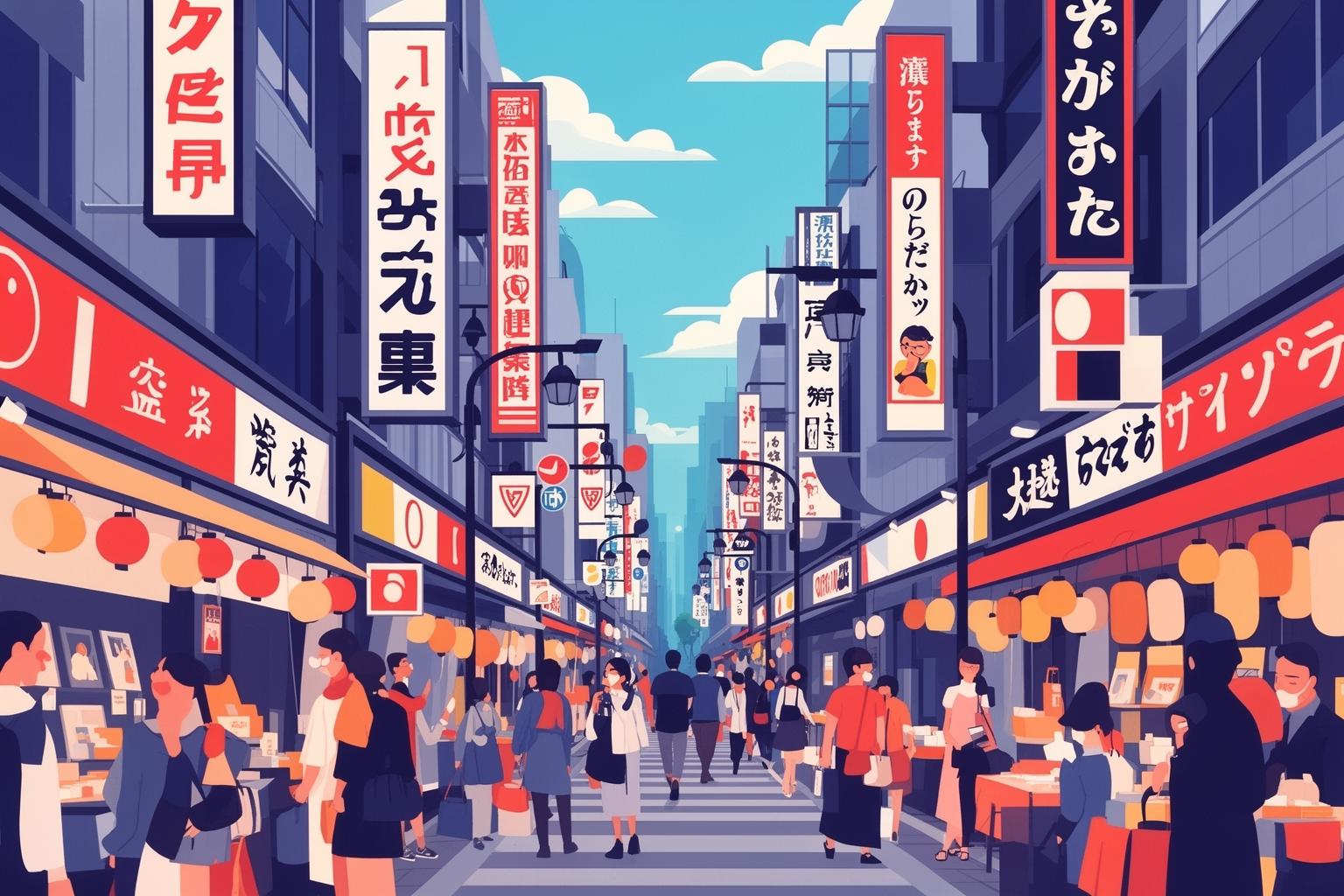
Entering a shotengai feels like stepping onto a stage where a play is continuously unfolding. It’s not the quiet, polite, and reserved shopping experience you might encounter in a Tokyo department store. Here, commerce is a full-contact sport, governed by a set of unwritten yet universally understood rules. The vendors are the star performers, the shoppers the discerning judges, and the prize is your daily yen. Grasping this dynamic is the key to discovering not only great deals but also the very essence of Osaka.
A Symphony of Shouting: The Vendor’s Call
The first thing that strikes you is the sound—a constant, overlapping chorus of voices called yobikomi, the call to customers. It’s more than a simple “Welcome!” This is a strategic broadcast. A fruit seller might shout, “Mikan, amai de, umai de! Ichi-paku nihyaku-en!” (Mandarins, sweet and delicious! 200 yen for a whole pack!). This call isn’t directed solely at you; it’s a direct challenge to the fruit vendor nearby. It’s a gauntlet thrown down. Moments later, the competitor might respond—not necessarily by lowering prices but by highlighting the size of his oranges or their specific origin. It’s a real-time vocal chess match. This boisterous setting can be startling to those used to the quiet, reverent shopping atmosphere elsewhere in Japan. In Tokyo, a sale often occurs as a quiet, discreet transaction. In Osaka, it’s a public declaration of value. Vendors take pride in their prices and want the entire arcade to hear it. This culture of loudly announcing prices ensures transparency and fuels competition. There’s no hiding a bad deal when your rival announces a better one every thirty seconds.
The Art of the Display: Piled High, Sold Cheap
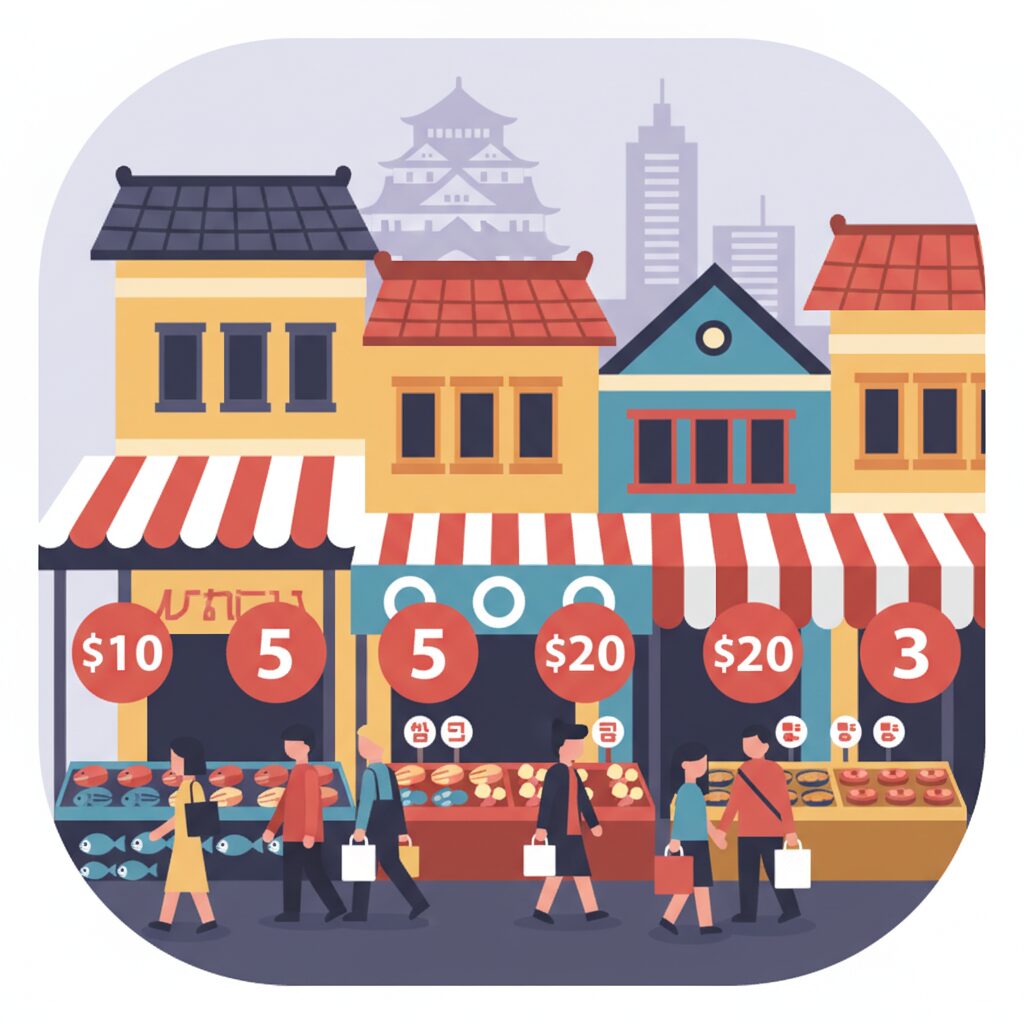
Forget individually wrapped apples on sterile foam trays. The aesthetic of a shotengai is one of overwhelming, almost chaotic abundance. Vegetables aren’t carefully arranged; they’re heaped. Boxes of produce stack into towering, precarious walls. Fish lie on beds of ice, whole and glistening, with clear, bright eyes. This visual strategy is deeply psychological. A mountain of carrots sends a strong, non-verbal message: “We have so much, we can’t afford to be precious about it. We have to sell it, and we have to sell it now.” This stands in stark contrast to the curated, minimalist displays of more upscale supermarkets, where scarcity and perfect presentation justify higher prices. In the shotengai, volume signals value. The displays make you feel as if you’re getting in on a huge, wholesale bargain. It creates urgency, a sense that if you don’t grab that bag of potatoes soon, the whole pile might be gone within an hour. This “stack ’em high, sell ’em cheap” philosophy physically embodies Osaka’s pragmatic approach to business. It’s less about aesthetics and more about moving product efficiently and affordably.
The Osaka Mindset: Why “Moukari Makka?” is More Than a Greeting
To truly understand why your grocery bill is lower in Osaka, you need to know the city’s history. For centuries, Osaka was called Tenka no Daidokoro, or “The Nation’s Kitchen.” It served as the main hub for rice and other goods, a city shaped not by samurai lords but by a shrewd, practical, and fiercely competitive merchant class. This commercial spirit is deeply embedded in the city and its residents. For them, business is more than a job; it’s an art, a game, and a fundamental part of their identity.
The Merchant’s DNA
A well-known Osaka dialect greeting still used by older business owners is “Moukari makka?” which directly translates to “Are you making a profit?” The typical modest reply is “Bochi bochi denna,” meaning “So-so, bit by bit.” This exchange captures the essence of the local mindset. In many cultures, asking about profits so directly would be seen as impolite. In Osaka, it’s a friendly gesture, a recognition of the shared effort and hustle involved in business. Osakans have a deep respect for a good deal, appreciating clever selling as much as smart buying. This isn’t about greed; it’s about being savvy. There’s a mutual delight in the transaction itself. When a vendor offers a good price, their eyes sparkle with an unspoken message: “You and I both understand value.” This cultural admiration for shrewdness is what keeps the system running smoothly. Vendors know they can’t overcharge because their customers are just as sharp as they are.
The Customer is Queen (and a Fierce Negotiator)
On the flip side is the Osaka shopper, most famously the obachan (a term for a middle-aged or older woman). She is not a passive buyer but an active player in the commercial exchange. Watching her shop is revealing: she’ll carefully inspect a daikon radish, feel its weight, and perhaps ask the vendor, “Kore, oishii no?” (Is this tasty?). There’s an open dialogue, a relationship based on trust but constantly tested. While outright haggling is uncommon for daily groceries, a subtle form of negotiation always takes place. Loyal customers might receive an extra potato as omake (a small bonus). Shoppers know the going prices of everything down to the last yen and won’t hesitate to skip one stall for another just a few meters away if the scallions are 10 yen cheaper. This persistent and discerning pressure from customers serves as the ultimate quality control and price regulator. Vendors must stay competitive because their clientele demands value and can spot a bad deal from afar.
Deconstructing the Price: How Can It Be This Cheap?
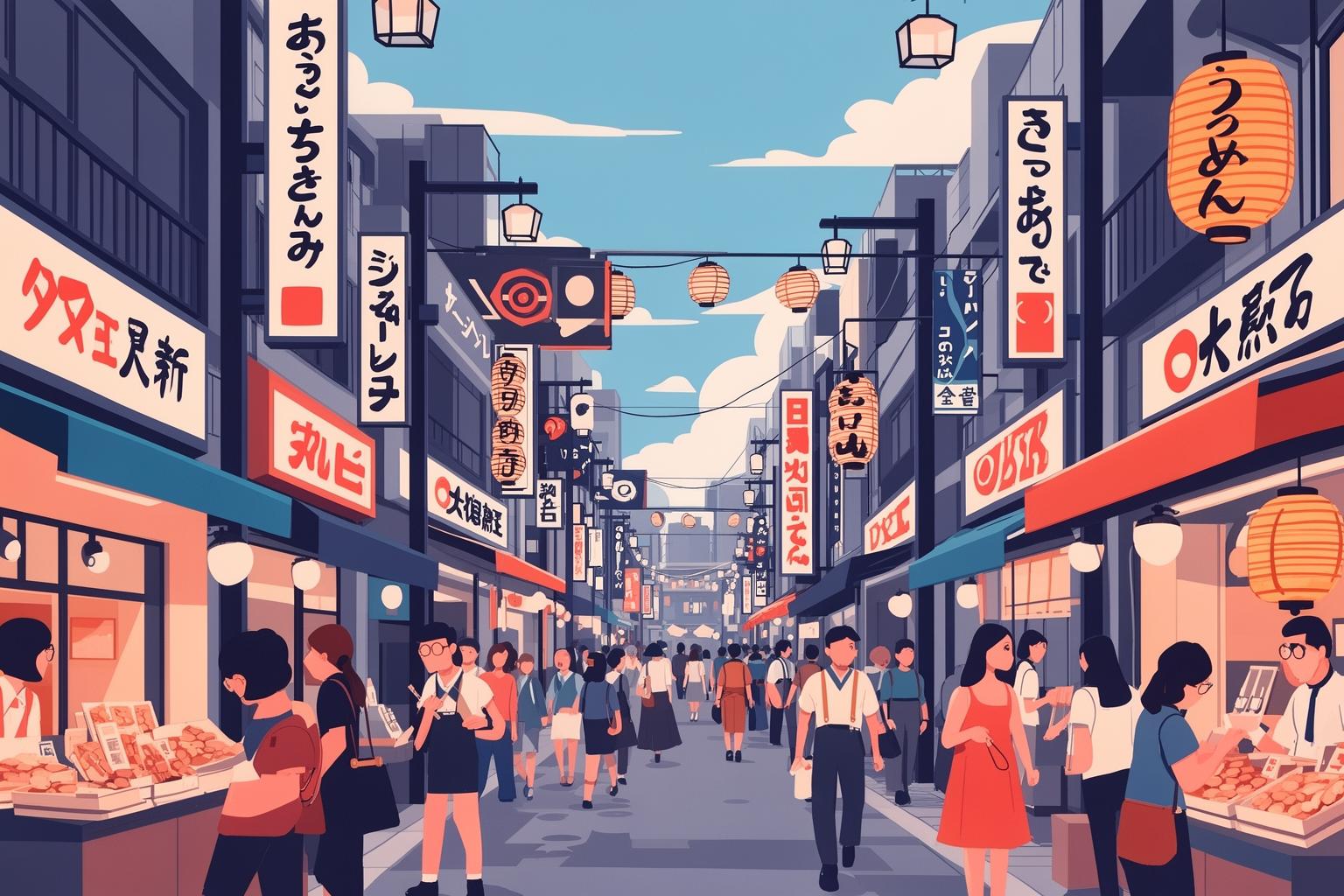
So, the culture and competition exist, but how do the actual economics function? Many foreigners, conditioned to believe that low prices indicate poor quality, are naturally suspicious. Is the produce old? Is the fish not fresh? In most cases, the answer is a firm no. The low prices stem from a highly efficient, low-overhead business model that prioritizes volume and speed above everything else.
Myth Busting: Cheap Doesn’t Mean Bad
The secret to the shotengai’s affordability lies in its supply chain and business structure. Numerous vendors have long-term relationships with local farmers or purchase directly from the central wholesale market early each morning. This eliminates multiple middlemen, significantly reducing costs. Moreover, their overhead is extremely low. They operate from simple, no-frills stalls rather than expensive retail spaces. They don’t invest in fancy packaging, marketing campaigns, or elaborate displays. All these savings are passed directly to the consumer. The core business philosophy is high volume, low margin. They would rather sell 200 cabbages with a small profit each than 20 cabbages with a high markup. Their aim is to have empty shelves by day’s end. This means the produce you’re buying is often incredibly fresh, sometimes picked just a day before. The slightly bruised tomato or oddly shaped cucumber? That’s not a sign of poor quality—it’s a sign of real food that hasn’t been bred for cosmetic perfection, and it’s sold at an even deeper discount.
The Ecosystem of Competition
Take a slow stroll down any major shotengai, like Tenjinbashisuji (the longest in Japan) or the more local Komagawa Nakano, and you’ll notice a deliberate, almost aggressive clustering of similar businesses. There won’t be just one butcher; there will be three, all within sight of each other. A fishmonger sets up shop directly across from another fishmonger. This isn’t poor city planning; it’s the engine of the price war. This hyper-concentration creates an arena of direct, unavoidable competition. If one shop sells chicken breast for 80 yen per 100g, the neighboring shop knows it must match or beat that price or offer noticeably better quality. Customers can compare prices and quality with a single glance, moving between stalls to assemble their shopping from the best deals each offers. This intense, geographically concentrated competition stops any single vendor from inflating their prices. It’s a self-regulating system powered by proximity and the ongoing pressure to provide the best value.
The ‘Time Sale’ and the Closing-Time Frenzy
For the truly dedicated bargain hunter, the shotengai offers moments of pure shopping bliss. Throughout the day, vendors might spontaneously announce a taimu seru (time sale) to quickly move a specific item. A call will go out—“For the next 10 minutes, all spinach is 50 yen a bunch!”—and a small, focused crowd will appear out of nowhere. But the grand finale is the last hour before closing. This is when the real magic unfolds. The vendors’ cheerful calls become more urgent, more desperate. Their main goal is to not take anything home. Prepared foods like tempura, croquettes, and yakitori are bundled together and deeply discounted. A tray of high-grade sashimi that was 1,000 yen at noon might be reduced to 500 yen, then 300 yen. Voices grow louder; handwritten signs with new, lower prices are slapped over the old ones. It’s a thrilling, fast-paced race to the finish line, and for residents who time their shopping right, it’s a chance to eat like royalty on a pauper’s budget.
Living the Shotengai Life: A Practical Guide for Residents
Embracing the shotengai is more than just a way to save money; it’s a means to immerse yourself in the local rhythm of Osaka. It calls for a shift in mindset away from the one-stop-shop convenience of a large supermarket toward a more lively and interactive method of sourcing your daily food.
Your Weekly Shopping Strategy
To get the most out of it, avoid coming in with a strict shopping list. Think of it as a treasure hunt. Your first step should always be a slow reconnaissance lap. Stroll the length of the arcade and notice who is shouting the loudest and what crowds are gathering. Your meal plan for the week should be flexible, shaped by what is fresh, plentiful, and affordable that day. If eggplants are practically being given away, it’s a perfect week for eggplant dishes. This approach not only saves you a lot of money but also connects you to the seasons in a way a supermarket never could. You buy what’s at its peak because that’s what’s cheapest. You’ll also come to rely on different vendors for various needs: your preferred tofu maker, your trusted butcher, and the fruit stand that always has the sweetest persimmons.
Beyond the Groceries: A Community Hub
The biggest mistake is to see the shotengai as merely a place to buy inexpensive groceries. It is the living, breathing heart of its neighborhood. Nestled between the fruit stands and fishmongers, you’ll find tiny teashops, old-fashioned pharmacies, stores selling comfortable everyday clothes, and small counters offering delicious, freshly made korokke (croquettes) or takoyaki. These arcades serve as vital community spaces, especially for the elderly. It’s where people catch up on local gossip, inquire about each other’s families, and sustain the social fabric of the neighborhood. When you become a regular, vendors begin to recognize you. The fishmonger will offer tips on preparing the fish you just bought. The vegetable vendor might set aside a particularly nice bundle of spinach for you. You shift from being an anonymous customer to becoming part of the local ecosystem. This human connection is increasingly rare in modern urban life but flourishes in the noisy, crowded, and warmly human corridors of Osaka’s shotengai.
Ultimately, the shotengai is an ideal metaphor for Osaka itself. It can seem a bit loud, chaotic, and rough around the edges compared to Tokyo’s polished elegance. But beneath the surface, it is remarkably efficient, deeply practical, and driven by a warm, unpretentious humanity. It’s a place where the city’s merchant spirit shines brightly, celebrating the simple, profound joy of a quality product at a fair price. Learning to navigate its rhythms and understand its language of shouted deals and stacked boxes is more than a life hack for living affordably in Japan. It’s a lesson in the heart and soul of Osaka. It’s the moment you stop merely living in the city and start truly belonging to it.