There’s a rhythm to Osaka that you feel deep in your bones, a percussive beat set by the clatter of a thousand kitchens, the boisterous laughter spilling from izakayas, and the relentless, forward-moving energy of its people. But to find the city’s true heart, its most intimate and unguarded melody, you must venture beyond the neon-drenched streets of Dotonbori and the towering heights of Umeda Sky Building. You must look for a different kind of landmark: a towering chimney, a gently swaying noren curtain marked with the simple kanji 湯 (yu), and the promise of steam. This is the entrance to the local public bathhouse, the sento, an institution that for centuries has served as the social nucleus of Japanese neighborhoods. In Osaka, a city renowned for its directness and warmth, the sento is not merely a place to cleanse the body; it is a space to soak the soul in the warm waters of community, to engage in a unique form of communication the Japanese call ‘skinship.’ It’s a concept that transcends mere physical proximity, referring to a deeper, non-verbal bond forged through shared experience and vulnerability. Here, in the steamy, echoing halls of a neighborhood bathhouse, stripped of the daily armor of clothes and status, you encounter the most authentic version of Osaka society in a ritual known as hadaka no tsukiai—naked communion. This is where barriers dissolve, conversations flow as freely as the water, and friendships are kindled in the most unassuming of ways. It is an experience that can feel intimidating to the uninitiated, a world governed by unwritten rules and subtle social cues. Yet, understanding this world is the key to unlocking a profound connection with the city and its people, a journey into the very essence of Osakan life.
To fully embrace this authentic rhythm of daily life in Osaka, one must also understand the realities of navigating its vibrant, yet often chaotic, city streets on a bicycle.
Echoes in the Steam: A Journey into the Historical Soul of the Sento
To fully appreciate the lively social atmosphere of an Osaka sento, one must first immerse themselves in its rich history. Public bathing in Japan is an ancient tradition, with origins tracing back over a thousand years to the tranquil temple baths of the Nara and Heian periods. Originally, these bathing facilities, called yuba, were reserved primarily for Buddhist monks performing purification rituals rather than for public leisure. The ideal of cleanliness, both physical and spiritual, is deeply ingrained in Japanese culture, and these early baths embodied that principle. It was not until the Kamakura period that public bathing began to democratize, as temples opened their baths to the sick and poor as an act of charity.
The sento as we know it today—a bustling commercial and social center—emerged during the Edo period. As cities such as Edo (now Tokyo) and Osaka grew with a rising population of merchants, artisans, and samurai, the demand for communal bathing facilities increased dramatically. Most commoners lived in cramped spaces without private baths, making the sento an essential part of daily life. In Osaka, Japan’s great merchant city, this development adopted a distinctly practical and communal nature. Known as the “nation’s kitchen,” Osaka was a center of commerce where social status was more fluid and relationships were founded on trust and mutual benefit. The sento became a level playing field—a place where a wealthy rice merchant and a humble cooper could soak in the same water, their conversations freed from the rigid social hierarchies that structured the outside world.
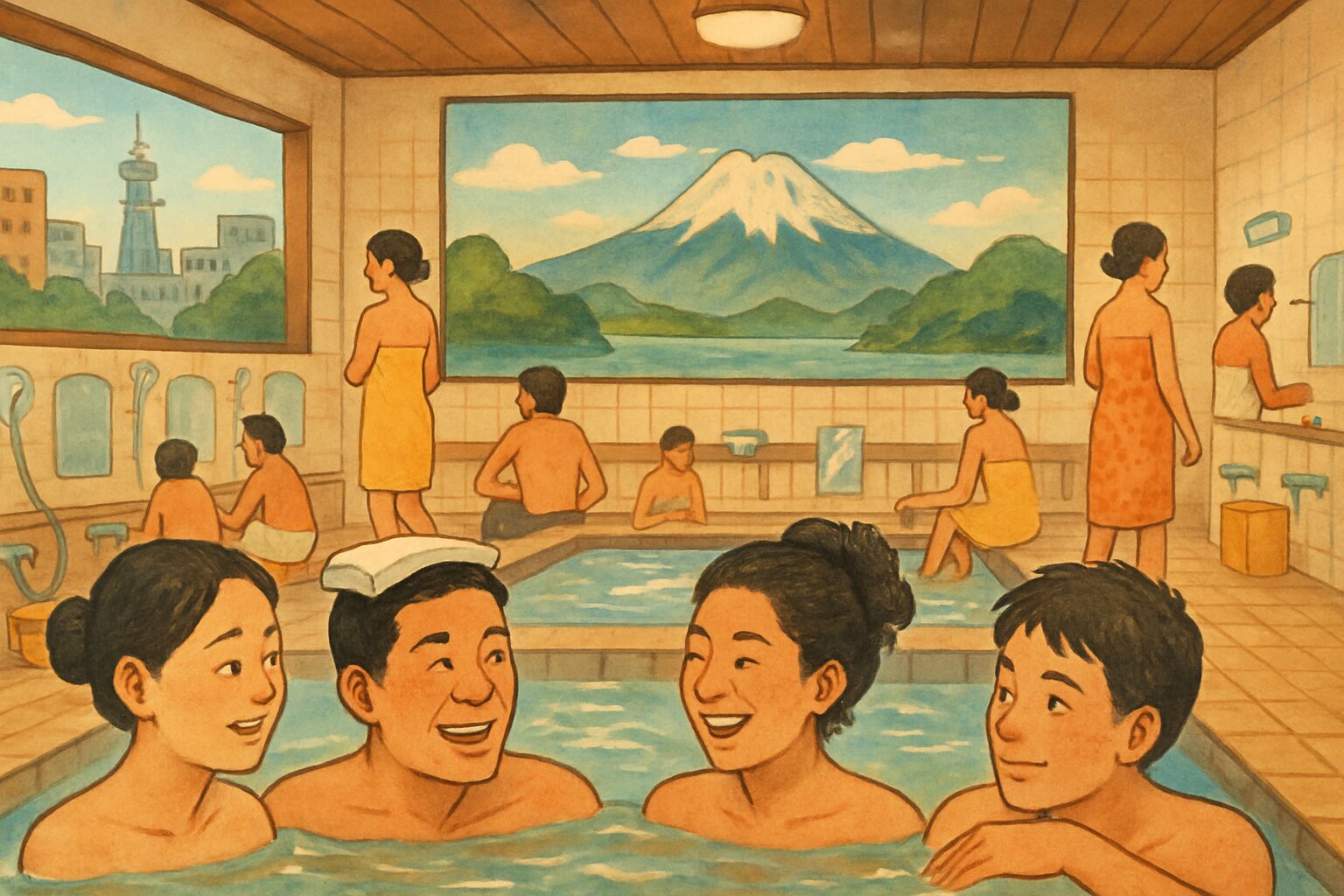
The architecture of the Edo sento also evolved, transitioning from simple steam baths (mushiburo) to the more familiar hot water baths (yuyasan). It was designed for both efficiency and community. The entrance often featured a raised platform called a bandai, where the owner sat to collect fees and oversee the men’s and women’s sections alike—a reflection of the open and straightforward nature of the establishment. The post-war era heralded another golden age for the sento. During Japan’s rapid reconstruction, the sento re-emerged as a crucial community pillar. It offered comfort and normalcy amidst destruction, a warm refuge where neighbors gathered to share news and reinforce social bonds. The iconic Mount Fuji murals, a hallmark of Tokyo sento, were painted to inspire hope and evoke a connection to an idealized, timeless Japan. While Osaka sento also adopted such murals, they often depicted local landscapes or auspicious symbols, highlighting the city’s strong local identity.
Today, sento face the challenges of modern life. The widespread availability of private bathrooms has led to a sharp decline in their numbers. Still, a strong wave of nostalgia and renewed appreciation for community have sparked a revival. Many of Osaka’s remaining sento are not just surviving but thriving, treasured by locals and delightedly discovered by newcomers. They stand as proud, steaming monuments to a way of life that values connection over convenience—a place where history is not simply read but felt on the skin.
The Unspoken Symphony: Decoding the Sento Ritual
Entering an Osaka sento for the first time is to immerse yourself in a living, breathing ritual—a series of actions refined over centuries. It’s a performance where every participant knows their role, creating a seamless flow that guarantees comfort and respect for everyone. The experience starts the moment you slide open the entrance door and hear the distinctive clatter of wooden geta on the tiled floor. The first stop is the getabako, a wall lined with small wooden lockers for your shoes. Sliding your footwear inside and taking the wooden key marks the symbolic beginning of leaving the outside world behind.
Next, you head to the bandai or, in modern establishments, the reception counter. Here, you pay the modest entry fee. The person behind the counter—often an elderly man or woman who has managed the bathhouse for generations—is the gatekeeper and heart of the sento. A polite nod and a simple “お願いします” (onegaishimasu) suffice. This is also where you can rent towels or buy soap and shampoo if you didn’t bring your own. Many regulars arrive with personalized sento kits in small plastic or woven baskets—a mark of a true enthusiast.
After paying, you proceed through the appropriate noren curtain—typically blue for men (男) and red for women (女). This leads into the datsuijo, or changing room, a testament to communal trust. Wicker baskets are usually provided for your clothes and belongings, placed on open shelves. Although coin lockers for valuables are generally available, the overall atmosphere is one of relaxed security. Disrobing is carried out without fuss or embarrassment. This is the great equalizer. Once your clothes are folded and placed in a basket, you are left with only your small modesty towel, or tenugui. This small, versatile cloth is your primary tool inside the bathing area. You are now ready for the main event.
Sliding open the glass door to the bathing area, you’re greeted by a wall of warm, humid air, heavy with the scent of soap and minerals. The soundscape features splashing water, echoing conversations, and the rhythmic tapping of plastic stools on the tiled floor. The first, and most important, step is the kakeyu. Near the entrance are large basins of warm water. Using one of the provided scoops, you must thoroughly pour this water over your body before entering any main baths. This isn’t just to wash off surface dirt; it also helps your body adjust to the heat and, more importantly, shows respect for the purity of the shared water. After the kakeyu, you move to the open washing station, or arai-ba. These consist of a low plastic stool, a faucet with hot and cold taps, and a handheld shower head. This is where the full washing ritual takes place. It’s considered rude to get soap or shampoo in the main tubs. You must lather, scrub, and rinse completely while seated on the stool to avoid splashing others. Observe the regulars; they perform this task with a meditative, practiced efficiency.
Only once thoroughly cleansed are you ready to soak. The main bathtubs, or yubune, come in a stunning variety. There may be a large bath with moderately hot water, ideal for a long, thoughtful soak. Often, a jetto-basu (jet bath) with strong streams massages your back and shoulders. For the adventurous, there’s the denki-buro (electric bath), where a mild current flows through the water, creating a tingling, muscle-relaxing sensation—use caution! You might also find a medicinal or herbal bath infused with seasonal ingredients like winter yuzu citrus or spring iris roots. Almost certainly, there will be a mizu-buro (cold water bath), an invigorating plunge pool designed for alternating with hot baths or following a sauna session. The key is to enter the tubs slowly and gracefully. The small towel should never enter the bathwater; it is either placed on your head—a classic sento style—or set aside on the tub’s edge.
The Art of ‘Hadaka no Tsukiai’: Forging Connections in the Nude
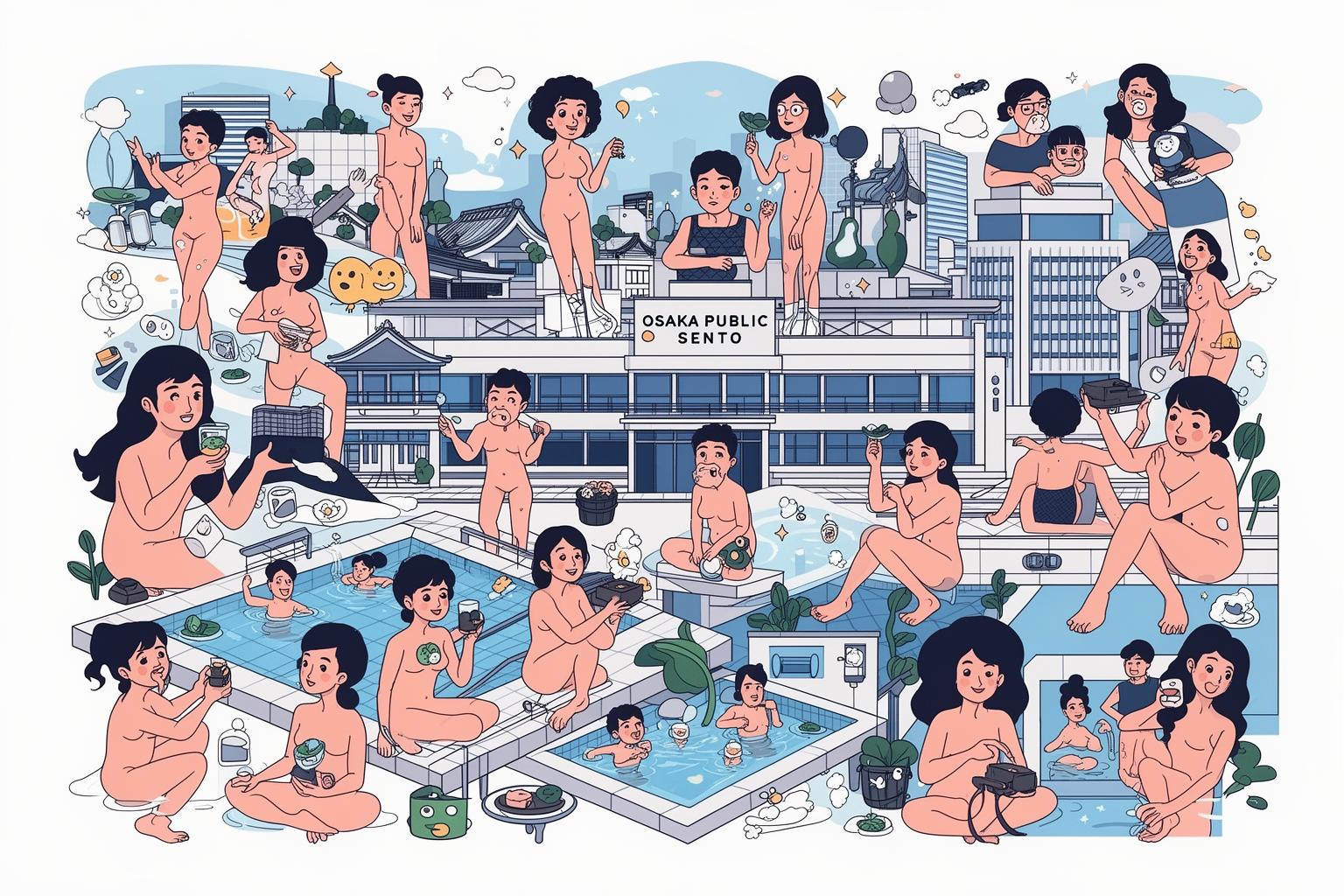
Now we reach the core of the matter: the subtle and uniquely Osakan art of making friends in the sento. While the bathing ritual is structured, the social aspect remains wonderfully fluid and organic. Hadaka no tsukiai—naked communion—represents the breaking down of social pretense. In Osaka, a city that values honesty and directness, this setting naturally fosters connection. Unlike the more reserved atmosphere typical of a Tokyo sento, where silence often predominates, an Osaka bathhouse frequently buzzes with conversation. The key is knowing how to join the chorus without sounding out of harmony.
Your initial experience in sento society will likely be as an observer. Tune in to the rhythm of the conversations around you. You’ll hear the melodic, fast-paced flow of Kansai-ben, the local dialect, which adds a sense of familiarity and casualness to interactions. Topics tend to be light and universal. The weather is an ever-reliable and popular opener. A simple “Eé tenki desu né” (Nice weather, isn’t it?) can earn you a nod and a smile. The bathwater temperature is another classic subject. “Kono oyu, chōdo eé anbai ya wa” (This water temperature is just right) might prompt a hearty agreement from a fellow bather.
In Osaka, compliments tend to be more direct and given generously. Don’t be surprised if an older gentleman remarks on your impressive physique or an obachan asks where you’re from with genuine interest. The best approach is to be open, friendly, and modest. A smile is a universal language, and a simple “Arigatō gozaimasu” can go a long way. Sports are a great conversation starter, especially when discussing the local baseball team, the Hanshin Tigers. Mentioning the Tigers’ recent game can unleash a flood of passionate commentary and shared camaraderie. Food, another great passion of Osaka, is also an ideal topic. Asking for a local takoyaki or okonomiyaki recommendation might earn you not just a suggestion but a new friend eager to share their city’s culinary pride.
It is important to distinguish between the emotional closeness of ‘skinship’ and actual physical contact. The shared nudity creates a sense of vulnerability and equality, yet personal space is still respected. Unsolicited touching is absolutely not part of the culture. The intimacy lies in the shared air, shared water, and shared conversation. Reading the atmosphere is an essential skill. If a section of the bath is quiet, with people soaking silently with their eyes closed, it is a cue to do the same. If a group is engaged in lively chat, you can gradually move closer and listen. If someone makes eye contact and smiles, feel free to offer a nod or a quiet greeting. The jōren-san, the regulars who have been coming to the same sento for decades, are the guardians of its culture. They often have their favorite spots and established social circles. Show them respect, give them space, and they will often be the first to warmly welcome a new face. Don’t try to force a friendship; rather, think of yourself as a guest in a communal living room. Be present, respectful, and open to connection. The friendships made here aren’t about exchanging business cards; they’re about simple, human acknowledgment in a space that celebrates our shared humanity.
A Practical Dip: Your First Osaka Sento Adventure
Starting your first sento experience in Osaka is less intimidating than it may appear. A bit of preparation can ensure the outing goes smoothly and is thoroughly enjoyable. The initial consideration is what to bring. Although most sento are ready to accommodate spontaneous visitors, arriving with a few essential items indicates familiarity. You’ll need two towels: a large one for drying off fully in the changing room, and a small one—the tenugui—for washing and modesty while moving around the bathing area. You should also bring your own soap, shampoo, and other toiletries. These are often available in small, single-use packets at the front desk for a reasonable price. Many sento provide a tebura setto (“empty-handed set”) that includes rental towels and basic toiletries, making it perfect for impromptu bathers. However, carrying your personal items in a small, waterproof bag or basket remains the traditional method.
Locating a sento is an adventure in itself. In older neighborhoods, they can still be identified by their tall chimneys. Look for the characteristic noren curtains at the entrance, usually marked with the character 湯 (yu) or the hiragana ゆ. While many modern sento or larger “super sento” facilities are clearly labeled, the small, family-run neighborhood sento offer the most authentic experience. A simple map search for “sento” nearby often uncovers hidden gems you might otherwise miss.
The timing of your visit can greatly influence your experience. For quiet reflection, try going on a weekday afternoon when the baths are less crowded, offering a peaceful retreat. On the other hand, if you want to enjoy the social energy of the sento, the busiest times are late afternoon through the evening, after work and school, when the neighborhood livens up, the baths fill, and the changing room buzzes with conversation. Weekends are predictably busy as well. Keep in mind that many traditional sento close one day a week, so it’s advisable to check their schedule beforehand.
One of the most delightful parts of the sento ritual happens after bathing. Once you’ve dried off and dressed, the experience continues. The changing room and lobby often serve as a place to relax afterward. Here, you’ll find classic post-soak refreshments. Vending machines are stocked with cold milk in nostalgic glass bottles—fruit milk and coffee milk being popular favorites. Few things match the satisfaction of drinking a cold bottle of milk after a long, hot soak. Many lobbies also have a television, often showing a baseball game or a variety show, along with chairs or benches where visitors unwind, cool down, and continue their conversations. This is a wonderful, low-key setting to extend a chat started in the bath. Taking a few moments here to soak in the relaxed atmosphere is an essential part of the complete sento experience.
Beyond the Bath: The Sento as a Cultural Touchstone
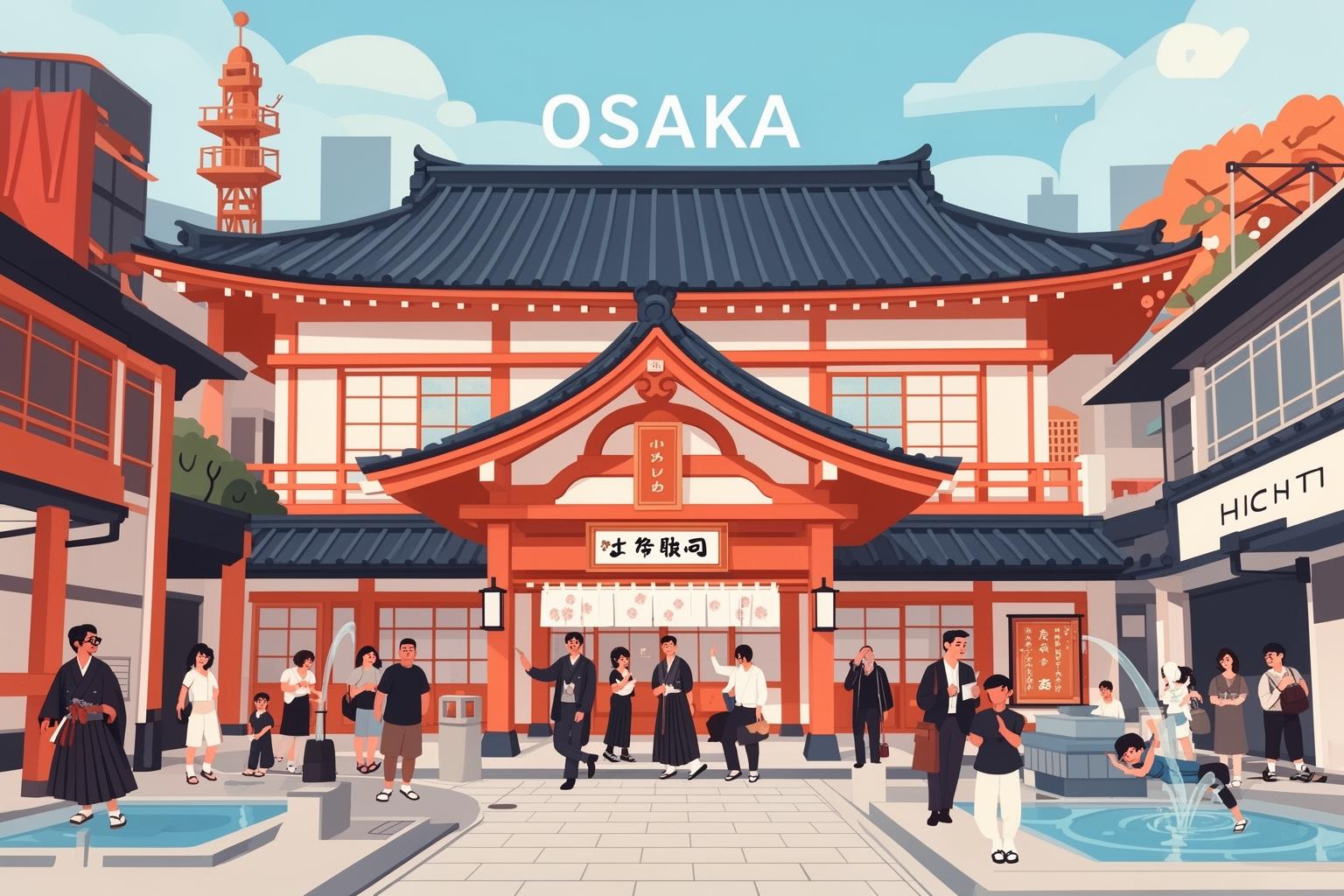
The sento is much more than just a bathing place; it serves as a microcosm of Japanese society and offers a powerful perspective for understanding some of its fundamental cultural concepts. The Japanese idea of uchi-soto, which distinguishes between one’s “inside” group and “outside” groups, is a key element of social interaction. The world is split between those you are close to (uchi) and everyone else (soto). This distinction can sometimes feel like a barrier for foreigners seeking deeper connections. However, the sento is a unique space where this divide temporarily dissolves. In the shared vulnerability of nudity, everyone becomes uchi, part of the temporary “inside” family of the bathhouse. This fosters an atmosphere of assumed trust and intimacy rarely found in other public spaces.
Art and aesthetics also hold significant importance in the sento experience. While the large mural of Mount Fuji is the most renowned example, the artistic details within a sento often evoke immense local pride. Look closely at the tilework, and you may discover exquisite, hand-painted Kutani-yaki or Arita-yaki tiles portraying folklore scenes, auspicious carp, or elegant floral patterns. The woodwork in the changing room, from the ceiling to the lockers, can be a masterpiece of traditional craftsmanship. Even the classic conical wooden bucket, the kerorin oke, is a design icon. These artistic features are not mere decoration; they represent a deliberate effort to create a space that is both functional and spiritually uplifting—a palace for the common person.
Historically, the sento has also stood as a pillar of community resilience. Following disasters like the Great Hanshin Earthquake in 1995, local sento were often among the first to reopen, frequently providing free baths to those who had lost their homes and access to running water. They became essential hubs of information and places of psychological comfort, reinforcing their role as an indispensable part of the social safety net. This spirit of mutual support and community care is deeply embedded in the very essence of the institution.
Looking ahead, the sento is evolving to survive and flourish. A new generation of owners is renovating old bathhouses with modern design sensibilities, creating “designer sento” that draw a younger audience. Some have added cafes, co-working spaces, or even craft beer bars. Innovative initiatives like “run-and-sento” events, where runners use the sento as a start and finish point for group runs, are reimagining the bathhouse as a contemporary wellness hub. This evolution ensures that, although the number of traditional sento may continue to decline, the spirit of communal bathing will endure, adapting to the needs of a new era while steadfastly upholding its core values of cleanliness, community, and connection.
A Warm Farewell
Exploring the world of the Osaka sento is like stepping into the warm, pulsating heart of the city itself. It starts with the basic, practical need for cleanliness and unfolds into a rich tapestry of history, ritual, and human connection. Overcoming initial hesitation and sliding open that door means accepting an invitation into a uniquely Japanese and distinctly Osakan experience. It is a place to find warmth not only in the water but also in the friendly smiles and casual conversations of fellow bathers. The sento imparts a quiet lesson in mindfulness, celebrating the simple joy of a hot bath and the deep comfort of community. It reminds us that beneath our clothes, titles, and nationalities, we are all fundamentally alike. So, bring a small towel, summon your courage, and take the plunge. You may arrive as a stranger, but you will leave feeling a bit cleaner, much more relaxed, and deeply connected to the vibrant, welcoming spirit of Osaka.