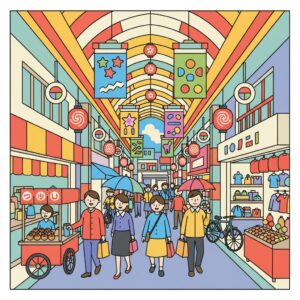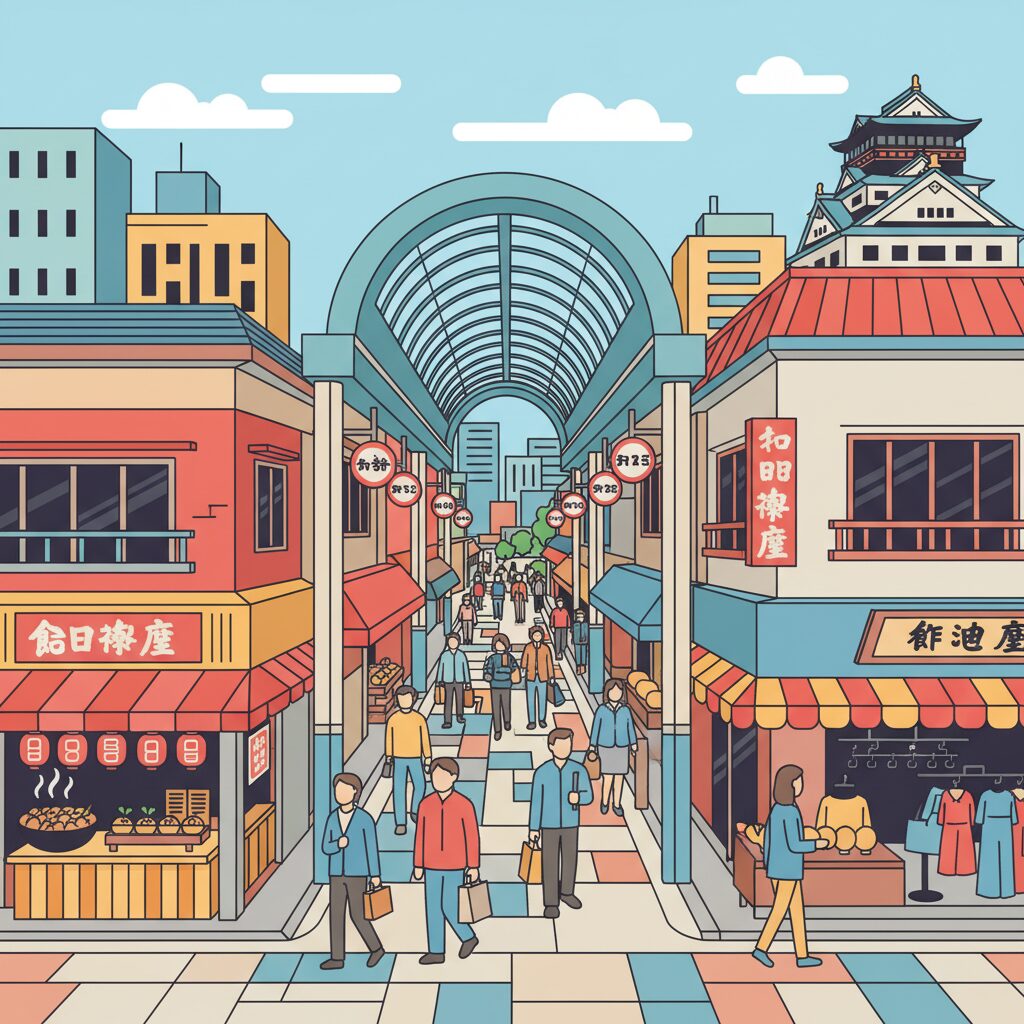
The image of an Osaka shotengai is etched into the collective consciousness of Japan. It’s a long, covered arcade, a river of commerce and community flowing through the heart of a neighborhood. You hear the rhythmic clatter of bicycles, the cheerful, booming calls of vendors—irasshaimase!—and the sizzle of takoyaki on a hot griddle. It feels like a relic from a different era, a vibrant, chaotic, and intensely human counterpoint to the sterile efficiency of modern life. For decades, these shopping streets were the city’s pantries and its living rooms. But in an age of Amazon deliveries and gleaming, multi-story shopping malls, many outsiders, and even some locals, have started to see them as charming but fading artifacts. The narrative of their slow decline has been a persistent hum in the background of urban discourse.
But here in Osaka, a city built on relentless pragmatism and an almost allergic aversion to waste, a different story is unfolding. As the global shift towards remote work rewrites the rules of professional life, these old-school arteries of commerce are undergoing a quiet, grassroots reinvention. They are not just surviving; they are evolving. Forget the sleek, glass-walled co-working spaces that dominate Tokyo’s corporate landscape. The Osakan answer to the new work-from-anywhere reality is far more integrated, more organic, and deeply woven into the existing fabric of the city. Old coffee shops, repurposed merchant houses, and forgotten corners of the arcade are transforming into informal hubs for a new generation of workers. This isn’t a top-down, city-planned initiative. It’s an emergent phenomenon, a perfect expression of the Osakan spirit: find a problem, find an existing resource, and mash them together until a practical solution appears. To understand this evolution is to understand the soul of Osaka itself—a city that honors its past not by preserving it in amber, but by finding a clever, new use for it.
These shotengai not only serve as evolving community hubs but also embody a uniquely Osaka pragmatic directness that mirrors the city’s resilient blend of heritage and innovation.
The Soul of the City: Understanding the Shotengai’s Historical Role
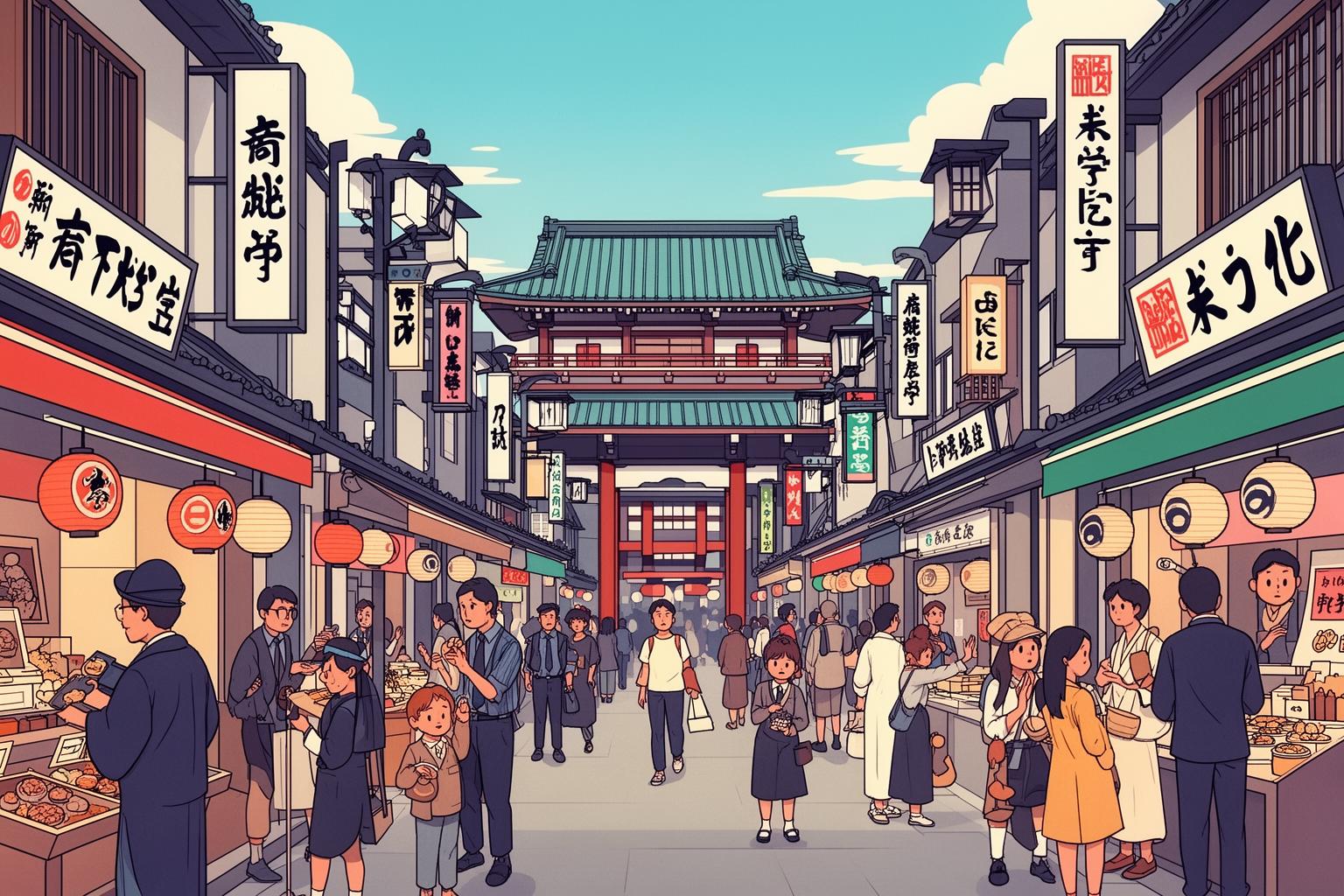
To understand why this transformation is distinctly Osakan, you first need to grasp what a shotengai truly represents. It is much more than just a cluster of shops sheltered by a rainproof roof. Historically, these arcades served as the lifeblood of neighborhood life. Osaka, known as the tenka no daidokoro or the ‘nation’s kitchen,’ became a powerhouse thanks to its merchants, its akindo. The shotengai embodied that merchant spirit physically. It functioned as a self-sustaining ecosystem grounded in face-to-face interactions and mutual trust. You didn’t merely buy fish from the fishmonger; you bought from Tanaka-san, who knew how you liked your mackerel filleted and would inquire about your mother’s health. The relationship was the transaction.
This nurtured a strong sense of local identity and community, known as jiban. Your jiban was your territory—the local network of people who knew and cared for you. The shotengai was the core of the jiban. It was where you received local gossip, celebrated festivals, and raised your children. It offered a robust social safety net and a profound sense of belonging that a sterile, impersonal supermarket could never provide. During the post-war boom, the shotengai was king. It was the lively, bustling hub of a world spanning only a few blocks in every direction but containing everything a family needed for daily life. This legacy of strong community integration is ingrained in their DNA; these places were never solely about commerce but about connection.
The ‘Shutter-gai’ Problem and the Tokyo Solution
However, the winds of change soon turned cold. The arrival of sprawling, American-style suburban malls, the convenience of 24-hour stores, and the dramatic shift to e-commerce began to undermine the shotengai’s central role. Younger generations drifted away, and the loyal customer base started to age. This led to a slow, creeping decline known as the shutter-gai phenomenon—shopping streets where an increasing number of storefronts were permanently shuttered with metal barriers. It became a symbol of Japan’s demographic and economic challenges, a poignant reminder of a bygone era.
In Tokyo, the response to urban decay often resembles a controlled demolition. The prevailing approach is large-scale redevelopment. Entire blocks of old, low-rise buildings are demolished to make room for gleaming, mixed-use skyscrapers like those in Shibuya or Roppongi. The solution is architectural shock and awe—a top-down, corporate-driven vision of the future. It’s efficient, profitable, and creates a sleek, modern aesthetic. Yet, it also tends to sterilize. The old communities, the quirky little shops, and the intangible sense of history are frequently wiped out, replaced by global chains and luxury brands. The human scale disappears, and though the new spaces impress, they can feel anonymous and disconnected from the city’s organic past.
This approach has never resonated with the Osaka mindset. Osakans are naturally wary of grand, top-down projects that erase local character. The idea of demolishing a perfectly serviceable, if slightly worn, building just to erect something shiny and new strikes many as wasteful and pretentious. There is a deep-rooted pragmatism here that values resourcefulness over polish. To many Osakans, the Tokyo method looks like throwing the baby out with the bathwater. Why destroy a community when you can adapt it?
The Osaka Answer: Grassroots Reinvention, Not Replacement
Osaka is offering its own solution. Rather than opting for demolition, the city is adopting a model of adaptive reuse. The shutter-gai issue is being seen not as a sign of decline, but as a chance for renewal. This movement isn’t led by government officials or real estate magnates; it’s a grassroots effort emerging from the streets, driven by young entrepreneurs, artists, and community-focused residents who recognize potential where others see deterioration.
An empty storefront is not a sign of failure; it’s a blank canvas. An old tofu shop, with its cool tiled floors and wooden counters, transforms into a specialty coffee roastery that also serves as a workspace. A multi-generational kimono store, unable to compete with contemporary fashion, is carefully converted into a quiet, book-filled café with reliable Wi-Fi. A dusty hardware store is reborn as a design studio. These new businesses don’t aim to erase the past—they honor it. They keep the old signage intact, preserve the original architectural features, and integrate the history of the space into their new identities. This approach is quintessentially Osakan: frugal, clever, and deeply respectful of what came before.
Picture a typical workday under this new model. You leave your apartment and enter the covered shotengai. You greet the woman at the vegetable stand as she arranges daikon radishes. You exchange nods with the butcher shop owner, the scent of fresh croquettes filling the air. You arrive at your ‘office’—a café located in what used to be a traditional teahouse. The owner, a young woman who returned to her family’s neighborhood, welcomes you by name and begins preparing your usual latte. You settle in with your laptop, while the ambient sounds of the arcade provide a soft, lively background—the distant rumble of a delivery truck, children’s laughter, and a time-sale announcement over the local loudspeaker. For lunch, you don’t order delivery; instead, you walk fifty meters to the family-run udon shop that’s been serving the same perfect noodles for seventy years. You’re not just working in a neighborhood; you’re an active participant in its everyday life.
More Than a Desk: The ‘Third Place’ in an Osaka Context
Sociologists refer to the ‘third place’ as a setting outside the primary environments of home (the first place) and the traditional office (the second place), which plays a crucial role in community building and creative thinking. In Tokyo, this third place might be a carefully designed, minimalist Starbucks or an exclusive, costly co-working space. While functional, these places tend to be transactional and anonymous—you pay for your spot, put on your noise-canceling headphones, and exist within a productivity bubble.
In contrast, the emerging shotengai workspaces in Osaka offer something fundamentally different. These third places are deeply and inseparably connected to your home and community. Far from being anonymous bubbles, they are open, social environments that provide a strong remedy to one of the biggest issues of remote work: social isolation. When home doubles as your office, it’s easy to feel cut off. But working from a shotengai café makes you a visible, engaged member of your community. The casual, everyday interactions—the small talk with the shopkeeper, the nod of recognition from another regular—form a network of weak ties that are essential for mental well-being. You become part of the neighborhood’s rhythm.
Networking happens here too, but it’s Osaka-style networking. It’s not about the forced pleasantries or business card exchanges typical of corporate mixers. Instead, it’s a slow, natural process of building relationships. You might start a conversation with the graphic designer at the next table or receive an introduction to a local artisan from the café owner. Business in Osaka has long thrived on these kinds of personal connections, grounded in trust developed over time. This environment naturally nurtures that traditional approach, adapted for the digital age. It encourages a sense of work-life integration instead of a strict work-life balance, weaving your work into the rich, complex fabric of your daily life and local community.
The Unspoken Rules of the Shotengai Workspace

For a foreigner wanting to enter this world, it’s essential to understand that these are not purpose-built offices. They are community spaces first, workspaces second. Successfully navigating them requires reading the atmosphere and respecting a set of unspoken rules that differ significantly from a global coffee chain.
First, embrace the energy. A shotengai is not a library. There will be noise. The butcher will be chopping, the fishmonger will be calling out the daily specials, and neighbors will be chatting loudly in the middle of the arcade. This is the lifeblood of the place. If you need absolute silence to focus, this isn’t the right spot. The appeal lies in the ambient hum of a living community, not the sterile quiet of a cubicle. It’s about feeling connected, not shutting the world out.
Second, be a regular, not just a customer. In a chain store, your relationship is purely transactional. Here, it’s relational. You’re expected to invest in the community you use. Make an effort to learn the owner’s name. Engage in small talk. Ask how their day is going. Don’t simply show up, open your laptop, and disappear into your screen for hours. Your social participation is part of the implicit rent for the space. It’s a two-way street. By becoming a familiar face, you move from being an anonymous user to part of the cafe’s fabric.
Third, respect the economics of the space. These are small, independent businesses running on thin margins. The unspoken rule of ‘one drink, one hour’ is a helpful guideline. Don’t occupy a prime seat all day nursing a single cup of coffee. Order lunch. Grab a snack in the afternoon. Be mindful of their busy hours and try to schedule your work during quieter times. Being a considerate patron helps ensure these valuable community hubs can continue to thrive. Consideration is a cornerstone of Japanese social interaction.
Finally, a little language effort goes a long way. While English can often get you by, making an attempt in Japanese, even if imperfect, signals genuine intent. It shows you want to belong to the local community, not just use its amenities temporarily. The direct, straightforward communication style of Osaka means people will likely engage with you. Being open to these conversations is key to unlocking the true value of working in a shotengai. You’re not just there for the Wi-Fi; you’re there for connection.
A Living Heritage: Why This Matters for Osaka’s Future
This quiet revolution in Osaka’s shotengai is more than a quirky trend; it is a crucial indicator of the city’s resilience and a roadmap for a more human-centered urban future. By repurposing old spaces for new functions, the city is preserving both its tangible and intangible heritage in the most sustainable way. These arcades are not turning into static tourist attractions or museum relics. Instead, they remain vibrant, living parts of the urban fabric, evolving to meet the needs of a new generation while maintaining their core character.
This model keeps economic activity intensely local. The money you spend on coffee and lunch supports a local family rather than a remote corporate headquarters. This deeply connects with Osaka’s independent and fiercely local spirit. It represents a form of economic development that strengthens communities from within, rather than imposing a generic, globalized vision from above.
For any foreigner wanting to truly understand what sets Osaka apart from Tokyo, spending a few workdays in a shotengai offers an essential education. It is here, amid the noise, commerce, and easy-going chatter, that you can feel the city’s genuine rhythm. You’ll witness Osaka’s pragmatism, its strong sense of community, its merchant ingenuity, and its remarkable ability to repurpose the old for new purposes. This is where the city’s past and future engage in an ongoing, creative dialogue, negotiating what it means to be a vibrant, modern city without losing its soul. This negotiation unfolds one repurposed shop—and one cup of coffee—at a time.