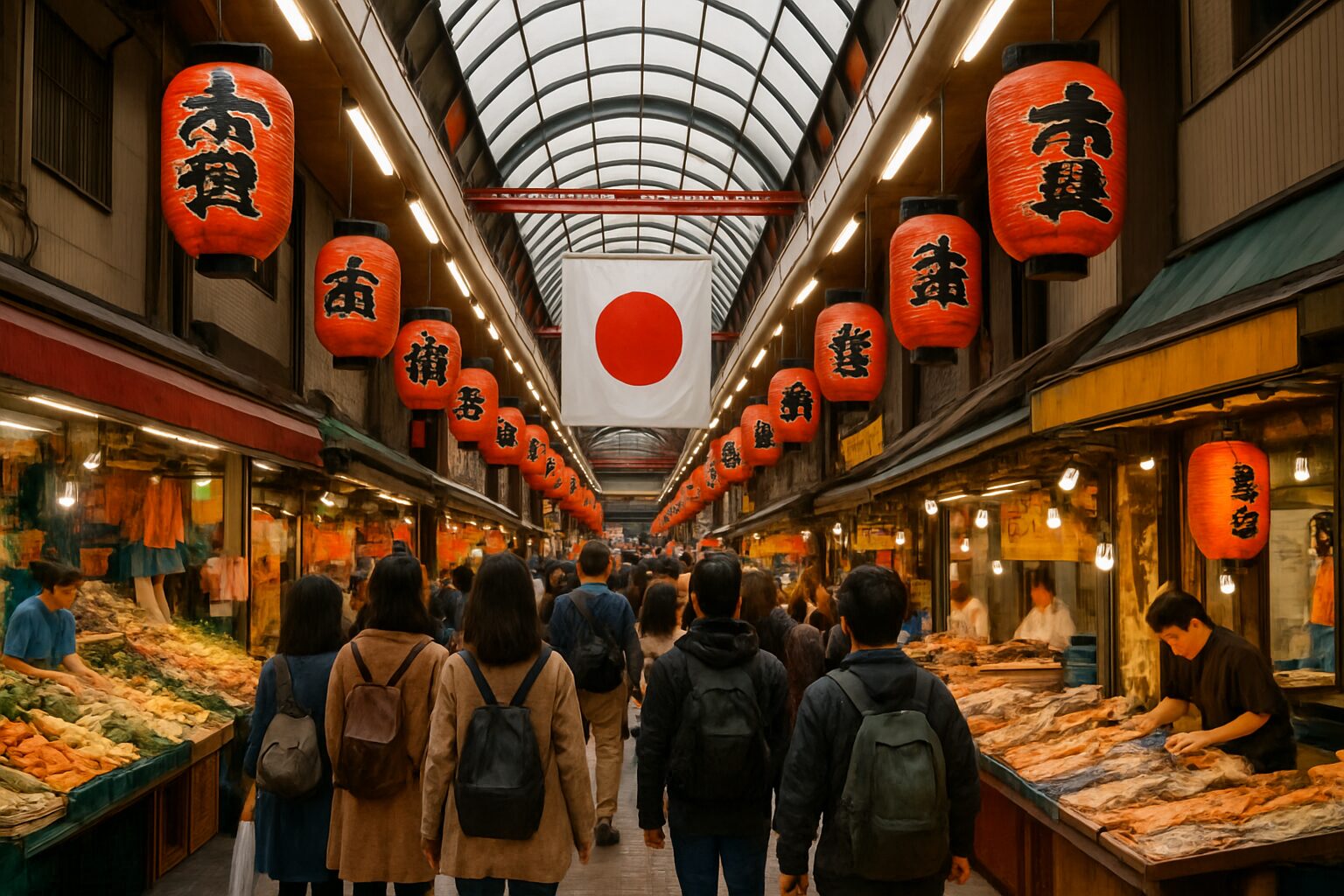
Welcome to Osaka, a city that pulses with an energy unlike any other. You’ve found your apartment, you’ve navigated the train system, and now you’re standing in front of an empty refrigerator. This is a rite of passage for every new resident, a moment that presents a fundamental choice about the kind of life you’ll lead here. Before you lie two distinct paths to stocking your kitchen, two philosophies of daily life that define the rhythm of this city. On one hand, you have the gleaming, automated, air-conditioned aisles of the modern Japanese supermarket, a temple of convenience and limitless choice. On the other, you have the chaotic, vibrant, covered arcades of the neighborhood shotengai, a living, breathing artery of commerce and community that has throbbed with life for generations. This isn’t just about buying groceries; it’s about deciding how you want to connect with Osaka. Will you embrace the predictable efficiency of the new, or will you dive headfirst into the boisterous, personal, and profoundly human world of the old? Each has its own irresistible allure, its own set of unwritten rules, and its own unique rewards. Your journey into the heart of Osaka’s culinary culture starts now, with this simple, daily decision. To get a sense of the scale and energy of one of Osaka’s most famous shopping arcades, take a look at the sprawling Tenjinbashisuji Shotengai, a perfect example of this incredible urban phenomenon.
This daily choice is also part of a larger shift in the region, as detailed in our article about the new era of high-value tourism in Kansai.
The Soul of the City: Stepping into an Osaka Shotengai
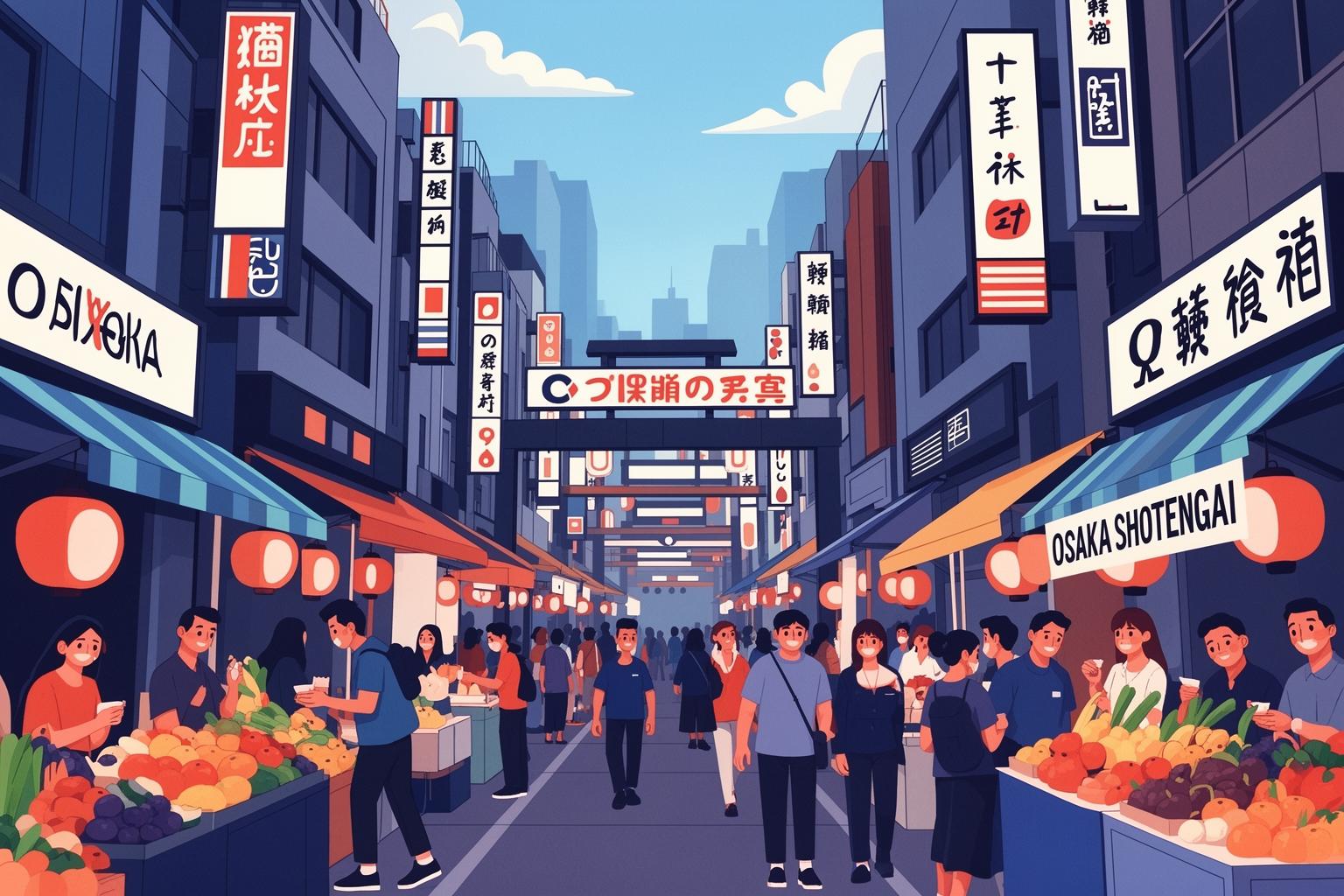
To step into a shotengai is to enter a different era, a distinct state of mind. The instant you pass beneath its covered roof, the manicured calm of the main street outside fades into a vibrant, roaring cacophony. It’s an immersive, full-body experience. There’s no soft, instrumental background music here; the neighborhood itself provides the soundtrack. It’s the rhythmic call of the greengrocer shouting out the day’s specials—“Kyabetsu yasui yo! Hyaku-en!” (Cabbage is cheap! 100 yen!)—the sizzle of oil as the butcher fries korokke (croquettes) for those passing by, the cheerful, high-pitched “Irasshaimase!” (Welcome!) echoed from every doorway, and the gentle hum of an elderly woman’s bicycle, its basket overflowing with daikon radish and green onions, as she expertly navigates the crowded walkway. It’s a sensory overload in the best sense, a place that captures your full attention and demands your presence.
A Symphony of Sights, Sounds, and Smells
The air is thick with a rich tapestry of aromas telling the story of every shop you encounter. One moment, you’re wrapped in the sweet, savory fragrance of soy sauce and mirin simmering in a shop specializing in nimono (stewed vegetables). A few steps onward, that scent is replaced by the salty, oceanic smell of a fishmonger’s stall, where gleaming silver-skinned fish rest neatly on beds of crushed ice. Then comes the earthy, clean scent of fresh tatami mats from a traditional weaver, followed by the nutty, comforting aroma of freshly roasted green tea from a tea merchant who has occupied the same spot for eighty years. The visual scene is just as vivid. Strings of red paper lanterns sway gently overhead, bold calligraphy on banners announce sales, and hand-written signs, taped to cardboard with endearing imperfection, advertise the price of today’s strawberries. Unlike the uniform fluorescence of a supermarket, the lighting here is varied and alive—a warm yellow glow from an old-fashioned butcher shop, stark white illumination highlighting the tofu maker’s pristine products, and natural sunlight filtering through the arcade’s glass roof, catching dust motes dancing in the air.
The Hyper-Specialized Haven
This is perhaps the most essential distinction between the shotengai and the supermarket: the philosophy of specialization. A supermarket is a generalist, a jack of all trades. A shotengai is a community of masters, each devoted to a single craft. You don’t simply go to “the store”; you visit your specific shops. You go to the yaoya, the greengrocer. There, the owner is not just a clerk; they are a vegetable expert who can tell you which spinach arrived fresh this morning, which persimmons are at their sweetest, and which potatoes are ideal for making nikujaga. The vegetables themselves are often different—they may be irregularly shaped, a little muddy, or retain a few more leaves than their perfectly sanitized supermarket counterparts, but they burst with flavor, often sourced from local farms just outside the city. They are unapologetically seasonal. You won’t find summer watermelons in the depths of winter. Instead, you’ll be guided to hearty daikon and napa cabbage, vegetables meant to be enjoyed now.
Then there’s the niku-ya, the butcher. Forget pre-packaged trays of meat wrapped in plastic. Here, large cuts of beef and pork hang in refrigerated display cases. You tell the butcher what you’re planning to cook, and a dialogue begins. If making gyudon, they will shave a block of beef into paper-thin slices right before your eyes. If you need pork for tonkatsu, they’ll select a thick, perfect loin cut and score it for you. They might even include a small chunk of fat free of charge to render in your pan, adding a depth of flavor that packaged meat can’t match. They know their products inside and out and take great pride in providing the perfect cut for your meal.
Next door is the sakana-ya, the fishmonger. The energy there is unmistakable. The owner, often clad in rubber boots and apron, moves with swift, practiced grace. They ask what you’d like to eat. For sashimi, they’ll point to the freshest, most beautiful block of tuna or sea bream, slice it with a long, elegant knife, arrange it artfully on a tray with shredded daikon and a plastic shiso leaf, and advise you to eat it tonight for optimal flavor. For grilled fish, they’ll recommend the seasonal sanma (Pacific saury) or aji (horse mackerel), and in a blink, they gut, clean, and lightly salt it for you, so you only need to bring it home and broil it. This level of service and expertise simply doesn’t exist in a world of pre-cut fillets on styrofoam.
And it doesn’t stop there. There’s the tofu-ya, where the owner rises before dawn to craft blocks of silken and firm tofu, fresh soy milk, and sheets of aburaage (fried tofu puffs). There’s the okome-ya, the rice specialist, who has dozens of rice varieties in large sacks and will mill it to your preferred degree of polish while you wait. There’s the tsukemono-ya, with barrels of colorful, pungent pickles, and the senbei-ya, where artisans grill rice crackers over charcoal. Each shop is a world unto itself, a tribute to the belief that mastering one thing perfectly is a noble endeavor.
The Unbeatable Bargains and the Art of the Deal
While some specialty items might come with a higher price tag, the shotengai often offers great bargains, especially on fresh produce. A large bag of bean sprouts for 30 yen, a bundle of spinach for 90 yen, five apples for 300 yen—the prices are often handwritten and fluctuate throughout the day. Then there’s the delightful culture of omake—meaning “a little extra,” a gift. Buy a few tomatoes, and the shopkeeper might toss in an extra one with a knowing wink. Purchase some pork, and the butcher might add some scraps perfect for soup stock. It’s not something you ask for; it’s a gesture of goodwill, a small token that strengthens the bond between customer and vendor. As evening approaches, the energy in the shotengai rises. Shopkeepers are eager to sell off the day’s remaining perishables, their calls grow louder, and prices drop sharply. This is the time to find incredible deals on vegetables, fish, and prepared side dishes. It’s a lively, competitive, and exhilarating experience, turning a simple shopping trip into a treasure hunt.
More Than Just Groceries: A Community Hub
Ultimately, the shotengai’s most vital role may not be commerce but community. It’s the neighborhood’s living room. It’s where you bump into neighbors and stop for a chat. It’s where local children buy their after-school snacks. It’s where seasonal festivals, or matsuri, happen, with temporary stalls selling fried noodles and games for kids. The shopkeepers become familiar faces. They watch you grow, ask about your family, notice when you get a haircut. They serve as the neighborhood’s unofficial guardians, custodians of its stories and spirit. Shopping here is an act of participation in this community. You are not an anonymous consumer; you are Tanaka-san from the third-floor apartment, the one who always buys silken tofu on Wednesdays. This sense of belonging, this ninjo (human warmth and empathy), is the priceless, intangible ingredient you bring home from the shotengai along with your groceries.
The Cathedral of Convenience: The Modern Japanese Supermarket
Now, step out of the shotengai and enter its modern equivalent: the supermarket, or suupaa. The contrast is immediate and striking. Automatic glass doors slide open with a soft whoosh, greeting you not with a chorus of shouts, but with a wave of cool, conditioned air and the subtle, unobtrusive melody of instrumental pop music. The chaos of the arcade gives way to a serene, almost reverent order. The floors gleam with a high polish, the lighting is bright and evenly distributed, and wide aisles facilitate the smooth, silent movement of shopping carts. This is a space designed for efficiency, clarity, and comfort—a controlled environment, a sanctuary from the unpredictable weather and noise outside.
A World of Pristine Perfection
If the shotengai is characterized by its charming, rustic imperfections, the supermarket is a testament to flawless presentation. Every fruit and vegetable appears as though handpicked by a pageant judge. The apples are perfectly round and uniformly red, stacked in immaculate pyramids. The cucumbers lie straight as arrows, each wrapped individually in plastic. Bunches of spinach are identical in size and shape, nestled in spotless bags. There is no dirt, no stray leaves, no oddly shaped carrots. It is a vision of agricultural perfection, reflecting Japan’s advanced logistics and quality control. This meticulous aesthetic extends throughout the store. Meat is neatly arranged on styrofoam trays, fish is hermetically sealed, and the shelves exemplify seiri seiton (sort and organize). Everything is in its proper place, creating a calming, predictable, and visually pleasing shopping experience.
One-Stop Shopping, Endless Choices
The supermarket’s greatest asset—its undeniable trump card—is convenience. Under one roof, you can find everything needed to run a modern household. You can pick up milk, bread, and eggs, then move on to the cleaning aisle for laundry detergent and sponges. Next comes the health and beauty section for shampoo and toothpaste. Need batteries? Stationery for your kids? A new pair of socks? The supermarket has it all. This consolidation of essentials is a huge time-saver for busy families and professionals. But it’s not only the breadth of categories; it’s also the depth of choice within them. Standing in the soy sauce aisle, you encounter dozens of options: light, dark, low-sodium, organic, gluten-free, dashi-infused, from various regions, in multiple bottle sizes. The same variety applies to miso, vinegar, cooking oil, and curry roux. The supermarket offers a dizzying array of choices catering to every possible dietary need, culinary preference, and budget. Want to try your hand at Italian cooking? There’s a dedicated section featuring imported pasta, canned San Marzano tomatoes, and a variety of olive oils. Feeling adventurous? You can find Thai green curry paste, Mexican tortillas, and American breakfast cereal. The supermarket serves as a global pantry and a gateway to flavors that the traditional shotengai cannot provide.
The Logic of Labels and the Predictability of Price
In the supermarket, there is no uncertainty. Each item is clearly labeled with a printed price, barcode, weight or volume, a list of ingredients, nutritional information, allergy warnings, and, most importantly, a precise best-by or use-by date. This eliminates all guesswork from shopping. You know exactly what you’re getting and precisely what it costs. Pricing is standardized and stable, often communicated through weekly flyers called chirashi delivered to your mailbox, advertising special offers. This predictability is reassuring. Additionally, the rise of private-label brands, such as Aeon’s Topvalu or Seiyu’s Minna-sama no Osumitsuki, provides excellent value on staple items. A carton of milk, a loaf of bread, or a bag of frozen vegetables from store brands is often significantly cheaper than name-brand equivalents, helping with meticulous budget management. This system is further supported by loyalty programs. The ubiquitous point card—requested at every checkout with “Pointo kaado wa omochi desu ka?”—rewards repeat customers with points redeemable for discounts. It’s a rational, data-driven system designed to encourage loyalty through tangible financial benefits rather than personal relationships.
The Lure of Prepared Foods (Sozai) and Bento Boxes
Any discussion of the Japanese supermarket is incomplete without acknowledging its remarkable prepared foods section, a treasure trove of sozai (side dishes), agemono (fried foods), sushi, and bento boxes. This section is a lifesaver for busy urbanites. As the afternoon progresses, it becomes a bustling hub. Gleaming display cases showcase an incredible variety of dishes: potato salads, seaweed salads, simmered pumpkin, grilled fish, yakitori skewers, and heaping piles of golden-brown fried chicken (karaage), tempura, and tonkatsu. Entire refrigerated areas are devoted to perfectly packed bento lunches and freshly made sushi sets rivaling those of casual restaurants. For solo diners, working parents, or anyone lacking time or energy to cook, this section is invaluable. It also features a thrilling nightly ritual: the discount sticker. Around 6 or 7 PM, an employee armed with a sticker gun begins marking down remaining prepared foods. A 20% off sticker may be followed by 30%, and then the ultimate prize: the hangaku (half-price) sticker. This sparks a quiet yet intense rush as shoppers snatch up delicious, high-quality meals at a fraction of the original price. It’s a uniquely Japanese form of bargain hunting—both practical and deeply satisfying.
The Great Debate: A Head-to-Head Comparison

The choice between shopping at a shotengai or a supermarket is about more than just logistics; it reflects a decision between two distinct value systems. Each has strengths where the other has weaknesses, creating an intriguing dynamic that shapes the daily lives of Osaka residents.
Freshness and Seasonality: The Garden vs. The Greenhouse
Both offer “freshness” when it comes to produce, but they interpret the term differently. At the shotengai, freshness means immediacy. The vegetables you purchase from the yaoya were likely harvested from a nearby farm just a day or two prior. They are closely tied to the current season. In spring, you’ll find tender bamboo shoots and bright rapeseed blossoms. In summer, stalls brim with juicy tomatoes, crisp cucumbers, and bitter melon. This strict seasonality encourages cooking in tune with nature, appreciating ingredients at their absolute peak. While the produce may appear a bit rustic, its flavor is often richer and more complex. In contrast, the supermarket defines freshness by longevity and appearance. Its produce travels through an advanced cold chain, a logistical feat ensuring that a crisp apple from Aomori or a perfect tomato from Kumamoto is available all year, looking just picked. This provides great convenience and consistency; you can enjoy a caprese salad in February if you like. The downside is a possible dulling of flavor and a disconnect from the local seasonal rhythm. It’s the difference between eating what is best now versus eating whatever you want, whenever you want.
Quality and Craftsmanship: The Specialist vs. The Generalist
This is where the shotengai truly shines. The quality from a specialist who has devoted their life to a single product is often unmatched. The butcher at the niku-ya intuitively understands the marbling of beef. They can advise on subtle differences between cuts and prepare your meat with skill honed through thousands of hours of practice. The fishmonger can identify exactly when and where a fish was caught and how its flavor will change depending on how you cook it. This represents artisanal quality, born of deep knowledge and passion. The supermarket offers good quality, certainly. Pre-packaged meat and fish are safe, hygienic, and consistent. Yet they lack that bespoke touch, the hand of a master craftsman. The selection is made by corporate buyers, chosen for standardization and shipping, not necessarily for unique character or peak flavor. For an everyday meal, the supermarket is perfectly suitable. But for dishes where the quality of a single ingredient should stand out, the shotengai specialist often proves the better choice.
Price Point and Value: The Bargain Hunt vs. The Point Card
Deciding which is cheaper can be complex and often surprising. The shotengai can offer remarkable bargains on seasonal produce, especially if you buy in bulk. As small, family-run businesses with lower overhead, they often beat supermarket prices on certain items. Meanwhile, the supermarket—with its vast purchasing power and efficient supply chains—can offer rock-bottom prices on staples, dairy, and private-label products. Savvy shoppers learn to navigate both: buying a week’s worth of vegetables at the shotengai for a few hundred yen, then popping into the supermarket for discounted store-brand milk, eggs, and bread. Value thus becomes a personal definition. Is it the absolute lowest total price, favoring the supermarket? Or the higher quality and larger quantity of fresh food for your money, favoring the shotengai? Does the butcher’s advice count as value? Is time saved by one-stop shopping a form of value? The answer depends on your priorities that day.
The Human Connection: A Conversation vs. A Beep
Here, the contrast is stark. A typical transaction at the shotengai is a conversation. It begins with a greeting, followed by your order. The shopkeeper might ask what you’re cooking, offer a tip, or comment on the weather. They’ll weigh your items, tell you the price, and you’ll pay—often in cash—exchanging a “thank you” (arigatou gozaimasu) and a “come again” (maido ookini, in Osaka dialect). This simple human interaction, repeated over time, builds genuine connection. You are seen, recognized, and part of a community. By contrast, the supermarket experience aims to minimize friction, often reducing human interaction. You quietly select items, and at checkout, the cashier scans them with machine-like efficiency. The exchange is brief and scripted: the total, a point card inquiry, a plastic bag offer. Increasingly, this is replaced by self-checkout, where your only interaction is with a touchscreen and the impersonal beep confirming payment. It is seamless, fast, and anonymous. For some, this anonymity is welcome; for others, it feels cold and isolating.
Time, Weather, and Convenience: The Ultimate Factors
On a sunny afternoon with time to spare, a leisurely stroll through the shotengai is one of life’s great pleasures. But on a hot, humid August day or a cold, rainy evening after work, the climate-controlled supermarket’s appeal is clear. Supermarkets usually open longer, often late into the night, catering to modern work schedules. Shotengai shops tend to open later in the morning, close earlier, and often close one day a week, requiring more planning. The supermarket suits the “big weekly shop,” with large carts and ample parking. The shotengai suits a more traditional, European-style rhythm: buying smaller amounts of fresh ingredients every day or two. The supermarket is a destination; the shotengai is woven into your daily walk. Convenience often tips the scales in favor of the supermarket, even for those who love the shotengai.
Finding Your Rhythm: The Hybrid Approach
After spending some time living in Osaka, you come to understand that the debate isn’t about choosing one option over the other. It’s not a fierce rivalry demanding loyalty to a single side. The true Osakan way embraces a hybrid approach, blending the strengths of both to create a shopping routine that is efficient, flavorful, and deeply fulfilling.
The Best of Both Worlds
Most locals develop their own customized system. The weekend might start with a big supermarket trip, where you stock up on essentials: milk, yogurt, butter, coffee, pasta, toilet paper, cleaning supplies, and perhaps some imported cheese or a bottle of wine. You gather the heavy, non-perishable staples that will support your meals for the week. Then, during the week, you make smaller, focused visits to the shotengai. On Tuesday, you might stop by the yaoya for fresh greens and the best-looking fruit. On Thursday, you visit the sakana-ya to pick up the day’s freshest catch. On your way back from the station, you drop in at your favorite butcher for freshly minced pork. This method lets you enjoy the unmatched freshness and quality offered by the shotengai’s specialists for key ingredients, while still taking advantage of the supermarket’s convenience and broad selection for everything else. It’s a rhythm that ties you to the seasons and community without giving up modern practicality.
A Practical Guide for Your First Osaka Shopping Trip
For newcomers, diving in can feel daunting, but some simple tips make it easier. When visiting the shotengai, it’s wise to bring cash. Though many shops now accept credit cards or digital payments, cash remains king, especially at small, family-run stalls. Bring your own reusable bags—your “my baggu”—since plastic bags often cost extra and carrying your own is eco-friendly. Don’t hesitate to use basic Japanese phrases. A friendly “Konnichiwa” (Hello), “Kore, kudasai” (This one, please), and “Arigatou gozaimasu” (Thank you very much) go a long way. If you want to be more adventurous, ask “Osusume wa nan desu ka?” (What do you recommend?). Shopkeepers are almost always happy to share their advice. At the supermarket, take a moment to learn the layout and check the weekly chirashi flyer near the entrance to see what’s on sale. Also, keep an eye out for those wonderful evening discount stickers in the prepared foods section—it’s a quintessential Japanese experience.
Discovering Your Neighborhood’s Heartbeat
While Osaka is home to famous, sprawling shotengai like the 2.6-kilometer-long Tenjinbashisuji or the tourist hotspot Kuromon Ichiba Market, the true charm lies in finding your own local neighborhood arcade. Every area has one, and it’s where your part of Osaka really starts to feel like home. Take a stroll. Explore the side streets. Discover the tofu shop with the warmest owner, the greengrocer with the tastiest tomatoes, the butcher who makes the crispiest croquettes. These small finds and budding relationships are what turn you from a visitor into a local. Your neighborhood shotengai is the surest way to uncover the true heartbeat of your new community.
In the end, your refrigerator may be full, but what you bring home is far more than just food. From the shotengai, you bring back stories, a connection to the seasons, and a sense of belonging. From the supermarket, you gain convenience, variety, and the quiet satisfaction of a well-planned shopping trip. Food shopping in Osaka is an ongoing journey, a daily ritual that defines your place within the intricate, delicious, and wonderfully human fabric of the city. Whether you find joy in the warm bustle of the arcade or the cool order of the supermarket aisle, you join in the rhythm of daily life that makes Osaka truly unforgettable.