You see them everywhere in Osaka. Tucked into the narrow arteries of a shotengai, crammed under a rattling train line, or glowing softly on a quiet residential corner. Tiny shops, restaurants for six, specialist bars, workshops overflowing with leather or clay or bicycle parts. And if you’ve come here from another country, or even from Tokyo, you might look at these impossibly small enterprises and ask a very logical question: How do they survive? In a country known for its corporate giants and its suffocating bureaucracy, how does so much small-scale, independent life flourish here?
Everyone assumes Tokyo is the center of the Japanese universe. It’s the magnetic north of ambition, the seat of government, the home of the colossal headquarters that scrape the sky. The money, the media, the power, the connections—they all seem to flow into that vast, glittering metropolis. So why do so many dreamers, makers, and hustlers plant their flags in Osaka instead? Why choose the city of comedians and takoyaki to build something from scratch, something to call your own?
The easy answer is rent. And yes, that’s a huge part of the story. But it’s not the whole story. It’s not even the most important part. To truly understand why Osaka is a fertile ground for entrepreneurs, you have to look past the balance sheets and into the city’s soul. It’s about a fundamentally different mindset, a culture forged not by samurai and bureaucrats, but by centuries of commerce. It’s a place where your value isn’t determined by the name on your business card, but by your hustle, your common sense, and the quality of your deal. This isn’t just a different city; it’s a different operating system for life and for business. It’s a place built by and for the ‘akindo’—the merchant—and that spirit changes everything.
This entrepreneurial hustle is evident even in the city’s infrastructure, where navigating the efficient Osaka Metro system mirrors the pragmatic, get-things-done spirit of its business owners.
The DNA of a Merchant City: Commerce Over Capital
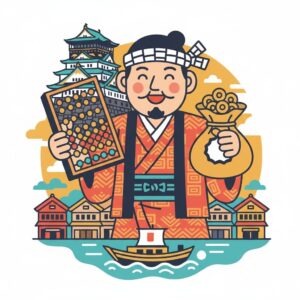
To truly understand Osaka, one must appreciate its historical rivalry with Tokyo, formerly known as Edo. Edo was the seat of the Shogun, serving as both the military and political capital. It was a city of samurai, strict hierarchies, rules, and formalities, where power flowed from the top down. Osaka, in contrast, was known as the ‘tenka no daidokoro’—the nation’s kitchen. It was the commercial center where rice and goods from across the country were gathered, stored, and traded. Its power was economic, and its heroes were not warriors but wealthy merchants who developed complex systems of commodity trading and credit. This fundamental difference in their origins continues to resonate through the centuries and shapes the business culture of both cities today.
Tokyo’s ‘Big Company’ Gravity vs. Osaka’s ‘Small Shop’ Galaxy
Life in Tokyo, especially for the ambitious, often revolves around its massive corporations. For many, the dream is to join a company like Mitsubishi, Sony, or Mizuho Bank. Success is measured by climbing the carefully structured hierarchy within one of these giants. The entire ecosystem supports this reality. Top university graduates are channeled into these firms, and networking events are polished occasions designed to connect people within established industries. The city itself stands as a monument to corporate power; its shining office towers in Marunouchi and Shinjuku are temples dedicated to the salaried worker.
Starting a small business in this environment can feel like swimming against a strong current. You are a small satellite trying to avoid the gravitational pull of massive planets. The discussions focus on securing Series A funding, rapid scaling, and potential IPOs. The pressure is intense because the context is corporate dominance. Your identity is defined by your relationship to this greater world—are you a supplier, a competitor, or a possible acquisition target?
Osaka presents a completely different landscape. It’s not a solar system with a few giant suns; it’s an expansive galaxy of countless stars, both large and small. The city’s heroes are entrepreneurs who began with nothing. Konosuke Matsushita, the founder of Panasonic, started tinkering in a tiny two-room tenement. Momofuku Ando invented instant ramen in a small shed in his backyard. This isn’t just ancient history—it’s living mythology. It reinforces the belief that greatness can emerge from humble beginnings and that you don’t need an elite degree or a corporate background to build something meaningful.
Wander through the business districts of Semba or Hommachi. You’ll see tall office buildings, yes, but they coexist with long-established wholesale shops, family-run suppliers, and small specialist firms that have operated for generations. The city’s economy is a dense and intricate mix of large and small enterprises. There’s a strong sense that being an independent business owner is a respected, normal path—not a risky departure from the norm. Tokyo feels like a meticulously curated high-end department store—everything polished, pristine, and perfectly arranged, with a price tag to match. Osaka, by contrast, is the sprawling, lively, chaotic marketplace next door. If you look carefully, you can find anything, negotiate the price, and maybe even carve out space to set up your own stall and start selling.
The ‘Akindo’ Spirit: It’s All About the Deal
In Japanese, the word for merchant is ‘shounin’ (商人), but in Osaka, the local term ‘akindo’ carries deeper cultural significance. An akindo is not just a seller. They are shrewd, pragmatic, unpretentious, and obsessed with value. The akindo spirit is the city’s driving force and often surprises outsiders, especially those used to Tokyo’s formal business manners.
Take the classic Osaka greeting often exchanged among older business owners: “Mokari makka?” (儲かりまっか?), meaning, “Are you making money?” The typical response is, “Bochi bochi denna” (ぼちぼちでんな), or “So-so, getting by.” In Tokyo, asking about someone’s profits would be considered a serious breach of privacy—rude and intrusive. But in Osaka, it’s a gesture of fellowship. It’s like two farmers talking about the weather—a quick, straightforward way of acknowledging shared struggles and goals: to run a successful business. It’s a verbal handshake saying, “I see you. I respect your effort. We’re in the same game.”
This practical mindset permeates every transaction. A fixed price feels, to those in Osaka, like a lack of imagination. Negotiation isn’t conflict; it’s a dialogue. It’s about finding a price that works for both sides. This applies not just to haggling over a television in Den Den Town but also to B2B deals, rent talks, and service contracts. When dealing with a supplier in Osaka, you’re not merely accepting a quote—you’re beginning a relationship. There will be give-and-take. They’ll want to understand your business, and you’ll want to grasp their costs. The goal is to reach a ‘nattoku’ price—a price both parties can feel good about. In Tokyo, transactions often feel sterile and procedural. In Osaka, they’re personal. This culture offers a huge advantage to small business owners on tight budgets, as it often allows for solutions through conversation and relationship-building rather than facing an unyielding price list.
The Practical Hurdles: Where the Rubber Meets the Road
Culture and mindset are vital, but a business also needs a physical base and a supportive community to truly flourish. It is within these practical, everyday realities that Osaka’s strengths become vividly, unmistakably apparent. For a new entrepreneur, these differences go beyond mere convenience; they represent the distinction between pursuing your dream and never leaving the starting line.
Rent: The Most Evident and Liberating Difference
To be blunt: rent in Tokyo is prohibitively expensive. Renting a small retail or office space in sought-after areas like Shibuya, Daikanyama, or Ginza demands a fortune. You’re paying not just for space but for prestige, foot traffic, and proximity to power. This financial hurdle is often overwhelming for self-funded entrepreneurs, thrusting them into a high-stakes game from the outset. Significant capital—whether from savings, loans, or investors—is essential just to open your doors. Once open, the heavy burden of monthly rent influences every decision. There’s no margin for error or slow growth.
In contrast, Osaka presents a very different scenario. Commercial rents are a fraction of Tokyo’s. A stylish storefront in trendy districts like Horie or Nakazakicho may cost less than a small, uninspiring office in a nondescript Tokyo suburb. This isn’t just a difference in numbers; it’s a change in mindset. It transforms the essence of entrepreneurship.
Lower rent means lower risk. You don’t have to wager your entire savings in the first year. You gain the freedom to experiment with your ideas, grow your customer base naturally, and learn from mistakes. The pressure to be an overnight success gives way to the possibility of steady, sustainable progress. It democratizes entrepreneurship. In Tokyo, being well-funded or well-connected is often a prerequisite. In Osaka, a good idea, a strong work ethic, and enough funds for a few months’ rent are usually sufficient. This relief from financial strain is arguably Osaka’s greatest gift to aspiring entrepreneurs.
Community Over Competition: The Strength of ‘Yoko no Tsunagari’
Networking in Tokyo tends to be formal and strategic. Known as ‘jinmyaku zukuri’ (人脈作り), or creating a network of contacts, it often feels hierarchical—aimed at connecting with someone higher up, like an investor, senior executive, or official. Business card exchanges at designed events characterize interactions that can feel transactional and cautious.
Osaka follows a different approach: ‘yoko no tsunagari’ (横の繋がり), meaning horizontal connections. It focuses on building relationships among peers, neighbors, and equals. Rooted in the city’s merchant heritage, this culture values mutual support as essential for survival.
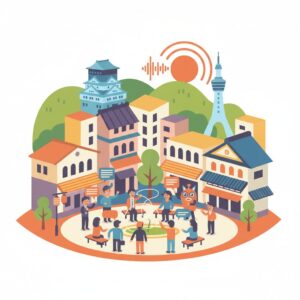
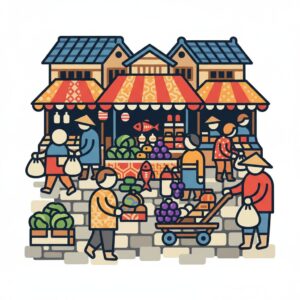
This is most evident in the numerous ‘shotengai’ (shopping arcades) around the city. Superficially, the butcher, fishmonger, and tofu maker seem to compete for local customers. In reality, they operate as a symbiotic community. They know each other’s families, exchange local news, refer customers, and collaborate on neighborhood festivals. They recognize that their collective well-being outweighs individual wins, with their true rival being the large Aeon supermarket on the outskirts.
This spirit extends beyond retail. Within creative and tech circles, a similar cooperative atmosphere prevails. Numerous coworking spaces, incubators, and informal meetups foster collaboration instead of cutthroat competition. People freely share information, offer advice, and make introductions without immediate expectations. There’s a shared belief that raising everyone benefits all. Whereas in Tokyo you may guard your ideas from competitors, in Osaka you’re more likely to brainstorm with them over a beer.
A Case Study: The Craft Coffee Shop
Consider the example of opening a small, independent craft coffee shop. In Tokyo, this would be intimidating. Sky-high rents in well-trafficked neighborhoods, direct competition with major domestic chains like Blue Bottle and Verve, and the need for a flawless, Instagram-ready space, an aggressive marketing campaign, and a standout story make the upfront investment enormous.
Picture the same venture in Osaka. You find an affordable, quaint ‘nagaya’ (row house) in areas like Karahori or Tenma. Rent is reasonable. Your initial funds focus on a quality espresso machine and premium beans, not lavish interiors. Neighbors—the vintage bookstore owner across the street, the gallery-running artist next door, the couple operating a tiny Italian restaurant nearby—become your first loyal customers. They spread the word. You supply coffee beans to the restaurant. The gallery asks to display local art on your walls. Another shop owner introduces you to a small-batch roaster in a nearby town. Instead of relying on a massive marketing push, you grow through genuine, local human connections. You weave yourself into the neighborhood’s fabric. This is entrepreneurship the Osaka way.
The Osaka Mindset: A Founder’s Best Friend (and Toughest Critic)
Establishing a business is one thing; surviving and thriving is quite another. This is where the distinct psychology of Osaka customers comes into play. For those used to the polite restraint found in other Japanese cities, it can be a surprising and sometimes challenging experience. However, if you can understand and embrace this mindset, it becomes a powerful asset for any small business.
‘Omoroi ka Dou ka’: Is It Interesting?
In Tokyo, value is often judged by status, brand, and presentation. Is it from a well-known brand? Has it been featured in a trendsetting magazine? Does it appear sleek and costly? The aesthetic often leans toward polished perfection, a ‘kirakira’ (sparkly, glittering) style.
In Osaka, the ultimate test for a business, product, or person is entirely different. It’s ‘omoroi ka dou ka’ (おもろいかどうか)—”Is it interesting or not?” ‘Omoroi’ is the local dialect form of ‘omosshiroi’ (interesting), but it carries a richer meaning. It blends funny, clever, unique, quirky, and genuinely engaging qualities. Osaka residents have a deep appreciation for character and low tolerance for anything they see as boring, pretentious, or bland.
This presents a fantastic opportunity for small businesses. You don’t need a huge budget to build a slick, polished brand. Instead, what matters is a compelling story, a unique angle, and a passionate personality. A slightly cluttered, eccentric interior can be more attractive than a minimalist, sterile one. A talkative, joke-cracking owner is an asset, not a sign of unprofessionalism. Authenticity outweighs perfection. Being a little rough around the edges, a bit quirky, is not a flaw; it’s a feature. That’s why Osaka is full of hyper-specialized businesses—a bar dedicated solely to 80s heavy metal, a bookstore focused on a single author, a café offering 50 varieties of pudding. These ideas might be too niche to survive Tokyo’s high-rent, trend-driven market, but in Osaka, their ‘omoroi’ factor helps them gather a devoted following.
The Directness Dividend: No Beating Around the Bush
One of the biggest challenges for foreigners doing business in Japan is navigating the culture of indirect communication. The concepts of ‘tatemae’ (public face) and ‘honne’ (true feelings) can be frustrating. You might leave a meeting in Tokyo feeling optimistic, only to encounter polite silence for weeks, never truly knowing the other party’s real thoughts. This ambiguity wastes significant time, money, and emotional energy.
Osaka is a remarkable exception to this norm. People here value directness—it’s a core part of their identity. If a potential client isn’t interested in your proposal, they are much more likely to tell you why, outright. They might say, “Akan, takai wa!” (“No way, that’s too expensive!”) or “Sonna mon, urarehen de” (“You’ll never sell that kind of thing.”).
To the unaccustomed, this can feel blunt or even rude. But for an entrepreneur, it is an invaluable gift. This direct feedback is pure, unvarnished market research. You always know where you stand. There’s no need to spend weeks trying to decode polite evasions. The same holds true for your customers. They will tell you exactly what they think about your product, service, and prices. An elderly lady might walk into your shop, pick up an item, and remark, “This is nice, but it would be better if you did it this way.” She’s not trying to insult you; she’s engaging seriously with your business and offering her input. This constant flow of honest, immediate feedback lets a small business adapt, iterate, and improve at a pace impossible in a more reserved culture.
The Flip Side: The Skepticism Barrier
This pragmatism and straightforwardness have a downside: Osakans are natural skeptics. They aren’t easily impressed by hype, buzzwords, or flashy marketing. The ‘akindo’ spirit sharpens their radar for real value. When evaluating your business, they quickly and thoughtfully consider: Is this product good? Is the price fair? Is this person trustworthy? Will this business last?
They respect ‘jitchi’ (実地), meaning actual substance and practical experience. You can’t just talk a good game—you must prove it. A flashy website and beautiful logo mean nothing if the product itself is mediocre or overpriced. You must earn their trust through consistent quality and fairness. The initial barrier to entry may feel higher than in other cities where surface appeal can carry you further. But once you’ve crossed that threshold—once you’ve demonstrated real value—you’ll find Osaka customers among the most loyal in the world. They become your champions, your advocates, your word-of-mouth marketing team. They stick with you through thick and thin because, to them, you are no longer just a transaction—you’re a trusted part of their community.
Daily Life as an Osaka Entrepreneur: A Tapestry of Neighborhoods
Osaka is not a single entity. The experience of running a business here is strongly influenced by the specific neighborhood you select. Each district boasts its own history, its own pace, and its unique commercial identity. Finding the right neighborhood for your business concept is like choosing the perfect soil to plant a seed. The city provides a rich and diverse environment suitable for nearly any type of enterprise.
Finding Your Niche, Finding Your Home
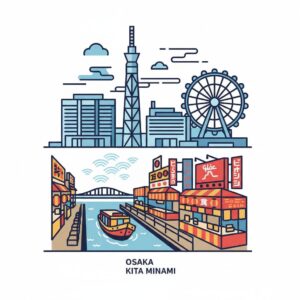
Let’s explore some of the key areas. If your business is B2B, especially related to textiles, tools, or traditional goods, consider Semba (船場). This area is the historic center of Osaka’s merchant class. Even today, its long covered arcades, such as the Semba Center Building, form a maze of wholesale suppliers. The atmosphere is old-fashioned, straightforward, and based on relationships that have lasted decades. Business here is still conducted with a handshake and a mutual understanding of the market. It’s ideal for those wanting to connect with the deep-rooted foundations of Osaka’s commerce.
For more modern, consumer-oriented businesses focused on design, fashion, or lifestyle, Horie (堀江) is the neighborhood to consider. Previously known mainly as a furniture district, it has evolved into one of Osaka’s trendiest areas, lined with independent boutiques, stylish cafes, and design studios. The vibe is sophisticated yet relaxed, less hectic than Tokyo’s Harajuku. It attracts customers who value quality craftsmanship and distinctive design, and are willing to pay for it.
If your business has an artistic, bohemian, or vintage spirit, then Tenma (天満) and Nakazakicho (中崎町) are your natural environments. These neighborhoods feature a maze of narrow, winding streets, pre-war wooden buildings, and hidden shops. Rent is affordable, the community close-knit, and customers are actively seeking unique items. It’s the perfect incubator for artists, craftspeople, vintage clothing vendors, and quirky, concept-driven cafes and bars. The energy here is creative, slightly gritty, and fiercely independent.
Don’t overlook the vast residential suburbs. Starting a bakery in Sakai, a family-friendly restaurant in Toyonaka, or a local workshop in Higashi-Osaka offers even lower costs and the opportunity to become a beloved part of a residential community. These areas host large, underserved markets that appreciate local businesses and the convenience of not needing to travel into the city center for everything.
The Rhythm of the City: Work-Life Integration, Osaka Style
Entrepreneurial life in Osaka feels different from that in Tokyo. The stereotype of the perpetually exhausted Tokyo worker, catching the last train home after midnight, is less typical here. While people work hard, there is a stronger sense of work-life integration rather than strict separation.
The idea of the ‘ikitsuke’ (行きつけ), your regular spot, is central to this rhythm. It might be the coffee shop where the owner starts preparing your usual order as soon as you walk in, the standing bar where you relax after a long day, or the okonomiyaki restaurant where you can casually meet with a supplier. These are not just places to eat or drink; they extend your office and social life. Business and pleasure blend naturally.
This is where genuine networking happens. It’s not at formal events; it occurs through spontaneous conversations with fellow local business owners at your ‘ikitsuke’ izakaya. You vent about a tough client, they recommend a reliable accountant. You mention you need a graphic designer, and the bartender shares her cousin’s contact. In Tokyo, networking is often scheduled; in Osaka, it’s a way of life, woven into everyday acts of eating, drinking, and belonging to a neighborhood. These frequent, casual interactions build a strong support system that is both professionally valuable and personally nourishing.
Beyond the Clichés: What Foreigners Often Get Wrong
For foreigners aiming to start a business in Osaka, the city’s distinctive culture can be both an asset and a challenge. Many newcomers arrive with preconceived ideas influenced by common stereotypes. Grasping the subtleties behind these clichés is essential for successfully navigating the local environment.
‘Friendly’ Doesn’t Mean ‘Easy’
One of the most common stereotypes is that people from Osaka are ‘friendly,’ and indeed, they are. They tend to be open, talkative, and quick to laugh. However, mistaking this friendliness for a lack of seriousness or an easy business climate is an error. In business situations, this outgoing demeanor serves as a tool—a way to quickly break down barriers and get to the core of the matter. They are sizing you up. The jokes, teasing, and personal questions about your hometown or your thoughts on takoyaki all form part of a social vetting process.
They want to understand what kind of person you are. Are you genuine? Can you take a joke? Do you have personality, or are you merely a walking business plan? They prefer to do business with individuals they like and trust. Their friendliness opens the door, but you still have to demonstrate your competence. Don’t confuse their casual banter with an invitation to slack on quality or promises. The ‘akindo’ is always mindful of the bottom line, even when laughing.
The Language Barrier is Different Here
Naturally, speaking Japanese is a significant advantage anywhere in Japan. Yet in Osaka, the challenge is more layered. The city takes immense pride in its dialect, ‘Osaka-ben.’ It’s more than just an accent; it represents a core part of local identity and a symbol differentiating it from the ‘standard’ Tokyo Japanese. Fluency in Osaka-ben isn’t expected, but showing appreciation for it, learning a few key phrases (‘ookini’ for thank you, ‘maido’ as a shop greeting), and not being put off when hearing it, goes a long way. It demonstrates respect and shows that you’re trying to connect with the local culture rather than just existing within it as an outsider.
The communication style itself also presents a barrier. It’s faster-paced and more overlapping. People might interrupt or talk over each other—not out of rudeness, but from enthusiasm and a desire to engage. For someone accustomed to a more orderly, sequential conversational style, this might feel chaotic. Learning to adapt, jumping in with your points without waiting for a perfect pause, is an essential skill.
It’s Not ‘Japan-Lite’
Finally, there’s a common but mistaken belief that because Osaka is more direct, casual, and less formal than Tokyo, it is somehow less ‘Japanese.’ This is fundamentally incorrect. Osaka is not a watered-down or Westernized version of Japan. It is a strong, alternative expression of Japanese culture, where the merchant-class values—pragmatism, community, value, and humor—take precedence over those of the warrior and bureaucratic classes.
All the fundamental principles of Japanese business still hold true. Trust is paramount. Long-term relationships matter more than short-term gains. Quality and reliability are non-negotiable. What differs is the process, the communication style, and the approach to building trust. In Osaka, that approach is more direct, more human, and more transparent. For the foreign entrepreneur willing to listen, learn, and engage with honesty and humor, it offers a path toward a business—and a life—that can be truly fulfilling.