
You see them everywhere in Osaka, tucked into the narrowest of alleyways, spilling light and noise onto the street under railway arches, or nestled in the labyrinthine shotengai shopping arcades. They are the tachinomi, the standing bars. From the outside, they can look intimidating—a crush of bodies, a wall of sound, a blur of motion. There are no empty tables to aim for, no host to greet you, just a small, sliding door and a room packed with people who all seem to know exactly what they’re doing. As a foreigner living here, your first instinct might be to just keep walking. You might wonder, “Is it okay for me to go in? How does it even work? What are the rules?” These are the right questions to ask, because a tachinomi isn’t just a place to get a cheap drink. It’s a dojo for learning the social rhythms of Osaka. It’s a theater where the city’s unique personality—pragmatic, efficient, boisterous, and surprisingly warm—is on full display. In Tokyo, a bar might be a place of quiet refuge or curated style. In Osaka, a tachinomi is an extension of the public square, a momentary community forged over cheap beer and grilled skewers. It’s where you’ll find the unfiltered soul of the city. This guide is your key to unlocking that door. We’ll break down the unspoken rules, the subtle cues, and the social choreography of the tachinomi, so you can step inside not as a tourist, but as a participant in one of Osaka’s most authentic daily rituals. Forget what you think you know about Japanese etiquette; this is a different world, and it’s time you learned how to navigate it.
For those curious about another unique aspect of Osaka’s social fabric, our nommunication culture guide provides insights that complement the authentic tachinomi experience.
What a Tachinomi Is (And What It Is Not)
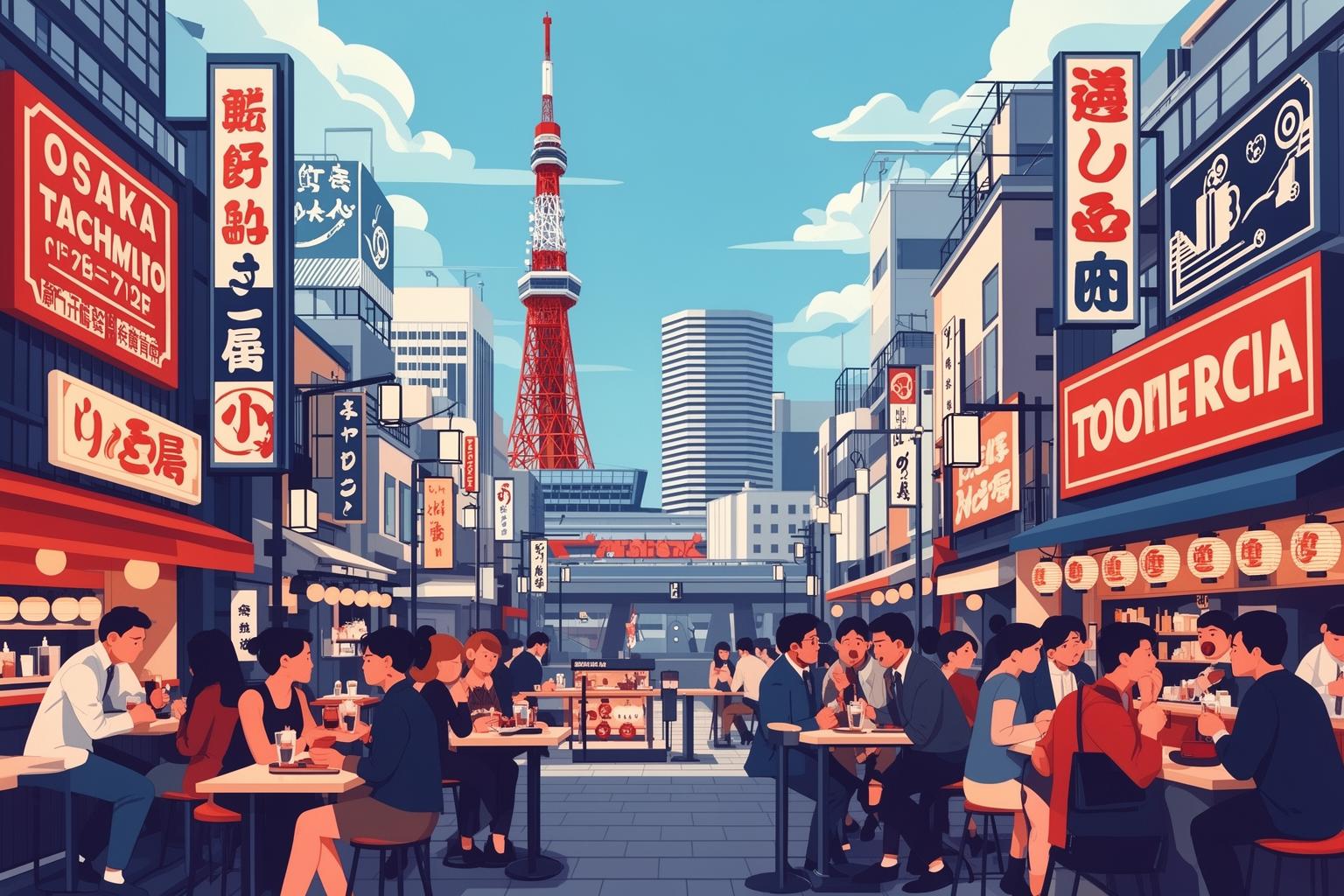
Before you even reach the door, it’s essential to adjust your mindset. A tachinomi serves a specific purpose, and grasping its role is the first step. Fundamentally, it’s a high-speed, efficient social lubrication spot. It’s not a restaurant meant for a slow, leisurely meal. It’s not a pub where you settle in for the entire evening. Instead, it’s a pit stop—a transitional zone between the structured world of work and the private realm of home. People come for a quick reset—one or two drinks, a few small plates, then they’re off to catch the last train. This approach directly reflects the Osaka merchant spirit, known as akinai. It emphasizes practicality, volume, and above all, kosupa—cost performance. Everything is pared down to its core function. There are no chairs because they encourage lingering, which reduces turnover. The decor is often minimal or nonexistent since you’re not paying for ambiance. The food is served quickly because time is money, both for you and the owner. You pay for good, honest food and drinks, delivered fast and affordably. Nothing more, nothing less. This practicality may seem brusque, but it’s not—it’s a sign of respect for your time and budget. Unlike the sleek, minimalist standing bars found in trendy Tokyo neighborhoods, an Osaka tachinomi is rarely about style. It’s about substance. The floor might be worn concrete, the walls plastered with handwritten menus yellowed by age and kitchen grease, and the air thick with the scent of grilled fish and simmering dashi. It’s a working-class institution that wears its grit proudly. So leave your expectations of polished service and quiet ambiance at the door. You’re stepping into a space built for speed, value, and human connection in its rawest form.
The Art of Entry: Reading the Room and Finding Your Place
Navigating the first thirty seconds inside a tachinomi is the most crucial part of the experience. It’s a silent choreography that decides whether you blend in smoothly or stand out awkwardly. The process begins even before you slide the door open.
Peeking Through the Noren: The First Assessment
Most tachinomi feature a noren, a fabric curtain, or a glass door that allows you to peek inside. Use this to your advantage. Your aim is to gauge the crowd density. Don’t search for empty seats, because there aren’t any. Look for gaps along the counter. Is there a narrow space between two people’s elbows? An unoccupied corner? An Osaka tachinomi operates on a different sense of personal space. What seems uncomfortably packed to a foreigner might be “roomy enough” to a local. The key is to find a body-sized gap, not a comfortable bubble. Observe the flow. Are patrons constantly coming and going, or is the crowd settled? A high-turnover spot is easier to enter since a space will likely open soon. The noise is another clue. A loud, lively buzz indicates a friendly atmosphere with flowing conversations. A quieter, more subdued environment may signal a bar with regulars and a more established dynamic, which might be harder for newcomers to break into. Don’t hesitate with this initial observation. It’s perfectly fine to pause, look, and assess. Charging in blindly is the biggest error. You’re not just searching for space; you’re sensing the nori, the rhythm of the place.
The Quiet Dance for Space
Once you spot a possible spot, you step inside. This is the moment of truth. Your first move should be to try and make eye contact with the staff, typically the owner or chef behind the counter, called the taisho. A quick nod and a questioning look—an eyebrow raise or slight head tilt—is all it takes. You’re silently asking, “Is it okay? Is there room for one more?” The taisho will respond. It might be a gruff nod toward an open spot, a simple “douzo” (please, go ahead), or just a glance acknowledging you. If they shake their head or raise a hand, it means they’re genuinely full. Accept it gracefully, bow slightly, and leave. Don’t argue or try to force your way in. If you get the green light, move toward your spot. This is where the social contract with your new neighbors begins. As you slide into the narrow space, a small, apologetic gesture is essential. A slight bow, a quiet “sumimasen” (excuse me), or “shitsurei shimasu” (sorry for the intrusion). Your neighbors will instinctively tuck in their elbows and shift just enough to let you in. They understand the system. In return, you’re expected to do the same. This is the charm of the tachinomi: a shared space governed by mutual, unspoken respect. You’re not intruding; you’re becoming part of a temporary collective.
Marking Your Spot: The Minimalist Mindset
Now that you have your tight slice of counter, you need to stake out your area. The key word is minimal. Your personal space extends only as wide as your shoulders and no more. Find the hook under the counter for your bag or jacket. If there isn’t one, keep your bag at your feet, tucked in tightly. Never, ever set your bag on the counter. The counter is sacred ground for food and drinks only. Place your phone face down next to your drink, not sprawled out before you. Your entire setup should be compact. You are a puzzle piece, and your task is to fit neatly into the whole. Spreading out your belongings is like shouting in a library. It reveals a misunderstanding of the shared environment. This compressed physicality sharply contrasts with the often rigidly defined personal bubbles found elsewhere in Japan. On a Tokyo train, people might stand inches apart but maintain an invisible barrier. In an Osaka tachinomi, close proximity is a feature, not a flaw. It’s an invitation to connect, a lowering of social walls that begins simply by sharing a small section of counter space.
The Language of Ordering: Efficiency and Directness

In a bustling tachinomi, there’s no room for hesitation or formal politeness. Ordering is an art that combines efficiency with attentiveness. It’s yet another way Osaka’s straightforwardness stands out, and mastering it will help you feel like a local.
First Things First: The “Toriaezu Biru” Tradition
Once you’ve settled in, the initial order is almost always the same. You catch the staff’s attention and say, “Toriaezu biru.” This literally means “Beer for now” or “I’ll start with a beer.” It’s more than just an order; it’s a cultural signal. It shows you understand the pace of the place. It gives you time to look around and choose your food while getting a drink quickly, helping you blend into the rhythm of the bar. The staff appreciates this because it’s efficient—they can grab a bottle or pour a draft without a lengthy exchange. While enjoying that first beer, take a moment to carefully consider your options. Don’t expect a glossy, laminated menu. Usually, the menu is handwritten on paper strips (tanzaku) pasted to the walls or displayed on a chalkboard behind the counter. This adds to the charm and means the offerings change daily, depending on what’s fresh at the market. If your Japanese reading isn’t strong, this is your first chance to engage.
How to Order Food Without a Menu
If you can’t read the wall menus, don’t worry. You have several better options than pulling out your phone to try a translation app. First, use your eyes. Look at the dishes on the counter in front of you, often laid out in large trays called obanzai. These are pre-prepared, home-style dishes. You can simply point and say, “Kore, kudasai” (This one, please). That’s a perfectly acceptable way to order. Second, observe what your neighbors are eating. If something looks tempting, lean over with a friendly smile and ask, “Sumimasen, sore wa nan desu ka?” (Excuse me, what is that?). Nine times out of ten, your neighbor will be happy to explain—and might even offer you a taste. This is a classic Osaka icebreaker, a compliment to their choice and a sign of genuine curiosity. Lastly, you can trust the taisho. Make eye contact and ask, “Osusume wa?” (What do you recommend?). The taisho will likely assess you and suggest one of their signature dishes, something they take pride in. This show of trust often results in the best food in the house. The key is to be proactive and engaged. A tachinomi isn’t a place for passive dining.
The Social Dance: Interacting with Staff and Strangers
This captures the essence of the tachinomi experience. The compact space and casual vibe are meant to foster social interaction. While you can certainly enjoy a quiet drink by yourself, you’d be missing the main point. The true magic unfolds when you connect with the people around you.
The Taisho: More Than Just a Chef
The person behind the counter, the taisho (master) or mama-san (female owner), serves as the sun around which the entire tachinomi system revolves. They are not merely staff; they act as the host, conductor, and often the central figure. Building a rapport with them is essential. Observe how regulars engage with them—it’s a blend of respect and casual banter. Address them warmly but respectfully. When you receive your food or drink, a simple nod and “doumo” (thanks) will suffice. When it’s time to leave, saying “Gochisousama deshita” (Thank you for the meal) is important—a gesture of appreciation for their effort. The taisho is a keeper of stories and a source of local knowledge. If you become a regular, they’ll remember your preferred drink, ask about your day, and even introduce you to other guests. This relationship is personal and deeply fulfilling. It’s a stark contrast to the impersonal, transactional service found in chain restaurants. In Osaka, this personal connection is highly regarded. A great taisho is the reason customers keep coming back.
Your Neighbor, Your Temporary Best Friend
The person beside you, your otonari-san, is not someone to be ignored but rather a potential conversation partner. The unwritten rule in an Osaka tachinomi is that it’s perfectly fine to chat with strangers; in fact, it’s often expected. This can be a big cultural shift for many foreigners, given Japan’s usual reserve. The key is to keep it casual and relevant to the situation. A great way to start is by commenting on their food. Another common opener is asking for a drink recommendation: “What’s that sake you’re drinking? Is it good?” People in Osaka generally love to talk (oshaberi) and are genuinely curious. They’ll ask where you’re from, why you’re in Japan, and what you think of their city. Expect direct questions and lighthearted teasing. This is not meant to offend; rather, it’s a form of closeness. If someone jokes with you, the best response is to laugh and banter back. This style of conversation, known as nori tsukkomi, functions like verbal volleyball, and joining in shows you understand the local culture. However, it’s important to recognize the nature of this bond—it’s a “situational friendship.” You might share a fun, lively conversation lasting an hour, but that doesn’t mean you’re destined to be lifelong friends. This connection exists only within the walls of the tachinomi and only while you’re there together. Attempting to exchange contact information can feel awkward and break the unspoken rule of transient interaction. Cherish the moment for what it is: a brief, genuine, and often memorable human exchange.
Unspoken Taboos: What Not to Do
To enjoy a smooth experience, there are some things you should avoid. The biggest is lingering. A tachinomi relies on turnover. Prices stay low because they serve many customers quickly. A typical visit lasts about 30 minutes to an hour. Ordering one drink and nursing it for two hours is a serious faux pas. When you’re done, you should pay and leave, freeing up space for the next person. Another no-no is being obnoxiously loud. The bars are naturally noisy, but it’s a communal, conversational buzz. Don’t be the person yelling into their phone or having a disruptive argument. Gauge the room and adjust your volume to match the general atmosphere. Finally, avoid being messy. In the tight space, spilling drinks or dropping food affects those around you. Be mindful of your movements. Regarding payment, be prepared. Most tachinomi are cash-only. Some operate on a cash-as-you-go system (kyasshu on), where you pay for each item as it arrives. You’ll often be given a small bowl or tray to place your money, and the staff will handle change. Others keep a tab. Watch what others do to understand the system. Fumbling with a credit card at the end marks you as inexperienced.
The Graceful Exit: Paying and Disappearing

Just as there is an art to entering, there is also a technique to leaving. Your departure should be as swift and efficient as your arrival. When you’re finished, catch the taisho’s eye and say clearly, “Okaikei onegaishimasu” (The bill, please) or, more casually, “Okanjo.” They will quickly calculate your total. Have your cash ready. Placing the exact amount on the tray is a smooth gesture, but receiving change is perfectly acceptable too. Once you’ve paid, gather your belongings promptly. This is the final and most important step: the goodbye. Offer a heartfelt and sincere “Gochisousama deshita!” to the taisho—this is essential. It serves as the closing note of your experience. Then, turn to the neighbors you spoke with. No lengthy farewell is necessary; a simple nod, a small smile, and a quiet “Osaki ni” (short for osaki ni shitsurei shimasu, meaning “excuse me for leaving before you”) will do. It’s a polite acknowledgment of your shared time. And then, you’re gone. You slip back out the door and fade into the night, leaving the warm bubble of the tachinomi behind. The fleeting nature of the experience is part of its charm. You were part of a small, temporary community, and now you’ve made way for someone else to take your place.
Why Tachinomi Is Quintessentially Osaka
The tachinomi is more than just a spot to drink; it serves as a living museum of Osaka culture. It captures the city’s core values in a way few other places do. The emphasis on kosupa reflects the pragmatic, no-nonsense spirit of a city shaped by merchants. Why pay for extras when the essentials—the food and drink—are superb? The straightforward, fast-paced communication reveals a preference for honesty over theatrical politeness. Casual conversations with strangers highlight a culture that cherishes open-hearted curiosity and shared experiences rather than strict social boundaries. This contrasts sharply with Tokyo, where public social interactions tend to be more reserved and formalized. In a Tokyo bar, you might be surrounded by people yet feel completely alone. In an Osaka tachinomi, even if you’re alone, that feeling rarely lasts. Someone will almost always pull you into their circle. What foreigners often misinterpret is that this friendliness isn’t staged for tourists—it’s the default state. It’s how the city’s social fabric is woven through these small, everyday encounters. Living in Osaka means learning to navigate these spaces, to value the charm of the unrefined, and to find community in the most unexpected places. The tachinomi teaches you to be observant, open, and willing to take social risks. It reveals that a city’s soul lies not in its grand monuments, but in the simple, daily rituals of its people, standing shoulder-to-shoulder, sharing a drink and a story at a well-worn wooden counter.