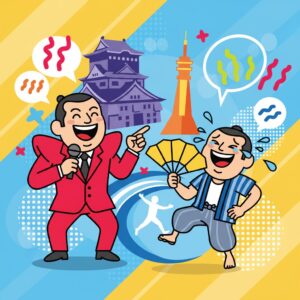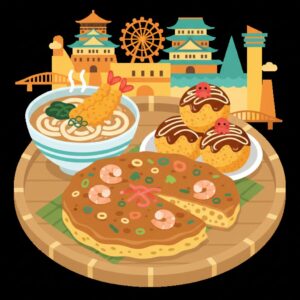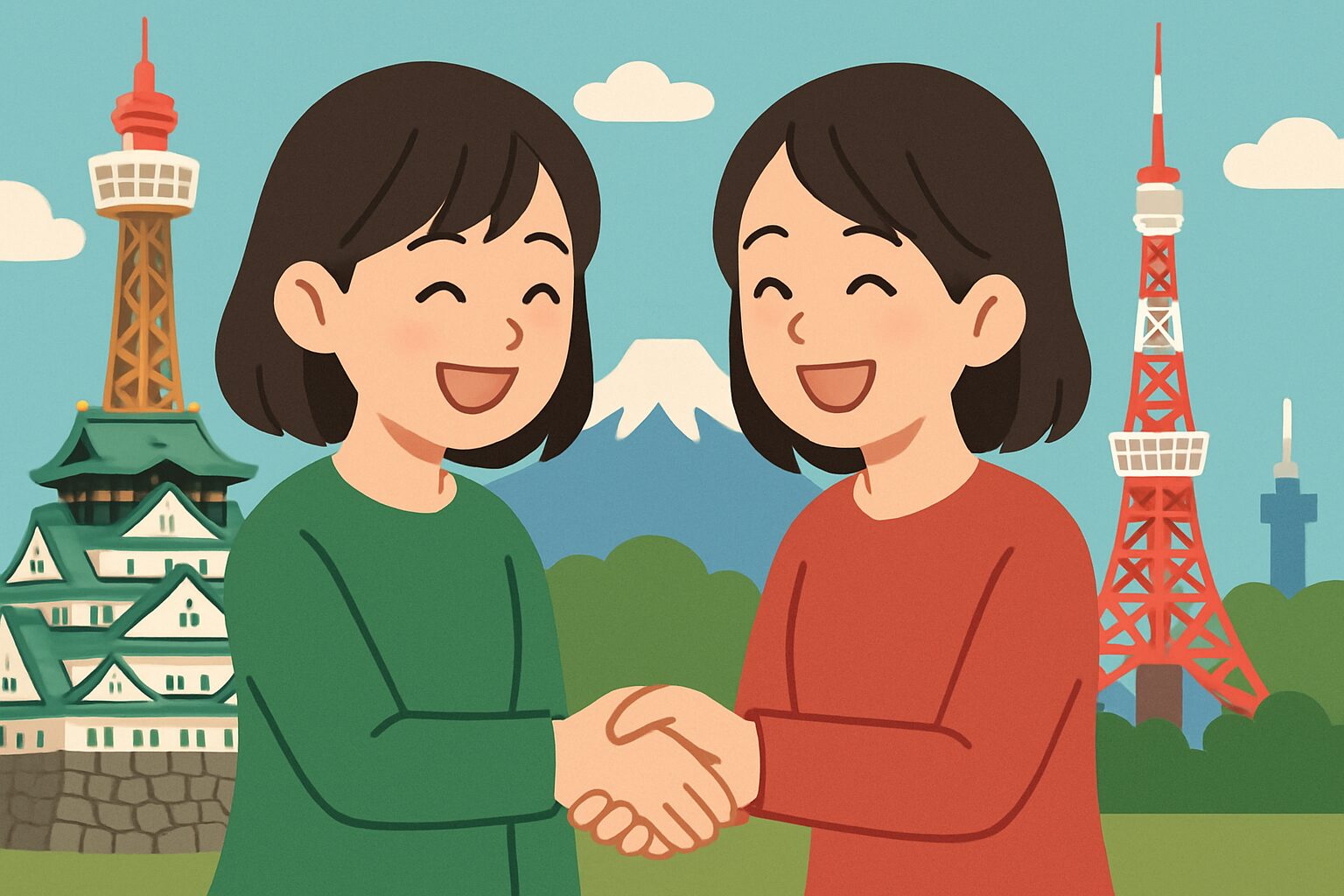
Welcome to the electric heart of Kansai, the city that moves to its own beat, a place where the air crackles with energy and the aroma of sizzling takoyaki is a constant, delicious promise. This is Osaka, Japan’s vibrant, unapologetic soul. You’ve probably heard the whispers, the long-standing rumor that travels on the Shinkansen tracks between Japan’s two biggest urban titans. The legend goes like this: Tokyo is the cool, sophisticated, impeccably polished older sibling, while Osaka is the loud, hilarious, warm-hearted younger cousin who greets you with a slap on the back and a joke already on their lips. It’s a classic cultural showdown, the stoic east versus the expressive west. But is there any real fire behind all that smoke? Are people from Osaka truly more friendly, more open, more outgoing than their counterparts in the sprawling metropolis of Tokyo? For any foreigner planting their roots or just passing through this incredible city, understanding this dynamic isn’t just a fun piece of trivia; it’s the key to unlocking the very essence of daily life here. It shapes the conversations you’ll have in a tiny, packed izakaya, the service you’ll get in a bustling market, and the overall feeling of community you’ll experience. This isn’t just a tale of two cities; it’s a deep dive into the historical currents and cultural streams that have carved the character of Osaka, a city built not by samurai and shoguns, but by merchants and comedians, where a good deal and a good laugh are the highest forms of currency. Before we unravel this captivating cultural tapestry, let’s get our bearings and see the stage where this grand performance of personality unfolds.
To truly experience this legendary warmth firsthand, you can start by learning how to connect with locals in Osaka’s standing bars.
The Roots of a Reputation: Where Osaka’s Vibe Comes From
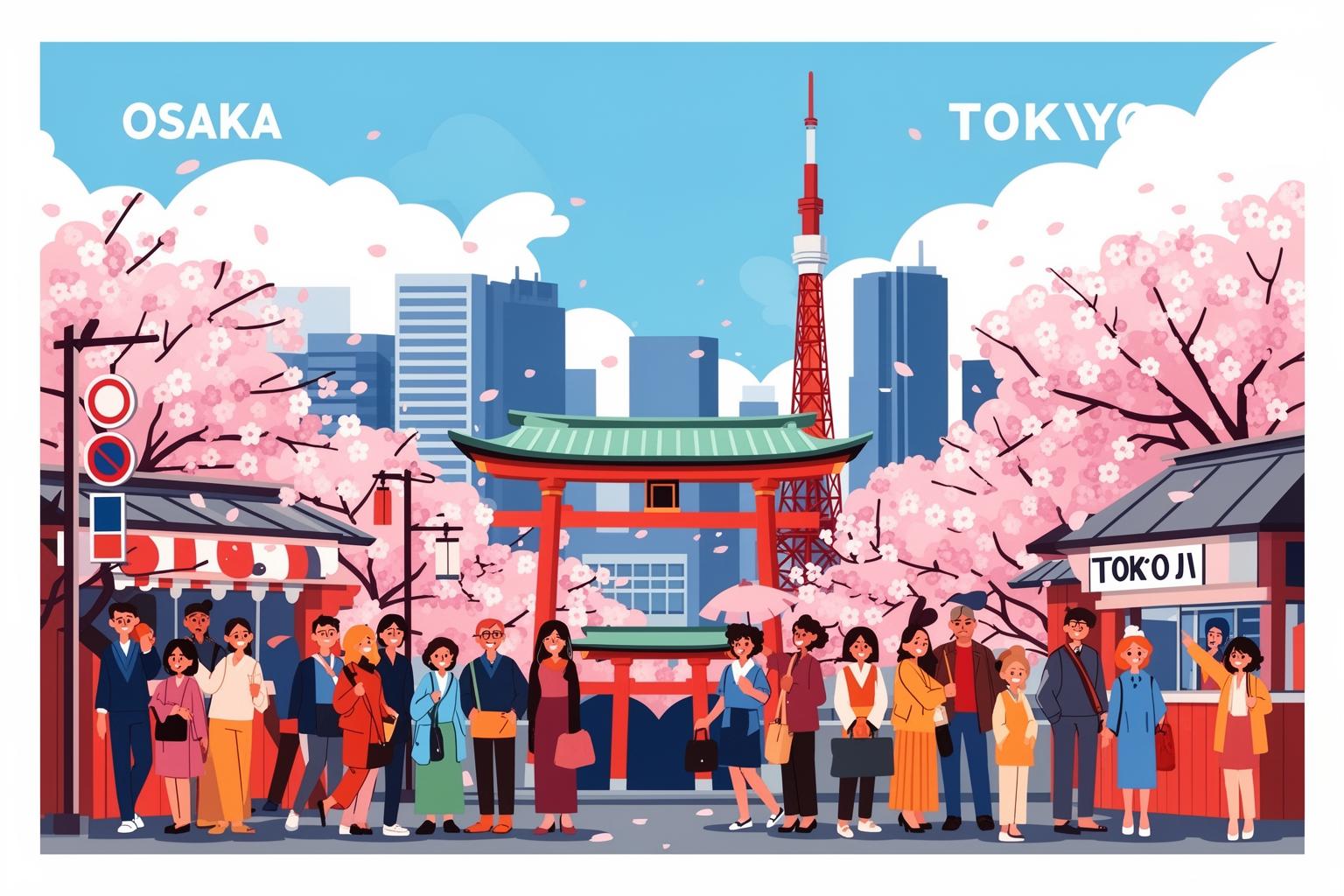
To truly understand Osaka’s essence, you must delve into the roots of its history. Unlike Tokyo, which gained prominence as Edo, the Tokugawa shogunate’s political and military hub, Osaka’s identity was shaped in the fiery kilns of commerce. It was, and in many ways remains, the `shōnin no machi`—the city of merchants. For centuries, Osaka was Japan’s economic engine, where rice from across the country was gathered, stored, and traded. This distinction is far more than a historical detail; it forms the very DNA of the city’s social fabric. In a samurai city like Edo, society was structured by a strict hierarchy, with rigid codes of conduct, formal language, and a strong emphasis on maintaining face and respecting one’s social station. Communication was often indirect, layered with nuance and unspoken rules, and personal worth was linked to lineage and rank.
In Osaka, however, the criteria were completely different. A person’s value was measured by their business savvy, their drive to hustle, innovate, and, above all, connect with others. A merchant’s survival depended on building relationships, bargaining effectively, and earning the trust of customers and suppliers. This world required not quiet deference, but directness, pragmatism, and a good dose of charm. The classic Osakan greeting, `Mōkarimakka?`—literally “Are you making a profit?”—perfectly captures this spirit. To outsiders, it may come across as blunt or even rude, but in Osaka, it’s a sincere, friendly way to ask, “How’s life?” The traditional reply, `Bochi bochi denna` (“Well, so-so”), carries a humble, relatable warmth. This brief exchange encapsulates the merchant culture, where business and personal life blend, and communication is rooted in the shared reality of earning a living.
This commercial spirit gave rise to a distinctive style of communication that thrives today. Humor became an essential tool in business. A well-placed joke could ease tension during negotiations, build rapport with new customers, or simply lighten the long hours at market. From this grew Osaka’s famed comedy scene, or `owarai`. The city stands as Japan’s comedy capital, home to the powerful Yoshimoto Kogyo entertainment company, which has produced the country’s most famous comedians for over a century. The `manzai` style—a rapid, witty exchange between a funny-man (`boke`) and a straight-man (`tsukkomi`)—is more than just a stage performance; it’s a rhythm that pulses through daily conversation. Osakans intuitively grasp this comedic timing and playful dialogue, using it constantly in their interactions. This culture of laughter fosters a social atmosphere that feels informal and inviting, a sharp contrast to the reserved and formal social tone often found in Tokyo.
The Tokyo Counterpoint: A City of Form and Function
To truly grasp Osaka’s unique flavor, it is crucial to understand its counterpart: Tokyo. The sprawling modern metropolis of Tokyo is a city of immense scale and relentless energy, yet its cultural foundation is strikingly different. Historically known as Edo, it was the shogun’s city, governed by the stoic values of the samurai class. This heritage of formality and order remains embedded in the city’s contemporary identity. Politeness in Tokyo is an art—a highly refined system of social etiquette that ensures the smooth functioning of a society with tremendous population density. It’s evident in how people line up neatly for trains, speak softly on public transport, and provide meticulous, almost reverential customer service in Ginza department stores. This reflects the culture of teinei, a deeply ingrained politeness that prioritizes harmony and the avoidance of imposing on others above all else.
For outsiders, this can be both comforting and challenging. On one hand, Tokyo is an incredibly convenient and easy city to navigate. Everything functions as expected. People respect your personal space, and you’re unlikely to be disturbed. However, this same respectful distance may sometimes be mistaken for coldness or aloofness. The social norm in Tokyo is to maintain a bubble of privacy. Starting a conversation with a stranger on a train or in a café is uncommon, not because people are unfriendly, but because it goes against cultural expectations. The emphasis is on preserving collective peace, or wa (harmony), which often means keeping to oneself.
Moreover, modern Tokyo is a vast melting pot. For generations, it has been the main destination for people from across Japan seeking education and career opportunities. Consequently, a large portion of its residents are not native Tokyoites. They come from Kyushu, Hokkaido, Tohoku, and even Kansai. This steady influx has fostered a more homogeneous, metropolitan culture. The strong, distinct regional identity found in Osaka is less pronounced in Tokyo’s vastness. People in Tokyo lead busy lives, often scheduled down to the minute—from crowded morning commutes to after-work obligations. Social interactions tend to feel more planned and less spontaneous. The city operates on efficiency, and its social dynamics mirror this. It’s not a lack of warmth, but rather a different set of priorities shaped by Tokyo’s history, scale, and role as the nation’s political and corporate hub. Its energy is one of ambition and precision, whereas Osaka’s vibrancy centers on commerce and conviviality.
Street-Level Evidence: Where to Feel the Osaka Spirit

The theoretical distinctions between the two cities come alive in vibrant, noisy, and flavorful detail on the streets of Osaka. The best place to experience the city’s essence in its purest form is in a `shōtengai`, a covered shopping arcade. While Tokyo boasts its own shopping streets, Osaka’s `shōtengai` exist on an entirely different level. They serve as the city’s vital arteries, pulsating with energy. Stroll along Tenjinbashi-suji, Japan’s longest `shōtengai`, stretching over 2.6 kilometers. Here, the air is thick with vendors’ calls, the sizzle of okonomiyaki cooking on a griddle, and the boisterous laughter of shoppers. You’ll encounter the quintessential Osaka `obachan` (a term affectionately used for middle-aged or older women), known for her vibrant fashion sense, haggling with a shopkeeper—not out of hostility, but as a form of social engagement. They’ll discuss the weather, grandchildren, and the quality of the day’s fish while negotiating a 50-yen discount. Shopkeepers are not passive attendants; they actively participate in this street theater, calling out to passersby, offering free samples, and engaging in playful banter. This is the merchant spirit in action: direct, engaging, and deeply human.
This spirit spills over into Osaka’s renowned food scene. The city’s unofficial motto is `kuidaore`, often translated as “eat till you drop,” but more accurately meaning “to ruin oneself by extravagance in food.” In Osaka, food is more than sustenance; it is the main medium for social interaction. Venture into the labyrinthine alleys of Ura Namba or the smoky, lantern-lit streets around Tenma Station after dark. Here, numerous `tachinomi` (standing bars) and izakayas are packed shoulder-to-shoulder with locals. This physical closeness is intentional. In these spots, it’s nearly impossible not to interact with your neighbors. Sharing a plate of `kushikatsu` (deep-fried skewers) with a complete stranger or having a salaryman pour you a glass of sake from his bottle is a common experience. This is where the stereotype of the friendly Osakan truly shines. People are genuinely curious. They want to know where you’re from, what you think of the food, and what brings you to their city. The barrier between strangers feels remarkably thin here, lubricated by good food, cheap drinks, and a culture that cherishes open-hearted connection.
Then there’s the art of conversation itself. The `boke` and `tsukkomi` dynamic is a vivid and present force. It’s a conversational dance where one person says something slightly silly or absurd (the `boke`), and the other delivers a quick, sharp-witted reply or playful smack (the `tsukkomi`). As a foreigner, you’ll inevitably find yourself caught up in this. For example, if you struggle with chopsticks and a piece of food flies off, a Tokyoite might politely ignore it to spare your embarrassment. An Osakan, however, is more likely to laugh and shout, “Hey, that fish is trying to escape!” before showing you the right way to hold them. This isn’t mockery; it’s a form of inclusion. By joking, they break the tension and welcome you into a shared, humorous moment. They treat you not as a fragile outsider, but as one of their own. This directness can be surprising at first, but it almost always stems from a genuine warmth and a desire to connect on a human level.
Debunking the Myths and Finding the Nuance
Certainly, it’s important to keep in mind that these descriptions are broad cultural generalizations, not definitive portraits of every individual. The notion that all 2.7 million residents of Osaka are extroverted comedians, while all 14 million people in the Tokyo Metropolis are reserved formalists, is an extreme oversimplification. Human personality exists along a spectrum, and you’ll find shy, quiet individuals in Osaka as well as loud, outgoing ones in Tokyo. The primary distinction lies in the social atmosphere and the default modes for public interaction. In Osaka, the cultural norm favors engagement, assuming that a bit of friendly banter is welcome. In Tokyo, the norm leans toward respectful distance, with the expectation that you shouldn’t intrude on someone’s privacy unless absolutely necessary.
This leads to a key distinction: the difference between friendliness and politeness. Tokyo is arguably one of the most polite cities in the world. The service is impeccable, the systems run smoothly, and there is a deep respect for rules and social harmony. This politeness acts as a civic grace that allows a huge city to operate with minimal friction. In contrast, Osaka’s defining trait is less about formal politeness and more about a kind of raw, unfiltered friendliness. This friendliness can sometimes show up as what’s called `osekkai`, which translates roughly as meddlesome or nosy, but it’s a nosiness born of genuine care. It’s the elderly woman on the street who stops you to point out your untied shoelace, or the restaurant owner who insists you try a complimentary dish because you seem to be enjoying your meal. These actions might violate the unspoken Tokyo rule of not interfering in others’ affairs, but in Osaka, they are expressions of a communal, familial spirit. It’s the sense that everyone belongs to the same large, slightly dysfunctional, yet ultimately loving family.
From a foreigner’s perspective, navigating these two social settings can produce very different experiences. The direct, open nature of Osakans can be incredibly refreshing, especially for those from more extroverted cultures. It can make practicing Japanese, asking for directions, and making local friends feel easier and more casual. The social barrier feels lower, increasing the likelihood of spontaneous, memorable encounters with locals. Conversely, Tokyo’s quiet, respectful atmosphere can provide great comfort. It’s a city where you can enjoy anonymity in the best sense, going about your business without interruption. The politeness ensures a smooth, stress-free experience in almost any situation. Neither approach is inherently better; they are simply different cultural responses to urban living, each with its own distinctive charm and appeal.
How to Connect: Tips for Thriving in Osaka
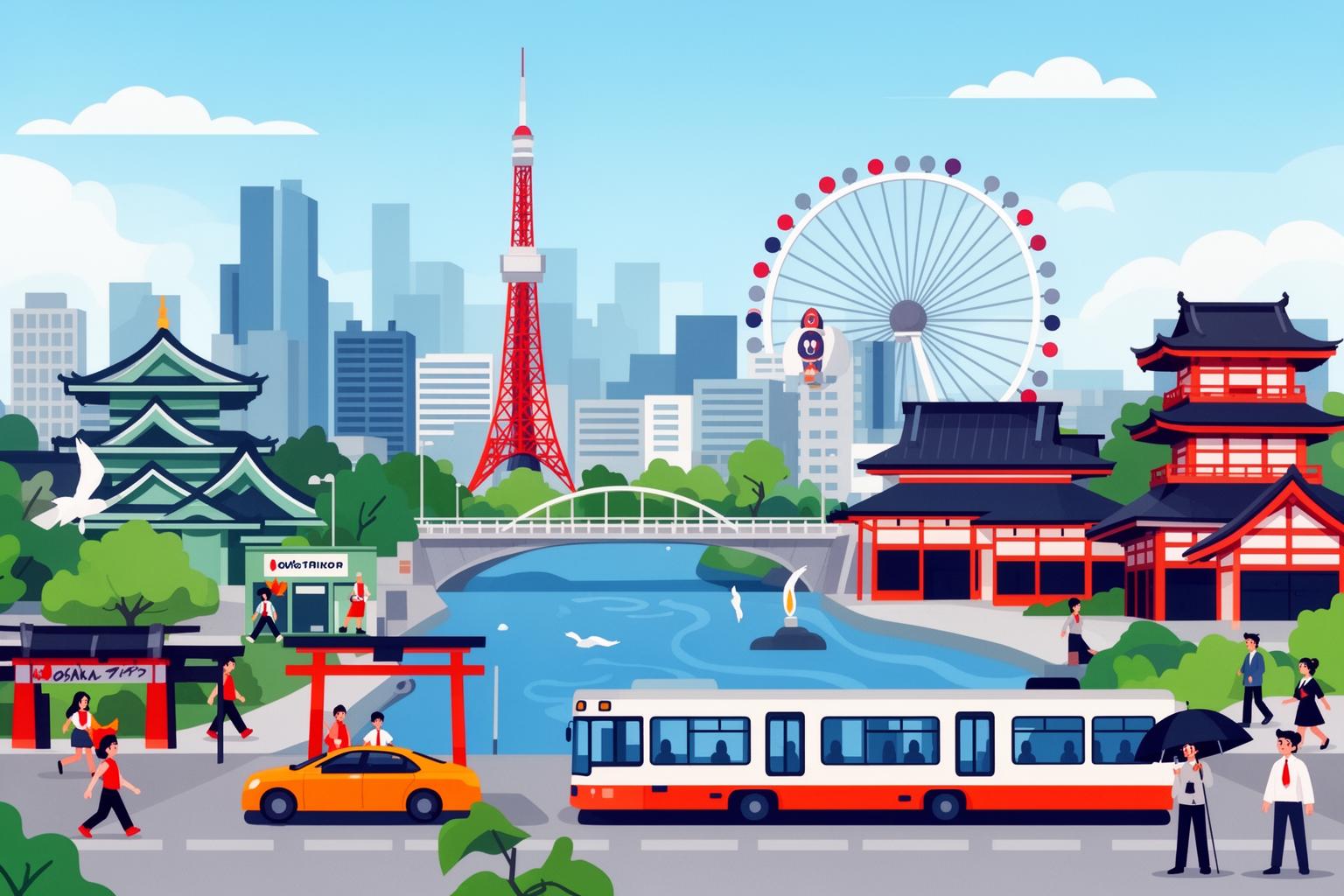
If you’re residing in or visiting Osaka and want to experience its unique social vibe, the best advice is to simply dive in. Don’t remain a passive onlooker; become an active participant. Embrace the local culture, and it will welcome you with open arms. A great way to start is by learning a few key phrases in the local dialect, Osaka-ben. Replacing the standard `arigatou` with an Osakan `ookini` will immediately bring a smile to a shopkeeper’s face. Saying `meccha oishii` (“super delicious”) instead of the usual `totemo oishii` shows that you’re genuinely trying to connect on their level.
Make a deliberate effort to explore beyond the heavily touristy spots like Dotonbori and Osaka Castle. While these are must-see landmarks, the true spirit of the city lies in its neighborhoods. Discover the retro-chic cafes and vintage shops of Nakazakicho, roam the food lover’s paradise of Fukushima, or immerse yourself in the authentic local bar scene in Kyobashi. Dine at the small, family-run places—the `shokudo` (diner) with just ten seats, the okonomiyaki joint that’s been around for fifty years. In these spots, you’re not merely a customer; you’re a guest. Engage with the owners, ask about the food, and compliment their cooking. This is where genuine connections happen.
Understand the local currency of kindness. In Osaka, this often takes the form of `ame-chan` (a small piece of candy). It’s a classic `obachan` habit to carry a few candies in her purse to give to kids or strangers as a simple gesture of goodwill. You don’t need to carry sweets yourself, but the principle is what counts. Small acts of generosity and appreciation go a long way here. Buying a round of drinks for regulars at a tiny bar or sincerely showing enthusiasm and gratitude for your experiences will open more doors than you imagine. This ties into the concept of `ninjō`, a word that’s hard to translate but encompasses human emotion, empathy, compassion, and a sense of communal responsibility. It’s the emotional bond that holds the city together—the idea that looking out for each other is just what you do. By showing a bit of `ninjō` yourself, you become part of Osaka’s vibrant, living heart.
So, returning to the original question: are Osakans friendlier than Tokyoites? Perhaps the question is flawed. It’s not a contest. Tokyo offers a deeply respectful politeness that’s a marvel of modern society, while Osaka offers something different: a loud, open-hearted, and profoundly human warmth that’s truly unique. Like all stereotypes, this one oversimplifies, but it points to a real truth. Osaka has an energy, a readiness to connect, a love of laughter, and a grounded spirit born of its merchant heritage that makes it feel especially welcoming and approachable. The best answer isn’t found in articles or debates but in the experiences waiting just outside your door. It’s in the shared laughter over a spilled drink, the unexpected chat at a ramen counter, and the genuine warmth of an `ookini` from a market vendor. Osaka’s friendliness isn’t a myth; it’s an invitation. All you have to do is accept it.