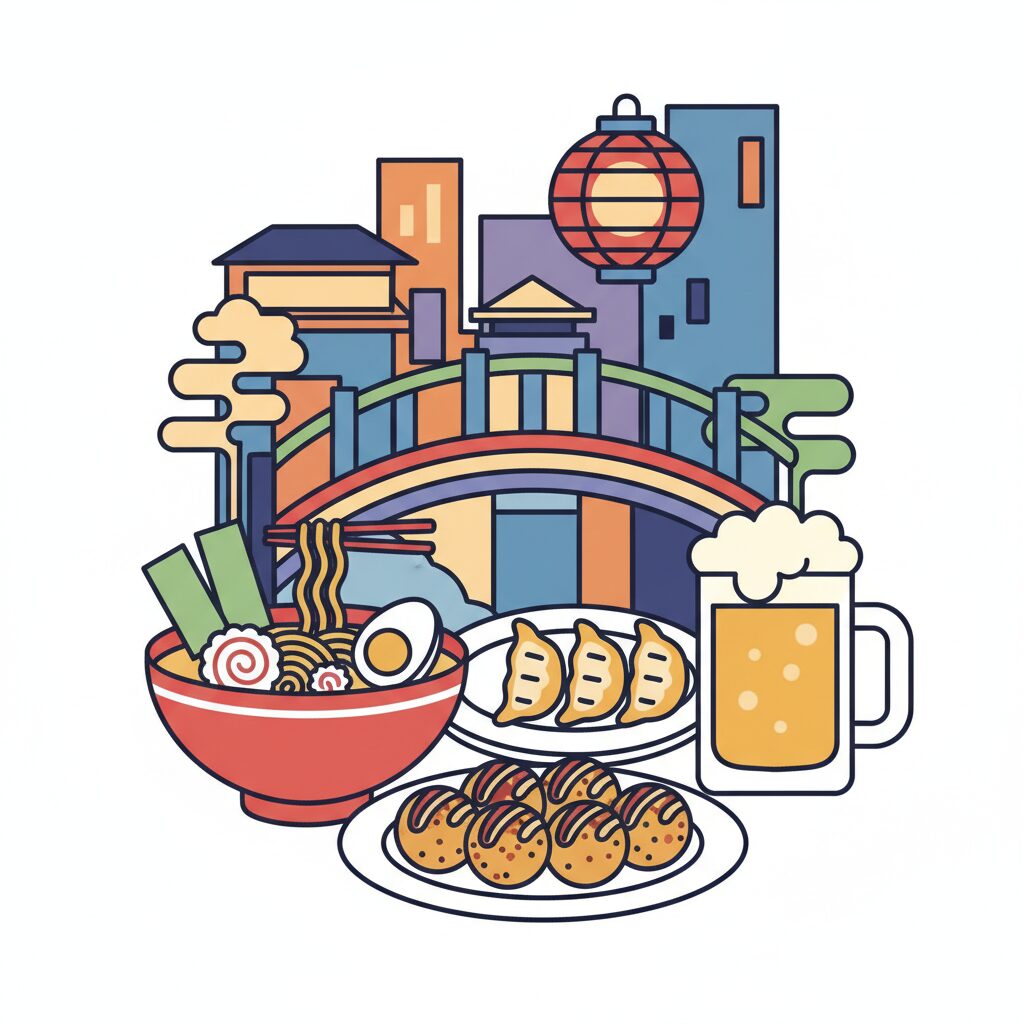
My first real Osaka ‘nomikai’, a work drinking party, was a blur of ice-cold beer, sizzling yakitori, and booming laughter that felt fundamentally different from the more reserved affairs I’d known in Tokyo. We’d eaten and drank for hours at a packed izakaya in Namba, the kind of place where the smoke from the grill and the energy from the crowd merge into a single, intoxicating cloud. When my boss finally clapped his hands and declared the official party over, I was ready to stumble towards the Midosuji line, full, happy, and exhausted. But as I reached for my coat, my colleagues looked at me with genuine confusion. “Where are you going, Sofia-chan?” one of them asked, head cocked. “We haven’t had shime yet.” Shime? To close? I thought we had closed. We’d just spent three hours eating. Yet, as if pulled by an invisible string, the entire group poured back out into the neon-drenched streets, not in search of the station, but in vigorous debate over what our final meal should be. Ramen? Udon? Takoyaki? That was the night I learned a fundamental truth about this city: in Osaka, the night isn’t over until you’ve eaten twice. The ‘shime’ (締め), that final culinary punctuation mark, isn’t just a midnight snack. It’s a ritual, a philosophy, and a window into the very soul of Osaka. It’s a concept that often baffles outsiders, but once you understand the art of the shime, you understand the rhythm of life in this magnificent, food-obsessed city.
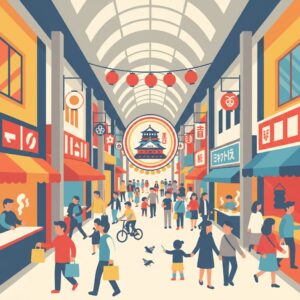
This communal, food-centric philosophy extends beyond the izakaya and into the daily fabric of the city, much like the social role played by Osaka’s vibrant local shotengai.
More Than Just a Midnight Snack: The Philosophy of the Final Course
To those unfamiliar, the idea of sitting down for a full bowl of noodles or a plate of fried octopus balls after a multi-course dinner may seem like sheer madness, a guaranteed path to indigestion. My Spanish instincts protested, “But we just ate!” It took me months of living here to understand that shime is rarely about hunger. It’s a cultural imperative driven by an entirely different set of motivations—a complex mix of social bonding, psychological closure, and a deep, unwavering devotion to the city’s culinary identity.
Shime as a Social Contract
Above all, shime acts as a social lubricant. It’s the afterparty to the afterparty. The main dinner or drinking session, especially when work-related, has a certain structure and energy. People play their roles—the diligent junior, the jovial manager. However, once the conversation turns to shime, the formalities dissolve with the melting ice in the highballs. The mood changes. Deciding where to go becomes a shared, often fervent negotiation revealing the group’s true dynamic. It’s a low-pressure way to build consensus and keep the good times flowing. The shime spot itself is a transitional space, a decompression chamber between the evening’s high energy and the quiet trip home. It’s in these brightly lit, simple ramen counters or steamy udon shops that the best conversations unfold. Freed from pretenses, gathered around steaming bowls, colleagues become friends. You discuss hobbies, dreams, dating woes—topics that felt too intimate just an hour earlier. It’s an unspoken agreement to extend the shared experience just a bit longer, to soften the night’s abrupt end, ensuring everyone leaves on a warm, satisfying note. It promises that the connection forged over drinks won’t simply vanish at the train platform.
The ‘Kuidaore’ Spirit After Dark
Osaka’s unofficial motto, ‘kuidaore’ (食い倒れ), roughly means “eat until you drop” or “eat yourself into ruin.” This is more than a catchy slogan for tourist brochures; it’s a deeply rooted cultural mindset. In Tokyo, food often emphasizes precision, perfection, and presentation. In Osaka, it celebrates satisfaction, flavor, and pure, unfiltered joy. The kuidaore spirit insists that a meal is not just fuel; it’s the main event. And this mindset doesn’t abruptly end after 10 p.m. Shime embodies the kuidaore spirit’s final, triumphant act of the night. It holds that an evening of good times deserves to finish with equally exceptional taste. A mediocre ending would retroactively sully the entire experience. It’s not about indulgence; it’s about respect for the palate. Shime must offer a very specific kind of culinary comfort—a flavor profile that perfectly complements your drinks and mood. It’s the city’s collective refusal to let the night fizzle out, insisting it ends with a flavorful crescendo, a final delicious memory to carry you home.
A Ritual of Closure
Psychologically, shime provides a powerful sense of closure. An evening without it can feel oddly unfinished, like a sentence without a period or a song missing its final chord. It draws a definitive line beneath the festivities. Once the last noodle is slurped or the final piece of takoyaki eaten, the night is officially, unequivocally over. There’s an unspoken, shared understanding: after this, we head home. This ritual effectively manages group energy, avoiding the awkwardness of a party that drags on with guests leaving one by one. Shime is a clear, communal cue that it’s time to end things. It’s a final, shared moment that unites the group one last time before dispersing them into the night. It transforms the evening’s close from a slow, messy fade-out into a crisp, satisfying finale. That final warm bite acts as a comforting anchor, a gratifying ending to the story you and your friends created together throughout the night.
The Shime Showdown: Osaka’s Endless Menu vs. Tokyo’s Ramen Rule
Ask anyone in Japan about shime, and ramen is almost always the first thing that comes to mind. In Tokyo, this holds largely true. The city’s shime culture revolves around the ramen counter—a quick, efficient, and delicious way to cap the night before catching the crucial last train. However, in Osaka, declaring ramen as the uncontested king of shime is a huge oversimplification. It’s akin to saying all music is rock and roll. While ramen is definitely a beloved option, the shime scene here is a vast, democratic, and wonderfully chaotic ecosystem of choices. This variety reflects the Osaka mindset: pragmatic, creative, and almost stubborn in resisting a single “correct” way to do things. Why settle on one option when an entire world of delicious possibilities awaits?
De-throning King Ramen
Let’s be clear: Osakans adore ramen, with countless legendary shops serving as the late-night retreat for revelers. You can’t stroll through Namba without spotting the iconic green dragon signs of Kinryu Ramen, whose light, garlicky tonkotsu broth beckons bar spillouts like a siren’s call. Places like Ichiran, open 24 hours with customizable bowls and solo-diner “flavor concentration booths,” provide a dependable, though somewhat impersonal, choice. But notice the difference in attitude. In Tokyo, picking ramen for shime feels like following a firmly established tradition. In Osaka, it’s just one of many possible selections. The choice depends on mood, location, and a cost-benefit analysis of flavor versus fullness. Osakans will zealously debate the virtues of a rich, fatty broth from a famed shop versus a simple, old-school shoyu ramen from a neighborhood joint—but just as passionately, they’ll argue for skipping ramen entirely.
The Gospel of Udon: Osaka’s Soul-Soothing Secret
Here lies the true essence of Osaka shime, the city’s secret weapon. While ramen delivers a punchy, savory kick, udon offers a warm, gentle comfort. For many Osakans, udon is the superior shime choice, reflecting a preference for comfort over intensity. The dashi broth—the heart of Kansai-style cuisine—is lighter and more nuanced than most ramen broths, making it feel less like a heavy meal and more like a restorative elixir. The noodles themselves, thick and chewy, are immensely satisfying.
- Kitsune Udon: The quintessential Osaka udon. This dish features thick noodles in a delicate dashi broth, topped with a large piece of sweet-braised fried tofu (‘aburaage’), born right here in the city. Legend has it that a Semba restaurateur was inspired by foxes (kitsune) said to love fried tofu. The sweetness of the tofu seeps into the savory broth, crafting a flavor uniquely comforting. Eating a bowl of kitsune udon for shime feels like receiving a warm hug from the city itself. It’s gentle on an alcohol-heavy stomach and calms you for the journey home.
- Kasu Udon: The shime for those seeking bold flavor without the weight of tonkotsu ramen. ‘Kasu’ refers to deep-fried beef intestines (horumon) simmered into the broth, infusing it with an incredibly deep, rich, and savory umami flavor like no other. It’s hearty and robust, yet the dashi base prevents it from becoming overwhelming. A bold, uniquely Osakan choice, kasu udon proclaims you a true connoisseur of the city’s deeper flavors.
The Konamon Kingdom: Takoyaki, Okonomiyaki, and Beyond
Osaka is undisputedly Japan’s capital of ‘konamon’—affordable, cheerful, and delicious flour-based dishes. These foods are perfectly suited for shime: quick, often portable, and made for sharing.
- Takoyaki: Perhaps the most spontaneous and truly Osaka-style shime. No need for a table or chair—just a few hundred yen and a spot by a takoyaki stand. Watching vendors expertly flip balls of batter with metal picks is part of the ritual. Served piping hot in a paper boat, slathered with tangy brown sauce, mayonnaise, and a flurry of bonito flakes dancing in the steam, takoyaki is a communal delight. Passed around among friends, everyone tries not to burn their mouths on the molten center. It keeps the street party vibe alive right up to the very end.
- Okonomiyaki: A heartier shime requiring a sit-down commitment, but one many gladly make. Gathered around a teppan griddle, you might cook it yourself or watch the staff prepare it with practiced skill. Like takoyaki, it’s a social food. You slice it like a pizza and share the pieces, extending the evening’s conversation in one final collaborative act of eating.
Thinking Outside the Bowl: The Unconventional Shime
Osaka’s shime creativity doesn’t stop there. This city delights in breaking the rules—even with the final meal.
- Shime Parfait (Shime Pafe): Although more famously linked to Sapporo, the ‘shime parfait’ enjoys a devoted following in Osaka’s upscale nightlife districts like Kitashinchi. After a night of savory food and drinks, the idea of a sweet, cold, elaborate dessert is a surprising and delightful palate cleanser. It’s a decadent, stylish way to end the evening on an unexpectedly elegant note.
- Shime Curry: Another daring choice. A plate of spicy, aromatic Japanese curry jolts the senses awake before the journey home. Historic spots like Jiyuken in Namba serve their famous curry mixed with rice and topped with a raw egg, offering a nostalgic yet invigorating taste of old-school Osaka as a final meal.
- Kushikatsu: In areas like Shinsekai or Tenma, the shime might not be a single dish at all. It could be “one more round” at a kushikatsu joint—ordering a few more deep-fried skewers of lotus root, beef, or quail eggs, along with one last beer. This kind of shime blurs the line between main event and closing act, perfectly embodying the freewheeling spirit of these drinking neighborhoods.
Navigating the Shime Scene: Unspoken Rules and Local Etiquette
Participating in the shime ritual involves more than just ordering food; it requires understanding the subtle social cues and unwritten rules that shape this beloved Osaka tradition. It’s a delicate balance of group dynamics, timing, and a mutual sense of how the night should come to a graceful close. For a foreigner, mastering these nuances is essential to truly feeling like a local.
The Art of the “What’s Next?” Conversation
The shift to shime rarely happens with a clear announcement; it’s an organic change in the atmosphere of the evening. After the bill for the main meal is settled and everyone is lingering on the sidewalk, a key moment arises. Someone will naturally pose a question, often indirectly, as a gentle suggestion to the group: “Saa, dou suru?” (“So, what shall we do?”) or the more straightforward, “Soro soro shime iku ka?” (“Shall we head to shime soon?”). This signals the start of the lively shime discussion. One person yearns for comforting udon, another advocates for a renowned ramen spot, while a third recommends a takoyaki stand nearby. This negotiation adds to the fun; it’s a final team-building ritual. In Osaka, where consensus and inclusion are prized, the conversation can be lengthy but always good-natured. The objective is to reach a decision that satisfies the majority, reflecting the group’s collective mood.
The Last Train Myth
In Tokyo, the evening revolves around the last train (‘shuuden’). The social schedule, especially on weeknights, is meticulously planned around this strict deadline, usually near midnight. The shime often becomes a rushed affair—hurriedly slurping noodles before dashing to the station. This represents one of the most notable differences in Osaka’s daily rhythm. While people there are aware of the last train, attitudes toward it are much more relaxed. The city’s core, especially the corridor from Namba to Umeda, is packed with 24-hour entertainment, dining, and lodging options, so missing the shuuden is not a crisis but a viable choice. People are more inclined to collectively decide to ignore the train schedule, enjoy their shime at a leisurely pace, and then either share a taxi, stay overnight at a karaoke box or manga cafe until the first train around 5 a.m., or find a budget capsule hotel. This freedom from the last train deadline profoundly transforms the nature of the shime; it stops being a hurried chore and becomes a relaxed, enjoyable chapter of the night.
Paying the Bill: The ‘Warikan’ Way
When the final bill for shime arrives, it’s rare to see anyone pulling out a calculator to work out exact shares. The concept of ‘warikan’ (割り勘), or splitting the bill evenly, is the standard practice at casual gatherings across Japan but feels especially quick and unquestioned within Osaka’s straightforward culture. Sharing the shime meal is a communal experience, extending naturally to the payment. Someone will swiftly divide the total by the number of people, everyone contributes their share (usually in cash, so it’s best to carry some), and the transaction is done in moments. There’s no fussing over who had an extra egg in their ramen or who drank water instead of tea. Such nitpicking would go against the spirit of the occasion. The shime is about shared enjoyment, and the warikan system provides the most efficient and harmonious way to conclude the night, leaving no one with an unpleasant feeling.
A Tale of Two Neighborhoods: Shime Styles Across Osaka
Just as the choice of dish reflects the group’s mood, the choice of neighborhood reveals the very character of the shime itself. Experiencing a final meal in the dazzling, chaotic heart of Minami is a world apart from enjoying a quiet, refined bowl of noodles in Kita’s business district. Grasping this geography is essential to understanding the city’s multifaceted personality. Each district provides a unique stage for the night’s concluding act.
Namba and Dotonbori: The Neon-Soaked Classic
This is the epicenter of Osaka’s shime culture, the image that most people envision. It’s an all-encompassing sensory bombardment. The flashing lights of the Glico Running Man and the massive mechanical crab of Kani Doraku shimmer over the murky canal. The air is dense with the aromas of grilled meat, savory dashi, and sweet batter. The shime here extends the entertainment. You might join the endless line at a famous takoyaki stand like Acchichi Honpo, savoring scorching-hot octopus balls while watching tourist boats glide by. You could slip into Kinryu Ramen, with its tatami-mat seating and iconic dragon façade, for a 24-hour noodle fix. Or wander into the lantern-lit, stone-paved alley of Hozenji Yokocho for a more atmospheric and traditional conclusion to the evening. A shime in Dotonbori is loud, vibrant, and unapologetically public. It’s less about quiet conversation and more about soaking up the city’s relentless energy one final time.
Umeda and Kitashinchi: The Sophisticated Settle-Down
Heading north, the atmosphere shifts dramatically. Umeda, with its soaring skyscrapers, luxury department stores, and labyrinthine underground malls, is the city’s other major hub. The shime scene here caters largely to the ‘sarariman’ (office worker) crowd flooding out of corporate towers. It’s more functional and polished. You’ll find numerous high-quality, efficient ramen and udon shops hidden within the underground maze of Whity Umeda or alongside the train tracks, designed for a quick but satisfying meal before heading out to the suburbs. Nearby Kitashinchi is Osaka’s premier upscale entertainment district, filled with exclusive clubs, hostess bars, and gourmet restaurants. Here, the shime is an exercise in elegance. It might be a meticulously crafted bowl of udon at a specialty shop opening only after 10 p.m., serving the district’s nocturnal patrons. Or it might be the chicest choice of all: a ‘shime parfait’ at a late-night dessert bar, a sweet and sophisticated endnote to a night of fine dining and pricey drinks. A shime in this area is more intentional, reflecting a more refined evening.
Tenma and Kyobashi: The Drunkard’s Paradise
For a taste of raw, unfiltered Osaka soul, neighborhoods like Tenma or Kyobashi are the places to go. These areas are sprawling networks of covered shopping arcades (‘shotengai’) and narrow alleys packed shoulder-to-shoulder with affordable izakayas, standing bars (‘tachinomi’), and BBQ joints. Here, the boundaries between dinner, drinks, and shime completely blur. The entire night is a succession of small meals and drinks at various spots. The shime might simply be the last stop on a lengthy bar crawl. It could be a few skewers of kushikatsu at a standing-only counter, a plate of fresh sushi at an unbelievable price, or a bowl of noodles from a gritty, beloved local dive. The atmosphere is loud, boisterous, and deeply local. There are no pretenses here—just honest, good food and drink. A shime in Tenma or Kyobashi isn’t a distinct event; it’s simply the moment you finally admit you can’t eat or drink another thing. It’s the city’s most authentic and unpretentious shime experience.
The Final Word on the Final Meal
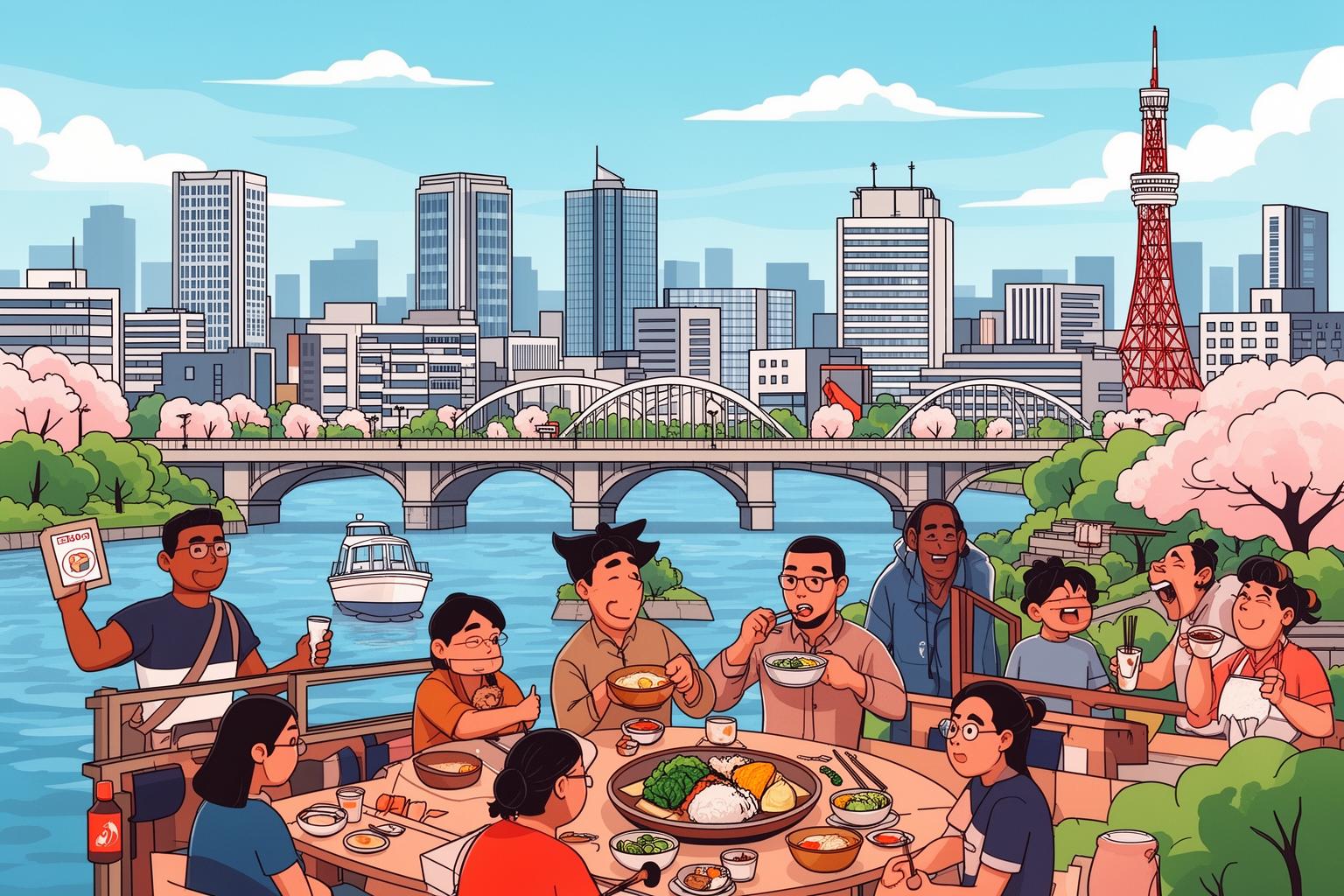
The shime is far more than just a habit of late-night eating. It serves as a mirror reflecting the core values of Osaka itself. It embodies ‘kuidaore,’ a testament to the belief that good food is not a luxury but an essential part of a well-lived life. It showcases the city’s pragmatism and creativity, outright rejecting the notion that there’s only one “right” way to do things. Why settle for just ramen when a universe of udon, takoyaki, and even parfaits awaits? This culinary variety symbolizes the city’s open-minded and adaptable character.
The ritual itself—the passionate discussions, the communal sharing, the collective choice to ignore the last train—reflects a social fabric that values human connection and shared experiences over strict schedules and formal rules. It is in these late-night moments, gathered around a griddle or leaning over a steaming bowl, that the true, unfiltered spirit of Osaka comes to life. It’s friendly without being forced, communal without being intrusive.
When I stood on that street corner in Namba all those months ago, completely puzzled by the idea of a second dinner, I saw it as a peculiar local quirk. Now, I recognize it for what it truly is. Standing beneath the glow of a thousand neon signs, sharing a final round of takoyaki with friends, I understand. That last, scalding hot, delicious bite is more than just food. It is the final note in the symphony of an Osaka night. It’s the warm, savory flavor of a city that never wants the good times to end. It’s the taste of connection. It’s the taste of home.