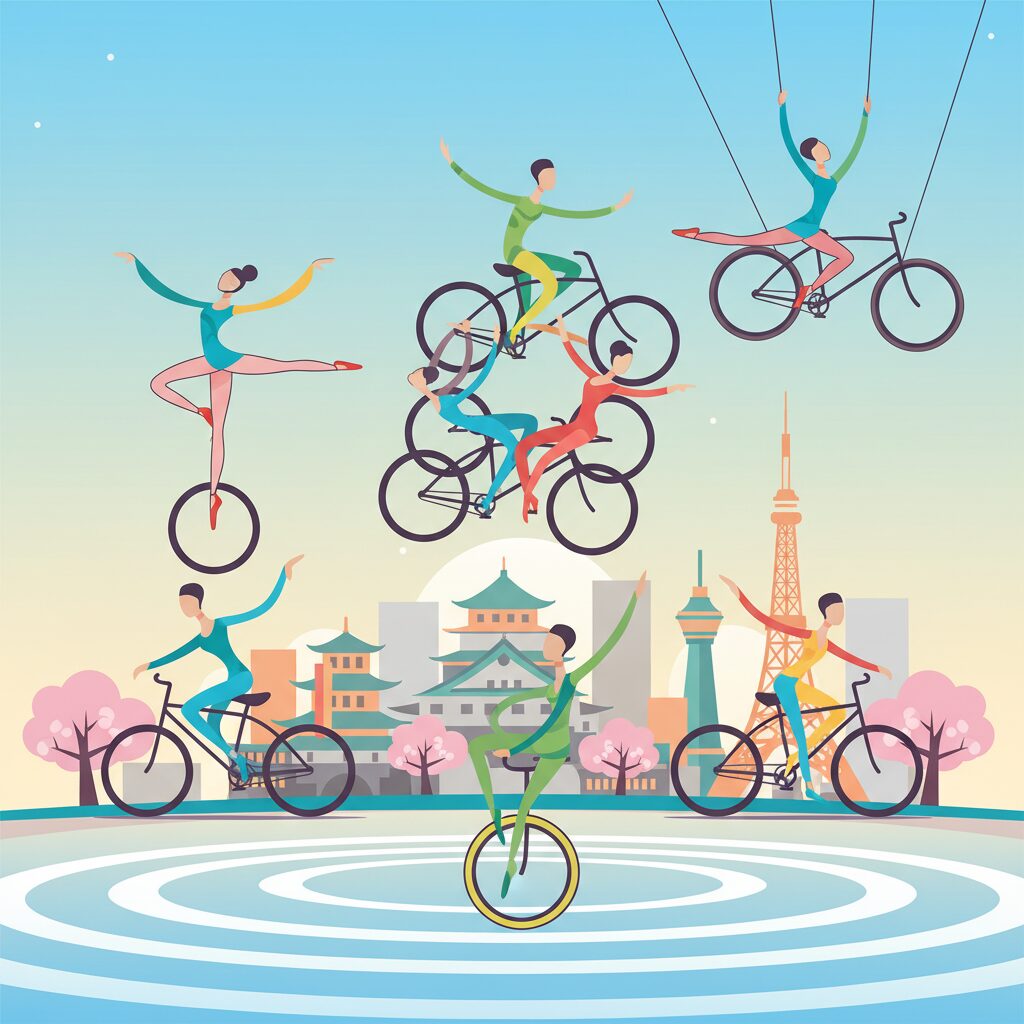
Hello, everyone! It’s Sofia. When I first moved to Osaka, I thought I understood Japan. I’d spent plenty of time in Tokyo, navigating its crisp, orderly streets, admiring the silent, seamless flow of people. Everything had a place, every movement a purpose, all guided by a clear set of rules. So, I bought a bicycle, a chic little thing I thought was perfect for exploring my new city. And on my very first ride, I nearly collided with a grandmother, a tiny queen on a throne of a bicycle—what they call a mamachari—piled high with daikon radishes, two toddlers strapped in securely, an umbrella mounted like a knight’s lance, all while she was, I kid you not, talking on her phone. She didn’t even flinch. She just tilted her head, offered a slight, knowing nod, and sailed past me, leaving me trembling in her wake. In that moment, I realized Osaka was a completely different world. The pristine, predictable choreography of Tokyo was gone, replaced by what looked like pure, unadulterated chaos. But I’ve learned since then that it isn’t chaos. It’s a performance, a complex and beautiful ballet with its own secret language. It’s the heart of Osaka, expressed on two wheels.
This isn’t just about traffic; it’s about a mindset. In Tokyo, you trust the system. The signs, the painted lines, the traffic signals—they are the ultimate authority. In Osaka, you trust the person next to you. You trust the salaryman to your left, the student to your right, and yes, the grandmother with the daikon radishes. It’s a city built on a foundation of human negotiation, a constant, fluid dance of eye contact, intuition, and unspoken agreements. To understand how to ride a bike here is to understand the soul of this city—pragmatic, a little bit rebellious, and deeply, fundamentally human. So, let’s peel back the layers of this beautiful mess and learn the steps to Osaka’s bicycle ballet.
This unspoken, intuitive communication is a key part of the city’s character, much like the playful back-and-forth of Osaka’s tsukkomi culture in its izakayas.
The Unwritten Codex of the Osaka Road
The first thing to grasp is that although the official traffic rulebook technically exists, it often functions more like a gentle suggestion here. The true laws are unwritten, conveyed through generations of daily commutes and grocery trips. This system relies on an extraordinary collective social awareness, known in Japanese as kuuki wo yomu, or ‘reading the air.’ However, Osaka’s version is faster, more assertive, and far more flexible than anywhere else in Japan. It’s not about passive compliance; it’s about active, split-second cooperation.
The Hierarchy on Wheels
An invisible hierarchy governs the streets, unrelated to speed or size. At the very top are the elderly, especially the obachan (aunties or grandmothers). They are immovable forces of nature, around whom the city’s flow revolves. Moving at their own relaxed pace, often indifferent to their surroundings, they assume—correctly—that everyone will give way. And we do. Directly beneath them are mothers on mamachari bikes, particularly those with children. A bicycle carrying one or two kids is sacred, deserving a wide, respectful space. Next come regular pedestrians, followed by everyday cyclists like students and commuters. At the bottom are delivery drivers on scooters, and finally, the cars. On narrow residential Osaka streets, car drivers know their place—they are guests in a world dominated by bicycles and pedestrians and move with the careful respect of someone entering another’s home.
The Language of the Glance
In Tokyo, people rely on traffic signals. In Osaka, you rely on the other person’s eyes. This is the most crucial rule. An intersection without a light isn’t a zone of uncertainty but a stage for a silent exchange. You approach, slow slightly, and lock eyes with the cyclist or pedestrian whose path you might intersect. In that instant, a whole negotiation unfolds. A subtle nod from them says, “I see you, go ahead.” A quick glance toward their intended direction means, “I’m going first.” If there’s no eye contact, they’re in their own world, treated as a beautiful, unpredictable obstacle. This continual scanning and unspoken communication can be mentally demanding at first, but soon it becomes instinctive. You start to feel connected to those around you, part of one vast, living organism moving through the city together.
The Philosophy of the Flow
The ultimate aim in Osaka is never to stop. Stopping signifies failure in the system. The culture revolves around keeping momentum. That’s why people might roll through a red light if it’s safe, or briefly move onto the sidewalk to bypass a stopped truck. The goal is a seamless, uninterrupted flow. While this may appear reckless to outsiders, it’s founded on mutual understanding: you’re responsible for not hitting others, and they are responsible for not hitting you. It’s a high-trust, high-stakes dynamic that, paradoxically, causes fewer conflicts than more rigid systems elsewhere. When everyone actively avoids collisions, the flow is remarkably smooth. It’s collective improvisation, and your task is to find your pace without disrupting the group’s rhythm.
Tokyo’s Textbook vs. Osaka’s Improv Theater
To truly understand the distinctiveness of Osaka’s bike culture, you need to compare it with its formidable rival, Tokyo. These two cities embody opposite extremes when it comes to interpreting public space rules. Riding a bike in each city feels like being in two different countries, each guided by its own philosophy of civic life.
Tokyo: The System is Sacred
In Tokyo, life unfolds like a perfectly composed piece of music, with everyone expected to play their role flawlessly. On a bicycle, this means stopping at every red light, even at 3 AM on an empty street. You remain strictly in the designated bike lane if one exists, with the dedication of a monk. You always ride on the left side of the road. Your turn signals are sharp and clear. The sidewalk is strictly for pedestrians. Deviating from these rules invites disapproving looks and breaks the social contract. The system is built to eliminate uncertainty. It is predictable, statistically safe, and requires minimal direct interaction with others. You don’t need to make eye contact with drivers because you both trust the traffic signals to guide you. The individual becomes part of the flawless, impersonal city machinery. There’s a certain elegance to this mechanical precision, like watching a Swiss watch at work, but it can also feel sterile, where procedure overrides context.
Osaka: The People are the System
If Tokyo is a classical orchestra, Osaka is a jazz club. The basic rules—don’t crash—are there, but everything else is improvisation. Here, rules serve as a foundation for negotiation. A red light isn’t an absolute stop; it’s a strong suggestion to check for cross-traffic. The sidewalk isn’t a sacred pedestrian zone; it’s an auxiliary path used cautiously and respectfully when the street is blocked or unsafe. You might see a delivery scooter, a mom on a mamachari, and a salaryman on a racing bike all sharing a wide sidewalk, weaving among pedestrians in a careful, slow dance. The system isn’t defined by painted lines or traffic signals; it is the people. It’s a dynamic, living network of individuals constantly making micro-adjustments based on their surroundings. This approach demands immense mental focus and continuous awareness. You never simply follow rules passively; you actively co-create order from potential chaos, moment by moment. It’s messier, less predictable, and intimidating to outsiders, but also highly efficient and deeply human. It encourages seeing those around you not as obstacles, but as partners in the shared task of moving through the day.
Why Osaka Rides This Way: A Peek into the Merchant’s Mindset
This unique approach is no coincidence. It directly reflects Osaka’s history and identity as Japan’s quintessential merchant city, the shōnin no machi. For centuries, this area was the commercial hub of the nation, where pragmatism, efficiency, and personal relationships were the key to survival. These values are ingrained in the city’s DNA, visible every day on its streets.
Pragmatism over Procedure
Merchants in old Osaka’s busy markets didn’t waste time on unnecessary formalities. The priority was to close deals, move goods, and move on to the next task quickly. Time was money, and inefficiency was the enemy. This mindset persists today. Why wait at a deserted intersection for the light to change? It’s illogical and a waste of time and energy. The pragmatic solution is to look, make sure it’s safe, and proceed. The goal—crossing safely—is met, and precious seconds are saved. This isn’t about reckless behavior; it’s about applying a cost-benefit analysis to everyday situations. The procedure (waiting for green) is less important than the result (reaching your destination efficiently and safely). This practical-results-over-process philosophy is a defining trait of Osaka’s character.
Relationships Rule Everything
In a merchant culture, your reputation and personal connections matter most. While contracts are important, a handshake and long-standing trust truly seal deals. This focus on interpersonal dynamics applies directly to the road. You’re not an anonymous cyclist interacting with an impersonal traffic system; you’re part of a community sharing space. The silent negotiation at intersections mirrors a business deal, requiring trust, mutual respect, and reading others’ intentions. When an elderly man waves you through with a smile, or a shopkeeper moves a display to let you pass, they strengthen these community ties. This network of informal, personal relationships holds together the seemingly chaotic system. It’s a powerful, invisible structure far more resilient than any painted line on the street.
The Art of Reading the Air (Osaka Edition)
As noted, kuuki wo yomu is a pan-Japanese concept, but its application varies greatly. In Tokyo, it often means sensing group consensus and quietly conforming to maintain harmony. In Osaka, it’s a more active, dynamic skill. It involves quickly assessing a fluid situation and making a decisive, independent judgment that benefits you without overly inconveniencing others. It’s less about deference and more about strategic maneuvering. You read the air to see if you can bend a rule, gauge the mood of a driver behind you, or anticipate a cyclist’s sudden swerve. It’s a street-smart, savvy interpretation of a subtle social skill, refined in the fast-paced, competitive environment of a merchant city.
The Essential Osaka Bicycle Toolkit: More Than Just a Bike
In Osaka, a bicycle is seldom just a means of transportation. It functions as a workhorse, a family vehicle, and a mobile storage unit. Both the bikes themselves and the vast array of accessories affixed to them reflect the city’s practical, get-it-done attitude. They are essential tools for daily life, refined through generations of urban living.
The Mighty Mamachari
The undisputed ruler of the Osaka streets is the mamachari (mom’s chariot). These bikes serve as the city’s SUVs. Featuring a low, step-through frame for easy mounting, they are heavy, robust, and built for stability rather than speed. Equipped with a large front basket, a sturdy rear rack (often fitted with a child seat), a built-in lock, a dynamo-powered headlight, and a broad, comfortable seat, their true uniqueness lies in their modifications. You’ll find them outfitted with elaborate, transparent rain shields that form a protective bubble for the child seated at the back. Handlebar covers shaped like giant mittens keep hands warm and dry during winter. Most distinctively, many have an umbrella holder called a sasube—a metal clamp attached to the handlebars that holds a full-sized umbrella, creating a mobile canopy for the rider. Though technically illegal, it is universally tolerated, perfectly symbolizing Osaka’s pragmatic approach to life.
The Chirin-Chirin Code
Here, the bicycle bell is not merely a toy; it’s a nuanced communication tool. The typical chirin-chirin sound conveys a dozen different messages depending on the context, timing, and frequency. A single, soft ring from a distance politely signals, “Excuse me, I’m approaching from behind.” It’s gentle and respectful. Two quick rings as you pass communicate, “Thank you for making space.” A series of sharp, insistent rings serve as a clear warning: “Watch out! You’re about to step into my path!” Cyclists learn to differentiate the friendly jingle from the alarm bell. Mastering this code is essential to blending seamlessly into the flow of the sidewalk, where cyclists are guests in the pedestrian’s domain.
Sidewalk vs. Street: The Great Negotiation
By law, bicycles in Japan are supposed to be ridden on the street unless otherwise indicated by signs. This rule is largely observed in Tokyo. In Osaka, however, it is treated more like a charming fiction. Busy arterial roads with fast-moving traffic are frightening to bike on, so cyclists naturally opt for the relative safety of the sidewalks. This creates a unique shared space where pedestrians and cyclists must coexist. It’s far from chaotic, though; there’s a strong, unspoken agreement that on the sidewalk, the pedestrian always has priority. Cyclists must ride slowly, be ready to stop immediately, and use their bell thoughtfully to announce their presence. They don’t barre through crowds; instead, they weave, wait, and yield. This mutual understanding transforms what could be a recipe for disaster into a surprisingly harmonious dance. It’s a continuous, low-key negotiation for space that succeeds because everyone respects their role.
What Foreigners Get Wrong (And How to Ride Right)
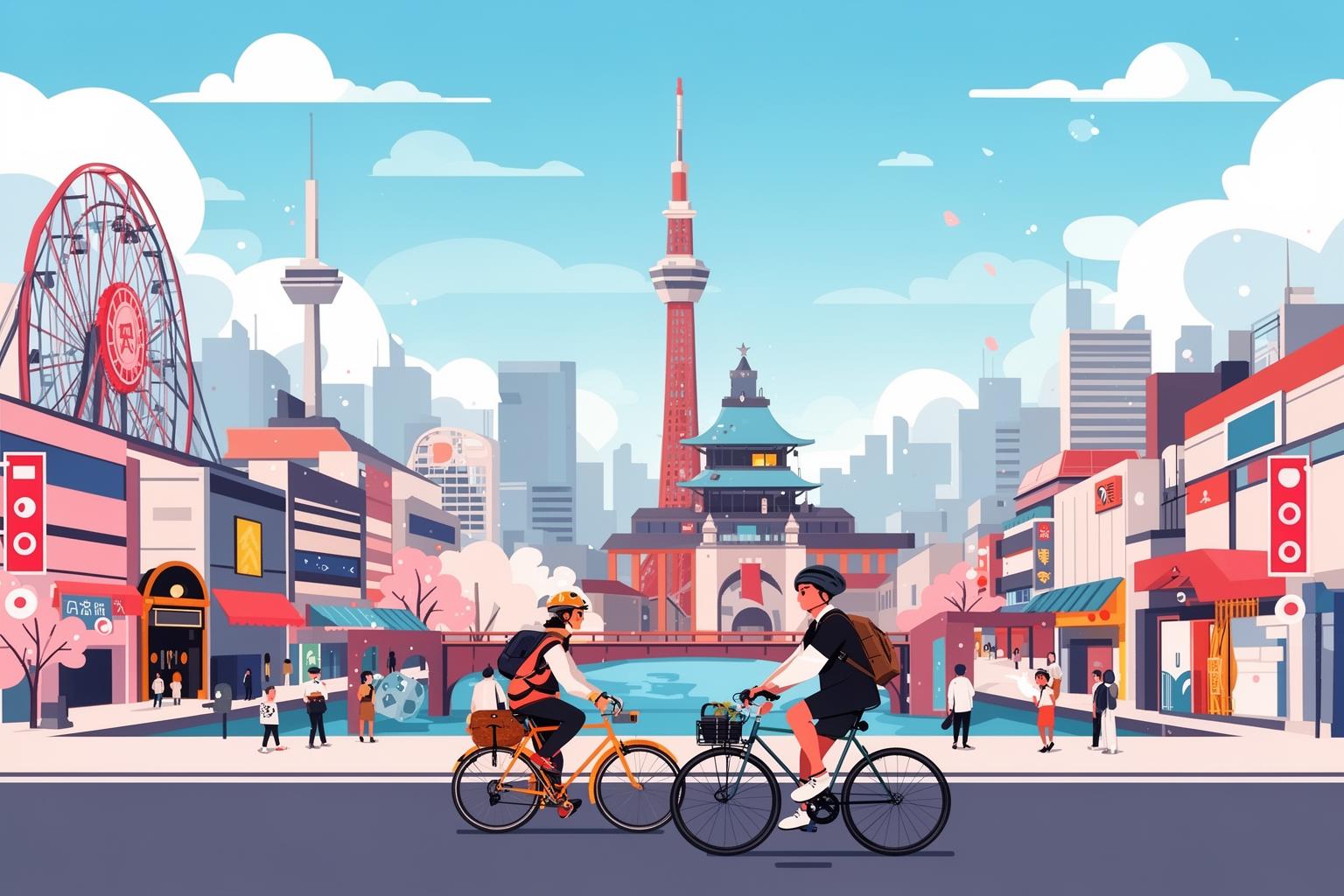
Navigating this distinctive environment can be quite challenging for newcomers. Many habits and assumptions you carry from other countries, or even from Tokyo, may cause confusion and frustration. Recognizing the common misunderstandings is the first step toward becoming a genuine Osaka cyclist.
Misunderstanding 1: It’s a Lawless Free-for-All
The most frequent mistake is interpreting the weaving cyclists and rule-bending as signs of lawlessness. It may appear that no one follows any rules, tempting you to think you can do whatever you want. This is a dangerous misconception. Although there are rules, they are social rather than legal, and they are maintained by the community. If you ride too fast on a crowded sidewalk, you won’t get a ticket from the police; instead, you’ll receive a sharp, disapproving glare from an obachan, a muttered “abunai!” (dangerous!), or, at worst, you might cause an accident. The shame of being the one who breaks the harmony is a far stronger deterrent than any fine. The system is self-regulating: order emerges naturally rather than being imposed. Your aim is to learn and respect these unwritten social rules.
Misunderstanding 2: You Should Ride Like You Would in Tokyo
Another major mistake is being overly cautious and inflexible. A cyclist who stops abruptly at every empty intersection, refuses to use the sidewalk when the road is unsafe, or waits for explicit permission to proceed becomes an obstacle. You become like a rock in a river, forcing traffic to divert around you. In trying to be ‘correct,’ you actually become unpredictable and disrupt the local rhythm. Other cyclists expect you to move forward slightly, make eye contact, and participate in the silent negotiation. When you remain frozen by the letter of the law, you break the flow. The key is to be fluid, adaptable, and predictable within the local context. You need to learn the dance steps; you can’t just stand on the sidelines.
Practical Tips for Survival and Thriving
So how do you become a seasoned Osaka cyclist? It takes practice, but here are the essentials:
- Look, Always Look: Your eyes are your most valuable tool. Make eye contact. Keep scanning continuously. Assume nothing is fixed. The world is always in motion, and you need to see it all.
- Be Assertive, Not Aggressive: Don’t be timid. Hold your line and communicate your intentions through body language. But don’t be a bully. Your assertiveness should be balanced with awareness and a readiness to yield when necessary.
- Master the Slow Weave: Learn to navigate crowds at a walking pace. It’s a skill of balance and subtle adjustments. Your goal is to be like water, finding the path of least resistance without causing a ripple.
- Get a Good Bell and Use It Wisely: Your bell is your voice. Understand the difference between a polite request and an urgent warning. Use it sparingly but effectively.
- Observe and Absorb: The best way to learn is by watching. Spend an afternoon at a busy shopping arcade, a shotengai, like Tenjinbashisuji. Observe how delivery bikes, grandmothers, students, and shoppers move around each other. You’ll witness the ballet in motion, the nods, the weaves, the silent concessions. It’s the best lesson you can get.
The Human Element: When the System is a Smile and a Nod
Ultimately, Osaka’s bicycle culture works because it is deeply human. It dismisses the cold, impersonal logic of a perfectly regulated system in favor of the messy, intuitive, and ultimately more forgiving logic of human interaction. It’s a system sustained by empathy. You yield to the mother with children because you understand her burden. You wait for the elderly man out of respect for his age. You trust the cyclist coming toward you because you are both engaged in the same delicate act of mutual preservation.
I’ll never forget the day my overloaded grocery bag tore open, sending oranges rolling across a narrow, busy street. In Tokyo, I imagine people might have politely ignored my plight, not wanting to get involved. In Osaka, the world came to a halt. A salaryman immediately put down his bike to help me gather the fruit. A woman from a nearby shop emerged with a sturdier bag. The delivery guy on his scooter waited patiently, smiling, and gave me a little “ganbatte” nod of encouragement. No one was annoyed by the disruption. They saw a fellow human in a moment of minor crisis and stepped in to help. At that moment, the system wasn’t about the efficient flow of traffic; it was about the efficient delivery of kindness.
That is the secret to Osaka. Riding a bike here is more than just traveling from point A to point B. It’s a daily immersion in the city’s core values. It teaches you to be present, to communicate without words, and to place your trust in the chaotic, vibrant, and deeply compassionate rhythm of those around you. It’s not always graceful, and it’s certainly not perfect, but within that beautiful, improvised dance on two wheels, you’ll find the true, beating heart of Osaka.