Ever been in a new city, feeling like a ghost? You walk the streets, you ride the trains, you buy the coffee, but you’re invisible. You exist within the city, but you’re not of it. In many places, especially in a country like Japan known for its polite distance, bridging that gap from observer to participant can feel like a monumental task. You might spend years in Tokyo, for example, and never know your neighbor’s name. But then there’s Osaka. Osaka plays by a different rulebook, a loud, chaotic, and wonderfully human one. And the key to understanding it, to truly cracking the code of this city, is a single, untranslatable word: osekkai.
Now, if you look up osekkai, you’ll find translations like “meddlesome,” “nosy,” or “officious.” All sound pretty negative, right? They conjure images of an intrusive busybody you’d actively avoid. But here in Osaka, that’s only half the story. Osekkai is an art form. It’s a social currency. It’s the city’s heartbeat, a type of proactive, unsolicited kindness that can feel jarring at first but is often the fastest path to genuine human connection. Forget quiet observation; life in Osaka is a contact sport, and osekkai is the opening move. It’s the moment the city stops being a backdrop and invites you onto the stage. It’s confusing, it’s sometimes annoying, but if you learn to lean into it, it’s the most authentic welcome you’ll ever get.
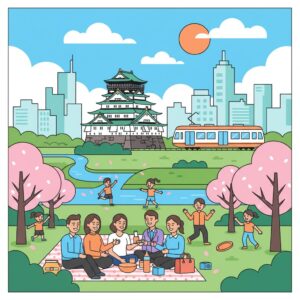
To see how this principle of proactive connection plays out in everyday public spaces, consider exploring the unspoken rhythms of Osaka’s parks.
Decoding ‘Osekkai’: More Than Just “Friendly”
Let’s clarify one thing. Calling Osaka “friendly” is like calling the ocean “wet.” It’s true, but it misses the essential point. The friendliness here isn’t passive—it’s more than a polite smile or a bow. It’s an active, engaging, and sometimes intrusive force of nature. That’s osekkai. It’s the opposite of enryo, the traditional Japanese concept of 遠慮, which means holding back to avoid burdening others. Across most of Japan, enryo forms the foundation of social harmony: you don’t speak unless spoken to, you don’t offer help unless asked, and you keep a respectful distance. Osekkai, however, bursts that bubble open with flair.
Picture yourself standing in a grocery store, staring blankly at a wall full of soy sauces. In Tokyo, you might stand there until closing time without anyone interrupting you. It’s your choice. In Osaka, the odds are good that an obachan (an older lady, the recognized grandmaster of osekkai) will appear at your side. She’ll pick up a bottle, shove it into your hand, and say, “This one. The others are no good for what you’re making. Too salty.” She hasn’t asked what you’re cooking. She doesn’t know you. But she has noticed your hesitation—and she solved the problem. She’s not judging your cooking skills; instead, she’s welcoming you into a shared community of local knowledge. To her, leaving you to flounder silently would be the truly cold and unfriendly act.
This is the heart of osekkai. It comes from a deeply held belief that we’re all in this together. The city is one vast, chaotic neighborhood, and its residents a sprawling, extended family. And what do families do? They meddle. They offer unsolicited advice. They involve themselves in your affairs because, in some way, your affairs are theirs too. It’s a form of social care wrapped in a blunt, no-nonsense style. It’s care shown not through soft pleasantries, but through direct intervention. It’s a mindset that values community welfare over personal privacy—and it’s the biggest cultural gap you’ll encounter when moving here from a more reserved city.
The Anatomy of an Osekkai Encounter
Osekkai isn’t some abstract concept; it’s part of everyday life. It happens on street corners, in crowded train cars, and across the counter at the neighborhood tofu shop. Learning to recognize these moments for what they truly are—invitations to connect—is your first step toward feeling at home here. These interactions typically fall into a few familiar categories.
The Supermarket Guru
This is the example I mentioned earlier, but it’s worth exploring more deeply. The supermarket is a prime spot for osekkai. Imagine you pick up a daikon radish. An elderly man nearby might lean over and say, “Not that one. The leaves look droopy. See, this one is better—heavier, with more water inside. And when you cook it, don’t peel the skin too thick; that’s where the flavor is.” He’s not an employee, just someone who knows his daikon well. He’s not criticizing your choice; he’s sharing knowledge—a small gift from his lifetime of experience to you. He saw you as someone who could benefit from a tip, not as a stranger to be ignored. By engaging with him, saying “Oh, really? Thank you! I was planning to make oden,” you’ve turned a simple shopping trip into a human connection. Next week, he might see you again and ask how the oden turned out. Just like that, a bond is formed.
The Neighborhood Watch
This kind of osekkai can feel most intrusive to newcomers. It’s the neighbor who remarks, “You’re home late today! Working hard?” or “That’s a lot of beer you bought! Having a party?” It might feel like surveillance, but the intent is rarely harmful. It’s about maintaining a sense of community and keeping an eye on the neighborhood’s rhythm. They aren’t just observing your habits; they’re acknowledging you. They’re signaling that you’re a recognized part of the local community. If you didn’t come home for three days, they’d be the first to wonder if something was wrong. It’s a low-tech security system driven by genuine curiosity. The same applies to the well-known trash-sorting reminders. If you put a plastic bottle in the burnable garbage, someone will definitely let you know. The goal isn’t to embarrass you but to protect the neighborhood’s pride in its clean, proper recycling. You’re part of the team now, so you’ve got to follow the team’s rules.
Street Style Corrections
This one always catches people off guard. You might be walking down the street when a complete stranger stops you, points, and says, “Your tag is sticking out.” Or they tap your shoulder to tell you your backpack is unzipped. Or they may gesture to your face and say, “You’ve got an eyelash on your cheek.” In many cultures, pointing out a minor flaw in a stranger’s appearance is incredibly rude. In Osaka, it’s considered a public service. The logic is simple: “If I had a tag sticking out of my shirt, I’d want someone to tell me. So I’ll tell them.” It’s a beautiful example of reciprocity. They’re helping you present your best self to the world. It’s a brief moment of teamwork with a stranger, a small act of mutual care that reinforces the idea that everyone is looking out for each other. It’s a quick, straightforward fix, and then you both move on—the social fabric just a little stronger than before.
Why Tokyo Keeps Its Distance and Osaka Leans In
The contrast with Tokyo is striking, highlighting why Japan cannot be generalized under a single cultural stereotype. Tokyo is a vast metropolis, characterized by professionalism and a refined sense of anonymity. Social interactions tend to be defined by your role: customer, colleague, passenger. People excel at minding their own business. This results in a smooth, efficient, and highly predictable urban environment. You could live in a Tokyo apartment for years and only exchange polite nods with your neighbors. Friendships usually develop within structured settings like workplaces, universities, or hobby clubs. The public sphere primarily serves as a means of transit rather than spontaneous connection.
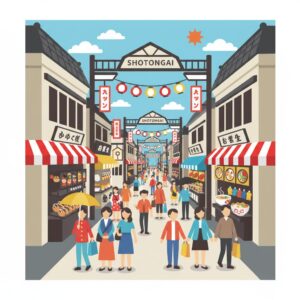
Osaka, by contrast, was founded on commerce. Known as the nation’s kitchen, it is a city of merchants, traders, and artisans. In a marketplace, being reserved doesn’t work. You need to talk, haggle, build rapport, earn trust quickly. Business wasn’t merely transactional; it was about relationships. This ethos is ingrained in the city’s identity. The borders between public and private, commercial and social, are wonderfully blurred. A shopkeeper is not just a seller but a community figure who knows your usual order and inquires about your family. The shotengai (covered shopping arcade) functions as the neighborhood’s living room. This merchant mentality—direct, practical, somewhat boisterous, and fundamentally relationship-driven—has shaped the city’s overall social character.
This core difference explains why life in Osaka feels distinctive. The atmosphere seems charged with more social energy. Where a Tokyo resident might show respect by giving you space, an Osakan demonstrates it by engaging you directly, closing that gap. It’s a complete reversal of social dynamics, and recognizing this is essential. Neither style is better or worse; however, Osaka’s approach provides a much easier entry point for newcomers seeking to establish themselves and build a social network from scratch.
Turning Meddling into Meaningful Friendships
So, you’ve just experienced some classic Osaka osekkai—an unsolicited tip from a stranger. What’s your move? Your reaction right now matters immensely. It could spark a new friendship or lead to an awkward, stilted exchange. Here’s a practical guide to turning that meddling into a genuine connection.
The Art of the Comeback
Osaka’s rich comedy culture centers on the dynamic between boke (the silly fool) and tsukkomi (the quick-witted straight man). When someone offers osekkai, they’re essentially playing the straight man, pointing out something real. The best response is often a bit of humor, playing the fool. When a neighbor remarks on your late return from work, rather than getting defensive, you could smile and say, “Yeah, the boss chained me to the desk!” or “Just protecting the Japanese economy!” This shows you grasp the informal, teasing spirit of the exchange. You’re not offended—you’re joining in the fun. A witty retort or a self-deprecating joke is social gold here. It signals you’re on the same wavelength, able to handle directness, and will almost always earn a laugh and new warmth.
Gratitude is Golden
If a clever reply doesn’t come to mind, a simple, heartfelt thank you is a powerful response. Back to the supermarket expert—you might already know the advice. That’s irrelevant. The right reply is a bright, sincere “Ookini!” (Thank you in the local dialect). “I didn’t know that, thanks for the tip!” Recognizing the intention behind the gesture, rather than the literal value of the advice, is key. You’re thanking them for noticing you and sharing something. This positive feedback encourages more interaction. They feel appreciated and are more likely to greet or chat with you next time.
From Passerby to Pal
Here’s how it all fits together. Osekkai is the small crack in the door. Your positive response opens it wider. These little interactions, nurtured over time, grow into something meaningful. The woman who corrected your trash sorting is no longer a stranger; she’s Tanaka-san. You start with a simple “Good morning.” That turns into a brief chat about the weather. One day, when she’s heading out with groceries, she asks if you need anything. A few weeks later, she knocks on your door with a plate of simmered pumpkin, saying she made too much. This is the progression. This is how community is built here. It’s a slow, organic process starting with a single, seemingly random act of friendly meddling. By embracing that initial moment, you set the entire chain in motion, transforming from an anonymous resident into a recognized and valued neighbor.
The Unspoken Rules of Osekkai
Though it may appear to be a chaotic free-for-all, osekkai actually operates according to a set of unspoken principles. It isn’t completely random. Grasping the context can help you navigate it more effectively. Generally, osekkai flows downward, with older individuals more often offering it to younger ones, or long-time residents extending it to newcomers. It serves as a means of passing on wisdom and integrating people into the community fabric. A twenty-year-old is unlikely to correct a seventy-year-old peeling an apple.
Location also plays a crucial role. You’re much more likely to encounter osekkai in a traditional shotengai, a public bath (sento), or a local, family-run restaurant than in a trendy cafe in Shinsaibashi or the sterile corridors of a large corporation. It thrives in places where community identity is strong and personal boundaries are less defined. Essentially, it is a hallmark of neighborhood life.
Then there’s the ultimate emblem of osekkai culture: the ame-chan. This is the small candy that Osaka obachan famously carry in their purses to offer to just about anyone—children, young adults, or even strangers who seem down. The ame-chan represents osekkai in its purest, most gentle form. It is an unsolicited gift, a tiny gesture that says, “I see you. Here’s something to brighten your day.” Accepting it with a smile and a thank you is part of the social contract. It’s a warm exchange, a simple, sweet reminder that even in a sprawling metropolis, you’re not entirely alone.
Is Osekkai for Everyone? An Honest Look
Let’s be honest. Despite its many charms, the osekkai culture isn’t suited for everyone. If you highly value privacy, prefer clear boundaries, and find unsolicited advice irritating, Osaka’s social environment may be difficult. It can be tiring to always be “on,” having to engage with neighbors or shopkeepers when all you want is to buy your milk and head home. There will be times when the constant chatter, questions, and well-intentioned intrusions feel overwhelming.
This is the key trade-off of living in Osaka. You exchange a certain polished anonymity typical of other global cities for a messier yet often richer sense of community. You sacrifice some personal space, but in return, you gain a support network you never had to ask for. People will notice when you’re away, share their food with you, and stop you on the street to straighten your collar because they want you to look your best. It’s a quicker, more direct way to feel a sense of belonging. In Osaka, you will rarely feel invisible. For many, that is the greatest gift a city can give. It means you are seen, you are known, and, in the most boisterous and heartfelt way possible, you are home.