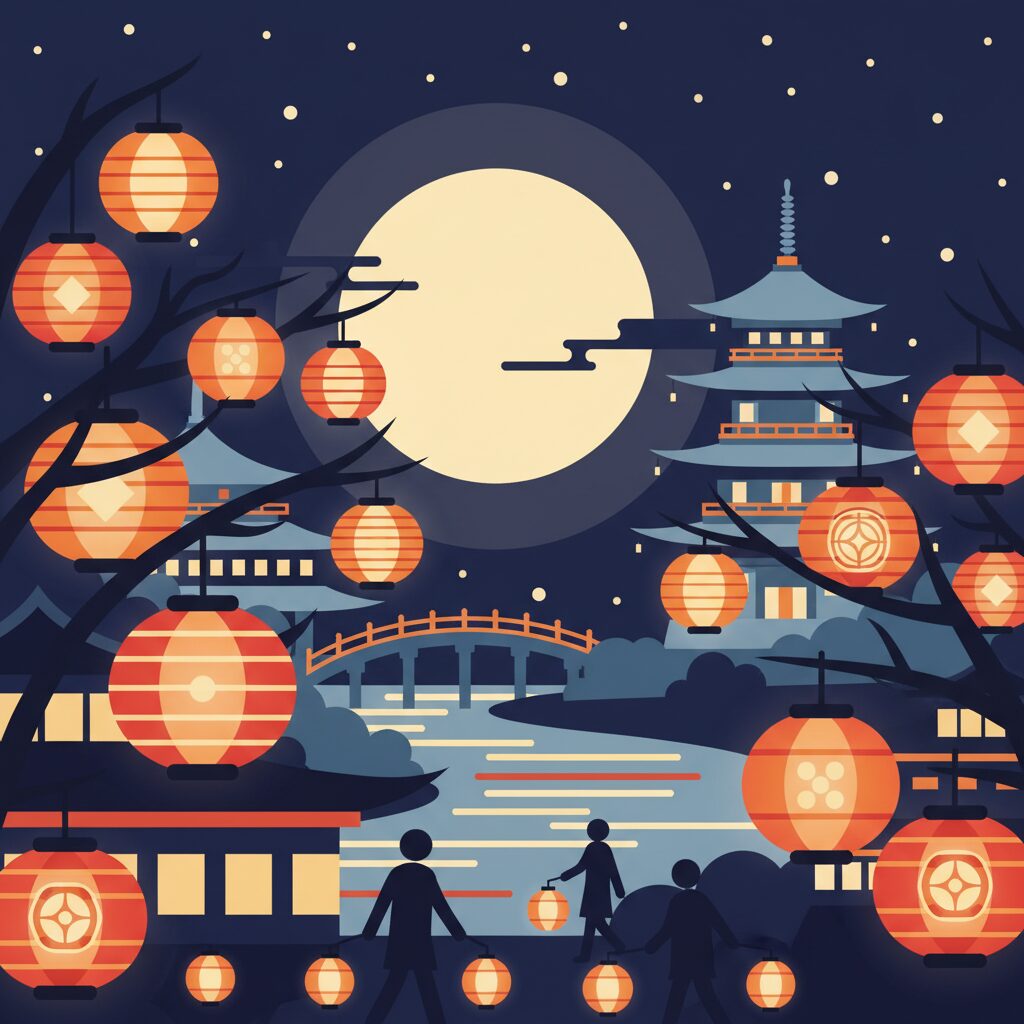
You hear it before you see it. A faint, thumping rhythm cutting through the humid summer air. Don-don-doko-don. It’s not the polished, thunderous sound of a professional taiko troupe. It’s looser, more human. Then you see them. Paper lanterns, strung between telephone poles, glowing a soft, warm red against the twilight sky. A banner, hand-painted with the name of your neighborhood, is tied to the chain-link fence of the local park. This isn’t the Gion Matsuri of Kyoto or Osaka’s own Tenjin Matsuri, splashed across tourist blogs and glossy magazines. There are no massive floats, no crushing crowds of international visitors. This is something else entirely. This is smaller. More intimate. It’s the annual matsuri organized by your local chonaikai, the neighborhood association. For anyone trying to understand what makes Osaka tick, to get beneath the surface of takoyaki and neon signs, this humble gathering is ground zero. It’s the city’s heart, beating in a dusty park, fueled by cheap beer and the tireless energy of grandmothers in cotton yukata. This is where the unspoken rules of Osaka life play out in plain sight, a living blueprint of the city’s pragmatic, chaotic, and deeply communal soul.
In the quiet cadence of nightly routines, the enduring merchant spirit weaves an enduring layer into Osaka’s vibrant tapestry of communal life.
The Chonaikai: Osaka’s Unseen Social Glue
To truly appreciate the importance of these festivals, you first need to understand their driving force: the Chonaikai. It’s a term you might encounter on a neighborhood bulletin board or hear mentioned casually, but its role is essential to the fabric of daily life here. It forms the unseen framework that binds the community, a concept that feels worlds apart from the impersonal individualism common in many Western cities.
What Is a Neighborhood Association, Exactly?
A Chonaikai is not an official government entity. It’s a voluntary, self-managed group of residents from a specific, often very small, geographic area—sometimes just a few blocks. While membership is technically optional, participation is a deeply rooted social norm. They manage the highly localized, practical matters that city governments are too large to handle effectively. They organize the cleaning schedule for the local garbage collection point—a task treated with near-sacred respect in Japan. They conduct safety patrols, with members taking turns walking the streets at night, using wooden clappers to announce their presence. They distribute newsletters containing information about recycling days, local construction, and, naturally, upcoming events. Essentially, the Chonaikai turns a random cluster of households into a functional, accountable community. Though Tokyo has neighborhood associations as well, those in Osaka often feel more influential and integrated into daily life. In a city built by merchants, this tradition of self-organization and mutual reliance runs deep. It’s a pragmatic system born from the need to manage shared resources and maintain order long before official bureaucracy intervened. The Chonaikai represents a modern version of the old village council, transplanted into the core of a sprawling metropolis.
A Symphony of Organized Chaos
The planning and execution of the neighborhood matsuri is the Chonaikai at its most visible, chaotic, and quintessentially Osakan. There are no professional event planners here. The entire process is a testament to grassroots collaboration, driven by a can-do spirit that prioritizes results over polished procedure. Weeks in advance, calls for volunteers appear on the community noticeboard. The planning meeting doesn’t take place in a sterile conference room; it’s held at the local community hall or even the home of the Chonaikai leader. It’s a noisy, lively gathering. The local liquor store owner, a community cornerstone, debates good-naturedly with the retired carpenter about the best way to wire the sound system for the yagura, the central wooden stage. A group of mothers, the true logistical heart of the operation, divides up the shopping list for the yakisoba stand. There’s a strong sense of shared ownership. This isn’t a performance for an audience; it’s a celebration the neighborhood is throwing for itself. Setup day is a masterpiece of controlled chaos. Fathers who wear suits during the week now don shorts and happi coats, sweating as they carry tables and erect tents. Hierarchy is notably absent—everyone pitches in. This exemplifies the Osaka mindset: less focused on rigid formality, more on accomplishing the task. To an outsider, it might appear disorderly, but there’s an underlying rhythm, an unspoken understanding that holds it all together. It’s a powerful display of community trust and collective effort, a social dance that strengthens bonds more effectively than any formal meeting ever could.
The Anatomy of a Hyper-Local Matsuri
Step into the park as the sun sets, and you find yourself immersed in a microcosm of Osaka life. The scale feels intimate, the atmosphere dense with a sense of belonging. Forget the sprawling, commercialized festivals—this is something far more genuine and unfiltered. It’s a sensory experience that reveals more about the city than any museum ever could.
The Sights, Sounds, and Smells
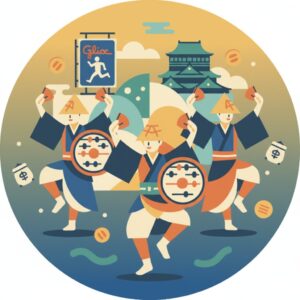
At the heart of the scene is the yagura. It’s not an elaborate stage, merely a simple, elevated wooden platform often put together that same morning. Draped in red and white fabric—celebratory colors in Japan—and strung with bare light bulbs emitting a stark, honest glow, it serves as the focal point. Here, the local taiko group, usually made up of enthusiastic children and a handful of dedicated adults, performs. The Chonaikai chairman delivers a slightly-too-long speech over a crackling microphone from this spot. Later in the evening, it becomes the center around which the Bon Odori dancers revolve. Encircling the yagura is a modest ring of stalls, run not by professionals but by local neighbors. The yakisoba stand, for example, is managed by a team of local moms expertly flipping noodles on a massive griddle. The aroma of sizzling pork, cabbage, and sweet-savory sauce is the quintessential scent of a Japanese summer festival. Nearby, a few dads grill frankfurters on sticks and pour draft beer from a keg set on a folding table. Prices are remarkably low, emphasizing participation over profit. Further along, you find simple children’s games—charming analog amusements like a ring toss with prizes of cheap snack bags, or a tub of water where kids try to scoop up bouncy superballs with delicate paper nets. The soundtrack is a uniquely Japanese collage: amateur drumming, a distorted voice over the PA announcing a lost child, an endless loop of Bon Odori folk tunes, and above all, the sound of laughter and friendly conversation. It’s the soundtrack of a community at ease with itself.
More Than Just a Party: The Unspoken Social Contract
What unfolds at a Chonaikai matsuri is the weaving of social fabric, strand by strand. Every interaction and role serves a purpose beyond mere entertainment. The festival acts as an essential setting for the practice of kao o dasu, literally meaning “to put out your face.” It’s about being seen, showing up, and reaffirming your place within the community. You might share a brief nod with the family down the street you usually only see when they take out their recycling. You buy a beer from the guy running the corner store, reinforcing local economic and social ties. It’s a low-pressure, high-reward social gathering. For the older generation, it’s a vital touchpoint—they are the tradition’s guardians, leading the Bon Odori, patiently guiding younger, less experienced dancers through the steps. The dance itself serves as a beautiful metaphor for community: everyone moving together in a circle, following a common rhythm. For parents, the matsuri offers a sanctuary—an environment where their children can safely enjoy a bit of freedom, running around with friends and clutching a few hundred-yen coins to spend on shaved ice and games. For newcomers, including foreign residents, it represents an open invitation. Simply by being present, you silently declare your intention to become part of the community. This is social contract in action—a yearly renewal of vows among neighbors to watch out for each other, celebrate together, and nurture the bonds that turn an address into a home.
Osaka vs. Tokyo: A Tale of Two Festivals
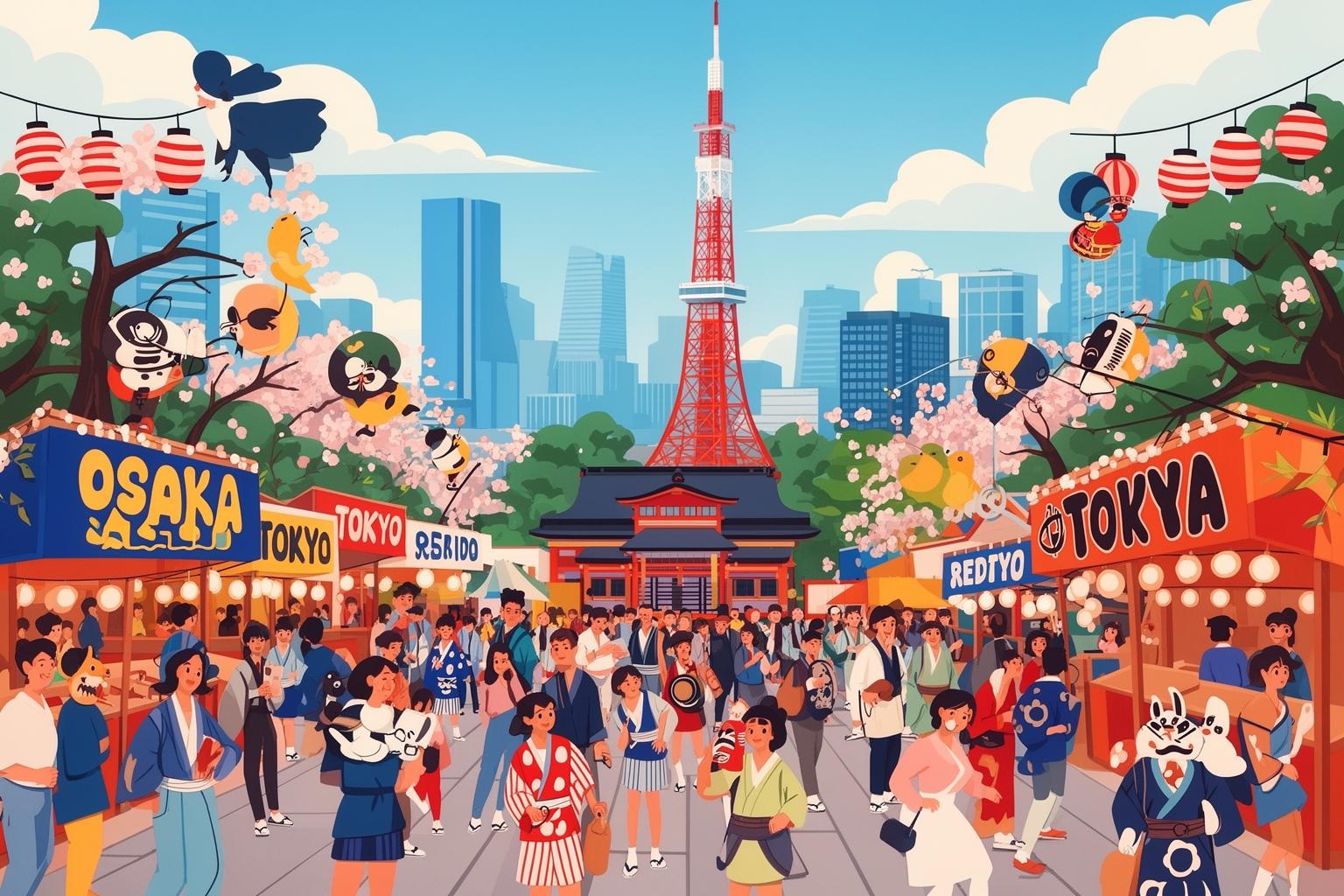
Comparing the local festivals of Osaka and Tokyo highlights the subtle yet meaningful differences in the characters of Japan’s two largest cities. While both feature neighborhood associations and local celebrations, the ambiance, execution, and underlying philosophy often vary, reflecting the broader cultural contrasts between the Kansai and Kanto regions.
Grassroots Grit vs. Polished Performance
A neighborhood festival in a residential Tokyo area might be, for lack of a better term, more… orderly. There’s a sense of refined propriety that frequently characterizes public events in the capital. The stalls tend to be more uniform, the schedule adhered to more strictly, and the overall atmosphere somewhat more reserved. Often, it’s a beautifully organized event—a polished performance for the community. In Osaka, however, the tone is distinctly different. It’s less like a performance and more like an impromptu jam session. There’s a charming element of improvisation and imperfection. The hand-painted sign for the cotton candy stand might contain a slight misspelling. The timing of the taiko drumming might be a bit off. No one minds. The goal isn’t a flawless production; it’s maximum participation and shared enjoyment. This reflects a fundamental Osaka value: a preference for honne (one’s true feelings) over tatemae (the public facade). There’s less pressure to present a perfect front. This acceptance of the beautifully imperfect, somewhat messy reality of human interaction is what makes Osaka’s community events feel warm and inviting. It’s an ethos that says, “Don’t worry about getting everything right, just join in.” This grassroots spirit is at the core of the city’s charm, a dismissal of pretense in favor of genuine, unfiltered connection.
The Currency of Community
The economic philosophy behind an Osaka Chonaikai matsuri is another crucial distinction. The event follows a principle that is surprisingly anti-commercial. As noted, prices are extremely low. A plate of yakisoba might cost 200 or 300 yen, with a cup of beer the same. This isn’t a fundraising effort aiming to generate substantial profit for the Chonaikai. The goal is simply to cover costs and nothing beyond. It stems from the pragmatic, value-conscious mindset of the Osaka merchant class. The idea is to make the festival accessible to every person in the neighborhood, regardless of their budget. A family with three children should be able to enjoy the event without financial strain. This contrasts with more commercialized festivals elsewhere, where prices can climb to tourist-level rates, even at local celebrations. In Osaka, there is a near stubborn pride in keeping things affordable and offering good value. It serves as a statement of principle: this event is for us, by us. It’s not a commodity to be marketed to outsiders. This non-commercial ethos reinforces the concept that the true currency of the festival isn’t yen; it’s social capital, goodwill, and shared memories. By minimizing the role of money, the focus stays firmly on human interactions, which, after all, is the very essence of the festival.
Decoding the Local Vibe: A Guide for Foreign Residents
For someone who is not a Japanese resident, witnessing a hyper-local matsuri can be both fascinating and daunting. It seems so authentically Japanese and deeply rooted in a culture of unwritten rules that it’s easy to feel like an outsider looking in. However, these events are actually among the most accessible and welcoming ways to experience genuine community life in Osaka.
“Can I Really Just Go?” Addressing the Common Question
This is the top question on many foreigners’ minds: Am I intruding on a private event? The answer, almost always, is a definite and enthusiastic no. You are not intruding. In fact, your presence is often viewed as a positive sign of your interest in the local community. While you might attract a few curious looks, these are usually expressions of pleasant surprise rather than suspicion. The key is to change your mindset from that of a tourist or observer to that of a participant, even if only in a small way. Avoid just standing at the edge taking photos—that creates a barrier. The approach is simple: walk up to a stall, smile, and buy something. Purchase a drink or a plate of food. This straightforward commercial exchange is an act of social bonding. It shows that you’re not merely there to watch, but to be part of it. If the Bon Odori begins, don’t hesitate to join the circle. Observe the person in front of you and copy their movements without hesitation. You will be awkward. You will make mistakes. And the locals will genuinely appreciate your effort. In Osaka, enthusiasm and effort are valued far more than flawless execution. Your willingness to participate and show vulnerability is the quickest way to break down the barrier between “us” and “them.”
The Language of the Matsuri
Fluency in Japanese is not necessary to navigate a neighborhood festival. The essential vocabulary is minimal. A simple “Sumimasen” (Excuse me) to get attention, followed by pointing and saying “Kore, kudasai” (This, please) usually suffices. Knowing “Ikura desu ka?” (How much is it?) helps, but prices are often clearly displayed on cardboard signs. More important than words is the language of smiles, nods, and shared experience. When you stand in line for fried chicken next to a family from your apartment building, you are communicating. When you and a local grandmother laugh at a child’s funny dance moves, you are communicating. The matsuri creates a shared atmosphere where usual pressures of language and cultural etiquette are eased. The environment is forgiving. It is designed to foster easy, positive interactions. This reveals a broader truth about communication in Osaka: people here often care less about grammatical accuracy and more about the spirit of the exchange. A sincere attempt to connect, even imperfect, will almost always be met with warmth and encouragement. The matsuri serves as your training ground for this kind of communication—a place to practice the art of connecting beyond words.
Why It All Matters: The Soul of the City
In an era marked by digital isolation and urban anonymity, the modest Chonaikai matsuri might appear to be a quaint relic from the past. However, it is far from that. It stands as a vibrant, living institution that acts as a crucial counterbalance to the stresses of modern city life. It is the connective fabric that unites the urban expanse, preventing neighborhoods from becoming mere assemblies of strangers. These small festivals transform the abstract idea of “community” into a tangible experience. It’s where you come to recognize the faces behind the names on the mailboxes. It’s where intergenerational bonds form—teenagers see the elderly not as distant strangers, but as the ones who taught them the Bon dance. It offers a vital sense of place and belonging, a reassurance that you are part of something larger than your immediate household. This is the true foundation of Osaka’s renowned friendliness. It’s not simply a random personality trait, but the outcome of a social framework, like the Chonaikai and its events, that encourages and demands interaction and mutual support. The city operates as a federation of thousands of small, resilient villages, each with its own rhythm, leaders, and celebrations. So, if you genuinely want to understand Osaka, look beyond the dazzling lights of Dotonbori. Seek out the small, unnamed park in your neighborhood on a warm summer evening. Follow the sound of the drums and the glow of the paper lanterns. Grab a beer, sample the yakisoba, and simply be present. You’ll be witnessing the soul of the city—not in a grand monument, but in the simple, profound act of neighbors coming together to share a moment in time.