The final Slack notification pings. You close the last browser tab, shutting down a world of spreadsheets, video calls, and endless email chains. Your laptop screen goes dark, but the workday’s digital residue clings to you, a static hum behind your eyes. Your apartment, which doubles as your office, suddenly feels cramped, the air thick with the phantom presence of deadlines and project updates. This is the reality of remote work in the 21st century: the lines between labor and life dissolve into a blurry, exhausting continuum. The commute is gone, but so is the separation. Your brain is a browser with too many tabs open, and you can’t find the one playing the music. In Tokyo, the solution might be a stiff drink at a polished bar or losing yourself in the anonymous crush of the train home. But this is Osaka. And Osaka has a better, older, and far more effective answer. It’s a solution that involves steam, scalding hot water, and the quiet, rhythmic sounds of a community washing away the day. It’s the neighborhood sentō, the public bathhouse. This isn’t a spa. It’s not a luxury. It’s a utility, as essential as the corner convenience store, and it’s the secret to untangling the knots of a modern workday and tapping directly into the city’s pragmatic, communal soul. It’s where you trade your keyboard for a wooden bucket and rediscover the boundary between who you are for work and who you are when you’re simply, refreshingly, clean.
Embrace a new chapter of unwinding by exploring the authentic sentō wellness experience that transforms Osaka’s age-old tradition into a modern antidote to the digital overload of remote work.
The Five O’Clock Whistle and the Noren Curtain

That moment of closing your laptop in Osaka signals more than the end of work; it marks the beginning of a different kind of ritual. Transitioning from work to life isn’t just a mental adjustment you hope for; it’s a physical step you take, even if it’s only a ten-minute walk. It’s about leaving a commercial space and entering a communal one. The journey itself is a vital part of unwinding, a gentle descent from the digital realm into the tangible reality of your neighborhood.
Trading the Keyboard for a Getabako
The air outside your apartment greets you—it’s distinct from the filtered, static atmosphere of your workspace. It carries the aroma of dinner being cooked next door—the rich scent of dashi, the sharpness of soy sauce. You stroll along narrow residential streets, passing carefully tended bonsai trees perched on ledges and bicycles leaned against tiled walls. The sounds are those of life, not work: the distant clatter of a Hankyu train, children laughing while playing a game unfamiliar to you, a neighbor’s friendly call of “Okairi” (welcome home). This is your sensory cleanse before the actual bath.
Then you spot it. The sentō entrance is unmistakable, its humble facade often marked by a gently curved roof and a short, split curtain called a noren hanging at the doorway. The characters for hot water, ゆ (yu), are printed on it—a simple, universal symbol of warmth and comfort. Pushing through that curtain feels like passing through a membrane between two worlds. You leave modern Osaka’s stresses behind and step into a pocket of the city that has run on the same principles for a century.
The first thing you come to is the getabako, a wall of small wooden lockers for shoes. You slide your work shoes—the ones carrying the city’s dust and the weight of your professional identity—into a locker and take the wooden key. This is more than storage; it’s a deeply symbolic gesture. You are literally shedding the outside world. The worries of your job and the pressures of the day remain locked away with your shoes. You’ve now entered a different realm, both physically and metaphorically.
The Tokyo vs. Osaka Locker Room Vibe
Inside, you approach the bandai, the traditional raised platform that functions as the reception desk. Here you encounter one of the most immediate and revealing differences between Osaka and Tokyo. In a modern Tokyo bathhouse, you’ll usually buy a ticket from a sterile, impersonal vending machine. The interaction is minimal, efficient, and anonymous—designed to get you to the bath quickly and with little fuss.
At an Osaka sentō, the bandai serves as the heart of the operation, almost always staffed by a person—often an older woman (obāchan) or man (ojīchan) who has likely held that post for decades. From this vantage point, they can see into both the men’s and women’s changing rooms, which can initially surprise foreigners. But this isn’t surveillance; it’s presence. It’s being the central hub of this small community.
The exchange here is rarely silent. When you hand over your 500 yen coin, you’re met with a warm “Maido” (a classic Osaka greeting) or “Otsukaresama” (acknowledging your hard work). They may comment on the humidity, “Mushimasu-naa,” or ask if you’ve been busy. It’s not small talk; it’s a genuine moment of connection—a way to honor the close of your workday. This is the engine of Osaka’s renowned friendliness. It’s not just an idea; it’s embedded in these small, daily exchanges. You’re not merely a customer; you’re a neighbor dropping by for a soak.
The Unspoken Rules of the Bath: A Masterclass in Osaka Communication
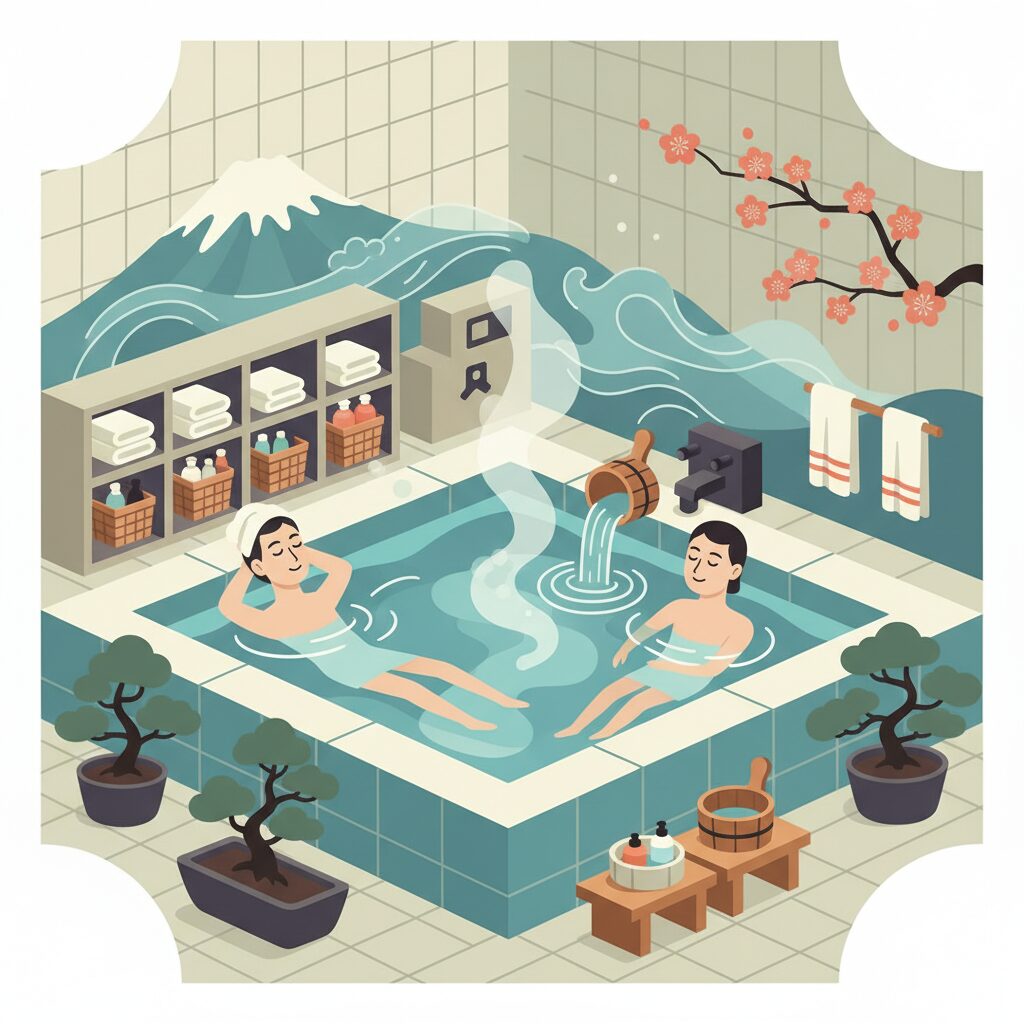
The bathing area itself is a realm of steam, echoing water, and tiled walls often adorned with an impressive, painted mural of Mount Fuji—a curious tradition given that Fuji lies hundreds of kilometers away. For newcomers, this space can feel daunting, filled with potential blunders. However, the rules of the sentō are straightforward and reveal a profound truth about how Osakans, and Japanese people more broadly, navigate communal spaces. It’s a dance of mutual respect, performed with a distinctly relaxed, unpretentious Osaka rhythm.
Kakeyu: More Than Just a Rinse
Before even dipping a toe into the main baths, washing is essential. You’ll see rows of low-seated washing stations, each equipped with a stool, a faucet, a handheld showerhead, and a bucket. The first step is kakeyu, the practice of pouring warm water over yourself from the bath. Using your bucket, scoop water and pour it over your body, starting from your feet and moving upward. This not only helps your body adjust to the temperature but, more importantly, rinses off the initial layer of dirt.
Next, you sit on the stool and scrub—thoroughly. This is the sentō’s most critical rule: you must be completely clean before entering the communal bath. The bath is for soaking, not washing. This principle extends beyond hygiene; it underscores a society that highly values not causing inconvenience to others. Your cleanliness is a gift to everyone else sharing the bath. It’s a quiet yet powerful act of respect for the communal experience. You’ll see older men scrubbing their backs with intense focus, a testament to a lifetime of ingrained ritual. Fathers patiently teach their young sons how to wash properly behind their ears. It’s a lesson in communal responsibility learned on a small plastic stool.
The “Towel on the Head” and Other Mysteries
As you move through the space, you’ll spot some sentō-specific behaviors that might seem strange at first. Everyone carries a small washcloth-sized towel. This is your multipurpose tool: you use it to scrub your body at the washing station, and when walking from the washing area to the baths, it provides modesty. But the most important rule is what not to do with it: the towel must never, ever touch the bathwater. The water is reserved for clean bodies only.
So what do you do with it? Veteran bathers neatly fold it and place it on their heads. This isn’t just a quirky habit—it serves a practical purpose by keeping the towel clean and out of the way. Some also believe that dipping the towel in cold water and placing it on your head helps prevent dizziness in the intensely hot water—a piece of folk wisdom passed down through generations.
Personal space is understood differently here. Sentō can be crowded, especially right after work. You might bump elbows at the washing station or squeeze into a bath. In many Western cultures, this would feel intrusive. Here, it’s simply the nature of a shared space. A quick nod or a soft “sumimasen” (excuse me) suffices. There’s an unspoken agreement that everyone is in this together, sharing the water, steam, and heat. It’s an easy, unforced intimacy that’s rare in modern urban life.
The Art of the Osaka “Atsui-naa”
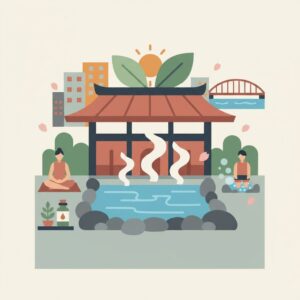
The baths come in various temperatures and types. There might be a jacuzzi-style jet bath (denki-buro), an herbal bath (yakuyu), and always the main bath, often blisteringly hot—frequently reaching 42 or 43 degrees Celsius (108-110°F). Settling into this water is both a challenge and a release. As the heat seeps into your bones, the tension from a day hunched over a laptop begins to fade.
It is here, in the scorching water, that you may experience a quintessential Osaka moment. A perfect stranger, an elderly man soaking quietly, might let out a long, satisfied sigh and mutter to no one in particular, “Atsui-naa…” (It’s hot, isn’t it…). This is more than a comment on the temperature; it’s an opening. In Tokyo, such a remark might be met with polite silence; in Osaka, it’s an invitation to connect. You can nod in agreement or reply, “Honma ni, atsui desu ne” (It really is hot). Suddenly, a conversation begins.
This is how communication works in Osaka. It’s rooted in shared, immediate experience. Osakans are masters at using a simple observation to build a bridge. The conversation might turn to the Hanshin Tigers baseball team, the rising cost of vegetables, or the best way to cook bamboo shoots. This is the city’s true social network, functioning not on Wi-Fi but on steam and goodwill. People bond not over abstract ideas, but over the simple fact that the water is indeed very hot. It’s a communication style that is direct, unpretentious, and deeply human.
The Post-Bath Ritual: Where Community is Forged
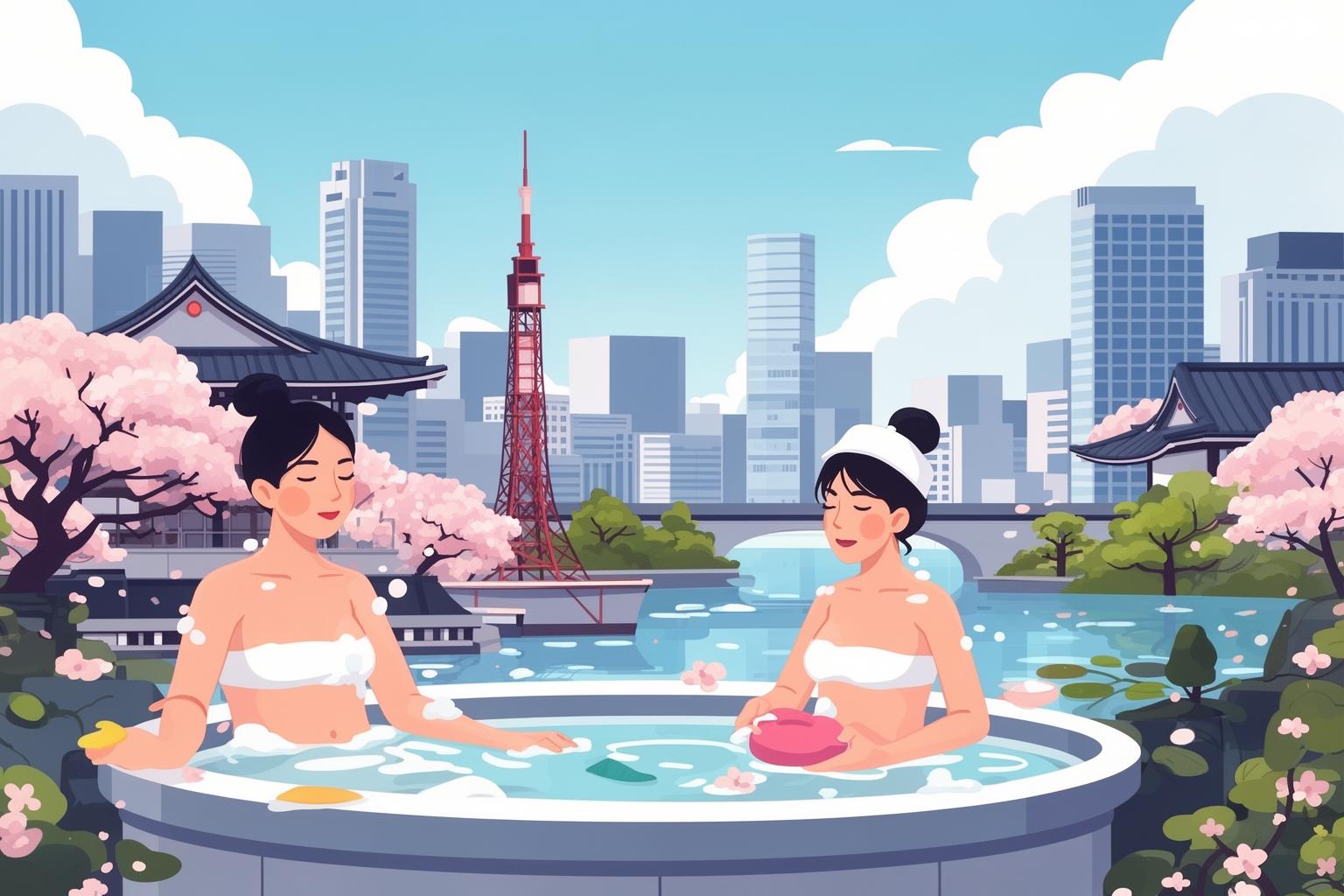
The sentō experience doesn’t conclude the moment you step out of the water. In fact, some of the most meaningful community bonding occurs in the minutes that follow. The sensation of emerging from the bath is one of deep renewal. Your skin tingles, your muscles feel loose like noodles, and your mind is blissfully clear. This post-bath state, called yuzame, is a relaxed and vulnerable time, with rituals designed to gently ease you back into the world while prolonging that sense of well-being.
The Sacred Vending Machine: Coffee Milk and Beer
After drying off, your first stop is almost always the vending machine or the vintage cooler in the changing room (datsuijo). The sudden craving for a cold drink after a hot soak is instinctive, and the sentō offers the perfect refreshments. The undisputed favorite post-bath drink is coffee milk (kōhī gyūnyū), served in a nostalgic, returnable glass bottle. There’s something about the creamy, sweet flavor combined with the cold glass in your hand that feels like pure nostalgia. For generations of Japanese, it’s the taste of childhood and the perfect conclusion to a good bath.
For adults, the other revered choice is a can of ice-cold beer. Cracking open a Kirin or an Asahi while your body still radiates the bath’s heat is a simple pleasure bordering on the sublime. You’ll often see groups of older men chatting and laughing on benches, beers in hand. This moment is not just about rehydrating; it’s the second phase of winding down. It’s a time to savor the clean, relaxed feeling before putting on your street clothes and resuming daily life.
The Datsuijo: The True Community Hub
The changing room is much more than a place to get dressed—it’s the sentō’s living room. Unlike a modern gym where people rush in and out, the datsuijo encourages lingering. You’ll find wooden benches, weighing scales that look like they’re straight from the 1950s, and invariably, an old-school bulky television often tuned to a sumo wrestling match or a baseball game. People don’t rush. They sit, fan themselves with towels, watch TV, and talk.
Here, the true spirit of the Osaka community comes alive. The obāchan reign supreme in this space. They hold court from the benches, sharing neighborhood gossip, offering unsolicited yet genuinely helpful advice, and sometimes even sharing snacks. Don’t be surprised if an elderly woman offers you a mikan (mandarin orange) or a hard candy from her purse. This is more than politeness—it’s an act of inclusion. By sharing their space, you are, for that moment, part of their world.
For foreigners, the datsuijo can provide some of the most genuine and disarming interactions you’ll experience in Japan. Your tattoos, often met with stares on the street, will spark open curiosity. An old man might ask where you’re from and then tell you about his one trip to Hawaii back in 1982. An obāchan might gently correct how you’re tying your yukata if you’ve rented one. It’s direct, unfiltered, and warmly welcoming. It breaks down the barrier between “local” and “foreigner” because, in the shared vulnerability of the changing room, such distinctions feel meaningless. You’re simply neighbors cooling down after a hot bath.
Why the Sentō is the Soul of Osaka’s Work-Life Balance
In an era of constant connectivity and blurred boundaries, the modest neighborhood sentō serves as a powerful remedy. It’s more than just a place to cleanse; it’s a carefully maintained space for mental and communal well-being. For the remote worker in Osaka, it is not merely a convenient amenity—but an essential survival tool, offering a clear, definite boundary at the end of the day and a way to reclaim a sense of self beyond work. Its existence and lasting popularity highlight the key values of the Osaka mindset: a strong appreciation for practicality, community, and the simple, tangible joys of life.
A Vital “Third Place” in a Digital Age
The idea of the “third place”—a space that is neither home nor work—is essential for a healthy social life. When your home is your workplace, this third place becomes even more important. The sentō is the ultimate third place. By its very nature, it demands disconnection. You cannot bring your laptop into the bath. You cannot check your smartphone amid the steam. For the hour you spend there, you are completely offline, unreachable, and fully present in your own body.
This stands in sharp contrast to the typical decompression rituals in a city like Tokyo. The Tokyo approach might involve a quick, efficient drink at a standing bar before enduring a long, silent commute on a crowded train. It offers release, but often one that is solitary and fleeting. The Osaka sentō experience is quite the opposite. It is slow, communal, and deeply restorative. It doesn’t merely distract from the day’s stress; it physically and mentally cleanses it away, replacing it with warmth and connection.
Practicality Over Pretension: The Osaka Ethos
A visit to the sentō costs about 500 yen, making it one of the most affordable self-care options imaginable. This is not a luxury spa with costly treatments and exclusivity. It is a service for everyone. This affordability resonates with the core of the Osaka character, defined by a rooted pragmatism and a keen focus on kosupa (cost performance). Osakans love a bargain, and the sentō is the best deal in town: for the price of a cup of coffee, you gain cleanliness, relaxation, and community.
This absence of pretension is crucial. At the sentō, everyone is equal. Stripped of clothes, logos, and status symbols, you are all simply people sharing a bath. A company CEO soaks in the same water as a construction worker. This radical equality forms the basis of the casual and easy social interactions found there. Osakans tend to prioritize substance over style, and the sentō physically embodies that philosophy. There’s no room for affectation when you’re sitting on a tiny plastic stool, scrubbing your back. This setting encourages the direct, honest, and sometimes boisterous communication style that the city is known for.
Discovering Your Local, Finding Your Place
Every neighborhood in Osaka has its own sentō, each with a distinct character. Some are old and rustic, with beautiful original tilework. Others have been modernized with amenities like saunas and cold plunge pools. Finding your local sentō is a rite of passage for anyone who truly wants to live in Osaka, not just stay there. It’s how you connect to the analog fabric of your community. The faces at the bandai and in the bath become familiar. You begin to recognize people on the street. You are no longer an anonymous foreigner; you become the person from the apartment down the road who visits the bath every Tuesday and Friday.
For the remote worker adrift in the digital ether, this connection is grounding. It creates a rhythm to the week, a concrete goal at the day’s end, and a genuine, physical community to belong to. The sentō is the ultimate work-life balance hack. It’s a place to wash away the day, soak away stress, and emerge not just clean, but reconnected to your body, your neighbors, and the warm, practical, and wonderfully human heart of Osaka.