So you’ve heard about Nakazakicho. You’ve seen the pictures, the ones that look like a film set from a bygone era. Narrow alleys twist and turn, revealing hand-drip coffee shops tucked into old wooden houses. Vintage clothing stores spill their colorful wares onto the sidewalk. Independent art galleries hide behind sliding paper doors. It’s the kind of neighborhood that pops on your screen, a perfect blend of retro charm and modern artistic cool, all just a stone’s throw from the concrete canyons of Umeda. And the immediate thought that follows, especially if you’ve spent any time in Tokyo, is, “This must be impossibly expensive.” It’s the kind of place that feels curated for day-trippers and priced for high-earners, a living museum where you visit but don’t actually live. But here’s the secret, the thing that gets to the very heart of Osaka’s character: you’re only half right. Nakazakicho isn’t just a trendy backdrop; it’s a living, breathing, and surprisingly affordable neighborhood. Finding that affordable apartment, however, requires you to throw out your Tokyo rulebook and learn the Osaka hustle. It’s a process that’s less about online portals and more about on-the-ground intuition, less about perfect specs and more about human connection. It’s about understanding that in Osaka, value isn’t always shiny and new. Sometimes, it’s a little crooked, a bit old, and full of a soul that money can’t buy. This isn’t just a guide to finding a cheap apartment; it’s a crash course in the Osaka mindset, where practicality, community, and a healthy dose of character reign supreme.
Once you’ve settled in, embracing the local lifestyle means mastering the art of getting around, starting with understanding the indispensable role of the mamachari in Osaka’s neighborhoods.
Decoding the Nakazakicho Vibe: More Than Just a Photo Op
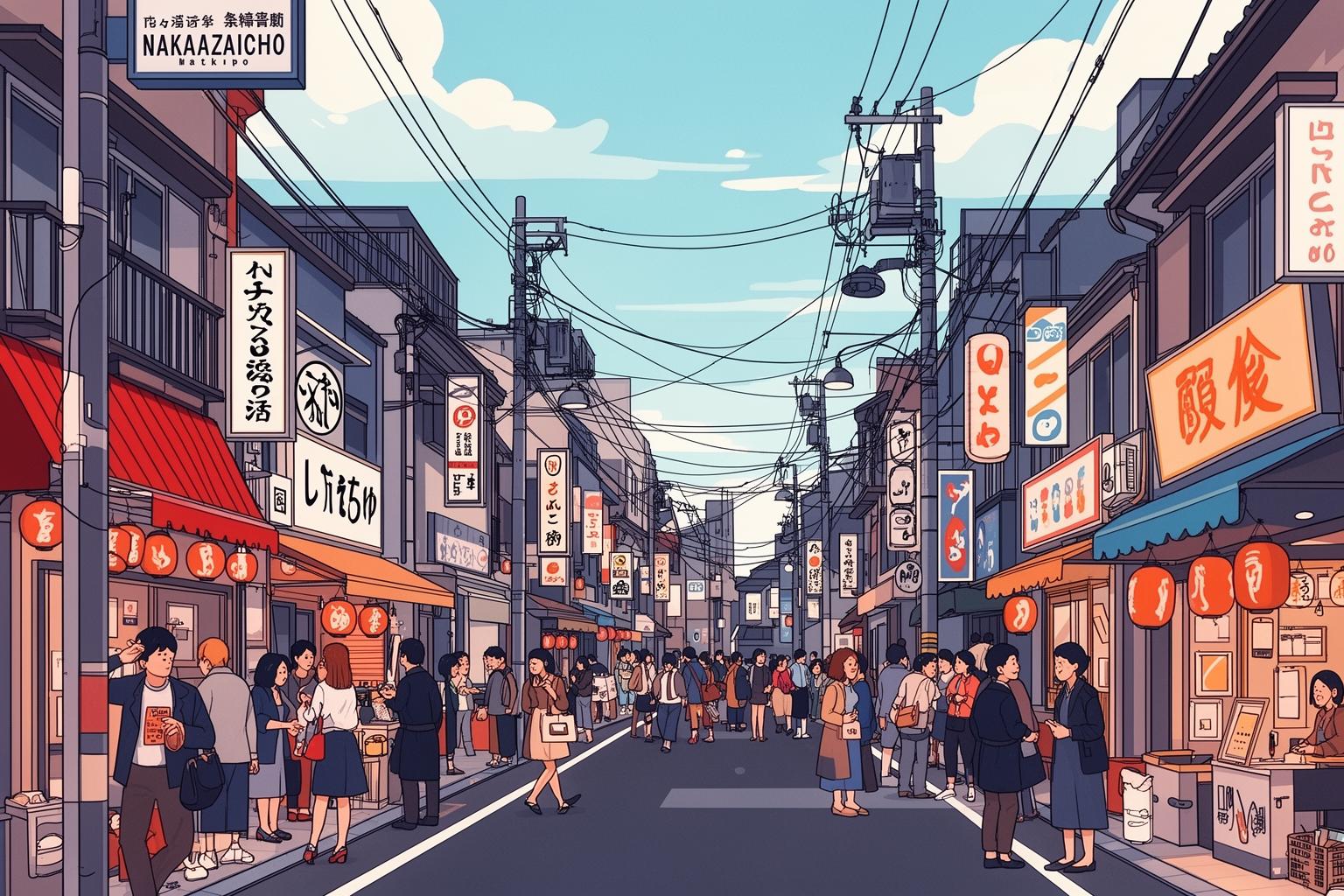
Before you can find a place here, you need to understand what you’re seeing. Foreigners, and even many Japanese from other cities, view Nakazakicho as a unified, singular aesthetic. It’s ‘the retro neighborhood.’ But living here means recognizing its dual nature, noticing the line that separates performance from reality. This division creates pockets of affordability and shapes the daily rhythm of life.
The Two Faces of the Neighborhood
Think of Nakazakicho as having a front stage and a backstage. The front stage is what appears on blogs and Instagram: a network of impossibly narrow, photogenic alleys radiating from the subway station. Here, you’ll find meticulously designed cafes where a single cup of coffee is an artwork, vintage boutiques with carefully curated racks, and tiny galleries showcasing local artists. This part hums with a quiet energy, filled with visitors speaking in reverent whispers as they wander. It feels deliberate, almost like an open-air museum. And yes, renting a commercial space or apartment along these main streets will cost you.
Then there’s the backstage. Just one block away from the main thoroughfare, the atmosphere changes completely. The curated aesthetic gives way to lived-in reality. The alleys widen just enough for a delivery scooter. You’ll see Showa-era apartment buildings—modest two-story structures with external staircases and rows of identical metal doors. Elderly residents tend sprawling collections of potted plants that have overtaken the sidewalk. You’ll hear the rumble of washing machines from open windows, the clatter of dishes from family kitchens. This is where people actually live. It’s less about style and more about existence. This is the Nakazakicho of small family-run hardware stores, local ‘sentō’ public baths, and the quiet daily rhythm that’s persisted for decades, long before the first artisanal coffee shop arrived. Affordable apartments are here, hidden in plain sight, woven into the fabric of this undocumented reality.
The Osaka Definition of ‘Retro’
In Tokyo, neighborhoods like Shimokitazawa or Koenji also have a ‘retro’ vibe, but it often feels like a stylistic choice, a deliberate branding effort. Old buildings are preserved or mimicked simply because the look is trendy. Gentrification often follows, driving prices up and pushing out longtime residents. In Osaka, especially Nakazakicho, ‘retro’ means something different. It’s not just a style; it’s the result of deeply ingrained pragmatism. People aren’t preserving these old buildings just because they look cool; they keep them because they still work. Why tear down a perfectly functional two-story wooden house to build a soulless concrete box if the old house keeps the rain out?
This embodies the spirit of ‘mottainai’—the idea of avoiding waste—applied to urban living. Osaka has always prioritized function and value over prestige and newness. A Tokyoite might see a 50-year-old apartment and think, ‘It’s old and needs replacing.’ But an Osakan sees the same building and thinks, ‘The rent is cheap, and it’s a ten-minute walk to Umeda. It’s perfect.’ This mindset is the main reason a neighborhood this charming and central remains affordable. The housing stock is older, and the local culture values utility over age. You’re not paying extra for a ‘retro lifestyle’; you’re getting a bargain for living in a place that’s simply… old.
The Artistic Soul Isn’t a Corporation, It’s an Oba-chan
Nakazakicho’s ‘artistic’ reputation can also be misleading. It’s not a city-funded arts district supported by corporate sponsors or grants. Creativity here is grassroots, bottom-up, and deeply individual. The cafe owner often designs the interior and roasts the beans. The artist in the gallery is usually the one at the front desk. This independent spirit permeates the community.
But the true art of Nakazakicho isn’t confined to galleries. It’s in an elderly woman—an ‘oba-chan’—who meticulously arranges dozens of mismatched pots: old paint cans, styrofoam boxes, chipped ceramic bowls, cultivating a riot of flowers and greenery on a tiny concrete patch outside her home. Her display is as carefully composed and vibrant as any gallery installation. It’s in the hand-painted sign of a tiny tobacco shop, the faded glory of an old movie poster plastered on a wall, the intricate tile work at a public bath’s entrance. This is the neighborhood’s soul—creativity born not of commerce, but of care, and a desire to make one’s small corner of the world a little more beautiful. Understanding this helps you see the neighborhood not as a consumer product, but as a community of individuals—a perspective essential to starting your apartment search.
The Hunt for an Apartment: An Osaka-Style Approach
If you come to Nakazakicho relying on the usual apartment-hunting methods you learned in Tokyo, you’ll likely end up frustrated. The sleek websites, the big-name real estate chains, and the rapid, impersonal transactions don’t work as effectively here. Renting in Nakazakicho is an analog experience in a digital age. It calls for patience, careful observation, and a willingness to engage in a very traditional form of commerce: conversation.
Why Your Tokyo Apartment Search Strategy Won’t Work Here
In Tokyo, the rental market operates like a high-volume, high-speed machine. You visit a major real estate portal such as Suumo or Homes, filter by size, price, and proximity to the station, and receive a list of hundreds of nearly identical modern apartments. You contact an agent from a large company like Apaman Shop or MiniMini, view three places within an hour, submit an application, and your fate is decided by a credit check. It’s efficient, anonymous, and transactional.
Try the same approach in Nakazakicho, and you’ll mostly find the newer, pricier apartments on the neighborhood’s outskirts. The true gems—charming, affordable, character-filled apartments in the heart of the old district—are often not listed. Why? Because many landlords are elderly, long-time owners who don’t have contracts with major real estate companies. They avoid dealing with a flood of anonymous online inquiries and maintain a relationship with a single person: the local neighborhood real estate agent. Often, the only advertisement is a laminated sign with handwritten details taped to the building’s front door.
The Importance of the Fudousan-ya (Real Estate Agent)
The key to accessing Nakazakicho’s hidden rental market is the local ‘fudousan-ya’. These are small, independent real estate offices located right within the neighborhood. They serve as gatekeepers, matchmakers, and your most valuable allies.
Choosing the Right Agent
Turn your back on Umeda’s glittering towers and big, brightly lit chain offices. Instead, stroll the residential streets of Nakazakicho and seek out small storefronts that look like they haven’t been updated since the 1980s. Their windows may be cluttered with sun-bleached floor plans. Inside, an older man or woman sits at a metal desk surrounded by piles of paper, with a fax machine humming nearby. This is the person you want to approach. These agents have a depth of local knowledge that no online database can match. They don’t just know the buildings—they know the landlords personally. They can tell you which landlord is strict about noise and which one favors artist tenants. They know which buildings have leaky roofs and which have thick walls. Their inventory may be small, but it’s the pure, unfiltered Nakazakicho.
Why Conversation Matters
Your initial conversation at one of these offices is crucial. It’s not a formal inquiry into your salary or visa status; it’s a vibe check. The agent wants to understand who you are and whether you’ll fit into the community. Don’t lead with budget and room size. Speak from the heart. Tell them what you love about Nakazakicho. Say things like, “I appreciate the atmosphere of the old buildings,” or “I’m looking for a place with character and don’t mind if it’s a bit aged,” or “I want to be part of a real community.” This signals to the agent that you grasp the trade-offs and aren’t the stereotypical renter who will complain about drafty windows or creaky floors. In Osaka, business is personal. The agent isn’t just finding a tenant; they’re finding a new neighbor for their landlord friend. They seek someone who will respect the building and the community. If they like you and believe you’ll fit, they’ll suddenly “remember” a place that just became available—one that never makes it online.
Understanding the Terminology and Costs
Once you identify a potential apartment, you’ll need to navigate Osaka’s distinctive rental financial landscape. Here, the city’s practical, straightforward attitude provides a clear edge over Tokyo.
Breaking Down the Rent
Like elsewhere in Japan, you’ll pay a deposit (‘shikikin’), typically one month’s rent and refundable minus cleaning and repairs. The major difference is ‘reikin’, or key money—a non-refundable “gift” to the landlord, a custom still firmly rooted in Tokyo where one or two months’ rent as key money is common. In Osaka, however, it’s much less frequent. The merchant city mindset is: “Why pay a gift just to rent?” It’s viewed as an unnecessary and illogical expense. Many older Nakazakicho apartments will be ‘reikin-nashi’—no key money required. This can save you hundreds or even thousands of dollars in initial move-in costs, a major financial advantage of living in Osaka.
‘Wakeari Bukken’: The Secret Behind Affordability
Now, honesty with yourself is essential. Apartments in Nakazakicho are affordable because they come with imperfections. These are ‘wakeari bukken’—properties with a ‘reason’ or ‘flaw.’ The agent might not use that exact term, but it’s the category these apartments fall into. These flaws filter out picky renters, leaving listings for those open to flexibility. What kind of flaws? It might be a ‘sentaku-soto’ (washing machine hookup on the balcony). It could be a ‘washiki’ toilet (traditional Japanese squat toilet). It could be a three-story building without an elevator (‘erebeta-nashi’). It might be a ‘baransu-gama’ bath, an old-fashioned type that requires lighting a pilot light to heat water. Or the building might be right next to train tracks, and you’ll hear the Hankyu line rumble every few minutes. These are the trade-offs. Osakans balance the flaw against the benefit: “Yes, it’s a squat toilet, but the rent is 45,000 yen, and I can walk to work in Umeda. I’ll take it.” If you demand modern perfection, be prepared to pay for it. But if you embrace the quirks, you unlock the neighborhood’s soul and its best bargains.
Living in Nakazakicho: The Unspoken Rules of a Retro Community
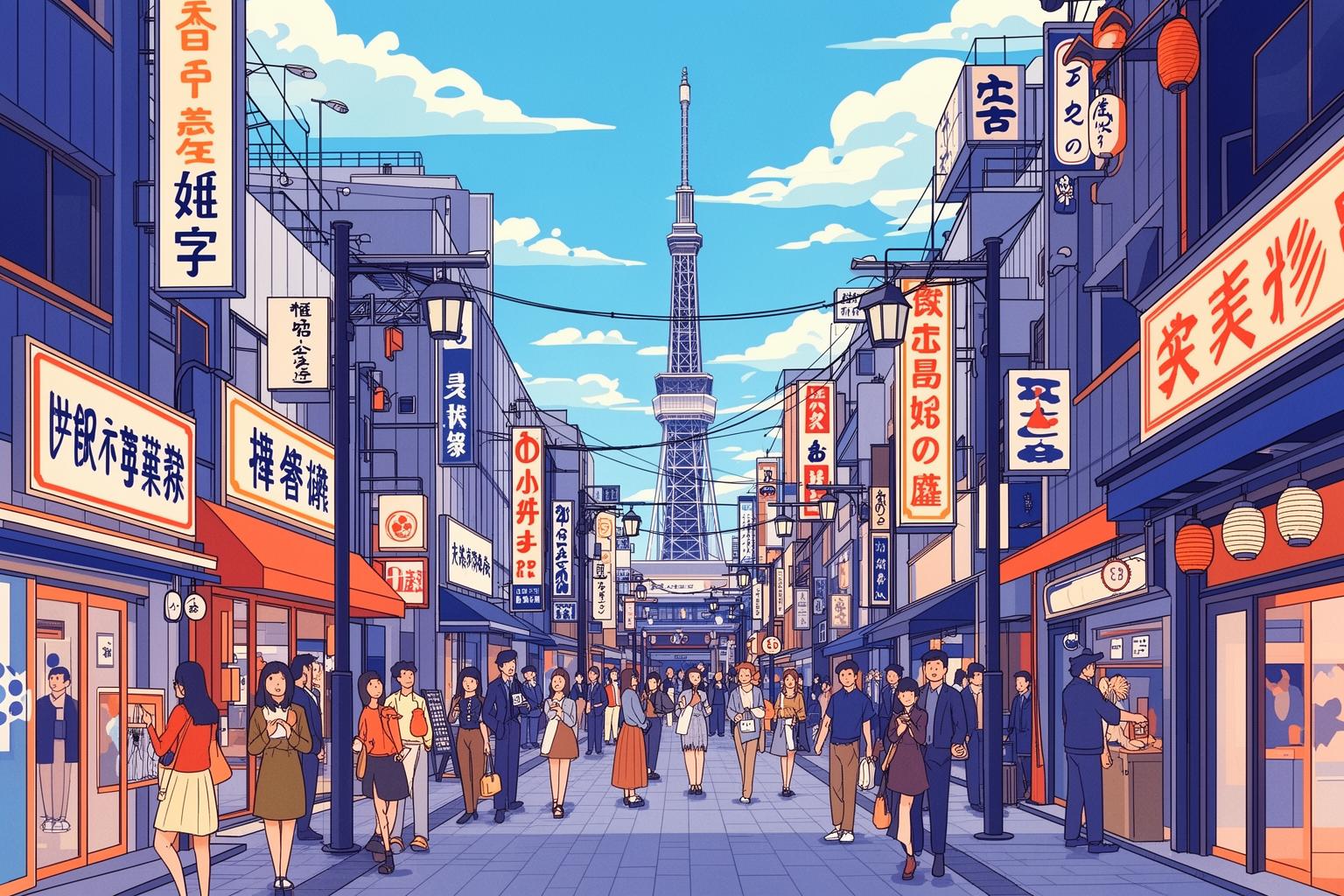
Securing the apartment is just the initial step. Living in Nakazakicho means becoming part of a close-knit, traditional community. This is perhaps the most significant cultural difference from Tokyo’s impersonal urban experience. Your life ceases to be solely your own; it becomes intertwined with those around you. This connection comes with unwritten rules and expectations essential for peacefully navigating daily life.
It’s a Neighborhood, Not Simply a Group of Apartments
In a modern Tokyo apartment building, you might live for years without ever learning your next-door neighbor’s name. That’s impossible in Nakazakicho. The buildings are small, often with only a few units, and the walls are thin. You’ll see familiar faces every single day. The elderly woman on the first floor will know your work schedule based on your comings and goings. The man running the corner liquor store will be familiar with your favorite beer brand. This isn’t nosiness; it’s community. It’s a subtle, ongoing form of mutual watchfulness that keeps the neighborhood safe and connected. You’re expected to be part of this network. You’re not merely a renter occupying a space; you’re the new resident in the Tanaka-san building, the foreigner on the second floor. Your identity is linked to your location and relationships.
The Significance of ‘Aisatsu’ (Greetings)
In this setting, simple greetings, or ‘aisatsu,’ hold deep meaning. They’re not the casual, mumbled ‘konnichiwa’ used in a bustling city. They serve as tools for building social capital. When you leave in the morning and see the landlord sweeping the entrance, you make eye contact, bow slightly, and say ‘Ohayō gozaimasu’ (Good morning). When passing a neighbor on the stairs in the evening, you say ‘Otsukaresama desu’ (Thanks for your hard work). This daily ritual of acknowledgment is the currency of community life. It signals that you are aware, respectful, and a trusted member of the group. Forgetting to greet is seen as odd and aloof. Consistently practicing it builds a reserve of goodwill that proves invaluable. If you mistakenly put out your garbage on the wrong day, a neighbor you greet every morning is more likely to kindly correct you than to complain to the landlord.
Noise, Garbage, and the Rhythm of Community
Living in an old wooden or light steel-frame building means intimacy, whether you welcome it or not. You’ll hear your neighbor’s television, their arguments, their late-night cooking—and they’ll hear yours. The unspoken rule isn’t silence, but mutual tolerance. Everyone knows the walls are thin. The expectation is that you’ll be considerate—no blasting music at 2 a.m.—but there’s a broad acceptance of everyday sounds. This stands in stark contrast to modern apartments, where noise complaints are common. Here, the solution is social rather than structural: you tolerate your neighbor’s noise because you expect them to tolerate yours.
Garbage disposal is another important community ritual. The rules for sorting are complex and strict, and your designated garbage spot (‘gomi-basho’) is a public stage. Everyone can see your trash. Putting it out on the wrong day or in the wrong bag is a public misstep. In Osaka, this is often addressed with characteristic directness. You might find a handwritten, slightly passive-aggressive note attached to your bag. More often, a neighborhood elder will simply approach you and say, “Hey, today is plastics, not burnables.” This isn’t meant to be confrontational; it’s a clear, practical correction aimed at preserving community harmony. Learning to accept this directness without taking offense is essential for happily living in an Osaka neighborhood. It’s not rude; it’s practical.
The Financial Reality: What Your Yen Actually Buys You
Let’s talk numbers. While the abstract charm of Nakazakicho is appealing, it’s the financial reality that truly makes it a practical place to live. The value proposition here is fundamentally different from what you’d find in a comparable Tokyo neighborhood, perfectly illustrating the differing priorities of the two cities.
A Tale of Two Budgets: Nakazakicho vs. a Tokyo Equivalent
Consider a monthly budget of 70,000 yen. In a trendy, somewhat central Tokyo neighborhood like Koenji or Gakugei-daigaku, that 70,000 yen might secure you a 20-square-meter 1K (one room plus kitchen) in a modern but soulless building from the 90s. It will be clean, functional, and likely equipped with an IH stove, but compact—just enough space for a bed and a small desk. It’s essentially an efficient box for sleeping in.
In Nakazakicho, however, the same 70,000 yen can get you something entirely different. You might find a 35-square-meter 1DK (one room and a separate dining/kitchen area) in a 40-year-old building. It will likely feature a traditional six-mat tatami room, offering wonderfully versatile space, a separate kitchen large enough for a small table, and a balcony to dry your laundry. It won’t be as new or shiny, and the bathroom fixtures may be a bit dated, but you get significantly more space for your money. Osakans have always valued space and practicality. Paying a premium for newness when you can get twice the floor space in an older building strikes most locals as utterly illogical. You’re paying for livable space, not for recent construction.
The Hidden Value: Proximity to Umeda
One of Nakazakicho’s most significant and often overlooked financial advantages is its location. It’s not just ‘near’ the city center; it’s practically in it. It’s a genuine 10-to-15-minute walk to the entrance of Osaka-Umeda Station—one of the largest and busiest transportation hubs in the country. This dramatically affects your daily budget and quality of life. You don’t need to spend on a train or subway to reach the main shopping districts, major department stores, or connections to Kobe, Kyoto, and beyond. That saves thousands of yen every month in commuting costs.
For Osakans, this is a source of immense pride—the art of securing a killer deal. Finding a cheap, spacious apartment just a short walk from the city’s heart is the ultimate win. It’s about being savvy. Why live in a small, expensive box in a distant suburb when you can live in a larger, more affordable, and more characterful place right next to everything? This calculation lies at the core of Osaka urbanites’ logic.
Renovated vs. Original: Choosing Your Battle
As you search, you’ll notice two primary categories of older apartments. First, there are the ‘full reform’ or ‘renovated’ apartments. These units within old buildings have been completely gutted and modernized. They boast shiny new laminate flooring, a modern system kitchen, Western-style toilets, and fresh white paint. They look great in online listings, and agents favor them because they sell easily. However, you’ll pay a premium for these upgrades, bringing rent closer to Tokyo levels.
The second category is the ‘original’ apartment—a time capsule. It retains the original tatami mats, which smell of sweet grass after rain. It has an old-fashioned kitchen with tiled walls and separate hot and cold taps. Wooden built-in closets with fusuma sliding doors may still be intact. It feels, for better or worse, like stepping into your Japanese grandmother’s house. These apartments offer the absolute best value. Rent is significantly lower because many younger Japanese renters, accustomed to modern amenities, tend to overlook them. If you’re willing to embrace this authentic Showa-era lifestyle and appreciate its imperfections, you’ll be rewarded with incredibly low rent in an unbeatable location.
Is Nakazakicho Right For You? A Final, Honest Gut Check
Nakazakicho is not suited for everyone. Its appeal comes with trade-offs, and its affordability is tied to certain conditions that some may find charming while others may consider difficult to accept. Before you begin your search, it’s important to honestly evaluate whether your personality and lifestyle truly fit the reality of this distinctive neighborhood.
Who Thrives Here
Those who thrive in Nakazakicho are people who prioritize character over convenience. They include artists, writers, freelancers, students, and anyone who appreciates beauty in the worn and weathered. They prefer a spacious tatami room to a small, modern unit with an auto-lock system. These individuals genuinely enjoy the spontaneity of community life—the unexpected conversations at the local bakery, the friendly hellos on the staircase. They don’t mind minor inconveniences if they come with a story. They view a 50-year-old building not as ‘dilapidated’ but as ‘sturdy and full of history.’ Essentially, they are people seeking a home, not just a rental.
Who Might Struggle
On the other hand, those who require seamless modern urban conveniences will likely find Nakazakicho challenging. If you can’t live without an elevator, a delivery locker for online orders, a 24-hour garbage room, and perfect soundproofing, this isn’t the place for you. If you value deep privacy and anonymity and would feel bothered by a neighbor commenting on your new haircut, the community aspect may feel intrusive. If small imperfections—a creaky floor, rattling windows, or a bathroom that takes time to heat water—quickly frustrate you, expect constant irritation. And if the straightforward, candid communication style typical of Osaka, where neighbors might bluntly point out your mistakes, feels uncomfortable, you might find the social environment difficult.
The Parting Shot: It’s an Attitude, Not Just an Address
In the end, finding and happily living in an affordable apartment in Nakazakicho is less about a particular search strategy and more about adopting a certain mindset. It means embracing Osaka’s philosophy of practicality over prestige, substance over appearance. It means recognizing the value in something old and well-loved. It means understanding that a strong community is a kind of wealth, and that a short walk to the city center is a luxury no fancy appliance can replace. Living in Nakazakicho isn’t like staying in a boutique hotel styled to look retro. It’s about engaging in the real, ongoing, sometimes messy, but vibrantly alive life of one of Osaka’s most soulful neighborhoods. It’s a conscious choice to live with a bit more texture, a bit more noise, and a whole lot more heart.