When I first moved to Osaka from the States, I developed a habit. Walking through the canyons of glass and steel in Umeda or the narrow, boutique-lined streets of Horie, I’d play a little game: count the meetings. Not the ones happening behind polished boardroom doors on the 34th floor, but the ones unfolding right there on the pavement. Two men in crisp, dark suits, leaning against a vending machine, nursing cans of Suntory BOSS coffee, heads bowed in intense discussion. A woman in a stylish blazer, phone pressed to her ear, gesturing emphatically to a colleague seated on a tiny stool outside a coffee stand, a half-finished latte sweating between them. These weren’t chance encounters or casual chats. They were deals being struck, strategies being honed, relationships being managed. They were work, happening in plain sight, fueled by caffeine and an unwritten urban code. This is the world of `tachibanashi`, a Japanese word that simply means “standing and talking.” But in Osaka, it’s so much more than that. It’s a business philosophy, a social lubricant, and the city’s default mode of communication. It’s the kinetic energy of a merchant town made visible, a constant hum of commerce and connection that you don’t just see, you feel. In Tokyo, a meeting is an event. It requires an appointment, a reserved room, a formal exchange of business cards. In Osaka, a meeting is a current. You just have to step into the flow. This sidewalk ballet of brief, potent interactions is one of the first and most profound clues to understanding the city’s soul. It reveals a culture that prizes pragmatism over procedure, relationships over rigid formality, and a sense of immediacy that can feel both exhilarating and bewildering to an outsider. Forget the high-rise offices for a moment; the real business of Osaka happens right here, on the sidewalk.
This dynamic, sidewalk-level approach to business is a key part of the broader Kansai economic boom that is reshaping the region’s future.
The Anatomy of an Osaka Tachibanashi Meeting
At first glance, these street-corner gatherings might seem like casual, unplanned meetups. But observe a few, and you’ll begin to notice the structure, the unspoken rules, and the subtle choreography that define them. It’s a highly refined form of communication, developed over centuries in one of Japan’s busiest commercial hubs. Understanding its elements is like learning the grammar of daily life in Osaka, enabling you to interpret the city’s intentions through the posture of its people.
More Than Just a Coffee Break
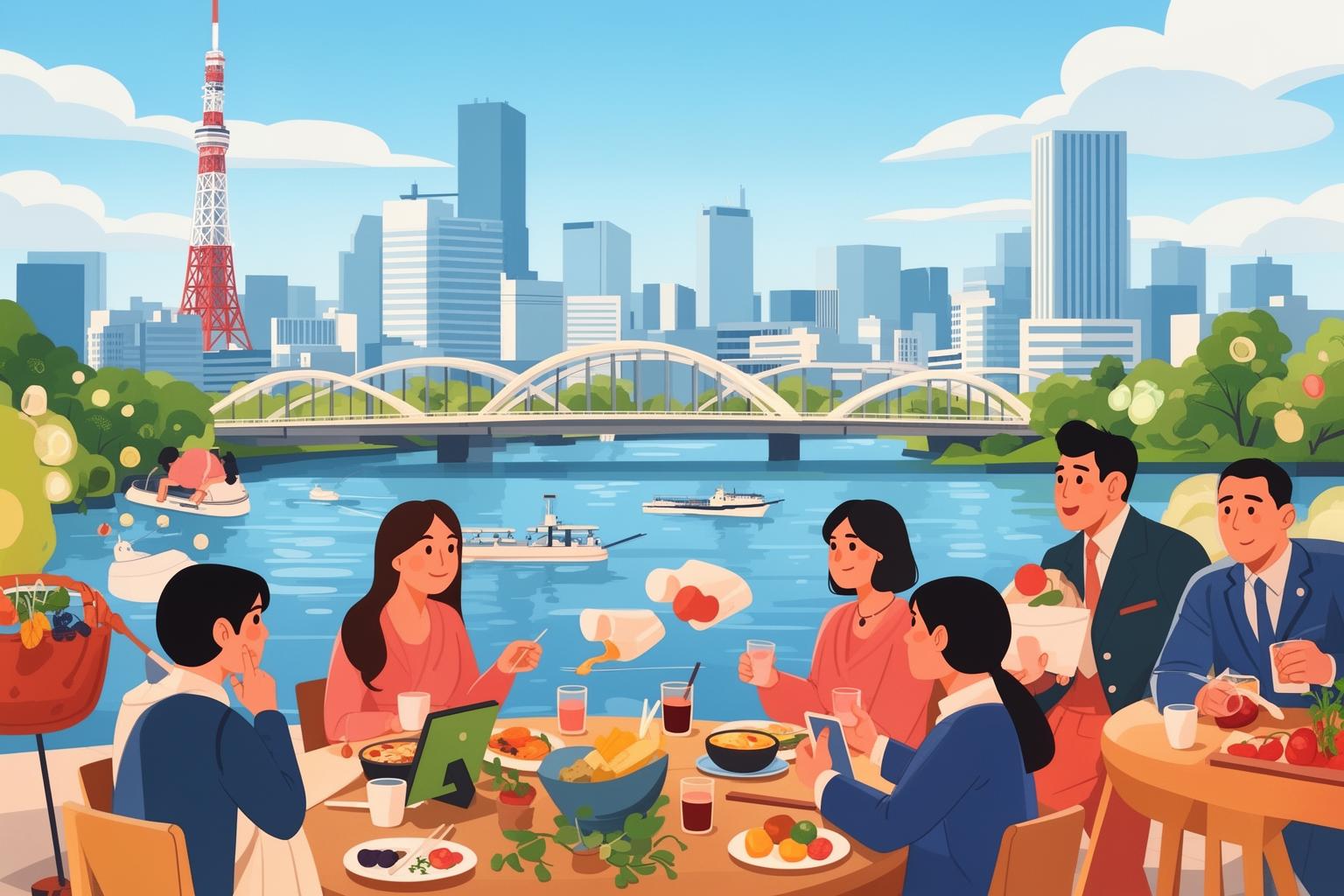
A typical `tachibanashi` meeting exemplifies focused informality. Imagine this common scene near Yodoyabashi Station, the heart of corporate Osaka. Two men, likely in their forties or fifties, stand just outside the busy Doutor Coffee shop. They don’t use the tables; that would imply a longer, more settled meeting. Instead, they stand, forming a temporary zone of business. One holds a clear file packed with papers, occasionally tapping it with his knuckle to emphasize a point. The other nods, phone in hand, perhaps scrolling through an email to confirm a figure. Their coffee—whether a paper cup from the cafe or a can from a nearby vending machine—acts as a prop and timer. While the coffee is in hand, the meeting is ongoing; once finished, the conversation naturally concludes. The dialogue is clipped, direct, and carries the distinct rhythm of the Osaka dialect. There’s laughter, a sudden clap on the shoulder, a shared look of understanding. This isn’t the stiff, hierarchical exchange common in Tokyo’s Marunouchi district. It’s a peer-to-peer negotiation, a fast-paced problem-solving session that strips away all pretense. The aim isn’t to perform the ritual of a meeting but to reach a concrete result: get the answer, confirm the plan, secure the agreement, and move on. The entire city is their office, the nearest vertical surface their wall, and the next five minutes their sole agenda. It’s efficiency in motion.
The Unspoken Rules of the Sidewalk
Although these meetings seem spontaneous, they follow an implicit etiquette that every Osakan knows. The first rule is spatial awareness. A `tachibanashi` group instinctively positions themselves to minimize disruption. They find a nook by a building entrance, a wide spot on the pavement, or a space beside a row of bicycles. They create a bubble of conversation without blocking the steady flow of pedestrians. This is a vital skill in a city as dense and crowded as Osaka, where interrupting the human current is a major faux pas. The second rule governs volume. While Osaka residents are famously loud and expressive compared to their Kanto counterparts, in a `tachibanashi` meeting the energy is controlled. Voices are lively but not disruptive. Laughter is genuine but doesn’t carry far down the street. It’s a private conversation held in a public place, and everyone instinctively knows where that line lies. Perhaps the most important rule is the concept of `ma`, the Japanese idea of negative space or pause. A skilled `tachibanashi` participant knows how to interpret the silences. A brief pause can indicate agreement, reflection, or a shift in topic. It’s during these moments that real communication takes place—a silent negotiation of turns and subjects. These unspoken codes sharply contrast with the rigid protocols of a formal office meeting. There are no RSVPs, no circulated agendas, no minutes recorded. The whole system depends on trust and shared understanding. The invitation to meet is often as simple as, “I’m near your office, got ten minutes?” The acceptance is just as swift. This fluidity offers a huge competitive edge. While a Tokyo team is booking a conference room for next Tuesday, their Osaka counterparts have already met, decided, and acted—all in the time it takes to finish a can of coffee.
Why Osaka? The Cultural Soil for Spontaneous Connection
This phenomenon of the sidewalk office is not merely a random habit; it directly reflects Osaka’s distinctive history and cultural DNA. For centuries, the city served as Japan’s commercial hub—the nation’s kitchen—where rice and goods from across the country were traded. This heritage as a `shōnin no machi`, a merchant town, has shaped a mindset fundamentally different from the bureaucratic and samurai-rooted culture of Tokyo. To truly grasp `tachibanashi`, one must understand the spirit of the Osaka merchant.
The Merchant’s DNA: Speed, Flexibility, and the Bottom Line
For an Osaka businessperson, the old adage `toki wa kane nari` (time is money) is more than a cliché; it is a guiding principle. In a port city founded on trade, opportunities were fleeting. When a ship arrived, goods had to be inspected, prices negotiated, and deals finalized before the next tide came in. Lengthy formalities or multi-step approval processes had no place here. This urgency is ingrained in the city’s culture. A `tachibanashi` meeting today mirrors a negotiation on the docks—cutting through distractions to reach the `yōken`, the main point. This style often values `honne`, one’s true feelings or intentions, over `tatemae`, the polite façade carefully maintained elsewhere in Japan. Tokyo business meetings typically spend considerable time on pleasantries and indirect communication, delicately probing the other party’s stance. By contrast, Osaka’s `tachibanashi` tends to feature direct questions like, “So, what’s the best price you can offer?” or candid remarks such as, “Honestly, I don’t think that timeline is realistic.” Though this straightforwardness might surprise outsiders, Osakans view it as a form of respect—it shows they value your time. The aim is to reach an `otchidokoro`, a compromise acceptable to both sides, as swiftly as possible. The sidewalk offers the perfect neutral, unpretentious setting for such honest exchanges.
“Akindo wa Hito ga Zaisan ya”: The Merchant’s Wealth is People
A well-known Osaka saying goes: “The merchant’s wealth is not in their warehouse but in their people.” This expresses a profound belief that business fundamentally revolves around human relationships. While transactions matter, the real asset lies in a long-term network of trust and mutual obligation. `Tachibanashi` serves as a key tool for nurturing this human capital. Each brief sidewalk chat is a deposit into a relationship bank—a chance to exchange information, share quick advice, or simply check in and ask about someone’s family. These frequent, low-pressure interactions weave a dense, resilient social fabric. When serious issues arise or major opportunities occur, the foundation of trust is already established. You’re not calling a stranger or a mere business contact but reaching out to someone you recently shared a coffee with. This contrasts sharply with Tokyo’s more structured and often transactional networking culture, where relationships often develop at formal `nomikai` (drinking parties) or through carefully arranged introductions. In Osaka, connections grow organically in the in-between moments of the day. The sidewalk office is where you prove your membership in the community, show your face, and demonstrate your reliability one brief conversation at a time.
The City’s Physicality: A Stage for Interaction
Osaka’s urban design plays a vital role in fostering `tachibanashi` culture. Unlike Tokyo, which can feel like a vast collection of disconnected hubs, central Osaka is compact and walkable. The business districts of Umeda, Yodoyabashi, Honmachi, and Shinsaibashi blend seamlessly into one another. It’s perfectly feasible to walk from a meeting in one district to lunch in another, and this pedestrian-friendly scale offers endless chances for chance encounters. The city also features infrastructure that supports spontaneous stops. Vending machines abound, providing a diverse range of hot and cold drinks. Tiny, one-person coffee stands nestle in alleyways and beneath railway tracks. Many buildings have open-front shops and cafés with seating spilling onto the sidewalk. The famous `shotengai`—covered shopping streets—serve as all-weather public corridors lined with benches and gathering spots. The city seems to invite you to pause and connect. Its streets are not just pathways from Point A to Point B; they function as active social spaces, extensions of the workplaces above and shops around them. This physical environment fosters a porous boundary between public and private life, work and leisure—unique to Osaka. The city’s very layout asserts that life is meant to be lived openly, not hidden behind closed doors.
The Tachibanashi Toolkit: Coffee Stands as Essential Infrastructure
The sidewalk office, like any traditional office, demands tools and resources. In Osaka, this essential toolkit is straightforward and accessible to everyone: a spot to stand and a beverage to drink. The emergence of specialty coffee culture alongside the enduring presence of vending machines has established a strong infrastructure that supports millions of these micro-meetings every day. These elements are not merely conveniences; they are vital components of the city’s economic and social machinery.
The Growth of the Coffee Stand
In the past fifteen years, Osaka has experienced a surge in independent coffee stands. These are not large, Starbucks-style cafes but rather small, often standing-room-only spots dedicated to one goal: quickly serving quality coffee. Establishments like Lilo Coffee Roasters or Granknot Coffee have become popular destinations and have also played a significant role in legitimizing quick, stand-up meetings. They offer a “third space” that is neither a formal office nor a public street, but a comfortable, semi-private blend of both. The ritual of ordering a pour-over or a carefully made latte introduced a new dimension to `tachibanashi`. It provided a slightly more refined, deliberate alternative to grabbing a canned drink from a machine. With their modest benches or outdoor ledges, these stands attracted creative professionals, tech entrepreneurs, and salespeople. They became neutral ground where individuals from different companies could meet without the formality of visiting offices. The coffee stand serves as the perfect excuse: you’re simply getting caffeine, but if a productive conversation unfolds, so much the better. It turned the simple coffee break into a powerful networking moment, perfectly aligning with Osaka’s approach of mixing business with pleasure.
The Vending Machine: The Original Sidewalk Office
Long before the craft coffee trend, there was the `jihanki`—the vending machine. It is the modest, democratic, and essential cornerstone of `tachibanashi` culture. For just 130 yen, you receive more than a drink; you earn a social license, a reason to pause. Rows of vending machines along a wall are not simply thirst-quenching spots but designated meeting areas. When one person buys a drink for another, it becomes a meaningful social gesture—an invitation to converse. This creates a small, temporary debt, compelling the recipient to spare a few minutes of their time and attention. The vast variety of canned coffee available highlights its role in Japanese work culture, especially in Osaka. Brands like Suntory’s BOSS, easily recognizable by its pipe-smoking detective logo, are emblematic of the salaryman’s brief break. Deciding among `bitou` (low sugar), `kafeore` (coffee with milk), or black coffee is a tiny yet significant ritual. The vending machine is the great equalizer. Whether CEO or new hire, everyone can afford a canned coffee. It acts as a perfect, low-cost facilitator for millions of daily interactions that keep the city’s wheels turning. It is, without exaggeration, the most vital piece of office equipment found outside any office.
The Canned Coffee Code
To outsiders, it might seem like just a can of sweet, milky coffee. But within the Osaka `tachibanashi` context, it’s a form of communication. The clink of the coin, the drop of the can into the machine’s slot—the sounds signal the beginning of a meeting. When a senior employee buys a coffee for a junior, it conveys mentorship and encourages openness. When two peers each purchase their own, it signifies a straightforward, businesslike discussion. Temperature matters too. On a scorching August afternoon, two colleagues sharing cold cans of Georgia Emerald Mountain demonstrate a sense of communal endurance. On a freezing February morning, handing someone a hot can of Fire coffee symbolizes warmth and friendship that goes beyond words. The can serves as a tangible object to hold, focus on, and gesturally emphasize points. When the can is empty and crushed, the meeting concludes. It’s a self-contained ritual with a clear start, middle, and end, all for the cost of a few coins. Understanding this code is crucial to grasping the subtle, non-verbal ways business and relationships are navigated in Osaka.
A Foreigner’s Guide to Navigating the Sidewalk Office
For a non-Japanese resident, the realm of `tachibanashi` can feel impenetrable. It’s a fast-paced, insider’s practice. However, learning to interpret the signals—and even to join in—is a significant step toward genuinely integrating into city life. It means adapting to Osaka time and Osaka’s rules. This skill will benefit you not only in business but also in fostering authentic connections within your neighborhood and daily routines.
Decoding the Vibe: Is It Okay to Approach?
Imagine seeing your colleague, Tanaka-san, engaged in a deep `tachibanashi` with someone unfamiliar. Your impulse might be to quickly pass by, not wanting to interrupt. In Tokyo, that would almost always be the right choice. But in Osaka, the rules differ. The trick is to observe body language. Are they closely huddled, speaking in low, intense voices, avoiding eye contact with others? That’s a private conversation—just keep walking. But if they stand more openly, appear relaxed, laugh, and glance around while talking, it’s likely a casual chat, and a brief interruption might be welcome. Osakans have finely tuned social radar; they’ll notice you approaching from twenty paces away. The best approach is not to ignore them but to offer a slight bow and nod as you pass. This simple gesture respects their conversation and reinforces your connection. More often than not, you’ll receive a hearty “Ou!” or “Maido!” in response. Sometimes, this might even be followed by a wave, inviting you to join for a moment. The key is to be attentive and respectful without being overly shy. In Osaka, excessive reservation can be mistaken for coldness or aloofness.
Participating, Not Interrupting
If you’re invited into a `tachibanashi` or need to speak to someone already engaged in one, there’s a proper etiquette to follow. Don’t launch straight into your topic. Instead, wait for a natural pause—a `ma`. Then say, “Sumimasen, oisogashii tokoro…” meaning “Excuse me for interrupting while you’re busy…” This shows you respect their ongoing conversation and value their time. State your purpose briefly: “Just wanted to confirm the time for tomorrow’s presentation,” or “I sent you that email and wanted to check if you saw it.” Get your response, express thanks, and then exit smoothly. The aim is to be a brief, efficient addition to the dialogue, not a disruption. What’s wonderful about Osaka’s `tachibanashi` is its flexibility—it can flow from a two-person exchange to a three-person check-in and back again without missing a beat. Mastering this rhythm reflects deep cultural fluency, showing your understanding of the local emphasis on time and straightforwardness.
Leveraging Tachibanashi in Your Own Life
Once you’re comfortable interpreting these cues, you can start initiating `tachibanashi` yourself. This is transformative for networking and problem-solving in Osaka. Instead of sending a formal email to set up a meeting, try a more casual approach: “I’ll be in the Namba area around 3 PM today. If you have 10 minutes, I’d love to buy you a coffee and ask a quick question.” This is very much in the Osaka spirit—low-pressure, respectful of schedules, and framing the interaction as a brief, informal chat rather than a lengthy formal meeting. This approach works across many areas of life. Need to resolve a neighbor issue? Don’t let it fester—suggest a quick talk outside the local convenience store. Want to build rapport with your favorite ramen shop owner? Share some `tachibanashi` during their break. By adopting this way of communicating, you signal that you’re not just a temporary resident but someone who understands and values the local lifestyle. You’re stepping into the rhythm.
Tachibanashi Beyond Business: The Social Glue of Neighborhoods
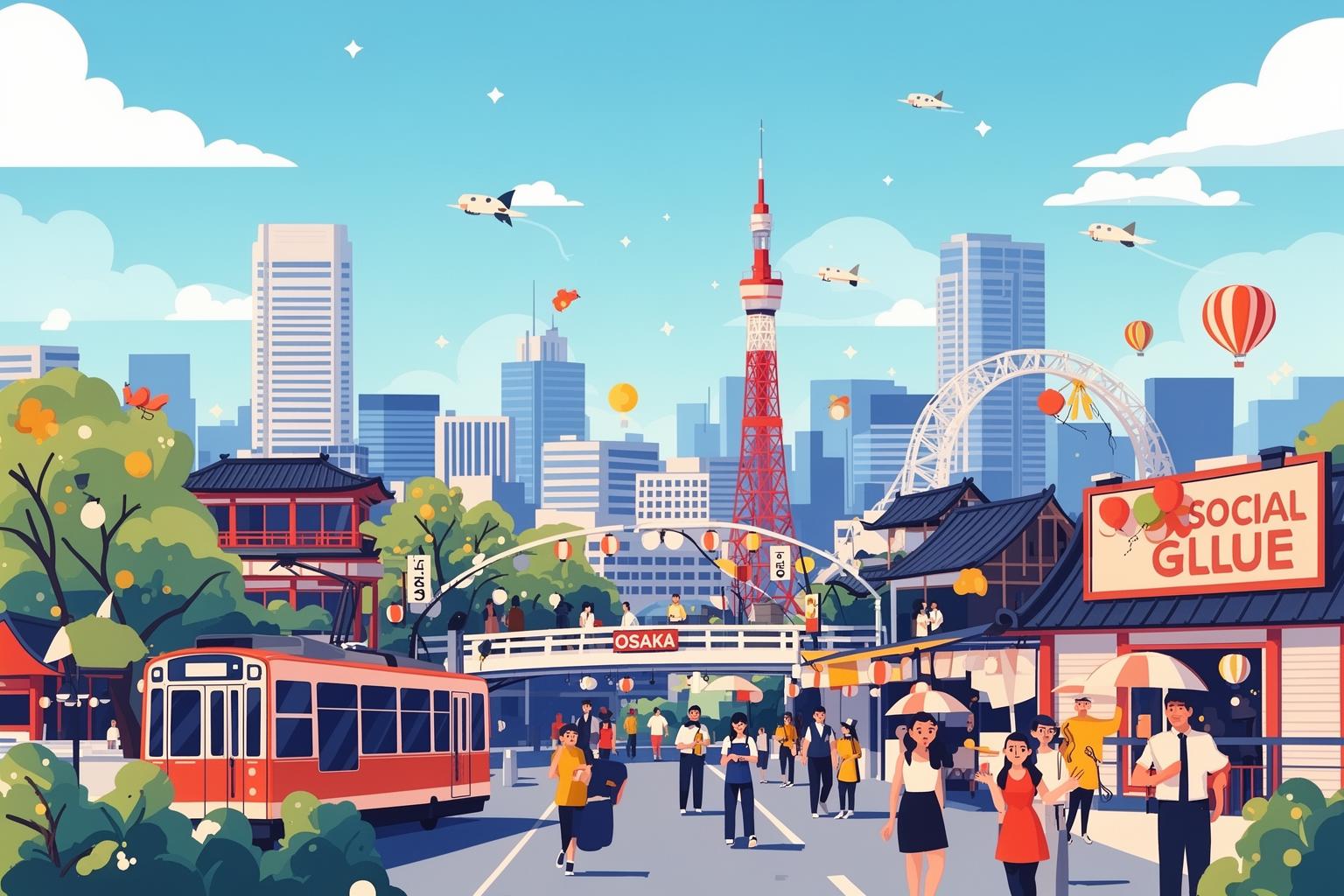
While the business practice known as `tachibanashi` is the most visible manifestation, this culture of standing and chatting extends beyond the corporate sphere. It represents the core way that communities in Osaka connect and maintain cohesion. It acts as the social glue binding neighborhoods, creating a continuous, low-key exchange of information that takes place in shopping arcades, outside train stations, and on quiet residential street corners. This is where the true pulse of the city can be sensed.
The Shotengai Symphony
Stroll through any of Osaka’s numerous `shotengai`—the covered shopping arcades that serve as the heart of its neighborhoods—and you will experience a symphony of `tachibanashi`. Here, it is the `obachan` and `ojichan`, the community’s elder aunties and uncles, who excel as the main practitioners. Groups gather outside the fishmonger, ostensibly to examine the day’s catch, but really to exchange news and gossip. Who’s getting married? Whose grandchild just passed their exams? Which local politician is creating trouble? This is how community knowledge spreads. It is a highly localized, analog social network. The butcher might lean over his counter to share a story with a familiar customer. The fruit stand owner calls out a greeting to a passerby, sparking a five-minute discussion about the quality of this year’s watermelons. While these interactions may seem trivial, they hold great significance. They build a web of accountability and familiarity. People know their neighbors, watch over each other’s children, and notice when an elderly resident hasn’t been seen for a day or two. This steady, casual observation generates substantial social capital, transforming neighborhoods from mere clusters of homes into vibrant, living communities.
The Convenience Store Convergence
The modern-day equivalent of the village well is the local `konbini`. The area just outside a FamilyMart or Lawson, often furnished with a bench and an ashtray, serves as a prime `tachibanashi` spot. It is a crossroads where various community strands meet. High school students gather after class, young parents pause on their way back from the park, and office workers pick up a late-night snack. People encounter each other, and conversations blossom. This is where you might hear about a new restaurant opening, learn of a part-time job opportunity, or simply commiserate about the humidity with a neighbor. The convenience store, with its bright lights and constant flow of people, offers a safe, neutral, and ever-present stage for these vital community exchanges. It exemplifies how Osaka’s infrastructure, whether intentionally or by happenstance, nurtures and encourages a culture of open, spontaneous communication.
Conclusion: More Than Just Talking on the Street
To view `tachibanashi` as simply “standing and talking” completely misses its essence. It represents the physical expression of Osaka’s most cherished values, embodying a merchant culture that values pragmatism, speed, and results. It conveys a social philosophy rooted in the belief that human relationships are the most precious currency. It emerges from an urban environment that encourages residents to live openly, engage with one another directly, and blur the boundaries between work and community. For a foreigner trying to navigate this remarkable city, the sidewalk meeting serves as a Rosetta Stone. It helps decode the local language of business and friendship, showing that in Osaka, formality can be a hindrance, and genuine respect often comes through straightforwardness. It reveals that crucial conversations don’t always occur in boardrooms but in fleeting, unscripted moments on busy street corners over a simple can of coffee. Next time you walk through the city, don’t just hurry to your destination. Pause and observe the sidewalk ballet. Listen to its rhythm. To understand `tachibanashi` is to grasp the vibrant, pulsating heart of Osaka itself—a city that believes the best ideas, strongest bonds, and most important deals are made openly, beneath the vast, shared sky.